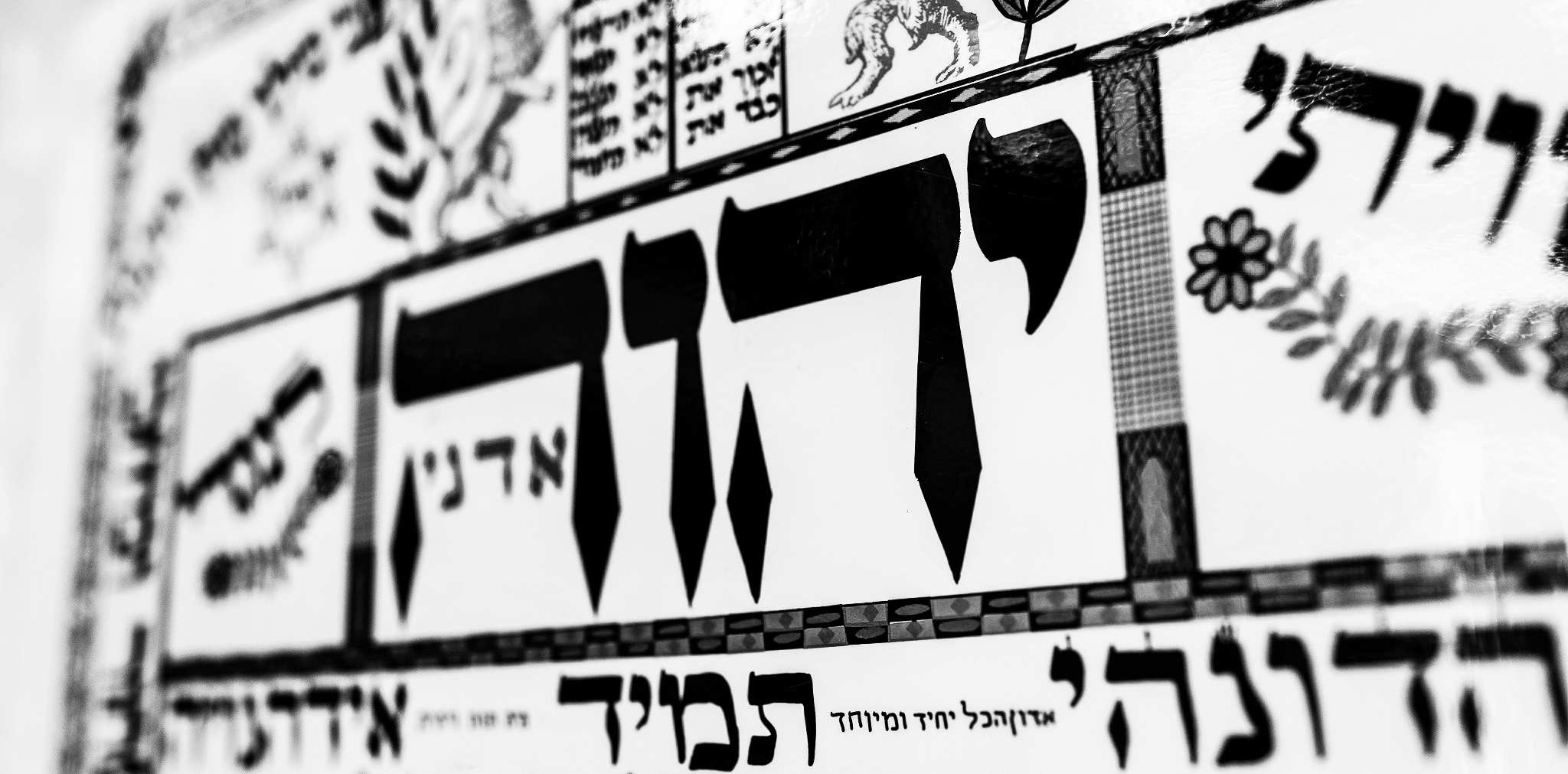
 The Torah divides the calendar into two symmetrical halves: the Spring and the Fall, indicating the two advents of Messiah. The Biblical year officially begins during the month of the Passover from Egypt (called Rosh Chodashim, see Exod. 12:2), and the spring holidays of Passover, Unleavened Bread, and Firstfruits both recall our deliverance from Egypt and also our greater deliverance given by means of the death, burial, and resurrection of the Messiah, the great Passover Lamb of God. Yeshua was crucified on erev Pesach, buried during Unleavened Bread, and was resurrected on Yom Habikkurim (Firstfruits). The holiday of Shavuot (i.e., “Pentecost”) both commemorates the revelation of the Torah at Sinai as well as the revelation of the Ruach HaKodesh (Holy Spirit) at Zion, in fulfillment of the promise given by our Lord….
The intermediate months of summer end with the advent of the sixth month of the calendar, called the month of Elul, which recalls the time Moses interceded on behalf of Israel after the sin of the Golden Calf. To commemorate this time of our history, we likewise focus on teshuvah (repentance) in anticipation of Rosh Hashanah (i.e., Teruah) and especially in anticipation of Yom Kippur, the great “Day of Atonement.” In Jewish tradition the 30 days of Elul are combined with the first ten days of the seventh month (called the “Days of Awe”) to set apart “Forty Days of Teshuvah” leading up to the Day of Forgiveness for Israel. Immediately following Yom Kippur, the mood changes as we begin preparing for a joyous week-long celebration called Sukkot (i.e., “Tabernacles”) that concludes with the holiday of Simchat Torah.
Just as the spring festivals (Passover, Firstfruits, and Shavuot) have been perfectly fulfilled in the first coming of Yeshua as Mashiach ben Yosef, so the fall festivals (Rosh Hashanah, Yom Kippur, and Sukkot) will be fulfilled in His second coming as Mashiach ben David. Since the first advent fulfilled all of the spring mo’edim to the smallest of details, we believe that His second advent portends similar fulfillment as revealed in the fall mo’edim. The fall festivals therefore prophetically foretell the Day of the LORD, the second coming of Yeshua, the great national turning of the Jewish people, and the establishment of the reign of the Messiah upon the earth during the Millennial Kingdom in the world to come.

…
For more information:
 Many people minimize the idea of sin because they fail to recognize it as life-threatening, lethal, and spiritually disastrous. Sin (and its justification in our lives) cuts us off from God, however, and that invariably leads to a sense of existential dread (Isa. 59:2; Ezek. 18:4). “The wages of sin is death” (Rom. 6:23), and that means those who practice sin are considered “dead” even while alive (Berachot 18a-b). Tragically, sin can lead to the dreadful punishment of karet (כָּרֵת), being “cut off” from any awareness of the Truth. Regarding this the sages note that the Hebrew word for sin, chet (חַטְא), is written with a silent Aleph (א) because when we sin, the Master and LORD (אַלּוּף) is present, because without his power no one could lift his hand to do anything great or small. Here we note the terrible reality that our sin is witnessed by God himself, a pain that pierces his very heart.
 When you become alive to the truth that the LORD is your Rock, the very ground upon which you live, move, and have your being, then your steps are made sure, as it says, “The steps of a man are established by the LORD, when he delights in his way; though he fall, he shall not be cast down: for the LORD holds his hand” (Psalm 37:23-24). When you are unsure of your way, when you walk in uncertainty, you are unsteady in your resolve and are tempted to regard your life as being without any solid foundation. As you commit your way to the LORD, your steps are made sure, for you are walking before his Presence, and therefore you are upheld by his power.
 From our Torah portion for this week (
 The knowledge of God (ידיעת יהוה) is our supreme good and the “chief end of human life.” It is our highest blessing, more precious than earthly riches, power, or any of the pleasures this world affords (Jer. 9:23-24; Prov. 3:15; Matt. 13:44-46). Those who do not esteem the true knowledge of God invariably fall into darkness, idolatry, and despair (1 Thess. 4:5; Eph. 4:17; Hos. 4:1-2). The knowledge of God set us free to receive the inestimable blessing of eternal life given in the Messiah, as Yeshua testified: “And this is eternal life, to know you (לדעת אותך) the only true God (האל האמיתי היחיד), and Yeshua the Messiah (ישוע המשיח) whom you have sent” (John 17:3). Knowing God is the very reason for your existence and nothing can be compared with its superlative excellence (Phil. 3:8). Oh, the depth of the riches and wisdom and knowledge of God! (Rom. 11:33).

 How we deal with trouble and suffering (i.e., tzuris) makes all the difference. We may be tempted to bitterness over our lives, but then what? To paraphrase Soren Kierkegaard, the way of life is how more than it is what. You may be powerless to control reality, but you are nevertheless responsible for how you respond to it. Check your attitude. Do you chose to live in lament over a healing that has not yet happened, or perhaps regard yourself as a hapless victim? Or will you attempt to justify your suffering as a means of personal atonement, accepting it passively as a “good child” or martyr? Does your suffering stretch your heart, or does it cause you to shrink back in fear or self-pity?
 Perhaps you (like me) once learned Psalm 19:7 as, “The law of the LORD is perfect, converting the soul.” However, the Hebrew text might better be translated as, “The instruction (i.e., Torah) of the LORD is perfect, returning the soul.” This is the message of teshuvah (תְּשׁוּבָה), or “repentance,” of course. We turn away from ourselves to discover that only the love of God given in Yeshua gives life to our dead hearts (Mark 1:15). Teshuvah is therefore first of all a matter of faith, of trusting in the miracle of God. And though it is indeed a great gift from heaven, it requires that we pass through the “narrow gate” of humility by confessing the truth about who we are (Matt. 7:13). We turn away from our pride; we acknowledge our inner poverty, our neediness, and we mourn over the loss and hurt caused by our sin. Teshuvah turns us away from our attempts to defend or justify ourselves and instead turns to God to heal our separation from love (Rom. 8:3-4). The miracle of love buries our old nature and transforms us into a new creation (2 Cor. 5:17).

