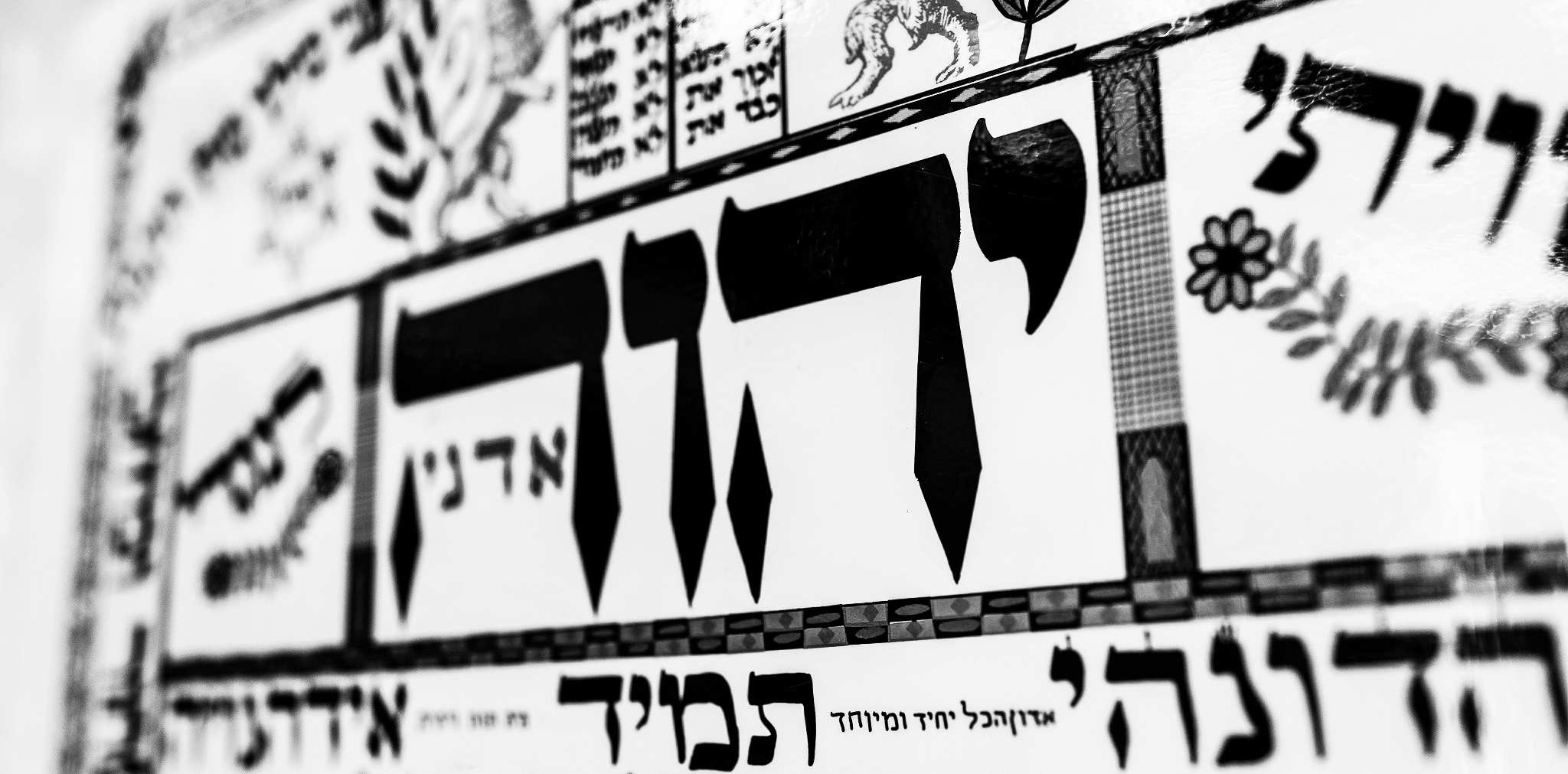
 During the holiday of Shavuot (i.e., “Weeks,” “Pentecost”) we remember how the LORD graciously condescended to meet with the Jewish people at Sinai, and how all the people heard the Voice of God (קול האלוהים) speaking from the midst of the fire (Deut. 4:33). This awesome event foreshadowed the great advent of the King and Lawgiver Himself, when the Eternal Word (דבר יהוה) became flesh to dwell with us (Phil. 2:6-7; John 1:1,14), and it further foreshadowed the advent of the Spirit of Truth given to the disciples of Messiah (Acts 2:1-4). Any theology that regards God as entirely transcendent will have a problem with divine immanence, since the highness, holiness, and perfection of God will make him seem distant, outside of us, far away, and even unknown… Incarnational theology, on the other hand, manifests the nearness of God to disclose the divine empathy. Indeed, the LORD became Immanuel (עמנו אל), “one with us,” to share our mortal condition, to know our pain, and to experience what it means to be wounded by sin, to be abandoned, alienated, forsaken. The “Eternal made flesh” bridges the gap between the realm of Ein Sof (אין סוף), the Infinitely transcendent One, and the finite world of people lost within their sinful frailty. Of course we believe Adonai Echad (יהוה אחד) – that the “LORD is One” – both in the sense of being exalted over all things but also in the sense of being compassionately involved in all things (Rom. 11:36). During Shavuot we celebrate the giving of the Torah both at Sinai, at Bethlehem (בית לחם), and within our hearts. We celebrate that God is indeed the King and Ruler over all, but we further affirm that God’s authority and rule extends to all possible worlds – including the realm of finitude and even death itself.
Hebrew Lesson:

 Instead of soberly acknowledging that our days are numbered in this world, many people deny the reality of death, steadfastly ignoring any idea of judgment to come. Yeshua warned us, however, that “nothing is hidden except to be made manifest; nor is anything secret except to come to light” (Mark 4:22). We should tremble before such words. Each of us will give account for what we have done with the time given us (Heb. 9:27; 2 Cor. 5:10; Matt. 12:36). Moses therefore prayed to God: “teach us to number our days,” that is, help us understand how to make our days count for eternity, to have a “weight of glory” (βάρος δόξης) that will shine in the world to come…
 There are some who believe that the holiday of Shavuot is linked (eschatologically) with the “rapture” of the church, that is, the doctrine that the followers of Yeshua the Messiah will be “caught up” (ἁρπάζω, harpazo) and suddenly taken away before the time of the Great Tribulation and the Great Day of the LORD (1 Thess. 4:17; John 14:3; 1 Cor. 15:51-52). They reason that since Shavuot marked the day of great and dramatic revelation, with signs of fire and the sounds of a heavenly shofar blast, an appointed time when Moses first ascended to receive revelation from Sinai and later the Holy Spirit descended upon the followers of Messiah from Zion. Shavuot therefore marks the fulfillment of Passover that culminates in the rapturous goal of our redemption… Both Jew and Gentile are “waved” together before the LORD (as symbolized by shtei ha-lechem, the two loaves), representing the “one new man” of kallat Mashiach, the “bride of Messiah,” or the assembly of those called out from every tribe and tongue to be a part of God’s heavenly kingdom.
 Perhaps the first or most basic question of philosophy is “what is real?” The ancient philosopher Aristotle wrote, “All men by nature desire to know,” and knowing presupposes an object of knowledge… The quest of discovering “what is real” is the subject matter of “metaphysics,” or the study of what makes up reality…
 From our Torah this week (i.e.,
  Everyone is a theologian of sorts, though not everyone thinks clearly or takes the time to reflect on the meaning of the words they use, and therefore studying theology is necessary because so much muddled theology exists… Generally speaking “theology” (θεολογία) may be defined as reasoning (λόγος) about God (Θεός), though such reasoning is grounded in the philosophical activity of apprehending truth about ultimate reality. And just as everyone is a theologian (either a good one or not), so everyone is a philosopher of some kind or another, that is, a person who opines about the ultimate questions of life. To be a conscious person (as opposed to being numb or asleep) implies that you are haunted by “big questions” (for example, “Who are we?” “Where did we come from?” “Why are we here?” “Where are we going?” and “What does it all mean?”), and therefore every self-reflective soul cannot escape the need to think clearly. Indeed disciples of Yeshua are called talmidim (תַּלְמִידִים), that is, “learners” who have a duty before God to know and live the truth. We are to “study to show ourselves approved before God, rightly understanding the Word of Truth” (2 Tim. 2:15). The alternative to being talmud chacham (a wise student) is to be muddled about what you believe and why your believe it. Faith is called the conviction (ἔλεγχος) or “argument” of truth (see Heb. 11:6). Not knowing the truth makes you vulnerable to various forms of philosophical deception and theological error, as it is written: “Beware lest anyone cheat you through philosophy and empty deceit, according to the traditions of men, according to the basic principles of the world, and not according to Messiah” (Col. 2:8). “However, we speak wisdom (σοφία) among those who are mature, yet not the wisdom of this age, nor of the rulers of this age, who are coming to nothing, but we speak the wisdom of God in a mystery, the hidden wisdom which God ordained before the ages for our glory” (1 Cor. 2:6-7). Knowing the truth sets us free (John 4:24, John 8:32; 2 Cor. 3:17).
 This week’s Torah portion (i.e.,
  We are being educated for eternity, and the life of faith is a long lesson in obedience — learning to suffer God’s will, to accept whatever happens, and to endure in hope. Practically speaking this means “laying aside” your desires and surrendering yourself — all that is within you — in trust of God’s plan for your life, even (and especially) in the most harrowing of moments… Indeed, in light of suffering what we really need is perseverance, or what the New Testament calls hupomone (ὑπομονή), a word that means “remaining [μένω] under [ὑπο]” the Divine Presence while being tested (the word “suffer” comes from the Latin word sufferre, from sub- (under) + ferre, to carry, and therefore denotes “bearing under” difficulty). Laying aside our desires is a form of suffering that calls for patience and wisdom as we learn to endure our own frailty and to trust God for what is best…

