 The LORD spoke to Moses, saying, “Speak to Aaron and his sons, saying, ‘Thus you shall bless the people of Israel, saying: “May Adonai bless you and keep you from illusions; may Adonai shine divine light upon you; may Adonai reveal his presence to you.’ So shall they put my Name upon the people of Israel, and I will bless them” (Num. 6:22-27). The question is asked why the kohanim (priests) were needed to confer God’s blessing, and what is meant by the idea of God “setting his Name” upon the people. The sages reply that the blessing is bestowed by a mediator to show that all things flow from the Holy One, and there is no one who can rightly say, “by my strength and my power alone has this come to pass” (Deut. 8:17). Therefore the blessing is graciously given to those who simply open their hearts to receive it: “May Adonai bless you; may Adonai shine divine light upon you; may Adonai reveal his Presence to you…” Everything that comes to us comes in God’s Name, as it is written: “Every good gift and every perfect gift is from above, coming down from the Father of Lights (אֲבִי הָאוֹרוֹת) with whom there is no variation or shadow due to change” (James 1:17). The blessing of God (בִּרְכַּת יָהּ) is to “bear His Name” by being filled with the strength of His Presence, walking in the flow of His power, completely in union with His will… Bearing the Name of the LORD means being surrendered and identified with his heart in all things.
Birkat Kohanim:


====
 Yeshua taught us to be focused and to refrain from using “vain repetitions” (i.e., βατταλογέω – “babbling words”) in our prayers, since our Father knows what we need before we ask Him (Matt. 6:7-8). What He wants is “us” – all our heart and hunger for life – not some formula or recipe of words to appeal to him. Don’t worry about the verbiage of your prayers, then, but attend to the inner groan of your heart (Rom. 8:26). “When you pray, rather let thy heart be without words than thy words be without heart” (John Bunyan). Ultimately prayer is a kind of teshuvah (תְּשׁוּבָה), a word often translated as “repentance,” though it’s more accurately understood as turning (shuv) to God in response to His call. Sometimes you just come and present yourself in God’s presence, without words, without requests… You just sigh, or let your heart groan in silence. The point, of course, is that you come to the Lord to do real business with Him, not to play games or to offer “lip service.” Are we really “showing up” when we pray?
 It is written in our Scriptures: “Do not be anxious about anything, but in everything by prayer and supplication with thanksgiving let your requests be made known to God” (Phil. 4:6). Note that the verb translated “be anxious” here (i.e.,μεριμνάω) comes from a root word (μερίζω) that means to be fragmented or divided into parts and pieces. Being anxious is therefore the uneasy state of being distracted, unfocused and divided within yourself. When we worry we heed voices of fear and begin to feel ‘double-minded,’ (i.e., δίψυχος), unstable, and unable to think clearly; we get restless and find it difficult to deeply breathe. We start to feel out of control, fearful that something bad will happen despite all our efforts or wishes to the contrary; we sense doom; we lose heart; we go dark… The Scripture here admonishes us to pray when we are tempted us to be anxious by focusing on something for which we are grateful. Doing so will instill the “peace of God” (שלום יהוה) that rises above all worldly thinking to keep watch over your heart and your thoughts through Yeshua the Messiah (Phil. 4:7). We gain the “light of life,” that is, inner illumination from God, so that we can remain steadfast and unmovable in our faith, despite the temptation to look for relief from our struggles apart from God.
 There is a great war going on, but it’s not a war waged with conventional weapons. This is the war for the souls of human beings, and every person alive is currently engaged in it… There is no place of neutrality in this war, and you cannot escape from the conflict. The enemy is now at the gate, the battle lines drawn. Pastors are being arrested around the world for holding church services; civil liberties and freedoms are being striped away from us in the name of state “security” for the “greater good.” Passivity or indifference is not an option, and therefore each of us must choose. We are either going forward or going backward; we are either drawing near or pulling away (Rev. 3:16). The question is now made urgent: מי ליהוה אלי – mi Adonal aylai? “Who is on the Lord’s side?”
 The Apostle Paul (רבי פאולוס השליח) taught that we are not to be “conformed” (συσχηματίζω) to the pattern of this fallen world but rather be “transformed” (μεταμορφόω) by renewing our minds, so that by testing we may discern what is the will of God (Rom. 12:2). Note that the word translated “conformed” in this verse means to accept the world’s scheme (σχῆμα) of understanding things, that is, to passively go along with the world’s matrix of lies, wishful thinking, propaganda, etc. The word translated as “transformed,” on the other hand, means to be metamorphosed or radically changed into a different kind of nature with a different source of being itself. Such transformation comes from having our minds “renewed” — the word used in this verse (i.e., ἀνακαινόω) means being “made new on the inside,” and therefore renewal is the gift of teshuvah (turning to God). Understand, then, that the foundation of all transformation of inner character and outward conduct comes from the miracle of having a renewed mind. I use the word “miracle” quite intentionally, since by itself “right thinking” is powerless to help the sinner truly change his ways, and therefore something more – new life and healing power from heaven, is needed.
 God’s people are “strangers” in this world; they are literally “e-stranged” and live as “resident aliens” — here, yet not here…. We wander; we are lonely; we yearn for our heavenly home. Life in this world is “olam ha’sheker,” the false world — full of deception, troubles, and struggle. Here there is no lasting hope, no abiding…
 The revelation of God in Yeshua means that Ultimate Reality — that is, the transcendental source of all that exists — is intensely personal, intimately knowable, and full of love. “Metaphysics” (i.e., that which is “really real”) is therefore not about an impersonal force known in objective relationship (i.e., a “what”) but a personal agency and creative mind known in subjective relationship (i.e., a “who”). The Scriptures teach that what is ultimately real (אהיה אשׁר אהיה) is the Ultimate Person of the LORD (אני יהוה). In Him we “live and move and have our being” (Acts 17:28).
 While it is wonderfully true that Yeshua died to free us from our sins, the corollary is that he imparts life for us to walk in the light of his glorious Divine Presence (2 Cor. 5:15). The two go together. You are redeemed by God to serve him. Simply believing (or hoping) that “Jesus died for your sins” doesn’t mean walking through your days without any thought of where you are going. Our teshuvah must make traction with our feet as we go forward by faith. This means we have a responsibility to practice the truth of Messiah, partaking his vision, hashkafah (philosophy) and compassion. Indeed each of us will give account for his or her life before God, as it is written: “For we must all appear before the judgment seat of the Messiah (כסא־דין המשיח), so that each one may receive what is due for what he has done in the body, whether good or evil. Therefore, knowing the fear of the Lord (יראת יהוה), we persuade others” (2 Cor. 5:10-11).
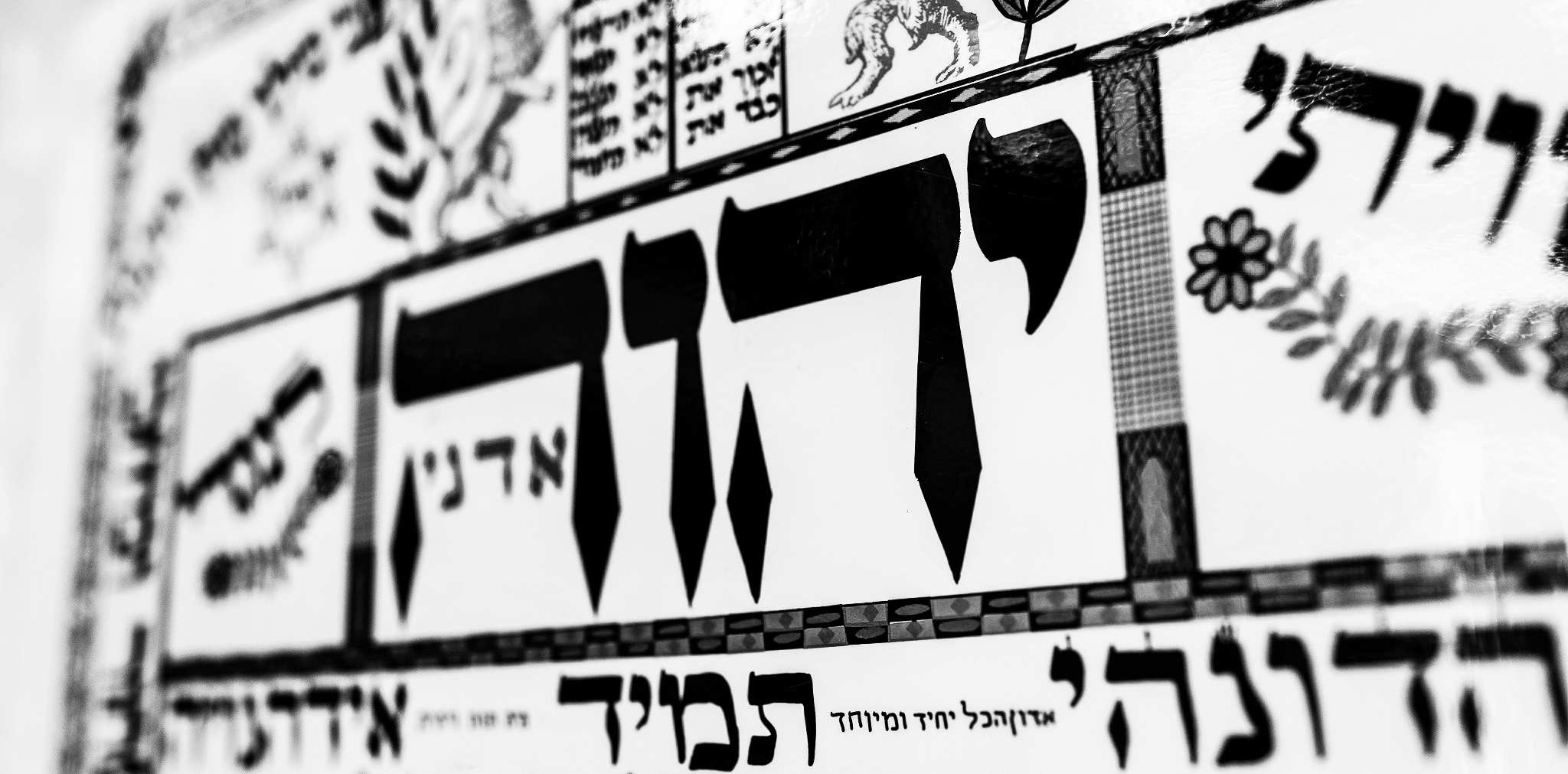
 The great Name of the LORD is “I-WILL-BE-WITH-YOU-ALWAYS” (אני אהיה עמך תמיד), which implies that we always live within God’s Presence and care (Deut. 31:8, Josh. 1:9, Isa 41:10, Matt. 28:20; etc.). The Name YHVH (יהוה) signifies God’s indomitable love and unfailing compassion. The LORD says to the trusting heart, hen al kapayim hachotikh: “Behold I have engraved you on the palms of my hands” (הֵן עַל־כַּפַּיִם חַקּתִיךְ; Isa. 49:16). Remember the One who stretched out his hands and died for your healing; remember that he said, “Don’t be anxious about tomorrow, for tomorrow will be anxious for itself. Sufficient for the day is its own trouble.” Again, “do not be anxious for any reason, but in everything by prayer and supplication with thanksgiving let your requests be made known to God, and the peace of God (שלום יהוה), which surpasses all understanding, will guard your hearts and your minds in Yeshua the Messiah” (Phil. 4:6-7). God keeps in perfect peace (lit. “the peace of peace”) those whose lean on Him (Isa. 26:3).