 From our Torah portion this week (i.e., Naso) we read: “Each one shall keep his holy donations: whatever anyone gives to the priest shall be his [לוֹ יִהְיֶה]” (Num. 5:10). This is the spiritual principle that what we give away is what we possess, and as we measure, so will be measured back to us again (Luke 6:38). The sages comment that being selfish, acquisitive, and power-hungry are drives common among the animals, but what makes a man unique is his ability to sacrifice himself for others. Giving tzedakah, then, is an inherently spiritual act, and ultimately only that which we give to others in love will be kept as holy. “For where your treasure is, there your heart will be also” (Matt. 6:21).
As you believe, so you will receive (Matt. 21:22). This is the “like for like” principle of faith. Forgive us as we forgive; judge us as we judge; love us as we love; make us righteous as we take hold of righteousness, give us courage as we believe, and so on. As Isaiah said to Ahaz: “If you will not be firm in faith, you will not be firm at all” (Isa. 7:9). Your “amen” echoes the “amen” of heaven: “Let it be done for you according to your faith” (Matt. 9:29).
Instead of refusing to judge others (in the name of tolerance), or judging them in terms of their worth, we are commanded judge people favorably by using a “good eye” (עַיִן טוֹבָה). As it is written in the Torah, “in righteousness judge your neighbor (בְּצֶדֶק תִּשְׁפּט עֲמִיתֶךָ)” (Lev. 19:15). Notice that the word translated “righteousness” is tzedek (צֶדֶק), a word that includes the heart motive of “charity” and love. We are commanded to give tzedakah (צְדָקָה, “charity”) not just because it is “right,” but it is right because it is based on God’s love and care for others. Something is righteous, in other words, because it expresses the truth about God’s love. We could read this commandment as “in love judge your neighbor.” Our judgments should be based on compassion, empathy, and care for others – never as a verdict about someone’s worth and status before God. We see with a redemptive eye, and that means seeing the potential of others and their inherent worth as God’s children.
Lord, help me receive what you give and give what I have received, for love’s sake. Amen.
Hebrew Lesson:

 Our Torah portion for this week (i.e.,
 The
The 

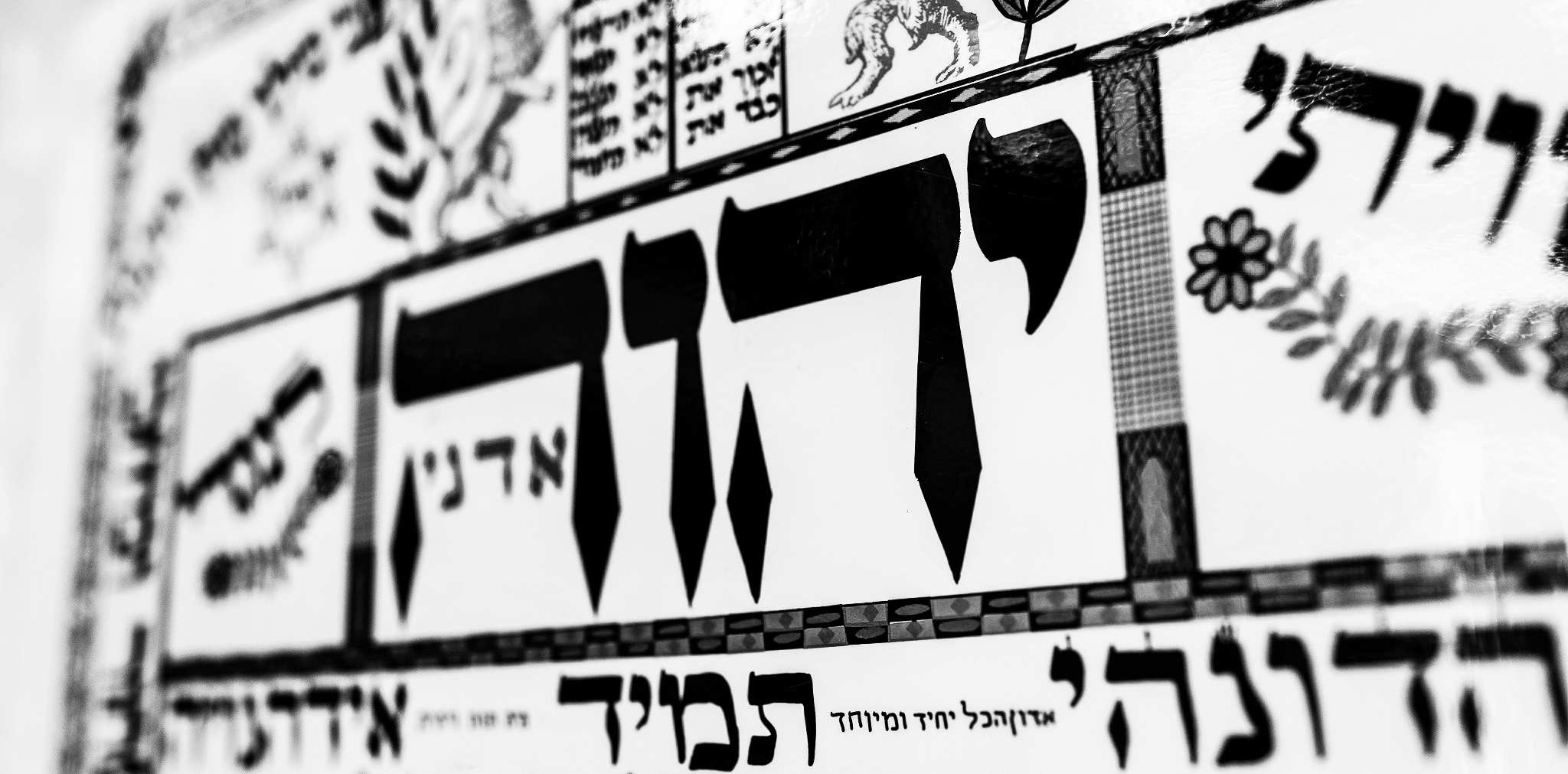
 In the Scriptures God’s Name is revealed as YHVH (יְהוָה), which means “He is Present.” The Name is formed from the words hayah (“He was”), hoveh (“He is”), and yihyeh (“He will be”): הָיָה הוֶה וְיִהְיֶה, indicating God’s omnipresence. Note that all the letters of the Name are “vowel letters,” which mean they evoke breath and life. This is the Name revealed to Moses thousands of years before the advent of other religions (Exod. 3:14), and indeed it is the Name associated with the nishmat chayim (נִשְׁמַת חַיִּים), the “breath of life,” imparted to Adam in the orchard at Eden (Gen. 2:4). It is therefore the original Name of God “breathed out” to mankind. The Name Yeshua (יֵשׁוּעַ) means “YHVH saves.” There is no other Savior beside Him, there is no other Name, there is no other LORD. “For I am the LORD your God, the Holy One of Israel, your Savior.” Only Yeshua the Messiah can deliver you from the wrath to come (1 Thess. 1:10).

 It is written in our Torah: “Take care, lest you forget the covenant of the LORD your God, which he made with you, and make a carved image, the form of anything that the LORD your God has forbidden you… ‘You shall not make for yourself a carved image (לא־תַעֲשֶׂה־לְךָ פֶסֶל) or any likeness of anything that is in heaven above, or that is on the earth beneath, or that is in the water under the earth” (Deut. 4:23; 5:8). Literally this refers to the ancient practice of bowing before “mediating forces” of God, often symbolized by art and ritual, as a token of respect or as a means of finding “acceptance” within a group. We are not to imitate such customs of the pagan world around us; on the contrary, we testify of the One True God and repudiate the need for intermediaries between God and man… On a different level, “bowing before an idol” means passively yielding to the world and its ideals rather than submitting to the truth. When we seek to fit in, to feel like we belong, and follow the trends and passions of the crowd, we express idolatry of heart. Most intimately, an idol is a source of desire, happiness, and security apart from the LORD. Your “god” is whatever your heart admires, follows and loves… If you have “other gods” before the LORD, then something is wrong, since we were created by God to find life in Him alone. “Surely you don’t think the Scripture speaks vainly when it says: the spirit which He sent to live in us wants us for himself alone?” (James 4:5) “Grace will save a man… but it will not save him and his idol” (A.W. Tozer). Therefore, my dear friends, flee from idolatry (1 Cor. 10:14).
 It is written in our Torah, “The LORD your God will return as you return (ושׁב יהוה אלהיך את־שׁבותך), and will have mercy upon you, turning to gather you back…” (Deut 30:3). This has both a present and prophetic application. First, in the present hour, if you turn to God, he will show you compassion, and he will “gather back” all those distant and fragmented parts of yourself into shalom and wholeness. He will restore your lost days; he will bring you out of exile and give you comfort in Yeshua. He makes all things new. “Draw near, therefore to God, and he will draw near to you” (James 4:8). Second, the LORD will return to earth as the Jewish people return from their captivity, and he will restore Zion during the time of the final redemption. The LORD will turn captivity into mercy; he will turn in his compassion to his people. As it is written: “I will be found by you, declares the LORD… (והשׁבתי אתכם אל־המקום) and I will bring you back to the place…” (Jer. 29:14).
 No one wants to admit that they are needy, broken, weak, and so on, and indeed such a confession is blasphemy to the heart of the proud. The truth, however, is that we are indeed all these things, and Yeshua told us we were blessed if we understood this (Matt. 5:3-6). The is great danger to pretend you are strong and capable of living life on your own terms, since eventually you will be blindsided by the truth about your condition. On the other hand, the confession of our weakness opens the way to God’s power, as Yeshua said to Paul in his affliction: “My grace is sufficient for you, for my power is made perfect in weakness” (2 Cor. 12:9). Paul came to see that the various trials and afflictions in his life taught his profound dependence on God: “for when I am weak, then I am strong.”
 Do you sometimes have trouble trusting God? Do you wrestle with fear, anxiety, or worry? Does an inexplicable dread or sense of hopelessness sometimes oppress you? Do you secretly wonder what’s wrong with you – and whether you are truly saved, after all? Please hang on. Doubting and questioning are often a part of the journey of faith, and we don’t have to be afraid of our questions, concerns, and difficulties… Being full of “certainty” is not the same as being full of faith, after all, since many sincere people are sincerely self-deceived, while many others experience fear, loneliness, and trouble as a result of their faith. There is so much we simply do not know, and it is dishonest to pretend otherwise. God knows your heart and its struggles; he knows all your secret fears. Thankfully, there is a special prayer included in the holy Scriptures for those times when we feel especially unsteady or insecure: “Lord, I believe, help thou my unbelief…” (Mark 9:24) Here we may bring our (lack of) faith to God for healing….
 Yeshua teaches us to earnestly seek for what really matters in life, to discover that which is best of all. He said, “The kingdom of heaven is like treasure hidden in a field, which a man found and covered up. Then in his joy he goes and sells all that he has and buys that field. Again, the kingdom of heaven is like a merchant in search of fine pearls, who, on finding one pearl of great value, went and sold all that he had and bought it” (Matt. 13:44-46). Here Yeshua teaches us that a relationship with God is the true source of joy and value in life, and that all other passions and desires are like “fools gold” when compared with its overwhelming worth…