In this shorter audio podcast I provide an introductory overview of Sefer Vayikra (the Book of Leviticus) as well as a brief introduction to parashat Vayikra. For more information about the details of the Torah portion, see the audio podcast for parashat Vayikra….
We are living in perilous times. It is lawlessness to reject the Torah of the LORD that commands us to follow Messiah and know him in all our ways – including the ways of our struggles, our calls for justice, and so on… Yeshua plainly warned us that those who practice lawlessness and anarchy do not know him and therefore they will be judged as outsiders of the truth of God. In this audio podcast, I discuss the meaning and importance of the “law” in the life of those who purport to be followers of the Messiah.
This week we have a “double portion” of Torah: parashat Vayakhel-Pekudei (ויקהל־פקודי). Much of this material is repeated from the earlier description of the Tabernacle (מִשְׁכָּן) to underscore the importance of the sacrificial system (the altar) and to portend the two advents of Messiah Yeshua. Note that God commanded Moses to assemble the Tabernacle on “the first month in the second year [from the date of the Exodus], on the first day of the month” (i.e., Nisan 1, or Rosh Chodashim, see Exod. 40:17). The new moon of Nisan, then, marks the beginning of month of redemption (chodesh yeshuah), both regarding the Exodus from Egypt (and the establishment of the altar at the Tabernacle), as well as the greater Exodus given through the altar of Messiah as spiritually foretold by this…
In addition to the Torah material I discuss the holidays of Purim and Shabbat Parah, as well as the greater meta-themes of Passover and the Exodus from Egypt.
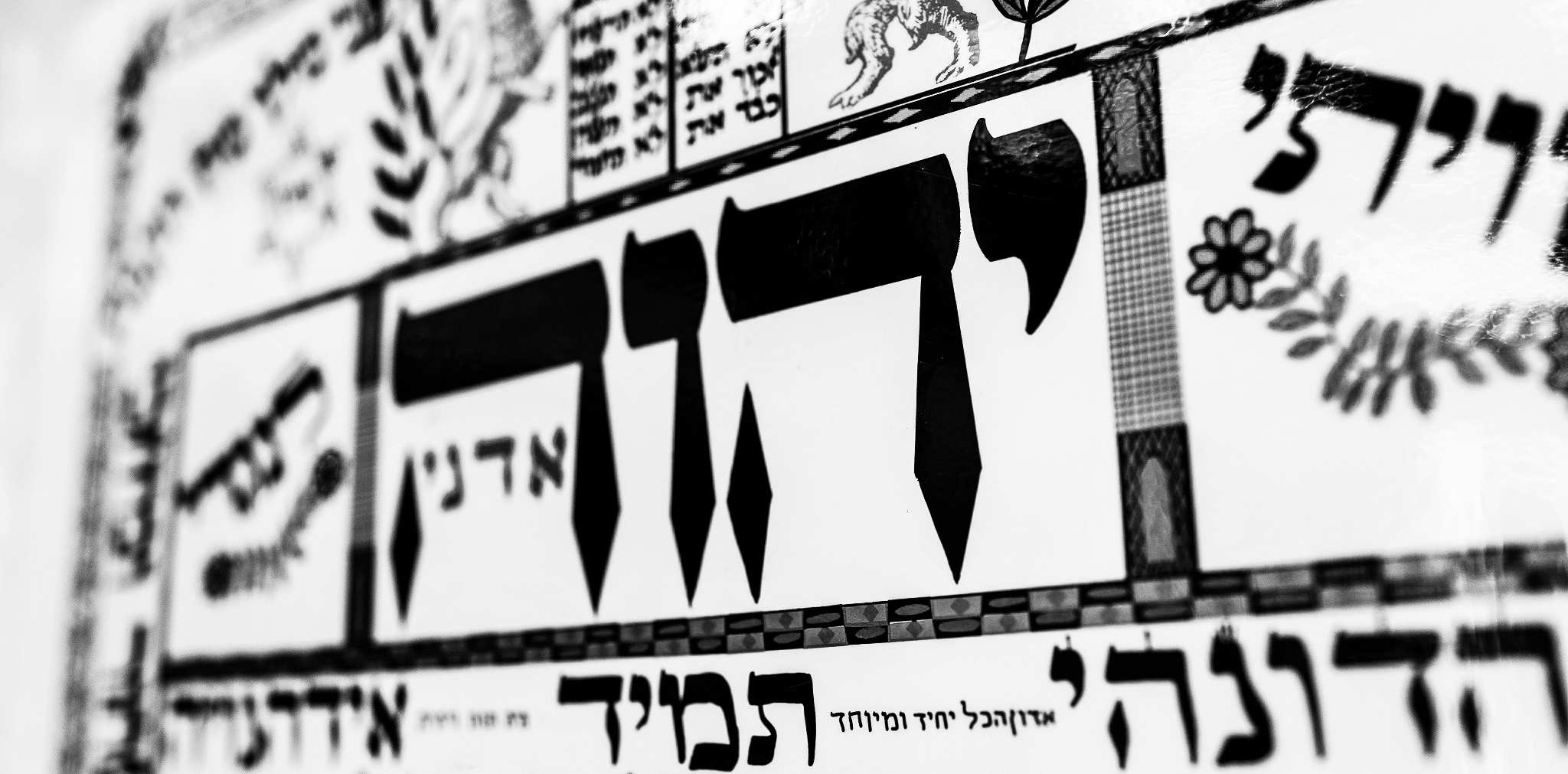
Our Torah reading for this week is Ki Tisa (כי תשא), one of the longest of the Torah. It includes the tragic account of the Sin of the Golden Calf (עֵגֶל מַסֵּכָה) and Moses’ passionate intercession for Israel. After a period of teshuvah (repentance) for Israel’s idolatry, the LORD graciously revealed the meaning of the Name YHVH (יהוה), that is, the thirty-two words that have become known in Jewish tradition as the Shelosh Esrei Middot, or the “Thirteen Attributes of God’s Mercy.” This was the LORD’s own definition of His compassionate character and attributes to Moses after the breaking of the Sinai covenant.
Though the Scriptures teach that the realm of the demonic exists, we encounter its presence most usually in thoughts and feelings that torment us. That is where the battle begins. In the mind. The monster that tempted Eve in the Garden got into her head before she bit into the fruit from the forbidden tree. And unless we are on guard against insinuations of godless insanity, we are liable to be under its influence as well…
You might think that demonic oppression is something flamboyant or requiring the ministrations of an exorcist, but long before such intervention may be necessary, the mind has been captivated by evil and deranged thinking. Such thinking may have its origins with a demons named “worry,” or “shame,” or “unworthiness” or “envy.” But a common strategy of the devil is to supply plausible ideas that are designed to deceive us and lead us astray.
Everyone is a theologian of sorts. The difference, however, is whether you are a good theologian or one who is swamped with muddled thinking about the issues. As C.S. Lewis once said, “Good philosophy must exist, if for no other reason, because bad philosophy needs to be answered. The cool intellect must work not only against cool intellect on the other side, but against the muddy heathen mysticisms which deny intellect altogether. Most of all, perhaps we need intimate knowledge of the past.”
The devil doesn’t care if it is a “holier-than-thou” theology, a murky mysticism of “absolute tolerance,” or a smarmy disavowal of faith in God altogether — he is equally pleased with the sensualist as well as the atheist, indeed, he is content with any distortion of the truth, for this enables him to “feed” his deluded ego as the “Prince of Darkness.”
In a way, dealing with evil thinking is prosaic and unremarkable. After all, the airwaves of mass media continually disseminate lies, disinformation, and godless thinking in countless formats and through diabolical stratagems. Whenever we encounter the demonic affecting us, then, we should not panic or be scandalized, but must instead reaffirm the truth of God and resolutely submit to his will (James 4:7). Sometimes this means contradicting the lie by quoting Scripture, offering praise to the Lord, and asking your Heavenly Father for deliverance. In extreme cases, it may be necessary to command the evil spirits to silence their blasphemies and to cease their intrusions. If we find ourselves going out of control emotionally, we are giving ground to the devil. The best tactic is to stay calm and re-center our focus on the Lord who is always present. There is shalom – that is, healing, wholeness, and soundness of mind – as we regain awareness of the greatness and the beauty and the glory of our God.
Our Torah reading for this week, parashat Tetzaveh, continues the description of the Mishkan (i.e., “Tabernacle”), though the focus shifts to those who will serve within it, namely the kohanim (i.e., the priests of Israel). First Moses was instructed to tell the Israelites to bring pure olive oil for the lamps of the Menorah which the High Priest was to light every evening in the Holy Place. God then commanded Moses to ordain Aaron and his sons as priests and described the priestly garments they would wear while serving in the Tabernacle. The portion further describes the ordination process for the priests and gives a description of the Altar of Incense (ketoret ha’mizbe’ah).
In this audio broadcast presentation I provide a verse-by-verse reading of the Torah portion (in English), providing Hebrew insights throughout, and linking the truths of Torah to the glory of Yeshua our Messiah, the Light of the World. I hope you find it helpful, chaverim.
Yeshua likened His relationship with his followers in terms using the metaphor of a vine and its branches: “I am the true Vine (הַגֶּפֶן הָאֲמִתִּית), and you are the branches” (see John 15:1-5). We derive our identity, life and strength from being made part of His life… The purpose of the branch is to be a conduit of the life of the vine. Vine branches by themselves are of little value, apart from the manifestation of fruit; they cannot be used for building things and otherwise are regarded as bramble (Ezek. 15:2-4). Notice further that the vine branch cannot bear good fruit while it remains on the ground: it must “climb” upward and be elevated. And if you look closely at a vine, it is often difficult to see where the vine ends and the branches begin.
The life of the branch becomes “entangled” in God’s love as it bears spiritual fruit from the sustenance of the True Vine (הַגֶּפֶן הָאֲמִתִּית). When we abide in, or are truly connected with, Yeshua as the Source of life, we bear the fragrance and sweet-smelling savor of heaven itself…
“I am the vine; you are the branches. Whoever abides in me and I in him, he it is that bears much fruit, for apart from me you can do nothing” (John 15:5). Note that the expression “apart from me” (χωρὶς ἐμοῦ) means being in a state of separation from Yeshua, which is likened to spiritual death… It is the death of possibility, the absence of power to yield true good to the world, and so on. This is what is meant by “you can do nothing” (οὐ δύνασθε ποιεῖν οὐδέν), that is, you can do nothing of any lasting significance or worth… There is simply no true life apart from the Savior who is the Source of divine life. May you find your life and peace in Yeshua’s heart, friends.
The goal of the Sinai revelation was not only the giving of the Ten Commandments to the Israelites but enshrining the Divine Presence within their hearts… In our Torah portion for this week (i.e., Parashat Terumah), we read how God asked the people to offer “gifts from the heart” to create a “place” for Him: “Let them make for me a sanctuary that I may dwell in their midst” (Exod. 25:8). The Hebrew word for “sanctuary” is mikdash (מִקְדָּשׁ), which comes from the root word kadash (קָדַשׁ), “to be set apart as sacred.” A mikdash is therefore a “set apart space,” or a “holy place” that represents something profoundly treasured – a place of beauty and worship, a refuge, a place of rest. Other words that share this root idea include kedushah (holiness), kiddushin (betrothal), kaddish (sanctification), kiddush (marking sacred time), and so on. When God said, “Let them make for me a mikdash,” then, he was inviting the people to make a sacred place within their hearts for His Presence to be manifest…. The “materials” required to make this place – gold, silver, brass, red and purple yarns, fine linens, oils, spices, precious stones, etc. – were ultimately from the heart, expressed in free-will offerings given to God.
In this audio broadcast I step through the Torah portion and add Hebrew insights to help you better understand the Jewish roots of your faith in Yeshua, the Jewish Messiah. I hope you will find it helpful.
Sometimes in our afflictions we may feel lost, confused, and uncertain of ourselves. We dare not doubt God’s love for us, though we may wonder how He might use such affliction to mend our hearts… As C.S. Lewis once said, “We are not necessarily doubting that God will do the best for us; we are wondering how painful the best will turn out to be” (Letters: 1964). There is a trust issue in suffering, and an intimacy that comes through its fires. As Kierkegaard reminds us, “It is one thing to conquer in the hardship, to overcome the hardship as one overcomes an enemy, while continuing in the idea that the hardship is one’s enemy; but it is more than conquering to believe that the hardship is one’s friend, that it is not the opposition but the road, is not what obstructs but what develops, is not what disheartens but ennobles” (Four Upbuilding Discourses, 1844).
Some of us want “mountain top” experiences of God, but more often than not we learn “down in the valley,” where the daily cares of life encroach upon our ideals and visions. Yet it is precisely there, in the “desert of the everyday,” in the “testing of the tedious,” in the “hazards of hopelessness,” that we are enabled to elevate our consciousness to realize that God is ezra ve’tzarot nimtza me’od (עֶזְרָה בְצָרוֹת נִמְצָא מְאד) – a “very present help in our troubles” (Psalm 46:1).
Amen, God is aware of our frustration, our lowliness, our fear, our suffering… When God delivered his people by the miracle of splitting the sea (קריעת ים סוף), he closed off any way of escape apart from his direct intervention. The Egyptian army was behind them, the mountains hemmed them in, and the vast horizon of the sea loomed before their way. The only way of deliverance was from above, in the midst of our struggle, by God’s own hand.
Trust in God’s healing and deliverance is the first step… The LORD is the Rock and all his ways are perfect (Deut. 32:4), and this must be affirmed especially if we cannot fathom the testing of our present circumstances…
Life is often a messy (and painful) business for us. We are weak. We are tempted, and we regularly fail. We are filled with ambivalence; we contradict ourselves; we struggle; we falter, we sin. At times we may even feel lost and inconsolably alone. But faith is a gift from heaven – the gift of God’s presence, and as such the miracle attests that “God is with us,” even in our times of darkness, in moments of sadness, heartache, confusion, anger, and fear.
Where is God in our sorrows, our losses, our nightmares? He is with us. Despite the blindness of our hearts, the Spirit whispers: “I am with you.” Yea, God never leaves us; he never forsakes us. He cares. His heart spans “the breadth and length and height and depth” of all that we are, expressed in his eviscerated groans for our deliverance, in drops of blood sweat out in his passion, in the forsakenness and utmost anguish of the cross… Faith believes and then sees.
God is with us, yet in the anxiety of the everyday we often lose sight of him. We forget. We go dark. We go into exile. And then in “the mercy of our misery” we sense the call of his heart once again: “Come unto me, you who labor and are heavy laden, and I will give you rest…” We slow down and again seek his “hidden” Presence, remembering his greatness and turning our thoughts back to what is ultimately real… What we thought was so big — the dramas of this world — suddenly seems small and insignificant. We remember the LORD our God; we revisit what matters most of all. And as we do so, the Spirit of God begins to flow within us as we reconnect with our true identity as God’s beloved child. We come back to the open arms our Savior. He is alive; Jesus is real; we belong to him and he will lead us into the depths of his love forever and ever… Amen.
Friend, if you struggle inwardly with sin and despair over yourself, remember: Faith is itself the struggle to believe, and therefore the struggle reveals the presence of earnestness within you… God sees you and will hear the cry of your heart…
 In this shorter audio podcast I provide an introductory overview of Sefer Vayikra (the Book of Leviticus) as well as a brief introduction to parashat Vayikra. For more information about the details of the Torah portion, see the audio podcast for parashat Vayikra….
 We are living in perilous times. It is lawlessness to reject the Torah of the LORD that commands us to follow Messiah and know him in all our ways – including the ways of our struggles, our calls for justice, and so on… Yeshua plainly warned us that those who practice lawlessness and anarchy do not know him and therefore they will be judged as outsiders of the truth of God. In this audio podcast, I discuss the meaning and importance of the “law” in the life of those who purport to be followers of the Messiah.
 This week we have a “double portion” of Torah:
 Our Torah reading for this week is
 Though the Scriptures teach that the realm of the demonic exists, we encounter its presence most usually in thoughts and feelings that torment us. That is where the battle begins. In the mind. The monster that tempted Eve in the Garden got into her head before she bit into the fruit from the forbidden tree. And unless we are on guard against insinuations of godless insanity, we are liable to be under its influence as well…
 Our Torah reading for this week,
 Yeshua likened His relationship with his followers in terms using the metaphor of a vine and its branches: “I am the true Vine (הַגֶּפֶן הָאֲמִתִּית), and you are the branches” (see John 15:1-5). We derive our identity, life and strength from being made part of His life… The purpose of the branch is to be a conduit of the life of the vine. Vine branches by themselves are of little value, apart from the manifestation of fruit; they cannot be used for building things and otherwise are regarded as bramble (Ezek. 15:2-4). Notice further that the vine branch cannot bear good fruit while it remains on the ground: it must “climb” upward and be elevated. And if you look closely at a vine, it is often difficult to see where the vine ends and the branches begin.
 The goal of the Sinai revelation was not only the giving of the Ten Commandments to the Israelites but enshrining the Divine Presence within their hearts… In our Torah portion for this week (i.e.,

 Sometimes in our afflictions we may feel lost, confused, and uncertain of ourselves. We dare not doubt God’s love for us, though we may wonder how He might use such affliction to mend our hearts… As C.S. Lewis once said, “We are not necessarily doubting that God will do the best for us; we are wondering how painful the best will turn out to be” (Letters: 1964). There is a trust issue in suffering, and an intimacy that comes through its fires. As Kierkegaard reminds us, “It is one thing to conquer in the hardship, to overcome the hardship as one overcomes an enemy, while continuing in the idea that the hardship is one’s enemy; but it is more than conquering to believe that the hardship is one’s friend, that it is not the opposition but the road, is not what obstructs but what develops, is not what disheartens but ennobles” (Four Upbuilding Discourses, 1844).
 Life is often a messy (and painful) business for us. We are weak. We are tempted, and we regularly fail. We are filled with ambivalence; we contradict ourselves; we struggle; we falter, we sin. At times we may even feel lost and inconsolably alone. But faith is a gift from heaven – the gift of God’s presence, and as such the miracle attests that “God is with us,” even in our times of darkness, in moments of sadness, heartache, confusion, anger, and fear.