 From our Torah reading for Rosh Hashanah (i.e., Vayeilech) the LORD foretold Moses’ death and the people’s subsequent apostasy from the faith: “This people will rise and whore after the foreign gods among them in the land that they are entering, and they will forsake me and break my covenant that I have made with them” (Deut. 31:16). The Lord then continued: “And then my anger will be kindled against them in that day, and I will forsake them and hide my face from them, and they will be devoured…. And I will surely hide my face in that day because of all the evil that they have done, because they have turned to other gods” (Deut. 31:17-18).
The phrase hester panim (הֶסְתֵר פָּנִים) means “hiding of the face.” It is often used when discussing the Book of Esther, where God’s Name isn’t mentioned even once, yet the hidden Presence is realized in the outcome of the story. In this sense of the term, hester panim is somewhat like the sun on an overcast day: Just because you don’t see it doesn’t mean it isn’t there. God’s providential care for us is at work at all times, whether we perceive it or not.
 In the Torah portion for
  From our Torah (
 The Scriptures teach that every word we speak and every choice we make are infallibly recorded in “heavenly scrolls,” and one day these scrolls will be opened as a testimony about what we did with our lives (Dan. 7:10; Matt. 12:36-37; 1 Cor. 3:13, 4:5). “And I saw the dead, both the great and the small, standing before the throne, and books were opened. Then another book (סֵפֶר אַחֵר) was opened, which is called the Book of Life (סֵפֶר הַחַיִּים). And the dead were judged by what was written in the books, according to what they had done” (Rev. 20:12).
 It is written in our Torah: “When a person (i.e., adam: אָדָם) has on the skin of his body a swelling (שְׂאֵת) or a scab (סַפַּחַת) or a bright spot (בְּהֶרֶת)… he shall be brought to the priest” (Lev. 13:2). Here the sages note three common afflictions that befall the “children of Adam”: swelling (arrogance), scabs (worldly vanity, from a word that means to join togther), and bright spots (representing the light of carnal reasoning to understand the ways of God). When we see only the affliction, we must go to the priest – to one who helps mediate the Divine Presence – to see how deep the affliction is… Symbolically, since we are all priests to one another (see Exod. 19:6; 1 Pet. 2:5,9; Rev. 1:6), we share our afflictions with one another, allowing ourselves to be seen, and to confess our need for healing. We are only as sick as the secrets we keep, and therefore we are encouraged to share our struggles with one another: “Therefore, disclose (ἐξομολογέω, lit. ‘confess out’) your sins to one another and pray (εὔχομαι) for one another, that you may be healed…” (James 5:16).
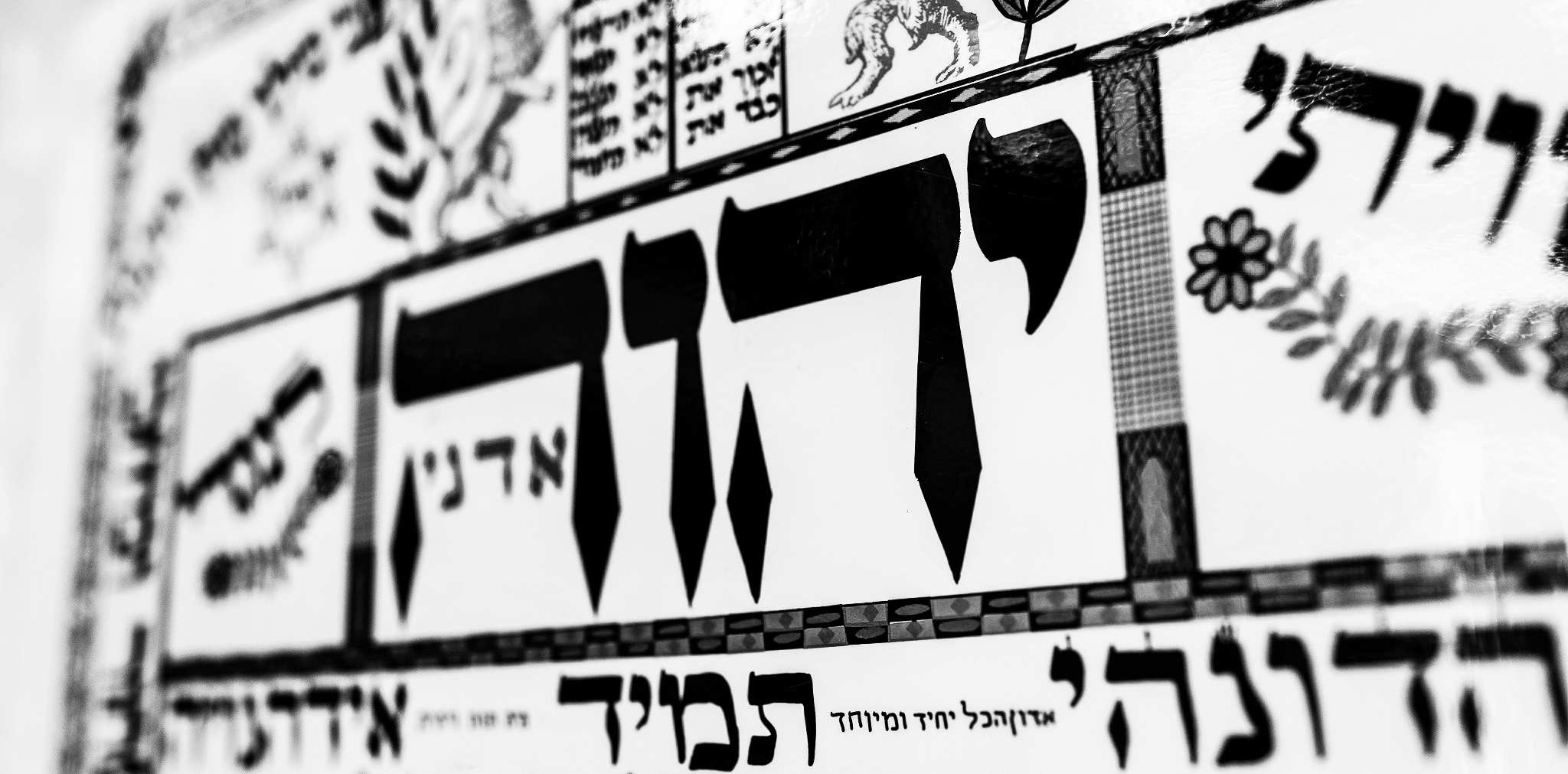
 In the Torah we find that the word “love” (i.e., ahavah) first appears regarding Abraham’s passion for his son: “Take your son, your only son Isaac, whom you love (אֲשֶׁר־אָהַבְתָּ), and go to the land of Moriah, and offer him there as a burnt offering on one of the mountains of which I shall tell you” (Gen. 22:2). After journeying to the place, Abraham told his child that God would provide a lamb (אֱלהִים יִרְאֶה־לּוֹ הַשֶּׂה), and then bound Isaac, laid him upon an altar, and raised his knife to slay him (Gen. 22:8-10). At the very last moment, the Angel of the Lord called out: “Abraham! Abraham! Do not lay your hand on the lad or do anything to him, for now I know that you fear God, seeing you have not withheld your son, your only son (בֵּן יָחִיד), from me” (Gen. 22:11-12). Abraham then “lifted up his eyes” and saw a ram “caught in a thicket” which he offered in place of his son. Abraham then named the place Adonai-Yireh (יהוה יִרְאֶה), “the LORD who provides” (Gen. 22:14). The sacrifice of the lamb for Isaac portrayed the coming sacrifice of Yeshua, the great “Lamb of God” (שֵׂה הָאֱלהִים) who would be offered in exchange for the trusting sinner (John 1:29). Indeed the story of how God provided the lamb at Moriah (and later during the Passover in Egypt) foreshadowed the greater redemption given in Messiah at the “Passover cross,” and may be understood as the “Gospel according to Moses” (Luke 24:27; John 5:46). Therefore, Rosh Hashanah, or the Day of Judgment (יוֹם הַדִּין), is all about our Messiah, and the sound of the shofar reminds us of the Lamb of God who was offered in our place…
 Since
Since  In this “Shavuah Tov” audio broadcast I discuss both the Jewish High Holidays — and how they relate to us as followers of Yeshua the Messiah — as well as the weekly Torah portion we will read for Shabbat Shuvah, namely parashat Vayeilech. I hope you will find it helpful. L’Shanah Tovah u’Metukah b’Yeshua Meshicheinu, chaverim! – “to a good and sweet year in our Messiah Yeshua, friends.”
 ding for this week, parashat Nitzavim (פרשת ניצבים), is always read on the Shabbat immediately before the solemn holiday of Rosh Hashanah, and therefore it is the last portion read before the new Jewish year (see Exod. 23:16). In many synagogues, the opening and concluding paragraphs of parashat Nitzavim are also read during the Yom Kippur morning service.