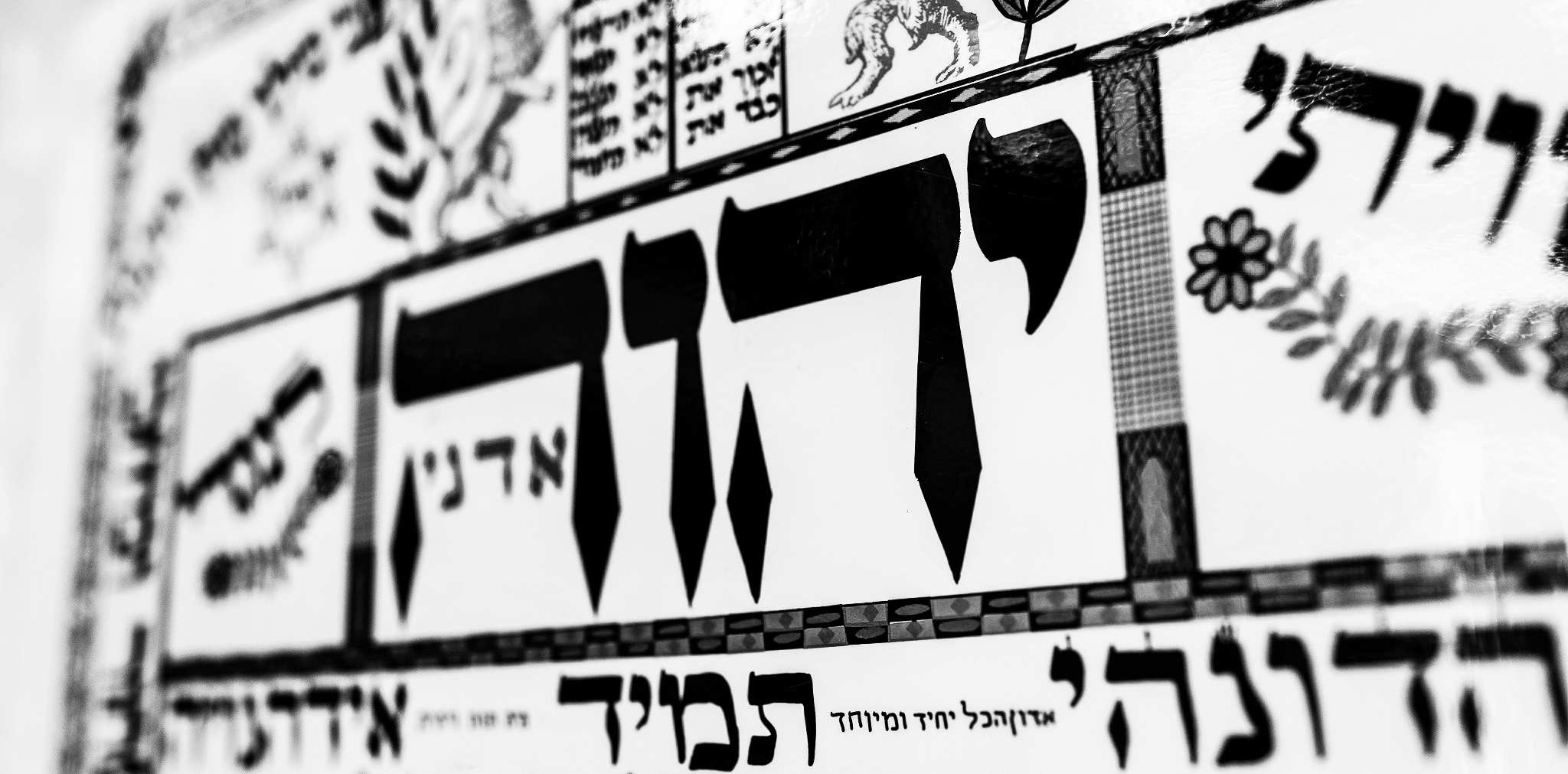
 The Hebrew idea of “truth” (i.e., emet: אֱמֶת) is richer than factual description or “correspondence” between language and reality, since it contains moral implications and possibilities: what is true is also right, good, reliable (honest), beautiful, and sacred. The Hebrew word comes from a verb (aman) that means to “confirm” or establish, and the noun form (i.e, emunah: אֱמוּנָה, “faithfulness” or “trustworthiness”) expresses the will to live by what is ratified, the “amen” of decision. The Hebrew concept is therefore existential: truth that is not lived is not really truth. Speaking the truth (dibbur emet) and abhorring dishonesty are considered foundational to moral life, as it says: “Speak the truth (דַּבְּרוּ אֱמֶת) to one another; render true and perfect justice in your gates” (Zech. 8:16). Yeshua said, “Amen, amen I say to you….” throughout his ministry to stress the reliability and certainty of God’s truth (Matt. 5:18, 26, etc.). Indeed, Yeshua is called “the Amen, the faithful and true witness” (Rev. 3:14). In that sense truth is not a “what” of correspondence but rather a “who,” since reality turns on the magnetism of the divine presence (Col. 1:16). Read more “The Ladder of Truth…”
Category: Torah Study
Selected verses from the Torah for Hebrew study
The Still Small Voice…
 Worry is a place of exile and pain. “For thus said the Lord GOD, the Holy One of Israel, “In returning and rest you shall be saved; in quietness and in trust shall be your strength” (Isa. 30:15). This message, alas, is rarely heeded because people are easily seduced by the vain attractions and empty threats of this evil world. We are constantly barraged with spurious messages that appeal to our lusts, our fears, or our vanity: “Buy me!” “You need this!” “Find pleasure,” “This will bring you love, respect,” etc.; Or we are given subliminal messages to be afraid and conform to the programming of those in power, to uncritically trust authority figures, to resist independent thinking, to submit to the mass hypnosis of the collective, and so on. We are so saturated by such fraudulent messages that we often deprecate them as “just words” and thereby become cynical of our need for truth. Because worldly language is a means of coercion and violence, we must be ready to think clearly and to ask the deeper questions about truth, significance, and the reality that language was intended to reveal to our conscious minds. Read more “The Still Small Voice…”
Trust in Dark Hours…
 We are living in dark times, perilous days (2 Tim. 3:1-5; 2 Pet. 3:3). The world has become more and more lawless and violent. Many live in dread, sensing that difficult times are ahead. Indeed, with the advent of the Covid pandemic, things are likely never to return to “normal” as the world economy and the global political situation are restructured… These are truly unprecedented times.
Though we might not understand why God allows these things to happen, we nevertheless hold fast to our conviction that the Lord is our Good Shepherd who restores our souls. He speaks to us in the midst of uncertainty:
…
“Who among you fears the LORD
and obeys the voice of his Servant?
Let him who walks in darkness and has no light
trust in the Name of the LORD and lean upon on his God.”
(Isa. 50:10)
…
The Time of Visitation…
 We must ready our hearts for the time of the Lord’s coming, for the hour draws near… Yeshua lamented over Israel: “You did not recognize the time of your visitation…” (Luke 19:44). But how was it possible for otherwise devoutly religious people to miss the advent of the Messiah were it not because they disregarded the signals meant to awaken them? “So also, when you see all these things, you know that he is near, at the very gates” (Matt. 24:33). That’s part of the message of teshuvah as well: Repent and believe the message of life (see Heb. 3:7-4:11). Esau “repented” with tears, but his wasn’t true repentance since he did not turn his heart to embrace the truth of God’s love… True repentance leads to healing and life. When the woman from Magdala wept and washed Yeshua’s feet with her tears, he said to those present, “I tell you, her sins, which are many, are forgiven — for she loved much” (Luke 7:44-48). In other words, she was lavish in her love because she deeply regretted that she had missed what was most important, what she desperately needed all along… She saw her sin as blindness to God’s love… After all, why would she weep over her sins unless she loved him? And how could she love him unless he first revealed his love to her? (1 John 4:19). Friends, the Kingdom of God is at hand: wake up and be ready for the advent of the King! The sound of the shofar reminds us that the great Day of the LORD is drawing near and soon we will see our King Yeshua.
Keep on trusting…
 When Yeshua said, “Let not your heart be troubled… I go to prepare a place for you” (John 14:1-2), he was assuring us that he had matters well under his control, and therefore we need not worry, since his passion rendered our salvation completely secure… The future is a “prepared place” for you, even if life in this world is often marked by testing and various refining fires. God has not promised to rescue us according to our own schedule, however, so if it appears that your prayers are not immediately answered, keep waiting in faith: “Rejoice, even if you have been grieved by various trials, because the tested genuineness of your faith — more precious than gold that perishes though it is tested by fire — may result in praise and glory and honor at the revelation of Yeshua the Messiah” (1 Pet. 1:6-7). God works “all things together for good,” and since the exercise of faith is your good, he engineers all things to build your faith. “For my thoughts are not your thoughts, neither are your ways my ways, says the LORD” (Isa. 55:8).
Jacob’s Great Awakening…
In our Torah portion (i.e., Vayetzei) we read: “Then Jacob awoke from his sleep and said, akhen yesh Adonai ba’makom ha’zeh, ve’anokhi lo yadati: ‘Surely the LORD is in this place, but I did not know it'” (Gen. 28:16). Jacob had been asleep but was jarred awake. He found himself in awe, sensing the presence of the gateway to heaven. The sages note the grammar here is emphatic, suggesting that Jacob said: “Surely the LORD is in this place — but am I (וְאָנכִי)? I do not know! (לא יָדָעְתִּי). Jacob had awakened from his dream to realize that he had been dreaming his life away, living in a fantasy world. God is present in this place – but am I? Have I awakened to be present before God?
Jacob’s Great Dream…
In our Torah portion this week (parashat Vayetzei), we read that when Jacob fled from his home in Canaan, he “came upon a certain place and stayed there that night” (Gen. 28:11). The Hebrew text, however, indicates that Jacob did not just happen upon a random place, but rather that “he came to the place” — vayifga ba’makom (וַיִּפְגַּע בַּמָּקוֹם). The sages therefore wondered why the Torah states ba’makom, “the place,” rather than b’makom, “a place”? Moreover, the verb translated “he came” is yifga (from paga’: פָּגַע), which means to encounter or to meet, suggesting that Jacob’s stop was a divine appointment.

Our Duty to Truth…
 Like most things that are important for our spiritual lives, this bears repeating: Those who follow Messiah the Yeshua are responsible to love and walk in truth and to abhor and reject what is false (1 John 4:6). This implies that we have a moral and spiritual duty to think clearly and not to abuse our minds (Phil. 4:8; Rom. 12:2). The LORD our God will help us to do this, as Yeshua said: “I will ask the Father, and he will give you a Helper (παράκλητος, someone “called to one’s side”), to be with you forever, even the Spirit of Truth (i.e., ruach ha’emet: רוּחַ הָאֱמֶת), whom the world cannot receive, because it neither sees him nor knows him” (John 14:16-17). The Spirit of Truth helps us “discern what is the will of God, what is good, acceptable, and perfect” (Rom. 12:2) and empowers us to take “every thought captive” to the reality of the Divine Presence (2 Cor. 10:4-5). Truth is connected to memory – both in our personal histories as well as the history of God’s redemptive actions performed on our behalf. Truth is described as “a-letheia” (ἀλήθεια), literally meaning “not forgetfulness…” Hence we are constantly commanded to remember what God has done for us and to “diligently repeat” (ושׁננתם) the truth to our children (Deut. 6:4-9). Similarly, the Spirit of Truth brings to remembrance the words of Yeshua to our hearts (John 14:26).
Seeing what we want to see…

We often see what we want to see… From our Torah portion this week (i.e., parashat Toldot) we read: “And Jacob was simmering stew when Esau came in from the field, famished” (Gen. 25:29). The Midrash Rabbah comments that Esau saw the stew and asked why it was being cooked. He was told that it was a traditional mourner’s meal because his grandfather Abraham had just died. Upon hearing this, Esau quickly became offended that one so righteous as Abraham had died and exclaimed: “If that’s the case, there is no reward for one’s good deeds, and no repair from death…” In this way Esau’s offence over sorrow and suffering moved him to reject reality as being inherently unjust, and by this logic he justified his godless lifestyle… Because bitterness took root within his heart, Esau despised his birthright and spurned the very significance of his life (Heb. 12:15-16).
The Prerogatives of God…

The Haftarah for parashat Toldot begins: “I have loved you,” says the LORD. But you say, “How have you loved us?” “Is not Esau Jacob’s brother?” declares the LORD. “Yet I have loved Jacob but Esau I have hated. I have laid waste his hill country and left his heritage to jackals of the desert” (Mal. 1:1-3; cp. Rom. 9:9-13). Some people may find God’s sovereign choice objectionable, though we know there is no unrighteousness in God’s decrees and ways (Deut. 32:4; Psalm 18:30; James 1:17, etc.). Therefore Yeshua told his followers, “You did not choose me, but I chose you and appointed you to go forth and bear fruit…” (John 15:16). Religious pride recoils at these words, thinking, “I don’t want to be chosen by God; I want to be in control; I want to choose God first.” The ego seeks some reason for revelation, some merit that commends the self to God. It’s hidden assumption is, “thank you, God, that I am not like other men” (Luke 18:11). The choice of God is scandalous because it is based on God’s love, not our own (1 John 4:19). We were spiritually reborn, not as the result of anything in the realm of nature, nor even through our personal decision, but solely on account of God’s sovereign prerogative (John 1:13). This is the message of the choice of Jacob over Esau in our Torah portion this week. Regarding this the New Testament comments: “Though they (i.e., Jacob and Esau) were not yet born and had done nothing either good or bad — in order that God’s purpose of election might stand (ἵνα ἡ κατ᾽ ἐκλογὴν πρόθεσις τοῦ θεοῦ μένῃ), not because of works but because of the One who calls, Rebekah was told, “the older will serve the younger” (Rom. 9:11-12). The carnal ego is quick to look for reasons that God chooses people, looking for merit or considering their worldly potential, though it is idolatrous to elevate the self this way. “Not by might nor by power, but by my spirit, says the LORD of Hosts” (Zech. 4:6). We don’t seek to please God so that we can be chosen; we are chosen so that we can seek to please him… God’s grace and love for us is always the starting point: “Lord, teach us to pray,” that is, choose words for us, the groaning of your Spirit, in accordance with your perfect will…
Over the years I have repeatedly affirmed the “salvation is of the LORD” (לַיהוָה הַיְשׁוּעָה), and therefore we are not saved “by works of righteousness (מַעֲשֵׂי הַצְּדָקָה) that we have done, but solely on account of the mercy given to us in God our Savior (אֱלהִים מוֹשִׁיעֵנוּ; Titus 3:4-5). Grace excludes all boasting (Eph. 2:9; Rom. 4:4). We believe that God justifies the ungodly (helpless) by trusting in his heart of compassion (Rom. 4:1-8). God loves us with “an everlasting love” (i.e., ahavat olam: אַהֲבַת עוֹלָם) and draws us in chesed (חֶסֶד, i.e., His faithful love and kindness). As it is written: “I love you with an everlasting love; therefore in chesed I draw you to me” (Jer. 31:3). Note that the word translated “I draw you” comes from the Hebrew word mashakh (מָשַׁךְ), meaning to “seize” or “drag away” (the ancient Greek translation used the verb helko (ἕλκω) to express the same idea). As Yeshua said, “No one is able to come to me unless he is “dragged away” (ἑλκύσῃ) by the Father (John 6:44). God’s chesed seizes us, scandalizes us, takes us captive, and leads us to the Savior… Spiritual rebirth is a divine act, “not of blood nor of the will of the flesh nor of the will of man, but of God” (John 1:13). In everything – including human reason itself – the LORD God Almighty is preeminent. Dear friend, if God has chosen you to be in covenant with him, then you are indeed one of the “chosen people.”

Therefore we can affirm the great benediction given in our Scriptures: “Blessed be the God and Father of our Adonai, Yeshua the Messiah, who has blessed us in Messiah with every spiritual blessing in the heavenly places, even as he chose us in him before the foundation of the world (καθὼς ἐξελέξατο ἡμᾶς ἐν αὐτῷ πρὸ καταβολῆς κόσμου), that we should be holy and blameless before him. In love he predestined us (προορίσας ἡμᾶς) for adoption as sons through Yeshua the Messiah, according to the purpose of his will, to the praise of his glorious grace, with which he has blessed us in the Beloved; in whom we have redemption through his blood, the forgiveness of our trespasses, according to the riches of his grace, which he lavished upon us, in all wisdom and insight…” (Eph. 1:3-8).
It is the fruit of his Spirit, not the fruit of our own that matters (Gal. 5:22-23). As Yeshua said, “it is the Spirit who gives life; the flesh is no help at all” (John 6:63). We are God’s workmanship, created in the Messiah for good works, which God prepared beforehand that we should walk in them” (Eph. 2:10). We are able to live for God through the agency of His love and sustaining grace, all for the sake of the glory of His Name. “For from Him and through Him and to Him are all things. To Him be glory forever. Amen” (Rom. 11:36).
