“No one ever told me that grief felt so much like fear” (C.S. Lewis). We naturally feel sorrow when we experience loss in our lives, though we may experience a sort of consternation, too, since the very ground beneath our feet may seem to fall away, us leaving us feeling alienated and terribly alone. Over time our grief can make us numb and disconnected. We draw inward, afraid that whatever we love will be taken from us… As someone once confided: “Each loss makes a little hole in you; after awhile, they all add up, and there’s just a gaping hole where your heart used to be.”
We must go through the desert before we can live the promise. Since experiencing loss is part of life in a fallen world, we must first acknowledge our troubles and sorrows. “Don’t call me Naomi (“my delight”) but Mara (“bitterness”), for the Almighty has dealt very bitterly with me (כִּי־הֵמַר שַׁדַּי לִי מְאֹד). I went out full, but the LORD hath brought me home empty” (Ruth 1:20-21). Once we give voice to our pain (and that might have to be done over and again) the heart can reopen to hope once again. We then can turn to God and learn to live in the moment, trusting him to help us through the troubles of the day (Matt. 6:34).
We are living in dark times, perilous days (2 Tim. 3:1-5; 2 Pet. 3:3). The world has become more and more lawless, corrupt, irrational, and violent. Many live in dread, sensing that days of difficulty are ahead. Indeed, with the advent of the “Covid” pandemic 18 months ago, it is evident that things are likely never to return to “normal” as the world economy and the global political situation are restructured… God has sent strong delusion “so that those who do not love the truth should believe a lie” (2 Thess. 2:10-11). These are truly unprecedented times, and the hour draws near, friends….
Though we might not understand why God allows these things to happen, we nevertheless hold fast to our conviction that the Lord is our Good Shepherd who is restoring our souls. He speaks to us in the midst of uncertainty: “Who among you fears the LORD and obeys the voice of his Servant? Let him who walks in darkness and has no light trust in the Name of the LORD and lean upon on his God” (Isa. 50:10).
Friend, the Lord allows the dark cloud of unknowing for his own sovereign purposes, perhaps as a means to teach us to abandon ourselves to his care. Surely God understands our powerlessness; “he remembers our frame, that we are dust” (Psalm 103:14); surely He knows that we cannot see and therefore he calls us to “lean upon Him” for guidance. As we walk through the valley of the shadow of death we find that he is with us, and therefore we must choose to fear no evil.
Trusting in God (i.e., bittachon – בִּטָּחוֹן) does not mean that we are obligated to affirm that this is “the best of all possible worlds,” though it does mean we believe that eventually God will wipe away every tear and make all things right. Bittachon is a word for this world, which says, “Though he slay me, I will trust in him…” We do not need to trust for what is seen in this world but for an unseen good (Rom. 8:24). Those who call upon the LORD can trust not only in concealed good behind ambiguous appearances (“all things work together for good”) but also in a future, real, substantive good that will one day be clearly manifest for us all… We fight the “good fight” of faith, which is a worthy struggle that eventually is realized for blessing. We die daily; we mortify ourselves and surrender to God’s will. Meanwhile, we ask the Lord to be kept from such depth of sorrow that leads to self-destruction and despair….
We must press on without fear, trusting that our faithful LORD will strengthen us for “such a time as this.” We must be brave, equipped for battle, and full of conviction that the message of the gospel is the only hope for this moribund and decadent world. We must be on guard lest we fear, for fear is the greatest tool of the enemy of our souls, and therefore we must resist him steadfast and full of divine assurance. “The Lord is faithful: He will establish you and guard you against the evil one” (2 Thess. 3:3). The Spirit says, “Fear not, for I am with you always.” The Lord “will sustain you to the end, guiltless in the Day of our Yeshua the Messiah” (1 Cor. 1:8). He who calls you is forever faithful; He will surely do it (1 Thess. 5:24).
If you ask for bread, your heavenly Father will not give you a stone… Only God can deliver us from our “disordered loves” to take hold of what is truly essential. All we can do is ask, and keep on asking – even as we struggle on, despite ourselves, despite our losses… And we often revisit our sins over and over until we become “sick of our sickness,” that is, until we begin to understand what our heart really needs. It’s as if we are constantly being asked, “Is this what you want?” and our choices confess the truth… Only God does the miracle of real change within the human heart – only God can give life from the dead!
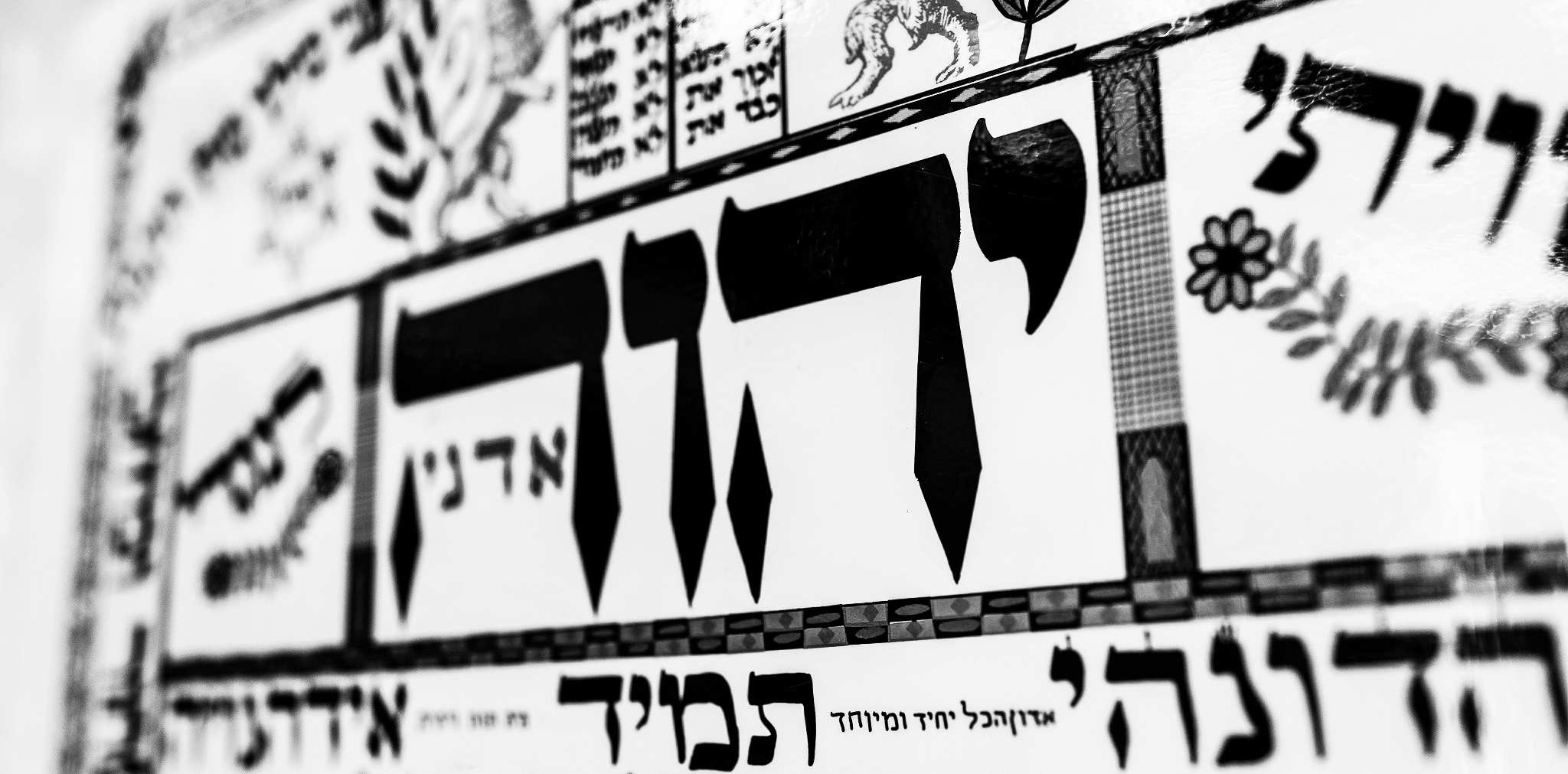
“We are in God and God whom we do not see is in us” (Julian of Norwich). This follows from the meaning of the Name of God itself which is Eternal Life. YHVH (יהוה) means that God was (i.e., hayah: היה), God is (i.e., hoveh: הוֶה), and God always will be (i.e., yihyeh: יהיה) the Source, the Heart, and the End of our lives. “For from him and through him and to him are all things. To him be glory forever. Amen” (Rom. 11:36). We may think of the LORD as being “out there” someplace apart from us, but that is untrue, for he constantly upholds all things by the word of his power (Heb. 1:3) and by Him all things “consist” or “hold together” (Col. 1:17). His will is the gravity that directs all of reality. We may sometimes feel like God is distant from us, but understand that feeling to be an invitation to wake up, come alive, and to live before his Presence. Blessed are those who hunger and thirst for Him….
God’s Name means “I-AM-with-you-always,” imanu-El (עִמָּנוּ אֵל) – always in the midst of you, in your heart, at the center of who you really are (Matt. 28:20; Isa. 41:10, Psalm 23:4, etc). The LORD is so named because he is never without his own, and we are who we are in relation to his presence in our lives. Yeshua is not simply the Lord of the past or the Lord of the future, but the Lord of this moment, this “here” and this “now.” He is the same yesterday, today, and forever – the breath of life, our sustaining hope, the Shepherd of our souls… Whatever else may come of this day, this is the day that the LORD has made, and we find peace in God’s Presence… Let us look to Him in this hour! Amen.
“Be still and know that I am God…” (Psalm 46:10). This is something you must do; you must quiet your heart to know the Divine Presence. Therefore “set the Lord always before you” (Psalm 16:8) and refuse anxious thoughts that weigh in upon you, creating pressure and “dis-ease.” Quieting your heart allows you to hear the holy whisper: “It is I; do not be afraid…” Once the storm of fear dissipates, you can access the truth of God. As the Spirit says, “In returning and rest you shall be saved; in quietness and in trust shall be your strength” (Isa. 30:15).
Worry is a place of exile and pain. Since God’s Name (יהוה) means “Presence” and “Love,” being anxious is to practice the absence of God’s presence instead of practicing his presence… A divided house cannot stand. Where it is written, “cast all your anxiety on him because he cares for you” (1 Pet. 5:7), the word translated “anxiety” comes from a verb that means to divide into pieces. Bring your brokenness to God – including those distractions that make you ambivalent and afraid – to receive God’s healing for your divided heart.
“Be still…” Note that the verb translated “be still” (i.e., rapha: רפה) means to “let go,” to stop striving, and to surrender everything to the care of God (Rom. 8:28). “Being still” means letting go of your “need” to control the world. Relax your hold and rely on God’s care for your life instead, without “taking thought” for tomorrow and its concerns (Matt. 6:34). The past is gone, after all, and the future is God’s business: all you have is the present moment to call upon our Lord. Be faithful in the present hour, then, asking God for the grace and strength you need to endure yourself and engage the task at hand. In this way you will experience the peace of God “which surpasses all understanding” (Phil. 4:7).
Walking with God isn’t just a matter of “head education,” but also of “heart education,” and these two must always go together as Spirit and Truth (John 4:23). Head education seeks knowledge primarily as a means of defining what you believe (emunah); heart education, on the other hand, centers on fear, or rather, on overcoming your fear by trusting in God’s love and healing grace (bittachon). When you accept that you are accepted despite yourself, you are delivered from the need to defend yourself. You can let go, quit denying who you are, and accept God’s unconditional care for your life – regardless of the state of the world. When your heart learns to “be still,” you can know that the Lord your God reigns over all things!
“Be still and know that I am…” Prayer is a type of listening (shema), a turning back to know the message of God’s love and hope in Messiah. The word “teshuvah” (תְּשׁוּבָה) means an answer or response to a question. God’s love is the question, and the heart’s response is the answer. Some of us may find it difficult to trust, to open our heart to receive grace and kindness. For those wounded by abandonment, it can be a great struggle to hear the voice of God calling you “beloved,” “worthy,” “valued,” and “accepted.” When you find faith to receive God’s word of love, however, your heart comes alive and you begin to heal… Yeshua speaks words of comfort: “Blessed are those who have not seen and yet still believe.”
Both Rachel and Leah are considered beautiful women in Jewish tradition, but a verse in this week’s Torah seems to suggest that Rachel was the “beauty queen” of the family: “Leah’s eyes were weak, but Rachel was shapely and beautiful” (Gen. 29:17). Why are Leah’s eyes described as “weak”? Is this a euphemism for saying she was unsightly? After all, Rachel is described in this verse as yifat mareh – “beautiful of sight” (i.e., attractive). Does this text therefore contrast the two women by implying that Leah was physically unattractive? Or does having “weak eyes” mean that she was perhaps nearsighted? How are we to understand Leah’s weak eyes?
The word translated as “weak” is the Hebrew word rakkot (רַכּוֹת), the plural form of the word rak (רַךְ), meaning soft or tender. Rashi comments that Leah’s eyes were made “weak” (tender) from crying “until her eyelashes fell out.” But why was she so sad? According to midrash, Leah’s eyes were reddened and puffy because she was constantly lamenting the prospect of marrying Esau. The adage of the town was: “Two sons to Rivkah; two daughters to Lavan; the older to the older, the younger to the younger.” Another, and perhaps more likely reason for Leah’s tears, however, was that her father Laban was an evil man…
Leah’s eyes were tender and tear-stained, then, but this is not intended to say she was physically unattractive. On the contrary, saying that she had “weak eyes” is a term of praise for her, since (according to the midrash) her greatest fear was to be forced to undergo an arranged marriage with Esau, and therefore she wept and wept to be the mother of the righteous…. God saw her tears — and blessed her to become the most fruitful of the four matriarchs of Israel. Ironically, it was the less teary-eyed Rachel, who later died in childbirth, that was prophesied to weep for her children (Jer. 31:15).
Regarding this subject the Talmud states that the word rak (tender) connotes royalty (Bava Basra 4a). Indeed, two lines of Jewish royalty were destined to descend from Leah: the royal family of Judah (from whom would come King David and King Messiah himself) and the spiritual line of Levi, from whom would descend Moses, Aaron, and the Kohanim (the priestly class of Israel). Like their tenderhearted mother, both of these houses of Israel would shed tears of concern for the well-being of Israel.
Our Torah reading this week (Vayetzei) includes the famous vision of Jacob wherein he saw the angels of God ascending and descending a ladder that reached from earth toward heaven…
=======
.
Recall that after Jacob had received the (second) blessing from his father Isaac, he fled for his life to escape the wrath of his brother Esau. He then came upon a certain place (וַיִּפְגַּע בַּמָּקוֹם) and stayed there for the night because the sun had set. Jacob then “took one of the stones of the place, and put it under his head, and lay down in that place to sleep” (Gen. 28:11). And so began Jacob’s journey from his homeland to attain the promise of God, and such is the way for us as well, as we first receive our Father’s blessing but soon are consigned to desolate places to await things yet unseen. For the way of blessing comes not from the “fatness of the earth” but from the more rarefied “dew from heaven,” which descends in mystery, after the sun has set (Gen. 27:28, cp. Gen. 27:39).
The faithful “descend in order to ascend,” which means they first suffer and then they are glorified. This is the pattern of Yeshua, who emptied himself and suffered before he was raised up in everlasting glory. “Unless a seed of wheat falls into the earth and dies, it remains alone; but if it dies, it bears much fruit” (John 12:24; 1 Cor. 15:36). God humbles and tests those whom he loves so they may learn to trust in his promise – his word – and to demonstrate his faithfulness in the end (Deut. 8:3; Rom. 11:36).
Note, then, that after being driven from his homeland Jacob dreamed of the ladder with the angels ascending and descending as the LORD himself announced his blessing over his seed (Gen. 28:12-14). Yeshua, as we learn from the gospel (John 1:51) explained that the vision ultimately referred to him – about how the angels followed him during his ascent and descent as the ladder or “bridge” between God and man. The descent refers to Yeshua’s incarnation wherein he entered the realm of this world, clothed in human flesh as the Promised Seed, the “Son of Man” who would restore the lost dominion of Adam; whereas the ascent refers to Yeshua’s resurrection – the redemption and return of fallen humanity by means of ascension and glorification as LORD over all. Luther understands the angelic host descending and ascending to reveal how the angels love and follow after their Lord — whose face they do always behold — eager to witness His advent as our Savior and Redeemer (see Matt. 18:10; 1 Pet. 1:12; 1 Tim. 3:16). Yeshua is Emanuel (עמנו אל), the Heralded Seed through whom all the families of the earth be blessed (Luke 2:8-15).
.
Hebrew Reading:
Returning to the account of the Torah, after Jacob received this dramatic vision, he awoke from his sleep and exclaimed: “Surely God is in this place, but I did not know!” And he was afraid, and said, “How dreadful is this place! this is none other but the house of God (בֵּית אֱלֹהִים), and this is the gate of heaven” (וְזֶה שַׁעַר הַשָּׁמָיִם, Gen. 28:16-17). Amen, Yeshua is ha’makom (המקום), the appointed “Place” of God, the very “House” of His presence; he alone is the way that leads us back to the Father (John 14:6). Yeshua is the Bridge to the Father, the narrow way of passage that leads to life. He has healed us from the sting of death. He calls out to us in the storm saying, “Take heart. It is I; be not afraid” (Matt. 14:27). Amen.
In our Torah portion for this week, parashat Vayera, we read the shocking account of how God tested Abraham by asking him to sacrifice his son Isaac as a burnt offering (Gen. 22:1-18). In Jewish tradition, this drama is called the “Akedah” (i.e., “binding”), which is regarded as the supreme test of Abraham’s obedience and faith to God. Many of us are familiar with this great story, of course, though we can learn much if we take some time to reflect about the meaning of Abraham’s ordeal, instead of skipping over the journey and “flying to the top of the mountain” to behold the happy ending.
The Torah’s account of the test begins this way: “Now it came about after these things, that God tested Abraham, and said to him, “Abraham!” And he said, “Here I am.” And he said, “Please take your son, your only son, whom you love, even Isaac, and go to the land of Moriah; and offer him there as a burnt offering on one of the mountains of which I will tell you” (Gen. 22:1-2). On the face of it, this dreadful request from God was mind-bendingly difficult to understand. Why would God ask Abraham for none other than his promised heir, the miracle child Isaac, to be literally sacrificed as a burnt offering? Was not Isaac specially chosen by God as the promised seed from whom all the nations would be blessed (Gen. 15:4-6)? It made no sense at all…. And why did God want the offering to be made in the “land of Moriah”? According to Rashi, the Hebrew word “Moriah” (מוֹרִיָּה) derives from the word “instruction” (הוֹרָאָה) and God (יהּ), suggesting the teaching of God, a synonym for Torah. According to the sages, Moriah But what sort of teaching is this, for Abraham to be asked to kill his beloved son?
It must have been a terribly sleepless night for Abraham as he agitated over God’s request for him to do the unthinkable act of sacrificing his promised son Isaac. Nevertheless, he wasted no time preparing himself for the journey ahead. At sunrise the very next day he arose, woke two of his servants and Isaac, prepared his donkey, cut wood for the burnt offering, and immediately set off to the place (הַמָּקוֹם) where God told him to go (Gen. 22:3). We have no idea if Abraham had told his wife Sarah of his plans…
We must try to understand and feel the great anxiety and distress of Abraham’s heart as he journeyed for three days, not knowing how to explain what he was doing to Isaac (or to his wife Sarah for that matter). There is terrible suspense in this story, not only in the cloud of unknowing surrounding the entire mission, but because the very thought of sacrificing his son, the sole heir of all that Abraham was promised, was the annihilation of all that he had believed, loved, and hoped. The starry sky of his vision counting the stars suddenly turned to black (Gen. 15:3). Abraham was later called the greatest of the patriarchs and “the father of the faithful,” because he bore the burden of trusting God in the midst of a dreadful contradiction. How could Abraham understand the Lord (יהוה) as the sole Creator and Sustainer of life, the sovereign King and righteous Judge, the one who led him from his homeland, the one who promised that he would be the father of a multitude of people, the covenant-making God who pledged land to his descendants after him into perpetuity; the one who said that Abraham would be “exceedingly fruitful” and from whom nations and kings would descend — how could Abraham understand this LORD to be capable of asking him to go and sacrifice his son as a burnt offering? Was this not a complete shock to all his theology? A temptation? A demonic idea? Did it not threaten the meaning of his visions? Did not God promise him a future and a hope? Had not the LORD renamed him from “Abram” (exalted father) to “Abraham” (father of a multitude) to signify his promise to make his descendants as numerous as the stars in the sky and sand on the shoreline?
All of us have unhealed parts, “hidden faults” (נסתרות) of which we are not fully aware. “Blind spots.” Therefore king David prayed, “Who can discern his errors? cleanse me from secret faults” (Psalm 19:12). We are cleansed by confession, that is, by looking within our hearts to uncover deeper motivations… If we are honest with ourselves we may discover, for example, that we are angry or fearful people, despite how we otherwise wish to regard ourselves. If you find yourself unable to let something go, for instance, some pain or failure of the past, remind yourself that you must do so if you want to move on with your life. Focusing on how things could have been different is to be enslaved to the past. The goal of teshuvah (repentance) is to turn us back to God for life, but to do this, we must be be willing to let go of what makes us sick.
Note that the Hebrew word translated “errors” (i.e., שְׁגִיאוֹת) comes from a root word (שָׁגָה) that means to wander, stray, or transgress. The question raised by David is rhetorical: “Who can discern his errors?” No one – apart from divine intervention… David asked to be cleansed from his “secret faults,” which are not those that were performed by him “in secret,” but rather those that were unknown, unseen, and unconscious to his own sense of awareness. These are “mindless” sins, unthinking offenses, hidden dispositions, character defects and actions that a person unwittingly performs, perhaps because of deep forces of which he was oblivious. These are the “secret sins” set in the light of God’s face (Psalm 90:8); the “sluggish darkness” of the human heart that leads to death and ruin: “The heart is deceitful above all things, and incurably sick; who can understand it?” (Jer. 17:9). How many of us, after all, are fully aware of what we are doing when we are doing something? How many of us are completely transparent both to ourselves and before God, with no unclear motives, etc.? We must always be vigilant… There is always the force of habit, or the subconscious desires or conflicts of the inner life, that work on us, not to mention the trauma of our past and the present devices from the enemy of our souls. May the LORD give us the willingness to be healed, even if there are parts of ourselves that seem to resist that healing. Amen.
Heaven and earth touch in innumerable ways. Every day we are given opportunity to turn to God and find life. The sages have said that the sun is red in the morning because it passes by the roses of the garden of Eden, and at sunset because it passes by the gate of Hell (Bava Batra 84a). The tender mercies of the Lord are renewed every morning, and for that reason we should turn to God when we first open our eyes to the light of the new day and say: Modeh ani lefanekha Adonai (מודה אני לפניך יהוה), “thank you, O Lord, for another opportunity to reach out to you for life.” Amen.
How we choose to deal with trouble and suffering (i.e., tzuris) makes all the difference. We may be tempted to bitterness over our lives, but then what? To paraphrase Soren Kierkegaard, the way of life is “how” more than it is “what.” You may be powerless to control reality, but you are nevertheless responsible for how you respond to it. Check your attitude. Do you chose to live in lament over a healing that has not yet happened, or perhaps regard yourself as a hapless victim? Or will you attempt to justify your suffering as a means of personal atonement, accepting it passively as a “good child” or martyr? Does your suffering stretch your heart, or does it cause you to shrink back in fear or self-pity?
In this connection, recall that when the Jews came to Marah, they “could not drink the water because it was bitter” (Exod. 15:23). The Hebrew, however, could be read, “they could not drink the water because they (i.e., the people) were bitter (כִּי מָרִים הֵם). The problem is often not “out there” but within the heart (Matt. 15:19-20). How we choose to see, in other words, says more about us than it does the external world. If you make the mistake of reading the daily news and taking it seriously, you will see only ugliness, and you run the risk of becoming hardhearted. Worldly despair eclipses apprehension of the Presence of God….
We have to use ayin tovah, “a good eye,” whenever we encounter the inevitable (and ubiquitous) adversities of life. Instead of seeing ourselves as victims of undeserved trouble, and instead of harboring resentment over the past and entertaining fear of the future, we must learn to see adversity in the light of faith that teaches lessons about finding resilience and hope. Faith affirms that adversity has an end that is ultimately good. Faith will not bow the knee to dark visions and live in dread of worldly fate.
It’s been said, “hurt people hurt people,” which means that if healing is not found for our woundedness, our pain will likely “leak out” as depression and hostility toward others… Finding inner peace is therefore crucial lest we become poisoned through a “root of bitterness” that defiles many (Heb. 12:15). The worst sort of prison is the one we make for ourselves, by choosing to be taken captive by fear and anger. May the Lord show us mercy and help us grow in grace and in the knowledge of his heart in all things. Amen.
 “No one ever told me that grief felt so much like fear” (C.S. Lewis). We naturally feel sorrow when we experience loss in our lives, though we may experience a sort of consternation, too, since the very ground beneath our feet may seem to fall away, us leaving us feeling alienated and terribly alone. Over time our grief can make us numb and disconnected. We draw inward, afraid that whatever we love will be taken from us… As someone once confided: “Each loss makes a little hole in you; after awhile, they all add up, and there’s just a gaping hole where your heart used to be.”
 We are living in dark times, perilous days (2 Tim. 3:1-5; 2 Pet. 3:3). The world has become more and more lawless, corrupt, irrational, and violent. Many live in dread, sensing that days of difficulty are ahead. Indeed, with the advent of the “Covid” pandemic 18 months ago, it is evident that things are likely never to return to “normal” as the world economy and the global political situation are restructured… God has sent strong delusion “so that those who do not love the truth should believe a lie” (2 Thess. 2:10-11). These are truly unprecedented times, and the hour draws near, friends….
 “We are in God and God whom we do not see is in us” (Julian of Norwich). This follows from the meaning of the Name of God itself which is Eternal Life. YHVH (יהוה) means that God was (i.e., hayah: היה), God is (i.e., hoveh: הוֶה), and God always will be (i.e., yihyeh: יהיה) the Source, the Heart, and the End of our lives. “For from him and through him and to him are all things. To him be glory forever. Amen” (Rom. 11:36). We may think of the LORD as being “out there” someplace apart from us, but that is untrue, for he constantly upholds all things by the word of his power (Heb. 1:3) and by Him all things “consist” or “hold together” (Col. 1:17). His will is the gravity that directs all of reality. We may sometimes feel like God is distant from us, but understand that feeling to be an invitation to wake up, come alive, and to live before his Presence. Blessed are those who hunger and thirst for Him….
 “Be still and know that I am God…” (Psalm 46:10). This is something you must do; you must quiet your heart to know the Divine Presence. Therefore “set the Lord always before you” (Psalm 16:8) and refuse anxious thoughts that weigh in upon you, creating pressure and “dis-ease.” Quieting your heart allows you to hear the holy whisper: “It is I; do not be afraid…” Once the storm of fear dissipates, you can access the truth of God. As the Spirit says, “In returning and rest you shall be saved; in quietness and in trust shall be your strength” (Isa. 30:15).


 Recall that after Jacob had received the (

 In our Torah portion for this week,
  All of us have unhealed parts, “hidden faults” (נסתרות) of which we are not fully aware. “Blind spots.” Therefore king David prayed, “Who can discern his errors? cleanse me from secret faults” (Psalm 19:12). We are cleansed by confession, that is, by looking within our hearts to uncover deeper motivations… If we are honest with ourselves we may discover, for example, that we are angry or fearful people, despite how we otherwise wish to regard ourselves. If you find yourself unable to let something go, for instance, some pain or failure of the past, remind yourself that you must do so if you want to move on with your life. Focusing on how things could have been different is to be enslaved to the past. The goal of teshuvah (repentance) is to turn us back to God for life, but to do this, we must be be willing to let go of what makes us sick.
 Heaven and earth touch in innumerable ways. Every day we are given opportunity to turn to God and find life. The sages have said that the sun is red in the morning because it passes by the roses of the garden of Eden, and at sunset because it passes by the gate of Hell (Bava Batra 84a). The tender mercies of the Lord are renewed every morning, and for that reason we should turn to God when we first open our eyes to the light of the new day and say: Modeh ani lefanekha Adonai (מודה אני לפניך יהוה), “thank you, O Lord, for another opportunity to reach out to you for life.” Amen.
 How we choose to deal with trouble and suffering (i.e., tzuris) makes all the difference. We may be tempted to bitterness over our lives, but then what? To paraphrase Soren Kierkegaard, the way of life is “how” more than it is “what.” You may be powerless to control reality, but you are nevertheless responsible for how you respond to it. Check your attitude. Do you chose to live in lament over a healing that has not yet happened, or perhaps regard yourself as a hapless victim? Or will you attempt to justify your suffering as a means of personal atonement, accepting it passively as a “good child” or martyr? Does your suffering stretch your heart, or does it cause you to shrink back in fear or self-pity?