At Sinai we heard the voice of God (קוֹל אֱלהִים) speaking from the midst of the Fire (Deut. 4:33), an event that foreshadowed the great advent of the King and Lawgiver Himself, when the Eternal Word (דְבַר־יְהוָה) became flesh and dwelt with us (Phil. 2:6-7; John 1:1,14). Any theology that regards God as entirely transcendent (i.e., God is beyond any analogy with the finite) will have a problem with divine immanence (i.e., God is inherent and involved within the finite), since the highness, holiness, and perfection of God will make Him seem distant, outside of us, far away, and unknown…
Incarnational theology, on the other hand, manifests the magnificent humility and nearness of God to disclose the divine empathy. Indeed, the LORD became Immanuel (עִמָּנוּ אֵל), “God with us,” to share our mortal condition, to know our pain, and to experience what it means to be wounded by sin, to be abandoned, alienated, forsaken.
The message of Chanukah is to resist being “assimilated” into this dark world and its benighted culture. As it says, “Do not be conformed to this world, but be transformed (i.e., transfigured by the light) through the renewal (ἀνακαίνωσις) of your mind, that by testing you may discern what is the will of God” (Rom. 12:2). Notice that the Greek word translated “conformed” is a passive verb (συσχηματίζω, derived from σύν, “with,” + σχῆμα, “matrix”) which means that we must consciously resist being lulled into accepting this world’s various ideologies (matrix) that are crafted to ignore Divine the Presence and Truth. In the realm of the spiritual, there is simply no place of neutrality, and if we are not going forward, then it’s likely we are going backward… Therefore we are repeatedly commanded to test the spirits and to examine truth claims. We ask God for wisdom and use the discernment that comes from the Holy Spirit.
We must exercise diligence to ensure we are not taken captive by the world and its seductive deceptions. Both Passover and Chanukah celebrate spiritual freedom, and indeed the very first word given at Sinai was “I AM the LORD thy God who brought you out (הוֹצֵאתִיךָ)… of the house of slavery” (Exod. 20:2). God’s first concern is to be known as your Deliverer, the God of your freedom. Therefore the Spirit of God says, “Thou shalt be free” (2 Cor. 3:17; Gal. 5:1). Set your focus, then, on the Divine Presence and refuse to live in fear of mere men and their political schemes. God has an appointment scheduled with the princes of this world, though we trust he is our Good Shepherd who will keep us from the wrath to come…
Yeshua forewarned that just before the End of Days, “many shall be offended, and shall betray one another, and shall hate one another” (Matt. 24:10). What dreadful people, you might imagine… what terrible depravity will mark that time! And yet here we are today, with so many crusading for their own personal sense of victimhood, demanding special treatment, and threatening retaliation for being treated unfairly… It must be remembered, however, that whenever we find offence in others, we are reflecting the evil within ourselves (Matt. 7:1-5). What is this evil within you ask? How about being intolerant toward those who differ from us? How about be impatient – refusing to allow others to share their perspectives? Indeed, how many of us make the demand that others be “perfect” but turn a blind eye to our own imperfections? And what about the sin of unforgiveness? What about our attitude of suspicion — using the “evil eye” regarding others’ motives – looking for something impure – rather than extending to them the benefit of the doubt? Do you carry resentment with your heart? Do you hold on to a grudge over a real (or imagined) insult from the past? Do you harbor the desire to seek revenge? All of these evil attitudes are symptomatic of hardhearted unforgiveness, and failing to remember that all that is good in your life you owe exclusively to the mercy of God alone… When you feel offended, look within and carefully consider the assumptions at work in your thinking. Ask whether your indignation is based on the truth of God or something else. Are you demanding: “My will be done, in heaven as it is on earth?” Are you seeking your own vision, or surrendering to the truth of Reality?
You’ve likely have heard the saying, “hate the sin, love the sinner,” and while it is true that we should hate sin (most of all, our own sin), it is contrary to the gospel to hate the sinner. After all, Christ died for the ungodly; he came to seek and to save those who are lost (Luke 19:10). “God demonstrates his love for us, in that while we were yet sinners, Yeshua died for us – the just for the unjust – that we may reconciled with him (Rom. 5:8; 1 Pet. 3:8; 2 Cor. 5:21). Indeed Yeshua was maligned by the self-righteous of his day by being called “a friend of tax collectors and sinners” (Luke 7:34, 15:2). So it is a spiritual misstep to hate the sinner because we hate their sin.
On the other hand the sages have repeatedly taught that love cannot take root within our hearts unless there is a hatred of the enemy, that is of the devil and sin. Indeed to hate sin indicates love for the sinner because sin inevitably yields suffering and loss (Psalm 97:10). So how is it possible to love others – including ourselves – if we do not hate evil? How can we exist within this state of inner contradiction? Doesn’t “holiness” mean separation from what is evil and to no longer partake of “works of darkness” that mark a godless life? (Rom. 13:12; Eph. 5:11; 1 Pet. 4:1-3). Is that not the meaning of “sanctification”?
So how can we love someone who does evil? Well, it’s not really that difficult. Indeed, as C.S. Lewis once observed, we love someone who does evil all the time – namely, ourselves! “You dislike what you have done, but you don’t cease to love yourself. You may even think that you ought to be hanged… Love is not affectionate feeling, but a steady wish for the loved person’s ultimate good as far as it can be obtained.” The point Mr. Lewis makes is simple. If we are able to love ourselves despite our shortcomings and faults, surely we ought show the same compassion to others. “Forgive us our sins as we forgive others,” Yeshua said, for if we do not forgive others, we ourselves remain unforgiven (Matt. 6:12-15).
It’s easy enough to love goodness; it’s no struggle to desire or cling to our supposed ideals. Even the pagans do as much. But Yeshua wants us to go beyond these sorts of natural affections to the realm of the divine, that is, to love our enemies and to care for them (Matt. 5:44; Luke 6:27). But how is that love possible if it is not a decision, an act of will to unconditionally give goodness to others (including ourselves)? When we pray and ask God to forgive us, our spirit cannot say “amen” and receive pardon unless we trust in God’s unconditional love for us. And this is the very love he wants us to give to others…
Still, there is this tension within us – the “demand” to be perfect alongside the reality of our daily imperfections…. Since we must, however, presently coexist with evil, what is essential is for us is to remain righteous by holding God’s goodness close to our hearts. This is the goodness of God’s unconditional love, his grace that overcomes all the evil in ourselves and others.
The devil seeks to steal, kill, and destroy; he wants to steal goodness from our hearts. He tempts us to judge ourselves and others as being no good, unworthy, sinful – and therefore unlovable. To overcome this temptation is a work of faith wherein we re-accept that we are accepted by God on account of his great love. That is the meaning of the redemption, after all, that God so loves you that he bears your evil and loves you in spite of it all. Yes, the Lord will help us and transform us so that we will learn to walk in love and stop being evil, but we love God because he first loved us. Or as C.S. Lewis again said, “the Christian does not think God will love us because we are good, but that God will make us good because He loves us.
The only way we can overcome evil is by the power of faith, seeking God in all things, and understanding that his redemptive love is our salvation. Practically speaking this means learning to see the good in all things, and especially in others. We have to overlook much, to forgive much, and so on, but that is what Yeshua meant when he said “judge righteous judgment” (John 7:24). Such righteousness “sees beyond” superficial appearance to discern the underlying good. It is seeing by the truth of mercy and by the truth of hope more than “factual” seeing… The Hebrew word for “righteousness” is tzedakah (צְדָקָה), which is a kind of giving to others than goes beyond natural measures of justice, such as “eye-for-eye” retribution or even the reward for doing good.
“Judge righteous judgment.” Don’t be holier-than-thou, damning others for their sinfulness. If we are not willing to overlook imperfections in ourselves and others, we will be miserable, angry, and hateful people. As Nietzsche said: “Whoever fights monsters should see to it that in the process he does not become a monster, and if you gaze long enough into an abyss, the abyss will gaze back into you.” Again, we overcome the power evil by means of the greater power of the good. And that’s really the message of the cross, after all: God overcomes evil by means of love. Focusing on the good does not deny that sin and evil are real problems, but it ensures that our response to such is grounded in God’s love that overcomes the darkness. Amen.
From our Torah portion this week (i.e., Vayishlach) we read: “And Jacob called the name of the place “the Face of God” (i.e., Peniel: פְּנִיאֵל) saying, “For I have seen God face to face (פּנִים אֶל־פָּנִים), and yet my life has been delivered” (Gen. 32:30). And where did Jacob see God “face to face” except in the struggle of faith, while seeking the blessing, even in the midst of his own inner conflict? And here too may we find the Shining Presence, the Face of God, even in the midst of our troubled lives, as we struggle, refusing to let go until we are taken hold by God’s love…
“And Jacob called the name of the place ‘Peniel,’ translated “the Face of God.” The “name of the place” (שֵׁם הַמָּקוֹם) here refers to the heart, the inner sanctuary, which is called the place of God. Where it says, “let them make me a Sanctuary, that I may dwell in their midst” (Exod. 25:8), the text literally reads, let them make me a sanctuary, that I may dwell within them (בְּתוֹכָם), that is, within their hearts. The place (המקום) is therefore the holy ground of the heart; the place within where God’s face is disclosed, and where we can apprehend God. It is noteworthy that the Hebrew word for “face,” i.e, panim (פָּנִים), is written the same way as the word for “inside,” that is, penim (פְּנִים). Indeed the word face comes from a root word panah (פָּנָה) meaning “to turn” (the Hebrew preposition “before,” i.e., lifnei (לִפְנֵי) comes from the same root and literally means turning toward or facing something). We can come to “the place of God” when we turn our hearts in respect before what is real and true. “Respect precedes Torah,” which means we cannot even begin to experience the Divine Presence apart from honoring the sacred, distinguishing it from the common, and understanding that we owe every fiber of our existence to the One before whom we shall give account (Heb. 4:13). The Spirit promises: “You will seek me and find me, when you seek me bekhol levavkha – with all your heart – and I will be found by you, declares the LORD” (Jer. 29:13-14).
Note: “With all your heart” — with both your “good” heart and with your “evil” heart — that is, with all that is within you do you seek… You don’t wait until you are “cleaned up” to reach out to God, but come “just as you are” — in the midst of the messiness and sin of your life…
Before he could return from his exile, Jacob had to face his fears and wrestle with God. The outcome of the struggle was a blessing, as signified by a new name, “Israel” (יִשְׂרָאֵל), meaning one who who perseveres (שָׂרָה) with God (אֵל). Jacob finally prevailed with God when the power of his faith overcame the pain of his past… Jacob’s story teaches that before we can return from our place of exile, we have to face our fears and wrestle over who we really are.
The Spirit of the LORD speaks to the heart of faith: “Fear not, for I have redeemed you; I have called you by name, and you are mine” (Isa. 43:1). God has personally redeemed you, friend; he calls you by name, and you belong to Him. Faith finds its place in God’s heart. The Lord loves you with an everlasting love (אהבת עולם) and draws you close (Jer. 31:3). He will never leave nor forsake you, even if you might face waters that seem to overwhelm or fires that seem to devour (Isa. 43:2). The will of your Heavenly Father will never lead you to a place where his love will not there sustain you.
Worry is a place of exile and pain. We are commanded, al tira, “fear not,” because fear was behind the original sin in the garden, just as mistrust lies behind our own hiding and self-imposed exile from God… Since sin expresses a heart of fear (Rom. 14:23), the way of healing is to courageously turn back to God, despite our uncertainties. We can trust God’s love for us because of the cross of Yeshua our Lord. If we haven’t received God’s love and acceptance, we are still enslaved to fear and abide in a state of exile. The love of God casts out our fear because it casts out all our sins (1 John 4:18).
It is written, “God has not given us the spirit of fear, but of power and of love, and of a “sound mind” (2 Tim. 1:7). Memorize that verse. The Greek word for “sound mind” means “safe” (i.e., soas: σωός) because of the power and grace of the Living God… If you sense fearful oppression within your heart, turn to the Lord and offer him focused praise. Lift up your soul to him and thank him for your trouble. This has the double benefit of exercising your trust in God’s care, as well as vexing the enemy of your soul. Come boldly to the throne of grace to find your help (Heb. 4:16); cast all your anxiety on him, for he cares for you (1 Pet. 5:7).
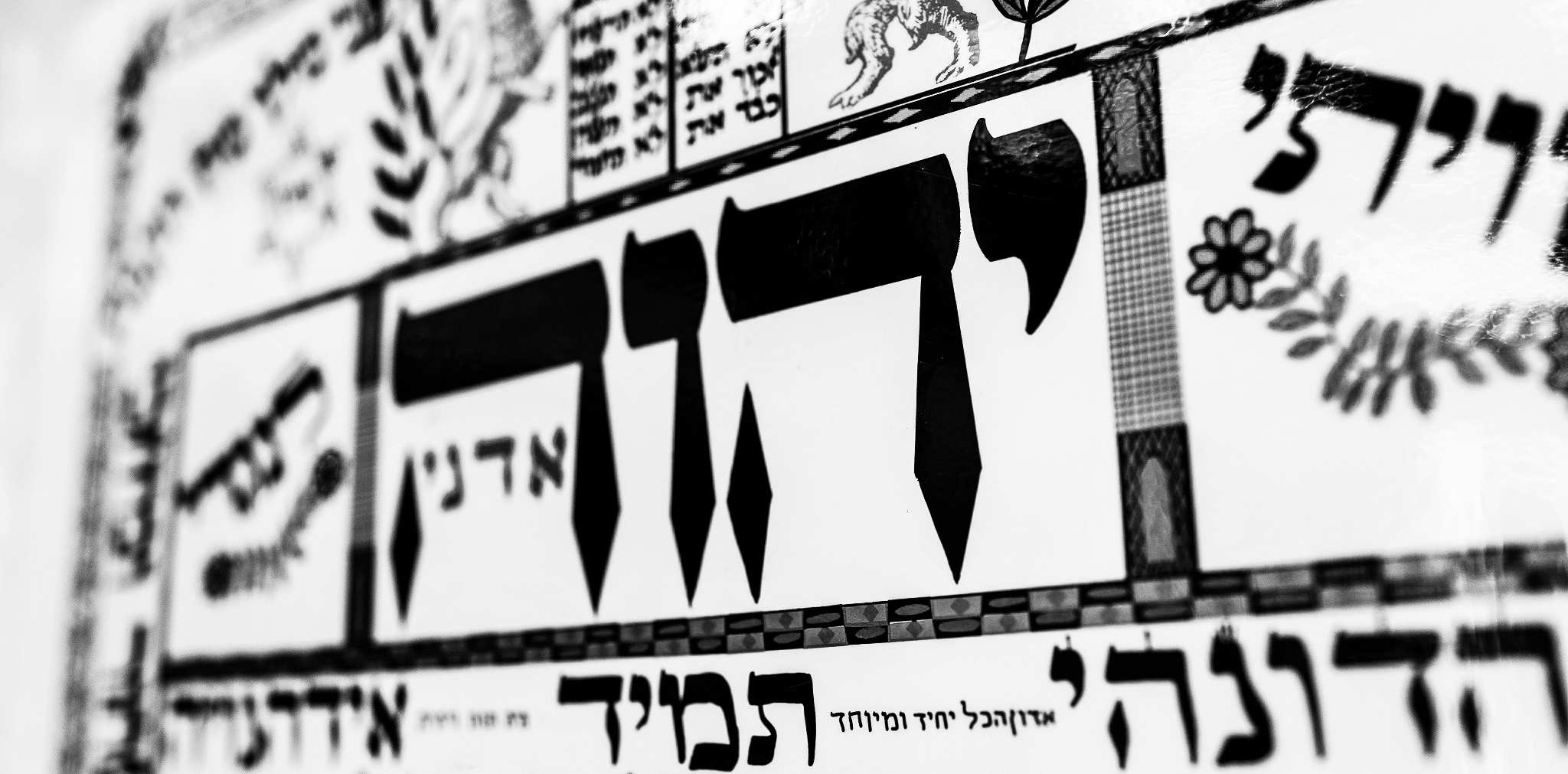
The Name of the LORD (יהוה) means “Presence” and “Love” (Exod. 3:14; 34:6-7). Yeshua said, “I go to prepare a place for you,” which means that his presence and love are waiting for you in whatever lies ahead (John 14:1-3; Rom. 8:35-39). To worry is to “practice the absence” of God instead of to practice His Presence… Trust the word of the Holy Spirit: “For I know the plans I have for you, declares the LORD, plans for healing peace and not for evil, to give you a future and a hope (Jer. 29:11).
Take comfort that your Heavenly Father sees when the sparrow falls; he arrays the flower in its hidden valley; and he calls each star by name. More importantly, the Lord sees you and understands your struggle with fear… Come to him with your needy heart and trust him to deliver you from the burdens of your soul (Matt. 11:28). Amen.
“Our Lord Jesus oftentimes said, ‘This I am. This I am. I am what you love. I am what you enjoy. I am what you serve. I am what you long for. I am what you desire. I am what you intend. I am all that is'” (Julian of Norwich). Amen to such beautiful words. And we should attend to stirring of our hearts, our deepest desires, since they ultimately find their end in God. As C.S. Lewis noted, our longing for a love which no experience in this world can fully satisfy is a sign that were made for God’s eternal love.
You seek beauty, peace, love, and life, but the Lord says that he is the substance and heart of all these things… The lilies of the field do not toil but are arrayed in God’s pleasure and design; the birds do not store up their food in barns but are sustained to take wing in the winds of God’s hovering presence. Every hair on your head is numbered; there is not a word on your tongue unheard by your Heavenly Father.
Imagine, if you will, Yeshua saying the following words, all of which are attested in the holy Scriptures: “I am the bread of life. I am the substance of what satisfies your hunger. I am essential for life. I am the manna that comes down from heaven to feed you and make you forever alive. I give you sustenance and strength; I will give you living water that will be like an oasis for your heart – the Spirit of Life that will comfort you. Blessed are those who hunger and thirst for righteousness, for they shall be satisfied. I alone can satisfy your deepest needs and longings. I am Life itself, the source and blessing of all that is good and worthy and true.
I am the light of the world. I give to you the light of life. My presence will guide your way. I will turn your darkness into light. In me is the fountain of life; in my light you shall receive light… I will give you a heart to know me. I am the Word of God: the Voice and revelation of the LORD, the Source of all truth. I am the LORD who brings you out of the darkness of your bondage; I am the one who redeems you, the one who atones for you, the one who suffers and dies for you to remove what separates you from God’s Presence. I am the Father who receives you with open arms; I sacrifice the fattened calf to celebrate the blessing of your life… I am the LORD your healer; I sanctify you in my love.
I am the gateway to life. I am the door that opens to the Kingdom of Heaven. I am the way to know the Father’s heart; I express the truth of God in who I am; I am the resurrection of God: No one can enter the kingdom apart from me. I am the LORD and there is no Savior apart from me. Do not be afraid: I will hold your right hand; it is I who say to you, “Fear not, I am the one who helps you.” I am the Good Shepherd who faithfully guards each one of his flock.
I am your way to connect with God. I am the true Vine. Live in me and I will live in you. I will never leave nor forsake you. Draw near to me: lean upon my bosom. I will teach you what love means. Find comfort in my love for you. Then you will be able to love others and glorify the truth of my heart’s passion for all people.”
Yeshua is the way, the truth, and the love for which our heart cries out. In Him we “live and move and have our being.” He is the Alef and Tav, the First and the Last, the Beginning and the End, and the Sacred Center of all that exists. His heart is our “all in all,” the fullness of all that will ever mean anything at any time. “I am my beloved’s and my beloved is mine; he grazes among the lilies.” May you open your heart and draw near to him today. Amen.
When Yeshua said that the truth would “set us free” (ἐλευθερώσει), he was referring to the acceptance of the Witness of Divine Reality (i.e., the Word, Breath, Spirit, Voice, Message, Meaning, and Love of God) that delivers us from the lies we habitually tell ourselves (or that we receive from others). If you “persevere in my word” (μείνητε ἐν τῷ λόγῳ τῷ ἐμῷ) he said, “then you are my disciples indeed, and you will know the truth, and the truth will set you free” (ἡ ἀλήθεια ἐλευθερώσει ὑμᾶς, John 8:31-32). In other words, as we identify with his vision and redemptive mission, we will “be free indeed” from the tohu va’vohu (Gen. 1:2) – the “chaos and unreality” – that inescapably besets the way of the lie… We will be delivered from vanity and delusions of this world and its diseased affections; we will be set free from the need to justify ourselves by religion (perfectionism); we will no longer crave other people’s approval; we will not be moved by the mass media and its pressures; we will find courage to face our challenges without resorting to escapism; and we will learn how to experience peace even when we encounter frustrations.
Despite our daily struggles and tests, we set free from bondage to anger and resentment as we yield our will in trust that God is working all things together for our ultimate good (Rom. 8:28). Genuine freedom is not an “accidental property” of the heart, depending on “luck” or “fortune,” but instead is a decision to believe in the Reality of the salvation of God given in Yeshua our LORD — even if at present we may experience “weltschmerz,” or the sorrow of despair….
Note: Tellingly, Merriam Webster has selected “gaslighting” as the Word of the Year, perhaps because of the constant blame-shifting, disinformation, and psychological terrorism propagated by the world’s governments since the advent of Covid.. Deception designed to manipulate others is gaslighting. We ask the LORD for the truth that sets us free, even from the calculated deceptions engineered by the workers of lawlessness and evil in this world. Amen. “Greater is He that is in you than the one that is in the world” (1 John 4:4).
The Torah teaches that a personal, all-powerful, and all-loving God exists and solely created the universe “yesh me’ayin” (יֵשׁ מְאַיִן), or out of nothing. As his crowning creative achievement, God created free moral agents – both angels and man – who could choose to do what is good or what is evil. For reasons that are not entirely clear, however, some of the angels chose to rebel against God (chief among them Lucifer, later renamed Satan), and these angels, in turn, conspired to seduce human beings to do likewise. When Adam and Eve disobeyed God’s moral law, they effectively joined the angelic rebellion. The consequence of this was catastrophic, and the mankind “fell” away from God as their King into a state of alienation and exile called “spiritual death.”
Since God had created man to exercise lawful dominion over the earth (שׁגח), however, as the steward and “federal head” of creation, the effect of his apostasy affected not only his life, but also that of the entire created order itself, as Satan then usurped the authority given to man and began his reign of terror upon the earth. With the spiritual and moral order usurped, mankind was under the hegemony of Satan, and anarchy resulted. The natural order likewise broke down and dissipated. The original transgression of man therefore affected not only his relationship with God but also that of the entire created order itself. Natural evils and chaos erupted as the earth became a rebel outpost from the original Kingdom of God. Satan enthroned himself as the “god of this world” (ὁ θεὸς τοῦ αἰῶνος τούτου) and humanity has subsequently suffered under his tyranny of deception and malice ever since.
Now this general account of the origin of evil may be considered philosophically, and indeed it is often discussed in such terms, since the main objection to the idea that an all-powerful and all-loving Creator exists is the concurrent existence of evil, and in particular, pain and suffering that seems to be omnipresent in the world. How could such a God allow evil in his creation? And doesn’t the prevalence of such evil impugn faith in God?
The contrary challenge being made here is that the following four propositions: 1) God exists; 2) God is all-powerful, 3) God is all-loving, and 4) evil exists are together logically incompatible and therefore one (or more) of them must be false. So the first order of business regarding this critical challenge is to consider each proposition (and its negation) to determine its credibility (or lack thereof), and then, after better understanding the meaning of the propositions, to decide if they are really inconsistent or not.
As for the first proposition, namely, that God “exists,” we need to consider various rational arguments for the existence of God, for instance, the cosmological argument (argument from cause), the teleological argument (argument from design), the ontological argument (the a priori argument), the argument from intuitions of beauty, morality, and logic, the argument from mystical experiences, arguments from fulfilled prophecies, evidences for the historical reliability of the Scriptures, and so on. Working through these arguments is beyond the scope of this short article, since my goal here is to briefly explore how “evil” and the existence of God are not only compatible, but are in indeed complementary to sound theology.
 (Originally published Dec. 20, 2020)

 The message of
 Yeshua forewarned that just before the End of Days, “many shall be offended, and shall betray one another, and shall hate one another” (Matt. 24:10). What dreadful people, you might imagine… what terrible depravity will mark that time! And yet here we are today, with so many crusading for their own personal sense of victimhood, demanding special treatment, and threatening retaliation for being treated unfairly… It must be remembered, however, that whenever we find offence in others, we are reflecting the evil within ourselves (Matt. 7:1-5). What is this evil within you ask? How about being intolerant toward those who differ from us? How about be impatient – refusing to allow others to share their perspectives? Indeed, how many of us make the demand that others be “perfect” but turn a blind eye to our own imperfections? And what about the sin of unforgiveness? What about our attitude of suspicion — using the “evil eye” regarding others’ motives – looking for something impure – rather than extending to them the benefit of the doubt? Do you carry resentment with your heart? Do you hold on to a grudge over a real (or imagined) insult from the past? Do you harbor the desire to seek revenge? All of these evil attitudes are symptomatic of hardhearted unforgiveness, and failing to remember that all that is good in your life you owe exclusively to the mercy of God alone… When you feel offended, look within and carefully consider the assumptions at work in your thinking. Ask whether your indignation is based on the truth of God or something else. Are you demanding: “My will be done, in heaven as it is on earth?” Are you seeking your own vision, or surrendering to the truth of Reality?
 You’ve likely have heard the saying, “hate the sin, love the sinner,” and while it is true that we should hate sin (most of all, our own sin), it is contrary to the gospel to hate the sinner. After all, Christ died for the ungodly; he came to seek and to save those who are lost (Luke 19:10). “God demonstrates his love for us, in that while we were yet sinners, Yeshua died for us – the just for the unjust – that we may reconciled with him (Rom. 5:8; 1 Pet. 3:8; 2 Cor. 5:21). Indeed Yeshua was maligned by the self-righteous of his day by being called “a friend of tax collectors and sinners” (Luke 7:34, 15:2). So it is a spiritual misstep to hate the sinner because we hate their sin.
 From our Torah portion this week (i.e.,
 Before he could return from his exile, Jacob had to face his fears and wrestle with God. The outcome of the struggle was a blessing, as signified by a new name, “Israel” (יִשְׂרָאֵל), meaning one who who perseveres (שָׂרָה) with God (אֵל). Jacob finally prevailed with God when the power of his faith overcame the pain of his past… Jacob’s story teaches that before we can return from our place of exile, we have to face our fears and wrestle over who we really are.
 The Spirit of the LORD speaks to the heart of faith: “Fear not, for I have redeemed you; I have called you by name, and you are mine” (Isa. 43:1). God has personally redeemed you, friend; he calls you by name, and you belong to Him. Faith finds its place in God’s heart. The Lord loves you with an everlasting love (אהבת עולם) and draws you close (Jer. 31:3). He will never leave nor forsake you, even if you might face waters that seem to overwhelm or fires that seem to devour (Isa. 43:2). The will of your Heavenly Father will never lead you to a place where his love will not there sustain you.
 “Our Lord Jesus oftentimes said, ‘This I am. This I am. I am what you love. I am what you enjoy. I am what you serve. I am what you long for. I am what you desire. I am what you intend. I am all that is'” (Julian of Norwich). Amen to such beautiful words. And we should attend to stirring of our hearts, our deepest desires, since they ultimately find their end in God. As C.S. Lewis noted, our longing for a love which no experience in this world can fully satisfy is a sign that were made for God’s eternal love.
 When Yeshua said that the truth would “set us free” (ἐλευθερώσει), he was referring to the acceptance of the Witness of Divine Reality (i.e., the Word, Breath, Spirit, Voice, Message, Meaning, and Love of God) that delivers us from the lies we habitually tell ourselves (or that we receive from others). If you “persevere in my word” (μείνητε ἐν τῷ λόγῳ τῷ ἐμῷ) he said, “then you are my disciples indeed, and you will know the truth, and the truth will set you free” (ἡ ἀλήθεια ἐλευθερώσει ὑμᾶς, John 8:31-32). In other words, as we identify with his vision and redemptive mission, we will “be free indeed” from the tohu va’vohu (Gen. 1:2) – the “chaos and unreality” – that inescapably besets the way of the lie… We will be delivered from vanity and delusions of this world and its diseased affections; we will be set free from the need to justify ourselves by religion (perfectionism); we will no longer crave other people’s approval; we will not be moved by the mass media and its pressures; we will find courage to face our challenges without resorting to escapism; and we will learn how to experience peace even when we encounter frustrations.
 The Torah teaches that a personal, all-powerful, and all-loving God exists and solely created the universe “yesh me’ayin” (יֵשׁ מְאַיִן), or out of nothing. As his crowning creative achievement, God created free moral agents – both angels and man – who could choose to do what is good or what is evil. For reasons that are not entirely clear, however, some of the angels chose to rebel against God (chief among them Lucifer, later renamed Satan), and these angels, in turn, conspired to seduce human beings to do likewise. When Adam and Eve disobeyed God’s moral law, they effectively joined the angelic rebellion. The consequence of this was catastrophic, and the mankind “fell” away from God as their King into a state of alienation and exile called “spiritual death.”