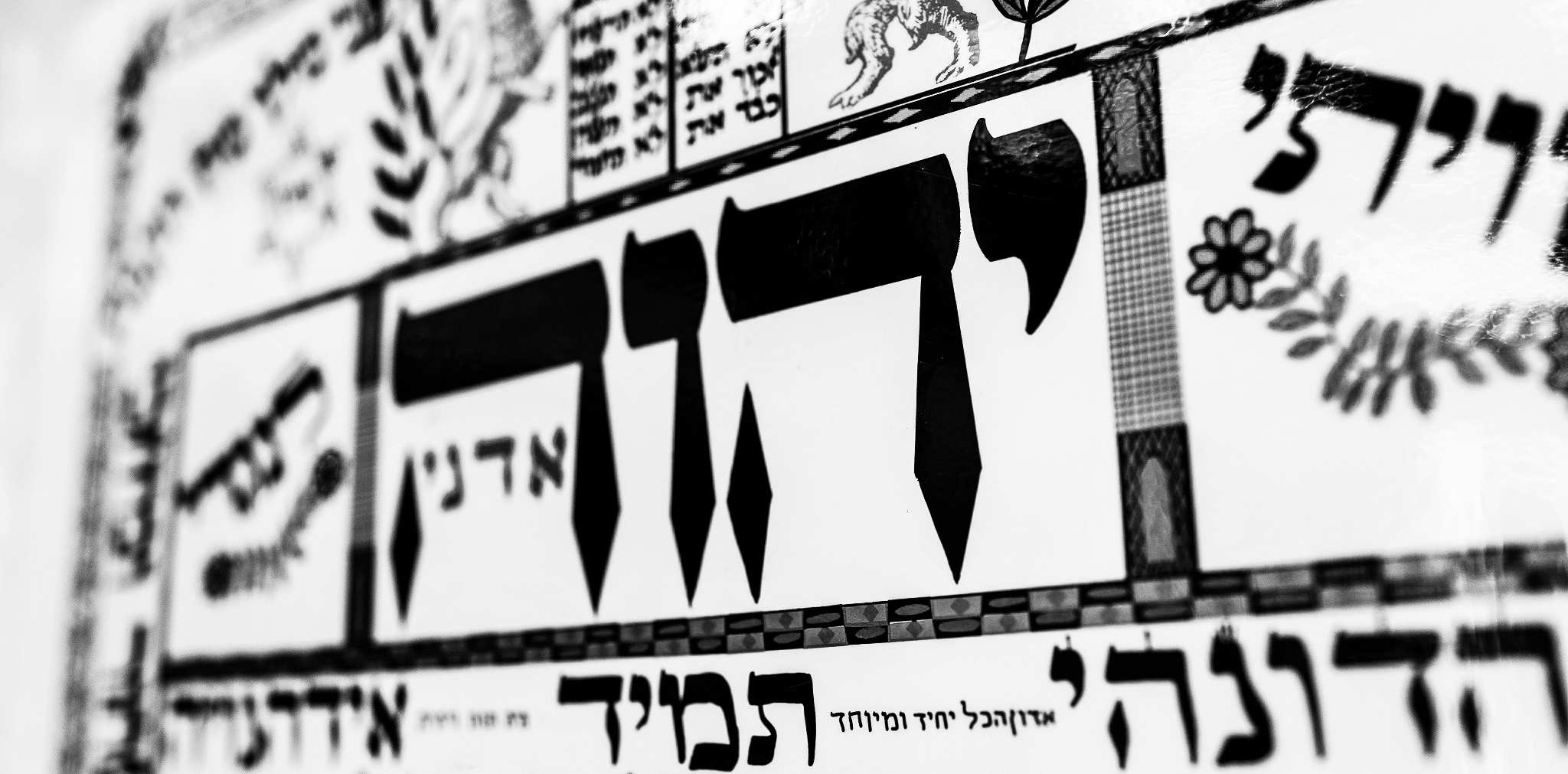
 In our Torah portion (i.e., Vayetzei) we read: “Then Jacob awoke from his sleep and said, akhen yesh Adonai ba’makom ha’zeh, ve’anokhi lo yadati: ‘Surely the LORD is in this place, but I did not know it'” (Gen. 28:16). Jacob had been asleep but was jarred awake. He found himself in awe, sensing the presence of the gateway to heaven. The sages note the grammar here is emphatic, suggesting that Jacob said: “Surely the LORD is in this place — but am I (וְאָנכִי)? I do not know! (לא יָדָעְתִּי). Jacob had awakened from his dream to realize that he had been dreaming his life away, living in a fantasy world. God is present in this place – but am I? Have I awakened to be present before God?
Category: Hebrew Reading Lesson
Reading Hebrew exercises and practice verses
Jacob’s Great Dream…
In our Torah portion this week (parashat Vayetzei), we read that when Jacob fled from his home in Canaan, he “came upon a certain place and stayed there that night” (Gen. 28:11). The Hebrew text, however, indicates that Jacob did not just happen upon a random place, but rather that “he came to the place” — vayifga ba’makom (וַיִּפְגַּע בַּמָּקוֹם). The sages therefore wondered why the Torah states ba’makom, “the place,” rather than b’makom, “a place”? Moreover, the verb translated “he came” is yifga (from paga’: פָּגַע), which means to encounter or to meet, suggesting that Jacob’s stop was a divine appointment.

Seeing what we want to see…

We often see what we want to see… From our Torah portion this week (i.e., parashat Toldot) we read: “And Jacob was simmering stew when Esau came in from the field, famished” (Gen. 25:29). The Midrash Rabbah comments that Esau saw the stew and asked why it was being cooked. He was told that it was a traditional mourner’s meal because his grandfather Abraham had just died. Upon hearing this, Esau quickly became offended that one so righteous as Abraham had died and exclaimed: “If that’s the case, there is no reward for one’s good deeds, and no repair from death…” In this way Esau’s offence over sorrow and suffering moved him to reject reality as being inherently unjust, and by this logic he justified his godless lifestyle… Because bitterness took root within his heart, Esau despised his birthright and spurned the very significance of his life (Heb. 12:15-16).
Draw near in your need…
 “Draw near to God, and he will draw near to you” (James 4:8). There are no conditions given here — other than your raw need to connect with God for help. “Purify your hearts, you double-minded ones” (δίψυχοι, lit. “two-souled ones”); make up your mind and be unified within your heart: “How long will you go limping between two different opinions?” (1 Kings 18:21). You are invited to come; God has made the way; your place at the table has been set and prepared. “Let us draw near with a sincere heart in full assurance of faith (ἐν πληροφορίᾳ πίστεως), with our hearts sprinkled clean from an evil conscience and our bodies washed with pure water. Let us hold fast the confession of our hope without wavering, for he who promised is faithful” (Heb. 10-22-23).

…
…
The Prerogatives of God…

The Haftarah for parashat Toldot begins: “I have loved you,” says the LORD. But you say, “How have you loved us?” “Is not Esau Jacob’s brother?” declares the LORD. “Yet I have loved Jacob but Esau I have hated. I have laid waste his hill country and left his heritage to jackals of the desert” (Mal. 1:1-3; cp. Rom. 9:9-13). Some people may find God’s sovereign choice objectionable, though we know there is no unrighteousness in God’s decrees and ways (Deut. 32:4; Psalm 18:30; James 1:17, etc.). Therefore Yeshua told his followers, “You did not choose me, but I chose you and appointed you to go forth and bear fruit…” (John 15:16). Religious pride recoils at these words, thinking, “I don’t want to be chosen by God; I want to be in control; I want to choose God first.” The ego seeks some reason for revelation, some merit that commends the self to God. It’s hidden assumption is, “thank you, God, that I am not like other men” (Luke 18:11). The choice of God is scandalous because it is based on God’s love, not our own (1 John 4:19). We were spiritually reborn, not as the result of anything in the realm of nature, nor even through our personal decision, but solely on account of God’s sovereign prerogative (John 1:13). This is the message of the choice of Jacob over Esau in our Torah portion this week. Regarding this the New Testament comments: “Though they (i.e., Jacob and Esau) were not yet born and had done nothing either good or bad — in order that God’s purpose of election might stand (ἵνα ἡ κατ᾽ ἐκλογὴν πρόθεσις τοῦ θεοῦ μένῃ), not because of works but because of the One who calls, Rebekah was told, “the older will serve the younger” (Rom. 9:11-12). The carnal ego is quick to look for reasons that God chooses people, looking for merit or considering their worldly potential, though it is idolatrous to elevate the self this way. “Not by might nor by power, but by my spirit, says the LORD of Hosts” (Zech. 4:6). We don’t seek to please God so that we can be chosen; we are chosen so that we can seek to please him… God’s grace and love for us is always the starting point: “Lord, teach us to pray,” that is, choose words for us, the groaning of your Spirit, in accordance with your perfect will…
Over the years I have repeatedly affirmed the “salvation is of the LORD” (לַיהוָה הַיְשׁוּעָה), and therefore we are not saved “by works of righteousness (מַעֲשֵׂי הַצְּדָקָה) that we have done, but solely on account of the mercy given to us in God our Savior (אֱלהִים מוֹשִׁיעֵנוּ; Titus 3:4-5). Grace excludes all boasting (Eph. 2:9; Rom. 4:4). We believe that God justifies the ungodly (helpless) by trusting in his heart of compassion (Rom. 4:1-8). God loves us with “an everlasting love” (i.e., ahavat olam: אַהֲבַת עוֹלָם) and draws us in chesed (חֶסֶד, i.e., His faithful love and kindness). As it is written: “I love you with an everlasting love; therefore in chesed I draw you to me” (Jer. 31:3). Note that the word translated “I draw you” comes from the Hebrew word mashakh (מָשַׁךְ), meaning to “seize” or “drag away” (the ancient Greek translation used the verb helko (ἕλκω) to express the same idea). As Yeshua said, “No one is able to come to me unless he is “dragged away” (ἑλκύσῃ) by the Father (John 6:44). God’s chesed seizes us, scandalizes us, takes us captive, and leads us to the Savior… Spiritual rebirth is a divine act, “not of blood nor of the will of the flesh nor of the will of man, but of God” (John 1:13). In everything – including human reason itself – the LORD God Almighty is preeminent. Dear friend, if God has chosen you to be in covenant with him, then you are indeed one of the “chosen people.”

Therefore we can affirm the great benediction given in our Scriptures: “Blessed be the God and Father of our Adonai, Yeshua the Messiah, who has blessed us in Messiah with every spiritual blessing in the heavenly places, even as he chose us in him before the foundation of the world (καθὼς ἐξελέξατο ἡμᾶς ἐν αὐτῷ πρὸ καταβολῆς κόσμου), that we should be holy and blameless before him. In love he predestined us (προορίσας ἡμᾶς) for adoption as sons through Yeshua the Messiah, according to the purpose of his will, to the praise of his glorious grace, with which he has blessed us in the Beloved; in whom we have redemption through his blood, the forgiveness of our trespasses, according to the riches of his grace, which he lavished upon us, in all wisdom and insight…” (Eph. 1:3-8).
It is the fruit of his Spirit, not the fruit of our own that matters (Gal. 5:22-23). As Yeshua said, “it is the Spirit who gives life; the flesh is no help at all” (John 6:63). We are God’s workmanship, created in the Messiah for good works, which God prepared beforehand that we should walk in them” (Eph. 2:10). We are able to live for God through the agency of His love and sustaining grace, all for the sake of the glory of His Name. “For from Him and through Him and to Him are all things. To Him be glory forever. Amen” (Rom. 11:36).

Two Blessings for Jacob…
 When we think of Jacob as a young man, we tend to recall the dramatic episode when he surreptitiously disguised himself as Esau to “steal” the blessing from his father Isaac. As we study our Torah reading, however, we learn that Jacob actually received two blessings from his father. The first blessing — given to a disguised Jacob — focused on material blessings: the “dew of heaven,” the “fatness of the earth,” “plenty of grain and wine,” political power and hegemony (Gen. 27:28-29), whereas the second blessing — given to an undisguised Jacob — focused on his role as God’s chosen patriarch of Israel (Gen. 28:3-4). The difference between these blessings turned on Isaac’s restored vision. His first blessing was tailored to the character of Esau as his “natural choice,” whereas his second blessing looked beyond mere appearances to behold the vision that was originally given to his father Abraham:
“May God Almighty bless you, and make you fruitful,
and multiply you so you become an assembly of peoples.
And may He grant the blessing of Abraham
to you and your offspring.”
(Gen. 28:3-4)
Bartering with Vanity…
 From our Torah portion (i.e., parashat Toldot) we read: “And Esau said to Jacob, ‘Let me eat some of that red stew, for I am exhausted!’ Therefore his name was called Edom (אֱדוֹם).” The Hebrew text more forcefully reports Esau’s words: ‘Let me gulp down (הַלְעִיטֵנִי) some of that “red-red stuff” (הָאָדם הָאָדם), picturing how eagerly he bartered away the blessing of heaven for a momentary and fleeting pleasure… The Maharal of Prague said that when Esau called the stew that “red-red stuff,” he was acting like an unthinking brute that relates to things without restraint, in the immediacy of the moment, and without regard to their “form,” that is, their higher purposes or end…

…
…
“See to it that no one fails to obtain the grace of God; that no “root of bitterness” springs up and causes trouble, and by it many become defiled; and that no one is sexually immoral or profane (i.e., βέβηλος, worldly, ungodly) like Esau, who sold his birthright for a single meal” (Heb. 12:15-16). Surely this is the deeper meaning of “profanity” – to deny reality, to live in willful ignorance, and to miss the glory of God’s presence.
Honesty and Deliverance…
 “Those who are well have no need of a physician, but those who are sick. I have not come to call the righteous but sinners to repentance” (Luke 5:31-32). Every one of us has a “dark side” or a “shadow self” that has destructive and selfish urges. We try to conceal this truth from others (and even ourselves) but such denial doesn’t change the reality within our hearts (Matt. 5:19; Jer. 17:9; Eccl. 9:3). Indeed, when we pretend to be something we are not we are more likely to be overwhelmed by dark forces hidden within us. Paradoxically we most vulnerable when we think we are well, that is, when we deny our sickness our heart and minimize our need for deliverance.
The way of healing is to “own” or confess the truth of our inner condition and to acknowledge the dark passions that sometimes overmaster our best intentions. We must give ourselves permission to allow the hurt, angry, and fearful voices to be heard and sanctioned within us – and then to bring these dark and hidden aspects of our selves before God for healing. The failure to do so will split the soul and cause the hidden aspects of the self to seek “revenge” upon the “parent self” that censors their message. The struggle within our hearts is real and we should attend to it seriously. Denying evil by pretending that we are okay, or by blaming others, blinds us to the truth of our ongoing need for deliverance. May God help each of us to be honest with ourselves and to confess our great need before our Heavenly Father.
Blessing of Confession…
 “If we confess our sins, he is faithful and just to forgive us our sins and to cleanse us from all unrighteousness” (1 John 1:9). Not just this or that particular sin, mind you, but the whole constellation of attitudes, assumptions, and wayward thinking that brought us into exile in the first place. The word confession (ὁμολογία) means bringing yourself naked before the Divine Light to agree with the truth about who you are. Indeed, the verb homologeo (ὁμολογέω) means “saying the same thing” – from ὁμός (same) and λόγος (word). In biblical Hebrew teshuvah (תְשׁוּבָה) means turning back to God by turning away from what makes you lost in unreality and painful exile. God’s love for us is the question, and our teshuvah – our turning of the heart toward Him – is the answer. Teshuvah is one of the great gifts God gives each of us – the ability to turn back to Him and seek healing for our brokenness.

…
…
Blessed Hunger and Thirst…
 Our Lord said: “Blessed are those who hunger and thirst for righteousness…” (Matt. 5:6). Yes, blessed are those who suffer such desperate need, who know inner emptiness, who are not made numb to the ache, and who cry from the heart for deliverance. Blessed are those who are in dread over themselves, who fall as one dead before the Divine Presence, who know they are undone, ruined, and dying for life… The great danger, spiritually speaking, is to become complacent, untouched by poverty of heart, to be lulled asleep, lost within a dream, made comatose, living-yet-dead. The gift of faith first reveals our own lostness and then imparts courage to live with ourselves despite ourselves as we seek God’s healing and life… Let us press on, dear friends.

…
…