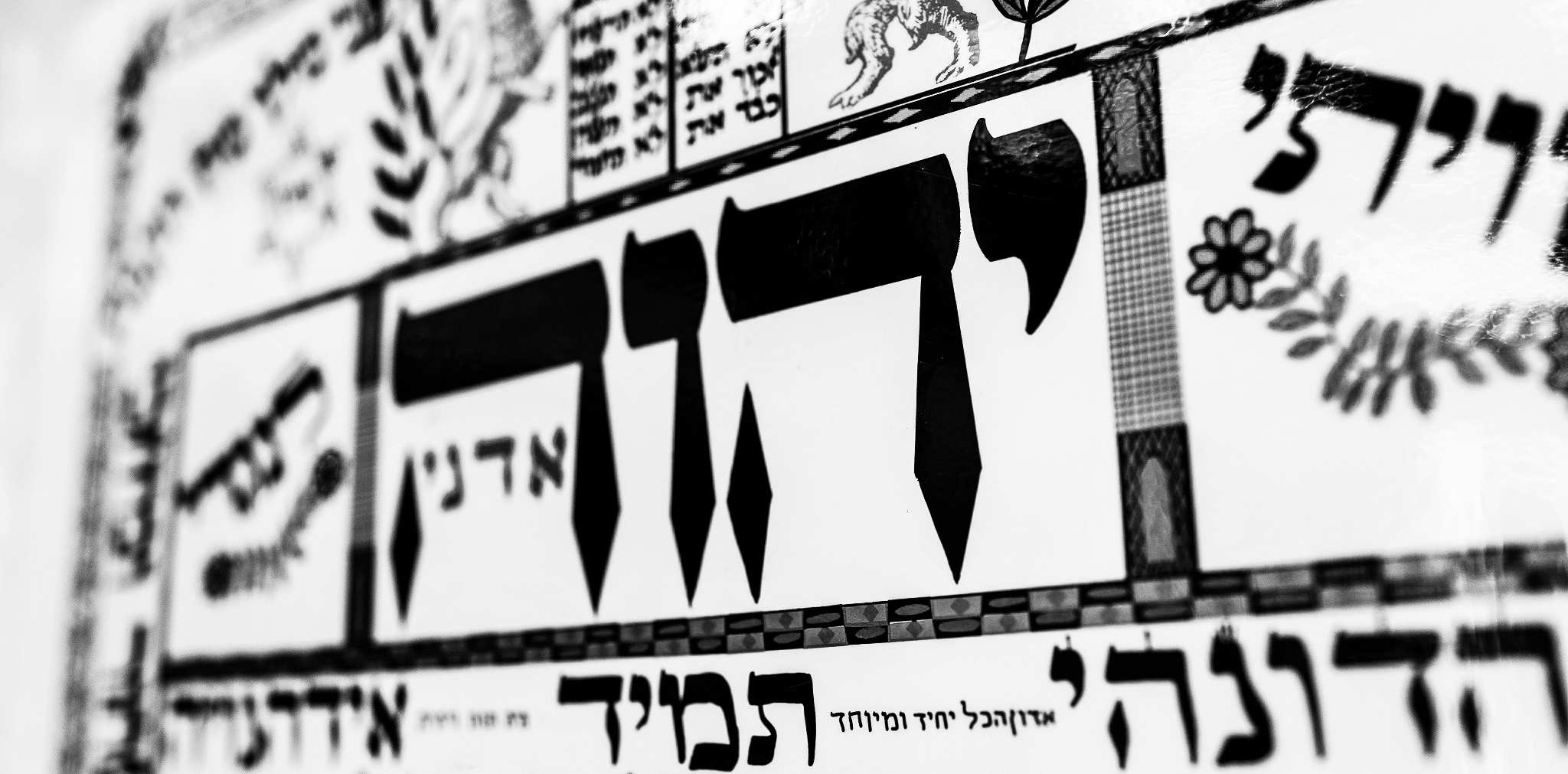
 A delusion is essentially a belief that does not correspond to reality which is held without rational warrant and is therefore immune from any possibility of falsification. Webster’s Dictionary defines it as, “a persistent false psychotic belief regarding the self or persons or objects outside the self that is maintained despite indisputable evidence to the contrary.” An example of a delusion is the theory of macro evolution, or the idea that the universe is an eternally self-existent, closed system of cause and effect. Another example would be the belief that value, meaning, purpose, logical inference, morality, beauty, truth, love, and so on, can exist in a universe apart from God.
On the other hand, there is rational, intuitive, and empirical evidence to believe that the universe was created in time by a transcendental power that is the source of all value, meaning, purpose, and so on. Martin Heidegger asked, “Why is there something rather than nothing,” which is not a question about a possible cause for an observed effect, but is a question about the underlying cause of any possible existence at all. The Scriptures reply: “For God’s invisible attributes, namely, his eternal power and divine nature from the creation of the world, have been clearly perceived, because they are understood through what has been made, so people are without excuse” (Rom 1:20).
Hebrew Lesson:

Since sound logic is “truth preserving,” if you begin with false premises, the conclusion will therefore be false as well. Thus those who begin their reasoning from humanistic assumptions are in error, even if they should stumble upon the truth. If the LORD alone is the One true God, then that changes absolutely everything, and nothing is unaffected by this all-pervasive truth. As Abraham Heschel once said, “God is of no importance unless He is of supreme importance,” and this is eminently true because “in Him we live, and move, and have our being” (Acts 17:28). Since reality turns on God, reasoning from another set of assumptions is really a form of delusional thinking that ultimately leads to insanity, that is, unsoundness of mind derived from folly or unreasonableness. The fool has said “in his heart” there is no God (Psalm 14:1). “The wicked boasts of the desires of his soul, and the one greedy for gain curses and renounces the LORD. In the pride of his face the wicked does not seek Him; all his thoughts are, ‘There is no God'” (Psalm 10:3-4). The suppression of the truth necessarily implies an exchange for the lie, and with the lie comes deranged reasoning, slavery, darkness, and fear….
 It is written in our Scriptures, θεὸς ἀγάπη ἐστίν, “God is love,” which means that God’s compassion and kindness are bound to his very essence and nature, and therefore our task is not to seek God’s love but to remove all the barriers within us that we have built against receiving it… Discovering what hinders our reception of love does not come from human analysis, however, as if we could take ourselves apart to find some reason for our fear. No, the best way to overcome barriers of the heart is to be still, seek silence, and pray – for this enables us to get in touch with the “sacred center,” that is, the realm of holiness where God dwells. “Shema Yisrael…” When we empty ourselves, turning to God for love, we will hear the Spirit whispering back to us: “Be not afraid…” “Live in me…” “Walk in the light…” “I am with you always…” “You are loved…”
 We must be careful not to worship an idol, that is, a false concept of God! It is possible to study the Bible, to attend a church or synagogue, and yet worship a pagan god. How so? By not knowing the heart of the Father; by not honoring the One who passionately seeks our healing. We know the Father by the Son, that is, in “the language of Son” (ἐν υἱῷ) and in the truth of his passion (Heb. 1:2; Luke 10:21-24). Our heavenly Father is eager to forgive and embrace all of his children (John 3:16-17). In Yeshua’s famous parable of the “prodigal son,” the father saw his wayward child a “long way off” and ran to embrace and kiss him – no questions asked, no explanations needed about his past. When the son nevertheless began reciting his carefully prepared speech of regret and repentance, the father barely listened, and in his overwhelming joy instructed his servants, ‘Bring quickly the best robe, and put it on him, and put a ring on his hand, and shoes on his feet. And bring the fattened calf and kill it, and let us eat and celebrate. For this my son was dead, and is alive again; he was lost, and is found’ (see Luke 15:20-25).
 “This is the thing that the LORD commanded you to do, so that the glory of the LORD may appear to you: Draw near to the altar and offer your sin offering and your burnt offering and make atonement for yourself” (Lev. 9:6-7). Have you considered why you were born into this world? What is your purpose, destiny, and end? The Torah states that you were personally created by Almighty God, who breathed out the breath of life (נִשְׁמַת חַיִּים) into you, and then redeemed your life so you could know the glory of God and spiritual reality. As it is written: “Worthy are you, our Lord and God, to receive glory and honor and power, for you created all things, and by your desire they existed and were created” (Rev. 4:11). God creates all things for his glory and purposes, which indeed is the first blessing recited over the bride and groom in a traditional Jewish wedding: בָּרוּךְ אַתָּה יְהוָה אֱלהֵינוּ מֶלֶךְ הָעוֹלם שֶׁהַכּל בָּרָא לִכְבוֹדו / “Blessed are you Lord our God king of the universe, who has created all things for his glory.” The purpose of life is to know and love God, to walk in His light and truth, and to glorify his compassion and grace forever…
 Although
  The Book of Leviticus (ספר ויקרא) is the third of the Torah, representing another stage in our spiritual journey. Genesis reveals both our divine origin but also our tragic fallenness, and the book ends with our need for deliverance from bondage to Egypt. Exodus reveals that we are liberated from slavery by trusting in the provision of God demonstrated by the sacrifice of the Passover lamb, and the book ends with the climax of the revelation of Torah given at Sinai, namely, the building of the Mishkan (Tabernacle) where the the need for blood atonement was enshrined. Indeed blood atonement is the central theme of the central book of Torah, i.e., Leviticus, where we are called to draw near to God through sacrificial rites, the foremost of which was the ongoing offering (i.e., korban tamid: קרבן תמיד) of a defect-free male lamb, together with unleavened bread and wine. The LORD called this “My offering, My bread” (Num. 28:1-8). In other words, the center of the Torah is the altar that constantly prefigured the Lamb of God who would be offered up to secure our eternal redemption (John 1:29; Heb. 9:11-12).
 The Spirit cries out, “The grass withers, the flower fades, but the word of our God will stand forever” (Isa. 40:8). This verse sets up a great contrast between olam ha-zeh and olam haba – between this present world and the heavenly realm. King David states, “Behold, you have made my days a few handbreadths, and my lifetime is as nothing before you (וְחֶלְדִּי כְאַיִן נֶגְדֶּךָ). Surely all mankind stands as a mere vanity” (Psalm 39:5). Yet we hunger and ache for love that fulfills the infinite depth of our hearts: “My soul yearns for you in the night; my spirit within me earnestly seeks you (Isa. 26:9). I say to the LORD, “You are my Lord; I have no good apart from you” (Psalm 16:2). Our hearts are restless until they find their rest in God, the Eternal, the abiding, and true…
 Our Master said: “For the bread of God (לֶחֶם אֱלהִים) is the One who comes down from heaven to give life to the world” (John 6:33). This is the Bread of Presence, literally, the “Bread of [his] Face” (לֶחֶם פָּנִים) that was prefigured in the manna that fell in the desert and in the rituals of the Tabernacle (Exod. 25:30). It was in the Holy Place, in the light of the Menorah, that the “bread of his face” was to be eaten… At his last Passover Seder with his students, Yeshua said “this is my body” (τοῦτό ἐστιν τὸ σῶμά μου), and made analogy between physical and the spiritual. We metaphorically “eat his flesh and drink his blood,” by seeing Him as our altar, our bridge before the Father. Just as the heart is the means by which blood is distributed to the body, so with the love of God expressed in our Lord Yeshua. He is the Divine Center of all of life: the true Tabernacle, the Word made flesh. He is the true Bread of Life (לחֶם הַחַיִּים), and we receive spiritual strength when we abide in his Torah (תּוֹרָה) and his life (John 15:5).
 I had mentioned
 The goal of the great Sinai revelation was not to simply impart a set of moral or social laws, but rather to “accommodate” the Divine Presence in the midst of the people. This is not to suggest that the various laws and decrees given to Israel were unimportant, of course, since they reflect the holy character and moral will of God. Nonetheless, the climax of the revelation of the Torah – its goal or purpose or “end” – was the revelation of the altar which prefigured the sacrificial work of the Lamb of God. Indeed, the central sacrifice upon this altar was the daily sacrifice (i.e., korban tamid: קָרְבַּן תָּמִיד) of a defect-free male lamb with unleavened bread and wine. The LORD calls this “My offering, My bread…” (see Num. 28:1-8). In other words, the service and ministry of the Mishkan (i.e., Tabernacle) constantly foreshadowed the coming Lamb of God who would be offered upon the altar “made without hands” to secure our eternal redemption (Heb. 9:11-12). The sacrifice of the lamb is therefore central to the meaning and purpose of the Torah.