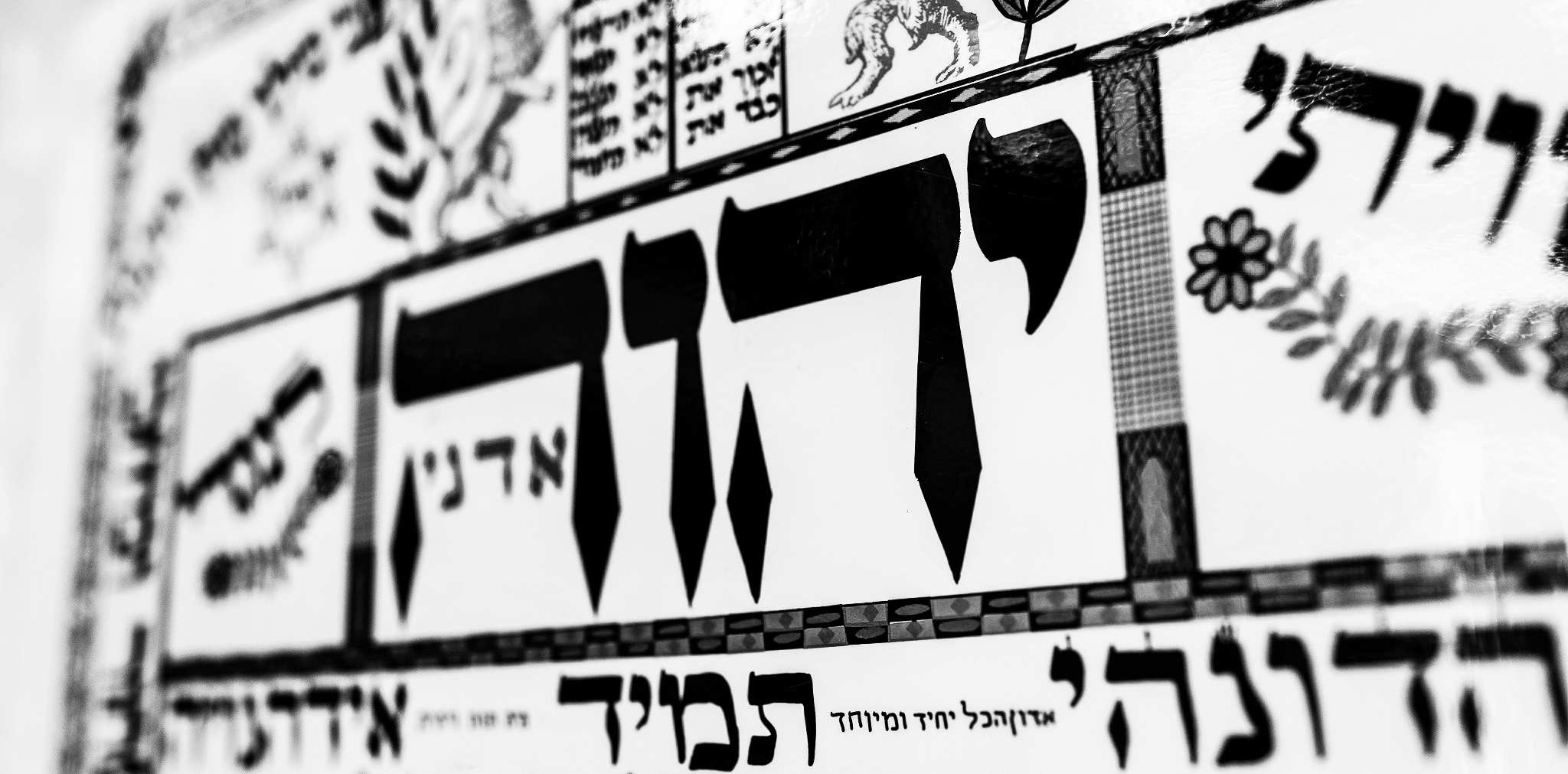
 Reflecting on the role of suffering in the heart of faith, Dietrich Bonhoeffer once wrote: “Here is the decisive difference between Christianity and all religions. Man’s religiosity makes him look in his distress to the power of God in the world: God is the deus ex machina [i.e., “quick fix”]. The Bible [on the other hand] directs man to God’s powerlessness and suffering: only a suffering God can help” (Letters and Papers from Prison). Bonhoeffer’s comment alludes to the difference between an “Elohim” (אֱלהִים) conception of God as the omnipotent power and Judge of reality, and the “YHVH” (יהוה) conception of God as the compassion Source and Breath of life – the Suffering God who empties himself to partake of our condition – to know our pain, to bear our sorrows, to heal us from the sickness of spiritual death, and to touch us in the loneliness of our exile… The Spirit enables us to “groan” in compassion, directing us away from the impulse to “kill the pain” to accept it as part of our lament and need for connection with God.
Hebrew Lesson:

Unlike cognitive faith (i.e., emunah: אֱמוּנָה) that assents to theological propositions or creeds, trust (i.e., bittachon: בִּטָחוֹן) emotionally commits to God’s presence in the sorrows of our lives and retains hope that we are not finally alone, abandoned, helpless… Trust goes beyond the “idolatries of theology,” that is, various theological conceptions of God as impassive, inexpressive, and distant in his decrees of transcendence, to engage God personally, existentially, and from within the whirlwind of harrowing pain and pain’s great loneliness. Authentic theology is dialectical or “dialogical” — a conversation of the heart with God – seeking, yearning, protesting, lamenting, and struggling with life’s inscrutabilities and unfathomable questions as it appeals to God for the assurance of genuine hope. Trust finds courage to give voice to our sorrow and fears, inviting God into the midst of our brokenness, often yielding to tearful silence in unknowing expectation. As Dorothy Soelle wrote: “Prayer is an all-encompassing act by which people transcend the mute God of an apathetically endured reality and go over to the speaking God of a reality experience with feeling in pain and happiness” (Soelle: Suffering). This is perhaps the deepest meaning of the Shema – to listen for God’s heart in the midst of your struggle; it is learning to encounter God’s compassion in the place of your brokenness and need.
 “If I say, surely darkness covers me … the night shines as the day; nothing hides from your radiance” (Psalm 139:11-12). We have to trust that God is in our darkness, in the silence, in the unknown… You come out of the shadows when you admit that you act just like other people, that you are human, in need of reconciliation yourself… Above all you need God. You need help. You need a miracle to help you to truly love. You may find excuses for many things, but you cannot escape the “wretched man that I am” reality that is grounded in your fears. God sees in the darkness and is present there, too. When you feel alone, like an unbridgeable gulf lay between you and all that is good; when you feel like you want to scream but are afraid that even then no one would hear, may the LORD shine His light upon you…
 Contact with the dead causes spiritual impurity (i.e., tumah) because death, as the separation from life, is the ultimate expression and consequence of sin. People routinely deny the meaning of death, explaining it away as the result of some cause from which one might escape (“he worked too hard,” “she got sick,” “it was an accident,” etc.). People rationalize death because they refuse to see it as the effect of sin, the consequence of the original transgression of Adam and Eve that humanity as a whole has “inherited” (Gen. 2:17; 3:19; Rom. 5:12). Therefore the Torah states that the birth of a child results in impurity (Lev. 12:2,7). Full atonement comes from “digging up the root of sin” by being purified from its source, namely, the curse of death itself. The Red Heifer alludes to the sin of the Golden Calf, which finds its source in the original idolatry of Adam and Eve. Even the blood of the sacrifice was burned to ash “outside the camp,” putting a complete end to the “life of death” and its power to corrupt. The Red Heifer is therefore a special sort of “sin offering” (chatat) that cleanses from contact with death itself (Num. 19:9).

 “Everyone who is bitten, when he looks upon it, shall live” (Num. 21:8). The fiery serpent – the very sting of which brings death – is what must be looked upon, confronted, and confessed. We must look at that which kills us, and by seeing it, we can then see God’s miracle (נֵּס) that delivers us… Therefore we look to the cross – the place where Yeshua clothed himself with our sickness and sin – to realize God’s remedy for our eternal healing. As Yeshua explained to Nicodemus, “As Moses lifted up the serpent in the wilderness, so must the Son of Man be lifted up, that whoever believes in him may have eternal life” (John 3:14-15). Humanity as a whole has been “bitten by the snake” and needs to be delivered from its lethal venom. Just as the image made in the likeness of the destroying snake was lifted up for Israel’s healing, so the One made in the likeness of sinful flesh (Rom. 8:3) was to be lifted up as the Healer of the world. In Yeshua the miraculous exchange takes place: “For our sake he made him to be sin who knew no sin, so that in him we might become the righteousness of God” (2 Cor. 5:21). Bless His holy name!

 Our Torah portion this week (i.e.,
 The sages say the verse, “Blessed is the person who fears always” (Prov. 28:14), means that whenever you want to do something, you should first soberly consider the consequences… If you do not think clearly, you will not fear, and such carelessness invariably leads to sin. The sacred is bound up with care; it sets boundaries between the profane and the holy. The “fear of the LORD” is expressed as vigilance against the lusts of the lower nature (yetzer ha’ra)… We “tremble” before God when we are awake to His holiness and wonder (Phil. 2:12). The Temple was destroyed because of our forefathers did not think about their actions; they first exiled themselves from the Divine Presence and then they “caught up with” the pain of their exile for themselves.

 “Grass withers, a flower fades, but the word of our God will stand forever” (Isa. 40:8). This verse sets up a great contrast between olam ha-zeh and olam haba – between this present world and the heavenly realm. King David states, “Behold, you have made my days a few handbreadths, and my lifetime is as nothing before you (וְחֶלְדִּי כְאַיִן נֶגְדֶּךָ). Surely all mankind stands as a mere vanity” (Psalm 39:5). Our hearts are restless until they find their rest in God, the Eternal, the abiding, and true: “Whom have I in heaven but you? And there is nothing on earth that I desire besides you” (Psalm 73:25). To the extent that we regard this world as our “home” we will find the transience of life to be tragic; but when we regard ourselves as strangers here, merely passing through, our transience becomes a passageway to the heavenly places…
 It is common to encounter people today who refuse to believe that God exists, not because there are compelling reasons to do so, but simply because they do not want God to exist, and therefore they willfully suppress the intuitions of logic, the apprehension of value, the awareness of glory in creation, and the sentiments of conscience, since all these experiences point to the realm of moral and spiritual reality. As it is stated in our Scriptures: “For that which may be known of God is manifest in them; for God has revealed it to them. For the invisible attributes of him from the creation of the world are clearly seen, being understood by the things that are made, even his eternal power and divinity; so that they are without excuse” (Rom. 1:19-20). Indeed, atheists and agnostics arrogantly preach that there is no transcendental “moral law” or Moral Lawgiver before whom all people will give account, again, not because reason indicates that this is so, but on the contrary, merely because they wish to be “free” to do whatever they want and to pursue their own selfish desires. In this regard the atheist merely chooses to close his mind because he does not want to see. As Rabbi Israel ben Eliezer (בש”ט) once said, “The world is full of wonders and miracles but man takes his little hand and covers his eyes and sees nothing.” Indeed the deification of the self makes the soul a stranger to God and blind to moral and spiritual reality. The modern man will split hairs and fastidiously object to questions of truth and meaning all for the sake of living life as he pleases, on his own terms, without recognizing any moral authority beyond himself….
 “Wherever you go, there you are…” You can’t escape from yourself; you can’t run away from who you are, and therefore your relationship with yourself is as inescapably eternal as your relationship with God. Indeed how you relate to yourself expresses your relationship with God (Luke 15:17). If you are self-abusive, if your life is a “living hell,” you must first of all face yourself and quit denying the condition of your heart. The LORD delivers through the wound; he does not offer you “Nirvana” to extinguish who you really are… If you have a critical spirit, if you cast eyes of suspicion upon others, then understand this reveals your own self-rejection and leads to the hell of never accepting yourself… Perhaps you learned to reject yourself through your earliest experiences, or from your family’s secret pain, but regardless you must be delivered from the fear of who you are, and only God in his mercy can heal you from that wound… Only when you are rightly related to God in the truth are you able to become a healed self; only by God’s power can you come alive from the dead to know the truth of God’s redeeming love.