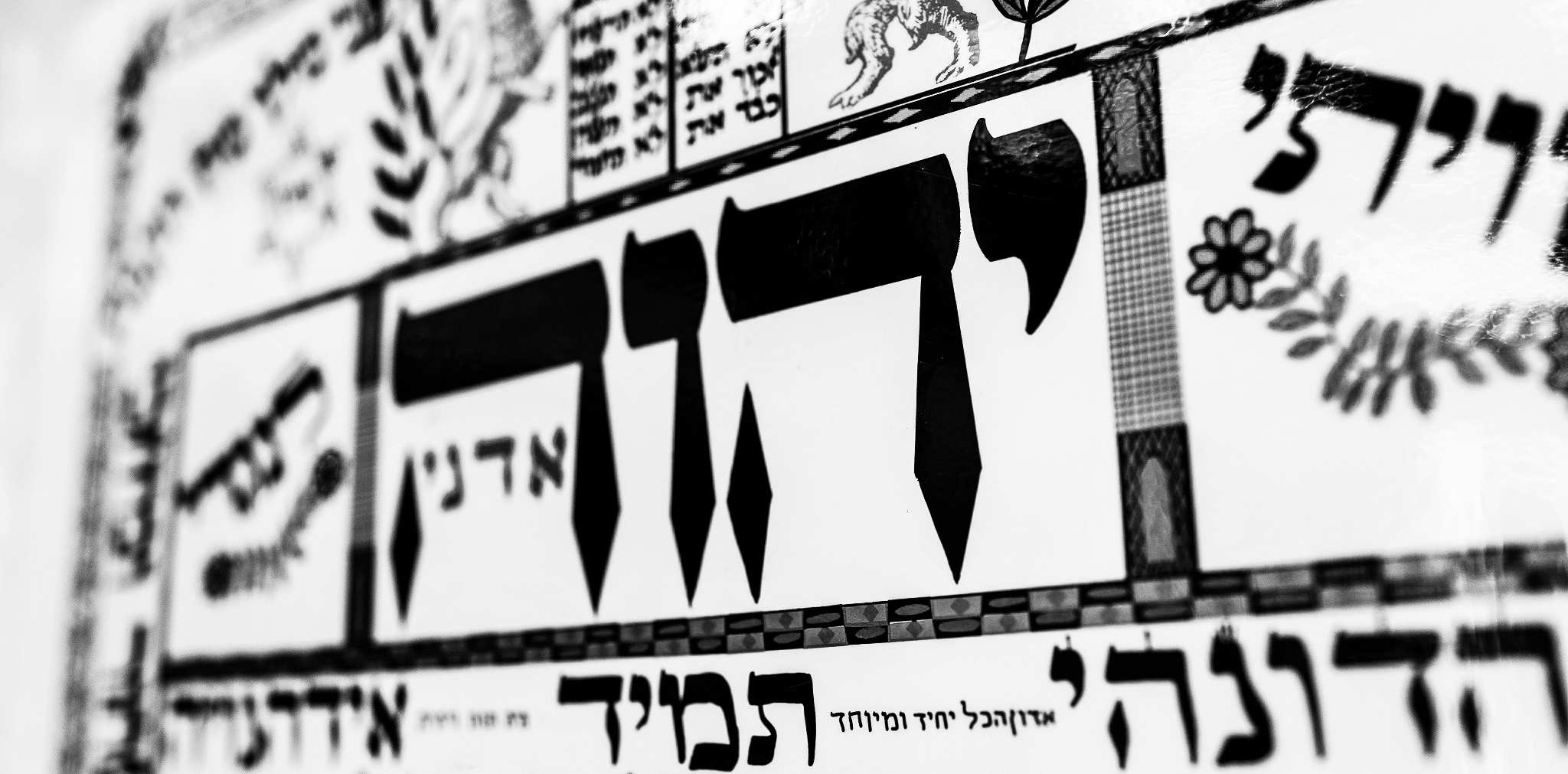
 ONE OF THE GREATEST OF MISTAKES is to forget your beloved status before the LORD… “Fear not, for I have redeemed you; I have called you by name, you are mine” (Isa. 43:1). Forgetting who you are leads to forgetting who the LORD is, just as forgetting who the LORD is leads to forgetting who you are… A passage from our Torah reading this week (i.e., Emor) speaks to us along these lines: “You are children of the LORD your God. You shall not cut yourselves or make any baldness on your foreheads for the dead. For you are a people holy to the LORD your God, and the LORD has chosen you to be for him am segulah (עם סגלה) – a treasured people out of all the peoples who are on the face of the earth” (Deut. 14:1-2).
In this verse, Moses reminds the people that since they are children of the LORD they were not to mourn for the dead like those without any hope of life beyond the grave… Our God, the Father of Israel, is eternal, and even if our earthly fathers were to die, we will never be orphans, because the LORD, the Everlasting God who is the “God of the spirits of all flesh” (אֱלהֵי הָרוּחת לְכָל־בָּשָׂר), always watches over us: “He will not let your foot be moved; he who keeps you will not slumber” (Psalm 121:3). But if we forget who we are, if we lose sight of our place in the Heavenly Father’s heart, then we are likely to fall into a state of excessive and self-destructive mourning over the losses we experience in this world. In the most tragic cases, this can lead to the darkness of unremedied despair, “living among the tombs, crying out and cutting himself with stones” (Mark 5:5). On the other hand, if remember our place at the Father’s table as his children, if we take hold that we are beloved of God – his very own “treasured people” – then we will regard the difficulties we encounter in this world as a test of faith intended for our good (Deut. 8:3,16, Jer. 29:11).
Notice further that this passage states that the people were chosen by the LORD to be his own “possession” (i.e., segulah: סְגֻלָּה) from all other peoples in the earth. The grammar here uses a comparative use of the preposition “min,” meaning “more than” the other peoples of the earth. This idea was first mentioned when God said to the elders at Sinai, “Now therefore, if you will indeed obey my voice and keep my covenant, you shall be my possession more than all other peoples (סְגֻלָּה מִכָּל־הָעַמִּים), for all the earth is mine; and you shall be to me a kingdom of priests and a holy nation” (Exod. 19:5-6). The truth that the Jewish people were specially chosen to reveal God’s salvation and mercy is repeated elsewhere in Scripture, including Mal. 3:17, Psalm 135:4, Deut. 7:6, 26:18. The word segulah essentially means valuable “personal property,” guarded for safe keeping, such as David’s treasure of gold and silver which he donated to the Temple (1 Chron. 29:3), or Solomon’s treasure collected from the kings and provinces (Eccl. 2:8). Undoubtedly God’s redeemed people are regarded as a treasured group of people among the nations of the earth…
 The last month of the Jewish calendar (counting from Tishri) is called Elul (אֱלוּל), which begins at sundown on Saturday, August 7th this year. Traditionally,
  Our Torah portion this week (i.e.,

 Teshuvah (“repentance”) is often described as “turning” back to God, though practically speaking it is an ongoing turning, that is, a turning to God both in moments of ambiguity, pain, and distress, as well as in moments of respite and relative happiness… It is in the midst of the ego’s clamor, before the parade of worldly fears or pressures, in the crucible of “everydayness” that we must “come to ourselves” and (re)find God. In that sense, teshuvah is a sort of focus, a direction, a seeking, and a center of life, the place of constant repair for the inner breach we constantly feel. It’s a long road home to finally understand you belong at your Father’s table… That is the message of the parable of the prodigal’s return (see Luke 15:11-32).
 C.S. Lewis once made the helpful distinction between “looking at” and “looking along” a sunbeam (Lewis: “Meditation in a Tool Shed,” 1945). In the former case the mind looks “at” the beam itself, from a supposedly “transcendental” perspective, as if it could objectively describe the thing in descriptive terms, as a “fact” or by reducing the phenomena to simpler, more “natural” terms (e.g., defining light as waves or particles or energy). In the latter case, the mind see “along” the beam in relationship with it, seeing by its means, as part of his horizon of experience, not focusing on it (as a fact) but experiencing other things through its agency, and interpreting them in a semantic world of interrelated meanings. Now Lewis’ point was that modern scientific humanism assumes it provides a “truer” interpretation of experience by looking “at” things, as for example, when it “reduces” (i.e., explains away) religious experience as a matter of genetics, sociology, psychology, or some other “natural” paradigm. Of course such a presupposition is without real warrant, since “looking at” something involves its own way of “looking along” the axis of assumptions hidden within its own methodology…. In short, there is no true “looking at” things as an independent observer, since everyone is affected by their own biases and assumptions they bring to experience. Such awareness should instill within every soul a deep sense of humility. Nevertheless, in questions of faith we are both look at and look along the contours of life to make inferences to the best explanation, and therefore as Lewis succinctly said, “ ‘I believe in Christianity as I believe that the sun has risen: not only because I see it, but because by it I see everything else.’ We (all of us) walk by faith, not by sight, and the only real question is what direction are we looking…
 In light of the threat of an invasion from the east, King Jehoshaphat (המלך יהושפט) of Judah prayed: “O LORD, God of our fathers (יהוה אֱלֹהֵי אֲבֹתֵינוּ), are you not God in heaven? You rule over all the kingdoms of the nations. In your hand are power and might, so that none is able to withstand you… O our God, will you not judge them? For we are powerless against this huge army that attacks us; we do not know what to do: but our eyes are upon you (כִּי עָלֶיךָ עֵינֵינוּ)… After he prayed, the Spirit of God spoke forth: “Thus says the LORD to you, ‘Do not be afraid and do not be dismayed at this great horde, for the battle is not yours but God’s'” (2 Chron. 20). Amen, Lord, our eyes are upon you…
 “Only watch yourself, and watch your soul diligently, lest you forget…” (Deut. 4:9a; Deut. 8:11). We are in constant and great need to remember the greatness of God, for when we forget this central truth, we lose sight of who we are and why we exist… Therefore we are earnestly admonished to guard our hearts with all diligence, for from the heart flows the streams of life (Prov. 4:23). Forgetfulness leads to apathy and indulgent thinking – a sure recipe for idolatry and despair… On the other hand, as we “practice the presence” of God, we encounter daily miracles and realize that our life comes from above: “In Him we live and move and have our being” (Acts 17:28). If we do not know God in all our ways, we lose touch with the purpose for our lives; if we close our eyes to the wonders of life, we forget both their source and the source of all that exists…
 We read in our Torah portion for this week (i.e.,
 Most of us understand that loving God is our essential obligation, the end or “goal” of all the other commandments, the very reason why God has spoken and why we exist. Yeshua plainly taught that this was the point of “the Torah and the prophets,” the rest being commentary (Matt. 7:12, Matt. 22:36-40). However, while love is our greatest duty – the yoke of heaven – you might be surprised to learn that the most frequent commandment is simply al-tira, “Be not afraid.” Over and over again in the Scriptures we hear the LORD saying to those who trust in Him, al tira, “be not afraid.”

 You may sometimes feel lonely and afraid, wondering if anyone really cares for you; you may feel abandoned to wander about in your heartache, without a sense of acceptance or “place” for your life; you may feel estranged from others, in a place of desperation, a silent scream, without apparent comfort in the world… These are real feelings and I do not discount them, though often such feelings arise from unbelief, or at least from questioning whether God’s love is for you, after all…