 All of us have unhealed parts, “hidden faults” (נסתרות) of which we are not fully aware. “Blind spots.” Therefore king David prayed, “Who can discern his errors? cleanse me from secret faults” (Psalm 19:12). We are cleansed by confession, that is, by looking within our hearts to uncover deeper motivations… If we are honest with ourselves we may discover, for example, that we are angry or fearful people, despite how we otherwise wish to regard ourselves. If you find yourself unable to let something go, for instance, some pain or failure of the past, remind yourself that you must do so if you want to move on with your life. Focusing on how things could have been different is to be enslaved to the past. The goal of teshuvah (repentance) is to turn us back to God for life, but to do this, we must be be willing to let go of what makes us sick.
Note that the Hebrew word translated “errors” (i.e., שְׁגִיאוֹת) comes from a root word (שָׁגָה) that means to wander, stray, or transgress. The question raised by David is rhetorical: “Who can discern his errors?” No one – apart from divine intervention… David asked to be cleansed from his “secret faults,” which are not those that were performed by him “in secret,” but rather those that were unknown, unseen, and unconscious to his own sense of awareness. These are “mindless” sins, unthinking offenses, hidden dispositions, character defects and actions that a person unwittingly performs, perhaps because of deep forces of which he was oblivious. These are the “secret sins” set in the light of God’s face (Psalm 90:8); the “sluggish darkness” of the human heart that leads to death and ruin: “The heart is deceitful above all things, and incurably sick; who can understand it?” (Jer. 17:9). How many of us, after all, are fully aware of what we are doing when we are doing something? How many of us are completely transparent both to ourselves and before God, with no unclear motives, etc.? We must always be vigilant… There is always the force of habit, or the subconscious desires or conflicts of the inner life, that work on us, not to mention the trauma of our past and the present devices from the enemy of our souls. May the LORD give us the willingness to be healed, even if there are parts of ourselves that seem to resist that healing. Amen.

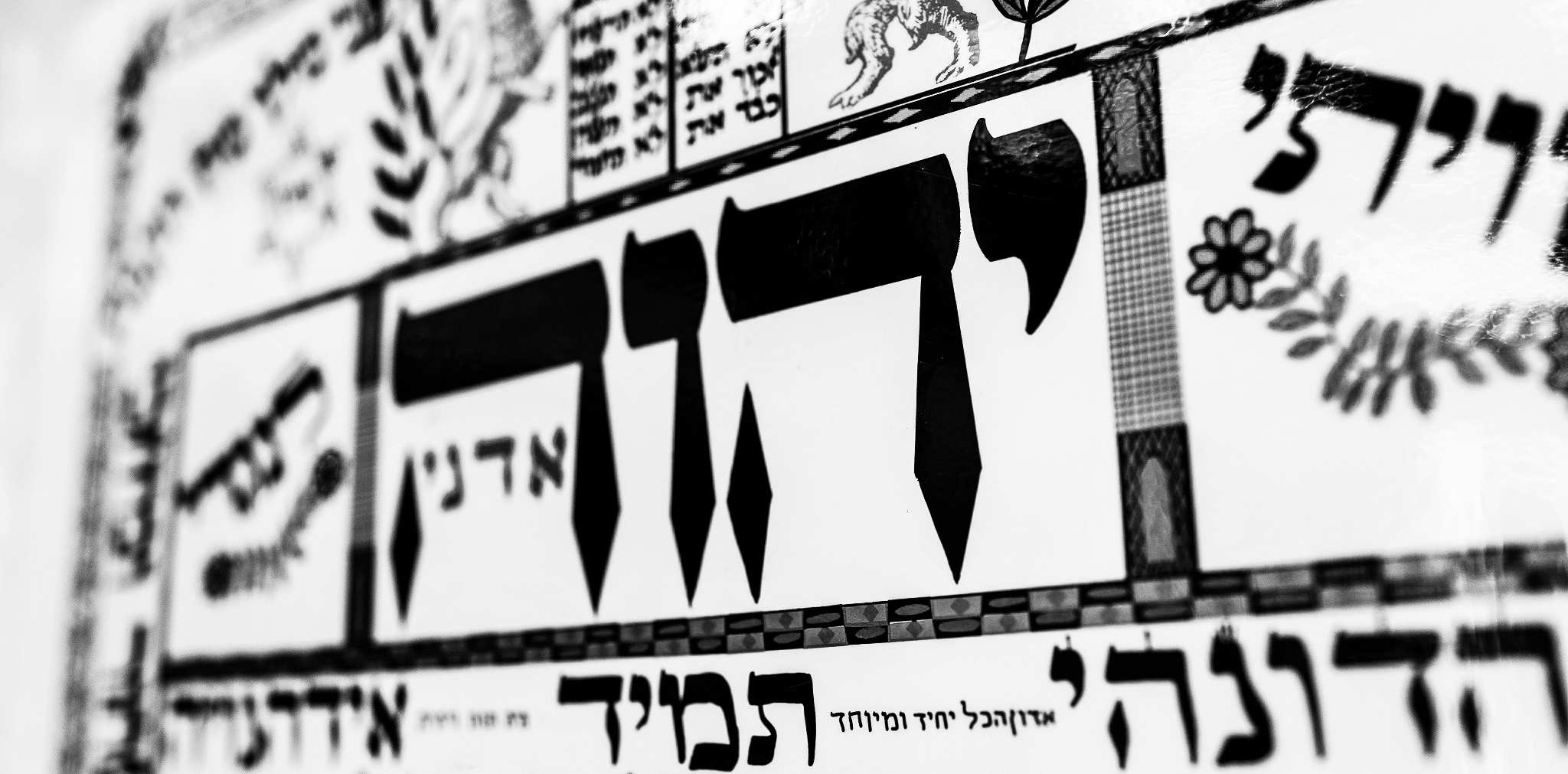
 Heaven and earth touch in innumerable ways. Every day we are given opportunity to turn to God and find life. The sages have said that the sun is red in the morning because it passes by the roses of the garden of Eden, and at sunset because it passes by the gate of Hell (Bava Batra 84a). The tender mercies of the Lord are renewed every morning, and for that reason we should turn to God when we first open our eyes to the light of the new day and say: Modeh ani lefanekha Adonai (מודה אני לפניך יהוה), “thank you, O Lord, for another opportunity to reach out to you for life.” Amen.
 How we choose to deal with trouble and suffering (i.e., tzuris) makes all the difference. We may be tempted to bitterness over our lives, but then what? To paraphrase Soren Kierkegaard, the way of life is “how” more than it is “what.” You may be powerless to control reality, but you are nevertheless responsible for how you respond to it. Check your attitude. Do you chose to live in lament over a healing that has not yet happened, or perhaps regard yourself as a hapless victim? Or will you attempt to justify your suffering as a means of personal atonement, accepting it passively as a “good child” or martyr? Does your suffering stretch your heart, or does it cause you to shrink back in fear or self-pity?
 Part of the meaning of teshuvah (i.e., “repentance”), at least for some of us, is learning to trust and believe in love…. If you were abandoned as a child, for instance, you were deprived of the security, nurture, and basic human connection you needed to partake in love. Instead of acquiring a sense of belonging and acceptance your soul desperately needed, you inherited a sense of shame that taught that you were inherently unlovable and unworthy. Consequently, as you grew up, you may have found it difficult to trust or ask others for help; you might have turned inward, relying only on yourself, protecting yourself from further pain. You may have became lonely, filled with sadness, anger, and fear. Ironically and tragically, as you protected yourself from abandonment you made your heart hard and numb, and that led to the abandonment of yourself….

 The Torah of Moses teaches that a defect-free male lamb must be sacrificed and roasted at the appointed time every year, eaten with matzah and bitter herbs, as a memorial of the redemption from Egypt (Num. 9:2, Deut. 16:1-8) — yet today, after the ministry and sacrificial death of Yeshua as the Lamb of God, we no longer perform the sacrificial rite of the Passover given to the Levites on behalf of Israel. We do not offer a lamb for sacrifice not because there is no Temple to offer such sacrifices, but because we have a greater priesthood based on the sworn oath of God that predates the Levitical priesthood in the life of the Messiah (Psalm 110:4). This is explained in the Book of Hebrews, chapter seven, which explains that “if perfection had been attainable through the Levitical priesthood (for under it the people received the law), what further need would there have been for another priest to arise after the order of Melchizedek, rather than one named after the order of Aaron? But when there is a change in the priesthood, there is necessarily a change in the law as well” (Heb. 7:11-12). The bottom line is that the promised new covenant (בּרית חדשׁה) of God centers on the sacrificial ministry of Yeshua as our Great High Priest, and this covenant provides a new way – “not according to the covenant made with the fathers at Sinai after the Exodus” – to be in right relationship with God (Jer. 31:31-34; Heb. 8:1-13). “And when Messiah had offered for all time a single sacrifice for sins, he sat down at the right hand of God, waiting from that time until his enemies should be made a footstool for his feet. For by one offering He has perfected forever those being sanctified” (Heb. 10:14).
 It is vital to affirm your identity as a beloved child of God… You may not always feel the connection, but you must choose it regardless of your present emotional state, because your place in God’s heart is a matter of truth, not sentimentality. Who you really are is grounded in the Reality and power of the LORD God of Israel.
 We all struggle with sin in our lives, and each of us needs deliverance from various attachments and fears that keep us from the deeper life… The problem is within ourselves, that is, the contradiction of heart we experience in our double-mindedness, our ambivalence, and our unbelief (Jer. 17:9). We may recite the Shema every day and say that we love God with all our being, but in the ordinary moments of daily life we are drawn to other concerns, alien affections, other “gods.” Indeed, whatever matters most to us, whatever consumes our attention, time, resources, and our interest, is something we “worship,” that is, something we esteem as worthy and valuable…
 “Draw near to God, and he will draw near to you” (James 4:8). There are no conditions given here — other than your honest need to connect with God for help. “Purify your hearts, you double-minded ones” (δίψυχοι, lit. “two-souled ones”); make up your mind and be unified within your heart: “How long will you go limping between two different opinions?” (1 Kings 18:21). You are invited to come; God has made the way; your place at the table has been set and prepared. “Let us draw near with a sincere heart in full assurance of faith (ἐν πληροφορίᾳ πίστεως), with our hearts sprinkled clean from an evil conscience and our bodies washed with pure water. Let us hold fast the confession of our hope without wavering, for he who promised is faithful” (Heb. 10-22-23).
 Yeshua forewarned that just before the End of Days, “many shall be offended, and shall betray one another, and shall hate one another” (Matt. 24:10). What dreadful people, you might imagine… what terrible depravity will mark that time! And yet here we are today, with so many crusading for their own personal sense of victimhood, demanding special treatment, and threatening retaliation for being treated unfairly… It must be remembered, however, that whenever we decry offence in others, we may be reflecting the evil within ourselves (Matt. 7:1-5). What is this evil within you ask? How about being intolerant toward those who differ from us? How about be impatient – refusing to allow others to share their perspectives? Indeed, how many of us make the demand that others be “perfect” but turn a blind eye to our own imperfections? And what about the sin of unforgiveness? What about our attitude of suspicion — using the “evil eye” regarding others’ motives – looking for something impure – rather than extending to them the benefit of the doubt? Do you carry resentment with your heart? Do you hold on to a grudge over a real (or imagined) insult from the past? Do you harbor the desire to seek revenge? All of these evil attitudes reveal a hard heart – and failing to remember that all that is good in your life comes exclusively by the mercy of God alone… When you feel offended, look within and carefully consider the assumptions at work in your thinking. Ask whether your indignation is based on the truth of God or something else. Are you demanding: “My will be done, in heaven as it is on earth?” Are you seeking your own vision, or surrendering to the truth of Reality?
 To be a human being is a paradox, caught between the realms of the infinite and nothingness; a union of endless possibility yet terminating limitation. Man desires to live forever but is conscious that one day he will die. He is an incongruity – a mix of flesh and spirit, saint and sinner, good and evil, angel and animal… A spirituality that demands for us to be always happy, always “up,” is therefore dishonest, since the truth is grounded in what is real, and that includes both the miserable and the tragic as well as the joyful and sublime. It’s not that there is no difference between good and evil within the heart, but both are part of who we really are. It is the bittersweet struggle, the process of walking as “saintly sinners,” “holy fools,” “dying immortals,” and so on, that defines us. We must embrace our brokenness, in order to become whole; there is no healing without true confession of our need. Therefore we come to the paradoxical cross – the place of utter pain, separation, and death – to find healing, acceptance and life.