 All thinking is a form of believing, and therefore there is no truth apart from faith. The scientist who carefully observes phenomena, for instance, is a person of faith who believes that an external world exists, that it is knowable by the human mind, that the future “resembles” the past (i.e., the uniformity of nature), that causal relationships exist, that the scientific method is able to reliably use logical inference to reach tentative conclusions, and so on. Indeed, the entire scientific worldview relies on metaphysical assumptions no less than any other religious view.On a practical and existential level, then, we note that everyone trusts and makes decisions based on metaphysical presuppositions that they (sub)consciously assume to be trustworthy. Regarding such assumptions, (i.e., axioms of ultimate meaning and “consequential weight”), we are constrained to give account, though we cannot settle the truth of such assumptions using the science or a naturalistic worldview without begging questions…
Some examples of matters of ultimate meaning include: “Why is there something rather than nothing?” “Does God exist?” “Is the universe a finite closed-system of cause and effect or the handiwork of a personal Creator, or neither?” “Is there a purpose to life, and if so, what is it?” “What is the nature of reality? Is everything categorically made up of “matter” (however you define it) or is there a non-material, spiritual dimension to reality as well? On the other hand, could everything be made up of spirit (or mind) and the idea that matter matter “exists” is just a fictive product of the mind?” “Is the universe governed by impersonal forces or does God personally supervise all that happens?” “How do we know things, and indeed, how can we properly define knowledge?” “Do we acquire knowledge exclusively through our senses or may it be attained by reasoning, intuition, or mystical revelation as well?” And so on…

 It is remarkable that the traditional morning blessing recited at synagogues around the world begins with words attributed to
 Torah portion
  We are living in times of difficulty leading up to the coming of our Messiah, Yeshua, and therefore we all need courage and grace to persevere. When Andrew Murray was bedridden and sick, he advised another sufferer using these words: “In time of trouble say: “First, He brought me here. It is by His will I am in this straight place; in that I will rest. Next, He will keep me here in His love, and give me grace to behave as His child. Then, He will make the trial a blessing, teaching me the lessons He intends me to learn, and working in me the grace He means to bestow. Last, In His good time He can bring me out again – how and when He knows. [Therefore] let me say I am here, (1) by God’s appointment; (2) in his keeping; (3) under His training; and (4) for His time.”
 From our Torah portion this week (i.e.,
 The
The 
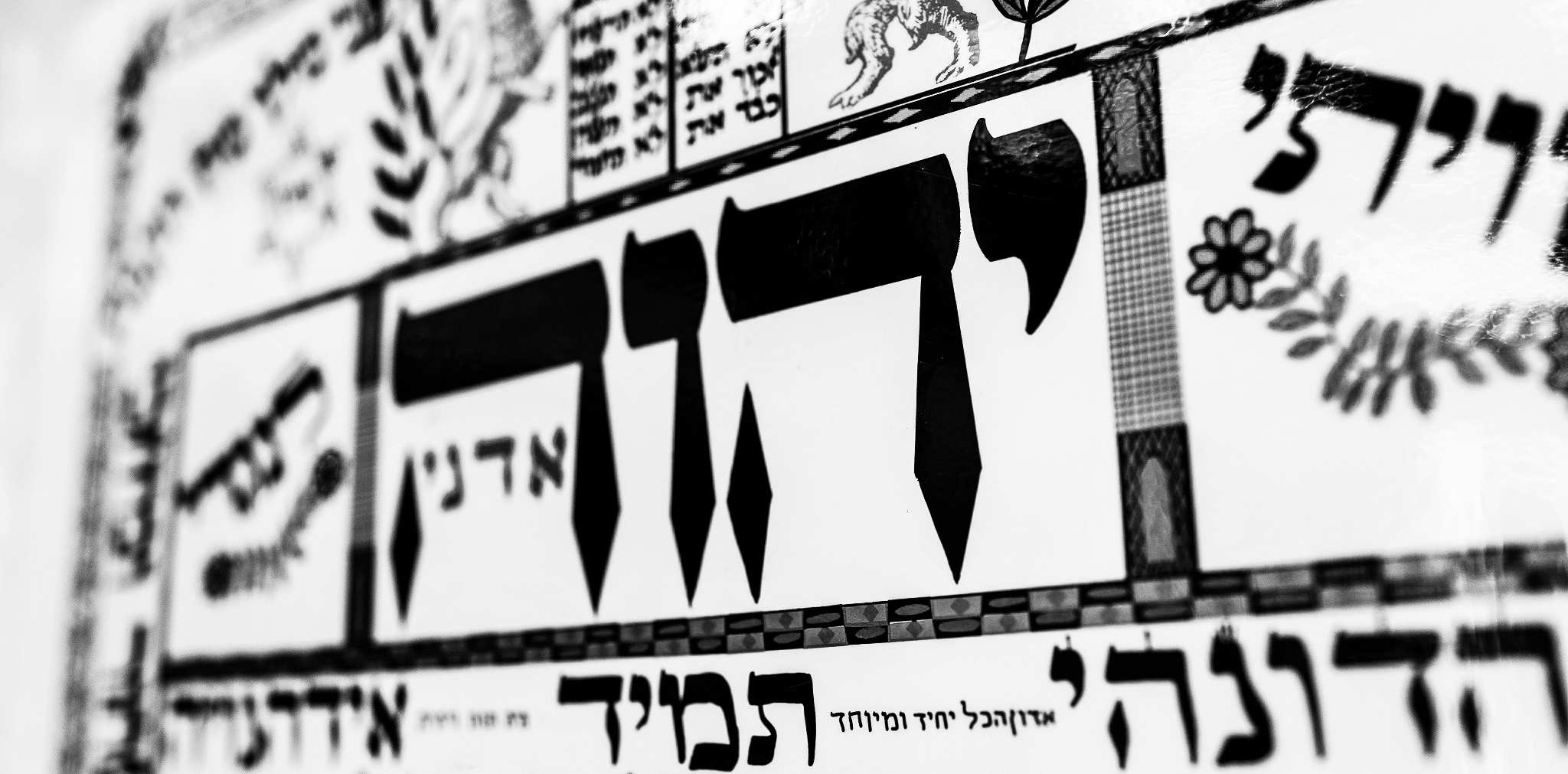
 In the Scriptures God’s Name is revealed as YHVH (יְהוָה), which means “He is Present.” The Name is formed from the words hayah (“He was”), hoveh (“He is”), and yihyeh (“He will be”): הָיָה הוֶה וְיִהְיֶה, indicating God’s omnipresence. Note that all the letters of the Name are “vowel letters,” which mean they evoke breath and life. This is the Name revealed to Moses thousands of years before the advent of other religions (Exod. 3:14), and indeed it is the Name associated with the nishmat chayim (נִשְׁמַת חַיִּים), the “breath of life,” imparted to Adam in the orchard at Eden (Gen. 2:4). It is therefore the original Name of God “breathed out” to mankind. The Name Yeshua (יֵשׁוּעַ) means “YHVH saves.” There is no other Savior beside Him, there is no other Name, there is no other LORD. “For I am the LORD your God, the Holy One of Israel, your Savior.” Only Yeshua the Messiah can deliver you from the wrath to come (1 Thess. 1:10).

 It is written in our Torah: “Take care, lest you forget the covenant of the LORD your God, which he made with you, and make a carved image, the form of anything that the LORD your God has forbidden you… ‘You shall not make for yourself a carved image (לא־תַעֲשֶׂה־לְךָ פֶסֶל) or any likeness of anything that is in heaven above, or that is on the earth beneath, or that is in the water under the earth” (Deut. 4:23; 5:8). Literally this refers to the ancient practice of bowing before “mediating forces” of God, often symbolized by art and ritual, as a token of respect or as a means of finding “acceptance” within a group. We are not to imitate such customs of the pagan world around us; on the contrary, we testify of the One True God and repudiate the need for intermediaries between God and man… On a different level, “bowing before an idol” means passively yielding to the world and its ideals rather than submitting to the truth. When we seek to fit in, to feel like we belong, and follow the trends and passions of the crowd, we express idolatry of heart. Most intimately, an idol is a source of desire, happiness, and security apart from the LORD. Your “god” is whatever your heart admires, follows and loves… If you have “other gods” before the LORD, then something is wrong, since we were created by God to find life in Him alone. “Surely you don’t think the Scripture speaks vainly when it says: the spirit which He sent to live in us wants us for himself alone?” (James 4:5) “Grace will save a man… but it will not save him and his idol” (A.W. Tozer). Therefore, my dear friends, flee from idolatry (1 Cor. 10:14).
 It is written in our Torah, “The LORD your God will return as you return (ושׁב יהוה אלהיך את־שׁבותך), and will have mercy upon you, turning to gather you back…” (Deut 30:3). This has both a present and prophetic application. First, in the present hour, if you turn to God, he will show you compassion, and he will “gather back” all those distant and fragmented parts of yourself into shalom and wholeness. He will restore your lost days; he will bring you out of exile and give you comfort in Yeshua. He makes all things new. “Draw near, therefore to God, and he will draw near to you” (James 4:8). Second, the LORD will return to earth as the Jewish people return from their captivity, and he will restore Zion during the time of the final redemption. The LORD will turn captivity into mercy; he will turn in his compassion to his people. As it is written: “I will be found by you, declares the LORD… (והשׁבתי אתכם אל־המקום) and I will bring you back to the place…” (Jer. 29:14).
 No one wants to admit that they are needy, broken, weak, and so on, and indeed such a confession is blasphemy to the heart of the proud. The truth, however, is that we are indeed all these things, and Yeshua told us we were blessed if we understood this (Matt. 5:3-6). The is great danger to pretend you are strong and capable of living life on your own terms, since eventually you will be blindsided by the truth about your condition. On the other hand, the confession of our weakness opens the way to God’s power, as Yeshua said to Paul in his affliction: “My grace is sufficient for you, for my power is made perfect in weakness” (2 Cor. 12:9). Paul came to see that the various trials and afflictions in his life taught his profound dependence on God: “for when I am weak, then I am strong.”