 It is written in our Torah: “When a person (i.e., adam: אָדָם) has on the skin of his body a swelling (שְׂאֵת) or a scab (סַפַּחַת) or a bright spot (בְּהֶרֶת)… he shall be brought to the priest” (Lev. 13:2). Here the sages note three common afflictions that befall the “children of Adam”: swelling (arrogance), scabs (worldly vanity, from a word that means to join togther), and bright spots (representing the light of carnal reasoning to understand the ways of God). When we see only the affliction, we must go to the priest – to one who helps mediate the Divine Presence – to see how deep the affliction is… Symbolically, since we are all priests to one another (see Exod. 19:6; 1 Pet. 2:5,9; Rev. 1:6), we share our afflictions with one another, allowing ourselves to be seen, and to confess our need for healing. We are only as sick as the secrets we keep, and therefore we are encouraged to share our struggles with one another: “Therefore, disclose (ἐξομολογέω, lit. ‘confess out’) your sins to one another and pray (εὔχομαι) for one another, that you may be healed…” (James 5:16).
Category: Daily Dvar (דבר יומי)
Daily teaching audios from John Parsons at Hebrew for Christians
Teruah and the Resurrection…

Rosh Hashanah literally means the “head of the year,” and it traditionally marks the anniversary of the creation of mankind. The sages note that where it is written, “When you take a census of the children of Israel” (Exod. 30:12), the Hebrew reads, “When you lift up the heads (כִּי תִשָּׂא אֶת־ראשׁ) of the children of Israel,” which implies that each person should be encouraged to understand that they “count” in the eyes of Heaven. The sages also note that the word “Israel” (יִשְׂרָאֵל) contains the letters that form the phrase li rosh (לִי ראשׁ), “there is to me a head,” that is, a soul created in the image of God.
The Blessing of Struggle…
 Recently I mentioned that we are part of a seemingly endless journey of falling down and getting back up once again. It is this struggle, this “good fight of faith,” that eventually ennobles the heart and establishes character… The hidden blessing of our repeated failure, then, is that we attain genuine humility as we rely on God for the miracle of deliverance. When we draw near to God in confession of our weakness, we may discover that our struggle disguises unacknowledged need within. For example, we might wrestle with sexual lust, but this may come from refusing to trust others or because we are harboring resentment… “Hurt people hurt people,” which means that often our sins come from a place of inner pain of abandonment. When we confess the truth we are enabled to draw close to God – the God of Truth – to discover his mercy. Those things you believe make you unlovable are the very means by which God manifests the glory of His compassion and love for you. “It is not judgment that breaks the heart, but mercy and love.”
Rosh Hashanah and the Lamb…
 In the Torah we find that the word “love” (i.e., ahavah) first appears regarding Abraham’s passion for his son: “Take your son, your only son Isaac, whom you love (אֲשֶׁר־אָהַבְתָּ), and go to the land of Moriah, and offer him there as a burnt offering on one of the mountains of which I shall tell you” (Gen. 22:2). After journeying to the place, Abraham told his child that God would provide a lamb (אֱלהִים יִרְאֶה־לּוֹ הַשֶּׂה), and then bound Isaac, laid him upon an altar, and raised his knife to slay him (Gen. 22:8-10). At the very last moment, the Angel of the Lord called out: “Abraham! Abraham! Do not lay your hand on the lad or do anything to him, for now I know that you fear God, seeing you have not withheld your son, your only son (בֵּן יָחִיד), from me” (Gen. 22:11-12). Abraham then “lifted up his eyes” and saw a ram “caught in a thicket” which he offered in place of his son. Abraham then named the place Adonai-Yireh (יהוה יִרְאֶה), “the LORD who provides” (Gen. 22:14). The sacrifice of the lamb for Isaac portrayed the coming sacrifice of Yeshua, the great “Lamb of God” (שֵׂה הָאֱלהִים) who would be offered in exchange for the trusting sinner (John 1:29). Indeed the story of how God provided the lamb at Moriah (and later during the Passover in Egypt) foreshadowed the greater redemption given in Messiah at the “Passover cross,” and may be understood as the “Gospel according to Moses” (Luke 24:27; John 5:46). Therefore, Rosh Hashanah, or the Day of Judgment (יוֹם הַדִּין), is all about our Messiah, and the sound of the shofar reminds us of the Lamb of God who was offered in our place…
Ever-Present Mercy…
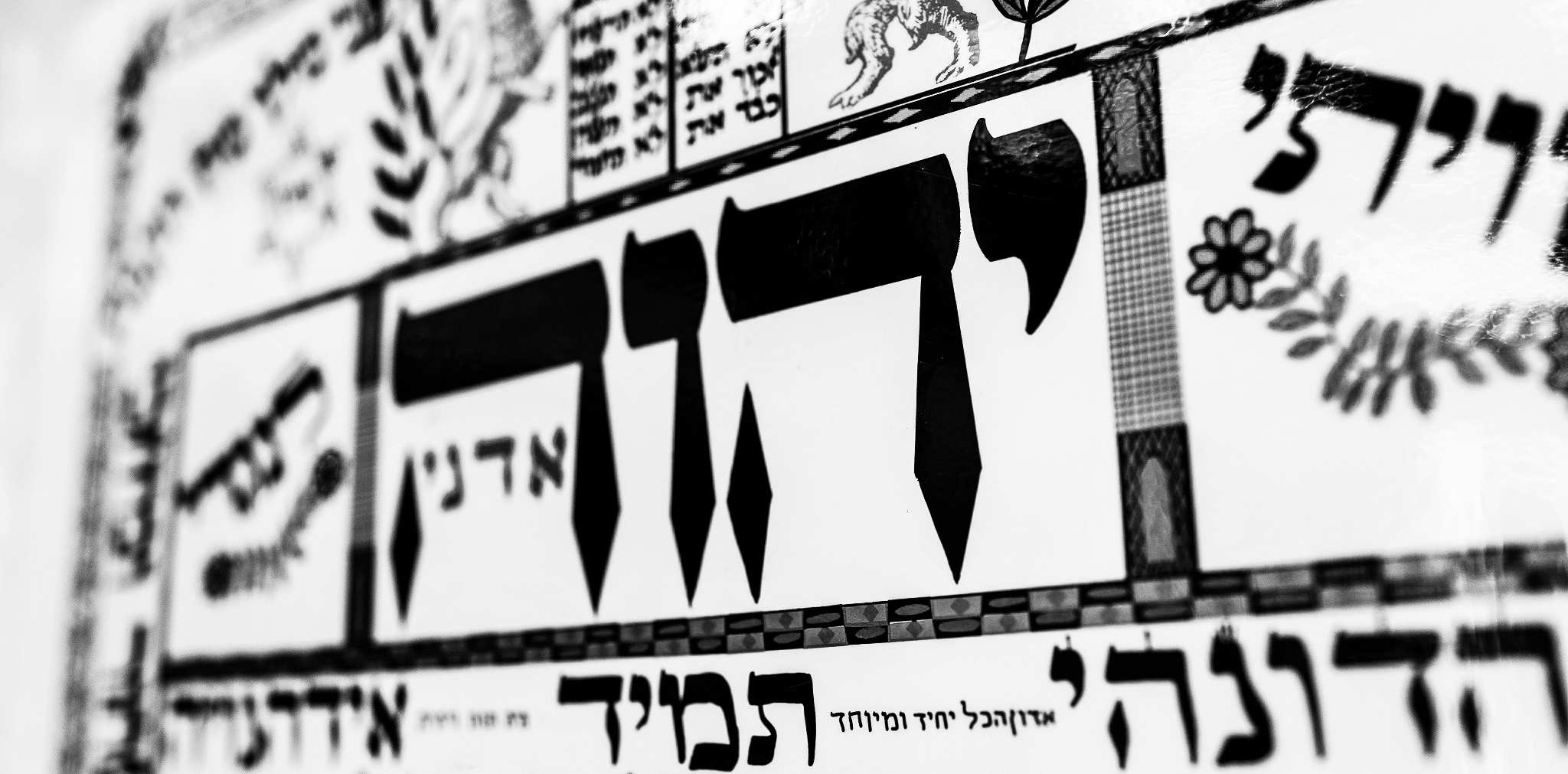
 Since Rosh Hashanah is known as the “Day of Judgment” (i.e., yom ha’din: יום הדין), it is customary to offer additional prayers of supplication (selichot) before the advent of the holiday. These prayers appeal to God’s compassion and often include the recitation of “shelosh esrei middot rachamim,” that is, the thirteen attributes of God’s mercy (Exod. 34:6-7). The thirteen attributes reveal the inner meaning of God’s Name YHVH (יהוה) disclosed to Moses after the people had committed the dreadful sin of the worshiping the golden calf (עגל זהב) at Sinai. God is not only our Judge and Lawgiver (Elohim), but our Savior and our Healer (Moshia). In his great mercy He restores what we have broken; He overcomes our judgment by means of his abounding love given to us in Yeshua (Psalm 85:10). We therefore appeal to YHVH as the Source of Compassion, the “breath of life” (נִשְׁמַת חַיִּים) that was imparted to Adam on the day he was first created (Gen. 2:7).
This is the day…
 God’s Name is “I-AM-with-you-always,” imanu-El (עִמָּנוּ אֵל) – always in the midst of you, your heart, your Center (Matt. 28:20; Isa. 41:10, Psalm 23:4, etc)…. The LORD is so named because he is never without his own, and we are who we are in relation to his presence in our lives. Yeshua is not simply the Lord of the past or the Lord of the future, but the Lord of this moment, this “here” and this “now.” He is the same yesterday, today, and forever – the breath of life, our sustaining hope, the Shepherd of our souls… Whatever else may come of this day, this is the day that the LORD has made, and we find peace in God’s Presence… Let us look to Him in this hour!

Seeking and Finding…
 “Seek the LORD while he may be found, call upon him while he is near: Let the wicked forsake his way, and the unrighteous man his thoughts: and let him return unto the LORD, and he will have mercy upon him; and to our God, for he will abundantly pardon” (Isa. 55:6-7). But how will we seek if we do not believe? And how will God be found unless God makes it possible for us to find Him? Hashivenu. We first believe the invitation to return is for us, and the moment we believe we draw near, which is to say God reveals himself to the heart of faith. If you feel devoid of God’s presence, heed David’s words to “set the LORD” before you (Psalm 16:8). Ask God for help to truly know Him and have confidence that he will indeed heal you. No prayer offered according to his heart will ever go unanswered (1 John 5:14-15). “The greatest honor we can give to the Almighty is to live gladly because of the knowledge of his love” (Julian Norwich). As Yeshua promised: “Whoever has my commandments and keeps them, he it is who loves me. And he who loves me will be loved by my Father, and I will love him and manifest myself to him” (John 14:21). Note that the Greek word translated “manifest” means to “shine inside” (i.e., ἐμφανίζω, from ἐν, “in” and φαίνω, “shine”), indicating that the revelation would be inward light of the Presence of Messiah himself (Χριστὸς ἐν ὑμῖν, ἡ ἐλπὶς τῆς δόξης, Col. 1:27). God calls you so that you might find him to be the greatest love of your life, and as you receive that love, as you embrace it as your own, the love of Messiah will become inwardly visible to you. This comes from a place of surrender and acceptance. As Paul Tillich said, “Sometimes in a moment of weakness light breaks into darkness, and it is as though a voice says, ‘You are accepted; you are accepted… Do not seek for anything; do not perform anything; do not intend anything. Simply accept the fact that you are accepted.’ If that happens to you, then you experience grace, and everything will be transformed.” Ultimately teshuvah is about salvation and transformation – beauty from ashes – and the love of God…
The Burden of Bitterness…
 Do any of you struggle with bitterness and chronic grief from being hurt in life? It is hard to forgive when we have been betrayed or seriously wounded by others… Perhaps you were abandoned as a child or suffered terrible betrayal from a friend or spouse. How do we get past the heartache? How can we move past the pain? There are no easy answers, and deliverance from evil comes at different stages for different people, but bitterness is essentially rooted in unforgiveness, and harboring it means losing sight of how much God loves you — despite your own betrayals and sins against others.
Refusing to forgive enslaves you resentment, pain, and life in despair. Forgiveness is therefore not optional for a follower of Messiah: Your forgiveness of others is your own forgiveness (Matt. 6:15). Give up your demands for justice (Elohim) and appeal to God as Savior (YHVH). Instead of focusing on what harm others have done to you, examine your own heart, confess your own hardheartedness, and learn to be thankful for the grace you hope to partake in Yeshua. “Forgive one another, as God in Messiah forgave you” (Eph. 4:32); “for while we were still his enemies, he died for us” (Rom. 5:8).
Teshuvah’s Paradox…
 To be a human being is a paradox, caught between the realms of the infinite and nothingness; a union of endless possibility yet terminating limitation. Man desires to live forever but is conscious that one day he will die. He is an incongruity – a mix of flesh and spirit, saint and sinner, good and evil, angel and animal… A spirituality that demands for us to be always happy, always “up,” is therefore dishonest, since the truth is grounded in what is real, and that includes both the miserable and the tragic as well as the joyful and sublime. It’s not that there is no difference between good and evil within the heart, but both are part of who we really are. It is the bittersweet struggle, the process of walking as “saintly sinners,” “holy fools,” “dying immortals,” and so on, that defines us. We must embrace our brokenness, in order to become whole; there is no healing without true confession of our need. Therefore we come to the paradoxical cross – the place of utter pain, separation, and death – to find atonement, acceptance and life.
Waking Up to Reality…
 It’s vital to remember that one of the main tactics of the devil is to cast a spell over you to induce a sense of forgetfulness and apathy… The devil wants you to forget that you are a child of the King. The entire venture of teshuvah (repentance) presupposes that you are created b’tzelem Elohim – in the image of God – and therefore you have infinite value and dignity. This is all the more evident in light of the awesome ransom that Yeshua paid to reconcile your soul with God. So what is the greatest sin you can commit in your life? To forget what God has done for you… Remaining asleep, unmindful of your true identity is one of the most tragic things of life. Therefore Rosh Hashanah is sometimes called Yom Ha-Zikaron – the “Day of Remembrance” (Lev. 23:24). The blast of the shofar is meant to jolt us from our sleep… We are to remember who we really are — to remember that God is our King. The person who says, “Tomorrow I will do teshuvah” really is saying, “Not now.” And then tomorrow comes and he says, “Not now.” And in this way his entire life passes by, saying, “Not now.” Finally one day he wakes up only to find himself already dead. May God help us wake up to the Reality that is set before us.