 We are living in dark times, perilous days (2 Tim. 3:1-5; 2 Pet. 3:3). The world has become more and more lawless, corrupt, irrational, and violent. Many live in dread, sensing that days of difficulty are ahead. Indeed, with the advent of the “Covid” pandemic 18 months ago, it is evident that things are likely never to return to “normal” as the world economy and the global political situation are restructured… God has sent strong delusion “so that those who do not love the truth should believe a lie” (2 Thess. 2:10-11). These are truly unprecedented times, and the hour draws near, friends….
Though we might not understand why God allows these things to happen, we nevertheless hold fast to our conviction that the Lord is our Good Shepherd who is restoring our souls. He speaks to us in the midst of uncertainty: “Who among you fears the LORD and obeys the voice of his Servant? Let him who walks in darkness and has no light trust in the Name of the LORD and lean upon on his God” (Isa. 50:10).
Friend, the Lord allows the dark cloud of unknowing for his own sovereign purposes, perhaps as a means to teach us to abandon ourselves to his care. Surely God understands our powerlessness; “he remembers our frame, that we are dust” (Psalm 103:14); surely He knows that we cannot see and therefore he calls us to “lean upon Him” for guidance. As we walk through the valley of the shadow of death we find that he is with us, and therefore we must choose to fear no evil.
Trusting in God (i.e., bittachon – בִּטָּחוֹן) does not mean that we are obligated to affirm that this is “the best of all possible worlds,” though it does mean we believe that eventually God will wipe away every tear and make all things right. Bittachon is a word for this world, which says, “Though he slay me, I will trust in him…” We do not need to trust for what is seen in this world but for an unseen good (Rom. 8:24). Those who call upon the LORD can trust not only in concealed good behind ambiguous appearances (“all things work together for good”) but also in a future, real, substantive good that will one day be clearly manifest for us all… We fight the “good fight” of faith, which is a worthy struggle that eventually is realized for blessing. We die daily; we mortify ourselves and surrender to God’s will. Meanwhile, we ask the Lord to be kept from such depth of sorrow that leads to self-destruction and despair….
We must press on without fear, trusting that our faithful LORD will strengthen us for “such a time as this.” We must be brave, equipped for battle, and full of conviction that the message of the gospel is the only hope for this moribund and decadent world. We must be on guard lest we fear, for fear is the greatest tool of the enemy of our souls, and therefore we must resist him steadfast and full of divine assurance. “The Lord is faithful: He will establish you and guard you against the evil one” (2 Thess. 3:3). The Spirit says, “Fear not, for I am with you always.” The Lord “will sustain you to the end, guiltless in the Day of our Yeshua the Messiah” (1 Cor. 1:8). He who calls you is forever faithful; He will surely do it (1 Thess. 5:24).
If you ask for bread, your heavenly Father will not give you a stone… Only God can deliver us from our “disordered loves” to take hold of what is truly essential. All we can do is ask, and keep on asking – even as we struggle on, despite ourselves, despite our losses… And we often revisit our sins over and over until we become “sick of our sickness,” that is, until we begin to understand what our heart really needs. It’s as if we are constantly being asked, “Is this what you want?” and our choices confess the truth… Only God does the miracle of real change within the human heart – only God can give life from the dead!
Hebrew Lesson:

- Isaiah 50:10 Hebrew Card (pdf)
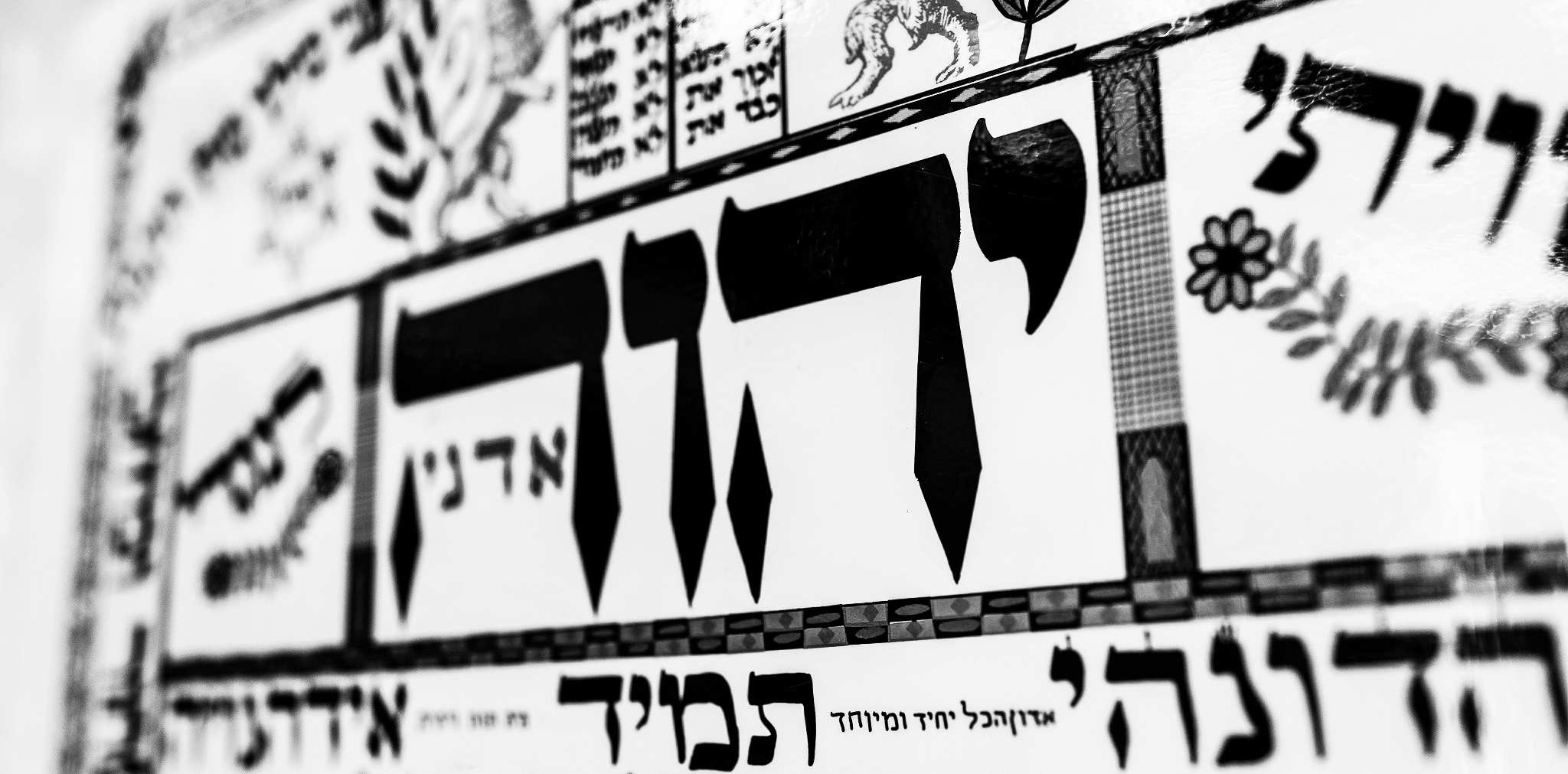
 “We are in God and God whom we do not see is in us” (Julian of Norwich). This follows from the meaning of the Name of God itself which is Eternal Life. YHVH (יהוה) means that God was (i.e., hayah: היה), God is (i.e., hoveh: הוֶה), and God always will be (i.e., yihyeh: יהיה) the Source, the Heart, and the End of our lives. “For from him and through him and to him are all things. To him be glory forever. Amen” (Rom. 11:36). We may think of the LORD as being “out there” someplace apart from us, but that is untrue, for he constantly upholds all things by the word of his power (Heb. 1:3) and by Him all things “consist” or “hold together” (Col. 1:17). His will is the gravity that directs all of reality. We may sometimes feel like God is distant from us, but understand that feeling to be an invitation to wake up, come alive, and to live before his Presence. Blessed are those who hunger and thirst for Him….
 “Be still and know that I am God…” (Psalm 46:10). This is something you must do; you must quiet your heart to know the Divine Presence. Therefore “set the Lord always before you” (Psalm 16:8) and refuse anxious thoughts that weigh in upon you, creating pressure and “dis-ease.” Quieting your heart allows you to hear the holy whisper: “It is I; do not be afraid…” Once the storm of fear dissipates, you can access the truth of God. As the Spirit says, “In returning and rest you shall be saved; in quietness and in trust shall be your strength” (Isa. 30:15).


 Recall that after Jacob had received the (

 If you have read the gospels, you are surely familiar with a disciple of Yeshua named “Thomas Didymus,” sometimes referred to as “Doubting Thomas.” Recall that when Thomas had first heard the testimony of the other disciples that Yeshua was raised from the dead, he was apprehensive and vowed to suspend his judgment until he had sufficient evidence to believe the matter for himself: “Unless I see the wounds from the nails in his hands, and put my finger into the wounds from the nails, and put my hand into his side,” he said, “I will never believe it!” (John 20:25). You know the rest of the story. When Yeshua later appeared to the disciples and this time Thomas was present, he said to him: “Put your finger here, and examine my hands. Extend your hand and put it into my side. Do not be become faithless, but believe” (John 20:27).
 In our Torah portion for this week,
 All of us have unhealed parts, “hidden faults” (נסתרות) of which we are not fully aware. “Blind spots.” Therefore king David prayed, “Who can discern his errors? cleanse me from secret faults” (Psalm 19:12). We are cleansed by confession, that is, by looking within our hearts to uncover deeper motivations… If we are honest with ourselves we may discover, for example, that we are angry or fearful people, despite how we otherwise wish to regard ourselves. If you find yourself unable to let something go, for instance, some pain or failure of the past, remind yourself that you must do so if you want to move on with your life. Focusing on how things could have been different is to be enslaved to the past. The goal of teshuvah (repentance) is to turn us back to God for life, but to do this, we must be be willing to let go of what makes us sick.
 Heaven and earth touch in innumerable ways. Every day we are given opportunity to turn to God and find life. The sages have said that the sun is red in the morning because it passes by the roses of the garden of Eden, and at sunset because it passes by the gate of Hell (Bava Batra 84a). The tender mercies of the Lord are renewed every morning, and for that reason we should turn to God when we first open our eyes to the light of the new day and say: Modeh ani lefanekha Adonai (מודה אני לפניך יהוה), “thank you, O Lord, for another opportunity to reach out to you for life.” Amen.