In this special “High Holiday” audio presentation, I discuss the holiday of Yom Kippur and its themes, particularly in reference to the atonement given in the Messiah Yeshua, as well as parashat Ha’azinu, the Torah portion we always read between Rosh Hashanah and Yom Kippur. The Ha’azinu is an amazing prophetic song (“shirah”) written by Moses just before he died. Written nearly 1,500 years before the advent of Yeshua, Moses foresaw the climatic events of Israel’s history — its past, present, and most notably its future, including the future time of redemption and atonement at the End of the Age.
I hope you find this podcast helpful, chaverim. Shanah Tovah b’Yeshua!
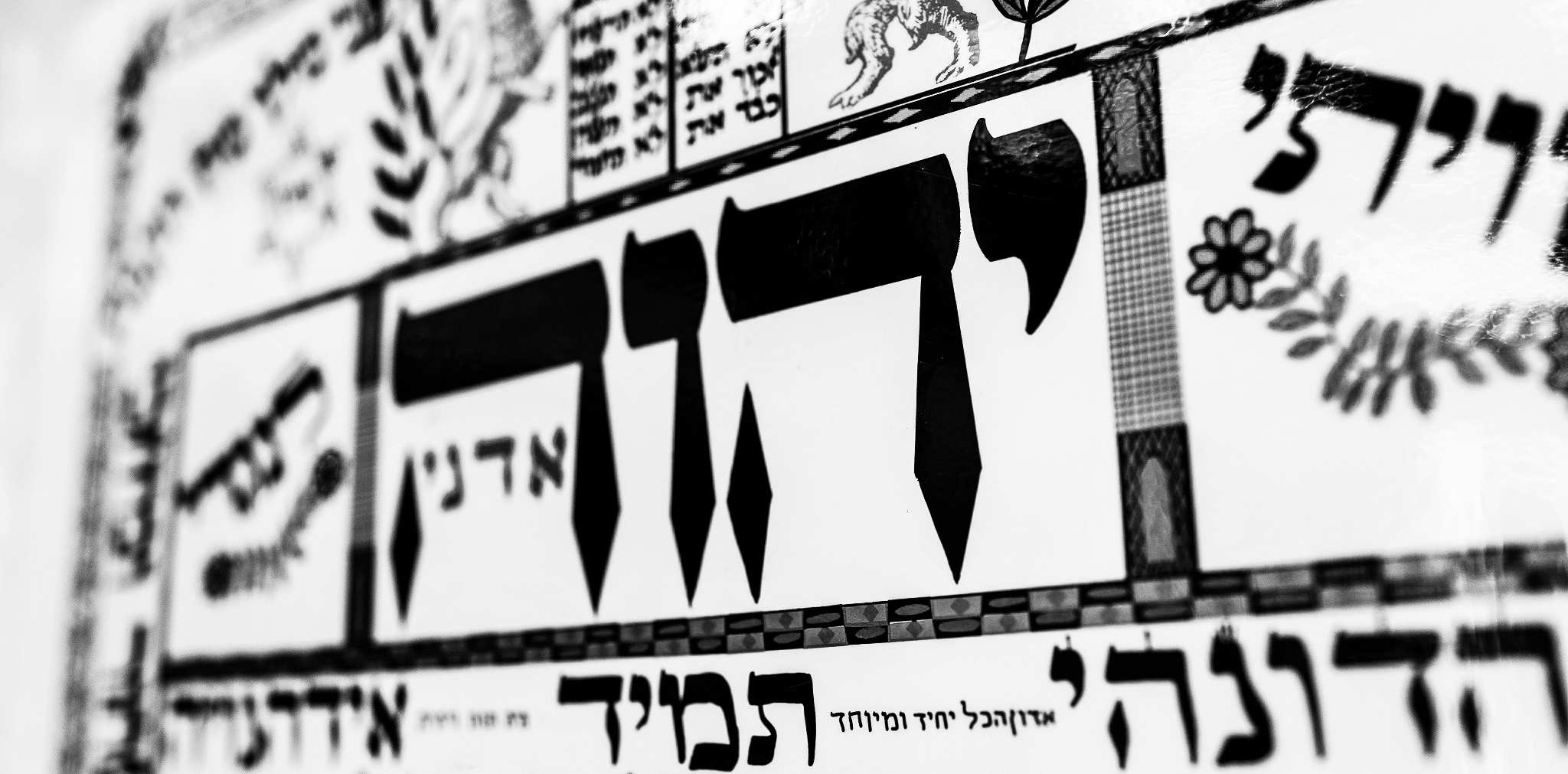
Yom Kippur (or the “Day of Atonement”) was the only time when the High Priest could enter the Holy of Holies and call upon the Name of YHVH (i.e., יהוה) to offer blood sacrifice for the sins of the people. This “life for a life” principle is the foundation of the sacrificial system and marked the great day of intercession made on behalf of God’s people.
For this reason Yom Kippur was also called the “Day of God’s Mercy,” or the “Day of God’s Name (יום השם). This alludes to the revelation of the attributes of God’s Compassion after the sin of the Golden Calf (see Exod. 34:6-7) — a disclosure that foreshadowed the New Covenant.
How much more, then, should Yom Kippur be esteemed as the “Day of Yeshua’s Name” (יום ישוע) since He secured for all of humanity everlasting kapparah (atonement)? Yeshua the Messiah is “Moshia ha’olam” (מוֹשִׁיעַ הָעוֹלָם), the Savior of the world; He alone possesses the “Name above all other Names” (Phil. 2:9-10; Acts 4:12).
It is altogether fitting, then, that God’s “hidden Name” (i.e., shem ha-meforash: שֵׁם הַמְּפרָשׁ) was proclaimed before the cover of the Ark of the Covenant in the Holy of Holies while atonement for our sins was made through the sacrificial blood….
This gives us a whole new perspective on Paul’s words (Rom. 10:9): “if you confess with your mouth that Yeshua is LORD (יהוה) and believe in your heart that God raised Him from the dead (i.e., that his blood was shed and presented on your behalf upon the heavenly kapporet), then you will be saved (that is, you will be reconciled to God and made a partaker of the atoning work of Yeshua).
Surely the Apostle Paul, a zealous rabbi who diligently studied Torah in Jerusalem under Rabbi Gamaliel (who was himself the grandson of the renowned Rabbi Hillel the Elder), understood the theological implications when he stated that the prophecy: “And it shall come to pass that everyone who calls on the Name of the LORD (בְּשֵׁם יְהוָה) shall be saved” (Joel 2:32) referred directly to Yeshua (Rom. 10:10).
In the Gates of Repentance it is written: ”I hereby forgive all who have hurt me, all who have wronged me, whether deliberately or inadvertently, whether by word or by deed. May no one be punished on my account. And as I forgive and pardon those who have wronged me, may those whom I have harmed forgive me, whether I acted deliberately or inadvertently, whether by word or by deed.” Amen…
Yeshua taught us to pray “forgive us as we forgive others,” which implies that our forgiveness (of others) is the measure of our own forgiveness. In other words, as we forgive others, so we experience forgiveness ourselves… Forgiveness releases the hurt, the anger, and the disappointment so these feelings do not inwardly consume and exhaust our souls. And yet forgiveness must be self-directed, too, since refusing to forgive yourself denies or negates the forgiveness given from others. Forgiving yourself means admitting that you act just like other people, that you are human, and that you are in need of reconciliation too. We have to move on, past the shame, and to turn back to hope. As a Yiddish proverb puts it, “You are what you are, not what you were…”
It is written, “in many things we offend all,” and therefore we must confess our sins one to another to find healing (James 5:16). However the practice of love overlooks a multitude of sins, and if we do not condemn those who offend us, then we will not need to forgive them for their offenses. Walking in God’s love sets us free from the slavery of negative emotions such as resentment, bitterness, anger, unresolved grief, and so on.
I love this affirmation and prayer attributed to Eusebius of Caesarea (c. 263-339 AD): “May I be the friend of that which is eternal and abides. May I never quarrel with those nearest me; and if I do, may we be reconciled quickly. May I never devise evil against anyone; and if any devise evil against me, may I escape uninjured and without any desire to hurt them. May I love, seek, and attain only that which is good. May I wish for the happiness of all and the misery of none. May I never rejoice in the ill-fortune of one who has wronged me. When I have done or said what is wrong, may I never wait for the rebuke of others, but always rebuke myself until I make amends.”
“May I, to the extent of my ability, give all needful help to my friends and to all who are in want. May I never fail a friend in danger. When visiting those in grief, may I be able by gentle and healing words to soften their pain. May I respect myself. May I always keep tame that which rages within me. May I accustom myself to be gentle, and never be angry with people because of circumstances. May I never discuss who is wicked and what wicked things he has done, but know good men and follow their footsteps.” Amen.
In this “Shavuah Tov” audio broadcast I discuss both the Jewish High Holidays — and how they relate to us as followers of Yeshua the Messiah — as well as the weekly Torah portion we will read for Shabbat Shuvah, namely parashat Vayeilech. I hope you will find it helpful. L’Shanah Tovah u’Metukah b’Yeshua Meshicheinu, chaverim! – “to a good and sweet year in our Messiah Yeshua, friends.”
From our Torah (Nitzavim) we read: “The word is very near you; it is in your mouth and in your heart, so that you can do it” (Deut. 30: 14). What “word” is this other than the confession of faith in the LORD? Faith is the key, since it responds to God’s voice and receives the message of hope within the heart… Faith is a matter of the will: of choosing to receive the blessing, accepting that you are accepted, and trusting God’s passion for your life. “Consider Abraham; he believed God and it was credited to him as righteousness” (Gal. 3:6). Faith itself is the obedience of Torah, the necessary precondition for all that follows. “I am the LORD your God” (אָנכִי יְהוָה אֱלהֶיךָ) is the very First Commandment. When we turn to the LORD, we esteem him as truthful, just, wise, compassionate, and worthy of our trust. “Let us then with confidence (μετὰ παρρησίας) draw near to the throne of grace (כִּסֵּא הֶחָסֶד), that we may receive mercy and find grace to help in time of need” (Heb. 4:16). Faith is teshuvah’s confession of the reality of love…
The students of the maggid of Zlotchov once asked him, “In the Torah we read that our father Abraham kept all the laws (Gen. 26:5), but how could this be, since they had not yet been given to him?” The maggid replied, “All that is needed is to love God. If you are about to do something and you think it might lessen your love, then you know it’s a sin; but if you think it will increase your love, then you know it’s in keeping with God’s will. That’s what Abraham did.” Amen. Faith is the confession of God’s love. Abraham was justified by faith because he trusted in God’s love more than anything else, and that is the essence of Torah. “Now abide faith, hope, love, these three, but the greatest of these is love” (1 Cor. 13:13).
Our Torah reading for this week, parashat Nitzavim (פרשת ניצבים), is always read on the Shabbat immediately before the solemn holiday of Rosh Hashanah, and therefore it is the last Torah portion read before the new Jewish year (see Exod. 23:16). In many synagogues, the opening and concluding paragraphs of parashat Nitzavim are also read during the Yom Kippur morning service.
Nitzavim begins: “You are standing here today, all of you, before the LORD your God (אַתֶּם נִצָּבִים הַיּוֹם כֻּלְּכֶם לִפְנֵי יְהוָה אֱלהֵיכֶם) … so that you may enter into the sworn covenant of the LORD your God, which the LORD your God is making with you today, that he may establish you today as his people, and that he may be your God, as he promised you, and as he swore to your fathers, to Abraham, to Isaac, and to Jacob” (Deut. 29:10-13). After this Moses went on to review Israel’s history and prophetic future — i.e., the great prophecy of the Diaspora and Return of the people — and then he solemnly appealed for all those who believed to turn to the LORD for life: “I call heaven and earth to witness against you today, that I have set before you life and death, blessing and curse. Therefore choose life, that you and your offspring may live” (Deut. 30:19).
In addition to an overview of the Torah reading, I discuss the fall holidays of the Torah’s calendar, particularly the significance of Rosh Hashanah for followers of Yeshua the Messiah.
Yeshua repeatedly took the role of a “stumbling block” to test people’s response to his ministry and message. Most people were offended at Him, of course, and in the end Yeshua was crucified for the sake of their offenses. After His death, the cross itself became the scandal of faith. The Apostle Paul referred to the “offense of the cross” which he did not want removed. But what is the “offense of the cross” and why is the proclamation of the crucified Messiah a scandal (σκάνδαλον) to Jews and foolishness to the Gentiles?
Listen Now:
For more information see “The Offense of the Cross: Further thoughts on Skandalon” on the Hebrew for Christians web site:
In this audio podcast I discuss the the 40 day “Season of Teshuvah” or repentance leading up to the Jewish High Holidays as well as the weekly Torah portion, parashat Ki Tavo, which includes instructions for the people to ratify the Sinai covenant in the promised land by means of a special covenant renewal ceremony performed in the valley between Mount Ebal and Mount Gerazim. During this ceremony blessings for obedience and curses for disobedience would be declared, and Moses warned the people by providing a seemingly endless description of terrible consequences that would befall the Jewish people if they disobeyed the terms of the Sinai covenant (Deut. 28:15-68).
In Jewish tradition this litany of woe is called the “tochachah” (תּוֹכָחָה), a word that means “rebuke” or “reprimand.” Reading the tochachah is difficult and painful, though it serves as a bitter medicine to wake us up and prevent us from falling into a lethal coma. In that sense the tochechah may be regarded as a great blessing, since it shocks us into experiencing the gravity of God’s grace. This is similar to Yeshua’s grave warnings about the dangers of hell. If we refuse to listen or rush past his words, we are missing the substance of God’s lament given through the Hebrew prophets. Sin is a lethal problem, and we must turn to God for healing or we will die. As Blaise Pascal once wrote, “Between heaven and hell is only this life, which is the most fragile thing in the world.” Therefore shuvah! — turn to God and receive the blessing of life!
Our Torah reading for this week (i.e., parashat Ki Teitzei) identifies 74 of the Torah’s 613 commandments (more than any other), which again invites the question of whether we are obligated to follow the law code of Moses or not… In this Shavuah Tov broadcast, I explore how we are to understand the law in light of the salvation given in Yeshua the Messiah. I hope you will find it both provocative and helpful.
 In this special “High Holiday” audio presentation, I discuss the holiday of Yom Kippur and its themes, particularly in reference to the atonement given in the Messiah Yeshua, as well as parashat Ha’azinu, the Torah portion we always read between Rosh Hashanah and Yom Kippur. The Ha’azinu is an amazing prophetic song (“shirah”) written by Moses just before he died. Written nearly 1,500 years before the advent of Yeshua, Moses foresaw the climatic events of Israel’s history — its past, present, and most notably its future, including the future time of redemption and atonement at the End of the Age.


 In the Gates of Repentance it is written: ”I hereby forgive all who have hurt me, all who have wronged me, whether deliberately or inadvertently, whether by word or by deed. May no one be punished on my account. And as I forgive and pardon those who have wronged me, may those whom I have harmed forgive me, whether I acted deliberately or inadvertently, whether by word or by deed.” Amen…
 In this “Shavuah Tov” audio broadcast I discuss both the Jewish High Holidays — and how they relate to us as followers of Yeshua the Messiah — as well as the weekly Torah portion we will read for Shabbat Shuvah, namely parashat Vayeilech. I hope you will find it helpful. L’Shanah Tovah u’Metukah b’Yeshua Meshicheinu, chaverim! – “to a good and sweet year in our Messiah Yeshua, friends.”
 From our Torah (
 ding for this week,

 Yeshua repeatedly took the role of a “stumbling block” to test people’s response to his ministry and message. Most people were offended at Him, of course, and in the end Yeshua was crucified for the sake of their offenses. After His death, the cross itself became the scandal of faith. The Apostle Paul referred to the “offense of the cross” which he did not want removed. But what is the “offense of the cross” and why is the proclamation of the crucified Messiah a scandal (σκάνδαλον) to Jews and foolishness to the Gentiles?
 In this audio podcast I discuss the the 40 day “Season of Teshuvah” or repentance leading up to the

