“Choose life that you may live.. ” (Deut. 30:19). The most significant question God asks is whether you want to live or not. Albert Camus wrote, “There is but one truly serious philosophical problem, and that is suicide. Judging whether life is or is not worth living amounts to answering the fundamental question of philosophy” (Myth of Sisyphus, 1942). Camus’ comment is not at all original, since this is also the ultimate question of theology as well. Do you want to live? Will you believe? Will you choose life and turn away from self-destruction? The Spirit of the LORD calls out: “Choose life that you may live…”
Yeshua said: “I am the vine; you are the branches. Whoever lives in me and I in him, he it is that bears much fruit, for apart from me you can do nothing” (John 15:5). We cannot create the new birth by means of moral reformation, since the divine life is a miracle from above and not the result of human agency or aspiration (John 1:13; John 3:6). If we “live in” Yeshua we will bear fruit – our spiritual connection or “union” with him is sufficient for every good work, but only fruit that derives from the life of Messiah will abide (1 John 2:17). Good works are a necessary consequence of regeneration in Messiah, but by themselves they are insufficient and something more is needed (Matt. 7:21-23). Therefore the Scriptures point to the salvation of God and his grace as the efficient cause for the miracle of newness of life: “Not by works of righteousness which we have done, but according to his mercy he saved us…” (Titus 3:5); “for by grace are you saved through faith, and that not of yourselves (τοῦτο οὐκ ἐξ ὑμῶν), it is the gift of God” (Eph. 2:8); “so if it is by grace, it is no longer on the basis of works; otherwise grace would no longer be grace” (Rom. 11:6).
Yeshua likened His relationship with his followers in terms using the metaphor of a vine and its branches: “I am the true Vine (הַגֶּפֶן הָאֲמִתִּית), and you are the branches” (see John 15:1-5). We derive our identity, life and strength from being made part of His life… The purpose of the branch is to be a conduit of the life of the vine. Vine branches by themselves are of little value, apart from the manifestation of fruit; they cannot be used for building things and otherwise are regarded as bramble (Ezek. 15:2-4). Notice further that the vine branch cannot bear good fruit while it remains on the ground: it must “climb” upward and be elevated. And if you look closely at a vine, it is often difficult to see where the vine ends and the branches begin.
The life of the branch becomes “entangled” in God’s love as it bears spiritual fruit from the sustenance of the True Vine (הַגֶּפֶן הָאֲמִתִּית). When we abide in, or are truly connected with, Yeshua as the Source of life, we bear the fragrance and sweet-smelling savor of heaven itself…
“I am the vine; you are the branches. Whoever abides in me and I in him, he it is that bears much fruit, for apart from me you can do nothing” (John 15:5). Note that the expression “apart from me” (χωρὶς ἐμοῦ) means being in a state of separation from Yeshua, which is likened to spiritual death… It is the death of possibility, the absence of power to yield true good to the world, and so on. This is what is meant by “you can do nothing” (οὐ δύνασθε ποιεῖν οὐδέν), that is, you can do nothing of any lasting significance or worth… There is simply no true life apart from the Savior who is the Source of divine life. May you find your life and peace in Yeshua’s heart, friends.
Shalom chaverim. In this “Daily Perush” audio I provide an exegesis and reading of a significant phrase in King Solomon’s great prayer at the dedication of the First Temple, namely, “Behold heaven and the heaven of heavens cannot contain you” (2 Chron. 6:18), and I then go on to reflect a bit on the meaning of these words in relation to the destruction of the Temple in Jerusalem. Please note that this topic is primarily designed for those who are studying Biblical Hebrew. I hope you will find it helpful. – John
During his earthly ministry, our Lord Yeshua referred to himself as “the True Temple of God” (המקדש האמיתי של אלוהים) that dwelt among us. The Mishkan (Tabernacle) was a temporary dwelling place as was the physical Bet Hamikdash (Temple). As Solomon said, God never could be contained in a house made of stone, cedar and gold (2 Chron. 6:18). These were shadows of a greater Substance that entirely embodied the Temple’s purpose and essential truth (Col. 2:17).
Yeshua told the Pharisees of his day that he was greater than the Temple in Jerusalem (Matt. 12:6) and challenged them: “Destroy this Temple, and in three days I will raise it up” (John 2:19-21). Yeshua is the Shekhinah – the Presence of God – manifested in the temple of human form: “For in him the whole fullness of deity dwells bodily” (Col. 2:9, John 1:1,14).
As the Lamb of God, Yeshua is not only the Kodesh Hakodoshim (Holy of Holies) — embodied within a human heart of flesh — but also the substance and end of all sacrifice (Heb. 10:12). When his flesh was destroyed on the Cross, the curtain of the Temple was likewise rent asunder (Matt. 27:50). Access to the inner sanctum of the LORD was thenceforth available to all who would come in faith. Yeshua alone is the Spirit, Source and the End of the true Temple of God.
Our Torah reading for this week (i.e., parashat Devarim) is the very first portion from the Book of Deuteronomy (i.e., Sefer Devarim: ספר דברים), which is always read on the Sabbath that immediately precedes the somber holiday of Tishah B’Av (תשעה באב). In Jewish tradition, this special Sabbath is called “Shabbat Chazon” (שַׁבַּת חַזוֹן), “the Sabbath of Vision,” since the Haftarah that is read (i.e., Isa. 1:1-25) comes from the vision of the prophet Isaiah (ישעיהו הנביא) regarding the destruction of the Holy Temple in Jerusalem. In both Jewish tradition and liturgy, teshuvah (repentance) and viduy (confession of sin) are the themes of this preparatory Sabbath.
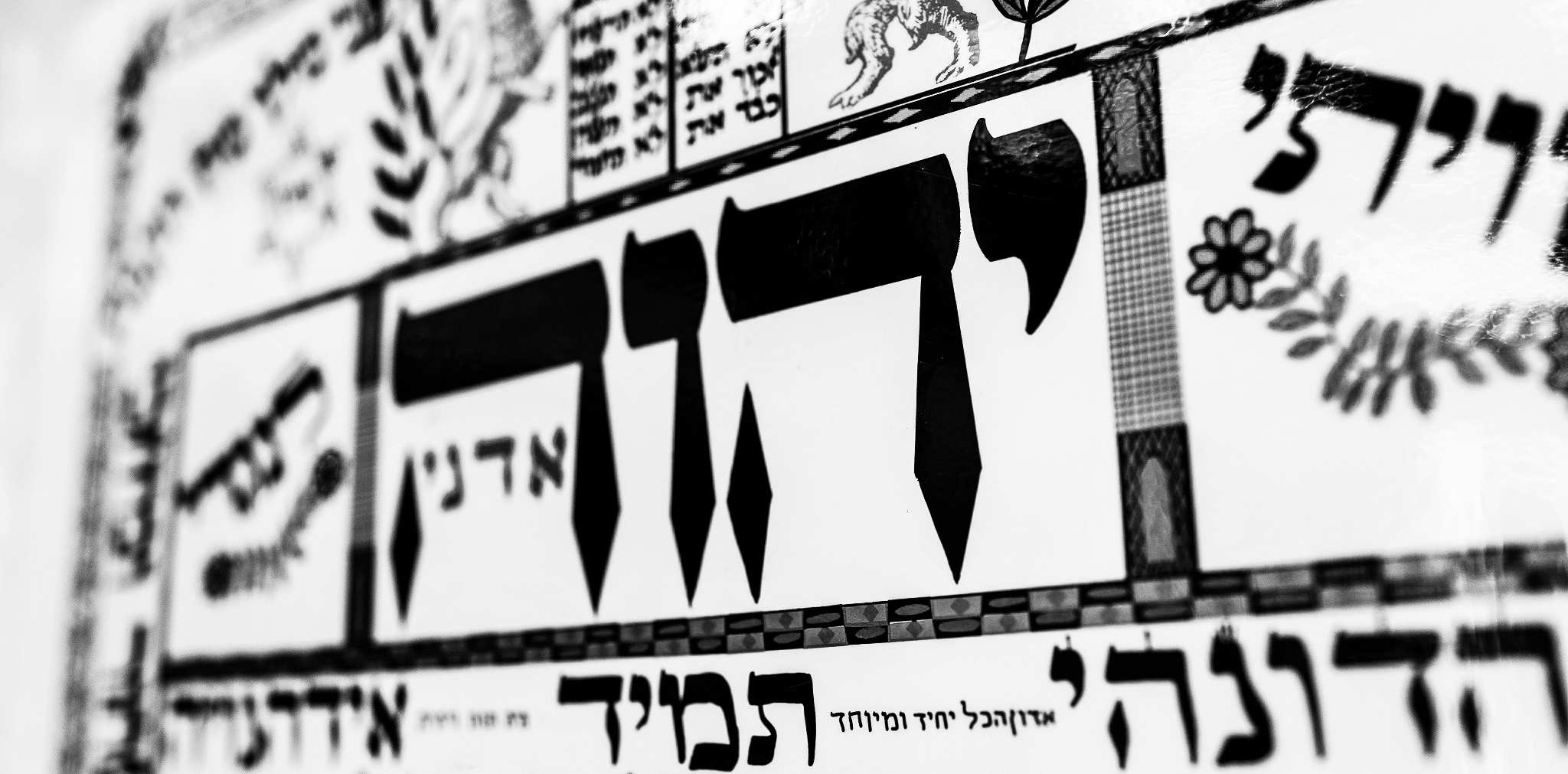
In the Scriptures God’s Name is revealed as YHVH (יְהוָה), which means “He is Present.” The Name is formed from the words hayah (“He was”), hoveh (“He is”), and yihyeh (“He will be”): הָיָה הוֶה וְיִהְיֶה, indicating God’s omnipresence. Note that all the letters of the Name are “vowel letters,” which mean they evoke breath and life. This is the Name revealed to Moses thousands of years before the advent of other religions (Exod. 3:14), and indeed it is the Name associated with the nishmat chayim (נִשְׁמַת חַיִּים), the “breath of life,” imparted to Adam in the orchard at Eden (Gen. 2:4). It is therefore the original Name of God “breathed out” to mankind. The Name Yeshua (יֵשׁוּעַ) means “YHVH saves.” There is no other Savior beside Him, there is no other Name, there is no other LORD. “For I am the LORD your God, the Holy One of Israel, your Savior.” Only Yeshua the Messiah can deliver you from the wrath to come (1 Thess. 1:10).
Many people live in regret over the past or in dread of the future. The Hebrew name of God, the Tetragrammaton (יהוה), means: “He is Present.” We can only find God now, today, at this hour. Today if you hear His voice… Yeshua said, “The kingdom of heaven is within you” (מַלְכוּת הָאֱלהִים בְּקִרְבְּכֶם), that is, is to be found within the heart of faith (Luke 17:21).
The question is asked why the Torah was written without vowels, punctuation marks, and so on. The lack of vowels implies that we must bring breath (i.e., ruach, spirit) to our reading of the words; the lack of punctuation implies that we must be humble and rely on others to help us read with understanding. In other words, we must bring our heart to the reading and be open-minded to receive revelation.
We need the power of the Holy Spirit to read correctly, and the Holy Spirit reveals the Living Word and glory of Yeshua: “It is the Spirit who gives life; the flesh is no help at all. The words that I have spoken to you are spirit and life” (John 6:63).
This week we read a “double portion” of Torah to conclude Sefer Bamidbar, or “the Book of Numbers.” Our first Torah portion, parashat Mattot (מַטּוֹת, “tribes”), begins with the LORD giving laws regarding the making of vows (nedarim). After this, the Israelites were commanded to wage war against the Midianites for seducing the people to sin at the incident of “Baal Peor.” During the ensuing battle, the wicked sorcerer Balaam was killed, as well as five tribal kings of the land of Midian. Our second Torah portion, parashat Masei (מַסְעֵי, “journeys”), provides the boundaries of the land of Canaan that were to be initially occupied by the Israelites. Note that these borders are not the same as those described earlier to Abraham (see Gen. 15:18-21), since that area will be given to Israel only after our Messiah Yeshua returns to establish Zion during the Millennial Kingdom (see Ezek. 47:15-48:35). During that coming time, Jerusalem (i.e., Zion) will be the center of the earth and renamed as “Adonai Shammah” (יְהוָה שָׁמָּה), “the LORD is there.”
Shalom friends. Our Torah reading this week honors Aaron’s grandson Pinchas (“Phinehas”), who, during the tragic rebellion at Baal Peor, zealously removed evil from Israel by driving a spear through a tribal prince who was brazenly cavorting with a Midianite princess in defiance of God’s law. On account of Pinchas’ zeal for the truth of Torah, God stopped the plague and Israel was delivered from destruction… As we will see, Pinchas reveals great truths about Yeshua the Messiah and how he became the mediator of the New Covenant of the LORD.
In addition to an overview of the Torah portion, I discuss the Three Weeks of Sorrow leading up to the somber holiday of Tishah B’Av as well as the significance of the Jewish holidays (mo’edim).
Our Torah portion for this week (i.e., parashat Balak) is named after a fretful Moabite king (בָּלָק) who sought to curse the Jewish people by hiring the services of a wicked Midianite “prophet” named Balaam (i.e., bil’am: בִּלְעָם). King Balak’s plan was to employ Balaam’s sorcery (i.e., kashafut: כַּשָׁפוּת) against the Israelites to prevent them from entering the Promised Land. Similar to the delicious irony that befell the villain Haman in the Book of Esther, however, King Balak’s scheme was upended, and the curse he sought to put on the Jewish people was repeatedly pronounced as a blessing by Balaam instead. After several foiled attempts, Balak fretfully dismissed the prophet, but before departing from the dejected king, Balaam ironically prophesied the destruction of the Moabites and the victorious establishment of Israel.
The shameful story of Balaam reveals that “there is no enchantment against Jacob, no divination against Israel” (Num. 23:23). Ein od milvado (אֵין עוֹד מִלְבַדּו) – no weapon or scheme devised against God will ever prosper (Isa. 54:15-17).
I don’t usually post about politics, as most of you know, though in the United States on July 4th we commemorate the Declaration of Independence and the establishment of a Constitutional Republic — matters that many today discount and some even want to overthrow. So this is an opportune time to think about the significance of “Independence Day” and whether it is something we should indeed honor and celebrate…
In this “Daily Dvar” broadcast (see link below) I discuss the meaning and significance of the Fourth of July “Independence Day” observed the United States, particularly in light of the radical agenda to deconstruct American values and to incite a “second American revolution” at the hands of Antifa and globalists. I recorded this back in 2020 but I am reposting it because the issues are even more relevant today. I hope you find it helpful, chaverim.
 “Choose life that you may live.. ” (Deut. 30:19). The most significant question God asks is whether you want to live or not. Albert Camus wrote, “There is but one truly serious philosophical problem, and that is suicide. Judging whether life is or is not worth living amounts to answering the fundamental question of philosophy” (Myth of Sisyphus, 1942). Camus’ comment is not at all original, since this is also the ultimate question of theology as well. Do you want to live? Will you believe? Will you choose life and turn away from self-destruction? The Spirit of the LORD calls out: “Choose life that you may live…”
 Yeshua said: “I am the vine; you are the branches. Whoever lives in me and I in him, he it is that bears much fruit, for apart from me you can do nothing” (John 15:5). We cannot create the new birth by means of moral reformation, since the divine life is a miracle from above and not the result of human agency or aspiration (John 1:13; John 3:6). If we “live in” Yeshua we will bear fruit – our spiritual connection or “union” with him is sufficient for every good work, but only fruit that derives from the life of Messiah will abide (1 John 2:17). Good works are a necessary consequence of regeneration in Messiah, but by themselves they are insufficient and something more is needed (Matt. 7:21-23). Therefore the Scriptures point to the salvation of God and his grace as the efficient cause for the miracle of newness of life: “Not by works of righteousness which we have done, but according to his mercy he saved us…” (Titus 3:5); “for by grace are you saved through faith, and that not of yourselves (τοῦτο οὐκ ἐξ ὑμῶν), it is the gift of God” (Eph. 2:8); “so if it is by grace, it is no longer on the basis of works; otherwise grace would no longer be grace” (Rom. 11:6).
 Yeshua likened His relationship with his followers in terms using the metaphor of a vine and its branches: “I am the true Vine (הַגֶּפֶן הָאֲמִתִּית), and you are the branches” (see John 15:1-5). We derive our identity, life and strength from being made part of His life… The purpose of the branch is to be a conduit of the life of the vine. Vine branches by themselves are of little value, apart from the manifestation of fruit; they cannot be used for building things and otherwise are regarded as bramble (Ezek. 15:2-4). Notice further that the vine branch cannot bear good fruit while it remains on the ground: it must “climb” upward and be elevated. And if you look closely at a vine, it is often difficult to see where the vine ends and the branches begin.
 Shalom chaverim. In this “Daily Perush” audio I provide an exegesis and reading of a significant phrase in King Solomon’s great prayer at the dedication of the First Temple, namely, “Behold heaven and the heaven of heavens cannot contain you” (2 Chron. 6:18), and I then go on to reflect a bit on the meaning of these words in relation to the destruction of the Temple in Jerusalem. Please note that this topic is primarily designed for those who are studying Biblical Hebrew. I hope you will find it helpful. – John
 Our Torah reading for this week (i.e.,
 In the Scriptures God’s Name is revealed as YHVH (יְהוָה), which means “He is Present.” The Name is formed from the words hayah (“He was”), hoveh (“He is”), and yihyeh (“He will be”): הָיָה הוֶה וְיִהְיֶה, indicating God’s omnipresence. Note that all the letters of the Name are “vowel letters,” which mean they evoke breath and life. This is the Name revealed to Moses thousands of years before the advent of other religions (Exod. 3:14), and indeed it is the Name associated with the nishmat chayim (נִשְׁמַת חַיִּים), the “breath of life,” imparted to Adam in the orchard at Eden (Gen. 2:4). It is therefore the original Name of God “breathed out” to mankind. The Name Yeshua (יֵשׁוּעַ) means “YHVH saves.” There is no other Savior beside Him, there is no other Name, there is no other LORD. “For I am the LORD your God, the Holy One of Israel, your Savior.” Only Yeshua the Messiah can deliver you from the wrath to come (1 Thess. 1:10).

 This week we read a “double portion” of Torah to conclude Sefer Bamidbar, or “the Book of Numbers.” Our first Torah portion,
 Shalom friends. Our Torah reading this week honors Aaron’s grandson

 Our Torah portion for this week (i.e.,

 I don’t usually post about politics, as most of you know, though in the United States on July 4th we commemorate the Declaration of Independence and the establishment of a Constitutional Republic — matters that many today discount and some even want to overthrow. So this is an opportune time to think about the significance of “Independence Day” and whether it is something we should indeed honor and celebrate…