|
Jewish Holiday Calendar
For September 2025 site updates, please scroll past this entry....
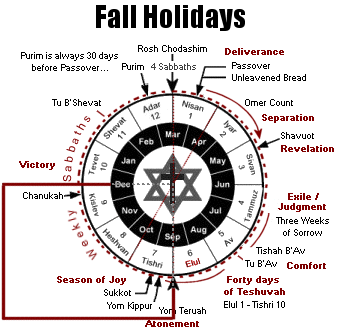
The Torah divides the calendar into two symmetrical halves: the Spring and the Fall, indicating the two advents of Messiah. The Biblical year officially begins during the month of the Passover from Egypt (called Rosh Chodashim, see Exod. 12:2), and the spring holidays of Passover, Unleavened Bread, and Firstfruits both recall our deliverance from Egypt and also our greater deliverance given by means of the death, burial, and resurrection of the Messiah, the great Passover Lamb of God. Yeshua was crucified on erev Pesach, buried during Unleavened Bread, and was resurrected on Yom Habikkurim (Firstfruits). The holiday of Shavuot (i.e., "Pentecost") both commemorates the revelation of the Torah at Sinai as well as the revelation of the Ruach HaKodesh (Holy Spirit) at Zion, in fulfillment of the promise given by our Lord....
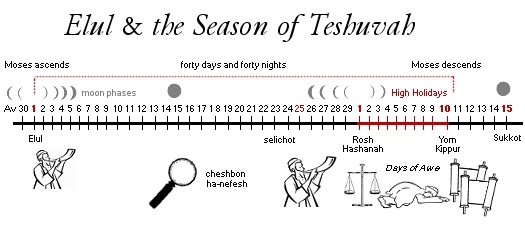
The intermediate months of summer end with the advent of the sixth month of the calendar, called the month of Elul, which recalls the time Moses interceded on behalf of Israel after the sin of the Golden Calf. To commemorate this time of our history, we likewise focus on teshuvah (repentance) in anticipation of Rosh Hashanah and especially in anticipation of Yom Kippur, the great "Day of Atonement." In Jewish tradition the 30 days of Elul are combined with the first ten days of the seventh month (called the "Days of Awe") to set apart "Forty Days of Teshuvah" leading up to the Day of Forgiveness for Israel. Immediately following Yom Kippur, the mood changes as we begin preparing for a joyous week-long celebration called Sukkot (i.e., "Tabernacles") that concludes with the holiday of Simchat Torah.
 |
The Fall Holidays:
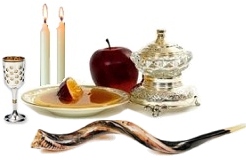
The fall festivals prophetically indicate the Day of the LORD, the second coming of Yeshua, the great national turning of the Jewish people, and the establishment of the reign of the Messiah upon the earth during the Millennial Kingdom in the world to come.
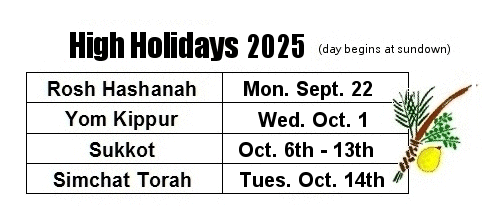
Note that in accordance with tradition, holiday dates begin at sundown. Moreover, some holidays may be postponed one day if they happen to fall on the weekly Sabbath:
1. Month of Elul (Sat. Aug. 23rd [eve] - Mon. Sept. 22nd [day])
2. Month of Tishri (Mon. Sept. 22nd [eve] - Tues. Oct. 21st [day]) - Fall holidays begin
3. Month of Cheshvan (Tues. Oct. 21st [eve] - Thurs. Nov. 20th [day])
- Four Sabbaths: Noach, Lekh-Lekha, Vayera, Chayei Sarah
- Yom Ha'Aliyah - Honoring Israel's immigrants (Mon. Nov. 5th; Cheshvan 7)
- Sigd - 50th day after Yom Kippur; Ethiopian Jewish holiday (Tues. Nov. 26th)
4. Month of Kislev (Thurs. Nov. 20th [eve] - Fri. Dec. 21st [day])
- Four Sabbaths: Toldot, Vayetzei, Vayishlach, Vayeshev
- Winter Solstice: Fri. Dec. 21st Kislev 23)
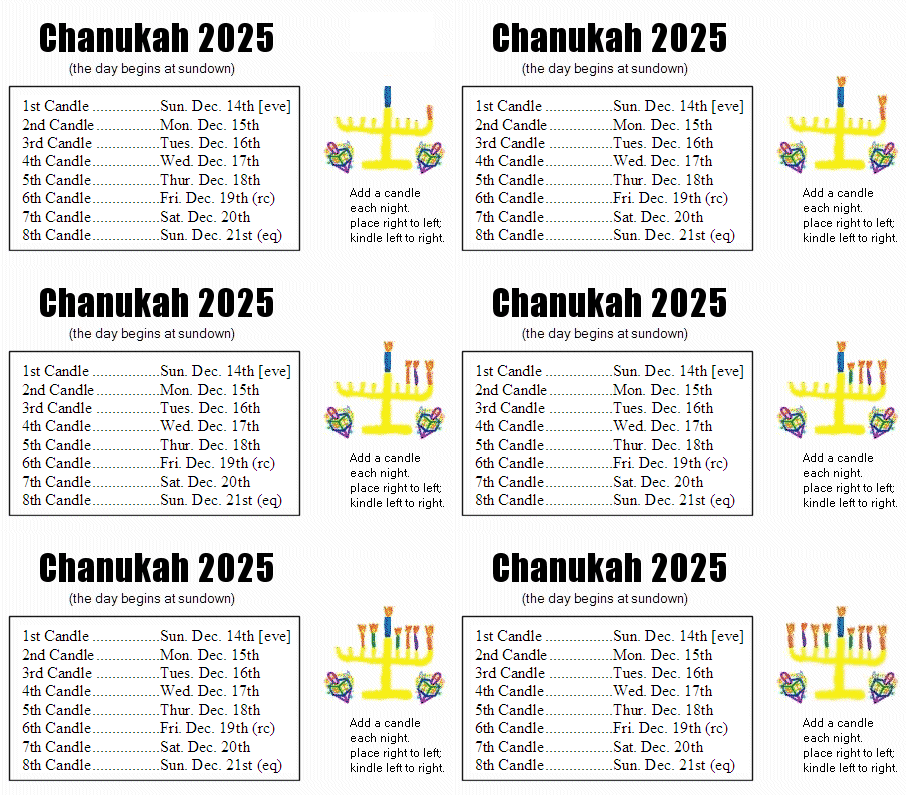
- Dates for Chanukah 2025 (5786):
- 1st Chanukah candle - Sun. Dec. 14th [i.e., Kislev 25]
- 2nd Chanukah candle - Mon. Dec. 15th [i.e., Kislev 26]
- 3rd Chanukah candle: Teus. Dec. 16th [i.e., Kislev 27]
- 4th Chanukah candle: Wed. Dec. 17th [i.e., Kislev 28]
- 5th Chanukah candle: Thurs. Dec. 18th [i.e., Kislev 29]
- 6th Chanukah candle: Fri. Dec. 19th [i.e., Kislev 30] (Chodesh Tevet)
5. Month of Tevet (Fri., Dec. 19th [eve] - Sun. Jan. 18th [day])
- Four Sabbaths: Miketz, Vayigash, Vayechi, Shemot
- Dates for Chanukah (continued):
- 7th Chanukah candle: Sat. Dec. 20th [i.e., Tevet 1]
- 8th Chanukah candle: Sun. Dec. 21st [Tevet 2] Zot Chanukah
- Winter Solstice: Sun. Dec. 21st (Tevet 2)
- Christmas - Mon. Dec. 25th (Tevet 5, 5786)
- Asarah B'Tevet - Tues. Dec. 30th (dawn), fast for Jerusalem
- Secular New Year: Mon. Jan. 1st, 2026 (Tevet 12, 5786)
 |
Note: For more about the dates of these holidays see the Calendar pages....
September 2025 Updates
Note: If any page content appears to be missing, please refresh the page...
Atonement and the New Covenant...
Understanding atonement is essential to understanding the cross of Messiah... The following provides an entry point for further study.
09.30.25 (Tishri 8, 5786) How are we to understand the apparent contradiction that Yom Kippur is to be observed as a "statute forever" (Lev. 16:29) while the New Testament emphatically states that Yeshua puts an end to animal sacrifice and now is our eternal atonement (see Heb. 9:12; 24-26)? What are we to make of this puzzle? To begin answering this question, we must note that this contradiction only arises when we make the (false) assumption that the Sinai covenant could never be abrogated, which would logically imply that a genuinely new covenant is impossible. If we can only relate to God through the covenantal terms given at Sinai, in other words, then the Levitical priesthood (alone) serves to mediate us before God, and there would be no need for a covenant based on the better priesthood and promises of the Messiah (see Heb. 8:6).
However, the new covenant was clearly foretold throughout the Torah, the writings, and the prophets, and the assumption that the Sinai covenant is "immutable" is therefore false. As it is written, "Behold the days are coming, says the LORD, when I will make a new covenant (ברית חדשׁה) with the house of Israel and the house of Judah, NOT like the covenant that I made with their fathers (לא כברית אשׁר כרתי את־אבותם) on the day when I took them by the hand to bring them out of the land of Egypt" (Jer. 31:31-32). We can understand this prophecy by way of analogy: If a certain employer makes a contract with an employee with conditional benefits that are subject to annual review, but later decides to rescind that contact and offer a new one with far better benefits, there is no contradiction involved, since he has the authority to define the terms of the contract. In our case a real contradiction would be occur if both the statement, "you must observe Yom Kippur forever," and then - in the same contract - it was later stated, "you no longer need observe Yom Kippur forever."
Since the Torah says of the Yom Kippur ritual, "this shall be a statute forever (חֻקַּת עוֹלָם) for you, that atonement may be made for the people of Israel once in the year because of all their sins" (Lev. 16:34), it is essential for us to better understand what "forever" might mean in this case, especially in light of the atonement given in Yeshua. First, we note that the Hebrew word translated "forever" is olam (עוֹלָם), which is derived from a root verb alam (עָלַם) that means "to conceal" or "to hide." Olam may have its origins using spatial imagery, suggesting a distance so vast that it is unseen, beyond the horizon, and therefore it can also came to mean "realm" or "world." When it is applied to the terms of the Sinai covenant (and the Tabernacle represents the "ritual expression" of that covenant), the word means perpetual, ongoing, etc., within that semantic domain or "world." It is interesting to note that the Jewish sages never regarded "olam" as unchangeable, since in the world to come Torah will issue from Zion (see Isa. 2:3). For more on this point, be sure to see the H4C article "Olam HaTorah: The World of the Torah."
Second, we must remember that the word Torah (תּוֹרָה) is a "function word" that expresses our responsibility in light of the covenantal acts of God, and if you choose to relate to God by means of the Sinai covenant, you are legally liable to the terms and provisions of that contract (e.g., niddah laws, blood ritual laws, tithing laws, agricultural laws, etc.), and this includes being legally liable to the enumerated curses for disobedience (i.e., the tochachah judgments). The covenant at Sinai is indeed eternal and never can change - it is brit olam, a perpetual covenant - but if you choose to abide by its terms, you are responsible for your side of the contract... The Book of Hebrews states: "When there is a change in the priesthood, there is necessarily (ἀνάγκη) a change in the Torah as well" (Heb. 7:12). Simply put, the Levitical priesthood expresses the Torah of the Covenant of Sinai (בְּרִית יְשָׁנָה), just as the priesthood of Yeshua expresses the Torah of the New Covenant (בְּרִית חֲדָשָׁה).
Third, Yeshua our Messiah came to deliver us from sin and to establish the new covenant with God, which both transcends the covenant given at Sinai and provides an entirely new way to be in relationship with God by the power of the Holy Spirit. The new covenant sets us free from the terms of Sinai (by the death of the Testator, see Heb. 9:15) so that we might serve God in a new and better way (see Jer. 31:33; Rom. 7:1-6; Heb. 8:6; Rom. 9:31-32; Acts 13:39; Gal. 4:21-5:1). We "die" to the terms of the former contract to serve God in a new and powerful way (see the analogy given in Rom. 7:1-4), with the inner intent of the law written upon our hearts by the Holy Spirit (Jer. 31:31-33). This is the "deeper Torah" that goes back to the original covenant made in the Garden of Eden (for more on this, see the H4C article: "The Gospel in the Garden").
Fourth, Yeshua is the King, the Lawgiver of Torah, and its "Substance" or essence: he did not come to destroy the Law and the Prophets, but to fulfill their message and meaning (Matt. 5:17-18; Rom. 10:4). As the true King, he has the authority to annul contracts with his subjects, and he has the authority to implement new agreements based on his sovereign will... The Torah of Moses commanded, "Thou shalt not kill..." but the King of Torah (מלך התורה) went to the heart of the matter, explaining that murder was a symptom of the deeper sin of anger...
Finally, those who claim to follow the law of Moses simply cannot keep the Day of Atonement as clearly commanded in the Book of Leviticus, nor have they been able to do so since 70 AD, after the destruction of the Second Temple as foretold by Yeshua (Matt. 24:2; Luke 19:41-4). Note that this was by divine design, since the way into the Holy of Holies (i.e., kodesh hakodashim: קדֶשׁ הַקֳּדָשִׁים) was not yet open for all as long as the "outer tent" still stood (i.e., the Levitical priesthood as the ritualistic expression of the covenant made at Sinai), since that was symbolic of "the present age," or the "dispensation that was passing away" (Heb. 8:13, 9:8-9; for more, see "The Parochet Rent in Two").
Despite the later invention of "Judaism without the Temple," the life is indeed "in the blood" (Lev. 17:11) and in Messiah we are given fulness of life! Only Yeshua gives us true atonement (i.e., kaparah ha'amitit: כַּפָּרָה הַאֲמִיתִית), and that's the true Torah of the LORD! The redemption obtained by the blood of animal sacrifices was merely provisional and symbolic, "for it is impossible for the blood of bulls and goats to take away sins" (Heb. 10:4). For eternal remedy something far greater was needed, namely, the sacrifice of the Lord God Himself. Consequently, when Yeshua came into the world, he said, "Sacrifices and offerings you have not desired, but a body have you prepared for me," and "'Behold, I have come to do your will, O God, as it is written of me in the scroll of the book" (Heb. 10:5,7). As the Book of Hebrew states: "We have an altar, whereof they have no right to eat who serve the Tabernacle" (i.e., the Levitical system of worship, see Heb. 13:10). We are cleansed from sin and made eternally right with God because of the cross of Yeshua (Eph. 1:7; 2 Cor. 5:12).
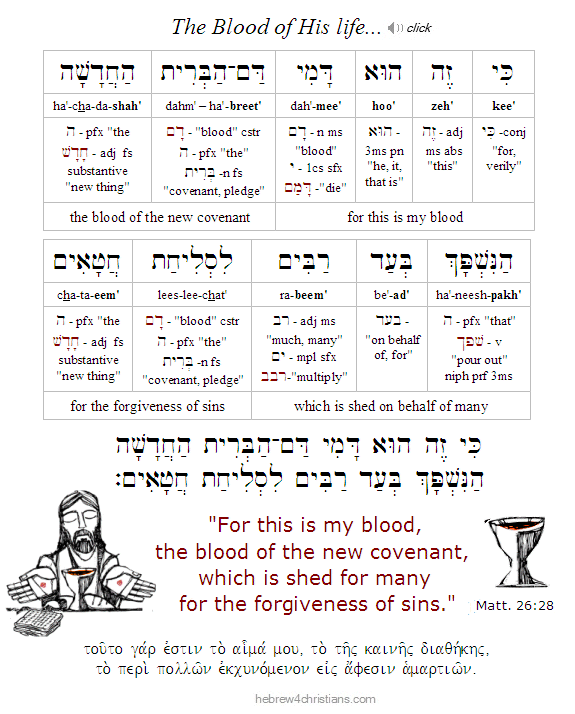
Hebrew Lesson:
Matthew 26:28 reading (click for audio):
 |
The bottom line is this. We have a greater High Priest who intercedes for us by means of his own shed blood within the true Holy of Holies, "made without hands," in the olam of reality. We do not mix the covenants of God, for this leads to double-mindedness and is regarded as spiritual adultery (see Rom. 7:1-4). It is chillul HaShem - the desecration of the Name above all Names - to turn away from the meaning and message of the cross of Messiah. There is no eternal atonement apart from Yeshua and his shed blood ratifying the New Covenant...
Addendum: So Why Study Yom Kippur?
In light of all this, the question might still be asked, "Why then should we study Yom Kippur?" And the answer is that we study the Yom Kippur avodah and the various rituals of blood atonement to better understand the meaning of Yeshua's sacrificial death for us as God's High Priest of the New Covenant. Moreover, as I've explained elsewhere on this site, Yom Kippur prophetically pictures the "Day of the LORD" or the Day of Judgment in Acharit Ha-Yamim (the End of Days). The heavenly shofar blasts heard at Mount Sinai will be reissued from Zion for all the world to hear. First will be the gathering together of those who follow the Messiah (i.e., those declared tzaddikim because of the merit of Yeshua's sacrifice), and then God's war against Satan and the world system will begin, culminating in the long-awaited coronation of the King of King of Kings. After the judgment of the nations after the Great Tribulation, ethnic Israel will be fully restored to the LORD and their sins will be completely purged (Matt. 24). "All Israel will be saved" (Rom. 11:26). Yeshua will then physically return to Israel to establish His glorious millennial kingdom in Zion. Then all the promises given to ethnic Israel through the prophets will finally be fulfilled. Like all holidays, Yom Kippur centers on Yeshua our Messiah. So let me wish you "gmar chatimah tovah" (גמר חתימה טובה) - thank God we have a good "sealing" in the Lamb's Book of Life!
Mystery of the Scapegoat...
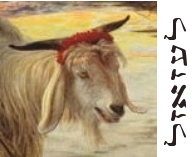
Yom Kippur, the "Day of Atonement," begins tomorrow at sunset...
09.30.25 (Tishri 8, 5786) On the holy occasion of Yom Kippur (the "Day of Atonement") the High Priest selected two male goats over which "lots" were to be drawn. Both goats were to be unblemished, healthy, and as much alike as possible, nearly identitcal. On one lot was inscribed "for the LORD" (לַיהוָה) and on the other was inscribed "for Azazel" (לַעֲזָאזֵל). After the lot was selected, the goat designated "for the LORD" was to be slaughtered as sin offering for the people, whereas the other goat was marked with a red band around its horns and left at the gate of the Tabernacle courtyard. Later in the service, Aaron would confess the sins of the entire community of Israel over this goat, which would then be "sent to Azazel" in the desert (see Lev. 16:5-10; 21-22). Notice that in some ways the ritual of the "two goats" of the Yom Kippur service was similar to the ritual of the "two birds" used for the cleansing of the leper we read about in parashat Metzora, since in both cases the focus was on purification from uncleanness (tumah) obtained through the mediation of a priest...
The sending away of the goat "to Azazel" is regarded as one of the central rites of the entire Yom Kippur service, though it has puzzled many of the traditional Jewish commentators. The sages asked how the idea of ritually "transferring" the sins of the people onto a goat could be reconciled with the Torah's clearly expressed commandments that each person has a moral duty to do teshuvah and take responsibility for his or her own actions... In light of this paradox the sages wonder why the Torah commands that on the holiest day of the year a "scapegoat" for sins should become the focal point...
While some scholars think "Azazel" comes from the verb azal (אָזַל), meaning to "go away" (i.e., to banish), the Jewish sages generally regarded the name as a reference to a geographical location of some kind, perhaps to a mountainous region with precipitous cliffs (Bavli Yoma 67b). According to Jewish tradition, the "designated man" assigned to run the goat away from the camp would go to this location to push the goat off a cliff to its death (Lev. 16:21-22). But notice that the idea of killing the goat is a Rabbinical addition, since the Torah simply states that the goat should be "sent away" (וְשִׁלַּח) into the wilderness. After all, if the animal was meant to be killed as a sacrifice for sin, why wasn't it slaughtered at the Tabernacle, as was required for all other sin offerings? Moreover, it is clear that the goat was not intended to be a sacrifice offered to "Azazel" or some other angelic being, since the Torah repeatedly forbids such acts of idolatry (e.g., Lev. 17:7).
According to Maimonides, "Azazel" symbolically represented the "extreme" point of being "outside of the camp," and the goat's exile was intended to instill fear that the same fate awaited those who refused to repent. Other commentators have said that since some of the Israelites made offerings to demons (i.e., se'irim [שְׂעִירִם], the same word for "goats"), the rite of the "sent goat" was intended to exile the idolatrous impulse of the people (Lev. 17:7). Still others have suggested that the two goats represented the struggle between Jacob and Esau, who were similar in appearance but had very different destinies. Jacob represented holy sacrifice (i.e., the goat "for the LORD" at Zion) whereas Esau represented exile (i.e., Mount Seir, the "mountain of goat"). The midrash states that the "sons of god" (בְּנֵי־הָאֱלהִים) who intermarried with human women (Gen. 6:1-2) were actually two angels - Aza and Azael - who originally asked God to allow them to enter human history to prove their loyalty. These two angels rebelled, however, and introduced gross perversions into the human family, and the "sent goat" was therefore offered to atone for the sins of gross sexual perversions and other horrendous evils. Most of the sages regard this midrash as an allegory intended to warn against sexual sin, and therefore the description of the Yom Kippur service is immediately followed by a list of forbidden sexual relationships (Lev. 18).
Finally, a few commentators have suggested that the ritual of the sent goat was a sort of "concession" made to the devil. They argue that the name "Azazel" refers to a name of a particular demon (perhaps even of the devil himself) that was associated with the wilderness regions (see Matt. 4:1). Instead of allowing illegitimate sacrifices made to the "goat demons" (Lev. 17:7), the ritual of "banishing the goat" acknowledged the power of spiritual darkness, and constituted a repudiation of "the force that rules desolate places, whose power is revealed in bloodshed, war, destruction, and under whose authority are the demons, the se'irim, the he-goats" (Nachmanides, Moreh Nevuchim). "Azazel" therefore represents the dread of sin and evil, which is regarded as essential to genuine teshuvah, and the "banishing of the goat" is symbolic of the need to resist the power of the devil... The ritual of the sent goat is therefore not intended to "appease the devil" but is meant to banish impurity and perversity from the community in order to avoid offending the LORD. After all, the goat was not sacrificed but rather sent away from the Presence of God...
The author of the Book of Hebrews writes, "When the Messiah appeared as High Priest of the good things to come, then, through the greater and more perfect Tabernacle (μείζονος καὶ τελειοτέρας σκηνῆς) which is not made with human hands (that is, not of this creation), he entered into the Kodesh Kodashim (Holy of Holies) once and for all - not by means of the blood of goats and calves but by means of his own blood, thus securing for us eternal redemption" (Heb. 9:11-12). The Levitical system of worship was a "shadow" (σκιά) of a greater reality to come (Heb. 10:1), since "it is impossible (ἀδύνατος) for the blood of bulls and goats to take away (i.e., ἀφαιρέω, used to translate the Hebrew כָּרַת, to "cut off") sins" (Heb. 10:4).
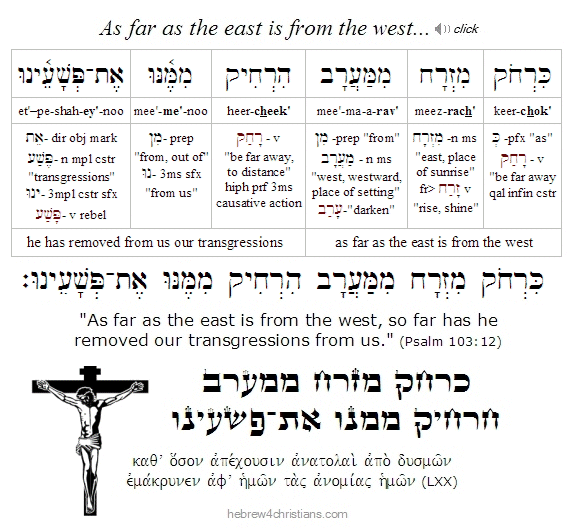
In light of the ministry of Yeshua as our great High Priest of the New Covenant, we understand the blood of the sin offering "to the LORD" to represent the blood of atonement that was shed upon the cross for our purification from sin, whereas the offering made "to Azazel" represents the additional aspect of removing of our sins far "outside the camp." Just as both of the goats of the Yom Kippur ritual constituted a single offering made to God (i.e., Lev. 16:5 states "he [Aaron] shall take ... two male goats for a (singular) sin offering"), so the sacrifice of Yeshua represents two aspects of a single offering before God. The blood of the first goat was given "unto the LORD" for atonement, but the exile of the second goat was given to banish sins from the Divine Presence. Likewise Yeshua served as both our atoning sacrifice before the Father and as our "scapegoat" who "carries away our sins" (Isa. 53:4, 5; Matt. 8:17; 1 Pet. 2:24). The "sent away goat" represents the separation from God that Yeshua experienced on our behalf as He bore the wrath of God in our place... Because of the Messiah's sacrifice, our sins are now put away "as far as the east is from the west" and are forever buried in the bottom of the sea, never to be remembered again (Psalm 103:12; Mic. 7:19; Isa. 38:17; Jer 31:34). Yeshua is both our Sin Offering whose blood cleanses us from sin as well as our "Scapegoat" who forever banishes our sins from God's holy Presence. יְהִי שֵׁם יְהוָה מְברָךְ - "Blessed be the Name of the Lord."
Hebrew Lesson
Psalm 103:12 reading (click):
 |
Note: Jewish tradition states that Yom Kippur is the date when Moses received the second set of Ten Commandments, after the first set were shattered when Moses descended Mount Sinai. This second set of tablets foreshadowed the surpassing glory that would be later revealed in the New Covenant of Yeshua. For more on this subject, see parashat Ki Tisa and the various other articles on this site, including "The Eight Aliyot of Moses," and "The Surpassing Glory - Paul's Midrash of the Veil of Moses," and so on.
Atonement and Healing...
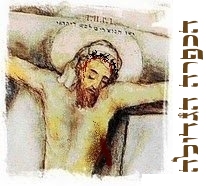
The holiday of Yom Kippur (Day of Atonement) begins Wed., Oct. 1st at sundown...
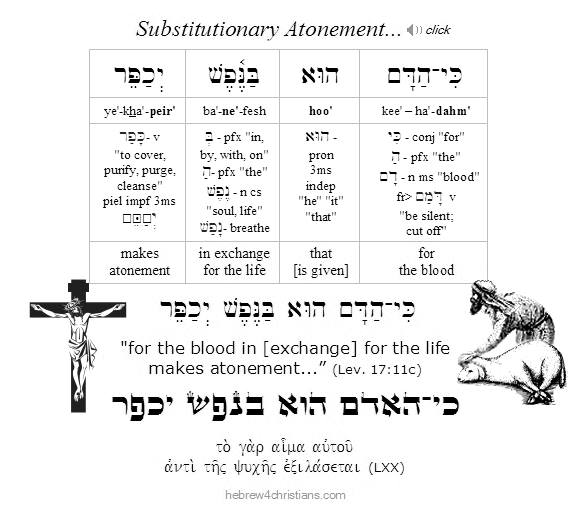
09.30.25 (Tishri 8, 5786) Atonement is about righting the wrong that separates us from God, repairing the breach caused by our sin, and being healed from the curse of death. We all desperately need this healing, yet our own hearts are the source of the trouble (Matt. 15:19-20). The holiness and justice of God (אלהִים) requires that sin be punished by death, but God is also merciful and gracious (יהוה), and therefore He instituted a system of animal sacrifices and blood rituals to provisionally "atone" for sin (i.e., restore the broken relationship with God). Since the life of the flesh is in the blood (Lev. 17:11), and the penalty for sin is death, the shedding of blood represents atonement (i.e., kapparah: כַּפָּרָה) for sin.
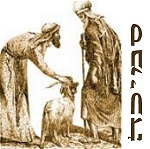
With regard to the chatat ("sin offering") or asham ("guilt offering"), a person would bring a kosher animal (korban) to the entrance of the Tabernacle and place both hands on the animal's head to identify with it (Lev. 4:29). This act of "semikhah" (סְמִיכָה) symbolically (i.e., ritually) transferred the penalty of sin and guilt to the sacrificial animal. Then, the person would slay the animal and confess that his sin caused the innocent to be slain in his place (Menachot 110a). The entire sacrificial system was intended to depict this "life-for-life" (חיים לחיים) principle: God accepted the blood of a sacrifice in exchange for the life of the sinner...
 |
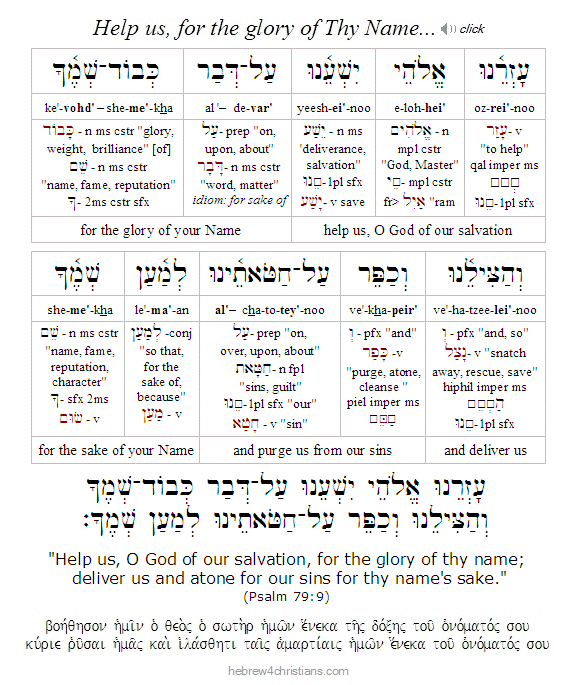
The sacrificial system of the mishkan or "Tabernacle" (and later the Temple) was a temporary arrangement until the coming of Messiah, the Promised Deliverer (Gal. 3:24-25; Rom. 10:4; Heb. 9:1-12). The atonement or purification obtained by animal sacrifices was provisional and symbolic, "for it is impossible for the blood of bulls and goats to take away sins" (Heb. 10:4; Micah 6:6). For eternal remedy, for the spiritual life of the soul, something far greater was needed, namely, the sacrifice of God Himself. Consequently, when Yeshua came into the world, he said, "Sacrifices and offerings you have not desired, but a body have you prepared for me," and "'Behold, I have come to do your will, O God, as it is written of me in the scroll of the book" (see Heb. 10:5,7).
All this is profoundly mysterious, of course. After all, if the Kohen Gadol (High Priest) could enter the Holy of Holies only once a year to present sacrificial blood upon the kapporet, invoking the Divine Name YHVH, and interceding for God's mercy on behalf of the people, how much more mysterious is Messiah's intercession for us as he willingly shed his own blood and died in exchange for the curse of our sins (Gal. 3:13)? It was there - in the true Holy of Holies, the "greater and more perfect tabernacle not made with hands" (Heb. 9:11), where the blood of Yeshua was poured out to pay the penalty for our sins, and it was there that we are given eternal life and healing (see 2 Cor. 5:21). Yeshua is the true Temple of God and the Central Sacrifice of God given on our behalf. In ways we simply cannot fathom, the sacrificial death of Yeshua delivers us from the curse of death and makes us alive together with God. We draw near to God through Him alone; he alone is the true High Priest of God, the One who finishes the work of redemption on our behalf in the Temple of his body...
Beware those who would have you return to the terms of the covenant at Sinai (Gal. 3:1). God made a new covenant, not like the covenant made at Sinai (Jer. 31:31-33). The New Testament teaches that Yeshua came to die "for our sins" under the law, and to heal us from the plague of spiritual death (Heb. 7:27, 9:26; 1 John 3:5). Our sin separates us from God, but Messiah's sacrifice draws us near (Heb. 7:19). The message of the gospel is that the Voice of the LORD - the very Word spoken from between the cherubim who hovered above the kapporet (the cover of the Ark of the Covenant) - "became flesh" and "tabernacled among us" (ἐσκήνωσεν ἐν ἡμῖν) for the purpose of becoming our substitutionary sacrifice for the guilt and defilement caused by our sins (John 1:1,14). Yeshua was "born to die" (Heb. 10:5-7), and his life and mission was lived in relation to His sacrificial death (Mark 8:27-33). As the Apostle Paul put it: This is of "first importance": Yeshua was born to die for our sins, to make us right with God, and was raised from the dead to vindicate the righteousness of God (1 Cor. 15:3-4). His sacrificial death eternally draws us near to God, and we can come boldly before God's Presence on the basis of His shed blood for our sins...
 |
The sacrificial system of Torah serves as a parable for us, or a metaphor of God's great redemptive plan revealed in the life and death of Yeshua. The Mercy Seat (kapporet) represents both the Throne of God (Heb. 4:16; 2 Kings 19:15) as well as the cross of Yeshua, where propitiation for our sins was made (Rom. 3:25). Mercy and truth "met" and were reconciled in the cross of Yeshua who serves as the everlasting Mediator of God's grace (Psalm 85:10). The glory of the Torah of Moses was destined to fade away (2 Cor. 3:3-11), just as its ritual center (i.e., the Tabernacle/Temple) was a shadow (σκιά) to be replaced by the greater priesthood of Messiah (Heb. 10:1; 13:10). Yeshua is the Goal and the "Goel" (i.e., גּאֵל, Redeemer) from the curse of the law (Gal. 3:13). "For the law made nothing perfect, but on the other hand, a better hope is introduced, and that is how we draw near (karov) to God" (Heb. 7:19). The sacrificial death of Yeshua caused the veil of the Temple to be torn asunder, revealing that access to the Presence of God is now available for all who come to God trusting in the finished work of God's Son.
For more on this, see "Why the Sacrifices?" and "Yom Kippur and the Gospel."
 |
The Narrow Gate...
09.29.25 (Tishri 7, 5786) There is a precipitous danger today of fearing the wrong things, and despairing over that which is trivial in light of eternity. Nevertheless, honest despair is a gift from God, if it is received as a message to wake up and to take heed of what is most important. "And this is the simple truth - that to live is to feel oneself lost. He who accepts it has already begun to find himself, to be on firm ground. Instinctively, as do the shipwrecked, he will look around for something to which to cling, and that tragic, ruthless glance, absolutely sincere, because it is a question of his salvation, will cause him to bring order into the chaos of his life. These are the only genuine ideas; the ideas of the shipwrecked. All the rest is rhetoric, posturing, farce" (Kierkegaard).
During Yom Kippur it is customary to read the Book of Jonah (מגילת יונה). Like the forelorn prophet we first must be "swallowed up" in consciousness of our own hopelessness before we realize that we are without remedy apart from God's intervention and deliverance. We start there - in the "belly of the fish" - and later are brought forth by God's mercy and grace. This is the place of the cross, the "narrow gate" that leads to life. As we look to Yeshua, as we lean on him, he reveals more of himself to us.
Hebrew Lesson:
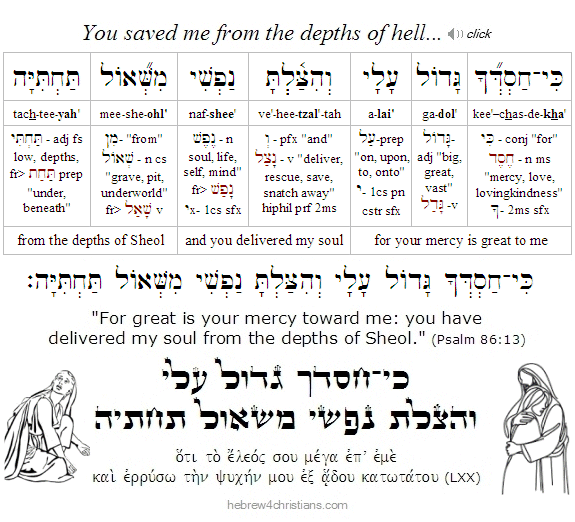
Psalm 86:13 Hebrew Reading (click):
Hillel the Elder said, "If I am not for myself then who will be for me? (אם אין אני לי מי לי); But if I am only for myself, what am I? And if not now, when?" (Avot 1:14). Hillel points out here that the language of "I am" (אָנִי) and "for me" (לִי) reveals that we have a relationship with ourselves that must be sanctified before God. As Soren Kierkegaard once wrote: "The self is a relation which relates itself to its own self," that is, the self is always in a state of dialog. A healed self relates itself to God as the Ground of existence, since otherwise irremediable despair will result, eternal lostness within, an everlasting sickness of soul...
"O Lord, it's not about words but groans... We need your heart, your spirit, your very being within us. For it is the power of God that saves us; it is your heart, your will, and your presence that transforms the soul made dead by sin and despair...
We hold no hope apart from you; we call all that we are upon you for life - the very life of God that calls the worlds into being. Show yourself glorious within our depths: for you alone are our heart's greatest desire and need, forever. Amen."
The remedy for being a lost self, relating only to itself without any center or ground, is to turn to God and to find your place in God's love and blessing. As we come to believe that we are accepted and loved despite our many imperfections, inadequacies, and character defects, we find courage to accept ourselves, to "let go" in trust. As Yeshua said, "whoever does not receive the kingdom of God like a child shall not enter it" (Luke 18:17).
Yom Kippur - Day of Atonement
This year the Yom Kippur fast begins an hour before sundown on Wednesday, Oct. 1st and lasts until an hour past sundown the following day....
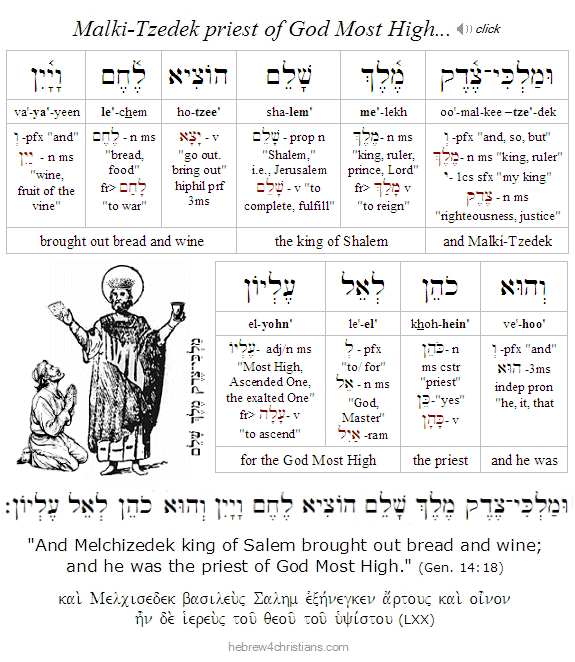
09.29.25 (Tishri 7, 5786) Yom Kippur (יוֹם הַכִּפּוּרִים), or the "Day of Atonement(s)," is regarded as the holiest day of the Jewish year, and provides prophetic insight regarding the Second Coming of the Messiah, the restoration of national Israel, and the final judgment of the world. It is also a day that reveals the High-Priestly work of Yeshua as our Kohen Gadol (High Priest) after the order of Malki-Tzedek (see Heb. 5:10, 6:20). The term Yom Kippur is written in the plural in the Torah, Yom Ha-Kippurim (יוֹם הַכִּפֻּרִים), which alludes to the two great atonements given by the LORD - the first for those among all the nations who turn to Yeshua for cleansing and forgiveness, and the second for the purification of ethnic Israel during Yom Adonai, the great Day of the LORD (יוֹם־יְהוָה הַגָּדוֹל) at the End of Days.
Hebrew Lesson
Genesis 18:14 reading (click):
 |
For more information, see the Yom Kippur pages.
Blood over the Tablets...
The following is related to Yom Kippur, or the "Day of Atonement..."
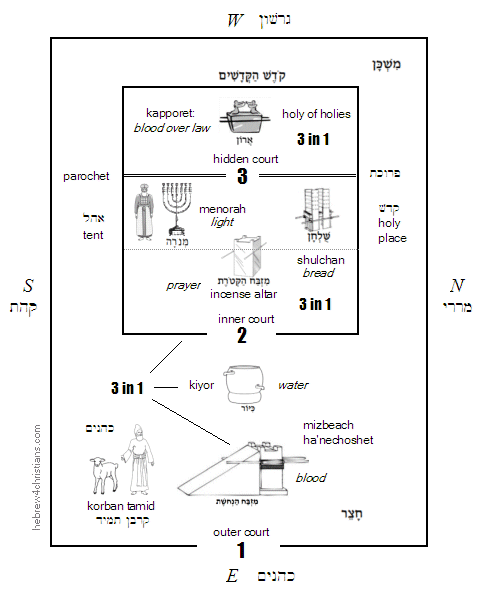
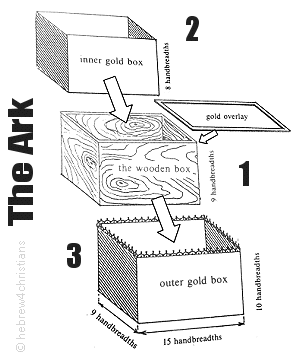
09.29.25 (Tishri 7, 5786) The earthy Tabernacle (i.e., Mishkan) and its furnishings were "copies" of the heavenly Temple and the Throne of God Himself. Moses was commanded to make the Sanctuary precisely according to the "pattern" that was revealed to him at Sinai (see Exod. 25:9). This was very important because it was meant to prefigure the atonement that would later be manifest in the sacrifice of Yeshua our Lord. As it is written in our Scriptures, "For Messiah has entered, not into holy places made with hands, which are representations (ἀντίτυπος) of the true things, but into heaven itself, now to appear in the presence of God on our behalf" (Heb. 9:24). The centermost point of the earthly Tabernacle was the Ark of the Covenant (אֲרוֹן־הַקּדֶשׁ), a "three-in-one" box that contained God's Holy Word (i.e., the tablets of the Torah). As such, the Ark served as a symbol of kisei ha-kavod (כִּסֵּא הַכָּבוֹד), or the Throne of God.
The Ark stood entirely apart as the only furnishing placed in the "three-in-one" space called the Holy of Holies (קדֶשׁ הַקֳּדָשִׁים). Upon the cover of the Ark (i.e., the kapporet) were fashioned two cherubim (i.e., angel-like figures) that faced one another (Exod. 25:17-18). According to the Talmud (Succah 5b), each cherub had the face of a child - one boy and one girl - and their wings spread heavenward as their eyes gazed upon the cover (Exod. 25:20). This was the sacred place where the blood of purification was sprinkled during Yom Kippur, the Day of Atonement, and this is the Place (הַמָּקוֹם) that prefigured the offering of the blood of the Messiah, our eternal Mediator of the New Covenant. "For I will appear in the cloud over the kapporet" (Lev. 16:2; Exod. 25:22). As it says, "I have blotted out your transgressions like a thick cloud and your sins like heavy mist; return to me (שׁוּבָה אֵלַי), for I have redeemed you (Isa. 44:22).
 |
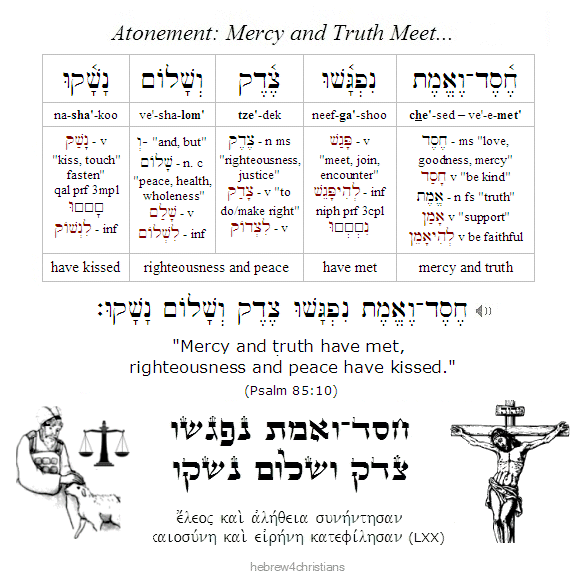
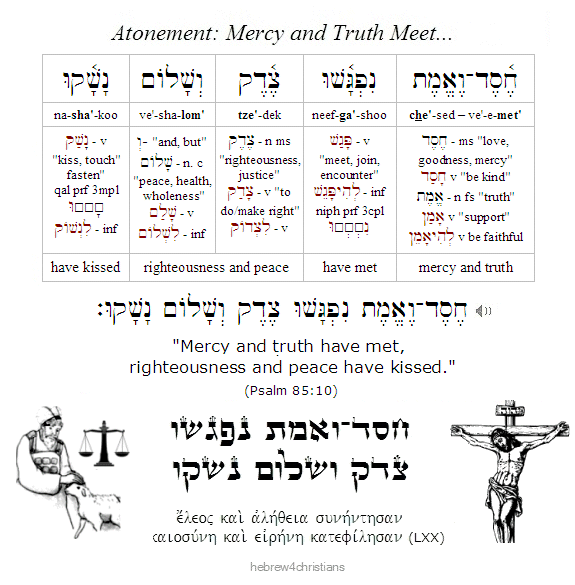
The central ritual of atonement given in the Torah is that of the anointed High Priest sprinkling sacrificial blood over the tablets of the law upon the kapporet (the "mercy seat") of the Ark of the Covenant - the Place where "Love and truth meet, where righteousness and peace kiss" (Psalm 85:10). From the midst of the surrounding cloud in the Holy of Holies the Voice of the LORD was heard, just as it was in the midst of the surrounding cloud of darkness upon the cross that Yeshua cried out in intercession for our sins...
חֶסֶד־וֶאֱמֶת נִפְגָּשׁוּ
צֶדֶק וְשָׁלוֹם נָשָׁקוּ

"Mercy and truth have met,
righteousness and peace have kissed."
(Psalm 85:10)

Note further that the High Priest was required to perform the Yom Kippur avodah (service) alone, while wearing humble attire, divested of his glory, and in complete solitude: "No one may be in the tent of meeting from the time he enters to make atonement in the Holy Place until he comes out" (Lev. 16:17). The Hebrew text literally says, "no adam (אָדָם) shall be in the tent," which suggests that something more than the natural man is needed for divine intercession. And just as Moses alone approached God in the thick clouds at Sinai to receive the revelation of the Altar as mediator of the older covenant (Exod. 24:15), so Yeshua, the Mediator of the New Covenant, went through his severest agony on the cross as the darkness covered the earth (Luke 23:44; Matt. 27:45).
All this should rouse our hearts in praise to the Lord our God. Hallelujah! Blessed is His Name forever! Amen...
The Prophetic Song of Moses...
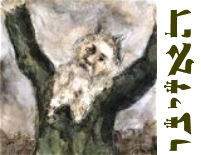
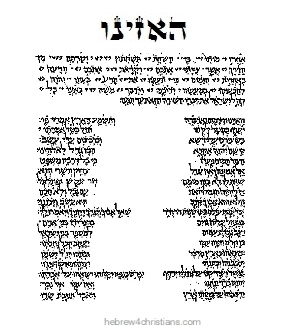
We always read the "Ha'azinu" every year during the High Holidays...
09.28.25 (Tishri 6, 5786) In last week's Torah portion for Rosh Hashanah (i.e., parashat Vayeleich), Moses finished his long address to the people of Israel and commissioned Joshua to be his successor. The LORD then foretold that after Moses' death the Israelites would "whore after foreign gods" and break covenant with Him. In light of this, Moses was instructed to teach the Israelites a great prophetic song called the "Ha'azinu." This week's portion provides the words of this song which foretells of Israel's history (past, present, and the future redemption) and that warns the people not to stray from the path that God had commanded. Structured in the form of an "oracle," the Ha'azinu contains Moses' final words of prophecy given to the Israelites before he ascended Mount Nebo to die.
The oracle begins by declaring the righteousness of God. Moses reminded the people of all that God had done for them and then foresaw all the great gifts they would enjoy as God's chosen nation in the promised land. However, instead of thanking God for all these gifts, Moses foresaw that the people would "grow fat" and forsake the LORD for various "no-gods." This would cause God's anger to burn, and Israel's apostasy would eventually lead to defeat at the hand of their enemies and to eventual exile. All the various curses listed earlier in the covenant would then come upon the people: "I will heap disasters upon them; I will spend my arrows on them; they shall be wasted with hunger, and devoured by plague and poisonous pestilence." Indeed, God would have entirely destroyed the Jewish people were it not for His reputation among the nations, lest they should say, "Our hand is triumphant, it was not the LORD who did all this."
Ultimately, however, God will vindicate his justice and mercy before heaven and earth by saving Israel from her enemies and atoning for all her sins. The song ends, "Cry out, O nations, with his people, for he will avenge his servants' blood; he will take vengeance against his enemies, and will atone for his land and his people."
After Moses recited the words of this song, he encouraged the people to take the words of his prophecy to heart and to teach them diligently to their children. "For it is no empty word for you, but your very life, and by this word you shall live long in the land." The portion ends with Moses ascending Mount Nebo so that he could see the Promised Land before he died.
Hebrew Lesson
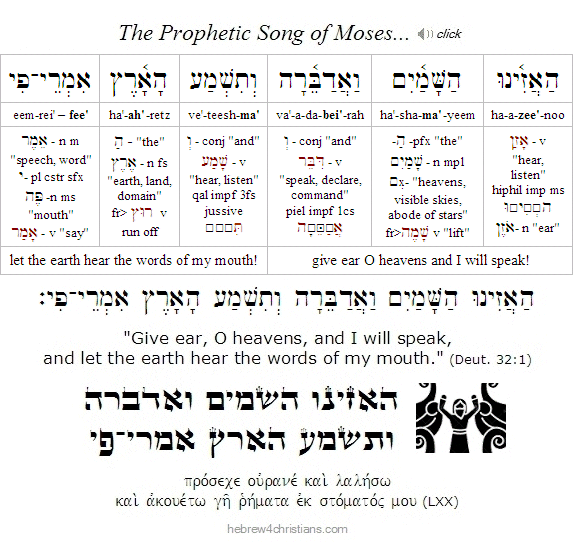
Deut. 32:1 reading (click for audio):
 |
We read the Ha'azinu every year near the High Holidays, either just before or just after Yom Kippur. In the Sefer Torah (Torah Scroll), the prophetic song is written in a stylized two-column format with extra spaces. Each line of the shirah (song) is matched by a second, parallel unit (Talmud: Shabbat 103b).
The Ha'azinu reminds us that who we listen to ultimately decides our fate. It begins, "Give ear, O heavens (הַאֲזִינוּ הַשָּׁמַיִם), and I will speak, and let the earth hear (וְתִשְׁמַע הָאָרֶץ) the words of my mouth" (Deut. 32:1). The word ha'azinu (הַאֲזִינוּ) comes from verb azan (אָזַנ), as does the Hebrew word for "ear" (i.e., ozen: אזֶן). The Midrash Rabbah says that the ear (אזֶן) gives life to all the organs of the body. How so? By listening (שׁמע, shema) to the Torah. This idea is repeated in the New Testament: "Faith comes from listening to the Word of God" (Rom. 10:17). The Word of God (דְּבַר־אֱלהִים) is our very life, friends...
Ha'azinu - Yom Kippur Podcast...
09.28.25 (Tishri 6, 5786) In this "High Holiday" podcast, I discuss Yom Kippur (Day of Atonement) and its themes, particularly in reference to the atonement given in the Messiah Yeshua, as well as parashat Ha'azinu, the Torah portion we always read between Rosh Hashanah and Yom Kippur. The Ha'azinu is an amazing prophetic song ("shirah") written by Moses just before he died. Written nearly 1,500 years before the advent of Yeshua, Moses foresaw the climatic events of Israel's history -- its past, present, and most notably its future, including the future time of redemption and atonement at the End of the Age.
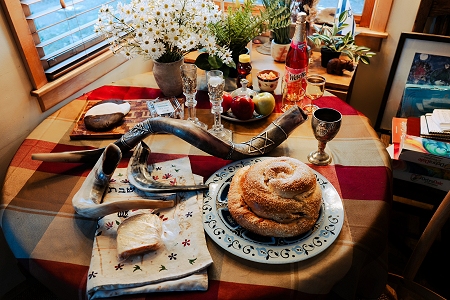
Our Rosh Hashanah Table...
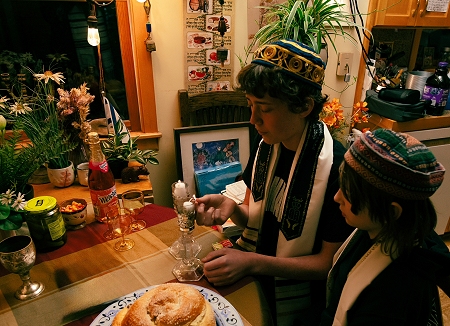
Judah lights Yom Tov candles...

Apples and Honey...
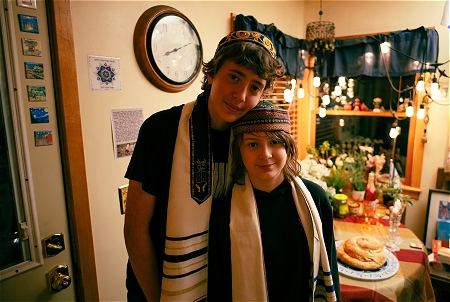
Judah and Manny...
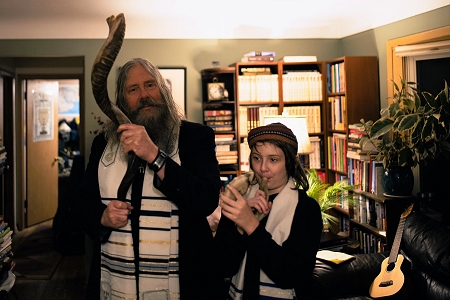
John and Manny blowing shofars...
Yom Kippur and God's Name...
Yom Kippur, or the "Day of Atonement," begins Wednesday, October 1st this year...
09.26.25 (Tishri 4, 5786) Yom Kippur was the only time when the High Priest could enter the Holy of Holies and call upon the Name of YHVH / YHVH (i.e., יהוה) to offer blood sacrifice for the sins of the people. This "life for a life" principle is the foundation of the sacrificial system and marked the great day of intercession made by the High Priest on behalf of Israel. For this reason it was also called the "Day of God's Mercy," or the "Day of God's Name (יום השם). This alludes to the revelation of the attributes of God's Compassion after the sin of the Golden Calf (see Exod. 34:6-7) -- a disclosure that foreshadowed the New Covenant. How much more, then, is Yom Kippur the "Day of Yeshua's Name" (יום ישוע) since He secured for all of humanity everlasting kapparah (atonement)? Yeshua the Messiah is Moshia ha'olam (מוֹשִׁיעַ הָעוֹלָם), the Savior of the world; He alone possesses the "Name above all other Names" (Phil. 2:9-10; Acts 4:12). It is altogether fitting, then, that God's "hidden Name" (i.e., shem ha-meforash: שֵׁם הַמְּפרָשׁ) was proclaimed before the cover of the Ark of the Covenant in the Holy of Holies while atonement for our sins was made through the sacrificial blood.
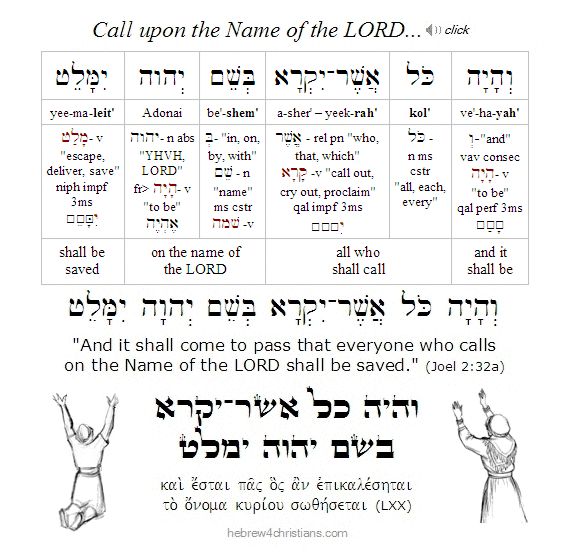
This gives us a whole new perspective on Paul's words (Rom. 10:9): "if you confess with your mouth that Yeshua is LORD (יהוה) and believe in your heart that God raised Him from the dead (i.e., that his blood was shed and presented on your behalf upon the heavenly kapporet), then you will be saved (that is, you will be reconciled to God and made a partaker of the atoning work of Yeshua). Surely the Apostle Paul, a zealous rabbi who diligently studied Torah in Jerusalem under Rabbi Gamaliel (who was himself the grandson of the renowned Rabbi Hillel the Elder), understood the theological implications when he stated that the prophecy: "And it shall come to pass that everyone who calls on the Name of the LORD (בְּשֵׁם יְהוָה) shall be saved" (Joel 2:32) applied directly to Yeshua (Rom. 10:10).
Hebrew Lesson
Joel 2:32a reading (click):
 |
Teshuvah of the Savior...
"God creates everything out of nothing. And everything which God is to use, he first reduces to nothing." - Soren Kierkegaard
09.26.25 (Tishri 4, 5786) "Repent, for the kingdom of heaven has drawn near" (Matt. 3:2). During this "season of teshuvah" (חודש תשובה) it is vital to understand exactly how we are to turn to God to find life.
Some religious people understand "repentance" to mean focusing on themselves, lamenting their sins, and making resolutions to improve their behavior, though this is not the meaning of teshuvah ("repentance") as Yeshua taught, which is turning of the heart in trust of God's great love and in the promise of newness of life (John 10:10,28). We do not begin with the imperative to turn until we understand the declaration of God's love given in Messiah. That is the problem of worldly or carnal thinking regarding the gospel. The carnal person imagines the declaration to be the imperative instead of seeing it as the reason for the heart's response to God's unconditional mercy to be received by faith...
"It is no longer 'I' who live but Messiah who lives in me," which means we find life and righteousness in the LORD and not in ourselves -- neither in our resolutions to change, nor in our religious practices, nor even our acts of repentance (Titus 3:5). We are "crucified with" Messiah, and that means the self-life comes to an end (Col. 3:3).
Regarding yourself as separated from God's acceptance will inevitably lead you to the "works of the law" and therefore to the "wheel of sin and death" -- and to despair.
Rightly understood, then, teshuvah cannot be separated from the salvation of the LORD (יְשׁוּעַת יְהוָה), nor can we disregard God's righteousness in the vain attempt to establish our own. Teshuvah receives the miracle of divine exchange: "For our sake he made Him to be sin who knew no sin, so that in Him we might become the righteousness of God" (2 Cor. 5:21).
We do not "reject the grace of God" (Οὐκ ἀθετῶ τὴν χάριν τοῦ θεοῦ) by seeking justification apart from the truth and blessing of Messiah, for He is the one "who loves me and gave himself for me" (Gal. 2:20-21).
The sickness of sin is lethal, and there is no remedy apart from turning to behold Yeshua, the "fiery serpent" lifted upon a stake, the One crucified for our deliverance (Num. 21:8; John 3:14; Gal. 3:13). The teshuvah of God is to turn away from yourself to behold the miracle of God's righteousness given for your sake, and therefore it is a matter of radical faith. "We had the sentence of death in ourselves, that we should not trust in ourselves, but in God who raises the dead" (2 Cor. 1:9). Amen, the verdict of the law condemns us, but God has given us a new covenant (בְּרִית חֲדָשָׁה) in Yeshua the Messiah, "not like the covenant that I made with the fathers on the day when I took them by the hand to bring them out of the land of Egypt" (Jer. 31:31-32), and by means of this new covenant the righteousness of God is given to the one who trusts in sacrificial death of Messiah given on their behalf. "Therefore, if anyone is in Messiah, he is briah chadashah (בְּרִיאָה חֲדָשָׁה), a new creation; the old has passed away; behold, the new has come" (2 Cor. 5:17).
We are told that we must "receive" the life of Yeshua into our hearts, and that is certainly true, but we must also receive his death as well... This is the meaning of "taking up your cross." It is the death of Yeshua in your place that releases you from the tochechah curse of the law (מִקִּלְלַת הַתּוֹרָה), that is, spiritual death, as it is says: "the Messiah has redeemed us from the curse of the law by becoming a curse for us, for it is written, "Cursed is everyone who is hanged on a tree" (Gal. 3:13).
The teshuvah of Yeshua is the miracle of new life; Messiah sets you free from the power of sin and death itself. The repentance of Yeshua is to trust in God's remedy for your sin: "This is the work of God, to believe in the One whom God sent" (John 6:29).
"He saw that there was no man, and wondered that there was no one to intercede; then His own arm brought him salvation, and his righteousness upheld him" (Isa. 59:16). We must turn away from the idea that God demands anything from us other than trust in his love. "Truly, I say to you, unless you turn and become like children, you will never enter the kingdom of heaven" (Matt. 18:3). Stop trying to measure up to his standards. You simply cannot give more than you have the love to give, so you must begin by getting your heart needs met by accepting God's unconditional love. It's not about what you do for God, after all, but about what he does for you. That's the message of the gospel.
Trust that you are rightly related to God because of the salvation of Yeshua, not because of your own efforts at self-improvement. "I tell you the solemn truth, the one who hears my message and believes the One who sent me has eternal life (חַיֵּי עוֹלָם) and will not be condemned, but has passed over (i.e., μετά + βαίνω, lit., "crossed over" [עָבַר]) from death to life" (John 5:24).
We must be careful not to worship an idol, that is, a false concept of God! It is possible to read the Bible, to go to church or synagogue, and yet worship a pagan god. How so? By not knowing the heart of the Father; by not honoring the One who passionately seeks our healing. We know the Father by the Son, that is, in "the language of Son" (Heb. 1:2; Luke 10:21-24). Our heavenly Father is eager to forgive and embrace all of his children.
In Yeshua's famous parable of the "prodigal son," the father saw his child a "long way off" and ran to embrace and kiss him - no questions asked, no explanations needed about his past. When the son nevertheless began reciting his carefully prepared speech of repentance, the father barely listened, and in his overwhelming joy instructed his servants, 'Bring quickly the best robe, and put it on him, and put a ring on his hand, and shoes on his feet. And bring the fattened calf and kill it, and let us eat and celebrate. For this my son was dead, and is alive again; he was lost, and is found...' (Luke 15:20-25).
Hebrew Lesson
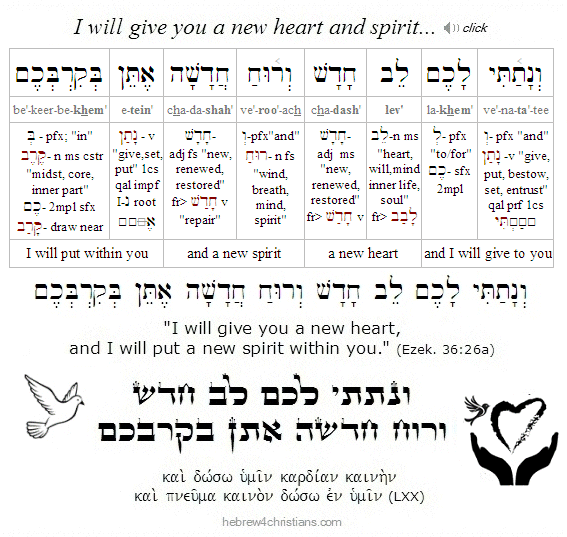
Ezekiel 36:26a Hebrew reading (click):
 |
The Shepherd's Call...
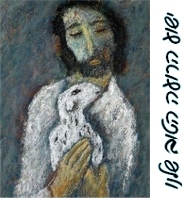
09.26.25 (Tishri 4, 5786) "What do you think? If a man has a hundred sheep, and one of them has gone astray, does he not leave the ninety-nine on the mountains and go in search of the one that went astray? And if he finds it, truly, I say to you, he rejoices over it more than over the ninety-nine that never went astray" (Matt. 18:12-13).
Though it involves sorrow, and the pain of being lost, repentance is ultimately about finding joy, and when we return to God, we have reason to rejoice. The Good Shepherd says, "Rejoice with me, for I have found my sheep that was lost. Just so, I tell you, there will be more joy in heaven over one sinner who repents than over ninety-nine righteous persons who need no repentance" (Luke 15:6-7).
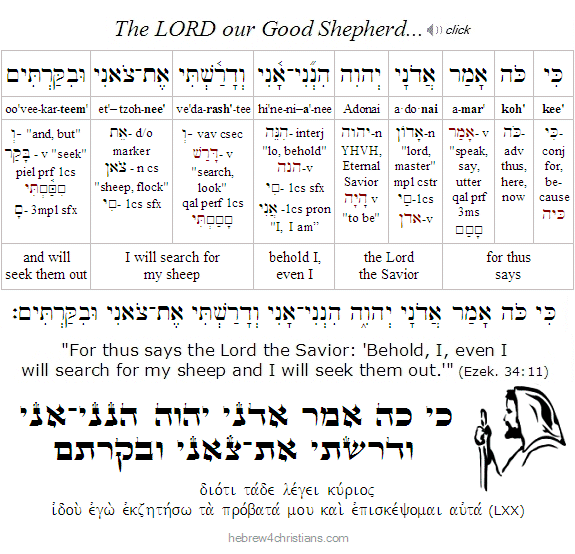
Indeed, the Son of Man came to seek and to save the lost: "For thus says the Lord GOD: Behold, I myself will search for my sheep and I will seek them out... I myself will be the Shepherd of my sheep, and I myself will make them lie down, declares the Lord GOD. I will seek the lost, and I will bring back the banished, and I will bind up the injured, and I will strengthen the sick..." (Ezek. 34:11,15-16).
Hebrew Lesson
Ezekiel 34:11 reading (click for audio):
 |
Anticipating Yom Kippur...
Yom Kippur, or the "Day of Atonement," begins Wed., Oct. 1st before sundown...
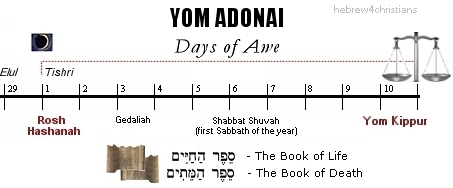
09.26.25 (Tishri 4, 5786) Yom tov, chaverim. As I mentioned last week, according to Jewish tradition on Rosh Hashanah the destiny of the righteous, or the tzaddikim, are written in the "Book of Life" (סֵפֶר הַחַיִּים), while the destiny of the wicked, or the resha'im, are written in the "Book of Death" (סֶפֶר הַמָּוֵת), though the people "in between" will not be inscribed in either book but are given a period of ten days -- from Rosh Hashanah until Yom Kippur -- to turn to God before their fate is "sealed" for the new year. On Yom Kippur, then, everyone's name will be indelibly written in one or the other of the two books, and the ten days are therefore referred to as aseret yemei teshuvah (עֲשֶׂרֶת יְמֵי תְּשׁוּבָה) - the "Ten Days of Repentance," and yamim nora'im (ימים נוראים) - the "Days of Awe," because repentance at this time (or its lack) will affect the divine decree for the coming year....
 |
The climax of these Ten Days of Awe is a 25 hour fast on Yom Kippur, the "Day of Atonenent," that symbolizes the people's sincere desire to be purified from their sins. The sages state that "afflicting the soul" (Lev. 23:32), or fasting from food and drink, is not undertaken as a means of punishing ourselves for our sins, but is intended to help us focus entirely on our spiritual side, free from carnal interests and concerns. It is a day utterly focused on the LORD and our need for reconciliation and salvation...
The biblical name for the Day of Atonement is Yom Kippurim (יוֹם הַכִּפֻּרִים), meaning "the day of covering(s), atonements, pardons, reconciling." Yom Kippur was the only time when the High Priest would enter the Holy of Holies and utter the Name of YHVH to offer blood sacrifice for the sins of the people. This "life for a life" principle is the foundation of the sacrificial system and marked the day of intercession made by the High Priest on behalf of Israel.
 |
Yom Kippur is one of the most important holidays of the Jewish Year and holds tremendous significance regarding the Second Coming of Messiah, the restoration of national Israel, and the final judgment of the world. It is also a day that reveals the High-Priestly work of Yeshua as our Kohen Gadol (High Priest) after the order of Malki-Tzedek (Heb. 5:10, 6:20).
Note that in the Scriptures, Yom Kippur is actually written in the plural in the Torah, Yom Ha-Kippurim (יוֹם הַכִּפֻּרִים), perhaps because the purification process cleansed from a multitude of transgressions, iniquities, and sins. However, the name also prophetically alludes to the two great atonements given by the LORD - the first for those among the nations who turn to Yeshua for cleansing and forgiveness, and the second for the purification of ethnic Israel during Yom Adonai, the great Day of the LORD at the end of days.
Yom Kippur once was called "The Day of Mercy" (יום הרחמים) or "The Day of God's Name" (יום השם), alluding to the revelation of the Name YHVH (יהוה) and the attributes of God's Compassion after the sin of the Golden Calf (Exod. 34:6-7). How much more, then, is Yom Kippur the "Day of Yeshua's Name" since He secured for all of humanity everlasting kapparah (atonement)? Yeshua the Messiah is Moshia ha'olam (מוֹשִׁיעַ הָעוֹלָם), the Savior of the world; His indeed is the "Name above all other Names" (Phil. 2:9-10; Acts 4:12). It is altogether fitting, then, that His "hidden" Name was proclaimed before the kapporet (the cover of the Ark of the Covenant) in the Holy of Holies before the Father for the purification of our sin.
We affirm that Judgment Day has come and eternal justice was served through the sacrificial offering of Yeshua for our sins (2 Cor. 5:21). Yeshua is the complete fulfillment of the Akedah of Isaac. Our names are written in the Lamb's Book of Life, or Sefer HaChayim (Rev. 13:8). We do not believe that we are made acceptable in God's sight by means of "our own works of righteousness" (Titus 3:5-6), though of course that does not excuse us from being without good works (as "fruit" of the Holy Spirit in our lives). Indeed, professing Christians will stand before the Throne of Judgment to account for their lives (2 Cor. 5:10). "Every man's work shall be made manifest: for the day shall declare it, because it shall be revealed by fire; and the fire shall try every man's work of what sort it is" (1 Cor. 3:13). We should walk in "fear and trembling" (Phil. 2:12). Life is an examination, a test, and every moment is irrepeatable. Every "careless" word we utter will be echoed on before heaven (see Matt. 12:36-37). Our future day of judgment is being decided today... May we we awaken to the urgency of the hour and call upon the Name above all names, our great Lord.
Hebrew Lesson
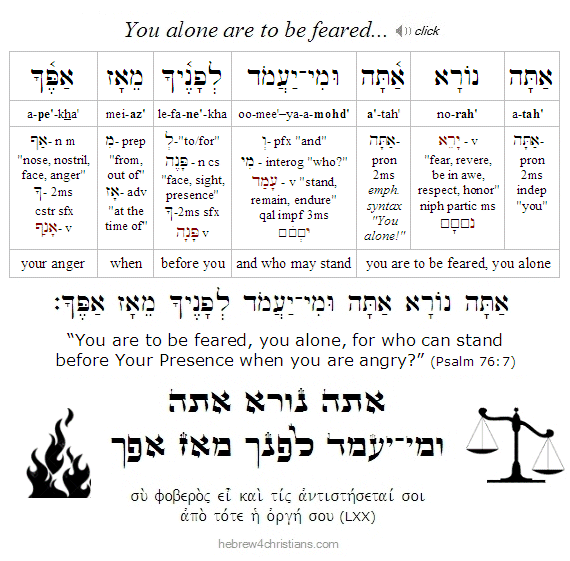
Psalm 76:7 reading (click for audio):
Teshuvah and Strength...
"The Lord bestows his blessings where he finds the vessels empty." - Thomas Kempis
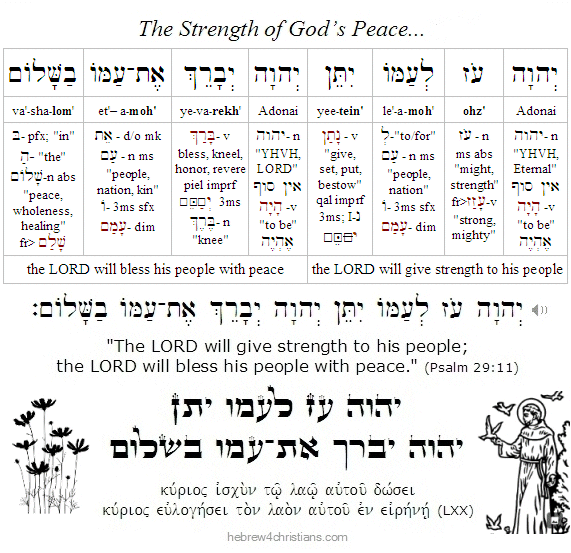
09.25.25 (Tishri 3, 5786) There may arise moments – dark, gnawing, raw – when you may lose sight of hope, when you might even fear that you have lost your faith – not in God or his promises – but rather in yourself, in your own strength to continue, to stay focused, to keep pressing on "hope against hope..." The remedy here is always the same: to remember that within you – that is, in your flesh - "there is no good thing" and that the miracle of salvation is made secure by God's passion for you, not your own power or desire. "Not by might, nor by power, but by my Spirit, saith the LORD of Hosts."
We don't trust in ourselves nor in the strength of our inner resolve, but solely in the power of God to make the way (John 1:13). We must turn away from ourselves to regain the message of God's unfailing love; only when we lose sight of ourselves do we find ourselves. God redeems you from your lost estate and touches you in your uncleanness; He clothes himself in your pain so that you may be clothed in his love. That never changes, despite dark moments, and to that we must always return...
Hebrew Lesson
Psalm 29:11 reading (click):
 |
Where it says, "I can do all things through Messiah who strengthens me" (Phil 4:13), that includes being healed of the inner pain of your life: your failures, your shame, the ache of rejection, abandonment, and so on. It means being set free from disillusionment, despair, and the oppression of relentless fear. "I can do all things through Messiah" means no longer accepting messages of self-hatred and hopelessness, no longer heeding the malicious whispers that say: "I am of no value," "I am unlovable," "my life is hopeless." No, "I can do all things through Messiah" means learning to be accepted, honored, and esteemed by God; it means opening your heart to God's love and blessing for your life; it means allowing your heart to be made right, to have inner peace... After all, Yeshua's great prayer was that we would know the truth of God's love for us (John 17), and this is the central need our lives.
Love Stronger than Death...
09.25.25 (Tishri 3, 5786) French philosopher and mathematician Blaise Pascal (1623-1662) wrote that the Christian religion teaches two essential truths. The first truth is that there is a Creator who can be known and who is the Lawgiver of the universe, and the second truth is that there is corruption in human nature that alienates us from this God. Both points are equally essential, because knowing God without knowing our wretchedness leads to presumption and idolatry, while knowing our wretchedness apart from knowing the Redeemer who can set us free from our sickness will lead us to self-destruction and despair. Various religions and philosophies often negate one of these points at the expense of the other and are therefore untrue to the reality of the human condition. We simply cannot know the meaning of Christ without knowing both the truth of God and our inherent wretchedness, which is explicated in the message of the cross itself...
 |
The message of the gospel is that though we recognize our inner sickness of soul, our innate depravity, and our benighted condition, God in his infinite mercy unites himself with our inmost need and delivers us from our corruption through the mediation of the Savior who loves us and gave himself for us (2 Cor. 5:12; Gal. 2:20; Titus 2:14).
Upheld by His Mercies...
09.25.25 (Tishri 3, 5786) Julian of Norwich gave her account of living by faith. On the one hand she said she experienced times of revelation and sweet delight in her soul, "filled with everlasting certitude, firmly sustained, without any painful dread," but at other times she was seemingly left to herself in depression, "weary of life and irked with myself, so that I kept the patience to go on living only with difficultly" (Revelations of Divine Love). In times of joy she exulted with the Apostle Paul, saying "Nothing can separate me from the love of Christ!" while in times of dejection she cried out, "Lord, save me, for I perish!"
In hindsight she later understood that the Lord allowed her to sometimes feel his comfort and at other times to be left to herself to teach her that it is his will that she would understand that he keeps her equally safe, both in woe as in well-being... "If there is anywhere on earth a lover of God who is always kept safe from falling, I know nothing of it, for it was not shown to me. But this was shown - that in falling and rising again we are always kept in that same precious love. Between God and the soul there is no between."
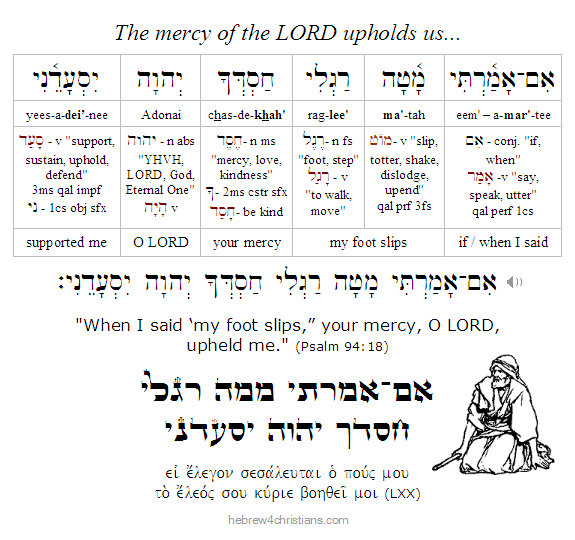 |
When you are unsure of your way, when you walk in uncertainty, you are unsteady in your resolve and are tempted to regard your life as being without any solid foundation. When you become alive to the truth that the LORD is your "Rock," the very ground upon which you live, move, and have your being, then your steps are made sure, as it says, "The steps of a man are established by the LORD, when he delights in his way; though he fall, he shall not be cast down: for the LORD holds his hand" (Psalm 37:23-24). Amen.
Come to the Savior...
09.24.25 (Tishri 2, 5786) "I thank thee, O Father, Lord of heaven and earth, because you have hidden these things from the wise and prudent, and have revealed them to babes.... Come unto me, all you that labor and are heavy laden, and I will give you rest. Take my yoke upon you, and learn from me; for I am meek and lowly in heart: and you shall find rest unto your souls. For my yoke is easy, and my burden is light" (Matt. 11:25, 28-30).
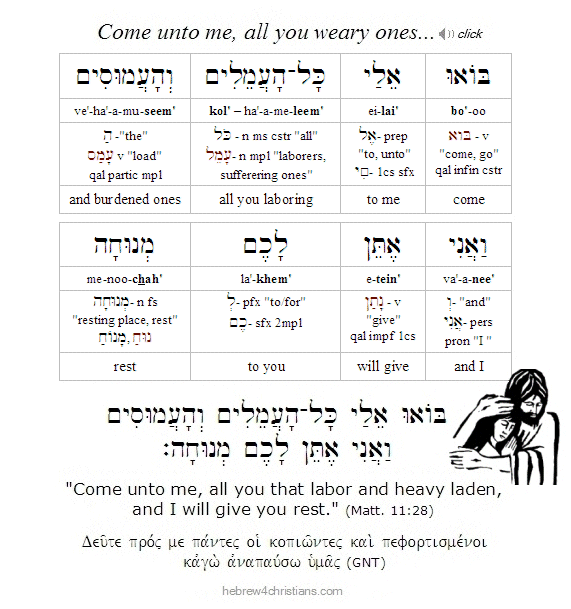 |
"Come unto me..." (בּוֹא אֵלַי) These are timeless words from our Savior who opens his heart to receive the "babes," that is, those who are simple at heart and cry out in their urgent need for God's help. "Come." This is his invitation to your heart, his personal call that beckons you to draw near to him in your trouble. In the midst of a confusing world and the babble of voices, the Savior cries out, "Come to me!" Turn away from the religionists and the so-called wise of the world, because the Father (את אבא), the Lord of heaven and earth (יהוה שמים וארץ) has hidden the truth of salvation from the proud of heart. God calls out to the humble, the lowly, and the broken; he looks to the poor and contrite of heart.
"Come unto me, all you who labor and are heavy laden." This includes you of doubting heart, weighed down by your anxieties and cares. You have gathered the sheaves and found little flax; you have toiled in the heat of day for little gain. "Come, you who are weary" of the news of the day, the sorrows of loss, the cruelly of the proud. "Come unto me" all who are weary of life, who ache in heart and dismay over the vain repetition of wickedness and sin. "Come unto me" all who feel like giving up, all who feel like they are dying inside...
"Come unto me," this is a message to your heart from the One who calls you, the heart behind the call, the Lord who reaches out to you in revelation and compassion, saying, "Come to me in your heaviness of heart, the utter depths of your sigh, in your weariness, your sorrows, and in your mourning, and I will give you rest, I will comfort you, I will heal your grief and give to the strong consolation of God's tender mercies and love.
"Take my yoke upon you. This is my yoke, my burden, and my passion - that you may enter my rest, know my peace, and draw strength from my love for you. Take hold and embrace my life given for you, to free you from the burden of suffering for your sins. This is the yoke of My love; this is the depths of spiritual rebirth, to know yourself as beloved because of the yoke of My love for you." This yoke "joins you" to his love. His yoke is for your heart, and you respond by taking up that yoke and sharing in what it means.
"Learn from me." This is the yoke of the disciple - to come under the tutelage of the love of God, and to know him in all your ways. "I am meek and lowly in heart," that is, he is mild, patient, kind, and gracious to you - and by responding to his acceptance and affirmation you will find "rest for your soul," you will be unburdened by the fears and distress of the ego, you will be set free from bondage to yourself.
"My yoke is easy." The Greek word translated "easy" means "full of grace," gentle and agreeable, and in Hebrew the word (נָעִים) is translated as "pleasant" and "joyful." Being in relationship with Yeshua is a matter of grace and communion. "My burden is light." The Hebrew word for "light" is "kal" (קל), meaning light, swift of foot, easily managed. Kal can also mean "simple" or essential. Indeed the burden of the Lord is weighty in earnestness but is carried by the grace of God's joy.
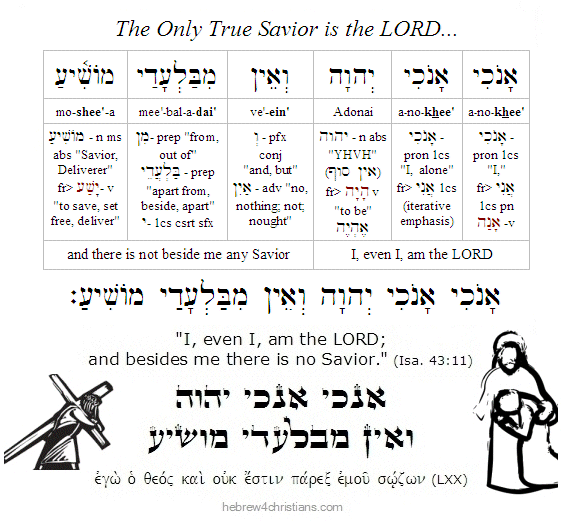
Paradoxically, this beautiful passage of Scripture distills the message of teshuvah with poignant simplicity and grace. "Come to me" is the essence of teshuvah, that is, turning to God for life. It is not about religious practices or liturgies; it is not even about morality or spiritual curiosity. It is about a radically new kind of life that is only known in a trusting relationship with Yeshua. He is the "way and the truth and the life" (John 14:6). No one can find eternal life apart from him. When we come to him and learn (i.e., receive) his love, we become new creations, reborn as beloved children, and heirs of all the promises of God. Teshuvah is the means to the greater end of knowing the heart of God. This is the essence of salvation itself, for there is no turning to God apart from Yeshua, who alone is the Savior and the one who truly returns us to God.
Hebrew Lesson
Isaiah 43:11 reading (click for audio):
 |
The Call to Seek God...

The ten days between Rosh Hashanah and Yom Kippur are accorded special sanctity and are called Aseret Yemei Teshuvah - the "Ten Days of Repentance."
09.24.25 (Tishri 2, 5786) The Hebrew phrase hester panim (הֶסְתֵר פָּנִים) means "hiding of the face" and is sometimes used in connection with the Book of Esther, where God's Name isn't mentioned even once, yet his hidden Presence is realized and revealed in the outcome of the story. In this sense of the term, hester panim is somewhat like the sun on an overcast day: Just because you don't see it doesn't mean it isn't there. God's providential care for us is at work at all times, whether we perceive it or not.
On the last day of Moses' life the LORD said to him, "Behold, you are about to lie down with your fathers. This people will rise and whore after the foreign gods among them in the land that they are entering, and they will forsake me and break my covenant that I have made with them" (Deut. 31:16). The LORD continues: "Then my anger will be kindled against them in that day, and I will forsake them and hide my face from them, and they will be devoured.... And I will surely hide my face in that day because of all the evil that they have done, because they have turned to other gods" (Deut. 31:17-18).
Unlike the happy thought that hester panim refers to God's hidden providence for good, in this case hester panim refers to the sobering prospect of the withdrawal of the Divine Presence itself. God "hides His face" from people because their own desire for evil blinds them to the truth of His Presence. Hester panim therefore is not only "absence of Divine Presence," but "presence of Divine Absence." In other words, sin and selfishness causes the Divine Presence to remove from us, but that is precisely because we remove ourselves from Him. "I will hide... because you have turned..." The distance is therefore reciprocal: Selfishness turns God away from us and turns us away from God. Chas v'shalom...
In difficult moments, people may cynically ask, "Where's God?" yet they have no intention of seeking the Divine Presence. They are quick to judge the Divine Absence as an excuse for the return to selfishness. This "hardening of the heart" leads to ever-increasing spiritual darkness and confusion... Finally the line is crossed and they become unable to turn away, unable not to sin (non posse non peccare). They are consigned to a frightful state: "God gave them up to a debased mind (αδοκιμον νουν) to do what ought not to be done" (Rom. 1:28).
People tend to blame God for the Divine Absence yet they forget that God "hides His face" from those who elevate selfish desire over all other things... "Whoring after other gods" is nothing more than perverse self-exaltation, stubborn self-worship, and the incessant return to yourself as the object of ultimate concern in life.... This profound despair form is truly the "sickness unto death."
Perhaps this topic is a bit disquieting to your heart... In some tragic cases, the disease "reaches term" and the person actually dies. The "hiding of face" is then forever sealed. Since we have hidden our face from Him, God has hidden His face from us. God forbid that this should be anyone's ultimate spiritual destiny.
Is there a redemptive side to all of this? Yes of course. In some cases God "turns away" from us in order to afflict us and understand our need to return to Him: "It was good for me that I was afflicted, that I might learn Your statues" (Psalm 119:71). God hides so that we will seek Him. The sense of "Divine Absence" can be a gift that helps us seek the Divine Presence: "Draw near to God, and he will draw near to you" (James 4:8). The "dark night of the soul" can be a means of leading us to godly sorrow that leads to life (2 Cor. 7:10).
In keeping with the Days of Awe and the call to return to the LORD God with all our hearts, then, let me quote from the prophet Isaiah who appealed to Israel: "Seek the LORD while he may be found; call upon him while he is near; let the wicked forsake his way, and the unrighteous man his thoughts; let him return to the LORD, that he may have compassion on him, and to our God, for he will abundantly pardon" (Isa. 55:6-7). Amen. Let us "wait for the LORD, who is hiding his face from the house of Jacob, and hope in him" (Isa. 8:17). Wishing you teshuvah shlemah b'ahavat Yeshua - "A complete turning in the love of Jesus." .
Hebrew Lesson
Jeremiah 29:13 reading (click for audio):
 |
Teshuvah and Renewal...
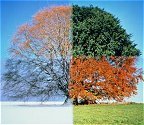
09.24.25 (Tishri 2, 5786) How hurriedly the days go by; how quickly the seasons change! It seems that we've just begun the task of teshuvah and now Rosh Hashanah is upon us... Perhaps that's part of the reason why Jewish tradition sets aside an entire month to help us get ready. We need the month of Elul to help us slow down and reconnect with what matters most of all -- our relationship with God, others, and ourselves.
But perhaps we've wasted time this month, squandering the opportunity to undergo cheshbon ha-nefesh (self-examination) and to take account of our lives before the LORD? It's never too late, really. The gates of repentance are always open. "Today, if you hear his voice, do not harden your heart" (Heb. 3:15).
Though it's a difficult and sometimes painful process, the primary goal of teshuvah is healing from the oppression of our sins and the restoration of our relationships. Someone once said that great sins are like great possessions -- both are difficult to give up. We have to be willing to "give up our sins" in order to find inner healing (and "giving up our sins" also may mean breaking free of the "pride-shame" cycle). Often we can only get to this point when we are afflicted and weary of our soul's sickness. We get "sick of our sickness..." Looked at this way, our afflictions are a really gift from the LORD to help us turn and surrender to Him. As the psalmist wrote: טוֹב־לִי כִי־עֻנֵּיתִי לְמַעַן אֶלְמַד חֻקֶּיךָ / "It was good for me that I was afflicted, that I might learn your statutes" (Psalm 119:71).
 |
It's important to remember that one of the main goals of the devil is to induce a sense of forgetfulness and apathy. The devil wants you to forget that you are ben melech (or bat melech) - a son (or daughter) of the King. The entire venture of teshuvah presupposes that you are created b'tzelem Elohim - in the image of God - and therefore you have infinite value and dignity. This is all the more evident in light of the awesome ransom that Yeshua our Lord paid in order to reconcile your soul with God. What is the greatest sin you can commit in your life? To forget what God has done for you... Remaining asleep, unmindful of your true identity is one of the most tragic things of life.... Therefore Rosh Hashanah is sometimes called Yom Ha-Zikaron - the "Day of Remembrance" (Lev. 23:24). The blast of the shofar is meant to jolt us from our sleep... We are to remember who we really are -- and to remember that God is our King. The person who says, "Tomorrow I will do teshuvah" really is saying, "Not now." And then tomorrow comes and he says, "Not now." And in this way his entire life passes by, saying, "Not now." Finally one day he wakes up only to find himself already dead...
According to some of the sages past events are not fixed in stone; rather they -- like our relationship to them -- can change. We do not have to live with childhood trauma or bitterness from the past. Teshuvah means "putting away childish things" and growing up (1 Cor. 13:11). Only our personal future is unknown and therefore seemingly "static." The forgiveness given through Yeshua redeems all of our sins -- including those that might haunt us from our past. Our present response to the LORD has the potential to transform everything in our lives -- both our past, present, and future... His love transforms every aspect of our lives, from cradle to grave. God is always present whenever we let Him in.
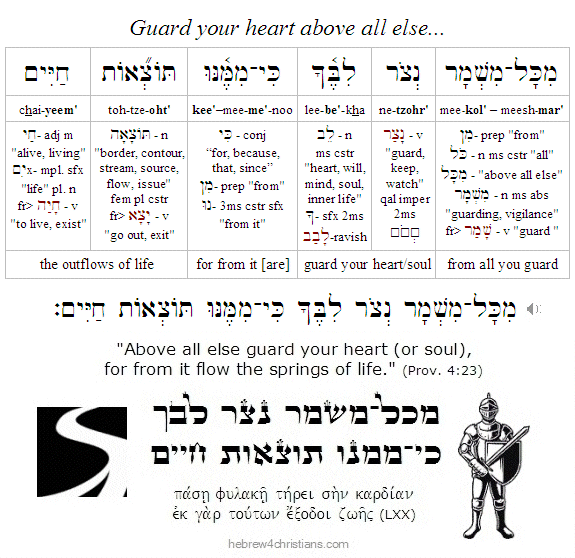
The sages point out that the gematria for the word Elul (אלוּל) equals binah (בּינה), suggesting that teshuvah is a matter of the heart's understanding of itself. Of course this is not to suggest that we should do teshuvah only during the 40 days before Yom Kippur. On the contrary, teshuvah is a lifelong and ongoing process -- a daily struggle to retain our focus and faith. Repentance is often "slow motion," involving lots of smaller decisions we make throughout the days of the year... This is the normal course of genuine transformation (or "sanctification"). The process of seeking the LORD is an ongoing process of discovery about God's love and forgiveness. For this reason the confession of sin should be a regular part of our fellowship with one another (James 5:16).
 |
The essence of Torah is to love your neighbor as yourself (Rom. 13:10; Gal. 5:14). Teshuvah means, among other things, understanding how far we are removed from this ideal and how we might move to remedy the breach. This is a daily task, an ongoing duty... But we cannot give away what we don't have to give, so if we're deficient in self-love, we will be unable to genuinely love others, too. Part of loving others is the obligation to forgive yourself for your sins. For some people, this might mean "accepting that they are accepted" by God... Real change is difficult -- some would even say impossible -- though with God all things are possible -- including the miracle of a heart of stone turning to flesh.
Forgiving others is a way to be free of their hold over us. It is a letting go of the pain of the past and finding courage to press on in hope. In the Gates of Repentance it is written: "I hereby forgive all who have hurt me, all who have wronged me, whether deliberately or inadvertently, whether by word or by deed. May no one be punished on my account. And as I forgive and pardon those who have wronged me, may those whom I have harmed forgive me, whether I acted deliberately or inadvertently, whether by word or by deed." Amen... It is only when we give up our hurt that we are able to move forward in the realm of the spirit. Faith and forgiveness are therefore intimately linked. Therefore Yeshua taught us to forgive others whenever we pray to the Father (Matt. 6:12).
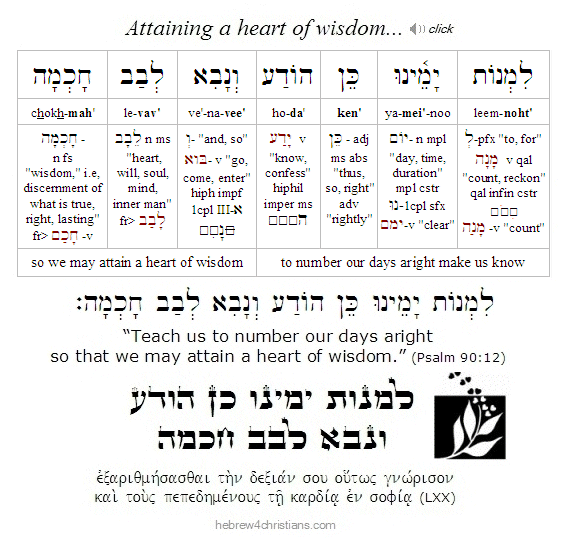
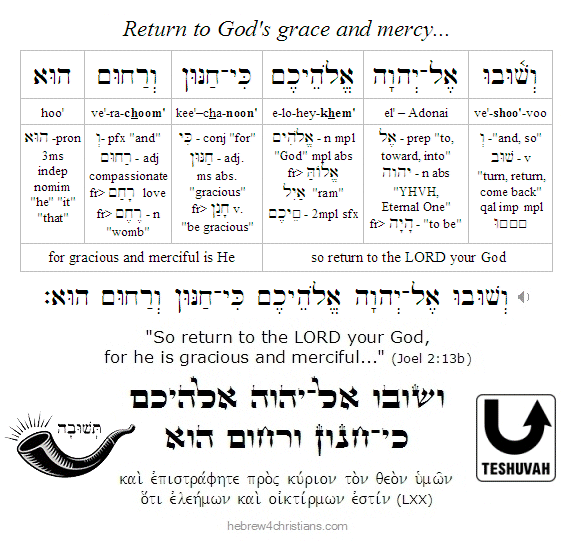
For this coming year, may it please the LORD to first of all help us to love Him with all of our hearts, and to love others as we love ourselves... May it please Him that we "lay aside every weight, and sin which clings so closely, and run with endurance the race that is set before us" (Heb. 12:1). May the LORD renew our minds so that we might discern His will (Rom. 12:2), and may He help us abide in Him -- so that we will not be ashamed at His coming (1 John 2:28). May the new year be good and sweet for us all, and may our righteous deeds increase, like the many seeds of the pomegranate (1 John 2:29). May God help us "number our days aright to attain a heart of wisdom" (Psalm 90:12).
Hashivenu Adonai elecha ve'nashuvah, chadesh yamenu ke'kedem: "Turn thou us unto Thee, O LORD, and we shall be turned; renew our days as of old" (Lam. 5:21). Amen.
Hebrew Lesson
Joel 2:13b Hebrew reading (click):
 |
Our Great Need to Forgive...
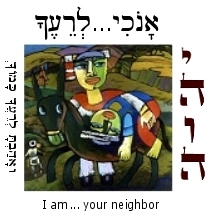
09.23.25 (Tishri 1, 5786) In the Gates of Repentance it is written: "I hereby forgive all who have hurt me, all who have wronged me, whether deliberately or inadvertently, whether by word or by deed. May no one be punished on my account. And as I forgive and pardon those who have wronged me, may those whom I have harmed forgive me, whether I acted deliberately or inadvertently, whether by word or by deed." Amen...
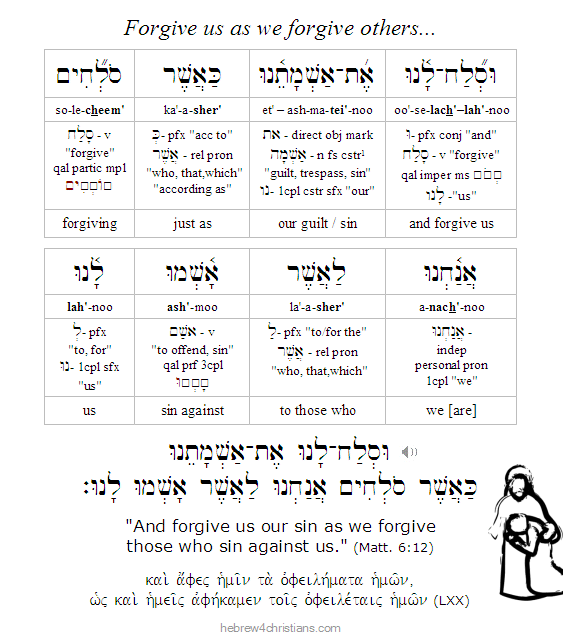
Yeshua taught us to pray "forgive us as we forgive others," which implies that our forgiveness (of others) is the measure of our own forgiveness. In other words, as we forgive others, so we experience forgiveness ourselves... Forgiveness releases the hurt, the anger, and the disappointment so these feelings do not inwardly consume and exhaust our souls. And yet forgiveness must be self-directed, too, since refusing to forgive ourselves denies or negates the forgiveness given from others. Forgiving yourself means admitting that you act just like other people, that you are human, and that you are in need of reconciliation too. We have to move on, past the shame, and to turn back to hope. As a Yiddish proverb puts it, "You are what you are, not what you were..."
It is written, "in many things we offend all," and therefore we must confess our sins one to another to find healing (James 5:16). However the practice of love overlooks a multitude of sins, and if we do not condemn those who offend us, then we will not need to forgive them for their offenses. Depression and anxiety may arise from being "frozen" in our bitterness or hurt. Walking in God's love sets us free from the slavery of negative emotions such as resentment, despair, anger, unresolved grief, and so on.
I love this affirmation and prayer attributed to Eusebius of Caesarea (c. 263-339 AD): "May I be the friend of that which is eternal and abides. May I never quarrel with those nearest me; and if I do, may we be reconciled quickly. May I never devise evil against anyone; and if any devise evil against me, may I escape uninjured and without any desire to hurt them. May I love, seek, and attain only that which is good. May I wish for the happiness of all and the misery of none. May I never rejoice in the ill-fortune of one who has wronged me. When I have done or said what is wrong, may I never wait for the rebuke of others, but always rebuke myself until I make amends."
"May I, to the extent of my ability, give all needful help to my friends and to all who are in want. May I never fail a friend in danger. When visiting those in grief, may I be able by gentle and healing words to soften their pain. May I respect myself. May I always keep tame that which rages within me. May I accustom myself to be gentle, and never be angry with people because of circumstances. May I never discuss who is wicked and what wicked things he has done, but know good men and follow their footsteps." Amen.
 |
Blessed Need of Heart...
09.23.25 (Tishri 1, 5786) "I need Thee every hour..." More than anything else, God's love is what we desperately need, isn't it? In moments of testing when we feel wounded, alone, unworthy, afraid, and needy; and especially when we succumb to the depths of despair and sickness of heart... God's love descends to the depths of our soul - to the very dust of death itself - to hear our cries and to profoundly touch us...
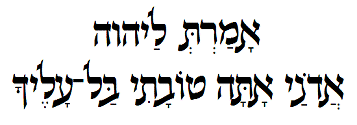
Praise the Name of Love - despite everything, God saves us from ourselves, from our worst fears, and from the hell of shame and abandonment. My soul yearns for you in the night; my spirit within me earnestly seeks you (Isa. 26:9). I say to the LORD, Adonai atah: "You are my Lord; I have no good apart from you" (Psalm 16:2).
אָמַרְתְּ לַיהוָה אֲדנָי אָתָּה
טוֹבָתִי בַּל־עָלֶיךָ
"I said to the LORD, "You are my Lord;
I have no good apart from you." (Psalm 16:2)
The ongoing need for the LORD is perhaps the highest estate of the human soul, even if it is nevertheless often attended with heartsickness and unrelenting longing. It is a great, great gift from heaven to know God as your heart's true desire - to fully understand that your relationship with Him is the ultimate concern and treasure of your existence.
Comfort from the Shepherd...
09.23.25 (Tishri 1, 5786) Shanah Tovah chaverim. The Spirit of the Lord comforts and reassures those who come to trust in Him: "My sheep hear my voice, and I know them, and they follow me. And I give them eternal life (חַיֵּי עוֹלָם), and they will never perish - no, never! - and no one will snatch them out of my hand" (John 10:27-28).
Note that the Greek grammar in this verse uses a "double negation," which is the strongest way to deny something. In other words, if the question were asked, "Will one of these sheep perish?" the answer is emphatic: "No, no, it will never happen! It is unthinkable!" Indeed all those who belong to Messiah "shall never, ever perish - not into eternity (εἰς τὸν αἰῶνα)." It is an eternal certainty that you who are trusting in Yeshua will never perish, and no power in heaven or earth will be able to take you out of God's hand... "Surely goodness and mercy shall pursue you all the days of your life, and you shall dwell in the Presence of the Lord forever (Psalm 23:6).
Regarding the certainty of salvation Yeshua said: "I tell you the solemn truth, the one who hears my message and believes in the One who sent me has (i.e., ἔχει, present active indicative) eternal life and will not be condemned, but has passed over (i.e., μετά + βαίνω, lit., "crossed over" [עָבַר]) from death to life" (John 5:24).
The verb translated "has passed over" (μεταβέβηκεν) is a perfect active that expresses completed action: "this one has already passed over from death to life." In other words, it is an accomplished reality though it is only experienced as we surrender to the love and grace of God. As the apostle Paul later summarized: "For it is by grace you have been saved (i.e., σεσῳσμένοι, a perfect passive participle that denotes completed action done on your behalf with effects that continue to the present) through faith, and this not from yourselves, it is the gift of God, not a result of works, so that no one may boast" (Eph. 2:9-10). Ultimately, salvation is a question about who you really are, not about what you do.
God does not want us uncertain or unsure of His great love for us. A fearful believer explained that he was anxious about his acceptance before heaven. When he was asked to define "salvation," he answered, "freedom, deliverance, rest, peace." So you think fear will help you do away with your fear? You are fearful of the idea of freedom from fear?
"Be strong and of good courage" - chazak ve'ematz (חֲזַק וֶאֱמָץ). The LORD God promises "never to leave you nor forsake you," and to be with you wherever you go (Josh. 1:5,9; Heb. 13:15, Psalm 139; Matt. 28:20). In the Greek New Testament the wording of Hebrews 13:15 is highly emphatic: "Not ever will I give up on you (οὐ μή σε ἀνῶ); no, not ever will I leave you behind (οὐδ᾽ οὐ μή σε ἐγκαταλίπω)." May you hear the voice of the Good Shepherd calling you, and may He forever keep you under His watchful care. Amen.
Hebrew Lesson
Psalm 23:1-3 reading (click for audio):
The Special Time of Yom Teruah...
!שנה טובה לכל העם היהודי היפה! מי ייתן וה' יברך אתכם תמיד. אמן
09.22.25 (Elul 29, 5785) The "Festival of Shofars" (i.e., yom teruah: יוֹם תְּרוּעָה), otherwise known as Rosh Hashanah (ראש השנה) in Jewish tradition, begins this evening at sundown! The call of the great shofar is to be heard, and we are close to the calling up of God's people and the Great Tribulation to begin. Israel is at war, surrounded by her enemies; there are worldwide tremors, engineered plagues, nation rising up against nation, people's hearts failing them for fear, worldwide apostasy and godlessness, and the love of many runs cold... A time of testing is approaching. Look up, for the day of redemption draws near, friends.
Let's make a joyful noise of praise to our God! L'shanah tovah b'Yeshua, chaverim!
Hebrew Lesson
Lev. 23:24 reading (click for audio):
Listen to the Shofar!
There are four primary types of shofar blasts, though some of these may be combined:
- Tekiah (תְּקִיעָה) - A long single blast (the sound of the King's coronation)
- Shevarim (שְׁבָרִים) - Three short wail-like blasts (signifying repentance)
- Teru'ah (תְּרוּעָה) - Nine staccato blasts of alarm (to awaken the soul)
- Tekiah ha-Gedolah (תְּקִיעָה הַגְּדוֹלָה) - A great long blast (for as long as you can blow!)
The general custom is to first blow tekiah, followed by shevarim, followed by teruah, and to close with tekiah ha'gedolah:
Torah and Rosh Hashanah...
The holiday of Rosh Hashanah (Yom Teruah) begins this evening at sundown...
09.22.25 (Elul 29, 5785) Though the term "Rosh Hashanah" (ראש השנה) does not explicitly occur in the Torah, the beginning of the 7th month (i.e., Tishri 1) is clearly to be set apart as "Yom Teruah" (יום תרועה), a day of shofar blowing (see Lev. 23:24-25, Num. 29:1-2). When we consult Jewish tradition for some additional insight about what this means, we discover that the sages and great commentators of the Torah universally regarded the number seven as the number of completeness. Just as the seventh day of the week was considered sacred, so too is the seventh month of the year. Therefore the sages reasoned that since each new moon (rosh chodesh) is regarded as a sacred time (see Num. 10:10), it's logical that the seventh new moon (counting from Nisan in the spring) should acquire special sanctity. This conclusion seems especially justified in this case because God directly commanded Israel to sanctify the seventh month as a solemn day of "remembrance and shofar blowing" (זִכְרוֹן תְּרוּעָה). Therefore while it is clear that the new moon of the seventh month is to be observed as "Yom Teruah," it nevertheless has a somewhat "concealed" significance, suggestive of the absence of the moon on that date itself...
Note, however, that the Torah calls the end of the harvest year (in the fall) the "end of the year" (i.e., חַג הָאָסִף בְּצֵאת הַשָּׁנָה, see Exod. 23:16), which implies both the start of a new year and the symmetry of the calendar: the fall festivals "mirror" the spring festivals and correspond to one another. Just as there is a "new year" in the spring, on the new moon of Nisan (i.e., Rosh Chodashim), so there is in the fall, on the new moon of Tishri, the seventh month... The Psalmist likewise regarded the new moon of the seventh month as especially significant (Psalm 81:3-4). And after the return of the exiles, Ezra the Scribe gathered the people at the Water Gate in Jerusalem on the first of Tishri to read the Torah before the people (see Neh. 8:1-9). Ezra's action may have been the precedent among the later sages for investing Tishri 1 with its distinctive status. That is why we make a "teruah" shout of thanks to God in anticipation of the fulfillment of God's promises and redemptive purposes during the End of Days.
The question about Rosh Hashanah has to do with the authority of Jewish tradition itself. Does the Jewish community have sanction to establish the date of Hebrew calendar? To establish the start of the month? To determine if a year was shemittah (a sabbatical year)? To sound the shofar and declare a Jubilee? According to Moses, the answer is a qualified "yes." After all, it's clear that Moses established judges and courts to determine such matters and to develop case law based on the precepts of the Torah (e.g., see Deut. 16:18). This "chain of authority" was later codified by the sages of the Mishnah, who said it was given by God first to Moses, then Joshua, then to the 70 elders, then to the prophets, and then to Ezra and the men of the Great Assembly (Pirke Avot 1:1). And according to "mainstream" Jewish tradition, Tishri 1 has been established as a "rosh hashanah" from at least the time of the return of the exiles (4th century BC). This is further attested by Flavius Josephus (first century AD) who wrote: "Moses ... appointed Nisan ... as the first month for the festivals ... the commencement of the year for everything relating to divine worship, but for selling and buying and other civil affairs he preserved the ancient order [i. e. the year beginning with Tishri]" (Antiquities 1.81). Even Yeshua Himself endorsed Ezra's division of the Scriptures into the "Law, Writings, and the Prophets" and said that not a "jot or a tittle" (kotzo shel Yod) would pass from the Torah until all was fulfilled (Luke 24:44; Matt. 5:18).
That said, there are undoubtedly a lot of Rabbinical "additions" that have accrued to the holiday over the centuries, especially since the destruction of the Second Temple. Despite this, however, let me suggest that many of the traditions of Rosh Hashanah can be genuinely helpful for us. For instance, undergoing self-examination and doing teshuvah are commanded by God and inherently valuable exercises for followers of Yeshua (see Lam. 3:40; Haggai 1:5; Psalm 119:59; Matt. 7:3-5, Gal. 6:3-4, 1 Cor. 11:28, 2 Cor. 13:5, James 5:16, 1 John 1:8-9, etc.). Setting aside 40 days each year to help us turn away from sin is a healing custom, especially if it's done in light of truth of the gospel message. After all, Christians will stand before the Throne of Judgment (kisei ha-din) to give account for their lives to God (see 2 Cor. 5:10). As it is written: "Every man's work shall be made manifest: for the day shall declare it, because it shall be revealed by fire; and the fire shall try every man's work of what sort it is" (1 Cor. 3:13). The foundation of every true work of God comes from trusting in the finished work of Yeshua the Messiah, and the work of our faith will be tested and judged. We have great consolation in our testings, friends: if we are honest with the Lord and appeal to Him for help, He promises to be there for us (Heb. 4:15-16).
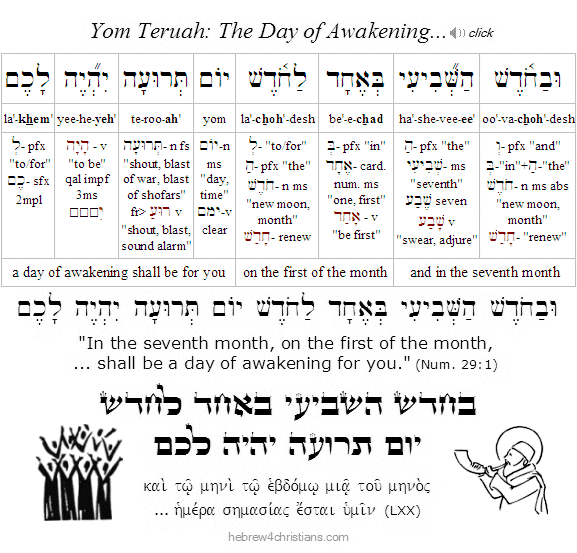 |
The Torah of your Life...
The appointed time of Yom Teruah begins Monday, Sept. 22nd at sundown this year... ]
09.22.25 (Elul 29, 5785) The underlying assumption at work behind the call to do teshuvah is that your life matters and your actions carry profound significance - both in this world and in the world to come. Sin is so dangerous because it damages our very essence, and if unremedied, such damage will be irreversible. Therefore today is the day to seek healing, for your days are numbered in this world and every day you live ratifies the end of your life. The sages say "mitzvah goreret mitzvah" (מצווה גוֹרֶרֶת מְצוּוֶה) - "the reward for a mitzvah (i.e., blessing) is another mitzvah" (Avot 4:2), though of course the logical corollary is also true, "the reward for a sin is another sin."
"It is a serious thing to live in a society of possible gods and goddesses, to remember that the dullest most uninteresting person you can talk to may one day be a creature which, if you saw it now, you would be strongly tempted to worship, or else a horror and a corruption such as you now meet, if at all, only in a nightmare. All day long we are, in some degree [going] to one or the other of these destinations. It is in the light of these overwhelming possibilities, it is with the awe and the circumspection proper to them, that we should conduct all of our dealings..." (C.S. Lewis: Weight of Glory)
In the Talmud (Makkot 2:6) we read, "They asked of Wisdom: 'What is the sinner's punishment?' It replied, "Evil pursues the sinners" (Prov. 13:21). They asked Prophecy: 'What is the sinner's punishment?' It replied, "The soul that sins shall die" (Ezek. 18:4). Then they asked the Holy One, blessed be He, 'What is the sinner's punishment?' He replied, "He should turn to me and be forgiven. This is the meaning of the verse, "Therefore he guides sinners in the way" (Psalm 25:8) - God guides sinners to do teshuvah so they may find life.
Hebrew Lesson
Psalm 25:8 reading (click for audio):
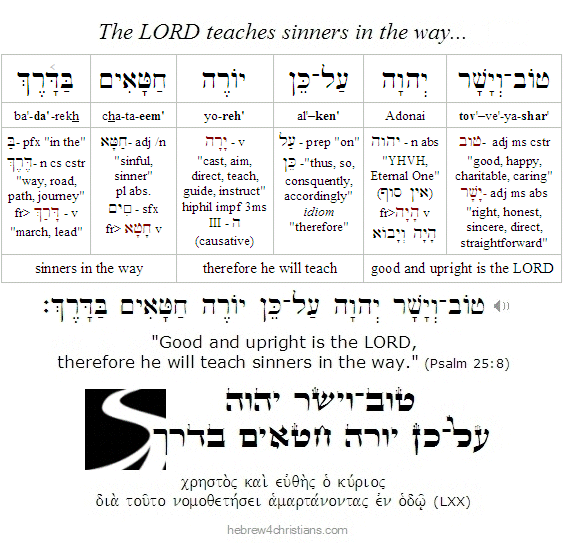 |
What is God like - what is His heart - is the first question, and how we answer that will determine how we deal with all the other questions that come up in theology... What do you feel inside when you stare up at the ceiling before you go to bed? In light of the ambiguity and heartaches of life we might wonder if God is there for us. Does God care? Is He angry at me? Does He really love me? This is the raw place of faith, where we live in the midst of our questions. The Name YHVH (יהוה) means "He is present," even when we are unconscious of His Presence in the hour of our greatest need.
The Prophetic Calendar...
The holiday of Rosh Hashana (Teruah) begins this evening at sundown...
09.22.25 (Elul 29, 5785) The spring festivals (i.e., Passover, Firstfruits, and Shavuot) have been perfectly fulfilled in the first coming of Yeshua as Mashiach ben Yosef, and the fall festivals (Teruah, Yom Kippur, and Sukkot) will be fulfilled in His second coming as Mashiach ben David. Since the first advent fulfilled all of the spring mo'edim to the smallest of details, we believe that His second advent portends similar fulfillment as revealed in the fall mo'edim.
After the summer of harvest (John 4:35), the very first fall festival on the Jewish calendar is Yom Teruah (יוֹם תְּרוּעָה), which is a picture of the "catching away" of kallat Mashiach (the Bride of Messiah) for the time of Sheva Berachot (the seven "days" of blessing that follows the traditional marriage ceremony). Then will come the Great Tribulation and Yom Adonai - the Day of the LORD (יוֹם יְהוָה). The heavenly shofar blasts heard at Sinai will be reissued from Zion. First will be the gathering together of those who follow the Messiah (i.e., those declared tzaddikim because they trust in the merit of Yeshua's sacrifice), and then God's war against Satan and the world system will begin, culminating in the long-awaited coronation of the King of King of Kings - Melech Malchei Ha-Melachim (מֶלֶךְ מַלְכֵי הַמְּלָכִים).
Rosh Hashanah (or better, Yom Teruah) is therefore a sacred time that has prophetic significance for the Messianic believer, since it commemorates both the creation of mankind by God as well as the "calling up" of the new creation at the behest of Yeshua, when the sound of the heavenly shofar inaugurates the anticipated End of Days (1 Cor. 15:51-54; 1 Thess. 4:15-18). Indeed, "teruah" (תְּרוּעָה) is a "calling up" signal for those who belong to Messiah, sounded during the opening of the "Gate to the Wedding" of the great Lamb of God. It also prefigures the coming Day of the LORD and Great Tribulation period that marks God's judgment on an unbelieving world...
In this connection Kierkegaard wrote about the apostasy of our age when he wrote: "A fire broke out backstage in a theater. The clown came out to warn the public; they thought it was a joke and applauded. He repeated it; the acclaim was even greater... that's just how the world will come to an end: to general applause from wits who believe it's a joke."
Hebrew Lesson
Psalm 104:19 reading (click for audio):
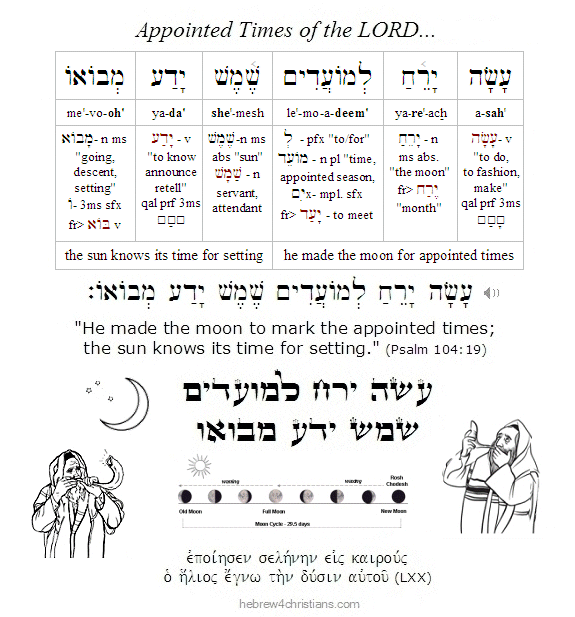 |
Note: For more on this fundamental topic, see "Introduction to the Jewish Calendar."
The Days of Awe... ימים נוראים
09.21.25 (Elul 28, 5785) According to tradition, on Rosh Hashanah the destiny of the righteous, the tzaddikim, are written in the Book of Life (סֵפֶר הַחַיִּים), and the destiny of the wicked, the resha'im, are written in the Book of Death (סֶפֶר הַמָּוֵת). However, most people will not be inscribed in either book, but have ten days -- from Rosh Hashanah until Yom Kippur -- to turn to God before "sealing" their fate. On Yom Kippur, then, everyone's name will be sealed in one or the other of the two books. The ten days are therefore called Aseret Yemei Teshuvah (עֲשֶׂרֶת יְמֵי תְּשׁוּבָה) - the "Ten Days of Repentance" - so called because it is thought that repentance at this time affects the divine decree for the coming year...
|
We affirm that Judgment Day has come and eternal justice was served through the sacrificial offering of Yeshua for our sins (2 Cor. 5:21). Yeshua is the complete fulfillment of the Akedah of Isaac. Our names are written in the Lamb's Book of Life, or Sefer HaChayim (Rev. 13:8). We do not believe that we are made acceptable in God's sight by means of "our own works of righteousness" (Titus 3:5-6), though of course that does not excuse us from being without good works (as "fruit" of the Holy Spirit in our lives). Indeed, professing Christians will stand before the Throne of Judgment to account for their lives (2 Cor. 5:10). "Every man's work shall be made manifest: for the day shall declare it, because it shall be revealed by fire; and the fire shall try every man's work of what sort it is" (1 Cor. 3:13).
Therefore we are reminded to be in awe before the LORD our Maker. Life is an examination, a test, and every moment is irrepeatable. Every "careless" word we utter will be echoed on the Day of Judgment (see Matt. 12:36-37). Our day of judgment is being decided today...
Hebrew Lesson
Psalm 95:6 reading (click for audio):
Parashat Vayeilech:
The Last Days of Moses...
09.21.25 (Elul 28, 5785) Shavuah tov, chaverim. Our Torah reading for this week is called "Vayeilech" where Moses announced his impending death and publicly transferred the leadership of the Jewish nation to his faithful servant Joshua (יְהוֹשֻׁעַ), a type of Messiah who would bring Israel into the promised land.
After his announcement, Moses continued his speech to Israel and warned that despite his appeals, the people would turn away from the covenant, which would cause God's face to turn away: "And hiding I will hide My face (הַסְתֵּר אַסְתִּיר פָּנַי) on that day, because of all the evil they have committed" (Deut. 31:18).
The sages note this verse is grammatically unusual because of the double use of the word "hide." If you do not know that God is "hiding," you will not seek for Him; but if you sense within your heart that he is hiding, you are invited to return to Him, as when King David said, "When you said to my heart, 'Seek my face;' my heart said to You, 'Your face, LORD, will I seek' (Psalm 27:8).
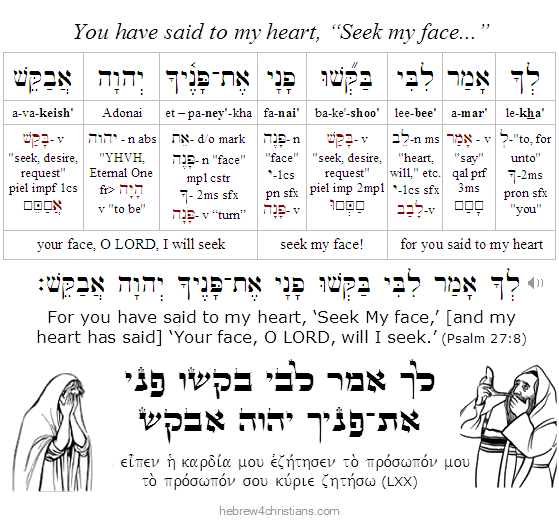 |
In this connection we note that Yeshua often spoke in the form of a parable (παραβολή) to "code" his meaning, to make it accessible only to those who were genuinely willing to make comparisons, to reason analogically, and so on (Isa. 1:18; 1 Cor. 2:13). He used "indirection," allusion, allegory, and "figures of speech" (παροιμία, lit. "[speech] beyond the usual way"), in order to provoke people to explore and ask the hard questions about life... "Truly, you are a God who hides himself, O God of Israel, the Savior" (Isa. 45:15).
"For God so loved the world" that He disguised himself as a bondservant to die in shame upon a cross; "God so loved the world" that he became entirely unesteemed -- "despised and rejected of men, a man of sorrows, acquainted with grief" (Isa. 53:3). Yet even Moses foresaw the stupor of the people in relation to the truth of God (Deut. 29:4).
Regarding the "hiding of face," in His sovereign judgment God decreed: "They know not, nor do they discern, for he has smeared their eyes so that they cannot see, and their hearts, so that they cannot understand" (Isa. 44:18). God "gave them over to their stubborn hearts, to follow their own devices" (Psalm 81:12; Rom. 1:24); they went "backward and not forward" (Jer. 7:24). This was not a blindness induced by the "god of this world" as much as it was a darkness induced by the flesh and its apathy toward God. The mind became dull and sleepy because it ceased to believe in the miracle - and to realize that God's truth is always something extraordinary, spectacular, and wonderful...
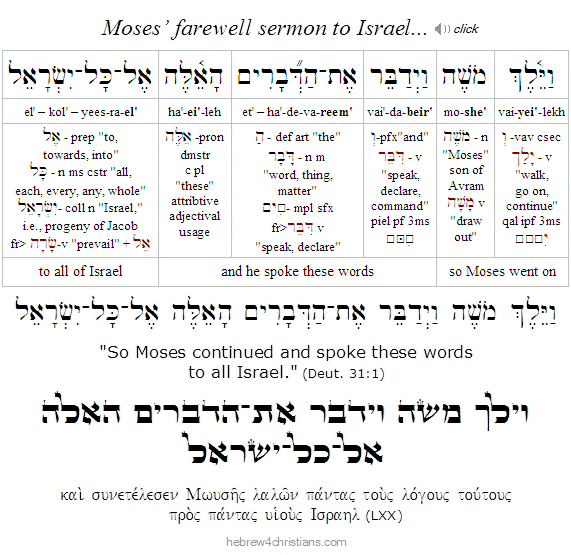 |
Shabbat Shuvah - שבת שובה
09.21.25 (Elul 28, 5785) Shavuah tov, chaverim. The Sabbath between Rosh Hashanah and Yom Kippur is called Shabbat Shuvah - "The Sabbath of Return." It is called "shuvah" because the Haftarah (Hosea 14:2) begins, Shuvah Yisrael ad Adonai Elohekha (שׁוּבָה יִשְׂרָאֵל עַד יְהוָה אֱלהֶיךָ): "Return, O Israel, unto the LORD your God!"
Since this Sabbath occurs before Yom Kippur, it is customary to listen to a sermon from an honored Torah sage calling for teshuvah (repentance) at this time. "Seek the LORD while he may be found; call upon him while he is near. Let the wicked forsake his way, and the unrighteous man his thoughts; let him return to the LORD, that he may have compassion on him, and to our God, for he will abundantly pardon" (Isa. 55:6-7).
Thoughts on Repentance...
09.19.25 (Elul 26, 5785) The theme of the Jewish High Holiday season is teshuvah (תְּשׁוּבָה), a word often translated as "repentance," though it's more accurately understood as turning back (shuv) to God. The root of this verb occurs nearly 1,000 times in the Hebrew Scriptures and first occurs when God told Adam he would "return to the earth" (Gen. 3:19). In spiritual terms, shuv may be regarded as a practical turning away from evil and a turning toward the good, though Jewish thinking regards turning to God as the means by which we turn away from evil. This act of turning has the power to redirect a person's destiny. It effects the whole life of the soul. As Abraham Heschel wrote, "No word is God's final word. Judgment, far from being absolute, is conditional. A change in man's conduct brings about a change in God's judgment" (Heschel: The Prophets, 194). In the ancient Greek translation of the Jewish Scriptures (i.e., the Septuagint, or LXX), shuv is translated using the word strepho (στρέφω), which means to turn around, or to turn back to God.

A related word in Hebrew is nacham (נָחַם), which is often associated with the emotion of regret (in the old King James Version of the Bible, nacham is sometimes confusingly translated using the word "repent"). Some linguists suggest that the root idea of the verb pictures God "taking a deep breath" (or even sighing) as way of expressing regret or feeling compassion in response to an offense by others. Thus we read, "And the LORD was sorry that he had made man on the earth (וַיִּנָּחֶם יְהוָה כִּי־עָשָׂה אֶת־הָאָדָם בָּאָרֶץ), and it grieved him to his heart" (Gen. 6:6). Speaking anthropomorphically, God "consoled himself" (nacham also means to comfort) by changing his thinking and plan. God's "regret" was His "answer" or response to the sinful choices of human beings.
Since it is absurd to say that God needs to repent from sin or that He morally regrets His actions, the meaning of nacham must be qualified when it is applied to man. Regret over sin is a state of sorrow that belongs exclusively to morally free human beings. Therefore the prophet Job uttered, "I abhor myself and repent (נחם) in dust and ashes" (Job 42:6). In the ancient Greek translation of the Scriptures, the word nacham was usually translated using the word metanoia (μετάνοια) or sometimes μεταμέλομαι. Metanoia is a compound word that comes from 'μετα' (after, with) and 'νοεω' (to think), which means "changing your thinking," (though it also can mean "going beyond (meta) your thinking" to access the realm of your heart). In other words, the word implies that how we think will affect how we make decisions (judgments), and therefore repentance means acknowledging that we are cognitively mistaken about the nature of reality (i.e., there is a divinely sanctioned moral order, and we are guilty of violating that order and in a state of profound alienation until we are divinely reconciled). Our change of mind - if genuine - will lead to a change of heart.
(As an aside, this implies that there is an "ethic of belief," or a moral imperative to believe the truth and reject error in the realm of the spiritual. God has "wired" us to be rational beings with a moral conscience and an intuitive perception of His reality. He also has revealed himself with "many proofs" (πολλοῖς τεκμηρίοις) that demonstrate the victory of His salvation (Acts 1:3). The greatest mitzvah is exercising faith in God's redemptive love as revealed in the Messiah Yeshua. The LORD is always "calling" out to you to respond to His Presence...)
The Greek New Testament seems to follow the LXX by using the verb metanao (μετανοέω) to express the Hebrew idea of nacham (i.e., regret or repentance), and it uses the verb strepho (στρέφω) to express the practical idea of shuv (i.e., turning to God and away from evil). Metanao means expressing regret and remorse over the bankruptcy of our personal philosophy of how the world should be run. We surrender to God's truth, forsake the selfish demands of the ego, and "let God be God." Strepho, on the other hand, is a literal or metaphorical turning. When applied to God, it means turning all of your "heart, soul, and strength" back to Him. Indeed, the LXX exclusively uses this word to translate the Hebrew word shuv (שׁוּב), from which we get the word teshuvah. For example, "If you return, O Israel" is אִם־תָּשׁוּב יִשְׂרָאֵל in the original Hebrew, but is translated as ἐὰν ἐπιστραφῇ Ισραηλ in the LXX (Jer. 4:1). Likewise, "Return, O Israel" is שׁוּבָה יִשְׂרָאֵל in the Hebrew but is translated as in the ἐπιστράφητι Ισραηλ in the LXX (Hos. 14:2). In a sense, we can say that nacham/metanao concerns the past (regret), whereas shuv/strepho concerns the present...
Traditional Christian theology tends to regard God in Greek, rather than Hebrew, terms. Historically speaking, most Christian theologians relied on the Greek translation of the Hebrew Scriptures rather than the original Hebrew to develop their theology. Indeed, the word "theology" itself is Greek (not Hebrew) and refers to the "study of God" (θεός + λόγος), implying that God is an "object" that could be looked at, "analyzed," and known as a "thing" or divine "substance." To the ancient Greeks, the idea of God is disclosed through a process of intellectual abstraction -- through "negative theology" (i.e., denying predicates of human language to the divine), and so on. The danger of regarding "repentance" as simply "changing your thinking" is that this can lead to intellectualism that is devoid of inward, heart transformation. Hence Evangelical Christianity has spawned an entire generation of those who accept "easy believism" and who tend to regard "repentance" as intellectual assent to the truths of the Gospel message (or to some creedal formula). Of course correct doctrine is vitally important, but it is emptiness if it is not passionately lived in one's experience. Ultimately, Christian truth is existential rather than academic. Yeshua's passion in the garden is greater than all the most profound thoughts of theology ever penned by the world's greatest theologians...
The general problem with repentance -- whether we regard it as a change of thinking or as a practical call to return to God - is that most people refuse to do it. In fact, no one can repent unless he or she is given the means to do so from heaven (John 6:44). We are born rebels who naturally hate God and His authority (Rom. 8:7). You can argue until you are "blue in face" with a sinner who needs to repent, but unless he or she is truly touched by God, the best possible outcome will be halfhearted resolutions and an incomplete reformation (Luke 11:24-26). Most parents who have children that have turned away from the LORD to embrace a sinful lifestyle know this to be true.... In this connection, repentance is analogous to spiritual rebirth that comes from God's direct intervention. Like genuine faith, the profound change in direction from the principle of self-centeredness to God-centeredness is a miracle from God.
While it is important that we "regret our thinking" (μετανοέω) and embrace the authority of God as the first principle in all our reasoning (λόγος ), it is equally important that we exercise our wills by turning to the LORD (στρέφω) through acts of repentance (e.g., prayer, confession, turning away from sinful practices, offering tzedakah, and so on). According to Jewish tradition, genuine teshuvah involves four basic steps:
Four Steps of Teshuvah:
- Forsake the sin (Prov. 28:13). "Sincere repentance is demonstrated when the same temptation to sin, under the same conditions, is resolutely resisted" (Talmud Yoma 86b). Note that according to traditional Jewish views, the atonement is of no avail without repentance (Midrash Sifra). [shuv/strepho]
- Regret the breach in your relationship with God and others (Psalm 51). [nacham/metanoia]
- Confess the truth and make amends with those we have harmed (Prov. 28:13; 1 John 1:9; James 5:16, Matt. 5:23-4). Note that we must ask for mechilah (forgiveness from others) before receiving selichah (forgiveness from God). [shuv/strepho]
- Accept your forgiveness and move forward with the LORD through faith (Phil. 3:13-14; 1 John 1:9). Be comforted by the Presence of the LORD in your life: Nachumu: "Comfort ye my people" (Isa. 40:1). [nacham/metanoia].
Finally, it needs to be said that authentic repentance is a lifestyle, not a "one time deal." We never get past it. Although there is certainly spiritual progress as we walk in grace, all genuine progress comes through ongoing teshuvah. We may repent from a certain action at a given point in time, but that does not mean that no longer need to do teshuvah. Teshuvah is perpetual and timeless, since it corresponds to our spiritual rather than our temporal lives (i.e., chayei olam rather than chayei sha'ah). Indeed, a true penitent is called baal teshuvah (בַּעַל תְשׁוּבָה), a "master of returning," who is always turning away from self and toward God. We never get beyond the call to "repent and believe the gospel" (Mark 1:15). That is why the season of teshuvah is always timely. The message of Elul and the High Holidays is meant to be carried over throughout the rest of the year. "Seek the LORD while He may be found, call out to Him while He is near" (Isa. 55:6).
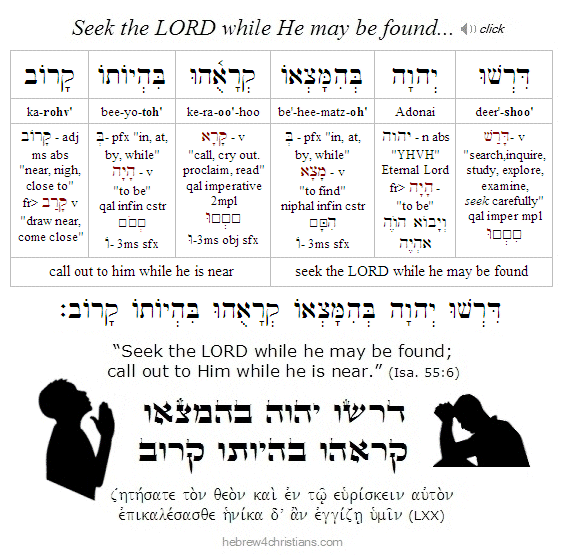 |
The passage continues: "Let the wicked man forsake his way (i.e, derekh: דֶּרֶךְ), and the perverse man his thoughts (i.e., machshavah: מַחֲשָׁבָה); and let him return (i.e., shuv: שׁוּב) to the LORD, that He may have compassion (i.e., rachamim: רַחֲמִים) on him, and to our God, for he will abundantly pardon (i.e., selichah: סְלִיחָה)" (Isa. 55:7).
"Behold, I stand at the door and knock. If anyone hears My voice and opens the door, I will come in to him and commune with him, and he with Me" (Rev. 3:20). Behold! Look and hear! The Lord knows the place of your "dwelling," he comes to you and "knocks" at the door of your heart to get your attention. Hearing his voice is the choice the believe, and opening the door is receiving the promise of His presence. The Lord promises to "come in to you," that is, to reveal his compassion for you. This is "Christ in you," the joining of his life with yours...
Teshuvah and confession go hand in hand. Confession (ὁμολογία) means bringing yourself naked before the Divine Light to agree with the truth about who you are. Indeed, the word homologeo literally means "saying the same thing" - from ὁμός (same) and λόγος (word). In Modern Hebrew teshuvah means an "answer" to a shelah, or a question. God's love for us is the question, and our teshuvah – our turning of the heart toward Him – is the answer. Teshuvah is one of the great gifts God gives each of us – the ability to turn back to Him and seek healing for our brokenness. May we turn to Him now!
 |
Search your Soul...
Cheshbon HaNefesh means 'making an account of the soul.' When we confess the truth about ourselves before the Lord who redeems us, we find healing...
09.19.25 (Elul 26, 5785) There is a midrash about a dialog between Adam and the LORD God after Adam's banishment from the Garden of Eden. Adam feared that all humans would later blame him for their mortality, but God replied, "Don't worry about the others. From now on each soul will be responsible for giving account of his or her life. Each person is required to write his or her own 'Book of Life.' On the Day of Judgment, I simply ratify what has been written." Now while this is a midrash, there is a lesson here for us to heed...
We are all on a spiritual journey, writing the "Book of our Life." To help us in the "writing" process, the Jewish sages decided that the month of Elul should be set aside as a season for cheshbon hanefesh (חֶשְׁבּוֹן הַנֶּפֶשׁ) - "making an account of the soul." This means that we engage in honest self-examination about our behavior. We take time to review our lives from the previous year. "How did I get to this place in my life?" "Where am I now?" "Am I where I should be?" We engage in this process of self-examination with an aim to grow -- to let go of the pain of the past and move forward.
We must begin by asking God for courage and strength... We must let go of the fear that we will discover the truth about who we really are -- about what we've done, what we've thought, about who we've allowed ourselves to become. Confession (ὁμολογία) means bringing yourself naked before the Divine Light to agree with the truth about who you are. Indeed, the word homologeo literally means "saying the same thing" - from ὁμός (same) and λόγος (word). We need to confess the truth if we are to be free from the pain of the past. When King David wrote, "The LORD is my Light and my salvation; whom shall I fear? (Psalm 27:1), he implied that he should even be free of fear of himself and of his past....
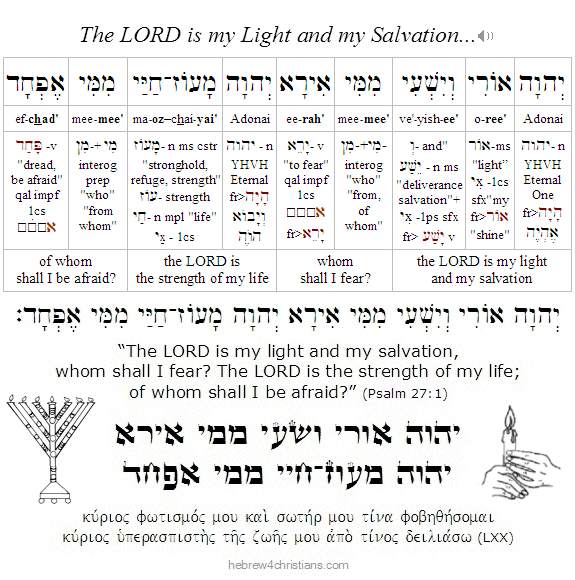 |
As noted by various Jewish sages, different sins require different types of confession. Sins against God (i.e., bein Adam la-Makom: בֵּין אָדָם לָמָקוֹם) require confession to God alone for the sake of obtaining divine forgiveness. Sins against others (i.e., bein Adam l'chavero: בֵּין אָדָם לְחֲבֵרוֹ) require that we personally acknowledge our harm to them and ask them for mechilah (מְחִילָה), forgiveness. Finally, sins against ourselves require that we admit that we have damaged our own lives and be willing to accept personal forgiveness. "For those whom we have wronged (including ourselves), may we be forgiven..."
It is important in this process not to blame others for our sins, since the object here is to work on changing ourselves, not others. As the Baal Shem Tov once said, "Sinners are like mirrors. When we see faults in others, we must understand that they only reflect the evil within ourselves." Of course this is not to say that you might not have been truly hurt by the actions and sins of others, but that is a matter of your own mechilah (forgiveness) to be given them if they come to you in teshuvah, not a matter of cheshbon hanefesh. The focus in this process is on our own sins -- and how we must respond to our own sinful condition. We cannot truly make amends with another if we are expecting a reciprocal act from them (e.g., "I've apologized to you, now it's your turn!")
Regarding self-forgiveness, it might be helpful to think about a sinful act you've repeatedly struggled with over the last year. Now imagine you are talking to a dear friend whom you deeply respect who is struggling this same way. How would you counsel him or her? Your answer can be part of the process of your own self-examination, where you can look within yourself honestly yet without the intent of bringing shame or further pain to your life. After all, the goal here is teshuvah -- return to God -- but you are not likely to do this if you are in a state of self-loathing or "toxic shame."
Most Christians are familiar with the idea of self-examination before partaking of the elements of the Lord's Table (i.e., the commemoration of Yeshua's last Passover Seder that prefigured His sacrifice as the Lamb of God who takes away the sins of the world). "Let a person examine himself first (δοκιμάζω - test for authenticity), and then he may eat of the bread and drink from the cup" (1 Cor. 11:28). Now while it is assuredly true that we should examine ourselves before this ritual act, self-examination and confession should be part of our everyday lives as followers of the Messiah. The unexamined life -- especially as a follower of Messiah, God of Truth -- is not worth living, and the practice of suppressing the truth about our sinful condition can lead to self-deception and even death (1 Cor. 11:30). "If we say we have no sin, we deceive ourselves, and the truth is not in us; if we confess our sins, he is faithful and just to forgive us our sins and to cleanse us from all unrighteousness" (1 John 1:7-8). "Therefore, confess (ἐξομολογέω, lit. 'confess out') your sins to one another and pray for one another, that you may be healed" (James 5:16).
Ultimately, confession of the truth is not optional for anyone. For the follower of the Messiah, such confession produces salvation: "for with the mouth one confesses and is saved" (Rom. 10:10). But for those who refuse to undergo self-examination and confess the truth, there is the Lord's own reciprocal confession: "Then I will confess to them (ὁμολογήσω αὐτοῖς), 'I never knew you; depart from me, you workers of lawlessness' (Matt. 7:23).
There is a godly sorrow that works teshuvah within our hearts. This is a sorrow or a mourning (λύπη) -- not an exercise in self-contempt or false pride -- for the pain we have caused the LORD with our actions... "For godly grief produces a repentance that leads to salvation without regret, whereas worldly grief produces death" (2 Cor. 7:10). This kind of sorrow is ultimately healing, since it impels us to return to the source of Love and healing we so desperately need. May God all bless us with such sorrow, the "gift of tears."
|
Upheld by God's Love...
"You are standing, all of you, before the Lord your God..." (Deut. 29:10).
09.19.25 (Elul 26, 5785) The midrash comments that Moses spoke these words immediately after warning the people of the terrible consequences that would befall them if they became careless and turned away from the Lord (see Deut. 28:15-69). Moses sought to encourage the people by saying that despite their various failures and missteps along the way, they had not forsaken hope that God would continue to sustain them...
Among other things, Moses' message was meant to teach that suffering and struggles are part of the journey of faith, and that the divine chastisement (tochechah) is his means of effecting refinement and growth. As it says in Proverbs: "My son, do not despise the chastening of the LORD, neither abhor his rebuke. For whom the LORD loves he corrects, like a father the son in whom he delights" (Prov. 3:11-12).
This idea is repeated in the New Testament as well: "My son, do not regard lightly the discipline of the Lord, nor faint when you are reproved by Him; for those whom the Lord loves He disciplines, and He scourges every son whom He receives. It is for discipline that you endure; God is dealing with you as with sons; for what son is there whom his father does not discipline? But if you are without discipline, of which all have become partakers, then you are illegitimate children and not sons" (Heb. 12:5-8). God the Father purges his children so that they will ultimately bear fruit and blessing (John 15:1-2).
We often learn more from our times of struggle and hardship than during times of comfort and ease. Indeed, as Kierkegaard said there can be no worse fate for the soul than to be satiated and made comfortably numb...
When we encounter difficulties and troubles beyond our control, we begin to awaken and search for the meaning for our suffering. This is the beginning of teshuvah. As C.S. Lewis said, "Pain insists upon being attended to. God whispers to us in our pleasures, speaks in our consciences, but shouts in our pains. It is his megaphone to rouse a deaf world."
When God brings his correction, our troubles move us to return to what is most essential in our lives, and the grace we are given imparts reassurance that He is with us. Our afflictions lead us to "stand before the LORD our God," and there is nothing more important or sacred for the ultimate good of our soul. God works all things together for our good; "the LORD upholds all who fall, and raises up all who are bowed down" (Psalm 145:14).
"Now to Him who is able to keep you from falling and to present you faultless Before the presence of His glory with exceeding joy, to the only wise God our Savior, is glory and greatness, power and authority, both now and to all the ages! Amen."
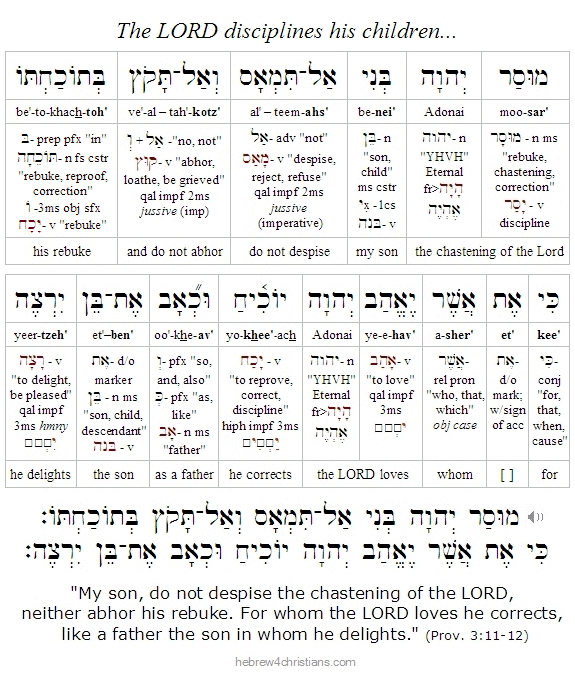 |
Teshuvah and Creation...
Today marks Elul 25th, the traditional date of the creation of the universe by God...
09.18.25 (Elul 25, 5785) Traditional Judaism regards Rosh Hashanah as the date of the Creation of the universe by God (Talmud: Rosh Hashanah 27a), but the Midrash notes that it occurred six days earlier, on the 25th of Elul, when God created the Divine light by saying, "Let there be light" (Gen. 1:3). The sages reasoned that since the gematria for the word yehi (יְהִי), "let there be," is 25, and man was created on Rosh Hashanah, the first work of creation (מַעֲשֵׂה-בְּרִאשִׁית) actually began on Elul 25 of the Hebrew calendar...
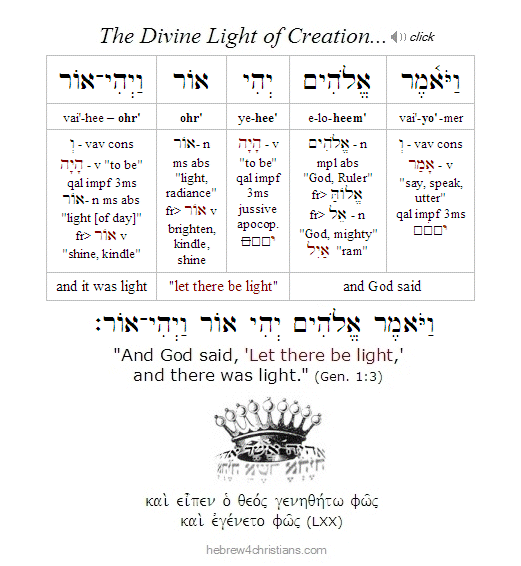 |
The Mishnah (Sanhedrin 38b) says Adam and Eve were created six days later on Rosh Hashanah (i.e., Tishri 1), but how did they determine this date from the Scriptures? In other words, why did the classical sages think man was created on Rosh Hashanah? They reasoned that by transposing the Hebrew letters of the very first word of the Hebrew Scriptures "bereshit" ("in the beginning"), the phrase aleph be'Tishri ("on the 1st of Tishri") was formed, and therefore this date became associated with the anniversary of creation (or better, the anniversary of the creation of Adam on the "sixth day."
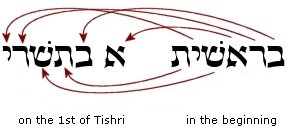 |
According to Jewish tradition, this first "Friday" of creation was the first Rosh Hashanah, the "head of the year," since it represents the day that God began to rule as King of the Universe (i.e., melekh ha-olam: מֶלֶךְ הָעוֹלָם). When Adam first opened his eyes and human consciousness was born, he immediately understood that the LORD created all things, including himself. According to midrash, Adam's first words were, יהוה מֶלֶךְ עוֹלָם וָעֶד / Adonai malakh olam va'ed: "The LORD is King for ever and ever" (Exod. 15:18). God then said, "Now the whole world will know that I am King," and He was very pleased. This was the "tov me'od" (טוֹב מְאד) moment of creation, when God saw all that He had made "and found it very good" (Gen. 1:31). The birthday of humanity is therefore the Coronation Day for the King of the Universe. Psalm 47 celebrates the Kingship of God that mentions the "shout" (teruah) and shofar blast of God's coronation: "God has gone up with a shout (teruah), the LORD with the sound of a shofar" (Psalm 47:5).
Akedat Yitzchak ("The Binding of Isaac") is a major theme on Rosh Hashanah. According to Jewish tradition, God told Abraham that the ram's horn (shofar) should be blown on Rosh Hashanah to remind the people of the substitutionary sacrifice provided by the LORD Himself -- an echo of the First Sacrifice offered in Eden. How much more should we as believers in the greater sacrifice of Yeshua as our Lamb of God celebrate this day?
The LORD is a God of order. The appointed times (moedim) were not given to Israel in vain. As Samson Raphael Hirsch once wrote, "The catechism of the Jew is his calendar." Round and round the calendar we go, waiting for God's revelation and will to be fulfilled in us.
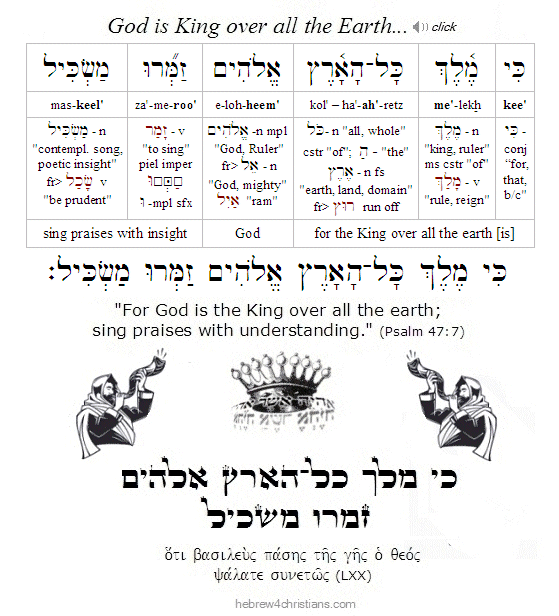 |
The Call of the Shofar...
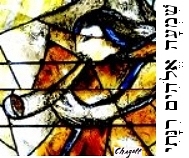
09.18.25 (Elul 25, 5785) The shofar (ram's horn) is often used as an instrument of spiritual warfare, though it is primarily used to rouse the soul to face reality... Maimonides writes: "There is a hidden message we are supposed to infer by listening to the shofar. It suggests to say: 'Sleeping ones! Awaken from your sleep! Slumbering ones! Awaken from your slumber! Examine your deeds. Remember your Creator and do teshuvah!" This idea was earlier stated in the New Testament writings: "Awake, O sleeper, and arise from the dead, and Messiah will shine on you" (Eph. 5:13-14).
This theme of "awakening from sleep" is found elsewhere in the Scriptures (e.g., John 11:11, Rom. 13:11, 1 Thess. 5:6, Dan. 12:1-2, Psalm 78:65, etc.). The sound of the shofar calls us to return to the LORD and seek His face. And since finding God is our greatest joy, David rightly wrote: "Happy is the people who know the teruah [i.e. the shofar blast]" (Psalm 89:16).
Indeed, the word shofar (שׁוֹפָר) comes from a root (שָׁפַר) that means to "amend" or "reform," alluding to the beautification of our ways as we turn to God in teshuvah. "In this month (i.e., the seventh month of Tishrei) you shall amend (shapperu) your deeds. The Holy One, blessed be He, said to Israel: 'If you will amend (shippartem) your deeds I shall become unto you like a horn (shofar). As the horn takes in the breath at one end and sends out at the other, so will I rise from the Throne of Judgment and sit upon the Throne of Mercy and will impart for you the Attribute of Justice (Elohim) into the Attribute of Mercy (YHVH)' (V. Rabba: 29:6).
May the LORD God of Israel bless you and keep you and shine His glory upon you for this coming new year! And may you be ready to hear the sound of the heavenly shofar that will call you into His glorious presence soon!
Hebrew Lesson
Psalm 89:15 Hebrew reading (click):
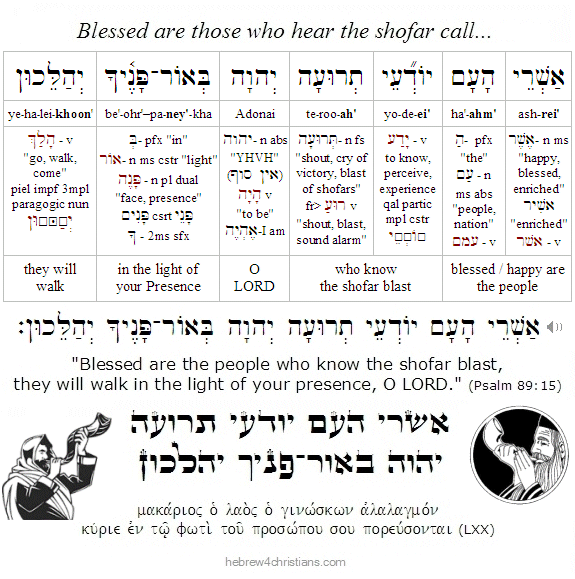 |
Note: For more on this subject see: "The Significance of the Shofar."
Dangers of False Humility...
"Our relationships live in the space between us which is sacred." - Martin Buber
09.18.25 (Elul 25, 5785) Isaac of Thebes was visiting a community when he saw a brother sin. Isaac condemned him in his heart. Later, when he returned to his room for the night, he discovered an angel barring the doorway. "God has sent me to ask you where he is to put the fallen brother whom you have condemned." Isaac was immediately contrite: If God did not judge the sinner, how could he? (Sayings of the Desert Fathers)
If you call yourself a sinner, be sure you understand the implications... If you say, "I know that I am the problem, that my heart is foolish, that I am hotheaded, and that my troubles are my own doing," then examine your anger and disappointment with others in your life... The genuineness of your humility may be revealed by how you handle disappointment, frustration, being disregarded, and so on. If you say that you are "just a poor sinner saved by grace," then test whether you really believe this is true....
There's an old native American story about a young boy who died of a snake bite. The poison took away his life, and his grieving parents carried his body to the holy man and laid it before him. And the three of them sat around the body sadly for a long, long time. The father finally rose from his grieving, went over to his child, stretched out his hands over the feet of the child and said, "In all my life I have not worked for my family as I should have." And the poison left the feet of the child.
Then the mother arose and said, "In all my life I have not loved my family as I should." And the poison left the heart of the child. And the holy man stretched out his hands over the head of the dead boy saying, "In all my life I have not believed the words I have spoken." And the poison left the head of the child. The child then rose up, and the parents and the holy man rose up, and the village greatly rejoiced that day.
Hebrew Lesson
Psalm 139:23 reading (click for audio):
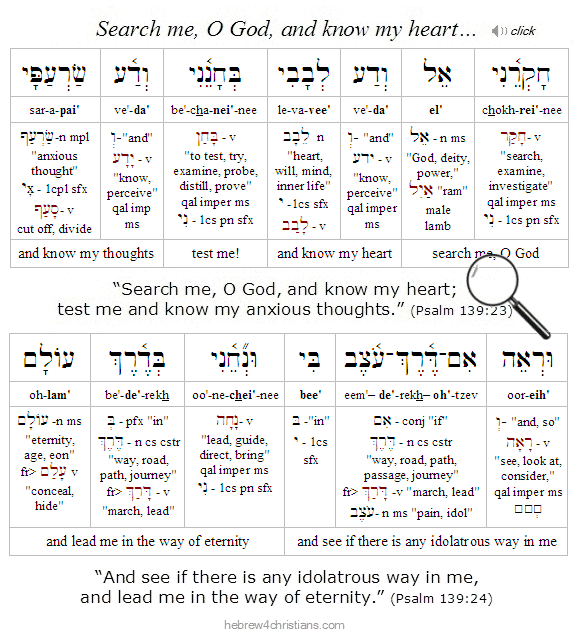 |
The Blessing of Struggle...
The following is related to the month of Elul and the "Season of Repentance"...
09.18.25 (Elul 25, 5785) Recently I mentioned that we are part of a seemingly endless journey of falling down and getting back up once again. It is this struggle, this "good fight of faith," that eventually ennobles the heart and establishes character...
The hidden blessing of our repeated failure, then, is that we attain genuine humility as we rely on God for the miracle of deliverance. When we draw near to God in confession of our weakness, we may discover that our struggle disguises unacknowledged need within.
For example, we might wrestle with sexual lust, but this may come from refusing to trust others or because we are harboring resentment... "Hurt people hurt people," which means that often our sins come from a place of inner pain of abandonment. When we confess the truth we draw close to God - the God of Truth - to discover his mercy. Those things you believe make you unlovable are the very means by which God manifests the glory of His compassion and love for you. "It is not judgment that breaks the heart, but mercy and love."
This is why during the month of Elul and the High Holidays we recite prayers for forgiveness (i.e., selichot) in the plural, listing all the sins from "A" to "Z" that we (collectively) have committed. We use plural pronouns out of a sense of compassion... We are one body. When some part of the body is sick, the whole body is sick; when one of us sins, he hurts all the flock (1 Cor. 12:26).
Therefore the traditional selichot prayer mentions all the possible sins in the order of the Hebrew alphabet: ashamnu (אשמנו), "we have sinned," begins with the letter Aleph; bagadnu (בגדנו), "we have been false," begins with Bet; gazalnu (גזלנו), "we have robbed," begins with Gimmel, and so on...
Yeshua taught us, "Avinu She'bashamayim" (אבינו שבשמים) - our Father, forgive us of our sins, to teach us that "all Israel is responsible one for another." "Compassion" means that others' sins and failures don't make them different from us, but rather more like ourselves. It is "feeling with" the heart for the sake of the other in empathy....
Hebrew Lesson
Psalm 41:4 reading (click):
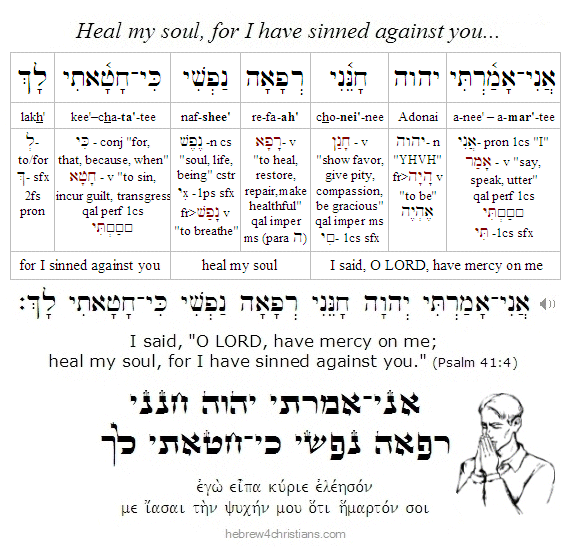 |
The Rabbi of Lelov said to his Hasidim: "A man cannot be redeemed until he recognizes the flaws in his soul and tries to mend them. A nation cannot be redeemed until it recognizes the flaws in its soul and tries to mend them. Whoever permits no recognition of his flaws, be it man or nation, permits no redemption. We can be redeemed to the extent to which we recognize ourselves. When Jacob's sons said to Joseph, "We are upright men," he answered: "That is why I spoke to you saying, 'You are spies.'" But later, when they confessed the truth with their lips and with their hearts, and said to one another, 'We are verily guilty concerning our brother,' the first gleam of their redemption dawned. Overcome by compassion, Joseph turned aside and wept." - Martin Buber (Tales of the Hasidim)
The Question of Teshuvah...
09.17.25 (Elul 24, 5785) Recall that God's first word spoken to Adam after he broke God's law was ayekah (אַיֶּכָּה), meaning "Where are you?" (Gen. 3:9), a question that introduces the themes of return and reconciliation that characterize the High Holidays.
The Hebrew word "teshuvah" (תְּשׁוּבָה) means an answer to a question, and its "shoresh," or root idea, is that of return (i.e., shuv: שׁוּב). The first time the root appears is after Adam and Eve sinned and hid from God in their shame (Gen. 3:7). The Lord then spoke to Adam saying "ayeka," not because he did not know where he was, of course, but because he wanted Adam to turn back to him.
The question, in other words, was for Adam to answer. Where was he, and how did he get there? God's question was not about his whereabouts in the garden, but his whereabouts in spiritual terms. "Where" Adam was revealed in his lost connection with God more than his hiding place among the fig trees of the orchard. Adam was now in the place of exile, separated from the original blessing and the Source of Life. To make his point, God removed his place in the original garden and told him that he would eat the fruit of the earth in sorrow all the days of his life, and that by the sweat of his face he would eat bread, "until you return (שׁוּבְךָ) to the ground, for out of it you were taken; for you are dust, and to dust you shall return (תָּשׁוּב). The wages of sin is death (Rom. 6:23).
The transgression at Eden was primordial and the consequence of separation from God was transferred to all subsequent generations, since Adam represented all of his progeny as their "federal head" (Rom. 5:12). In other words, Adam's curse was passed on to subsequent generations, but then so was the promise given to Adam and Eve that a child would be born among their descendants who would "undue the curse" and eternally reconcile God with humanity (Gen. 3:15). This "Second Adam" is Yeshua, who died on a tree to transform the bitter waters of death into purifying waters of life (1 Cor. 15:47). Access to the reconciliation of the Savior would be granted through heartfelt faith in God's faithful love, rectifying the doubt that was the essence of the original transgression within the heart...
Hebrew Lesson
Hosea 14:1 reading (click for audio):
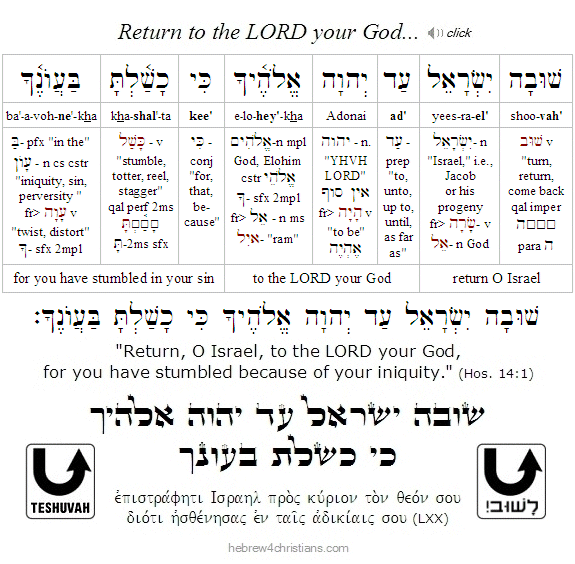 |
The Account of our Lives...
"Don't you know that a midnight hour comes when everyone has to take off his mask? Do you think life always lets itself be trifled with? Do you think you can sneak off a little before midnight to escape this?" - Kierkegaard
09.17.25 (Elul 24, 5785) The Scriptures teach that every word we speak and every choice we make are infallibly recorded in "heavenly scrolls," and one day these scrolls will be opened as a testimony about what we did with our lives: "As I looked, thrones were placed, and the Ancient of Days took his seat; his clothing was white as snow, and the hair of his head like pure wool; His throne was ablaze with fire and its wheels were all aflame. A river of fire was streaming forth and proceeding from his presence; a thousand thousands served him, and ten thousand times ten thousand stood before him; the court sat in judgment, and the books were opened...." (Dan. 7:9-10).
This vision is repeated in the New Testament writings as well: "And I saw the dead, both the great and the small, standing before the throne, and books were opened. Then another book (סֵפֶר אַחֵר) was opened, which is called the Book of Life (סֵפֶר הַחַיִּים). And the dead were judged by what was written in the books, according to what they had done" (Rev. 20:12).
The Greek word for truth is "aletheia" (ἀλήθεια), a word that means revelation and disclosure. Truth is inevitable and invincible; all that is covered up will be revealed; all that is hidden will be made known (Luke 12:2). As it is written in Megillat Kohelet (מגילת קהלת): "For God shall bring every work into the judgment concerning every hidden thing, whether it be good or whether it be evil" (Eccl. 12:14).
Hebrew Lesson
Ecclesiates 12:14 reading (click for audio):
Consider some further admonition from the New Testament that foretells the inevitability of God's judgment for the choices we have made in this life:
- "No creature is hidden from his sight, but all are naked and exposed to the eyes of him to whom we must give account" (Heb. 4:13).
- "I say to say to you that on the day of judgment, people will give account for every careless matter" (Matt. 12:36).
- "Each person's work will become manifest, for the Day will disclose it, because it will be revealed by fire, and the fire will test what sort of work each has done" (1 Cor. 3:13).
- "The LORD will bring to light the things now hidden in darkness and will disclose the purposes of the heart" (1 Cor. 4:5).
- "For we must all appear before the judgment throne of Messiah (כִסֵּא־דִין הַמָּשִׁיחַ), so that each one may receive what is due for what he has done in the body, whether good or evil. Therefore, knowing the fear of the Lord, we persuade others" (2 Cor. 5:10-11).
- "If you call on him as Father who judges impartially according to each one's deeds, conduct yourselves with fear throughout the time of your exile" (1 Pet. 1:17).
In the vision of the great Day of Judgment to come (i.e., Dan. 7:9-10; Rev. 20:12), notice that there was "another book" opened during the accounting called the "Book of Life" (סֵפֶר הַחַיִּים), and later we learn that only those whose names were found written in this book would be granted access to the "heavenly Jerusalem" (Rev. 21:27). But what is this Book and how can our names be inscribed in it so that we can partake of the future glory?
The Lamb's Book of Life (סֵפֶר הַחַיִּים אֲשֶׁר לַשֶּׂה) refers to "the record" (i.e., the words and deeds) of Yeshua our Messiah, the true Lamb of God, and therefore the book represents the final attestation - or "sworn testimony" - of the worthiness of God's own righteousness and salvation. In the great plan of God's salvation for the world, Yeshua was "born to die" as our atoning sacrifice for sin (Heb. 10:7-5). "God made the one who did not know sin to be sin for us, so that in him (ἐν αὐτῷ) we would become the righteousness of God" (2 Cor. 5:21). But note that we must be "in him," that is, fully identified with Yeshua so that his sacrificial death becomes counted as our own... Our identification in him means that our sin is "imputed" to his suffering and death upon the cross, just as his righteousness is "imputed" to us through the vindication of his resurrection. This is the essence of the "korban principle" of "life-for-life" - the innocent sacrificed for the guilty - that was the foundation of the sacrificial system of the Temple. By faith, the substitutionary death of Yeshua is "for you."
For more on this, see "The Book of Life: Finding your name in the pages of redemption."
 |
|
Healing from hidden faults...
"The easiest person to deceive is oneself. For what a man wishes, he generally believes to be true." -- Arthur Schopenhauer
09.16.25 (Elul 23, 5785) We all have unhealed parts, "hidden faults" (נסתרות) of which we are not fully aware. "Blind spots." Therefore king David prayed, "Who can discern his errors? cleanse me from secret faults" (Psalm 19:12). We are cleansed by confession (וִדוּי), that is, by looking within our hearts to uncover deeper motivations... If we are honest with ourselves we may discover, for example, that we are fearful or angry, despite how we otherwise wish to regard ourselves. If you find yourself unable to let something go, for instance, some pain or failure of the past, remind yourself that you must do so if you want to move on with your life. Focusing on how things could have been different is to be enslaved to the past. The goal of teshuvah (repentance) is to turn us back to God for life, but to do this, we must be be willing to let go of what makes us sick.
Note that the Hebrew word translated "errors" (i.e., שְׁגִיאוֹת) comes from a root word (שָׁגָה) that means to wander, stray, or transgress. The question raised by David is rhetorical: "Who can discern his errors?" No one – apart from divine intervention... David asked to be cleansed from his "secret faults," which are not those that were performed by him "in secret," but rather those that were unknown, unseen, and unconscious to his own sense of awareness. These are "mindless" sins, unthinking offenses, hidden dispositions, character defects and actions that a person unwittingly performs, perhaps because of deep forces of which he was oblivious. These are the "secret sins" set in the light of God's face (Psalm 90:8); the "sluggish darkness" of the human heart that leads to death and ruin: "The heart is deceitful above all things, and incurably sick; who can understand it?" (Jer. 17:9).
How many of us, after all, are fully aware of what we are doing when we are doing something? How many of us are completely transparent both to ourselves and before God, with no unclear motives, etc.? We must always be vigilant... "You are the man!" (2 Sam. 12:7). There is always the force of habit, or the subconscious desires or conflicts of the inner life, that work on us, not to mention the trauma of our past and the present devices from the enemy of our souls. May the LORD give us the willingness to be healed, even if there are parts of ourselves that seem to resist that healing. Amen.
Hebrew Lesson
Psalm 19:12 reading (click):
Repentance and Paradox...
09.16.25 (Elul 23, 5785) To be a human being is a paradox, caught between the realms of the infinite and nothingness; a union of endless possibility yet terminating limitation. Man desires to live forever but is conscious that one day he will die. He is an incongruity - a mix of flesh and spirit, saint and sinner, good and evil, angel and animal... A spirituality that demands for us to be always happy, always "up," is therefore dishonest, since the truth is grounded in what is real, and that includes both the miserable and the tragic as well as the joyful and sublime. It's not that there is no difference between good and evil within the heart, but both are part of who we really are. It is the bittersweet struggle, the process of walking as "saintly sinners," "holy fools," "dying immortals," and so on, that defines us. We must embrace our brokenness, in order to become whole; there is no healing without true confession of our need. Therefore we come to the paradoxical cross - the place of utter pain, separation, and death - to find healing, acceptance and life.
Please note this is not to deny that we are to walk by the Spirit and reckon ourselves dead to sin in the Messiah (Rom. 6:11); however, far from being a sign of a lack of spirituality, personal struggle is a sign of its presence.... Only those who are conscious of the tragic, who are haunted by the disparity between what "is" and what "ought" to be; only those who are divided within themselves, torn by inner tension and conflict - those aware that they are both in this world but not of it - sojourners, a long long way from home, homesick for the heavenly city, who inwardly ache and yearn to be fully redeemed - only these, it may be said, are consciously spiritual. After all, the worldling, the self-confident and self-possessed, rarely desire deliverance from themselves and are often content to rationalize the state of their soul; the spiritual person, on the other hand, senses a profound incompletion, a lack, a fracture that runs straight through the core of reality, a breach that needs to be healed...
I would utterly die of despair over myself were it not for the truth that it is not about who I am that is important but the truth about who He is...
There is great joy, of course, and we are indeed to "rejoice in the Lord always," but there is also real pain in our lives, and I'd rather be in the company of those mourning the mess they have made of their lives than with someone who thinks they've got it all together... "We are treated as impostors, and yet are true; as unknown, and yet well known; as dying, and behold, we live; as punished, and yet not killed; as sorrowful, yet always rejoicing; as poor, yet making many rich; as having nothing, yet possessing everything" (2 Cor. 6:8-10).
Hebrew Lesson
Psalm 41:4 reading (click):
|
Personal Note: I want to express my heartfelt appreciation to each of you who stand with this ministry and encourage me to continue... You are in my prayers, and may it please the LORD our God to draw you ever closer to Him through the grace we have in Yeshua our glorious Savior. Amen.
Fearing No Evil...
"What does anxiety about the future bring you but sorrow upon sorrow?" - Thomas à Kempis
09.16.25 (Elul 23, 5785) The devil wants you to be afraid, to be very afraid, and indeed, inciting fear is the primary weapon he uses against us... The devil understands that fear profoundly affects the way the human brain processes images and messages: Fear colors the way we see and hear things. Fear makes us feel angry, unsettled, and unhappy. And since the mind and body are intricately interconnected, fear is the root cause of many physiological problems such as heart disease, high blood pressure, clinical depression, and other ailments. Left unchecked, fear can be deadly...
Most of our negative emotions come from fearful thoughts, including anger, frustration, and rage. On a spiritual level, fear and worry can cause people to question God's love, to doubt His promises, and so on. The devil knows that frightening people causes them to be unsettled, off-balance, and therefore vulnerable to all sorts of sickness, manipulation, and deception. Living in fear is a form of slavery (Heb. 2:15).
Logicians call illegitimate appeals to fear argumentum ad baculum, or the "appeal to the stick." When someone plays on your fears, it is wise to discern whether there is any basis in reality for the supposed threat, or if the appeal is simply a rhetorical scare tactic intended to persuade (coerce) you to accept some sort of conclusion. Unscrupulous people such as advertisers, politicians, dictators, community organizers, social activists, and so on, regularly use fear to manipulate public opinion, of course, and they are only too glad to tell you exactly what you should fear. They are delighted to prey upon your anxieties and then offer you their supposed "remedy." You know whom they serve, friends...
The war for truth began in the Garden of Eden, when Satan lied to Eve by saying that she would not die if she disobeyed God (Gen. 3:4). Satan cunningly played on Eve's fear of being deceived to persuade her to disobey. Fear, then, is the emotional center of sin and the opposite of faith. The fearful are referred to as the "unbelieving" and those who "love and make a lie" (Rev. 21:8, 22:15).
God repeatedly tells us not to be afraid – not of man, nor of war, nor of tribulation, nor of various plagues, yea, nor even of death itself (Rom. 8:35-39). Indeed, one of the most frequently occurring commandments in Scripture is simply al-tirah, "Be not afraid."
But how do we overcome our fear? How can we live our faith in the midst of a worldwide cultural slide into deception and insanity? How can we walk in peace while a worldwide tyranny is crafting a globalist police state wherein no one will be able to buy or sell if they are not wholly subservient to the dictates of an unseen power elite? How else but by wholeheartedly trusting that God is with us? The LORD will never leave nor forsake us, even if we are faced with difficult circumstances. The antidote to fear is heartfelt faith in God's love for us (1 John 4:18). God saves us from our fears (Psalm 34:4, 2 Tim. 1:7). When we trust that God personally cares for us, we find comfort and courage to face life without fear.
Hebrew Lesson
Psalm 23:4a reading (click):
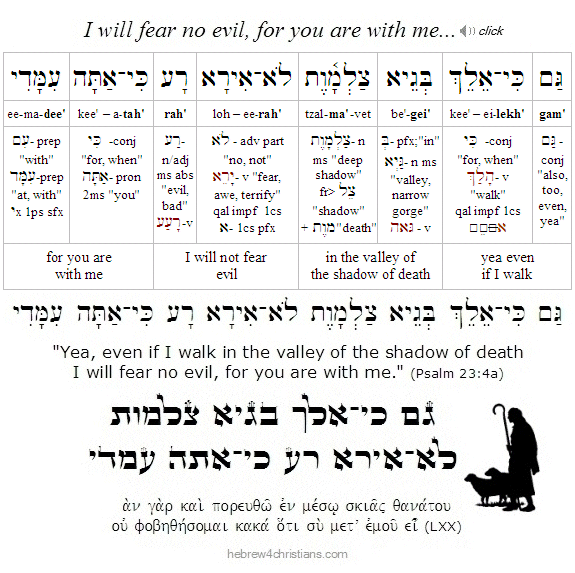 |
Ours is an age of emotional incontinence and insane thinking. We need self-control of the mind and heart; we need to "take every thought captive" to the abiding Presence of the LORD. May God grant each of us the grace of the Spirit to know the shalom of His love...
Teshuvah's Confession...
09.15.25 (Elul 22, 5785) From our Torah portion this week (Nitzavim) we read: "The word is very near you; it is in your mouth and in your heart, so that you can do it" (Deut. 30: 14). But what "word" is this other than the confession of faith in the LORD? Faith is the key, since it responds to God's voice and receives the message of hope within the heart...
Faith is a matter of the will: of choosing to receive the blessing, accepting that you are accepted, and trusting God's passion for your life. "Consider Abraham; he believed God and it was credited to him as righteousness" (Gal. 3:6). Faith itself is the obedience of Torah, the necessary precondition for all that follows. "I am the LORD your God" (אָנכִי יְהוָה אֱלהֶיךָ) is the very First Commandment.
When we turn to the LORD, we esteem him as truthful, just, wise, compassionate, and worthy of our trust. "Let us then with confidence (μετὰ παρρησίας) draw near to the throne of grace (כִּסֵּא הֶחָסֶד), that we may receive mercy and find grace to help in time of need" (Heb. 4:16). Faith is teshuvah's confession of the reality of love...
The students of the maggid of Zlotchov once asked him, "In the Torah we read that our father Abraham kept all the laws (Gen. 26:5), but how could this be, since they had not yet been given to him?" The maggid replied, "All that is needed is to love God. If you are about to do something and you think it might lessen your love, then you know it's a sin; but if you think it will increase your love, then you know it's in keeping with God's will. And that is just what Abraham did."
Amen. Faith is the confession of God's love. Abraham was justified by faith because he trusted in God's love more than anything else, and that is the essence of Torah. "Now abide faith, hope, love, these three, but the greatest of these is love" (1 Cor. 13:13).
Hebrew Lesson
Song of Songs 6:3 reading:
 |
He Hears our Prayers...
"As long as there is a believer, this person, in order to have become one, must have been, and as a believer must be, as contemporary with Christ's presence as His contemporaries were. This contemporaneity is the condition of faith, and, more sharply defined, it is faith." - Kierkegaard
09.15.25 (Elul 22, 5785) Yeshua told us: "If you live in Me, and My words live in you, ask whatever you wish, and it will be done for you. By this My Father is glorified, that you bear much fruit; so you will be My disciples" (John 15:7-8).
If you really believe that Yeshua is alive right now, with ears and heart open to your every prayer, then wouldn't this be the most important truth you could possibly know? and wouldn't your prayer to Him be the most significant thing you could ever do?
A life of prayerful communion with the Lord is the highest form of life we can experience this side of heaven. As our Lord further said: "You did not choose Me but I chose you, and appointed you that you would go and bear fruit, and that your fruit would remain, so that whatever you ask of the Father in My name He may give to you" (John 15:16). Amen, this is the "now" covenant we have with the Lord...
So be encouraged to call upon the Lord for help: Come boldly before the Throne of his Grace (Heb. 4:16). "Ask, for it will be given to you; seek, and you will find; knock, and it will be opened to you. For everyone who asks receives, and he who seeks finds, and to him who knocks it will be opened" (Matt. 5:7-8). Amen.
Hebrew Lesson
Psalm 145:18 Hebrew reading:
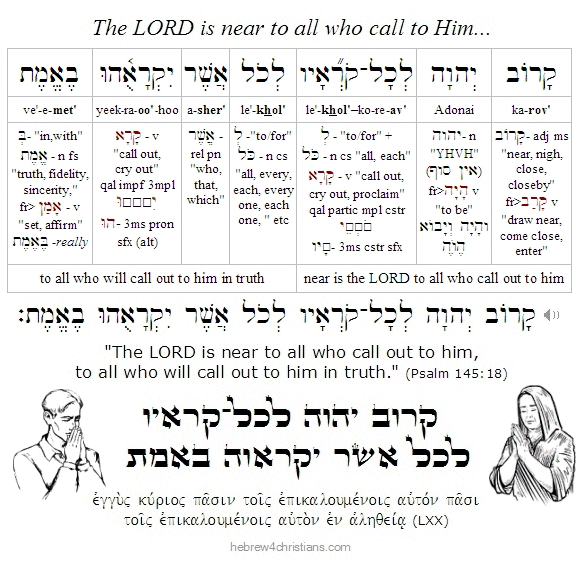 |
Parashat Nitzavim:
Standing before God...
Yom Teruah ("Rosh Hashanah") begins this coming Monday, Sept. 22nd at sundown...
09.14.25 (Elul 21, 5785) Shalom kulam! For the last Sabbath of the current Jewish (civil) year we always read parashat Nitzavim (פרשת ניצבים) as as a prelude to the holiday of Rosh Hashanah (יום תרועה). The sages found an allusion to Rosh Hashanah in the opening verse: "You are standing (נִצָּבִים) today all of you before the LORD your God" (Deut. 29:10), where "today" refers to Rosh Hashanah (i.e., Yom Teruah), when "all of you" shall stand before the LORD your God in judgment. The "last" shofar blast refers to Rosh Hashanah when the dead shall be raised (Rosh Hashanah 16b), whereas the "great" shofar blast is sounded at the end of Yom Kippur, after Israel has received the atonement.
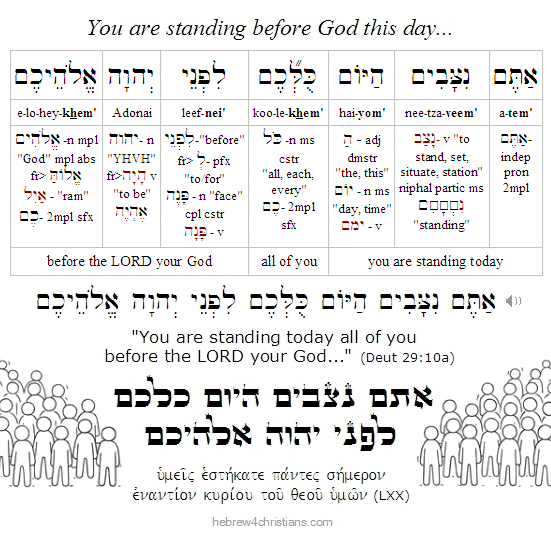 |
According to many of the sages, the time immediately preceding the appearance of the Messiah will be a time of testing (nisayon) in which the world will undergo various forms of tribulation called chevlei Mashiach (חֶבְלֵי הַמָּשִׁיחַ) - the "birth pangs of the Messiah" (Sanhedrin 98a; Ketubot, Bereshit Rabbah 42:4, Matt. 24:8). Some say the birth pangs are to last for 70 years, with the last 7 years being the most intense period of tribulation -- called the "Time of Jacob's Trouble" / עֵת־צָרָה הִיא לְיַעֲקב (Jer. 30:7). The climax of the Great Tribulation is called the great "Day of the LORD" (יוֹם־יהוה הַגָּדוֹל) which represents God's wrath poured out upon a rebellious world system. On this fateful day, the LORD will terribly shake the entire earth (Isa. 2:19) and worldwide catastrophes will occur. "For the great day of their wrath has come, and who can stand?" (Rev. 6:17).
The prophet Malachi likewise says: "Surely the day is coming; it will burn like a furnace. All the arrogant and every evildoer will be stubble, and that day that is coming will set them on fire,' says the LORD Almighty. 'Not a root or a branch will be left to them'" (Mal. 4:1). Only after the nations of the world have been judged will the kingdom of God (מַלְכוּת הָאֱלהִים) be established upon the earth. The remnant of Israel will be saved and the 1,000 year reign of King Messiah will then commence (Rev. 20:4).
Shavuah Tov Podcast:
Parashat Nitzavim..
09.14.25 (Elul 21, 5785) As mentioned above, our Torah reading this week, parashat Nitzavim (פרשת ניצבים), is always read on the Shabbat immediately before the solemn holiday of Rosh Hashanah, and therefore it is the last portion read before the new Jewish year (see Exod. 23:16). In many synagogues, the opening and concluding paragraphs of parashat Nitzavim are also read during the Yom Kippur morning service.
Torah portion Nitzavim begins: "You are standing here today, all of you, before the LORD your God (אַתֶּם נִצָּבִים הַיּוֹם כֻּלְּכֶם לִפְנֵי יְהוָה אֱלהֵיכֶם) ... so that you may enter into the sworn covenant of the LORD your God, which the LORD your God is making with you today, that he may establish you today as his people, and that he may be your God, as he promised you, and as he swore to your fathers, to Abraham, to Isaac, and to Jacob" (Deut. 29:10-13). After affirming the congregation, Moses went on to review Israel's history and prophetic future -- i.e., the great prophecy of the Diaspora and Return of the people -- and then he solemnly appealed for all those who believed to turn to the LORD for life: "I call heaven and earth to witness against you today, that I have set before you life and death, blessing and curse. Therefore choose life, that you and your offspring may live" (Deut. 30:19).
In addition to an overview of the reading, I discuss the fall holidays of the Torah's calendar, particularly the significance of Rosh Hashanah for followers of Yeshua the Messiah.
Deliverance from Anxiety...

"I am no longer anxious about anything, as I realize the Lord is able to carry out His will, and His will is mine. It makes no matter where He places me, or how. That is rather for Him to consider than for me; for in the easiest positions He must give me His grace, and in the most difficult, His grace is sufficient." - Hudson Taylor
09.12.25 (Elul 19, 5785) It is written in our Scriptures: "Do not be anxious about anything, but in everything by prayer and supplication with thanksgiving let your requests be made known to God" (Phil. 4:6). Note that the verb translated "be anxious" here (i.e.,μεριμνάω) comes from a root word (μερίζω) that means to be fragmented or divided into parts and pieces. Being anxious is therefore the uneasy state of being distracted, unfocused and divided within yourself.
When we worry we heed voices of fear and begin to feel 'double-minded,' (i.e., δίψυχος), unstable, and unable to think clearly; we get restless and find it difficult to deeply breathe. We start to feel out of control, fearful that something bad will happen despite all our efforts or wishes to the contrary; we sense doom; we lose heart; we go dark...
The Scripture here admonishes us to pray when we are tempted to be anxious by focusing on something for which we are grateful. Doing so will instill the "peace of God" (שלום יהוה) that rises above all worldly thinking to keep watch over your heart and your thoughts through Yeshua the Messiah (Phil. 4:7). We gain the "light of life," that is, inner illumination from God, so that we can remain steadfast and unmovable in our faith, despite the temptation to look for relief from our struggles apart from God.
Hebrew Lesson
Isa. 26:3 Hebrew reading (click):
Remember that Yeshua is the central character of every episode of your life. Faith sees his presence, unbelief does not. Most of us live within the continuum of blindness and seeing... "Lord I believe; help Thou my unbelief."
The Miracle of Teshuvah...

09.12.25 (Elul 19, 5785) Have you ever considered what the "self" really is? We tend to think of it, I suppose, as a conscious and emotional "center" of experience that is distinct from others and that has a sense of continuity through time and place. However, the self (or soul) has the ability to "transcend" itself, that is, to become conscious of itself, and this sets up an inner "dialog" within that enables the self to examine its own thinking, or to regard itself in relation to itself.... In this connection Soren Kierkegaard wrote of two types of "despair," by which he meant a condition of being wrongly related to your self. First, you can despair by rejecting (or denying) the self, and second, you can despair by elevating and exalting your self. In the first case the self is "lost" or abandoned by various forms of escapism; in the second case, the self is "idolized" and given god-like prerogative; in either case, however, the self is in despair because it is not grounded in the truth of reality, since there can be no true "self" apart from relationship with God who is the ground of all being...
This is connected with the task of cheshbon ha'nefesh (חֶשְׁבּוֹן הַנֶּפֶשׁ), or taking account of ourselves to do teshuvah (i.e., repent). Note that Kierkegaard understood the experience of the "self" as a conscious "synthesis" of the infinite/finite, the temporal/eternal, and freedom/necessity, all in relationship to God, who is the Source and End of self-conscious life. We will exist in a state of "despair" when we attempt to deny any one of these paradoxes and thereby choose to understand ourselves apart from relationship with God. We all stand at the "crossroads" of the eternal and the temporal, and we can only know ourselves for what we are when we surrender to God for each irrepeatable choice of our lives. Because of this, teshuvah (or "repentance") is an ongoing activity of the heart - the "daily bread" and sustenance in the way of becoming whole before God.
In your fight against evil, it is important not to become evil yourself, or as Nietsche once sardonically said, "Whoever fights monsters should see to it that in the process he does not become a monster. And if you gaze long enough into an abyss, the abyss will gaze back into you." Applied inwardly this means that we are careful not to hate ourselves in the battle we have with our sin. We can escape the "shame-pride" cycle when we turn away from ourselves by knowing ourselves only in relationship with the Lord who loves and gave himself for newness of life. We turn away from the hell of our past mistakes and turn to God who is our only remedy from death. When we know ourselves only through God's love in Yeshua, we find ourselves as beloved in relation to Him.
Any idea of the "self" apart from God is a dead-end (Prov. 14:12). Indeed, if we find the courage to honestly look within we soon discover that we are filled with violent desires and are loveless at heart: "For out of the heart comes evil..." (Mark 7:21; Jer. 17:9). The essence of Torah is to love, to "do good and no evil," but we are inherently selfish, judgmental of others, calloused, and proud. So how can we do the impossible?
There is a persistent temptation to regard our inability to love as the result of something other than our own inner perversity, or what the Bible calls "spiritual death." If we are not careful, we will pray that the Lord will show mercy and compassion on that which is to crucified, buried, and taken away. God does not reform our carnal nature but puts it on the cross to be done away, and then he replaces it with a radically new nature based on the Spirit and resurrection life... This great miracle of God is found in union with the Messiah's life. "Live in me and I will live in you," Yeshua says, "as the branch cannot bear fruit by itself, unless it finds life in the vine, neither can you, unless you find life in me; for apart from me you can do nothing" (John 15:4-5). You cannot do the impossible, but with God all things are possible (Mark 10:27; Phil. 4:13).
Therefore the ability to love comes by the miracle of God (Ezek. 36:26; 1 John 4:19). As we live in Yeshua, we find life, love, light, truth, and salvation from the hell of a loveless heart. Unite yourself with his death, burial, and resurrection; reckon yourself to be immersed into him, death-for-death, life-for-life (Rom. 6:8-11; Col. 3:1-4). "Unless a seed of wheat falls to the ground and dies, it abides alone..." (John 12:24). Yeshua is the source of all life, and we find nourishment, strength, and fullness of joy as we connect with him.
By faith therefore affirm: "I have been crucified with Messiah, and it is no longer 'I' who live, but Messiah who lives in me" (Gal. 2:20). There is a new "I" that comes from above, known only in spiritual relationship with the Savior. The miracle of the exchanged life comes as we surrender to the truth of what God has done for us (2 Cor. 5:17). That's the essence of the gospel, "the power of God for salvation to all who believe" (Rom. 1:16). Therefore we do not attempt to crucify ourselves, or labor to reform our lower nature, but we instead accept that we already have been crucified by the mercy and power of God. We clothe ourselves in the robes of his righteousness as we celebrate God's redeeming love for our lives. Only then are we empowered by the Spirit to truly "love the LORD and keep his charge"; and only then will we have a true self... Amen.
Hebrew Lesson
Psalm 139:23-24 reading (click for audio):
A Closing Thought...
Though we are given a new heart at the time of our regeneration, we are still saddled with the sinful lower nature, and that explains why we are instructed to become sanctified by "putting on" our spiritual self and "putting off" the carnal one (see Gal. 3:27; Eph. 4:24; Col. 3:10; 1 Thess. 4:3; etc.). We are to "mortify" (put to death) the sinful nature by faith in the power and provision of God (Col. 3:5; Rom. 8:13) As it is written: "The night is far gone; the day is at hand. So then let us cast off the works of darkness and put on the armor of light. Let us walk properly as in the daytime, not in orgies and drunkenness, not in sexual immorality and sensuality, not in quarreling and jealousy. But put on the Lord Yeshua the Messiah, and make no provision for the flesh, to gratify its desires" (Rom. 13:12-14).
Though followers of Yeshua are made into a "new creation" and all things are "made new" (2 Cor. 5:17) we nevertheless must practice our spirituality by being "renewed in the spirit of the mind" and by consciously choosing to "walk in the Spirit" (Eph. 4:23-24; Gal. 5:16). Therefore go forward in faith; do not focus on your failures but on His victory secured on your behalf. We all struggle with sin in our lives, but the difference for some is that they are called by God and are chosen to know him despite the common failings of the fallen human condition. Count yourself among those who must "fight the good fight of faith," and above all else, never let go of your hope in God's passion and love for you.
Shabbat Shalom chaverim....
|
Teshuvah of Humility....
09.11.25 (Elul 18, 5785) Only Yeshua imparts eternal life to the trusting soul, enabling the heart to truly and radically change. However, to receive this utmost blessing, we must settle the question of our profound need for deliverance from our corrupt inner nature. We simply cannot hear the message of the gospel if we do not feel hopelessly trapped within the consciousness and conviction of our sin. If we believe that we must justify our own existence by means doing good or by means of religious practices, for example, we will likely turn against God by regarding him a taskmaster who demands too much from us. If however, we realize that we cannot please God apart from his merciful intervention in our hearts, we learn to let go and abandon ourselves to his mercies. Those who cannot fathom the grace of God, however, are consigned to go back "under the law" again and again until the question of their powerlessness is settled. Until that miraculous moment of awakening comes, however, the message of Yeshua will make little traction within the heart.
Grace often comes in disguise because the ego has to be humbled for the heart to confess its need. When the veil is pulled back, and we discover with a shock that we ourselves are evil, and that despite our ideals we need deliverance from our inner wretchedness, we begin to turn to God not merely for mercy, but for the miracle of transformation - a new kind of life, a new heart, a new spirit - freedom from the soul sickness that haunts us in our secret shame and self reproach.... It is when we are at the "end of ourselves" -- when we know in our bones that we must "find God or die" -- that we can turn to Yeshua for life.
It is hard for the "rich" to enter the kingdom of God; it is hard for those who are self-satisfied, who regard themselves as moral, righteous, and who pray: "Thank you God that I am not like other men" (Luke 18:11). Yeshua speaks to the "poor in spirit" and to those who mourn over their lost condition. Those who are blessed realize their great need for God's intervention in their lives. They understand that it is in brokenness that we find divine healing; it is in our weakness we find God's strength.
Hebrew Lesson
Psalm 34:18 reading (click):
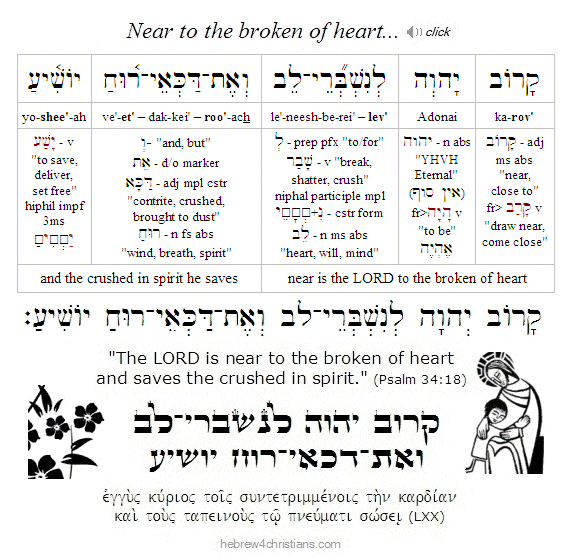 |
"God became a man to turn creatures into sons, not simply to produce better men of the old kind but to produce a new kind of man. It is not like teaching a horse to jump better and better, but like turning a horse into a winged creature" (Lewis: Mere Christianity). Amen. The divine name associated with teshuvah, or repentance, is ehyeh (אהיה), "I will be." The LORD imparts a holy and divine nature within us when are are reborn as his children. As it is written in our Scriptures: "Therefore, if anyone is in Messiah, he is a new creation (בריאה חדשׁה); the old has passed away; behold, the new has come" (2 Cor. 5:17).
The End of Brokenness...
The following is related to the month of Elul and the "Season of Repentance"...
09.11.25 (Elul 18, 5785) Spirituality is lived now, in this world... "I do not ask that you take them out of the world, but that you keep them from the evil one" (John 17:15). We are "in but not of" the world; we are part yet also not part of it... This is the tension of living in the realm of the "already-not-yet." We are haunted by a sense of incompletion - a yearning for the fulfillment of our salvation, an inner ache that helps focus the heart's affections...
A paradox of the spiritual life is that we must descend to ascend... We all sin; we all fall short. First we must accept our own "dark side" -- our own sinful nature -- before we can ever come to know the light... This is the path of confession - acknowledging the truth about who we really are, which is the only way we can learn to "endure ourselves" and eventually let go of our shame. We find ourselves when we give up our defenses and take hold of God's compassion. We all have our sins; now we must find our courage in God's love.
כִּי־פְשָׁעַי אֲנִי אֵדָע
וְחַטָּאתִי נֶגְדִּי תָמִיד

"For I know my transgressions,
and my sin is ever before me"
(Psalm 51:3)
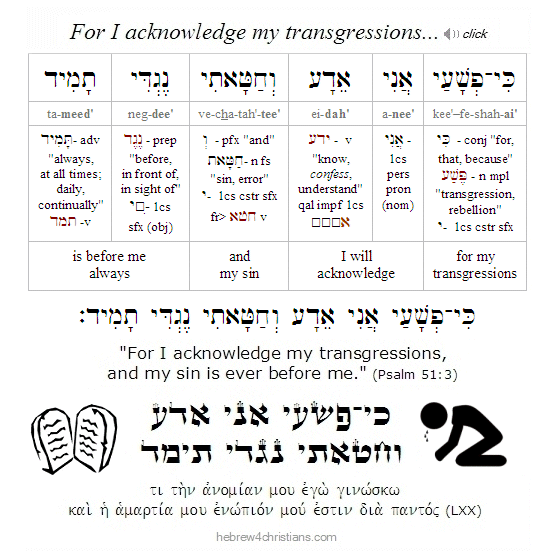
We must learn to "endure ourselves..." We can't deny who we are; we can't pretend to be what we are not. The root of shame is self-rejection. This is the hidden anguish of heart that leads many of us astray. As Henri Nouwen said, "There are two extremes to avoid: 1) being completely absorbed in your pain and 2) being distracted by so many things that you stay far away from the wound you want to heal." We don't come to the cross to destroy ourselves but to find deliverance and life: our brokenness is a means to this greater end. We "take up the cross daily," which means learning to forgive and endure ourselves... As theologian Paul Tillich once insightfully said: "The courage to be is the courage to accept oneself as accepted in spite of being unacceptable..." (Tillich).
In this age, we are part of a seemingly endless journey of falling down and getting back up once again. It is this struggle, this "good fight of faith," that eventually ennobles the heart and establishes character... In light of this, we must refuse to lose heart when things appear to be going badly, and likewise we must remain vigilant when things seems to be going well. The goal of the process is always to be in heartfelt, genuine, and earnest relationship with the LORD. As Madame Guyon once wrote, "You are born into the world like an illegitimate child who has no idea who his father is. But God comes and draws you out of your old life. He cleanses you and gives you back your innocence." Amen.
|
Destiny of the Soul...
The following is related to the month of Elul and the "Season of Repentance"...
09.10.25 (Elul 17, 5785) The Scriptures define "man" as the creation of God, a union of body and soul, that is, a unity of physical and spiritual elements, as it is written: "Then the LORD God formed the man from the dust of the ground (adamah: אֲדָמָה) and breathed into his nostrils the breath of life (nishmat chayim: נִשְׁמַת חַיִּים), and the man became a living soul" (Gen. 2:7). The miracle of creation means that God imparted his own neshimah (נְשִׁימָה), his own "breath," to give life to the man, who was named "Adam."
Note then that man was made in two distinct stages. First the LORD "formed" (יָצַר) his body (גוּף) from the "dust of the earth" (עָפָר מִן־הָאֲדָמָה), and then the LORD breathed (נָפַח) into this body a "soul" (נֶפֶשׁ ,נְשָׁמָה), that is, the consciousness that represents the self or the "I" that inhabits the body. This is sometimes called the "image of God" (צלם אלוהים), the "I am" of self-consciousness, the ability to reason and to make decisions, to discern intuitions of logic, to apprehend moral and aesthetic reality, to wonder and glory over the the beauty and greatness of the Divine Presence, and so on. The image of God means that man reflects (analogically) God's very attributes and characteristics.
The Scriptures also refer to the soul of man as "ruach" (רוּחַ), generally meaning "breath" or wind (Psalm 78:39). The unity of the body and soul is called "nefesh chayah" (נֶפֶשׁ חַיָּה), a "living being." The body serves as a "habitation" for the soul as it lives in this world, and the separation of this unity, that is physical death, causes the body to return to the dust, though the soul continues to exist (Psalm 90:3; Eccl. 12:7).
According to "kabbalistic" (i.e., neoplatonic) interpretations of Judaism, the individual soul goes through distinct stages in its "journey" emanating from God and then returning back to God. The first stage is nebulous "preexistence," or the soul before it enters a body while being suspended in the "treasury of souls"(הָאוֹצָר); the second stage is physical life, when the soul "falls" into the body and where it is actuated, imprisoned and tested in human form. The soul then works to remove the barriers to spiritual life in this world, and upon death of the body is released to either to Paradise (heaven) or to Gehenna (hell), but finally, the soul will have a share in the "world to come" (olam haba) after the resurrection of the dead. In some forms of kabbalah the soul is reincarnated until it attains success in its mission that was given before it "fell" to the realm of this world (olam ha'zeh). The final vision of the world to come is unified into one world that is inhabited by God in all fullness.
It should be noted that such a kabbalistic vision is not biblical, though it includes some biblical truths.... Let's therefore review Scripture to get an understanding of the human soul and its ultimate end. So we begin at the beginning, where Torah clearly states that God created Adam as a union of body and soul. First Adam's body was formed from the dust of the earth, and then Adam's soul was imparted when God breathed it into his body (Gen. 2:7). Note that Adam's body apart from his soul is not alive, and it is only after the soul is imparted to the body that man is called "nefesh chayah," a living creature. So at the outset of creation God made Adam "for life" and worship in the paradise of Eden. That was the original ideal.
Death is first mentioned following the account of the creation of the man, when the LORD commanded Adam not to eat from the "tree of the knowledge of good and evil" (עֵץ הַדַּעַת טוֹב וָרָע): "And the LORD God commanded the man, saying, "Of every tree of the garden you may freely eat; but of the tree of the knowledge of good and evil you shall not eat, for in the day that you eat of it you shall surely die" (Gen. 2:16-17). In this connection we note that the Hebrew phrase that warns of the dreadful consequence of eating from the forbidden tree is "mot tamut" (מוֹת תָּמוּת), literally "in dying you will die," which both implies the spiritual nature of death as separation from the divine life, but also the repeated experience of death – the ongoing knowledge of decay, dissolution, and loss...
Though it is not explicitly stated in the narrative, it is implied that Adam would have understood the meaning of the commandment and would have had some idea of the implications of what death meant, even though he had never directly encountered death in his life before. Adam would understand death to mean the loss of life, and moreover that death was the penalty for transgressing God's will. When Adam later transgressed God's decree, God invoked the just penalty by saying: "You shall return to the earth, for out of it you were taken; for dust you are, and to dust you shall return" (Gen. 3:19). "Returning to dust" (אֶל־עָפָר תָּשׁוּב) implies the disintegration of Adam, the separation of his body from his soul. I will consider some of the spiritual implications of this shortly.
Contrary to the idea that death is a "natural" part of a larger "evolutionary narrative" that explains it as an inevitable (i.e., mechanistic) "mutation" of biochemical organisms, the Scriptures understand death as God's judgment upon sin, both in the individual sense of the "curse" of decay and the dissolution of the human body, but also in a cosmic sense of the dissolution of biological organisms and "heat death" of the very universe itself.
After Adam's original sin, human nature itself "fell" and was corrupted, and all of his subsequent descendants would inherit the curse of death, and therefore all subsequent generations of people would eventually die (Rom. 5:12). This furthermore meant that all people would be born in a state of spiritual alienation and under judgment (guilt) derived by virtue of Adam's "federal headship" as the original father of the human race. In addition, and as mentioned above, the curse of death extended to the creation itself, since Adam was created to exercise godly dominion as God's steward and mediator of the world (Gen. 1:26). Adam's transgression forfeited his divine right to rule creation, and his authority was usurped by the devil who had deceived him (Gen. 3:1-19).
So in the biblical sense, "death" (i.e., mavet: מָוֶת) is far more than just the cessation of physical life, that is, the dissolution of the body, but concerns the soul's relationship with God, and therefore it is rightly called spiritual death (מוות נַפשִׁי).
Spiritual death is a "mode" of existence that may appear "alive" but it is actually cut off, separated, and alienated from God. It is in fact a "similitude" of life - death disguised as life. The Apostle Paul calls this godless and carnal energy "the flesh" (Rom. 7:5, Rom. 8:6), though Jewish tradition has often referred to it as "yetzer ha'ra" (יֵצֶר הָרָה) the inclination to be selfish and evil (the word yetzer first appears in Genesis 6:5 where the wickedness of man is described as "every imagination of the thoughts of his heart (יֵצֶר מַחְשְׁבֹת לִבּוֹ) was only evil continually"). The wicked are dead while they 'live;' the righteous are alive while they 'die.' As strange as it may seem, people are born in a state of death, enslaved to their carnal nature, and "dead in sins" (Eph. 2:1; Col. 2:13; Psalm 51:5; Jer. 17:9). The underlying problem of death, therefore, is the curse of spiritual death (קִלִלַת הַמָּוות הַרוּחָנִי), for unless that is somehow remedied, there is no lasting hope, even if the physical body were to continue to live into perpetuity. And this is the message of the gospel itself, that God, in compassion for your soul, redeems you from the curse and delivers you from spiritual death by the sacrificial exchange of Yeshua on the cross for your life. "For God made him who knew no sin to be sin for you, that you might become the righteousness of God in Him" (2 Cor. 5:21).
But note that just as the death of the body does not mean the death of the soul, so the death of the soul does not mean the end of its existence... In relation to the soul, death is something spiritual and therefore concerns the immaterial nefesh, the "self," and its separation from the divine life. As I mentioned above, the nefesh is the "I am" of inner consciousness, but being a person necessarily involves relationship, a "dialog," and ultimately this dialog must transcend the individual to be grounded in relationship with God.
There are two relationships we can never escape and that are eternal: the relationship we have with ourselves, and the relationship we have with God. If we have healing and peace in our relationship with God, we have a happy sense of self that will be grounded in eternal reality, but if we are hostile and offended in our relationship with God, we will have a self locked within itself in endless inner dialog that will be unhappy and full of blame, anger, grumbling, and shame. This is the worst kind of death, called "eternal death" (מוות נִצְהִי) which is the sealed judgment upon those who have willfully chosen reject God's mercies by remaining spiritually dead during their allotted time on earth.
All this is devastatingly sobering. If a person physically dies in a state of alienation and rebellion against God, that is, if they refuse God's remedy for the sickness of their condition of spiritual death, then their soul will be consigned to Hades, a temporary "holding cell," until the final judgment that will be pronounced and enforced at the end of the world, at the Great White Throne, wherein they will then be resurrected to rejoin their souls with their bodies and then eternally separated from God forever and ever. Tragically, the only remnant of the soul that will be retained will be consciousness of the revelation of God's justice and judgment upon their sin forever and ever. The Apostle John calls this the "Second Death" (הַמָּוֶת הַשֵּׁנִי) in the "Lake of Fire" (Rev. 20:11-15).
On the other hand, those who do teshuvah (repent) and are regenerated by God will be given spiritual life (חַיֵּי עוֹלָם) imparted by the Holy Spirit (John 3:1-8). A "new nature" is created, a new heart (נֶפֶשׁ) and a new spirit (רוּחַ) is given (Ezek. 36:26). This is a matter of "ontological" change, not simply a matter of faith (2 Cor. 5:17). Just as physical birth resulted in being in the earthy realm, connected to Adam as our primordial father, so spiritual birth results in being in the heavenly realm, connected to Yeshua as our "Second Adam" and "Father of Eternity" (Isa. 9:6; 1 Cor. 15:45; Eph. 1:5). An intimate sense of God as "Abba" is implanted in the heart, and new desires - a hunger and thirst to know and walk in God's ways - begin to take root (Rom. 8:15; 1 Pet. 1:23). Although there will ongoing struggles with "the world, the flesh, and the devil," a real transformation from a life characterized by spiritual death to one of divine life and godly character will begin to be manifest. The "old self" (הָאָדָם הַיָּשָׁן) is crucified with Messiah and the carnal connection with Adam severed "so that we would no longer be enslaved to sin" (Rom. 6:6). Our connection to death will die; the power of sin will be radically broken, and we will experience freedom to do what is right in God's eyes (Eph. 2:5). "By his divine power, God has given us everything we need for living a godly life, through the knowledge of Him who called us by glory and goodness, by which have been given to us exceedingly great and precious powers (i.e., ἐπάγγελμα, the substance of what has been promised), that through these you may be partakers of the divine nature, having escaped the corruption that is in the world through lust" (2 Pet. 1:3-4).
Of course "salvation is of the LORD" (יְשׁוּעָתָה לַיהוָה), which means God is the Author and Finisher of our salvation, and we are powerless to generate new life in our souls. Indeed, the gospel speaks precisely to those who know they cannot save themselves. There are no "works of righteousness" that we may do, no rituals or special prayers that will unlock the blessings of true spiritual life: It is the miracle of God; it is the sovereign work of the Holy Spirit of God. Nevertheless, in this present age, physical death is inevitable and is a matter of God's decree (Heb. 9:27; Psalm 139:16). This is a result of living in a fallen world. The essential issue is what death means in light of salvation in Messiah. In the case of the unregenerated person, as we have seen, the separation of the body and the soul leads to the continuation of spiritual death, and ultimately to eternal death (Luke 16:19-31). In the case of the regenerated person, however, the separation of the body and the soul leads to the continuation of spiritual life and entry before the presence of God in paradise, and ultimately to life to heaven itself (John 5:24; 2 Cor. 5:8; Phil. 1:23).
We are given eternal life (חַיֵּי עוֹלָם) when we are regenerated by the Holy Spirit, and our regeneration is a present possession even as we live in this temporal realm (John 5:24). The life we are given in Messiah is a possession of the "inner man," that is, a new nature and spirit, and though the "outer man" may perish, the inner man is renewed day by day (2 Cor. 4:16). The Greek word used for "renewed" in this verse (ἀνακαινόω) means being transformed into something new, raised up from death into a new kind of life. We no longer know ourselves "after the flesh" (Gal. 2:20; 2 Cor. 5:16); there is a new principle at work, the "law of the Spirit of Life" that sets us from the "law of sin and death" (Rom. 8:2). Death has lost its power over us because Yeshua has overcome death on our behalf and will rescue us from its claim on our souls. But we have this treasure in "jars of clay," to show that the surpassing power belongs to God and not to us" (2 Cor. 4:7) Therefore, as Paul affirmed: "whether we live, we live unto the Lord; and whether we die, we die unto the Lord. Whether we live therefore or die, we are the Lord's (Rom. 14:8).
But why must we physically die, if Yeshua took upon himself the curse of death and died in our place? Because the spiritual life he imparts to us will be fully manifest upon our death, as we share in his resurrection power. Then, at the appointed time when we are reunited with our bodies at the time of the rapture, in a "twinkling of an eye," the people of God will be physically restored to serve in the Millennial Kingdom at the time of the Second Coming. For the believer, death will then be "swallowed up" into life forevermore. It should be noted that this restoration of the body is unlike the resurrection of the spiritually dead before the White Throne judgment at the end of the age.
Though the prospect of physical death is fearful, we have peace with God as we trust in his sovereign work to save our souls. Yeshua is the way, the truth, and the life: he has tasted death for us and overcome all its terrors (Rev. 1:8). He takes our place as our Scapegoat upon the cross, and our atonement from the penalty for our sins is thereby made eternally secure. In this life he quickens us with spiritual life and a new nature; as we live out our days he guides our way, and when we die, he will receive us into the presence of his glory. We will live and reign with him forever and ever to the glory and praise of the LORD our God. Amen.
Hebrew Lesson
Psalm 73:24 reading (click for audio):
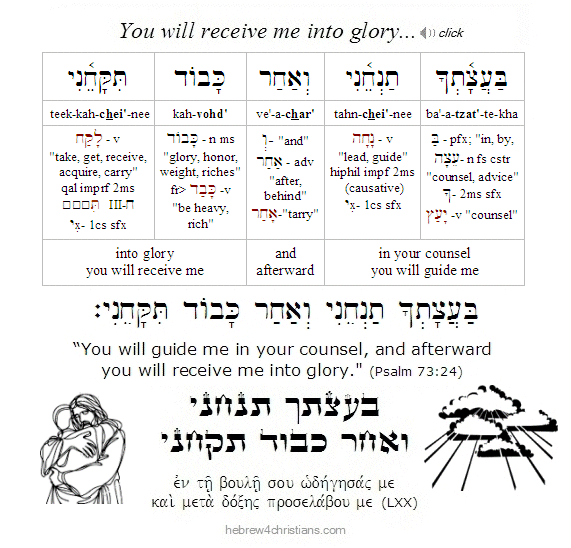 |
The Urgency of Repentance...
"Die before you die; there is no chance after." - C.S. Lewis
09.10.25 (Elul 17, 5785) In the Gospel of Luke we read that some people once came to Yeshua to share the terrible news that Pontius Pilate, the infamous Roman prefect of Judea, had murdered several Jews from Galilee as they were offering sacrifices at the Temple (Luke 13:1). Apparently Pilate even mingled the blood of these Galileans with their offerings! Horrible. Dreadful. How could this have happened? Why would God allow such a thing?
We are unsure why these people might have shared this awful news with Yeshua. Were they testing him? Perhaps they hoped he would openly identify with the Zealots who sought to overthrow the Romans, or perhaps they wanted him to say that the Galileans deserved retribution for some sort of wickedness -- or perhaps they just shared out of morbid concern -- but regardless of their motive, Yeshua replied by asking them a question: "Do you think these Galileans were worse sinners than all the other Galileans, because they suffered these things?" And then he added: "I tell you, no; but unless you repent you will all likewise perish" (Luke 13:2-3).
Now that was unexpected. Why did he say that the same sort of fate might befall them? Yet to reiterate his point, Yeshua recalled the sudden death of several people when the Tower of Siloam fell: "Those eighteen who were killed when the tower in Siloam fell on them, do you think they were worse offenders than all the others who live in Jerusalem? I tell you, no; but unless you repent you will all likewise perish" (Luke 13:4-5). There's no mention of the reaction of the people when Yeshua said this, but it was likely one of shock, anger, and fear.
What was Yeshua trying to teach by his response to these tragedies? Was he being cruel to point out that unless people repent, they would suffer tragedy in their lives? Well first it is likely that he was countering the assumptions behind the thinking of his listeners, namely, the idea that unexpected death happens only to people who are notoriously bad and therefore deserve judgment from heaven. On the contrary, trouble often befalls the righteous, while worldly success and comforts often are gained by the wicked. Yeshua therefore rejects simplistic answers as to why death happens, and he instead consigns tragedies, suffering, and trouble to be an inescapable part of life in a broken and fallen world. Death is the inheritance of all the children of Adam, and humanity is under the divine curse until it would be removed by the atonement of the Yeshua upon the altar of the cross (Gal. 3:13). If there is a deeper reason as to why particular tragedies occur, we are not privy to such information. Yeshua, however, warns us from thinking that some people deserve judgment more than others, but on the contrary, that all people are sinners in need of salvation (Rom. 3:23).
The lethal consequence of the fall of Adam extends beyond acts of human sinfulness, to natural disasters and matters of sickness, disability, and physical death, however. For example, when the disciples encountered a man who had been born blind they asked Yeshua: "Rabbi, why was this man born blind? Was it because of his own sins or his parents' sins?" Yeshua then answered: "It was not that this man sinned, or his parents, but that the works of God might be manifest in him" (John 9:1-3). Though we naturally assume that there must be a reason for whatever happens, we are not given explicit explanations, and therefore we should be cautious when making inferences. It is a matter of trust that God will bring about a wonderful end for us -- even if we presently may experience pain, sorrow, and various kinds of suffering in our lives. That's part of the consummation of our redemption, after all. However, it is written: "We must through much tribulation enter into the kingdom of God" (Acts 14:22) and "Unless a grain of wheat falls into the earth and dies, it remains alone; but if it dies, it bears much fruit" (John 12:24). We are both redeemed people but we live within fallenness...
Sadly people often die with little warning and for no clearly identified reason. Life is precarious, fragile, and poignant. Yeshua does not defend God's governance of the universe; he knows His heavenly Father is loving, just, and righteous in all his ways. He groans over our suffering and indeed tastes death for every one. He was born to die. "My God, my God, why have you forsaken me?" was his cry on the cross, in the hour of his abandonment and utmost grief. Yeshua entered in the depths of our sin and embraced it as his concern and passion to remedy on our behalf. He was alone in the dark cloud to intecede for us...
In light of the unpredictable perils of life, then, Yeshua wants all people to understand their great need for teshuvah, or repentance. This was the burden of his ministry to us, the very reason he came. And indeed teshuvah is first word of his proclamation: "The time is fulfilled, and the kingdom of God is at hand. Repent, and believe in the gospel" (Mark 1:15). Yeshua wants everyone to know their need and his power to save them from death...
The central problem for human beings - both the so-called good as well as the bad - is that of spiritual death, that is, the destruction of one's soul. The danger is real for all of us. Each of us may be unprepared for sudden death, and therefore it is vital to turn to God for life while we have the opportunity. We must be wary of a false sense of security; we must understand our radical need for healing and turn to God for salvation. Time is running out. Our days are numbered. We must sincerely repent lest we perish in uncertainty and darkness of heart...
But this is not all. Yeshua continued his teaching about the danger of perishing without repenting by giving the "parable of the fig tree" (Luke 13:6-9). A certain man had a fig tree in his vineyard that did not bear fruit. When he decided to cut the tree down, his gardener intervened: "Sir, give it one more chance; leave it another year, and I'll give it special attention and plenty of fertilizer. Then if it bears fruit next year, well and good; but if not, you can cut it down." Among other things this parable teaches that a tree that is fruitless will eventually be destroyed, echoing John the Baptist's warning to turn to the Savior for life: "Even now the ax of God's judgment is poised, ready to sever the roots of the trees. Yes, every tree that does not produce good fruit will be chopped down and thrown into the fire!" (Matt. 3:10). The fruit here is that of teshuvah, or repentance (Luke 3:8). The "fruits worthy of repentance" are those derived from heartfelt trust in God's salvation, resulting in a radical change of direction, an abiding abhorrence over personal sin, and an earnest turning to God to escape from the wrath to come - the wrath that is ready to break forth in fiery judgment upon the earth. True repentance is a change of mind (μετάνοια), "taking down high thoughts and bringing them into obedience to Christ" (2 Cor. 10:5). The parable teaches that a life devoid of teshuvah, and in particular a soul devoid of faith in Yeshua as the Savior and deliverer of the soul, will be unprepared for death. The gardener is patient and does everything he can to rescue the tree, but if the tree continues to be fruitless, it will be removed suddenly and irrevocably. The point of the parable is a great question. Will fruit emerge in time before the tree would be felled in judgment? How much time remains for the tree before its day of reckoning comes?
Why does God want us to face the truth about death? Why does Moses ask God to teach us to "number of our days?" (Psalm 90:12). Why does David pray: "LORD, make me to know mine end, and the measure of my days, what it is; that I may know how frail I am" (Psalm 39:4)? The reason is that by nature people deny the reality of death - they hide their eyes from it, ignore it, and pretend it's not there - so they can continue to live under the illusion that they are in control of their lives, that they are the center, that they are immortal little "gods." Death threatens the ego and humbles us to confess the truth about life, namely that we are not in control, that we cannot choose to be immortals, that we do not have power to exist in ourselves, and therefore we need life from a different source - spiritual life - wherein we receive a new identity and a new being found in relation to God.
So in light of all this, what can we learn about repentance? Far more than moral reformation or "self-improvement," the word teshuvah means turning to God in our brokenness, regretting the sin of our life, and fundamentally changing the way we think. Most of all it means trusting in God, believing in the miracle of resurrection life, and relying upon his promises despite the transience, jeopardy, and uncertainty of our lives in this world. Repentance is the confession of our fragility and of our need for God to carry us through the darkness into the presence of his glorious light; it means finding faith to be healed from the sickness of spiritual death and to exist as a new creation for God's glory. It believes that one day we will be home in the house of God's unending love... Repentance is a heart that won't let go of God's love.
Hebrew Lesson
Psalm 39:4 Hebrew reading (click):
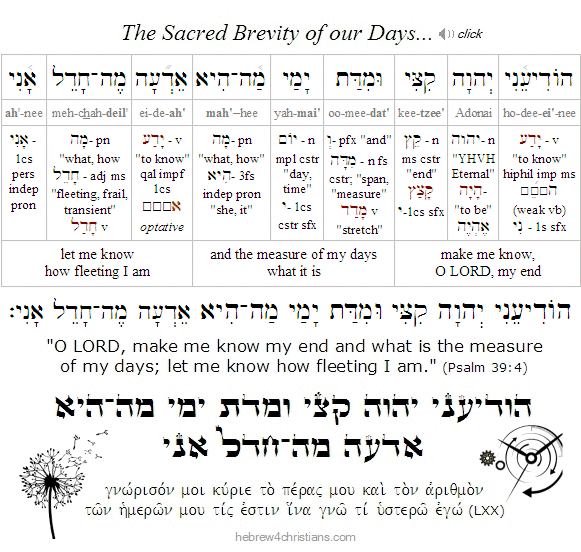 |
Exile and Joy...
"True faith rests upon the character of God and asks no further proof than the moral perfections of the One who cannot lie. It is enough that God has said it." - A.W. Tozer
09.10.25 (Elul 17, 5785) In our Torah portion this week (Ki Tavo) we are warned of exile if we fail to express simchah (joy) for the fruit of our lives (see Deut. 28:45-47). We are to offer our bikkurim (first fruits) from an inward store of gratitude, from a heart that recounts the history of God's deliverance (Deut. 26:1-11). We don't superficially enter into the land. Instead of attaining joy by keeping the commandments, we keep the commandments by attaining joy, which is another way of saying that faith is the essence of all true Torah. "If we do not fulfill a mitzvah with joy, we do not understand the meaning of a mitzvah." Indeed, without faith it is impossible to please God (Heb. 11:6).
A Chassidic story, undoubtedly influenced by the New Testament, says that Rabbi Shmelke and Rabbi Moshe Leib of Sassov were traveling on a ship when a dangerous storm arose that threatened to destroy the vessel. Rabbi Shmelke went over to the Sassover and saw that he was engaged in a joyful dance. "Why are you dancing?" asked Shmelke. "I am overjoyed at the thought that I shall soon arrive in the mansion of my Father." "I shall join you, then," said Shmelke. But the storm spent its force, and the ship reached port in safety.
Inner joy comes from entirely trusting that God loves, forgives, and accepts you... Joy and peace spontaneously arise when you realize that God knows your "story" and promises you a "happy ending." It is faith in God's personal love for you...
Faith sees beyond the fleeting to the substance, that is, the reality of the promise; it is the conviction of the coming blessing as foretold by God. We come to God by trusting that this reality is forthcoming, and by doing so we contemn the vanity and deceptions of the godless world. We confess that we are "strangers" and "sojourners" on this earth, "tent dwellers" who look for a city with "everlasting foundations" whose builder and maker is God. This coming blessing is the "heavenly Jerusalem," the joyful assembly of myriad angels and the "called out" people of faith whose names are written in heaven, and whose spirits have been perfected by divine transformation of their resurrection. It is to behold the presence of Yeshua himself, the mediator of the true covenant (διαθήκης νέας) of the Living God. This the vision of Zion, the perfection of holiness, and of our ultimate healing and blessedness. Let us, therefore, endure in joy, "seeing Him who is invisible," as we faithfully await the coming day when we shall take hold of the unspeakably glory and the reward of our faith!
Hebrew Lesson
Psalm 27:14 reading (click for audio):
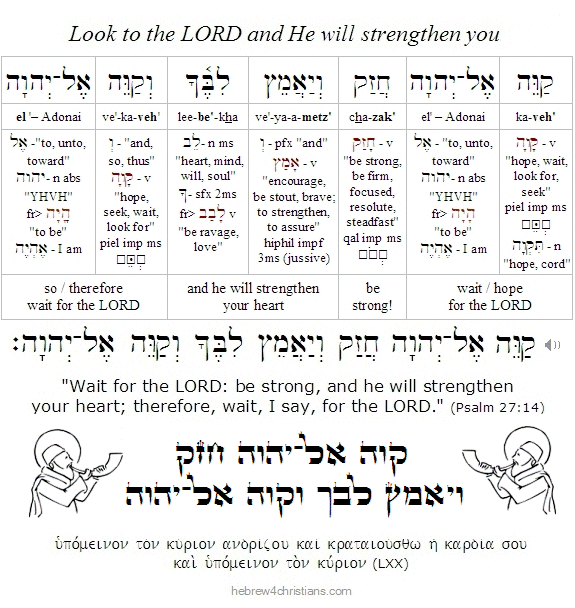 |
Holy Introspection...
Doing teshuvah requires courage and honesty, but a fearful life is not worth living....
09.09.25 (Elul 16, 5785) We are all on a spiritual journey, writing the "Book of our Life." To help us in the "writing" process, the Jewish sages decided that the entire month of Elul should be set aside as a season for cheshbon hanefesh (חֶשְׁבּוֹן הַנֶּפֶשׁ) - "making an account of the soul." This means that we attempt to engage in honest self-examination about our behavior and ask where we have been and where we are going. After all, what is the essence of teshuvah (i.e., "repentance") if it is not honesty with yourself? "For everyone who does wicked things (lit., ὁ φαῦλα, that which is "easy," "worthless," or "vain") hates the light and does not come to the light, lest his works should be exposed" (John 3:20). Therefore we make some time to reflect about our lives from the previous year. We ask searching questions like, "How did I get to this place in my life?" "Where am I now?" "Am I where I should be?"
We engage in this process of self-examination with an aim to grow -- to let go of the pain and mistakes of the past in order to move forward. Confession (i.e., homologia: ὁμολογία) means bringing yourself naked before the Divine Light to agree with the truth about who you are. Indeed, the related verb word "homologeo" (ὁμολογέω) literally means "saying the same thing" - from ὁμός (same) and λόγος (word). We need to confess the truth if we are to be healed from the pain of the past (James 5:16). When King David wrote, יְהוָה אוֹרִי וְיִשְׁעִי מִמִּי אִירָ֑א - "The LORD is my Light and my salvation; whom shall I fear? (Psalm 27:1), he implied that he should even be free of fear of himself and of his past.
Of course we need God's help to do any of this, since it is easy enough to deceive ourselves, to deny the truth, in an attempt to protect our ego from shame. However being honest with ourselves is absolutely essential for any sort of authentic spiritual life... "No person is saved except by grace; but there is one sin that makes grace impossible, and that is dishonesty; and there is one thing God must forever and unconditionally require, and that is honesty" (Kierkegaard). Confession means "saying the same thing" about ourselves that God says - and that means not only acknowledging our various sins, transgressions, and iniquities, but also affirming our new identity as the beloved children of God. Saying that God doesn't love you is a lie as damning as denying His very existence...
Hebrew Lesson
Psalm 139:23-24 reading (click):
|
The High Cost of Apathy...
One of the great sins of our age is "acedia" (ἀκηδία) sometimes translated as "sloth," but is better regarded as a lack of care... It is a state of being numb, unfeeling, and emotionally disconnected from life. It's a type of heartlessness. Unawareness. Willful ignorance. Kierkegaard would describe it as a form of despair that refuses to surrender to God, an attitude that refuses to accept responsibility.
09.09.25 (Elul 16, 5785) From our Torah for this week (i.e., Ki Tavo) we read: "Cursed is anyone who does not uphold the words of this Torah to do them" (Deut. 27:26). This is because 1) God is God; 2) ultimate reality is non-negotiable, and 3) we are eternally accountable for all that we do (Matt. 12:36; Heb. 4:13). "Each person's deeds will become manifest, for the Day will disclose it, because it will be revealed by fire, and the fire will test what sort of deeds each one has done" (1 Cor. 3:13). There is a Scroll that attests the reality of all truth, and the life of every soul created by God is recorded therein (Rev. 20:12).
We are forbidden to add or subtract from Torah, since that is to refashion God's message into one of our own understanding (Deut. 4:2). Reading the tochachah or "rebuke" in our portion (i.e., Deut. 28:15-68) is difficult and painful, though it serves as a bitter medicine to wake us up from our lethal coma. In that sense the tochechah is a great blessing, since it shocks us into experiencing the "gravity of God's grace." This is why Yeshua proclaimed grave warnings about the dangers of forfeiting life and thereby "receiving" hell... Sin is a lethal problem, and we must turn to God for healing or we will die.
The Lord does not allow us to trifle with the truth, neither will he offer us a good that excludes Divine Reality since there simply is no such thing. God does not give us the option of affecting existential indifference toward Him, since apathy is as much a spiritual decision as is outright rebellion and apostasy. "If anyone thinks he has faith yet is indifferent toward this possession, is neither hot nor cold, he can be certain that he does not have faith. If anyone thinks he is a Christian and yet is indifferent toward being that, then he is not really one at all. Indeed what would we think of a person who gave assurances that he was in love and also that it was a matter of indifference to him?" (Kierkegaard). As King David inscribed upon his heart: "Guard me, O God, for in you I take refuge. I say to the Lord, "You are my Lord; I have no good apart from you" (Psalm 16:1-2).
Hebrew Lesson
Psalm 16:2 reading (click):
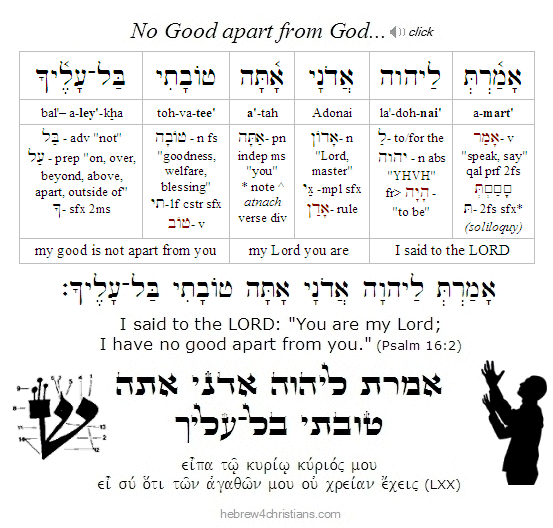 |
Firstfruits and Blessing...
"If the only prayer you said was 'thank you,' that would be enough." - Meister Eckhart
09.09.25 (Elul 16, 5785) From our Torah portion this week (Ki Tavo) we read: "You shall take some of the first of all the fruit of the ground, which you harvest from your land that the LORD your God is giving you, and you shall put it in a basket, and you shall go to the place that the LORD your God will choose, to make his name to dwell there" (Deut. 26:2). This is called the mitzvah of "bikkurim" (בִּכּוּרִים), or "firstfruits," a thank offering (זֶבַח הַתּוֹדָה) that was given to the priests in recognition of God's faithful love.
In a special Shavuot ceremony, a basket filled with the first samples of the spring harvest was presented before the altar at the Temple as the worshiper recited a passage from Torah (Deut. 26:5-12) that retold the basic story of Exodus from Egypt and how the LORD had faithfully brought the people into the Promised Land, "a land flowing with milk and honey" (i.e., eretz zavat chalav u'devash). The point of the yearly bikkurim ritual was to instill a sense of gratitude, or "hakarat tovah" (הַכָּרַת טוֹבָה), a phrase that means "recognizing or being conscious of the good" (indeed, the word "Jew" (יְהוּדִי) comes from wordplay on the verb yadah (יָדָה), meaning to acknowledge and give thanks).
We see that the firstfruits offering teaches us to use the "good eye" to appreciate God's kindness and love. Doing so will yield a harvest of blessing in our lives, as it says: "Honor the LORD with your substance and with the firstfruits of all your produce; then your barns will be filled with plenty, and your vats will be bursting with wine" (Prov. 3:9-10). "Bless the LORD, O my soul, and all that is within me, bless his holy name; Bless the LORD, O my soul, and forget not all his benefits" (Psalm 103:1-2).
בָּרֲכִי נַפְשִׁי אֶת־יְהוָה
וְכָל־קְרָבַי אֶת־שֵׁם קָדְשׁוֹ
ba·ra·khee · naf·shee · et-Adonai
ve·khol-ke·rah·vai · et-shem · kod·shoh
"Bless the LORD, O my soul,
and all that is within me, bless his holy name"
(Psalm 103:1)
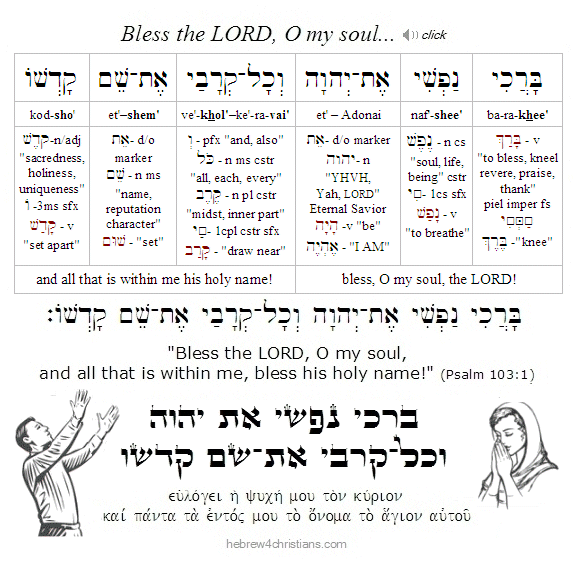
The bikkurim ritual testifies that God has redeemed us so that we will produce fruit in our lives to His glory (John 15:7-8). Chodesh tov and love to you, chaverim...
<< Return
|