|
September 2025 Updates (continued)
Note: If any page content appears to be missing, please refresh the page...
The Blessing of Willingness...
"Let me seek you in the darkness of my silence, and find you in the silence of Your light, which is love shining as the sun, flowing like the river, and joying like the heart." - Meister Eckhart
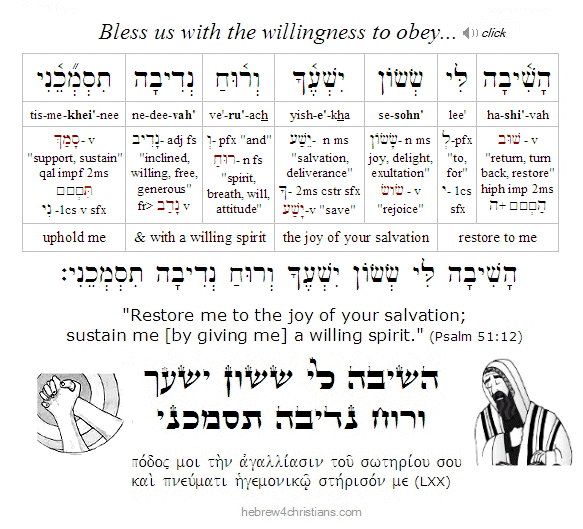
09.08.25 (Elul 15, 5785) When King David repented from his sin and asked God's forgiveness, he appealed to the LORD: "Restore me to the joy of your salvation (יְשׁוּעָה) and sustain me with a willing spirit. Then I will teach transgressors your ways, and sinners will return to you" (Psalm 51:12-13). The sages comment that this is indeed the way of the LORD (דֶּרֶךְ יְהוָה), namely, to confess your sin, and in brokenness and heartfelt contrition, to return to the LORD full of hope in his steadfast love. In this way, sinners will understand the truth of Torah and return to the LORD God as well.... Hashiveinu, Adonai.
In the Torah we read: "if you seek for the LORD your God from there (i.e., in your place of exile), you will find him, if you search for him with all your heart (בְּכָל־לְבָבְךָ) and with all your soul" (Deut. 4:29). From where do we search, from what place, except from a place of hardship, testing, and tribulation? If you seek for the LORD your God from there - in the midst of your exile, in the midst of your heart's cry - you will find him there, in your heart. This message is a prophecy to the heart of faith, so that even after testing befalls you, in the end you will belong to the LORD and will hear his voice. Amen. Have faith in God to heal.
Hebrew Lesson
Psalm 51:12 reading (click):
 |
Repent one day before you die...
"Rabbi Eliezer said: 'Let the honor of your friend be as dear to you as your own; And be not easily provoked to anger; And repent one day before your death.'" - Pirkei Avot 2:10
09.08.25 (Elul 15, 5785) In this week's Torah reading (Ki Tavo), the LORD commanded that the firstfruits (bikkurim) of crops be brought to the priests in the central sanctuary in a prescribed ritual. This celebration later was associated with the festival of Shavuot ("Pentecost") and is traditionally recalled during our Passover Seders.
Each family would go up to Jerusalem to present a basket of their finest fruits to a kohen (priest), who then would wave it in seven directions (tenufah) and set it before the altar. The worshipper would then recite a ceremonial vidui (confession) before the priest that began, "A wandering Aramean was my father." Some of the sages understand this opening phrase to mean: "An Aramean destroyed my father," based on the the verb oved (אבד) that alludes to devastation (the word Abaddon comes from the same root). So understood, this confession thanks God not only for Israel's deliverance from bondage in Egypt, but also from the evil designs of Laban who sought to kill Jacob when he left for the Promised Land. The sages reasoned that "Uncle Laban" was at heart an enemy of God who literally sought to kidnap the sons of Israel (Gen. 31:43).
Though this portion begins with a joyful subject that celebrates God's faithfulness, it also includes a litany of curses (kelalot) proclaimed for those who stray away from the truth of Torah. The frightening list of curses is summed up in Deut. 28:45-48:
"All these curses shall come upon you and pursue you and overtake you till you are destroyed, because you did not obey the voice of the LORD your God, to keep his commandments and his statutes that he commanded you. They shall be a sign and a wonder against you and your offspring forever. Because you did not serve the LORD your God with joyfulness and gladness of heart, because of the abundance of all things, therefore you shall serve your enemies whom the LORD will send against you, in hunger and thirst, in nakedness, and lacking everything. And he will put a yoke of iron on your neck until he has destroyed you."
Notice something profoundly important here: All the varied and distressing curses enumerated in this Torah portion would come upon those who refused to serve the LORD "with joy (simchah, שִׂמְחָה) and gladness of heart." In other words, living a discontented and ungrateful life leads to greater and greater rebellion. Genuine joy is heartfelt appreciation at the wonder and grace of God. Indeed, the Greek word for joy (χαρα) is related to the word for grace (χαρις), so there is a deep inner connection between grace and joy (Phil. 4:4). The joy of the LORD is our strength (Neh. 8:10).
The sages connect the joy of offering first fruits with the study of Torah, since the phrase "You shall take from the first" (Deut. 26:2) alludes to the Torah, which is the first part of our wisdom (Psalm 111:10). In the world to come, the first thing you will be asked is if you had learned the wisdom and truth of Torah.... "Blessed ("happy") is the man who...delights in the Torah of the LORD and meditates upon it day and night" (Psalm 1:1-2). If you find studying and living the truth of Scripture joyless, then be careful that you don't drift into spiritual exile.
Why is this portion of Torah always read during the Season of Teshuvah (i.e., Repentance)? Because the blessings and curses are intended to awaken us to perform "soul searching (cheshbon ha-nefesh, חֶשְׁבּוֹן הַנֶּפֶשׁ) and teshuvah. The Talmud says, "Repent one day before you die." But who knows the day of one's death in advance? Therefore live each day as if it were to be your last, and live it with joy.
Shuvah! Return to the LORD and serve Him with gladness (Psalm 100:2). Come in joy of what Yeshua, our Firstfruit of the LORD (1 Cor. 15:20), has done for you: "Though you have not seen him, you love him. Though you do not now see him, you believe in him and rejoice with joy that is inexpressible and filled with glory, obtaining the outcome of your faith, the salvation of your souls" (1 Pet. 1:8-9).
Hebrew Lesson
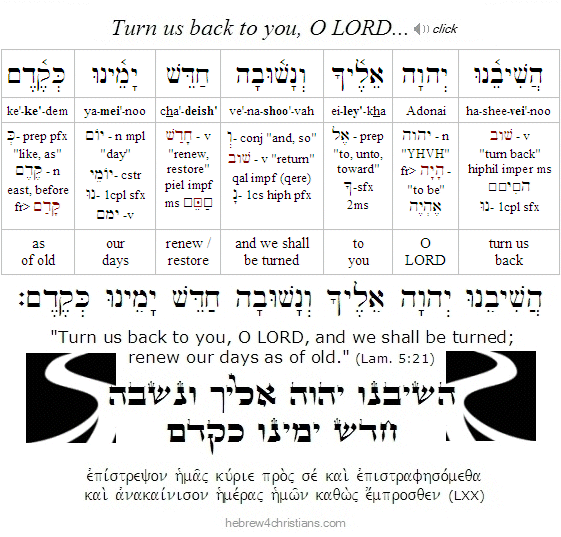
Lamentations 5:21 reading (click):
 |
Finding Life in God...
"God abides for ever in an eternal present, His knowledge, also transcending all movement of time, dwells in the simplicity of its own changeless present." - Boethius
09.08.25 (Elul 15, 5785) The name of the Lord is YHVH (יהוה), which comes from a root word meaning existence (i.e., hayah: היה, to be). It is this name that gives existence to creation, as it says, "in him all things hold together" (τὰ πάντα ἐν αὐτῷ συνέστηκεν; Col. 1:17) and by his power "all things are carried" (φέρων τε τὰ πάντα; Heb. 1:3).
In God we "live and move and have our being" (Acts 17:28) and "from him and through him and to him are all things" (Rom. 11:36). Some people think of "eternal life" as unending life or immortality of the soul, but eternal life (i.e., chayei olam: חַיֵּי עוֹלָם) transcends the idea of time and is centered in relation to the Living God, right now, wherever we are... Therefore Yeshua says to his followers, "Live in me and I will live in you" (John 15:4). We need not fear death, then, because we partake in the overcoming life of God given in Yeshua: there is no ultimate separation from his love. We have the "now" covenant with our Lord forever!
When we live in Messiah our true life is "concealed" and we pass over from the temporal world of shadows to the world of reality, from fear to comfort, from darkness to light. We "lose our life in order to find it" (Luke 17:33). The walk of faith surrenders all that this life may promise for the sake of finding true life in God.
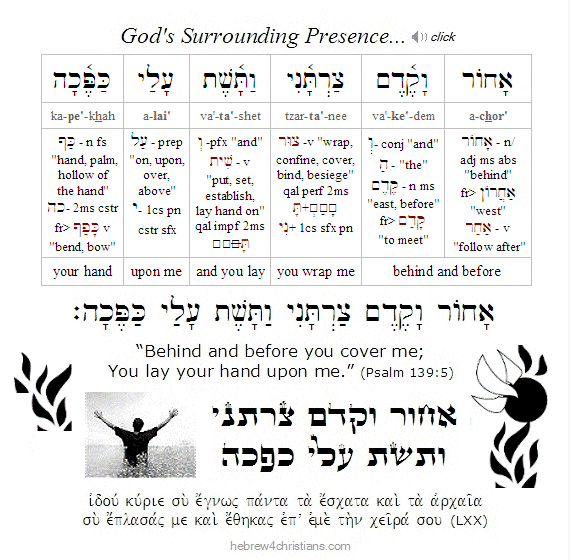
Hebrew Lesson:
Psalm 139:5 Hebrew reading (click):
Shavuah Tov Podcast:
The Offense of the Cross...
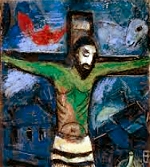
09.08.25 (Elul 15, 5785) Yeshua repeatedly took the role of a "stumbling block" to test people's response to his ministry. Most people were offended at Him, of course, and in the end Yeshua was crucified for the sake of their offenses. After His death, the cross itself became the scandal of faith. The Apostle Paul referred to the "offense of the cross" which he did not want removed. But what is the "offense of the cross" and why is the proclamation of the crucified Messiah a scandal (σκάνδαλον) to Jews and foolishness to the Gentiles?
Teshuvah and Healing...
09.07.25 (Elul 14, 5785) "Those who are well have no need of a physician, but those who are sick. I have not come to call the righteous but sinners to repentance" (Luke 5:31-32). Every one of us has a "dark side" or a "shadow self" that has destructive and selfish urges. We try to conceal this truth from others (and even ourselves) but such denial doesn't change the reality within our hearts (Matt. 5:19; Jer. 17:9; Eccl. 9:3). Indeed, when we pretend to be something we are not we are more likely to be overwhelmed by dark forces hidden within us. Paradoxically we most vulnerable when we think we are well, that is, when we deny our sickness our heart and minimize our need for deliverance.
The way of healing is to "own" or confess the truth of our inner condition and to acknowledge the dark passions that sometimes overmaster our best intentions. We must give ourselves permission to allow the hurt, angry, and fearful voices to be heard and sanctioned within us - and then to bring these dark and hidden aspects of our selves before God for healing. The failure to do so will split the soul and cause the hidden aspects of the self to seek "revenge" upon the "parent self" that censors their message. The struggle within our hearts is real and we should attend to it seriously. Denying evil by pretending that we are okay, or by blaming others, blinds us to the truth of our ongoing need for deliverance. May God help each of us to be honest with ourselves and to confess our great need before our Heavenly Father.
Why do we have such difficulty being genuinely honest with ourselves? Despite the fact that we may profess that we are "sinners saved by grace," we often make excuses for our failures, rationalizing that we are not "that bad," and therefore we postpone genuine teshuvah (repentance) and trifle with our spiritual lives. We do this because we feel an almost irresistible desire or "need" to justify ourselves, to "save face" by pretending that we are not "incurably sick," or by attempting to find something about us that makes feel valuable and worthy. As H.L. Mencken once wittingly noted, "the 'truth' that survives is simply the lie that is pleasantest to believe."
The LORD wants us to be truthful in the "inward being" (Psalm 51:6), though that truth will cost us something, namely whatever worldly gains we might find through self-deception... Opening our hearts to divine examination eventually means colliding with the world of men and their conspiracies, since the godly man no longer abides their presence (Psalm 1:1-2). The Apostle Paul said there was an exclusive disjunction between seeking the approval of men and of the approval of God: "Do I seek to please men? for if I yet pleased men, I should not be the servant of the Messiah (Gal. 1:10). Likewise we are told not to deceive ourselves (lit., "reason around" the truth, from παραλογίζομαι, from παρά, "around, beside" and λογίζομαι, "to reason") by merely hearing the truth of Scripture and not living it (James 1:22). God is not interested in "lip service" any more than he desires heartless sacrifice (Isa. 29:13; Hos. 6:6; Matt. 15:9). "Let your love be genuine (ἀνυπόκριτος, without a "mask" put on), abhor what is evil; cling to what is good (Rom. 12:9). God abhors those who pretend to know Him but who are really spiritual impostors (Matt. 7:21-23; 25:11-12; Luke 6:46).
Tragically (and paradoxically) many people can talk themselves into believing something without really believing it, and that is perhaps the most dangerous thing of all (Matt. 7:22-23). On the other hand, some people can talk themselves into believing (or accepting) something that they know is untrue (or morally wrong), and that self-deception leads to inner fragmentation, chaos, and dissolution of character. A "double-minded man is unstable in all his ways" (James 1:8). As I have said before, the word translated "double-minded" is dipsuchos (δίψυχος), a word formed from δίς, "twice" and ψυχή, "soul." The word describes the spiritual condition of having "two souls" that both want different things at once -- a state of inner contradiction and ambivalence.
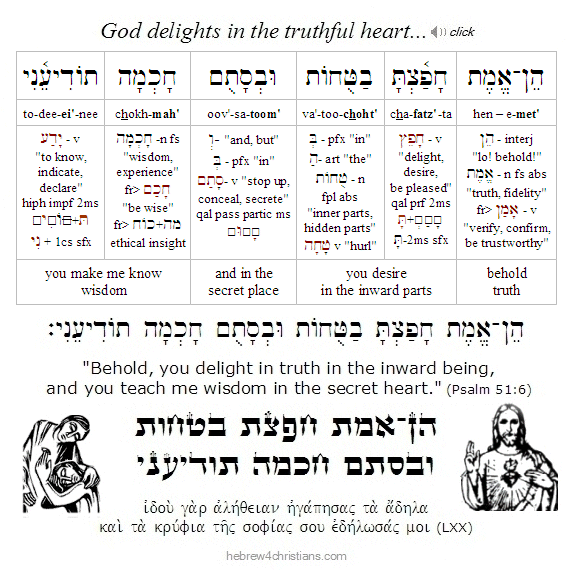
Hebrew Lesson
Psalm 51:6 reading (click):
Left to our own devices, we can't deal with the evil influences of this fallen world nor handle the raging impulses and fears of our own sinful nature. Confess your need for God to fight for you, to shine his light in your darkness. Yeshua has conquered sin and death on the cross and now intercedes for you; therefore call upon his name for life. The LORD has promised to never leave nor forsake those who honestly seek him...
Thank the LORD our God that there is real healing for our inner dividedness, ambivalence, and double-mindedness, but that healing demands rigorous honesty. As Kierkegaard rightly observed: "No person is saved except by grace; but there is one sin that makes grace impossible, and that is dishonesty; and there is one thing God must forever and unconditionally require, and that is honesty." Therefore we are instructed to confess our faults one to another, and pray for one another, that we may be healed (James 5:16). May the LORD our God help each of us to be wholehearted in our devotion to Him.
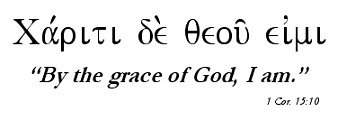
Finally, friend, a closing thought. Let us not despair by thinking that we will never change. We must simply "enter into" the presence of God in Yeshua. That is what "self-denial" really means: Turn to God and know his heart. When we do, we receive a heart to know him in return... Let us "believe to see" the goodness of the LORD in your midst. Amen.
 |
 |
Gravity of Grace:
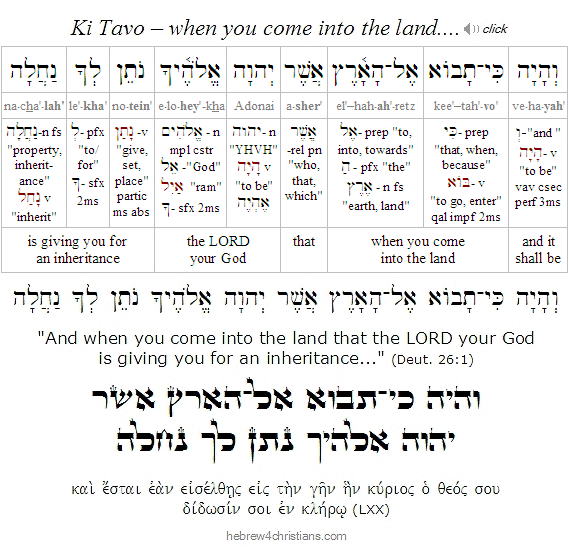
Parashat Ki Tavo - כי־תבוא
09.07.25 (Elul 14, 5785) Shavuah tov, friends. Our Torah this week (i.e., Ki Tavo) includes instructions for the people to ratify the Sinai covenant in the promised land by means of a special ceremony performed in the valley between Mount Ebal and Mount Gerazim (later fulfilled by Israel, see Josh. 8:30-35). During this ceremony the blessings for obedience and the curses for disobedience would be declared, and Moses warned the people by providing a seemingly endless description of terrible consequences that would befall the Jewish people if they disobeyed the terms of the Sinai covenant (Deut. 28:15-68). In Jewish tradition this litany of woe is called the "tochachah" (תּוֹכָחָה), a word that means "rebuke" or "reprimand."
Reading the tochachah is difficult and painful, though it serves as a bitter medicine to wake us up and prevent us from falling into a lethal coma. In that sense the tochechah may be regarded as a great blessing, since it shocks us into experiencing the gravity of God's grace. This is similar to Yeshua's grave warnings about the dangers of hell. If we refuse to listen or rush past his words, we are missing the substance of God's lament given through the Hebrew prophets. Sin is a lethal problem, and we must turn to God for healing or we will die. As Blaise Pascal once wrote, "Between heaven and hell is only this life, which is the most fragile thing in the world." Therefore shuvah! -- turn to God and receive the blessing of life!
Hebrew Lesson
Deuteronomy 26:1 reading (click):
This Week's podcast:
Parashat Ki Tavo..
09.07.25 (Elul 14, 5785) Shavuah tov, chaverim. In this week's "Shavuah Tov" audio podcast (see the links below) I discuss the the 40 day "Season of Teshuvah" leading up to the Jewish High Holidays as well as some of the central themes from Torah portion Ki Tavo, which includes instructions for the people to ratify the Sinai covenant in the promised land by means of a special ceremony performed in the valley between Mount Ebal and Mount Gerazim. During this ceremony blessings for obedience and curses for disobedience would be declared, and Moses warned the people by providing a seemingly endless description of terrible consequences that would befall the Jewish people if they disobeyed the terms of the Sinai covenant (Deut. 28:15-68). I hope you will find it encouraging.
The Road of Teshuvah...
"Resolved, to live with all my might, while I do live." - Jonathan Edwards
09.05.25 (Elul 12, 5785) Teshuvah ("repentance") is an ongoing journey toward wholeness, and in this life we never fully arrive: we are always "on the road," and often we are in the dark... The way of teshuvah is therefore more of a question about how we walk the road than what the road is like or even where it may take us. As we turn to God, as we experience His claim on our lives and trust that we are His redeemed people, questions about "how" are revealed, one step at a time. We take up the cross daily, and in doing so we find ourselves on the road, even if we may not know where it is immediately taking us.
Hebrew Lesson
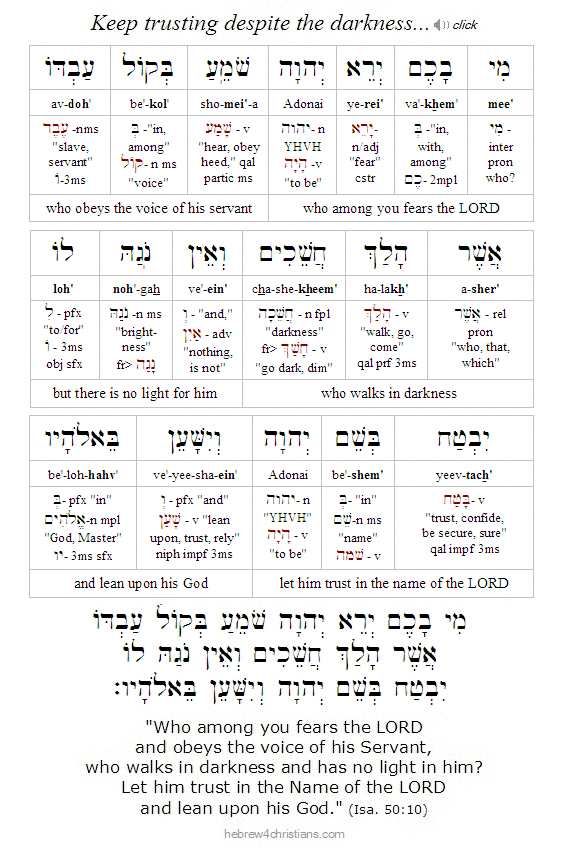
Isa. 50:10 Hebrew reading (click):
 |
It is precarious to assume that a person who is walking in spiritual darkness must necessarily be outside of God's will, or that such a person is being punished by God. That, after all, was the karma-based theology delivered to Job by his "religious" friends... On the contrary, as Charles Spurgeon reminds us, "Spiritual darkness of any sort is to be avoided and not desired; and yet, surprising as it may seem to be, it is a fact that some of the best of God's people frequently walk in darkness; some of them are wrapped in a sevenfold gloom at times, and to them neither sun, nor moon, nor star appears. As the pastor of a large church, I have to observe a great variety of experiences, and I note that some of whom I greatly love and esteem, who are, in my judgment, among the very choicest of God's people, nevertheless, travel most of the way to heaven by night."
"My Lord God, I have no idea where I am going. I do not see the road ahead of me, I cannot know for certain where it will end. Nor do I really know myself, and the fact that I think I am following your will does not mean I am actually doing so. But I believe the desire to please you does in fact please you, and I hope I have that desire in all that I am doing. I hope that I will never do anything apart from that desire. And I know that if I do this you will lead me by the right road, though I may know nothing about it. Therefore, I will trust you always, though I may seem to be lost and in the shadow of death. I will not fear, for your are ever with me, and you will never leave me to face my perils alone." - Thomas Merton (Thoughts In Solitude)
Indeed, Yeshua himself entered into thick darkness for our sake, and he sometimes calls his followers go there, too (Col. 1:24). "Through struggle with his demons and the encounter with the LORD, Anthony had learned to diagnose the hearts of people and the mood of his time and thus to offer insight, comfort, and consolation. Such had made him a compassionate man." (Wisdom of the Desert Fathers)
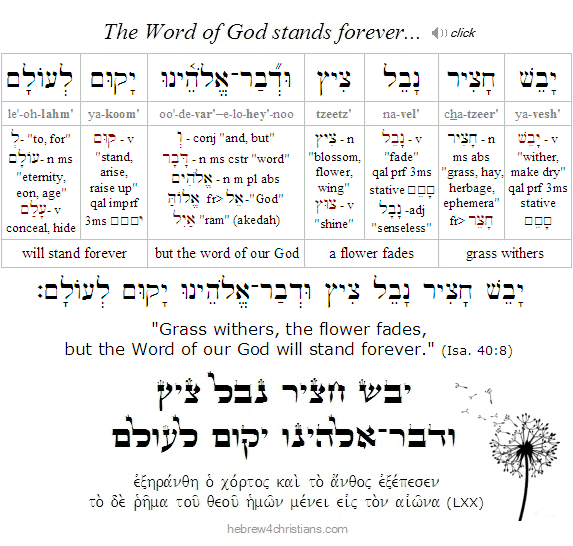
There is a "center" or focus for life, however, and that is the cry of the heart for the LORD Himself. Therefore the LORD is called El Ne'eman (אֵל נֶאֱמָן), "the faithful God." His very Name means certainty, reliability, strength, truth, reality, presence, being, life, and so on... It follows from this that doubt is never from God, since the one who doubts is "driven like a wave of the sea and tossed" by the winds of change (James 1:6). We are given strength from heaven when we exercise bittachon (trust) that God is faithful and true, despite passing through the valley of the shadow of death itself. God abides with us during our sojourning. The LORD is the only enduring Reality in a constantly changing world, this world of flux and shadows, and He has designed it this way to cause men's hearts to search for him. "All flesh is grass, and all its beauty is like the flower of the field" - such is the condition of this ephemeral world and its fortunes. The flesh fades because the breath of the LORD blows (רוּחַ יְהוָה נָשְׁבָה) upon it (Isa. 40:7). God Himself has ordained human life to be a vapor (Psalm 39:5).
Nonetheless, despite the inescapable dissolution of life in this world, we are told not to fear, because there is good news for Zion: the LORD is coming with might to reward those who are waiting for him. He will tend his flock like a shepherd; he will gather his lambs and carry them close to his heart (Isa. 40:11). As the apostle Peter said, this good news is the eternal life given through the imperishable "seed" - the Word of God that rises forever in Yeshua (1 Pet. 1:23-25). May His Name be praised forever...
Hebrew Lesson
Isa. 40:8 Hebrew reading (click):
 |
Teshuvah's Sweet Sorrow...
The following is related to the month of Elul and the theme of teshuvah (repentance)...
09.05.25 (Elul 12, 5785) While it's true that we express sorrow and regret for our sins - we mourn over our lives - this is an essential part of the healing process, with the end result of obtaining comfort from God (Matt. 5:4). Mere regret over sin is not enough, however, since the motive may be from shame (pride) or disappointment over some selfish loss. Esau "repented" with tears, but his wasn't true repentance since he didn't lament the loss of his heart to God's love (Heb. 12:14).
True repentance always leads to healing and life. When the woman from Magdala wept and washed Yeshua's feet with her tears, he said, "I tell you, her sins, which are many, are forgiven -- for she loved much" (Luke 7:44-48). In other words, she was lavish in her love because she deeply regretted that she had missed what was most important, what she desperately needed all along... She saw her sin as blindness to God's love... After all, why would she weep over her sins unless she loved him? And how could she love him unless he first revealed his love to her? (1 John 4:19)
"For grief (λύπη) as intended by God produces a repentance (תְּשׁוּעָה) that leads to salvation, leaving no regret, but worldly grief produces death" (2 Cor. 7:10).
Hebrew Lesson
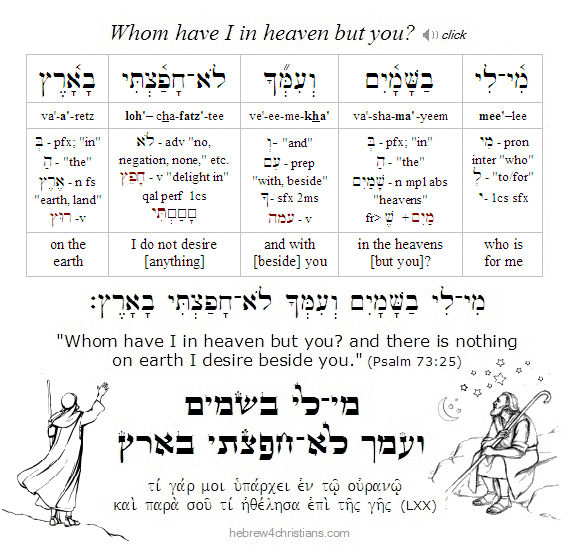
Click to learn to read the Hebrew text:
 |
God's Personal Care...

09.04.25 (Elul 11, 5785) Our Scriptures affirm that "all things work together for good" (Rom. 8:28), and therefore we must trust God for both perceived evil as well as perceived good, since all circumstances of life come from the hand of the LORD our God (see Job 2:10). Despite appearances that sometimes seem to the contrary, we believe that the all-powerful Creator and LORD over all has not abandoned the world but actively sustains and upholds it with benevolent intent (Heb. 1:3). "We walk by faith and not by sight" (2 Cor. 5:7). When difficult things happen to the righteous, we trust in God's personal care for their ultimate good, despite their present troubles. As the prophet Job said: "Though he slay me, I will trust in Him" (Job 13:15). This is the heart behind the Kaddish, the mourner's prayer, that expresses acceptance of God's world, despite the pain, sorrow, loss, and so on.
The term hashgachah pratit (השׁגחה פרטית) refers to God's personal supervision of our lives (hashgachah means "supervision," and pratit means "individual" or "particular"). Since He is the Master of the Universe, God's supervision reaches to the smallest of details of creation - from subatomic particles to the great motions of the cosmos. God not only calls each star by its own name (Psalm 147:4), but knows each particular lily and sparrow (Matt. 6:28-30, 10:29). Each person created in the likeness of God is therefore under the direct, personal supervision of God Himself -- whether that soul is conscious of that fact or not. As Yeshua said, even the hairs on your head are all numbered (Matt. 10:30). Indeed, the God of Israel is called אלהי הרוּחת לכל־בּשׂר / Elohei ha-ruchot lekhol-basar: "The God of the spirits of all flesh" (Num. 16:22), and that means He is LORD even over those who vainly attempt to suppress His Presence and reality. "Can a man hide himself in secret places so that I cannot see him? declares the LORD. Do I not fill heaven and earth?" (Jer. 23:24).
The Talmud says that when Moses asked God, "Please show me your glory" (Exod. 33:18), he was asking for God's vindication in the light of the gnawing question: "Why do the righteous suffer while the wicked prosper?" Moses was not given an explicit answer, and some of the sages said he wrote the enigmatic Book of Job to demonstrate that the question can only be reduced to God's inscrutable will: "Where were you when I laid the earth's foundation?" (Job 38:4). In other words, the question can only be answered by the One who knows the beginning from the end, the Infinite One who sees the implications and concatenation of all things. As finite beings, we see only a fraction of the big picture, and therefore we must yield our trust to the Wisdom and Power of Almighty God (Deut. 32:4).
It is written, "Your eyes saw me when I was inside the womb; in your scroll everything was written, my days were ordained before they came into existence" (Psalm 139:16). In light of God's providential ordering of our lives, Blaise Pascal asked, "What is left for us but to unite our will to that of God himself, to will in him, with him, and for him the thing that he has eternally willed in us and for us." The Mishnah says it this way: "Do His will as if it was your will that He may do your will as if it was His will" (Avot 2:4). In other words, what else can we do but learn to trust, accept, and to say "yes" to life -- even if at times we may feel like orphans, lost in a fatherless world... All our days are recorded in God's scroll.
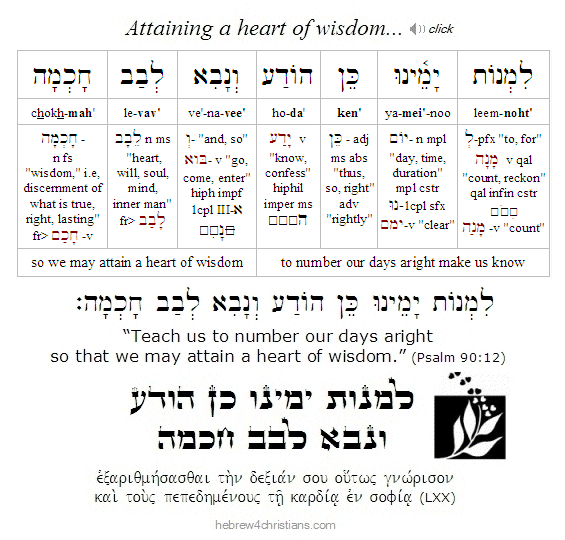
Therefore may God "teach us to number our days to get a heart of wisdom" (Psalm 90:12). The sages say on the day of death, one considers one's life as if it had been a single day... Life goes by so quickly, and we never know when our personal Rosh Hashanah will come. "No one knows the day or hour..." That's why it is so vital to be healed and to turn to God while there is still time. So turn to him today and bacharta ba'chayim (בָּחַרְתָּ בַּחַיִּים) - "choose life!" "For this commandment (of turning to God in teshuvah) is not hidden from you, and it is not far away. It is not in heaven... nor across the sea.... Rather, the matter is very near you - in your mouth and your heart - to do it" (Deut. 30:11-14; Rom. 10:8-13).
Hebrew Lesson
Psalm 90:12 reading (click for audio):
 |
Parashat Ki Teitsei:
Why then the Law?
09.04.25 (Elul 11, 5785) Our Torah reading this week, parashat Ki Teitzei, is notable because it contains more commandments than any of the other 52 weekly Torah readings, which according to the total enumerated by Maimonides, is 74 (that is over 12% of the 613 commandments). These various commandments cover a wide assortment of rules related to ethical warfare, family life, burial of the deceased, property laws, fair labor practices, proper economic transactions, agricultural tithes, concerns about giving tzedakah, and so on. Even rules about a mother bird and her young are included (Deut. 22:6-7). Your Heavenly Father knows when the sparrow falls (Matt. 10:29).
In every aspect of human life - religious, moral, social, civil, environmental, agricultural, dietary, sexual, and so on - the Torah has its voice. For example, Rabbi Pinchas ben Hama said, "Wherever you go and whatever you do, pious deeds will accompany you. When you build a new house, 'make a parapet for your roof' (Deut. 22:8). When you make a door, 'write the commandments upon your doorposts' (Deut. 6:9). When you put on new garments, 'do not wear cloth that combines wool and linen' (i.e., shaatnez; Deut. 22:11). When you cut your hair, 'do not round the corners of your head' (Lev. 19:27). When you plow your field, 'do not plow with an ox and an ass together' (Deut. 22:10). When you reap your harvest, and have forgotten a sheaf, do not pick it up. Leave it for the stranger, the fatherless, and the widow (Deut. 24:19). And even if you are not engaged in any particular kind of work but are merely journeying on the road, the precepts accompany you. If a bird's nest is before you on the road, 'do not take the mother with her young' (Deut. 22:6-7)." We might add, whenever you eat or drink something we are to recall how God's Presence sustains us (1 Cor. 10:31).
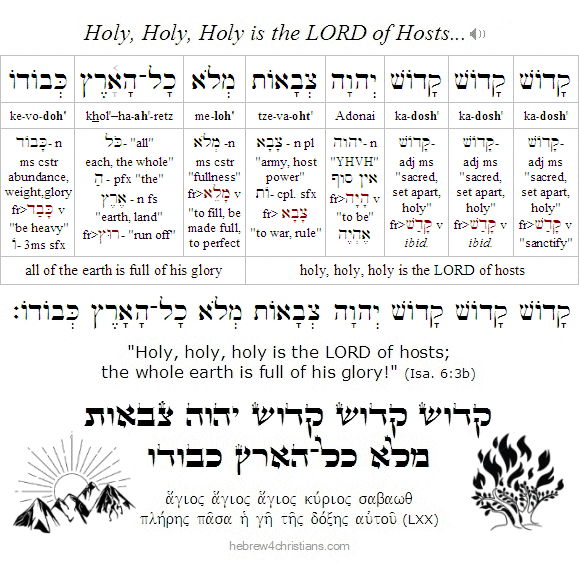
The pervasive scope of God's commandments indicates that there is no "dividing line" between the sacred and the profane in the life of the tzaddik (saint). The world is not compartmentalized into the realms of the spiritual and the material. No, "the whole earth is filled with the glory of God," and it is only because of spiritual blindness that we do not discern this truth. Simply put, all the various commandments found in the Scriptures were given because the spiritual realm is intended to permeate every aspect of our lives (1 Cor. 10:31). Just as reciting 100 blessings a day helps us be mindful of the source of our blessings, so studying the Torah's commandments helps us to "wake up" to divine Presence regarding every practical decision we make.
So the Scriptures are filled with commandments intended to awaken us to the reality of God's immanent Presence. Da lifnei mi attah omed (דַּע לִפְנֵי מִי אַתָּה עוֹמֵד) - "Know before Whom you stand." There are 613 commandments given in the Torah of Moses, hundreds more found in the Writings and the Prophets, and over a thousand revealed in the New Testament. All of these imperatives are intended to give voice to the concern and love of God by pointing to the blessing of knowing the Divine Presence in the midst of our daily lives. That is the general idea, though the specifics are where we are apt to get confused....
Because our Torah reading contains so many commandments, the question naturally arises as to whether followers of Yeshua and partakers of the New Covenant are obligated to follow the lawcode of Moses or not... In the following Shavuah Tov broadcast (see the links below), I explore how we may be able to understand the role of the law in light of the salvation given in Yeshua the Messiah. I hope you will find it both provocative and helpful.
Fighting the Evil Eye...
"Rejoice not against me, O mine enemy: when I fall, I shall arise; when I sit in darkness, the LORD shall be a light unto me." - Micah 7:
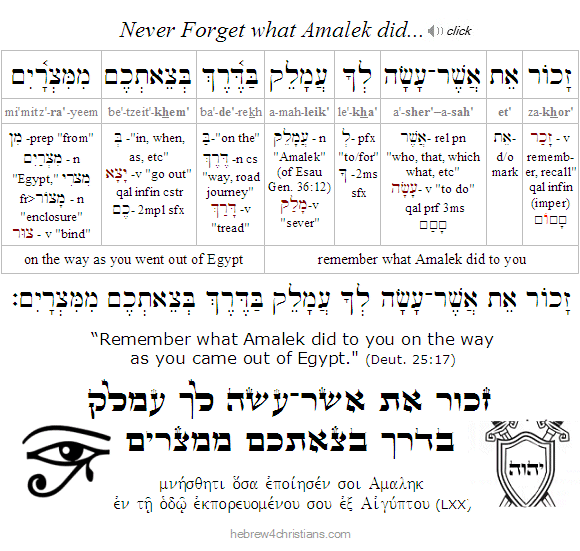
09.03.25 (Elul 10, 5785) Our Torah portion this week (Ki Teitzei) commands us to remember what the Amalekites did to the Jewish people after they left Egypt during the time of the Exodus (Deut. 25:17). Recall that the Israelites had reached Rephidim after crossing the sea when the nation of Amalek sneaked up and attacked them. Spiritually speaking, Amalek picked up where the Pharaoh had left off, since their evil intent was to enslave the people and to prevent them from reaching the promised land. In the account given in the book of Exodus, after Israel successfully fended off the assault, God paradoxically commanded them to "blot out the remembrance" of Amalek yet also foretold the need to fight Amalek "from generation to generation" (Exod. 17:14-16). But how are we to understand the commandment to "blot out the remembrance" of something from generation to generation? If we obey the commandment not to remember, why are we to remember?
Perhaps the solution to this riddle may be found in the name "Amalek" (עֲמָלֵק), which begins with the letter Ayin (symbolizing the eye) and equals 240 in gematria -- the same value for safek (סָפֵק), the Hebrew word for doubt. Amalek therefore would symbolize "the eye of doubt," or even "the severed eye" (the Hebrew verb מָלָק means "to chop" or "sever" in reference to the "eye" of Ayin). The "power" of Amalek therefore represents skepticism and spiritual blindness as it acts itself out in the world.
On a "deeper" level, some of the sages have said that Amalek represents doubt within our own hearts. When we read "Remember what Amalek did to you on the way out of Egypt," we can read "Remember what doubt did you," or how doubt fell upon you and attacked your faith. After all, did not some of the Israelites lapse in their faith in the desert? Did they not question God at Massah murmurring "is the LORD with us or not?" (Exod. 17:7).
In Jewish tradition, Amalek represents pure evil, or those who have "given themselves over" to Sitra Achra, the dark side of impurity, and therefore the LORD vowed perpetual warfare against Amalek: "The Hand is on God's throne. God shall be at war with Amalek for all generations" (Exod. 17:16). Concerning this verse the great commentator Rashi noted that the term "God's throne" is written incompletely in Hebrew as kes Yah (כֵּס יָהּ), rather than as kisei Adonai (כִּסֵּא יְהוָה), which suggests that God's rule will be incomplete until the powers of darkness are totally wiped off the face of the earth (by the hand of Yeshua our LORD; see Rev. 19-20). Amalek embodies the principle of lo yareh HaShem, the lack of the fear of God, and therefore represents the power of darkness and evil in the world. The Torah states that we must "go out and fight" Amalek, which is a call to ongoing spiritual warfare in our lives (Deut. 25:17-19). We can't sit by and passively accept evil; nor can we ignore it or pretend that it doesn't exist. We must call evil by its name and exercise spiritual authority over it (Eph. 5:11; Luke 10:19). The weapons of our warfare have divine power to destroy enemy strongholds (2 Cor. 10:4). We are protected by the armor of God and "weapons of light" (Rom. 13:12; Eph. 6:11-18).
The battle with Amalek came after the incident at Marah, where the bitter waters were turned sweet by means of the "healing tree" that was felled (Exod. 15:25), a picture of the cross of the Messiah who gives us living water (mayim chayim) and who saves us from the power of evil and death. When we are cleansed and sanctified by the sacrificial blood, we will overcome evil by the power of God's grace and goodness, though this requires earnest faith on our part. When Moses raised his hands in battle against the Amalekites, the Israelites prevailed, but if he lowered them, they suffered defeat (Exod. 17:11). Eventually Moses grew weary and he needed Aaron and Hur to help him hold his arms steady to ensure victory (Exod. 17:12). Note that the Hebrew word translated "steady" is emunah (אֱמוּנָה), the word for faith... It was Moses' steady faith in God's power that gave Israel the victory over the powers of darkness, just as we lift up our faith in God's power demonstrated at the cross gives us the victory over Satan and his schemes.
Hebrew Lesson
Deut. 25:17 Hebrew reading (click):
 |
The Man Hanged on a Tree...
Ki Teitzei is always read during the Season of Teshuvah. It is my hope that this article will encourage you to "return to the LORD and listen to His Voice" (Deut. 30:2).
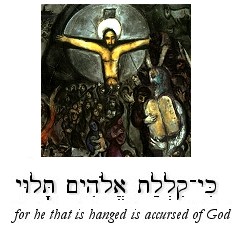
09.02.25 (Elul 9, 5785) Our Torah portion for this week (i.e., Ki Teitzei) includes the statement that a man who was to be executed and "hanged on a tree" (עַל־עֵץ) was under the curse of God, that is, was utterly condemned under the verdict of the law (Deut. 21:22-23). According to the Talmud (Nezakim: Sanhedrin 6:4:3), the Great Sanhedrin decided that "a man must be hanged with his face towards the spectators" upon a wooden stake, with his arms slung over a horizontal beam. It should be noted that while this is technically not the same thing as the gruesome practice of Roman crucifixion, the reasoning based on this verse was apparently used to justify the execution of Yeshua (Mark 15:9-15; John 19:5-7; 15). The exposed body was required to be buried before sundown to keep the land from being defiled. Besides the shame of this manner of death, the one so executed would be unable to fall to their knees as a final act of repentance before God, thereby implying that they were under the irrevocable curse of God (קִלְלַת אֱלהִים).
In this connection, we should note that Yeshua was falsely charged with blasphemy before the corrupt Sanhedrin of His day (Matt. 26:65; Mark 14:64; John 10:33) - an offence that was punishable by stoning (Lev. 24:11-16). However, since the Imperial Roman government then exercised legal hegemony over the region of Palestine, all capital cases were required to be submitted to the Roman proconsul for adjudication, and therefore we understand why the Jewish court remanded Yeshua and brought him to be interrogated by Pontius Pilate. Because Roman law was indifferent to cases concerning Jewish religious practices (i.e., charges of blasphemy), however, the priests further slandered Yeshua by illegitimately switching the original charge of blasphemy to that of sedition against Rome. The Sanhedrin undoubtedly rationalized their duplicity because the Torah allowed for an offender to impaled or "hung on a tree" (Num. 25:4), and since they were unable to do carry out this judgment because of Roman rule in the area, they needed Pilate to condemn him to death by crucifixion (Matt. 27:31; Mark 15:13-4; Luke 23:21; John 19:6,15). Note that crucifixion is mentioned elsewhere in the Talmud (Nashim: Yevamot 120b) regarding whether a widow can remarry if her husband had been crucified, as well as by the Jewish historian Josephus. The Talmud furthermore alludes to the death of Yeshua where Yeshua is said to have been crucified on "eve of Passover" (Nezekin: Sanhedrin 43a).
Some say that the word "cross" in the New Testament should be translated as "stake" or "tree" instead, claiming that the shape of the instrument that Yeshua was crucified upon was not cross-shaped or "cruciform." Now while the Greek word translated "cross" (i.e., σταυρός) is not fully described in the New Testament, according to ancient historians there were different "shapes" of the means used for crucifixion, including the crux simplex (|), the crux immissa (+), the crux commissa (T), and even stakes shaped as an X or Y. The "T" shape (commissa) was described by the historian Josephus, and is likely the form used to crucify Yeshua, since the early Christians all referred to it that way. There are also ancient Greek (pre-Christian era) descriptions of crucifixion. For example Herodotus (450 BCE) wrote: "they crucified him hands and feet stretched out and nailed to cross-pieces," which suggests that the cross immissa or commisa shape was used in ancient times... Incidentally the gruesome practice of crucifixion goes back to the ancient Persians and Phoenicians.
So it is likely that Yeshua was crucified on a stake made of a cedar tree that was formed by attaching a crossbeam to a pole that was inserted into the ground. It is also likely that he carried only the crossbeam, or gibbet, as he walked to Golgotha to be hung up to die, since the stake would likely have weighed 300 pounds or so, and after brutal flogging under Roman whips it is unlikely that even the strongest of men could carry one... Moreover, the description of a Roman soldier putting a sponge on a hyssop stalk to give Yeshua a drink suggests that he was crucified on "short cross," since the stalk was usually less than two feet long. Regardless of the exact shape of the cross, however, death by crucifixion was horrifyingly shameful and unutterably painful.... but Yeshua went there for you.
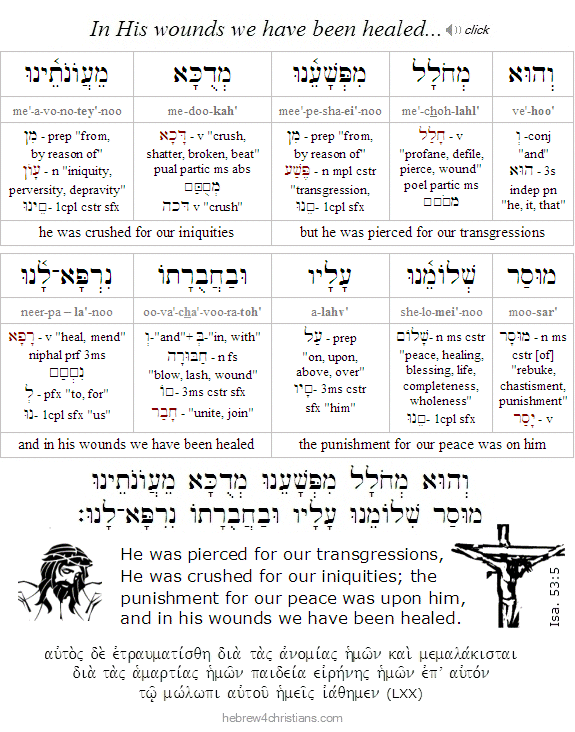
וְהוּא מְחלָל מִפְּשָׁעֵנוּ מְדֻכָּא מֵעֲוֹנתֵינוּ
מוּסַר שְׁלוֹמֵנוּ עָלָיו וּבַחֲבֻרָתוֹ נִרְפָּא־לָנוּ
ve·hoo mei·choh·lal mee-pe'·shah·ei'·noo mei·doo·ka me·a·voh·noh·tey'·noo
moo·sahr she·loh·mei'·noo ah·lav oo·va·cha·voo·ra·toh neer·pah- lah'·noo

"But he was pierced for our transgressions, he was crushed for our iniquities,
the correction of our peace was upon him, and by his wound we are healed"
(Isa. 53:5)
 |
The Torah clearly teaches there is no remission of sin without the shedding of blood (Lev. 17:11, Heb. 9:22). The sacrificial death of Yeshua as the great "Lamb of God" was intended not only to cleanse us from sin (and to absolve us from the verdict of guilt as required by the law), but was also intended to fully satisfy both God's justice and and compassion (see Rom. 3:22-25; Psalm 85:10). In other words the cross is the place (ha'makom) where Yeshua "became sin for us" - the One who knew no sin - that we might be made the righteousness of God (2 Cor. 5:21). As the apostle Paul wrote: "The Messiah redeemed us from the curse of the law by becoming a curse for us -- for it is written, 'A Man hanged on a tree is cursed...' (Gal. 6:13, quoting Deut. 21:22-23). The Son of Man was "lifted up" to save from death as the brazen serpent (נְחַשׁ נְחֹשֶׁת) in the desert prefigured (Num. 21:9; John 3:14-15). And just before Yeshua died upon the cross, he said something of tremendous significance. Eyewitnesses to his crucifixion wrote, "When he had received the drink (of vinegar) Yeshua said, 'It is finished.' With that, he bowed his head and gave up his spirit" (John 19:30; Matt. 27:50). In Koine Greek, this final statement is recorded as a single word: tetelestai (Τετέλεσται), a cheer of victory and triumph. In Hebrew, Yeshua might have uttered, "nishlam" (נִשְׁלָם) or perhaps more likely "gemar tov" (גְמָר טוּב), testifying to his fully accomplished atonement (כַּפָּרָה) made on our behalf....
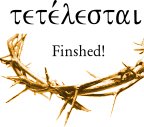
In Greek, the word tetelestai (Τετέλεσται) is an "indicative perfect passive" form of the verb teleo (τελέω) which implies that something has been completed with an enduring effect or state. The verb comes from telos (τέλος), a noun meaning a goal or purpose. Telos is the word Paul used when he wrote: "For Messiah is the end of the law (τέλος νόμου) for righteousness to everyone who believes" (Rom 10:4).
Tetelestai was the cry of victory to the Father. "I have finished the work you gave me to do." What was that work? To establish the new covenant (brit chadashah) between God and man by offering up His life as the atoning sacrifice for humanity's sins (Heb. 1:3, 10:12). The priesthood of Yeshua is said to be after the "order of Malki-Tzedek," based on a direct oath from God, that predates the operation of the Levitical priesthood (for more information about the role of Yeshua as our High Priest, see the article "Yom Kippur and the Gospel"). Yeshua was the only Tzaddik who ever completely walked out the truth of Torah. He expressed its inner meaning perfectly and embodied its truth in full. The Akedah of Yeshua (i.e., His crucifixion at Moriah) was the altar where the justice and chesed (love) of the Father fully met. If God were not just, Yeshua did not need to die; and if God were not loving, He would not have given up His Son as a ransom for our sin. Justice and mercy kiss.
The Torah (i.e., law) is holy, just and good (Rom. 7:12), but those seeking righteousness based on it's demands will discover the tragic fact that it is powerless to impart righteousness and life (2 Cor. 3:7-18). It is sin within the human heart that condemns people - not the law! The crucifixion of Yeshua condemned sin in the flesh (again, not the law) and now the righteousness of God is imparted to those who embrace Yeshua by faith (Rom. 8:3-4). Enabled by the Holy Spirit, with the law now written upon our hearts (Jer. 31:31-3; Heb. 8:10-11), we are empowered to fulfill the requirements of the law based on a new covenant relationship with God (Gal. 2:16, 3:2). We no longer seek righteousness by means of maintaining ritualistic or other ordinances (Rom. 4:5, Gal. 2:16) but by receiving the free gift of Messiah's righteousness imputed to us through our trust (Eph. 2:8-9). Because of Yeshua's victory, we do not strive for acceptance before the Father, we abide within it, chaverim (John 15:4).
Imagine for a moment what it might have been like to hear Yeshua cry out, "It is finished!" His final breath, His kiddush Hashem, His spirit given up and now released before the Father - the resonance of this word filling all heaven and all earth - "It is finished! Father! It is finished! I have completed the work that you have given me to do!" Imagine the joy, the celebration, the glory, the honor given to the Son as He appeared before the Father after securing us so great a salvation.
Because Yeshua became our "serpent" upon the cross, all those who have been bitten by snake and poisoned by the venom of sin may be delivered. Just as the image made in the likeness of the destroying snake was lifted up for Israel's healing, so the One made in the likeness of sinful flesh (Rom. 8:3) was to be lifted up as the Healer of the world. Likewise with the other pictures of our Savior as the "leper Messiah," as the "red heifer" who purifies from death, as the "scapegoat" sacrifice who sends our sins into exile, and so on. Yeshua is Adonai Tzidkenu - the LORD our Righteousness. Blessed be His Name forever and ever...
|
Restoring what is lost...
09.01.25 (Elul 8, 5785) In our Torah portion this week (Ki Teitzei) we read: "Do not ignore the loss of your brother... you shall restore it to him" (Deut. 22:1-3). This indicates that we have a moral duty to return lost items to others, and on a spiritual level that includes restoring honor and dignity to those who have lost sight of their value in the eyes of God... For even greater reason we must make restitution to those whom we have harmed.
Making amends is part of the teshuvah process. We hurt ourselves when we hurt others, and we hurt others when we hurt ourselves. The way out of that circle is through making amends. As Yeshua taught: "If you are offering your gift at the altar and there remember that your brother has something against you, leave your gift there before the altar and go. First be reconciled to your brother, and then come and offer your gift" (Matt. 5:22-23). "Therefore, confess your sins to one another and pray for one another, that you may be healed. The prayer of a righteous person works great power" (James 5:16). Ultimately, confession of the truth is not optional for anyone.
Indeed, regarding the duty to restore what is lost to our brother mentioned above, the Torah adds, "and you are not to ignore it," which literally reads, "you are unable to hide it" (לא תוּכַל לְהִתְעַלֵּם). Abraham Twerski noted that the Torah is not giving us a command as much as stating a fact: You are unable to hide from a wrongful act. In other words, the problem with "getting away with it" is that you get away with it, that is, you take it with you. Such self-deception sears your conscience, makes you numb inside, and deadens the heart. Making amends to others is life-giving, helping you let go of what you've done wrong to restore inner peace. We must be vigilant not to let our hearts die because of either shame or rationalization. May the LORD help us walk in the Spirit of Truth.
Hebrew Lesson
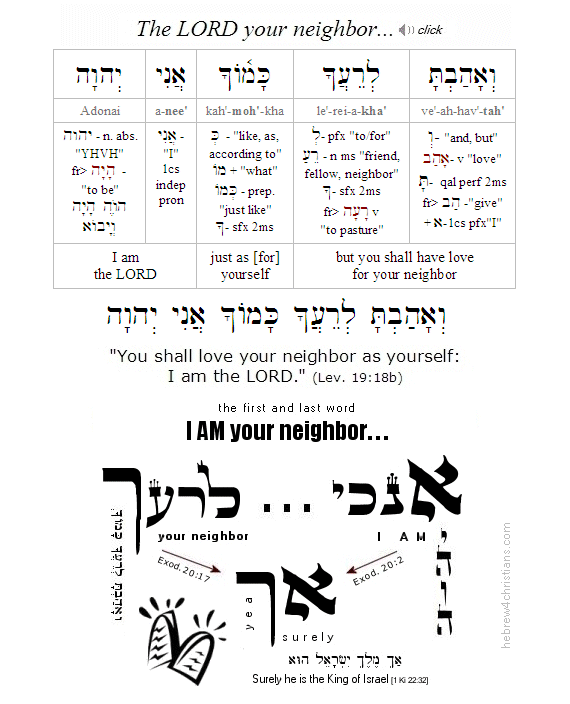
Lev. 19:18a Hebrew reading (click):
 |
Spelling out "Teshuvah"...
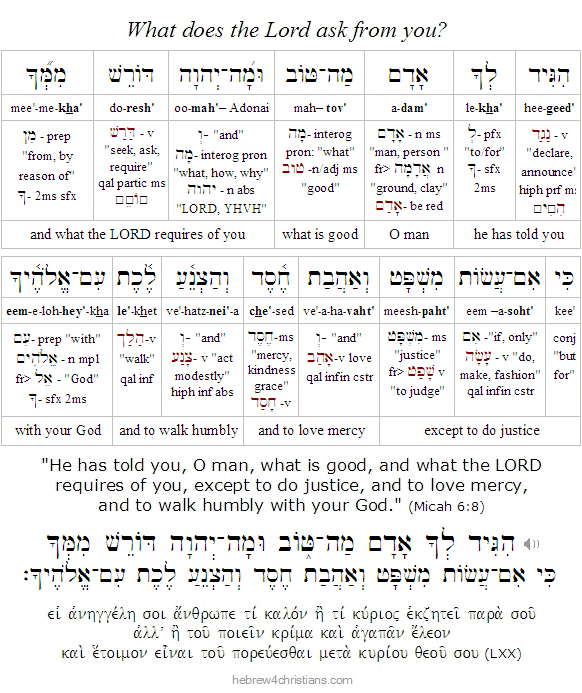
09.01.25 (Elul 8, 5785) Taken as a whole, the central message and ultimate point of the Scriptures is to turn to God for life... Rabbi Sussya once said: "There are five verses in the bible that constitute the essence of the Torah. These verses begin in Hebrew with one of these letters: Tav (תּ), Shin (שׁ), Vav (ו), Bet (בּ), and Hey (ה), which form the word for repentance, namely,"teshuvah" (תְּשׁובָה). The five verses are: 1) Tamim tiheyeh (תָּמִים תִּהְיֶה): "Be wholehearted before God" (Deut. 18:13); 2) Shiviti Adonai (שִׁוִּיתִי יְהוָה): "I have set the LORD always before me" (Psalm 16:8); 3) Va'ahavta lere'akha (וְאָהַבְתָּ לְרֵעֲךָ): "Love your neighbor as yourself" (Lev. 19:18); 4) Be'khol derakekha (בְּכָל־דְּרָכֶיךָ): "In all your ways know Him" (Prov. 3:6); and 5) Higgid lekha (הִגִּיד לְךָ): "Walk humbly with your God" (Micah 6:8). In other words, "teshuvah" (repentance) is an acronym that stands for being whole, seeing God, loving others, knowing God in all your journey, and walking in humility...
Hebrew Lesson
Micah 6:8 Hebrew reading (click):
 |
תורת האמונה
The Torah of Faith...
The following entry concerns this week's Torah reading, parashat Ki Teitzei, which contains more commandments than any other Torah portion...
09.01.25 (Elul 8, 5785) When asked how many commandments are in the Torah, most Jewish scholars will answer 613, based on Jewish tradition (the number 613 is sometimes called "taryag" (תריג), an abbreviation for the letters Tav (400) + Resh (200) + Yod (10) + Gimmel (3) = 613). Despite several attempts made over the centuries, however, there has never been a definitive list of these commandments, and of those who tried to compile such, no two agree... Some say the number 613 comes from a fanciful midrash that teaches that since there are 365 days in a year (corresponding to the 365 negative commandments) and 248 "parts" of the body (corresponding to the positive commandments), each day we should use our body to serve God.
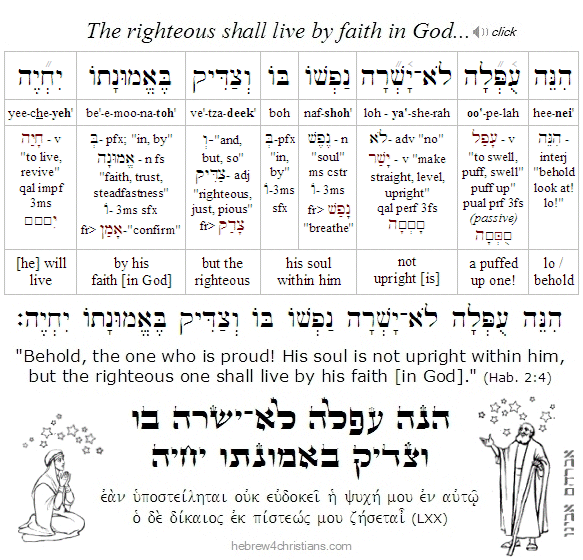
Regardless of the exact count, however, the Talmud (Makkot 23b-24a) says, "Moses gave Israel 613 commandments, David reduced them to eleven (Psalm 15), Isaiah to six (Isaiah 33:15-16), Micah to three (Micah 6:8), Isaiah reduced them again to two (Isaiah 56:1); but it was Habakkuk who gave the one essential commandment: v'tzaddik be'emunato yich'yeh, literally, "the righteous, by his faithfulness - shall live." In the New Testament, the apostle Paul had (earlier) distilled the various commandments of the Torah to this same principle of faith (see Rom. 1:17, Gal. 3:11, and Heb. 10:38).
This small phrase, consisting of just three words (וְצַדִּיק בֶּאֱמוּנָתוֹ יִחְיֶה), is perhaps the pivotal axis upon which our salvation turns, since it distills the requirement that we are justified by our faith in God, and not by "works of righteousness which we have done" (Titus 3:5). In other words, salvation is "of the LORD," it is his righteousness given to us through his love...
All the Torah's commandments may be derived from the Ten Commandments given at Sinai, the most basic of which is the very First Commandment, namely, "I AM the LORD your God (אָנכִי יְהוָה אֱלהֶיךָ) who brought you out of Egypt, out of the house of slavery" (Exod. 20:2). This is the starting point for the law, namely to believe that God exists and has personally redeemed you from the slavery of your past. This is the very first step of Torah, since until you personally believe that the Lord is your God who redeems you, none of the other commandments will have any traction within your heart... Amen, Yeshua taught us the law of faith in God's love (תורת האמונה), which preempts, overrules, and informs all the others...
Hebrew Lesson
Habbakuk 2:4 reading (click for audio):
 |
<< Return
|
|