|
Jewish Holiday Calendar
For August 2025 site updates, please scroll past this entry....
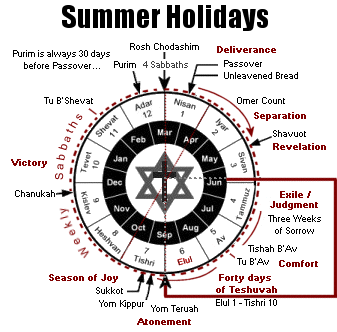
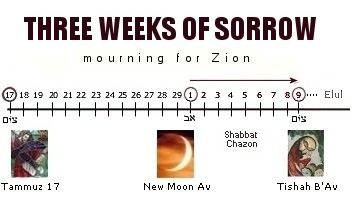
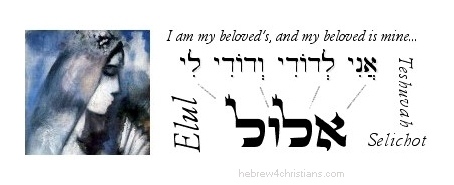
In the summer there occurs a three week period of mourning that begins with the Fast of Tammuz and ends with Tishah B'Av. The last nine days of this three week period (i.e., from Av 1 until Av 9th) are days of increased mourning. However, after this somber time, the romantic holiday of Tu B'Av, the 15th of Av occurs. Summer ends with the 30 days of the month of Elul, a yearly season of teshuvah (repentance) that anticipates Rosh Hashanah and the fall holidays. The 30 days of Elul are combined with the first 10 days of the month of Tishri to create the "Forty Days of Teshuvah" that culminate with Yom Kippur.
Because they occur between the spring and fall holidays, the summer holidays help us prepare for the second coming of the Messiah:
The Summer Holidays:
Note that in accordance with tradition, holiday dates begin at sundown. Moreover, some holidays may be postponed one day if they happen to fall on the weekly Sabbath:
- Month of Tammuz (Wed. June 25th [eve] - Fri. July 25th [day])
- Month of Av (Fri. July 25th [eve] - Sat. Aug. 23rd [day])
- Month of Elul (Sat. Aug. 23rd [eve] - Mon. Sept. 22nd [day])
- Month of Tishri (Mon. Sept. 22nd [eve] - Tues. Oct. 21st [day])
Note: For more about the dates of these holidays see the Calendar pages....
August 2025 Updates
Note: If any page content appears to be missing, please refresh the page...
Weekly Torah portion:
Parashat Ki Teitzei...
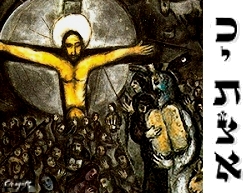
Our Torah reading this week (i.e., Ki Teitzei) is always read during the month of Elul...
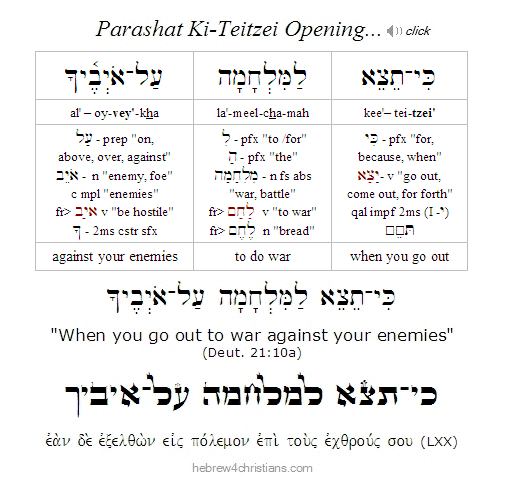
08.31.25 (Elul 7, 5785) Shavuah tov v'chodesh Elul tov, chaverim. Recall that in last week's Torah reading (i.e., Shoftim), Moses defined an extensive system of justice for the Israelites and pointed to the coming Messiah who would be the rightful King of Israel: "The LORD your God will raise up for you a prophet like me from among you, from your brothers -- it is to him you shall listen" (Deut. 18:15). In this week's portion (i.e., Ki Teitzei: כי־תצא), Moses returns to the immediate concern of life in the promised land by providing additional laws to be enforced regarding civil life in Israel. In fact, Jewish tradition (following Maimonides) identifies no less than 74 of the Torah's 613 commandments in this portion (more than any other), covering a wide assortment of rules related to ethical warfare, family life, burial of the deceased, property laws, the humane treatment of animals, fair labor practices, and honest economic transactions.
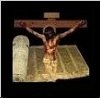
Of particular interest to us is the statement that a man who was executed and "hanged on a tree" (עַל־עֵץ) is cursed of God (Deut. 21:22-23). According to the Talmud (i.e., Nezakim: Sanhedrin 6:4:3), the Great Sanhedrin (סַנְהֶדְרִין גְדוֹלָה) decided that "a man must be hanged with his face towards the spectators" upon a wooden stake, with his arms slung over a horizontal beam. It should be noted that while this is technically not the same thing as the gruesome practice of Roman crucifixion, the reasoning based on this verse was apparently used to justify the execution of Yeshua (Mark 15:9-15; John 19:5-7; 15). The exposed body was required to be buried before sundown to keep the land from being defiled. Besides the shame and degradation of this manner of death, the one so executed would be unable to fall to their knees as a final act of repentance before God, thereby implying that they were under the irrevocable curse of God (קִלְלַת אֱלהִים).
In this connection, we should note that Yeshua was falsely charged with blasphemy before the corrupt Sanhedrin of His day (Matt. 26:65; Mark 14:64; John 10:33) - an offence that was punishable by stoning (Lev. 24:11-16). However, since the Imperial Roman government then exercised legal hegemony over the region of Palestine, all capital cases were required to be submitted to the Roman proconsul for adjudication, and therefore we understand why the Jewish court remanded Yeshua and brought him to be interrogated by Pontius Pilate. Because Roman law was indifferent to cases concerning Jewish religious practices (i.e., charges of blasphemy), however, the priests further slandered Yeshua by illegitimately switching the original charge of blasphemy to that of sedition against Rome. The Sanhedrin undoubtedly rationalized their duplicity because the Torah allowed for an offender to impaled or "hung on a tree" (Num. 25:4), and since they were unable to do carry out this judgment because of Roman rule in the area, they needed Pilate to condemn him to death by crucifixion (Matt. 27:31; Mark 15:13-4; Luke 23:21; John 19:6,15). Note that crucifixion is mentioned elsewhere in the Talmud (Nashim: Yevamot 120b) regarding whether a widow can remarry if her husband had been crucified, as well as by the Jewish historian Josephus. The Talmud furthermore alludes to the death of Yeshua where Yeshua is said to have been crucified on "eve of Passover" (Nezekin: Sanhedrin 43a).
 |
Shavuah Tov Podcast:
Parashat Ki Teitzei...
08.31.25 (Elul 7, 5785) Our Torah reading for this week (i.e., parashat Ki Teitzei) identifies 74 of the Torah's 613 commandments (more than any other), covering a wide assortment of laws related to warfare, family life, property laws, the humane treatment of animals, fair labor practices, and honest economic transactions, and more. The portion is always read during the month of Elul, and therefore it provides an opportunity for us to review the importance of the law in relation to the theme of teshuvah (i.e., repentance).
God's Mercy and Deliverance...

"It is not the healthy who need a doctor, but the sick. I have not come to call the righteous, but sinners to repentance." - Yeshua
08.29.25 (Elul 5, 5785) We all wrestle with sin in our lives, and each of us needs deliverance from various attachments and fears that keep us from the deeper life... The problem is within ourselves, that is, the contradiction of heart we experience in our double-mindedness, our ambivalence, and even our unbelief (Jer. 17:9). We may recite the Shema every day and say that we love God with all our being, but in the ordinary moments of daily life we are drawn to other concerns, alien affections, other "gods." Indeed, whatever matters most to us, whatever consumes our attention, time, resources, and our interest, is something we "worship," that is, something we esteem as worthy and valuable...
People necessarily value things, of course, and therefore every person is a "worshiper" (i.e., a person who finds "worth" in something). This is equally true for a "devout" atheist, or a "woke" crusader, as is it for a "religious" person... The question that matters, however, is what is your ultimate concern? What do you really want? Only when we begin to understand what draws and attracts us can we begin to discern what we really need. Therefore we must first acknowledge our false worship, our radical selfishness, and our sundry attachments in order to be set free. We must confess the truth that we are slaves.
Pride blinds us to the truth of our sickness, persuading us to deny our problems, to cover them up, and to try harder and harder to "control" ourselves. This is a spiritual dead-end, a vicious circle, the "law of sin and death." We are set free, however, when we die to ourselves, that is, when we surrender to the love of God and receive the miracle of promised deliverance. Since we are powerless to change ourselves, to reform our lower nature, and to be healed by our own best efforts, we must abandon our "religion" and rely entirely upon the God for the power to heal. This is an ongoing venture: We die daily; we take up the cross daily, we walk with a limp from our inner struggle, and we cling to God alone show us the way and to guide our steps. Beloved, we have been crucified with Messiah and the old nature has lost its power over us; we are alive by the miracle of God's power. May God deliver us from ourselves. "If we live by the Spirit, let us also walk in the Spirit" (Gal. 5:25).
Hebrew Lesson
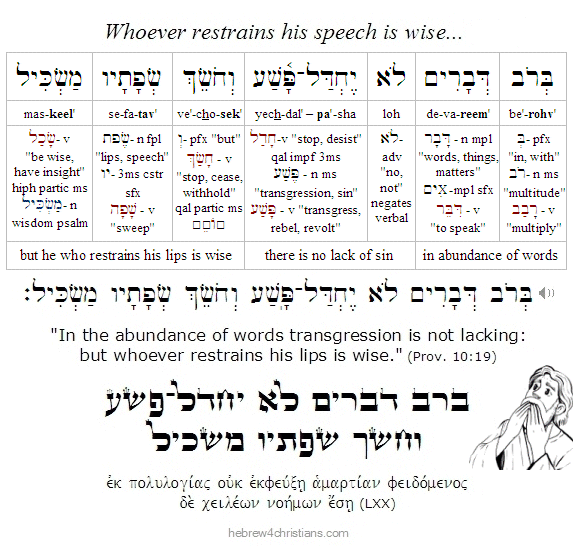
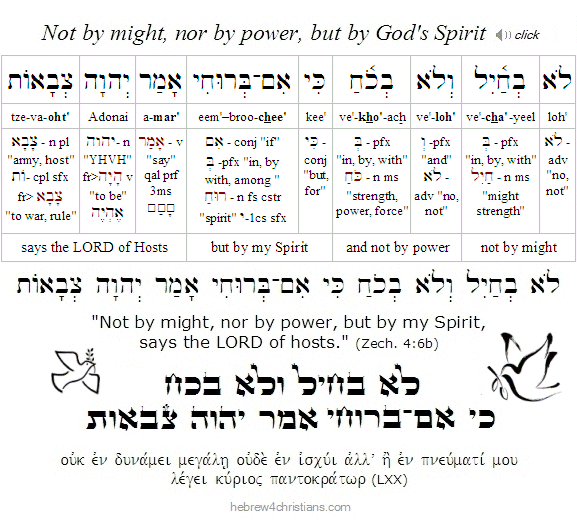
Zechariah 4:6 reading (click for audio):
 |
The True Prophet like Moses...
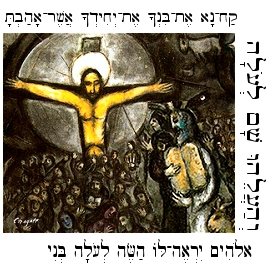
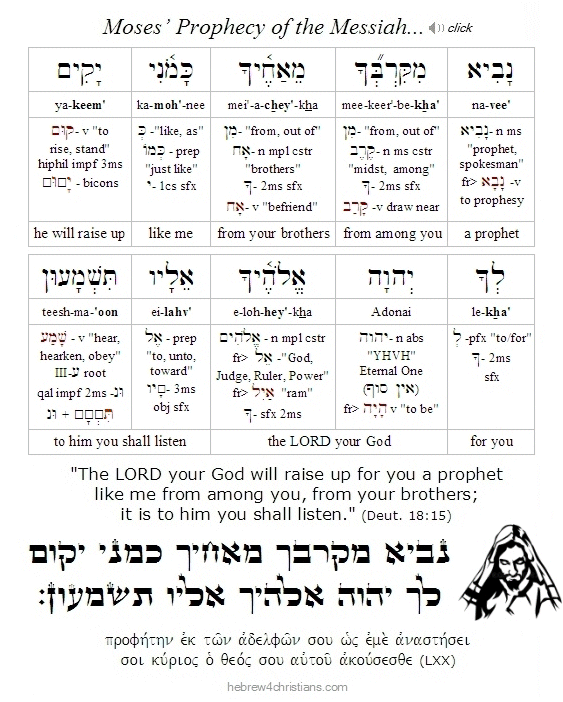
08.29.25 (Elul 5, 5785) In our Torah portion for this week, parashat Shoftim, we read Moses' great prophecy of the Messiah: "The LORD your God will raise up for you a prophet like me from among you, from your brothers -- it is to him you shall listen" (Deut. 18:15).
Although there is not a lot of detail given in this prophecy, there is enough to determine some of the necessary conditions regarding the qualifications for the great prophet to come. For instance, God would "raise up" this prophet, the verb "raise" used in this verse (i.e., קוּם) alludes to the divine power of resurrection (תְקוּמָה). This prophet also would "be like" Moses (כָּמֹנִי), which means that he would share the same characterisitcs of Moses who was a redeemer sent by the LORD, a teacher, a prophet, a lawgiver, and so on.
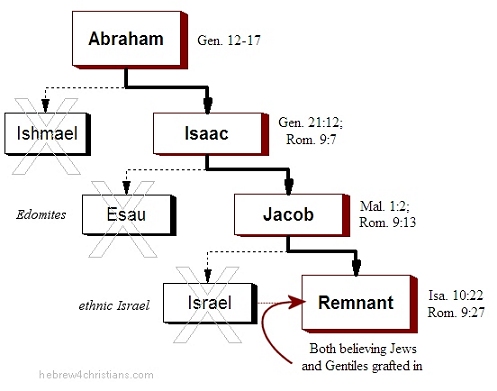
Now Islam claims that this prophet to come was "Muhammad," though that is certainly false, since Moses clearly said that the prophet to come would be a Jew who would be from the people Israel ("from among you"), not from another nation, and particularly not from the descendants of Ishmael (i.e., from Hagar rather than Sarah; see Gen. 17:19-22; Gal. 4:22-26).
 |
So what basic characteristics were to mark this extraordinary Jewish prophet to come? To answer that question wisely, we must consider the life of Moses to discern the one who would be "like" him, that is, a prophet who would serve as an analog to his mission and life....
Consider, then that after being chosen by God to deliver Israel from bondage during the time of the Exodus, Moses became 1) the mediator (priest) of the covenant between God and the Jewish people, 2) the legislator the various commandments of the Torah, and 3) the prophet who received the vision of the Mishkan (the Altar), the future exile, and the ultimate destiny and glory of Zion. Moses was extraordinary because as the mediator of Israel, he instituted various sacrificial rites before the laws of sacrifice were enacted. For example, he instituted the Passover sacrifice in Egypt (Exod. 12:1-11), and when the people later reached Mount Sinai, he offered blood sacrifices to ratify the terms of the covenant (Exod. 24:8). As the great legislator of Israel, Moses declared the terms of the covenant, serving as its voice of authority. And finally, as the great prophet of Israel, Moses ascended the mountain and received the vision of the Mishkan (i.e., Tabernacle) before the priesthood had been instituted in Israel (Exod. 25:8-9). And even after the laws of the priests were proclaimed and the Mishkan was set up, Moses went before the very Holy of Holies to directly hear the Voice of the LORD, even though technically speaking this was forbidden, since he was not a kohen (i.e., descendant of Aaron). Indeed we read that "when Moses went into the tent of meeting to speak with the LORD, he heard the Voice speaking to him from above the mercy seat (i.e., kapporet: כַּפּרֶת) that was on the Ark of the Testimony, from between the two cherubim; and it spoke to him" (Num. 7:89). Near the end of his life, Moses message to Israel was summarized in a prophetic song called "Ha'azinu" that foretold Israel's entire history, past, present, and including the future redemption of the Jewish people.
"A prophet like unto me..." (Deut. 18:15). I mention all this because some people stumble over the fact that Yeshua, who was from the tribe of Judah, served as Israel's High Priest of the New Covenant, but Moses was from the tribe of Levi . But remember, though Moses was a Levite, he was not a member of the priesthood, even though he had defined the role of the sacrificial system to Israel and had direct access to the presence of the LORD within the sacred chamber of the Mishkan itself. Of course this issue is addressed in the Book of Hebrews, where the role of the Malki-Tzedek priesthood is ascribed to King Yeshua (Heb. 5:6-11; 7:1-19), but it is important to realize that Moses himself foresaw the coming of the Messiah as Israel's great Prophet, Priest and King (Deut. 18:15-19; John 5:36).
Therefore, just as Moses himself was "outside" the law by serving as Israel's priest but nevertheless was commissioned by God Himself, so also with Yeshua, who instituted the sacrifice of His blood as the Lamb of God and who went directly before God's Throne to intercede on our behalf. Amen. For more on this see: "Moses' Prophecy of the Messiah."
Hebrew Lesson:
Deut. 18:15 reading (click):
Personal note
I fell about 5 feet up from a ladder on to concrete the other day and I have been in pain and unable to sleep much. Thank you for remembering me in your prayers. - John
Returning to the Lord...
08.28.25 (Elul 4, 5785) The only way we will draw near to God is by believing that He draws near to us, personally, intimately... "Behold I stand at the door and knock" (Rev. 3:20). Faith "hears the knock" as God's desire to draw near... faith hears his voice and opens the door to his presence; faith believes to partake in his communion....
"Draw near to God and he draws near to you" (James 4:8). The Hebrew word karov (קרוב) is translated using engidzo (ἐγγίζω) in New Testament Greek, a word that means to come close and touch... When we draw close to God, we reach out and find God holding us. Our "I" melts away as we cling to God as our dear life; we become one with his heart; and by means of this blessing we lose ourselves to find ourselves...
Hebrew Lesson
Zechariah 1:3b reading (click for audio):
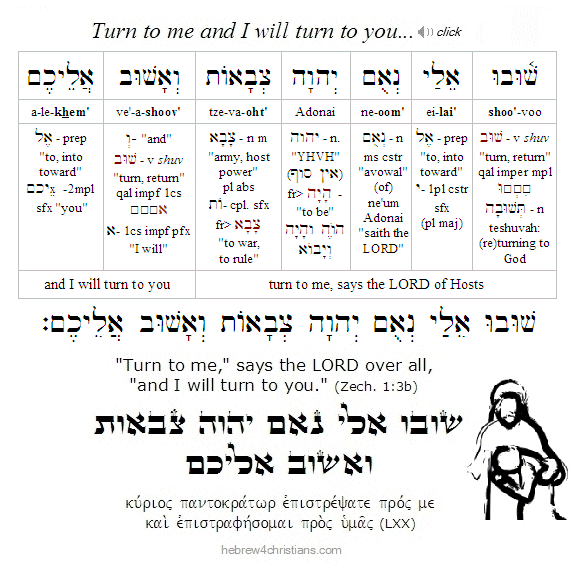 |
"Turn to me and I will turn to you..." (Zech. 1:3). Someone might wonder why we must take the initiative, but that is because God has never turned away from us; he has always been the one who loves us most of all and awaits our return to his love.... "Turn to me and you will discover that I have never left you nor forsaken you."
Yeshua illustrated the idea of teshuvah (i.e., תְּשׁוּבָה, "returning to God") by telling the famous story of the "prodigal son" (Luke 15:11-32). After selfishly squandering his father's inheritance, a wayward son decided to return home, full of shame and self-reproach. "But while he was still a long way off, his father saw him and was filled with compassion for him; he ran to his son, threw his arms around him and kissed him." The father then ordered a celebratory meal in honor of his lost son's homecoming. When his older brother objected, the father said, "We had to celebrate and be glad, because this brother of yours was dead and is alive again; he was lost and is found."
This parable reveals that teshuvah ultimately means returning (shuv) to the outstretched arms of your Heavenly Father... God sees you while you are still "a long way off" (Rom. 5:8). He runs to you with affection when you first begin to turn your heart toward Him. Indeed, God's compassion is so great that He willingly embraces the shame of your sins and then adorns you with "a fine robe, a ring, and sandals." Your Heavenly Father even slaughters the "fattened calf" (Yeshua) so that a meal that celebrates your life may be served....
 |
The Torah of Mercies...
08.28.25 (Elul 4, 5785) It has been said that grace is getting what you don't deserve, whereas mercy is not getting what you do... Yeshua said, "Blessed are the merciful, for they shall receive mercy" (Matt. 5:7). This is not a reciprocal law like karma, i.e., you get in return what you first give, since we cannot obtain God's mercy as reward for our own supposed merit (Rom. 4:4). No, we are able to extend mercy to others only when we are made merciful ("full of mercy"), that is, when we first receive mercy as the gift of God (Eph. 2:8; Rom. 5:15). After all, you can't give away what you don't have, and if we have no mercy for others, it is likely that we have not received it ourselves, as the parable of the "Good Samaritan" reveals (Luke 10:25-8).
Your forgiveness is your forgiveness, that is, as you forgive, so you reveal your heart. What you do comes from what you are, not the other way around. We are first transformed by God's grace and then come works of love. We are able to judge others mercifully, with the "good eye," because we come to believe that we are beloved by God.
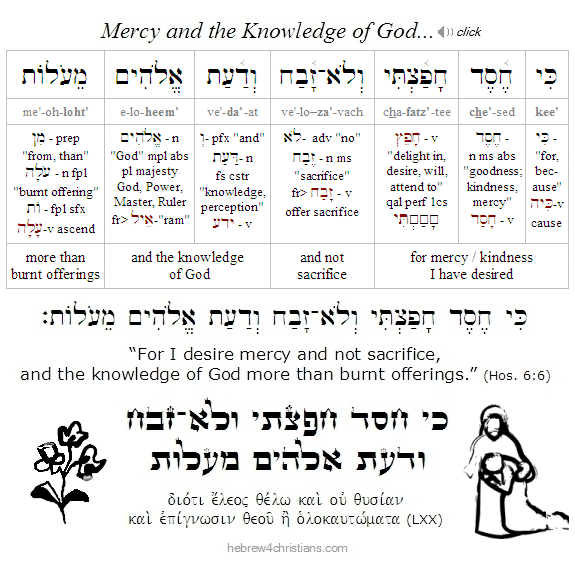
When Yeshua rebuked the "holier-than-thou" attitude of some people, he said: "Go and learn what this means, 'I desire mercy, and not sacrifice.' For I came not to call the righteous, but sinners" (Matt. 9:13). The pattern therefore abides: First you realize you are broken, impoverished of heart, and you mourn over your sinful condition (Matt. 5:3-4); then you hunger and thirst for God's righteousness, that is, for his healing and deliverance, and finally you learn to trust the mercy of God, that is, you come to accept that you are accepted despite your unacceptability (Matt. 5:5-6). As you begin "suffer yourself" and forgive your own evil, you are enabled to extend this mercy to others (Matt. 5:7). In this way you begin to see God in your relationships and obey the heart of truth (Matt. 5:8; 1 Sam. 15:22).
Though we love and honor truth, we must be careful never to use it as a weapon to judge or wound others. The failure to extend mercy, to demand your "rights" or hold on to grudges, implies that you are relating to God as Judge rather than as Savior (James 2:13). If we condemn what we see in others, we have yet to truly see what is within our own hearts; we have yet to see our desperate need for God's mercy for our lives. If you don't own your own sin, your sin will own you. Being merciful is a response to God's love and therefore is essential to genuine teshuvah (repentance).
Walking in love is the deepest expression of truth, since love heals untruth and embraces hope for what is presently broken (1 Cor. 13:7). In light of this, take a moment to ask the LORD to help you relinquish the pain of your past by being full of mercy toward yourself and others. Honor God's love for you by forgiving yourself and showing compassion and mercy to others in your life...
Hebrew Lesson
Hosea 6:6 Hebrew reading (click):
Truth and God's Salvation...
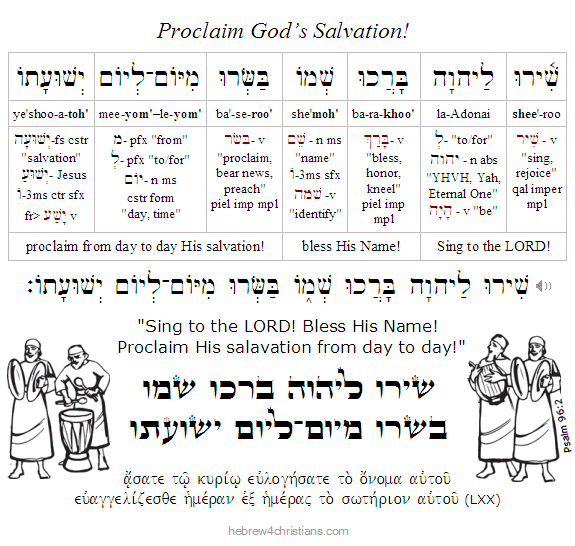
08.27.25 (Elul 3, 5785) The Scriptures teach us that it is forbidden to be afraid of the future because we are to live in the presence of God today and trust him to take care of us. "Sing to the LORD! Bless His Name! Proclaim His salvation from day to day" (Psalm 96:2).
"There is no fear in love," and therefore over and over the Spirit of God says, al tira' - "don't be afraid..." When we are afraid, we are believing the lie there is something beyond God's control or reach, and therefore God is "not enough"...
In times of testing you must remind yourself of what is true and real. When you know the truth, you will be set free from the power of the lie (John 8:32). God formed you in your mother's womb, breathed into you nishmat chayim, the breath of life, and numbers all your days... Every breath you take, every heartbeat in your chest is ordained from heaven, and indeed, there is not a moment of your life apart from God's sovereign and sustaining grace.
So what, then, are you afraid of? Dying? Judgment in the world to come? Being left unloved, bereft of home, abandoned, consigned to outer darkness? King David said, "If I make my bed in Hell, behold, you are there" (Psalm 139:8). Understand that the LORD God is not only present in your "happy moments," when you feel "put together" and respectable, but he is present in your desperate moments, in your hunger, your thirst, and in your secrets. May we never lose sight of God's love, especially in times of distress and trouble, since we trust that he is always working all things together for our ultimate good (Rom. 8:28).
The Name of the LORD (יהוה) means "Presence" and "Love" (Exod. 3:14; 34:6-7). Yeshua said, "I go to prepare a place for you," which means that his presence and love are waiting for you in whatever lies ahead (Rom. 8:35-39). To worry is "practicing the absence" of God instead of practicing His Presence... Trust the word of the Holy Spirit: "For I know the plans I have for you, declares the LORD, plans for healing peace and not for evil, to give you a future and a hope (Jer. 29:11). The Word always speaks hope.
Take comfort that your Heavenly Father sees when the sparrow falls; he arrays the flower in its hidden valley; and he calls each star by name. More importantly, the Lord sees you and knows your struggle with fear. Come to him with your needy heart and trust him to deliver you from the burdens of your soul (Matt. 11:28). Shalom means being free from fear.
This is a word for the exiles of every age: Be not afraid - al-tira' – not of man, nor of war, nor of tribulation, nor even of death itself (Rom. 8:35-39). If God be for us, who can be against us? Indeed, Yeshua came to die to destroy the power of death "and to release all those who through fear of death were subject to lifelong slavery" (Heb. 2:14-15). The resurrection of the Messiah is the focal point of history - not the "dust of death." Death does not have the final word. Indeed, because Yeshua is alive, we also shall live (John 14:19). May your chesed, O LORD, be upon us, as we wait for You (Psalm 33:22).
Nachman of Breslov once is reported to have said that "The whole earth is a very narrow bridge (כָּל־הָעוֹלָם כֻּלּוֹ גֶּשֶׁר צַר מְאד), and the point of life is never to be afraid." Likewise we understand Yeshua to be the Bridge to the Father, the narrow way of passage that leads to life. He calls out to us in the storm of this world, "Take heart. It is I; be not afraid" (Matt. 14:27). When Peter answered the call and attempted to walk across the stormy waters, he lost courage and began to sink, but Yeshua immediately reached out his hand and took hold of him, saying, "O you of little faith, why did you doubt (lit., think twice)?"
We must be careful not to let the light in us become darkness (Luke 11:35). The love and acceptance of God is the answer to our fear, not the thought of being judged by Him or attempting to merit his favor through religion. God's love is our hope, and this hope gives us courage to persevere the storms of the day... As it is written: "Be not afraid of sudden terror, nor of the destruction of the wicked when it comes. For the LORD shall be your confidence, and he shall keep your foot from being caught" (Prov. 3:25-26). Amen, may your chesed, O LORD, be upon us, as we wait for You.
"Greater is He that is in you than the one that is in the world" (1 John 4:4). Let us therefore walk in the Spirit of Truth, friends, and thereby overcome the devil and his noisome lies....
Hebrew Lesson
Psalm 96:2 reading (click for audio):
Made Whole with God...
08.27.25 (Elul 3, 5785) In our Torah portion for this week (i.e., Shoftim) we read: "You shall be blameless with the LORD your God" (Deut. 18:13), which seems to suggest that we should be perfectionistic in our faith, and indeed some older Bible versions translated the Hebrew word tamim (תָּמִים) as "perfect" which once meant "to be thoroughly made," though in modern times means flawless, faultless, or ideal. Because of these connotations, it is better to translate the Hebrew word as "complete," "whole," or "sincere."
When God said to Abraham, "I am El Shaddai; walk before me and be tamim (Gen. 17:1), he was not saying "be perfect" or "don't ever make a mistake," but rather be fully engaged, that is, to walk before God passionately, sincerely, wholeheartedly (מכל הלב), and by doing so to "walk out" the relationship with full assurance that he is accepted and beloved by God. Likewise when Yeshua said "Be therefore perfect as your Father who is in heaven is perfect" (Matt. 5:48), he meant that we should be complete, finished, and "made whole" by knowing and receiving the overflowing love and light of God.
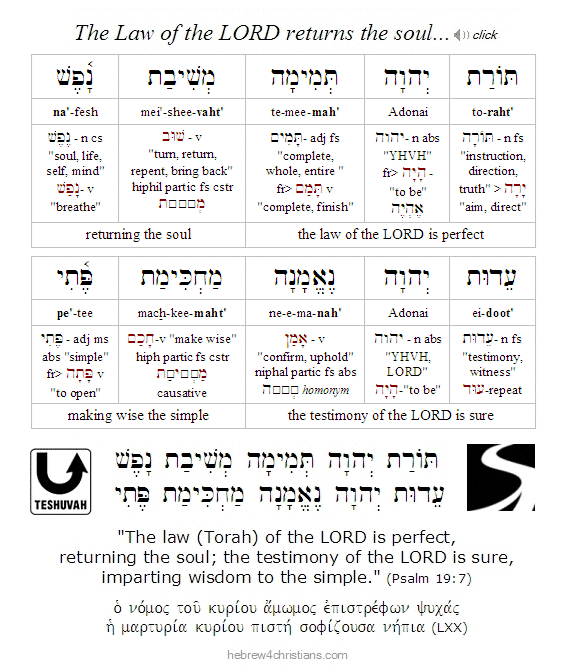
"You shall be wholehearted with the LORD your God" is therefore a mandate to know who you are, to know what is truly good as distinguished from what is evil, and to be united with God's passion to be healed from your inner conflicts and ambivalence (δίψυχος). We are made "whole" or "perfect" (i.e., complete) when we resolutely turn to God for healing of what divides our hearts, as it says: "The Torah of the LORD is perfect (תָּמִים), returning the soul" (Psalm 19:8). Understand the Torah's commandment, then: "You shall be tamim (i.e., whole and wholehearted) with the LORD your God," to be a prophecy of transformation for your life, friend... Amen. And may you passionately know "the love of Messiah that surpasses knowledge and be filled with all the fullness of God" (Eph. 3:19).
Hebrew Lesson
Deut. 18:13 Hebrew reading (click):
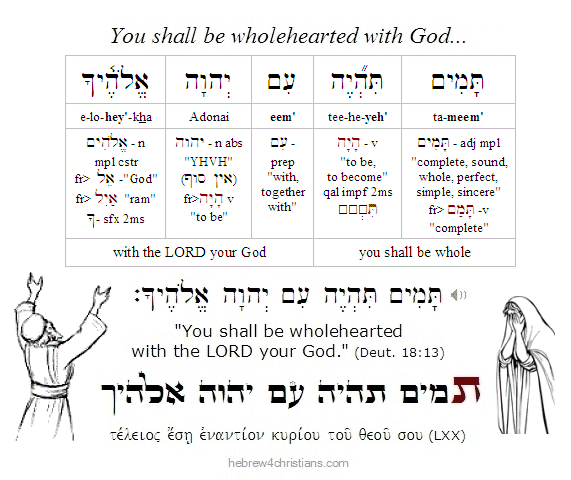 |
Note: In the Sefer Torah (i.e., the handwritten Torah scroll), the first letter of the word tamim ("wholehearted") is written extra LARGE in order to emphasize the importance of the word. Notice also the little word "with" (עִם) that follows in this verse. This hearkens to Micah 6:8: "What does the LORD require of you except to do justice (mishpat), and to love mercy (chesed), and to walk humbly (hatznea lechet) with your God?" Having a humble heart walks with the LORD. Humility begins with the awareness that 1) there is a God and 2) you are not Him.... It is the practice of da lifnei mi attah omed: "knowing before whom you stand" and living your life in light of this fundamental truth.
Teshuvah and Truth...
People perish because "they refuse to love the truth and so be saved" (2 Thess. 2:10-12). Therefore the issue of truth - physical, moral, aesthetic, spiritual, etc. - is central to salvation.
08.26.25 (Elul 2, 5785) In the New Testament, the Greek word "metanoia" is the most commonly used word to express the idea of "repentance." The word is formed from the prefix 'μετα' ("after, beyond") combined 'νοεω' ("to think") and it generally means "changing your mind" (in the noun form) or "thinking differently" (in the verb form). Since it can also represent an "afterthought" expressed emotionally as disappointment over a loss of some kind, metanoia is similar to the idea of nacham (נָחַם) in the Hebrew Scriptures, which literally means to "sigh" heavily as a way of expressing regret or consolation. The Greek word strepho (στρέφω), like the Hebrew word shuv (שׁוּב), means to "return" to God in a practical sense, that is, by performing acts of contrition. In either case, however, Hebrew or Greek, a change of direction is implied, and that begins with changing how we think and what we regard as the truth. Repentance, then, involves a new vision, a new way of seeing reality...
Yeshua's earthly ministry began with the message, "The time has come and the kingdom of God draws near: repent (μετανοεῖτε) and believe (πιστεύετε) the good news" (Mark 1:15). These two verbs (repent and believe) are in the imperative mood. We are commanded to repent, to "change our thinking," and therefore to turn away from hopelessness - and the sin that hopelessness begets - by accepting God's intervention and deliverance. But you cannot believe if you do not first turn, and therefore you must change your focus; you must clear away the world's distractions and ready your heart to hear the message. It is then that we hear a voice crying out: "Prepare the way of the LORD and make straight in the wilderness a highway for our God!" (Isa. 40:3).
Hebrew Lesson
Isaiah 40:3 reading (click for audio):
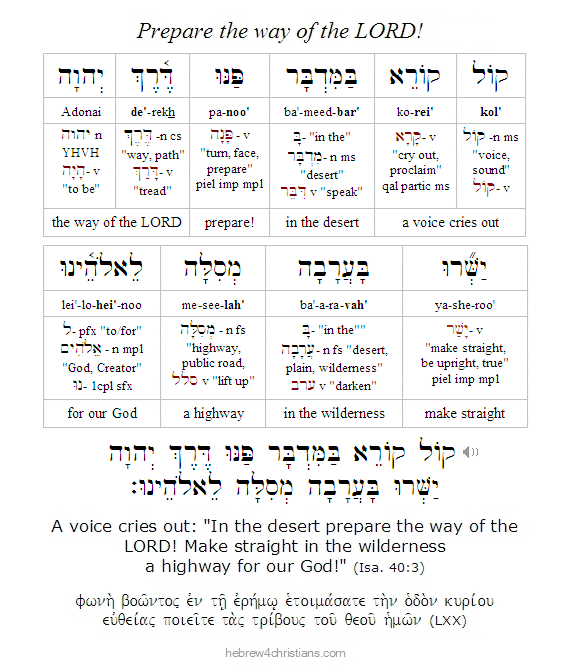 |
Note that the Hebrew word translated "prepare" in this verse (i.e., panu) comes from a root word (פָּנָה) that means to turn to face someone... The Hebrew word panim (פָּנִים), "face," comes from the same root, as does the word penimi (פְּנִימִי), "inner," and the word penimiyut (פְּנִימִיוּת), meaning "inwardness" or "immanency." This suggests that we must go within our own hearts, and there, in our "desert places," prepare for the Presence of the LORD. It is in the solitude of the desert - away from the mindless noise and empty distractions of this vain world, where we can listen and focus our heart, confess our sin, and express our great need for God... Being honest with ourselves makes us yashar (יָשַׁר), "upright," and crooked ways are made straight for God to be received... The word mesilah (מְסִלָּה) alludes to the ladder (i.e., sullam: סֻלָּם) that Jacob saw in the desert when he received the blessing (Gen. 28:12). Yeshua is the Bridge, (הַסֻּלָּם), that unites and mediates heaven and earth (John 1:51).
Since God holds us responsible to repent and believe the truth of the gospel (Acts 17:30-31), He must have made it possible for us to do so ("ought" implies "can"). And indeed, God has created us in His image so that we are able to discern spiritual truth. He created us with a logical sense (rationality) as well as a moral sense (conscience) so that we can apprehend order and find meaning in the universe He created. All our knowledge presupposes this. Whenever we experience anything through our senses, for example, we use logic to categorize and generalize from the particular to the general, and whenever we make deductions in our thinking (comparing terms, making inferences, and so on), we rely on logic. We have an innate intellectual and moral "compass" that points us to God.
Since we all necessarily must think in order to live, we should value clear thinking. This should be obvious enough, though people often make various errors and misjudgments because they devalue the effort required to carefully think through a question. As William James once said, "A great many people think they are thinking when they are merely rearranging their prejudices." When it comes to questions about the gospel, however, God regards such carelessness to be blameworthy. Again, the LORD holds us accountable for what we think and believe, especially when it comes to the reality and mission of His Son.
The truth about God is always available to human beings, if they are earnestly willing to look for it. The Divine Light that was created before the sun and the stars represents God's immanent presence that "lights up" all of creation - including our minds (Gen. 1:3). As Paul stated, "the invisible things of Him from the creation of the world are clearly seen so that people are without excuse" (Rom. 1:19-20). The heavens are constantly attesting to the reality of God's handiwork (Psalm 19:1). All of creation "shouts out" that there is a God. Small children particularly understand this....
Hebrew Lesson
Psalm 19:7 reading (click for audio):
 |
Note: For more on this subject, see "Teshuvah of the Mind."
Call to do Teshuvah...
Rosh Chodesh Elul and the 40 days began yesterday...
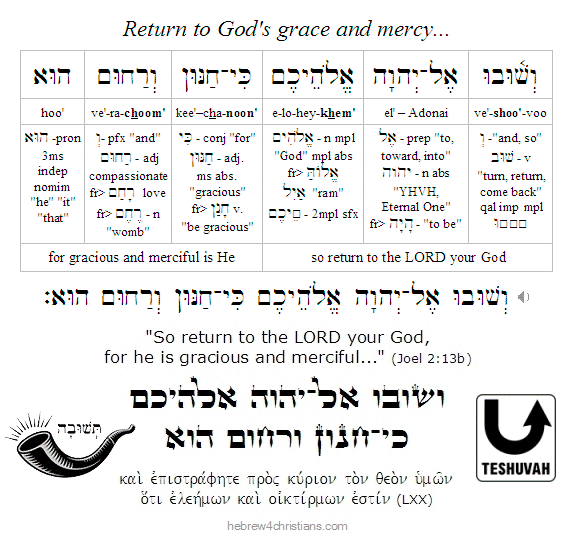
08.26.25 (Elul 2, 5785) Regarding the call to do teshuvah the LORD appeals: "Come back to me with all your heart (בְּכָל־לְבַבְכֶם) - with fasting, with weeping, and with mourning - and rend your hearts and not your garments, and return to the LORD your God (וְשׁוּבוּ אֶל־יְהוָה אֱלהֵיכֶם), for he is gracious and merciful, slow to anger, and abounding in love..." (Joel 2:13). Genuine teshuvah (repentance) is not about the "outer layers" of life, but engages the deepest depths of heart; it is not expressed in religious practices or rituals but in personal brokenness and utter desperation...
As King David said, "the sacrifices of God are a broken spirit (רוּחַ נִשְׁבָּרָה); a broken and contrite heart (לֵב־נִשְׁבָּר וְנִדְכֶּה), O God, you will not despise" (Psalm 51:17). As is written in our Haftarah portion for Shabbat Shuvah: "Return O Israel (שׁוּבָה יִשְׂרָאֵל), to the LORD your God, for you have stumbled because of your iniquity; take with you words and return to the LORD (וְשׁוּבוּ אֶל־יְהוָה) and say to him, 'Take away all iniquity; accept what is good, and we will pay with bulls the vows of our lips'" (Hos. 14:1-2).
Note that the appeal to the LORD as "gracious and merciful, slow to anger, and abounding in steadfast love" (חַנּוּן וְרַחוּם הוּא אֶרֶךְ אַפַּיִם וְרַב־חֶסֶד) recalls the meaning of YHVH (יהוה) revealed to Moses in his state of brokenness over the sin of the Golden Calf (Exod. 34:6-7). It's a word for our hour of need as well.
Hebrew Lesson
Joel 2:13b Hebrew reading (click):
 |
Guarding your Heart...
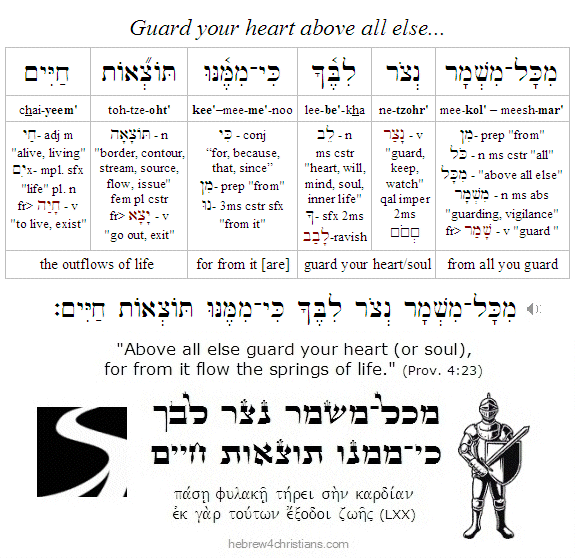
08.25.25 (Elul 1, 5785) Our Torah portion for this week, parashat Shoftim, begins: "Judges and officers you shall give to yourself (תִּתֶּן־לְךָ) in all your gates" (Deut. 16:18). In this connection some of the sages interpreted the word "gates" (שׁערים) to refer to our sense organs, for example, the "eye gate," the "ear gate," and so on. Likewise the Lord instructs us to write the words of Torah "upon the doors of our house and on our gates" (Deut. 6:9). Because we are naturally inclined to "spy after our hearts and eyes" (Num. 15:39), we are instructed to appoint "gatekeepers" to protect the sanctity of our soul, as it says: "Above all else guard your heart, for from it flow the springs of life" (Prov. 4:23).
The Hebrew text for this verse is emphatic. We are to guard our hearts vigilantly, just as a prison guard or warden might keep watch over a prisoner. The phrase translated "above all else" literally means "more than anything that might be guarded" (mikkol mishmar), a construction used to intensify the command to exercise vigilance. Plainly put, this verse commands us to watch over our heart more than anything else.
And yet "the whole head is sick, and the whole heart faint" (Isa. 1:5). We understand how apt we are to go astray in our affections, and therefore the heart is easily divided, obstructed, and liable to failure... Despite its frailty, however, the heart determines totze'ot chayim, or the "springs" or "contours" of life. In the Tanakh, the word totza'ot is often used to refer to the borders of territories or the boundaries of a city. This verse is saying that from the heart of a person (lev) a "map" or "chart" to life is drawn. As the heart is either pure or corrupt, so will be the course of one's life... Purity of heart represents healing, which means being single-minded in our affections and attention before the LORD.
How you choose to guard your heart from inner corruption and hardness will determine the "road" of your life. Concerning this verse the Metzudos commentary says, "Above all – more than anything else – a person must be careful to guard his heart from improper thoughts, for one cannot contemplate using the heart – the very vortex of life – to harbor thoughts that are inimical to life." Because the flesh is weak, we must be vigilant lest we become cynical, weary, and unfeelingly selfish. An unguarded heart soon becomes troubled, lonely, suspicious, and unstable. If, however, we keep ourselves from the obstruction of sin, we will experience the free flow of compassion, encouragement, and joy. The faithful heart is open - it believes all things, hopes all things, and endures all things (1 Cor. 13:7).
"Judges and officers you shall give to yourself (תִּתֶּן־לְךָ) in all your gates." Note that that Torah states that you shall appoint these to yourself, stated in the singular, not in the plural, to suggest that it is your personal responsibility to guard your heart from negative influences. God considers it your duty to yield yourself as a vessel or "steward" of the kingdom of God (Rom. 6:13). We must regularly ask God to enlighten "the eyes of our heart" (τοὺς ὀφθαλμοὺς τῆς καρδίας ὑμῶν) according to His wisdom and power (i.e., truth revealed in Scripture), and to impart the power of the Holy Spirit to transform our desires and affections so that they conform to the character of the Messiah (Eph. 1:18).
Hebrew Lesson
Proverbs 4:23 reading (click for audio):
 |
Daily Dvar Podcast:
Guarding your Heart...
08.25.25 (Elul 1, 5785) Chodesh tov Elul, chaverim. It is written in our Scriptures: "Above all else guard your heart, for from it flow the springs of life" (Prov. 4:23). The Hebrew text for this verse is emphatic. We are to guard our hearts vigilantly, just as a prison guard or warden might keep watch over a prisoner. The phrase translated "above all else" (mikkol mishmar), literally means "more than anything that might be guarded" a construction used to intensify the command to exercise vigilance. Plainly put, this verse commands us to watch over our heart more than anything else.
In the following daily d'var broadcast (see links below), I briefly discuss the importance of guarding our hearts especially in light of the call to do teshuvah during the Forty Days leading up to Yom Kippur. I hope you find it helpful.
Linked Podcasts:
Parashat Shoftim - שופטים
Surely our moribund culture of anarchy, relativistic chaos, and "radical" politics needs to hear the Torah regarding boundaries and matters of social justice (Jer. 18:15-16)...
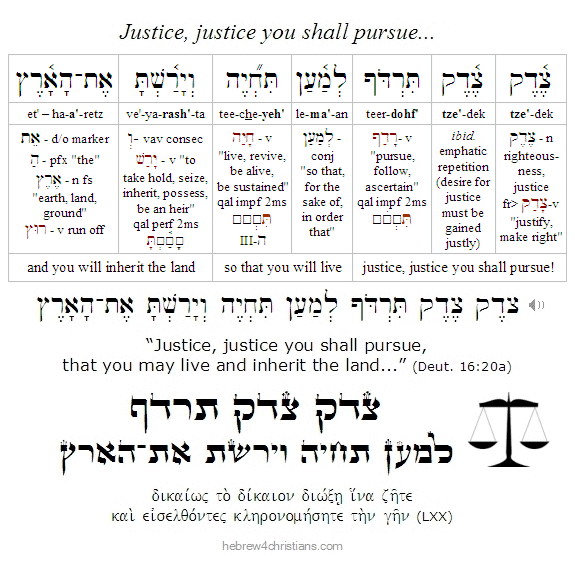
08.24.25 (Av 30, 5785) Shalom and Chodesh Elul tov, chaverim! Our Torah reading for this week (Shoftim) begins with the commandment that the people of Israel should appoint judges (i.e., shoftim: שׁפְטִים) and officers (i.e., shoterim: שׁוֹטְרִים) so that justice would be respected throughout the promised land (Deut. 16:18). The duty to establish justice is famously stated as, "tzedek, tzedek tirdof" (צֶדֶק צֶדֶק תִּרְדּף): "Justice, Justice you shall pursue" (Deut. 16:20). The word tzedek means "righteousness" and involves the obligation to adhere to moral truth.
Throughout the portion the theme of social justice predominates, as the ethical characteristics for judges are defined, as well as for elders, kings, prophets, and priests, all of whom are responsible for maintaining a just and healthful society. As the prophet wrote: "The work of righteousness shall be peace" (וְהָיָה מַעֲשֵׂה הַצְּדָקָה שָׁלוֹם), and "the service of righteousness (וַעֲבדַת הַצְּדָקָה) shall be quietness and security forever" (Isa. 32:17).
Hebrew Lesson
Opening words of the Torah portion (click):
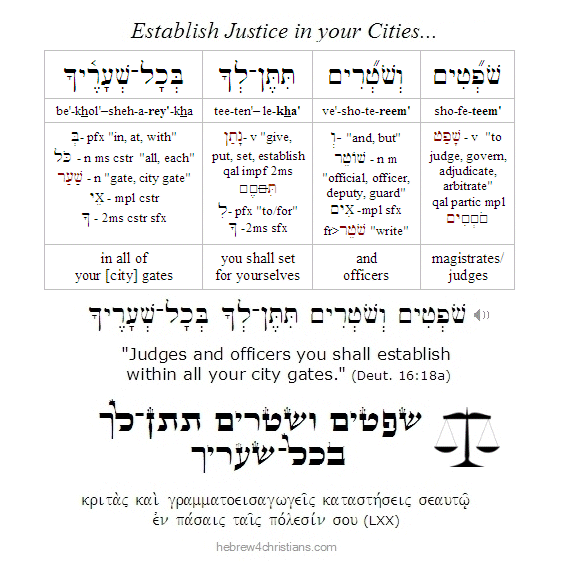 |
Note that the call for justice, "tzedek, tzedek tirdof" (צֶדֶק צֶדֶק תִּרְדּף) is stated twice to teach that justice must be pursued in an entirely just manner, that is, the methods used to obtain justice must themselves be just... Corrupt law enforcement and judicial systems, political persecution, etc., are all condemned. The Scriptures therefore do not advocate pragmatism or utilitarian thinking. There are no "noble lies" in the Kingdom of Heaven. Violence (verbal or physical) or deception done in the name of God is always forbidden and will be judged by the LORD. We must execute great restraint and caution when we seek to confront oppression in the world. If you want to change the world around you, begin with yourself....
Hebrew Lesson
Deut. 16:20 Hebrew reading (click):
Freedom and Fear...
"We must fear God out of love, not love God out of fear." - Saint Francis de Sales
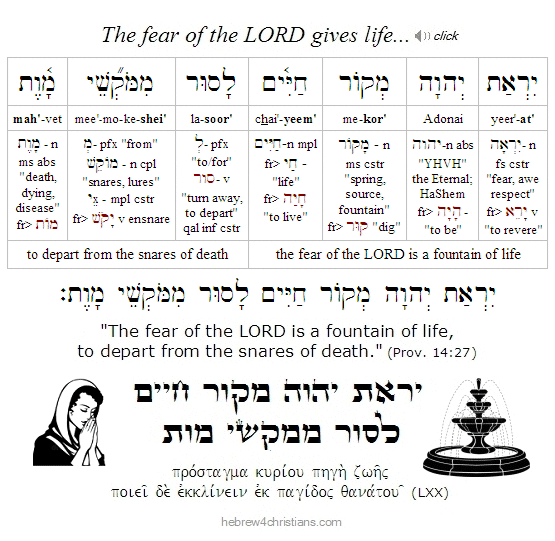
08.22.25 (Av 28, 5785) Those who surrender every breath and moment of their lives to God, abiding in the refuge of the Eternal, are set free from common fears. The world is crucified to them; they are no longer swayed by the praises or threats of men, but seek only to know and honor the LORD in all their ways... As it says, "The fear of the LORD is a fountain of life, to turn away from the snares of death" (Prov. 14:27).
The fear of the LORD, or "yirat Adonai" (יִרְאַת יְהוָה), is reverential wonder over the sacredness of our lives; it is an apprehension of the infinite value of who were are and what we do... It is a holy hush of the heart, an immense respect for the glory and sanctity of life, and an abiding sense of awe over the worth, beauty, and overmastering glory of God. The fear of the LORD is life-affirming and healing, turning us away from the snares of death...
God is ever-present and leads the way back home: "Now to the One who is able to keep you from falling, and to cause you to stand, rejoicing, without blemish before His glorious presence, to the only God our Savior through Yeshua the Messiah, our Lord and great Lamb of God, be glory, majesty, power, and authority, before all time, and now, and for all eternity. Amen." Shabbat Shalom and great peace, love, and happiness to you all...
Hebrew Lesson
Proverbs 14:27 reading (click for audio):
The Great Commandment
Our heart's greatest need...
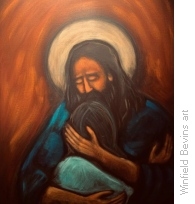
08.22.25 (Av 28, 5785) Both Moses and Yeshua taught that the "great commandment" of Torah (הַמִּצְוָה הַגְּדוֹלָה בַּתּוֹרָה), that is, the imperative which is of utmost spiritual importance, is to love God with all of our being. Nothing is more important, and nothing better expresses the essential duty of our lives. And as I hope you will see, this great commandment is fundamentally an appeal to awaken to beauty, mystery, holiness, and peace. It's an invitation to be radically made whole, set free from fear and despair. It's the call to receive healing of your loss and to know a real sense of belonging. To paraphrase a bit, the great commandment is to open your heart to receive God's love and to learn to love in return.
Just as God is the Source of all love, so loving God is the goal or end of our existence; it is our raison d'etre, our very reason for being. It is the answer to the haunting existential question of why we exist. No matter who you are or what you have done, the greatest thing about you is that you are loved by God, and that your central need is to receive God's love and to live it out in your life.
Love is inherently relational. It is not self-reflexive but giving and expansive. It seeks the beloved; it hungers and thirsts for connection. As the foundation of reality, our relationship with God teaches us who we really are, namely, sacred beings made in the divine image but who, despite being created to enjoy intimate fellowship with God, have turned away and fallen into spiritual blindness and insanity. The ideal has been lost to the real. Human life has become a tragedy, a nightmare, a prison of suffering and vanity.
This is the problem of the "human condition." We need deliverance from the darkness of sin, from the nightmare of our alienation from God. We must find the way out of our spiritually lost condition lest we succumb to utter despair and perish in shame. We need a new sort of life to overcome the "spiritual death" that enslaves us. To be healed we must be "reborn" by God's spirit and made into a "new creation." This is the only way to be saved from ourselves and our own insanity. We need a miracle, and this miracle is found in Yeshua, the only true Savior and Healer of the world...
As we come to believe the promise of who we really are, and as we answer and turn to God's love, our spiritual eyes will be opened and we will begin to understand God's will. We will regard both ourselves and other people as significant, valuable, and worthy of our respect. Indeed we will cherish and honor all of creation since it is God's expression and personal handiwork. As image bearers of God, we will become emissaries of his blessing, and we will discover that all of his commandments of Torah are "for life" (Lev. 18:5), which means they were given to promote love, healing, and shalom.
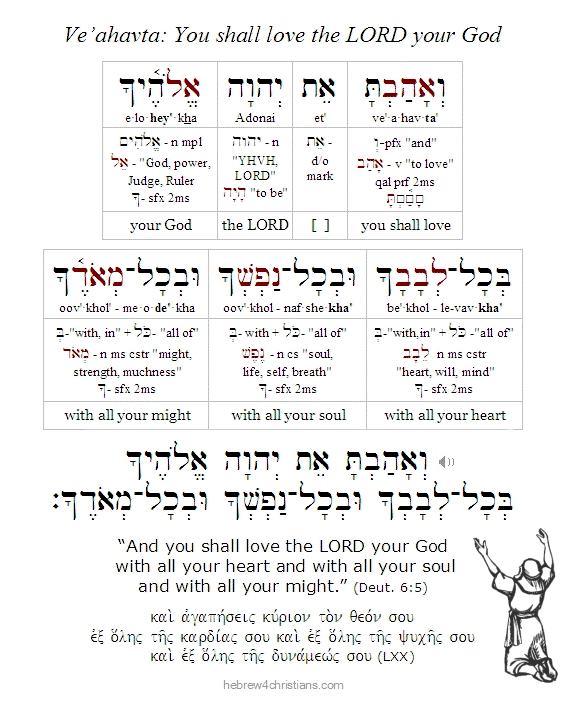
In Jewish tradition the great commandment is called the "Shema," meaning to listen, from the first word of Deuteronomy 6:4, "Hear (שְׁמַע), O Israel, the LORD is our God, the LORD alone." The opening passage continues to the next verse, called "Ve'ahvata," which reads: "and you shall love (וְאָהַבְתָּ) the LORD your God with all your heart, with all your soul, and with all your strength," which expresses the fundamental duty to love God above everything else in our lives. Yeshua affirmed the great commandment when he said: "The first of all the commandments is, 'Hear, O Israel, the Lord our God is one Lord, and you shall love the LORD your God with all your heart, with all your soul, with all your mind, and with all your strength.' Αὕτη πρώτη ἐντολή- This is the first commandment" (Mark 12:29-30).
Loving God is therefore the central issue of life, and the conduit of love is the heart. As Khalil Gibran put it, "He came to make the human heart a Temple, the soul an Altar, and the mind a priest." It is amazingly wonderful that the love of God is the core meaning of our existence, and yet love is not static but seeks the beloved, and therefore we are called to love God in return, and this is best expressed when we love our "neighbor" as ourselves. That is the second great commandment, namely, to love others as we love ourselves (Lev. 19:18, Mark 12:31, Gal. 5:14). Note here that loving others as we love ourselves logically implies that we love ourselves, which means that we confess God's love for us is real. We love others "as" we love ourselves, and we love ourselves "as" we accept God's love for us, so again love is relational, reciprocal, and a matter of profound communion.
But what does it mean to love God "be'khol levavkha," with all your being? For that matter, what does the word "love" really mean? In English the word "love" comes from the Hebrew word lev (לֵב), meaning heart, but the Hebrew word for love is "ahavah" (אהבה), which can be broken down to the letter Alef (א), a preformative meaning "I will," plus the root "hav" (הב) meaning "to give," which when put together indicates that love is a matter of a willingness to give. Love is therefore a spirit of generosity, of grace, and of compassion, the greatest example of which is the giving of God in the sacrificial life of his son Yeshua. "God is love" is expressed in the crucifixion of himself to save us from ourselves by giving to us forgiveness, healing, and the blessing of eternal life.
Notice that the commandment to love God, the Shema, is set in the context of Moses' appeal to Israel to keep "the commandments" of God, and therefore it serves as a "meta-commandment" to keep God's other commandments. Love is therefore the ground or foundation for the commandments, as the apostle John affirmed: "For this is the love of God, that we keep his commandments, and His commandments are not burdensome," and as Yeshua repeatedly taught his disciples: "If you love me, you will keep my commandments" (1 John 5:3, John 14:15). Doing God's will by keeping his commandments, then, expresses your love for God. If you do not care to keep God's commandments, then you reveal that your love for God is not genuine or sincere... Loving God is the response to God's blessing, while indifference leads to exile. The Shema, then, can be understood as an appeal to care, to keep faith, and to encounter God's love.
The Ve'ahavta ("you shall love") does not appeal to merely outward forms of obedience, of course, but to the inmost depths: with all your heart (בְּכָל־לְבָבְךָ), and with all your soul (וּבְכָל־נַפְשְׁךָ) and with all your strength (וּבְכָל־מְאֹדֶךָ). The traditional sages interpret your "heart" (לב) to refer to wisdom, and therefore to your mind, the "soul" (נפש) to refer your life energy - even if you should give up your life for his sake - and your "strength" or your "might" (מאד) to refer to your material possessions and money.
Regarding the heart, or the duty to attain wisdom, the Shema says that we should diligently repeat these matters to our children (וְשִׁנַּנְתָּם לְבָנֶיךָ), talking to them as we sit in our homes (בְּשִׁבְתְּךָ בְּבֵיתֶךָ), as we walk along the way (וּבְלֶכְתְּךָ בַדֶּרֶךְ), and whenever we lie down to sleep (וּבְשָׁכְבְּךָ) and whenever we rise up (וּבְקוּמֶךָ). In other words, the love of God should move us to regard him in every circumstance of our lives. Our father Abraham "got many souls" by persuading others of the truth and their duty to know God (Gen. 12:5).
So loving God is the point of life, the very reason for our existence, and the essence of what makes life worth living. But what does it mean to love God, and how is it possible to even do so? These seem to be vital questions as we consider further the duties of the heart...
Loving God is connected to worship, that is, ascribing worth to God by valuing him as the highest good and our ultimate blessing. In Hebrew worship is expressed using the root word shachah (שָׁחָה), meaning to bow down in homage, usually in hitapa'el (reflexive) form suggesting an inner state of humility and reverence. The impulse behind worship is gratitude for the blessing of life combined with a sense of awe - an awareness of the overwhleming beauty of the LORD and the glory of his holiness...
To love God certainly implies that we are grateful for the gift of our lives and that we care enough to listen to him and respond to his heart (i.e., his will). As the psalmist prayed: "With all my heart I seek you. O let me not wander from your commandments" (Psalm 119:10). It is absurd to think someone can love God and be indifferent to what God wants. People may "draw near to God with their lips" but their hearts may be removed from him (Isa. 29:13). Yeshua asks, "Why do you call me, 'Lord, Lord,' and do not the things I say?" (Luke 6:46). If you truly love the Lord, wouldn't you want to do what he asks of you?
There is an emotional aspect of love that is essential. When you earnestly love someone they will mean everything to you. You will irresistably be drawn to them, and they will always be on your mind. You will miss them and want to spend time alone with them. Your heart will be stirred at the very thought of them, and you will be overjoyed when you finally are able to be together. In the time of your communion with the beloved there is a deep sense of appreciation, connection, acceptance, and understanding.
Kierkegaard wonders what sort of a lover would he be who had no great desire to be with his beloved and take care of her. He considers it a mockery of love to give to her sustenance yet to have no affection in his heart. Psalm 91:14 reads, "Because he has set his love upon me, therefore will I deliver him: I will set him on high, because he has known my name." The heart that passionately desires God knows God's Name.
A nagging question may be raised about whether such love can be commanded. After all, can feelings be commanded? In response it may be asked whether love is a feeling or something more? As we have seen the "command" to love is an invitation to "taste and see" that the LORD is good, and moreover that the invitation to believe is not about good feelings as much as it is about reality. It is the invitation to come alive to mystery, beauty, and truth. It's to be radically made whole, set free from fear and despair. But fundamentally love is a decision, an act of the will driven by conviction of the truth, and such a decision will lead to feelings of gratitude, loyalty, delight, wonder, desire, and so on. The same may be said regarding the commandment to fear God (Deut. 6:13). This sort of fear is not about the fear of punishment but rather appreciating the "awful goodness" and majesty of God. The fear of the LORD (יִרְאַת יהוה) is love's "fear and trembling" as it encounters the glorious beauty, the incomprehensible greatness, and overwhelming wonder of God.
Love and fear, then, are two sides of the same thing, as it says in Deuteronomy 10:12-13, "And now, O Israel, what does the LORD your God ask of you, but to fear (לִירָא) the LORD your God, to live (לָלֶכֶת) in all His ways, and to love Him (לְאהב אֹתוֹ), and to worship (לעבודה) the LORD your God with all your heart (בְּכָל־לְבָבְךָ) and with all your soul (בְּכָל־נַפְשֶׁךָ) -- to keep (לִשְׁמֹר) the commandments and statutes of the LORD, which I am commanding you today for your good (לְטוֹב לָךְ)?"
In this connection Maimonides (following Aristotle) said that you can command actions that will eventually create such feelings, and therefore habits can be transformed into virtues of the heart. As you do the commandments you will authenticate their validity and thereby realize affections that are associated with them... This is especially true of the foundational commandment of all the Scriptures, namely to believe in the Lord (Exod. 20:2), and to do his will. The rabbis of Yeshua's day once tested him by asking, "What must we do, to be doing the works of God?" and Yeshua answered them, "This is the work of God, that you believe in the one whom God has sent" (John 6:28-29). The commandment to repent and believe in God's redemptive love given in Yeshua the Messiah, then, is the starting point of knowing the love of God, and the Holy Spirit (רוח הקודש) authenticates the truth through an "inner witness" that reveals the divine presence within our hearts (Rom. 5:5). This is sometimes called argumentum spiritus sancti, or the conviction of the Holy Spirit. Teshuvah (repentance) comes first so that we know God's tender mercies and forgiveness in relation to his sacrificial love (John 3:16).
The fear of God is about his glory, transcendence, and utter sanctity, whereas the love of God is about God's compassion, immanence, and healing for our lives, and both are fully revealed in the passion of Yeshua as the Lamb of God. The fear of God, however, is basic, since without first understanding God's greatness as our Creator and the Lawgiver who insists that we regard ourselves and others as sacred, we will not appreciate the nature of his forgiveness and compassion given in Messiah.
It is written in our Scriptures: "My people are destroyed for the lack of knowledge" (Hos. 4:6). Maimonides comments "One only loves God with the knowledge with which one knows him. As the knowledge, so will be the love" (Mishneh Torah). To know God truly is to love him. This is the "mode" of knowing God. As it is written: "For with you is the fountain of life; in your light do we see light" (Psalm 36:9). The knowledge of truth of God sets us free, as Yeshua taught, because the truth is the message of the gospel itself (John 8:32; 2 Cor. 4:6). It is the love of the truth that leads to salvation (2 Thess. 2:10).
Knowledge and love derive from the same source, as when it was said that Adam "knew" Eve his wife (וְהָאָדָם יָדַע אֶת־חַוָּה) and she conceived (Gen. 4:1). You cannot know anything without first caring about truth. Indeed every science presupposes that it is better to know than not to know, and therefore epistemic value is assumed...
The ancient pagan philosophers understood this. For instance Plato said that knowledge could not take root in an alien nature, and to understand something a person must live with it and develop an affinity with it (Republic). He later spoke of transformation that comes through intimate knowledge. By studying eternal verities such as mathematics, a person will gradually lose interest in ephemeral things and focus on the eternal "forms" of what is ultimately real. Kierkegaard famously said that "truth is subjectivity," by which he did not mean to suggest that "truth is subjective" and therefore relative, but rather that how something is known can disclose what it is. This is particularly the case regarding knowing God or falling in love, which are inaccessible without personal passion. It also applies to self-knowledge. As Dostoevsky wrote, "Above all, don't lie to yourself. The man who lies to himself and listens to his own lie comes to a point that he cannot distinguish the truth within him, or around him, and so loses all respect for himself and for others. And having no respect he ceases to love." As Chesterton said: "You can only find truth with logic if you have already found truth without it."
I have mentioned before that the Ve'ahavta ("thou shalt love") can be understood not only as a prescription but as a prophecy: "You shall love the LORD" is your ultimate destiny, even if at present you are battling through ambivalence and uncertainty. Love is the end (τέλος) of your existence, your place within God's heart, and heaven itself. Others have said, however, that the Ve'ahavta is a revelation of God, a disclosure of his heart. In that sense God makes himself vulnerable by asking us to respond to him... "Behold I stand at the door and knock..." (Rev. 3:20). This is because God is not some philosophical abstraction like Aristotle's Unmoved Mover, or an object of theological contemplation, but is first and foremost a Person who desires and seeks our love. That God speaks to us and "empties himself" so that we can understand him is the revelation of his love. He is the Word of God who invites us to love him because it is the invitation that opens the very possibility and awakens the soul to love at all. As it says: "We love him because he first loved us" (1 John 4:19). God's imperative (or plea) to love him is heard when we receive the inestimable blessing that we are his beloved. We only can know ourselves as loved by means of his love, and through this "first love" we are able to love others (Lev. 16:18; Matt. 22:39).
The declaration that "God is love" (ὁ θεὸς ἀγάπη ἐστίν) is the underlying and overarching reason for all the commandments and imperatives of Scripture. The commandments are opportunities for our connection with God. As we fulfill them we become "partners with God" in healing the world. Instead of thinking we "ought" to keep the commandments lest we be punished, it is better to think that by doing the commandments we come to know God's heart in all that we do. The imperative language is used to remind us of the profound significance of our actions...
God's love overcomes the powers of sin, hell, and death. It is the gate of our healing opened at the cross of Messiah. The regenerated soul, redeemed and known to be loved by God, triumphs over the dust of death. This is experienced as a form of resurrection, a shocking adventure like Moses' encounter at the burning bush or Paul's blinding vision of the risen Messiah on the road to Damascus. "You must be born again" said Yeshua. You must experience an entirely new realm of existence as a child with whom God is well-pleased.
It is by grace your heart hears the Shema, that is, God's invitation to know his love. By studying the Scriptures you encounter various characterizations of God, for example, as your Creator, as the Healer of your fears, as the Deliverer who rescues you from the darkness of the curse; as the Good Shepherd who seeks for your soul; as the Lamb of God who exchanges his life for your own; as the Faithful Redeemer who delivers you from slavery and exile; as the Atonement of God who restores you and cleanses you from sin, but most especially in the revelation of his heart in Yeshua, who substantiates and embodies God's Presence and knows the language of your pain, and who promises eternal life to all who put their hope in him. The Holy Spirit comforts you with the inner witness of God's truth; you have received the "Spirit of adoption" by whom you cry out, "Abba, Father," sacred names of intimacy and closeness...
The revelation of God's love is also built upon the testimony and experiences of God's people over the millennia, though it is not always obvious what the love of God will look like in the lives of those who trust in him. For example Job proved his love for God in the ash heap of painful despair yet later found consolation and blessing, while King David extolled the goodness of God for overcoming his enemies. The same may be said of Moses' intercession to die in place of his people (Exod. 32:30-32), which foreshadowed Yeshua's death on the cross for the sake of God's redeeming love.
So the commandment to love God reveals the means for the heart to know his love. It is a circle that begins and ends in God's grace and compassion for us all. The answer may be expressed in different ways for different people, but it is not likely expressed in religious dogmatism that regards God's truth in "geometric" or axiomatic terms, nor is it a recipe or set of rituals that defines an authentic spiritual life. It is not found in an esoteric sacramental system but in a heart response that is alive to God's passion and that shares in that passion. It is more like a love poem than a catechism; it is an affair of the heart more than a system of theology. It is known and experienced in an "I-Thou" relationship with the Living God, the Ascended One (אֵל עֶלְיוֹן) who overcame every obstacle to bring us back to life and into the open arms of our God.
We must be careful, however, not to regard God in our own image and likeness. While God's love is his essence and he offers us deliverance from ourselves and newness of life, it is on his terms, not our own. We cannot say, "love us, forgive us, take away our suffering, give us happiness and joy, deliver us from all our fears," and so on, apart from knowing and honoring God as God. This is where the transcendence of God comes in and acts as a "boundary" in our relationship with God. Regarding the Lord as your "buddy" risks over familiarization and even thinking that he is your servant rather than the other way around! How can we stand in awe of God if we regard him as a "genie" invoked to do our bidding or our own "personal Jesus"? God cannot become a conceit of the soul that makes itself the center of the universe!
And yet God does indeed "empty himself" to partake of our frailty and to save us in the depths of our being; the Lord does reach into our lives and "serve" us. He made himself a man of sorrows (אִישׁ מַכְאֹבוֹת) acquainted with our grief. Yeshua is our Suffering Servant (הַמְּשָׁרֵת הַסּוֹבֵל) who gave up his life in exchange for our need: "God made him who knew no sin to be sin for us, that we might become the righteousness of God in him (2 Cor. 5:21). He heals us in the intimacy of our suffering; he comforts us and encourages us to walk with him, he asks us to trust in him, and to "open the door" so that he may enter. It is paradoxical, to be sure, the Fire of God that envelops us in his passion...
There is a paradoxical balance between love and fear. God is a person - the lover of your soul - yet you are a "klume," or a speck of dust in the vastness of the universe. The sages say each of us holds two notes in our hand. One reads "For me the world was created," and the other reads "I am but dust and ashes." Two notes, equally important.
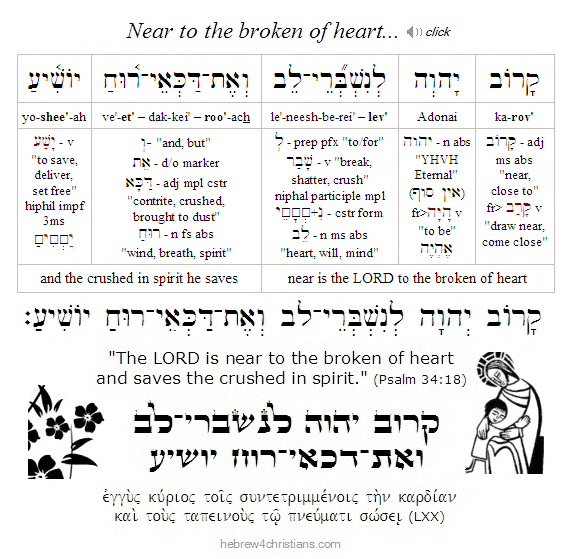
At times God may feel very close to us, "a friend who sticks closer than a brother" (Prov. 18:24), while at other times God may feel "high and lifted up," and we shrink back before his great glory, and yet both these times are present and one. The Lord is both the King of Kings and Lord of Lords, the Word made flesh who dwelt among us, the baby who upheld the universe while feeding upon his mother's breast, and the Infinite One who alone dwells in immortality and blinding light, whom no one has seen — yet he has indeed been seen! (1 Tim. 6:16; 1 John 1:1-4). The Lord is glorious beyond all description - the "glory of his train" fills heaven and earth - yet he considers the lilies of the field, he tends to the birds, and he counts the number of hairs on each of our heads. His greatness extends to the highest heights yet equally to the lowest lows. "For this is what the high and lifted up One says, the One who abides forever, whose name is Holy: 'I dwell in a high and holy place, but also with the broken and lowly of spirit, to revive the spirit of the lowly and to revive the heart of the crushed'" (Isa. 57:15).
Of course much more could be said on the topic of God's love, and what I've shared here barely scratches the surface, but I hope that at least some of what I have said might provoke you to consider these matters for yourself. One thing, however, impresses me as all-important, and that is the realization that the one thing absolutely necessary for us, namely God's unconditional love, is the one thing God says is what is necessary, after all. Our heart's deepest need is met in God's deepest passion. Amen.
Hebrew Lesson
Deut. 6:5 reading (click for audio):
 |
Teshuvah and the Gospel...
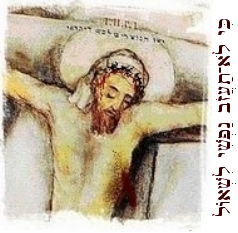
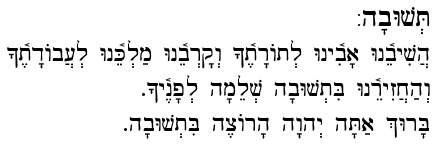
"Return us, our Father, to Your Torah; draw us near our King to serve You. Restore us to Your presence in complete repentance. Blessed are You, O Lord, Who desires repentance." - Amidah
08.22.25 (Av 28, 5785) Yeshua began his public ministry with these words: "Repent for the kingdom of God is at hand" (שׁוּבוּ כִּי מַלְכוּת הַשָׁמַיִם קָרְבָה), which indicates that the beginning of the "gospel" message is that of teshuvah (תְּשׁוּבָה), that is, responding to the invitation of God to believe in eternal life and healing (Psalm 90:3). The message is "good news" (i.e., εὐαγγέλιον) because it proclaims that the prophesied way of redemption is fulfilled in Him, the promised "Seed of Abraham," and the "Son of Man," who had come to release us from our captivity to demonic evil by becoming our atoning sacrifice upon the cross... Yeshua's vicarious sacrifice for us removes our guilt and delivers us from the law's verdict that the guilty sinner must die. As the prophets foretold, the new way to return to God - the "new covenant" - is found in Yeshua.
According to Jewish tradition the month of Elul represents the time that Moses spent on Sinai preparing the second set of tablets after the idolatrous incident of the Golden Calf. Moses ascended on Rosh Chodesh Elul ("Head of the Month of Elul") and then descended 40 days later on the 10th of Tishri, the end of Yom Kippur, when the repentance of the people was complete. The month of Elul therefore represents the time of national sin and forgiveness obtained by means of teshuvah before the LORD.
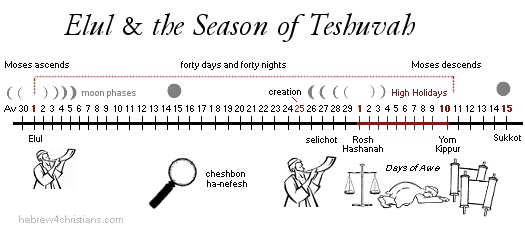 |
The month of Elul is therefore set apart for us to respond to the message of teshuvah, to take account of the soul (i.e., cheshbon ha'nefesh: חשבון הנפש), and to prepare for the fall holidays. The Alter Rebbe likened the month of Elul as a time of favor to approach our King. He used a parable to depict the season: "Before a king enters his city, its inhabitants go out to greet him and receive him in the field. At that time, anyone who so desires is granted permission to approach the king and to greet him. He receives them all pleasantly, and shows a smiling countenance to all."
"The King is in the field." He draws near to us and the hour approaches for him to be revealed. As we look for our blessed hope to be fulfilled, the sound of the great "teruah" shout ascends with the cry of the heart to be with the Lord our King. May that day come soon, and in our generation. Amen.
Hebrew Lesson
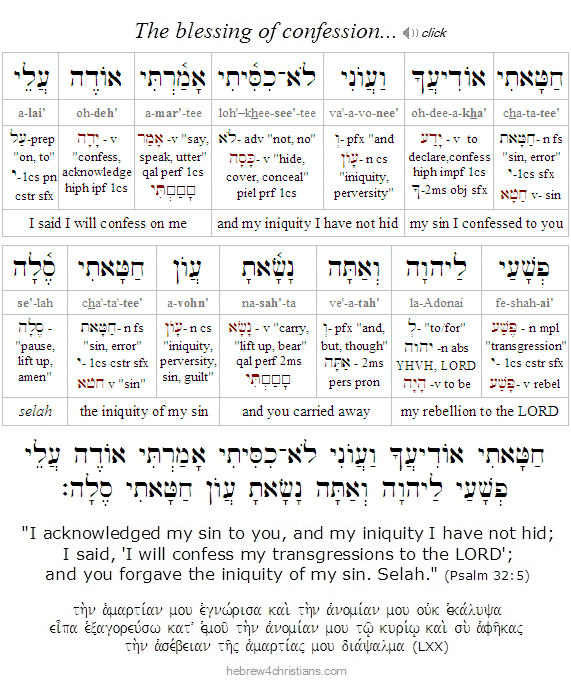
Psalm 32:5 reading (click for audio):
The Narrow Gate of Heart...
"Only the heart knows how to find what is precious." - Fyodor Dostoevsky
08.21.25 (Av 27, 5785) Knowing about God is not the same thing as personally trusting Him with your life. The difference between the mere professor and a genuine person of faith is that the latter wrestles through the pain, the ambiguity, the heartache -- yet still holds on to God's love. "Though he slay me, yet I will hope in Him." Of course this does not mean that faith is irrational, since love needs no justification. This works the other way around, too. People who refuse to trust God are seeking ways to justify their spiritual mutiny.
Simply knowing about God can lead to a sense of "distance," to theological abstractions, to dogmas and creedal formulas. More dangerously, the split between the head and heart can lead people to seek emotional satisfaction in things other than a personal relationship with the Living God. Many of our more carnal sins center on the loss of hope for love. Because of our despair, we may return to the old comforts of the flesh, instead of pressing through the immediate desire to discover our longing for eternity, that is, for God's love... I wonder how many sins have been committed because people feel homesick for eternity.
Perhaps the greatest danger is for people to become so numb that they subsist in a state of indifference, no longer concerned about questions of eternal importance. God then becomes "for other people," and the connection between their desire and their deepest need becomes entirely severed. People lose heart and then feel powerless to change. And because they give up hope, they trade their eternal passion for vain trivialities; they become more concerned about television or the outcome of some sporting event than with their eternal souls (Luke 9:25).
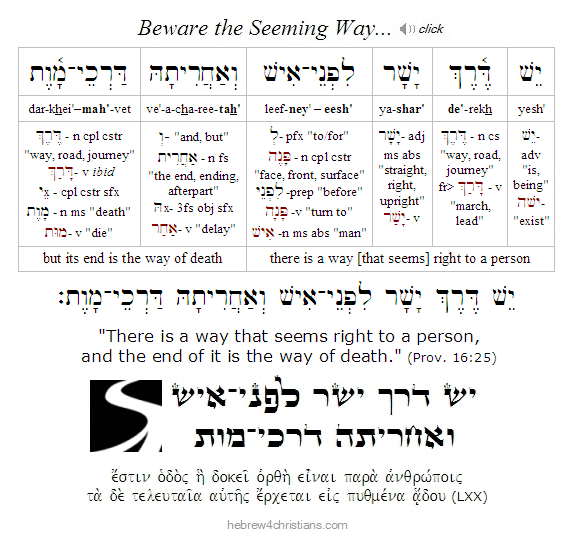
There is a way that seems right… even for professing Christians. "Enter by the narrow gate. For the gate is wide and the way is easy that leads to destruction, and those who enter by it are many" (Matt. 7:14). The Christian life is easy if it is merely regarded as "interesting" or "insightful," since then it pleases people and requires nothing in return. It is made even easier when it flatters the ego and tickles the ear in the name of spirituality or religion! However, when the demand comes, when people understand that there is a eternal obligation to authentically live in light of its truth – when they understand that there is a real cost associated with their faith – then the interest quickly fades... Taking up the cross is difficult because the flesh does not want to die... Here is a test case, a way to examine our hearts: "Love your enemies, do good to those who hate you" (Luke 6:27).
Hebrew Lesson
Proverbs 16:25 reading (click for audio):
 |
The Wheel of Faith...
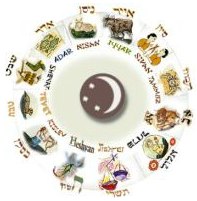
"Every Jew should think of himself as having come out of Egypt." - Traditional Haggadah
08.21.25 (Av 27, 5785) Our Torah reading for this week (i.e., Re'eh) concludes wtih the commandment to make three "pilgrimage festivals" (i.e., shelosh regalim) each year: Passover, Shavuot (Pentecost), and Sukkot (Tabernacles).
In the Torah, these "holidays" are called "appointed times" (i.e., mo'edim: מוֹעֲדִים), a word which comes from a root meaning witness (עֵד). Other words formed from this root include edah (עֵדָה), a congregation, edut (עֵדוּת), a testimony, and so on. The related verb ya'ad (יָעַד) means to meet, assemble, or even to betroth.
The significance of the holy days, then, is for the covenant people of the LORD to bear witness to God's love and faithfulness by revisiting our history and by looking forward to their ultimate fulfillment, that is, the heavenly reality the holidays adumbrate. Meanwhile we trust in God's prophetic plan as revealed in the holy calendar, and observe the seasons as he has commanded. As it says in our songs: "All the paths of the LORD are compassion and truth to those keeping His covenant and His testimonies" (Psalm 25:10).
כָּל־אָרְחוֹת יְהוָה חֶסֶד וֶאֱמֶת
לְנצְרֵי בְרִיתוֹ וְעֵדתָיו

"All the paths of the LORD are compassion and truth
to those keeping His covenant and His testimonies."

Hebrew Study Card
Metaphorically the "paths of the Lord" (i.e., orchot Adonai: אָרְחוֹת יְהוָה) are likened to ruts or grooves created by the wheels of a caravan (i.e., orchah: אוֹרחָה) passing repeatedly over the same ground. These paths signify the Divine Presence journeying with God's children in this world. In temporal terms, we are able to discern the path by means of the divine calendar that we observe every year.
God's love and faithfulness attend to His covenant (i.e., brit: בְּרִית, "pledge" or promise) and to the commemorations of the yearly "appointed times" (i.e., mo'edim: מוֹעֲדִם) which testify of His love and faithfulness. Keeping God's testimonies, then, means knowing what time it its - and to observe the biblical holidays in order to attest to God's truth...
Hebrew Lesson
Psalm 25:10 Hebrew reading (click):
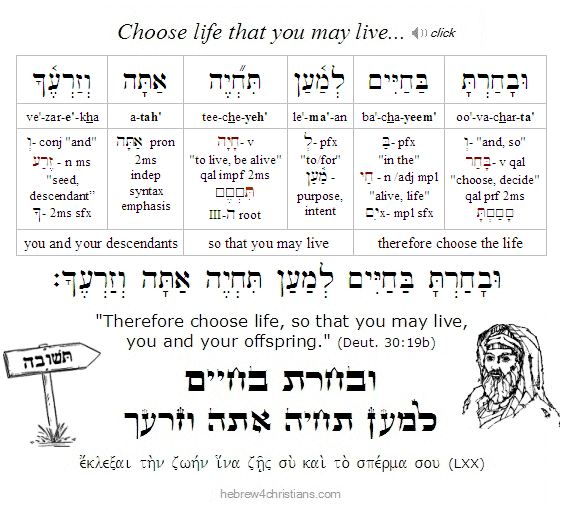
An early "Shababt Shalom," friends. May this coming Season of Teshuvah be one wherein we all draw closer to the LORD our God... Choose life and blessing! Amen.
Teach us to Pray...
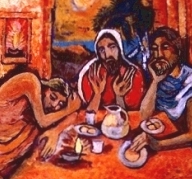
Prayer is not what is done by us, but rather what is done by the Holy Spirit within us.
08.20.25 (Av 26, 5785) There is only once place in the New Testament where the disciples asked Yeshua to teach them something, and that was when they said, "Lord, teach us to pray" (Luke 11:1). Yeshua then responded by giving them a pattern of prayer that's been called "the Lord's Prayer," though it's better to think of it as a model for prayer instead of a formulaic petition to recite. After all, the disciples asked "Teach us to pray," not "teach us a prayer," as if a special prayer could serve as a sort of incantation to propitiate God.
Yeshua points us to the Father. He did not suggest using traditional rabbinical expressions such as "Barukh attah Adonai," "Ribbono shel Olam," or "Elohei Avoteinu," nor did he endorse praying three times a day as decreed by the elders of the Great Assembly. No, Yeshua taught us to come to God using the simple word "Father." This is the language of familiar intimacy that expresses the trust a young child has for his earthly father.
So Yeshua teaches us to pray in heartfelt confidence that God is our caring heavenly Father, and this implies that we understand and regard ourselves as his beloved children. God has manifested himself as Father to us, and our prayers should evince our faith that we are His children in return. We have access to God's heart in a direct and meaningful way.
As God's beloved children, we are to honor and our heavenly Father and to esteem his will and vision for our destiny. "Holy is Thy name"; "Thy will be done"; "Thy kingdom come" - all these matters come before requests for our "daily bread" -- and even before matters of our need for forgiveness of sin. Our course God cares for our daily needs, our forgiveness, our deliverance from evil, and so on, but Yeshua concentrates our focus on the Father and our identity as his children first of all. Da lifnei mi attah omed: "Know before whom you stand."
Regarding our personal petitions, it is wise to understand that your Heavenly Father gives what you need, not what you may want at the time. "Ask and it shall be given you" means "keep on asking" (Luke 11:9). If a recurring request seems to go unanswered, remember that initial barriers are not necessarily refusals but are meant to yield what is best for you (Rom. 8:28). We can be confident, however, that God hears us when we pray and that he gives "good gifts" to those who ask Him (Matt. 7:11) -- in particular, gifts of the Holy Spirit (Luke 11:13). God gives wisdom to those who ask for it (James 1:5) and imparts the "spirit of wisdom and revelation to know him better" (Eph. 1:17). If we ask in accordance with his will, that is, in matters of our great need for him, then we have confidence that he will act on our behalf (1 John 5:14-15). These are "spiritual blessings in heavenly places" representing the deepest need of our hearts.
We are instructed to "present ourselves to God as those who are alive from the dead" (Rom. 6:13), indicating that we are to come confident of his acceptance because of what Yeshua has done on our behalf. We are "crucified with Christ" (Gal. 2:20) and partake in his resurrection life. In the Torah the "daily sacrifice," or korban tamid (קָרְבַּן תָּמִיד), was offered to the LORD every morning and evening upon the altar, which corresponds to being a "living sacrifice" (i.e., korban chai: קָרְבָּן חַי) to the LORD (Rom. 12:1-2). We are to "pray without ceasing," which means living what we believe in all that we do, with nothing unsaid in our faith. We take up our cross daily (Luke 9:23). We come "boldly" before the throne of grace. We are made "alive from the dead" to access God's presence and heart for us at all times. We have been made new creations, members of God's household, esteemed, eternally beloved....
"Take my soul and body's powers;
take my memory, mind and will;
All my goods, all my hours;
All I know, and all I feel;
All I think, or speak, or do;
take my heart - and make it new."
- Charles Wesley
Hebrew Lesson
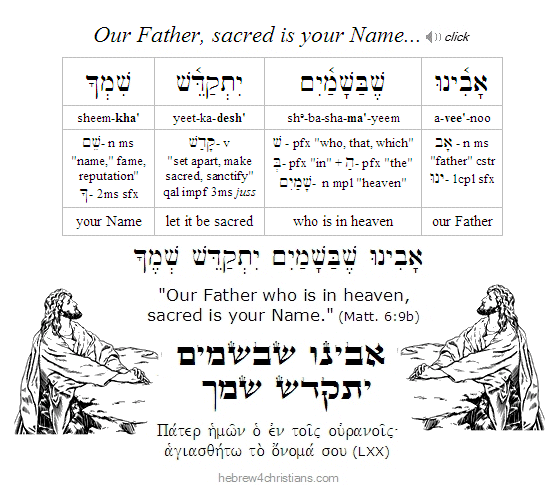
Matthew 6:9b reading (click):
The Power of God for Life...
"I am not ashamed of the gospel of Christ, for it is the power of God to salvation." - Rom. 1:16
08.19.25 (Av 25, 5785) Only the power of God heals us from the sickness of death and imparts within us ζωὴ αἰώνιος - a radically new kind of life (2 Cor. 5:17). "Jesus saves" is not a cliché for the faith but the sober truth of reality. It is by our union or identification with Him, by the agency of the Holy Spirit, that we are imparted new existence, true spiritual being, that is not subject to the natural law of sin and death (Col. 3:9-11). No other religion or world philosophy solves the essential problem of spiritual death and our separation from a holy God salvation on account of our sin; no one other than Yeshua gives us eternal life....
Being "in Messiah" means you are "justified," that is, declared righteous by God, and that you therefore set free from the bondage of "being unto death." You partake and share in the life (relationship) of God because of his redeeming love: you are "adopted" by God, made a member of his "household," and attain the inheritance of which is eternal life.
The Spirit within you cries out "Abba, Father" to God, for He is the one who watches over you and leads you through your days of sojourn here on earth (Rom. 3:32). Despite walking through the shadowy byways and tribulations of this world, you trust that your Father is with you, working all things for your ultimate good (Rom. 8:28). You are no no longer benighted by the world's godless thoughts and vanities. You know who you are, where you are going, and what your destiny is because of Yeshua our Lord.
We must always remember the gospel message and meditate on its implications, for it is is the power of God (גְּבוּרַת אֱלֹהִים) for salvation to all who are called to know the truth. This is what we truly need, after all, for we are powerless to save ourselves. Yeshua is not far away, a distant hope, but as near as the heart and tongue that confesses who he truly is (Rom. 10:6-11). Unlike other religions and philosophies that vainly hope that things will work out in the end, the follower of Yeshua understands that He is alive and present in this very moment, sustaining us and imparting the power of his presence to be manifest within us. There is no need for us to passively wait in vain hope for the deep healing and life we so desperately need. Those who belong to Him "are are kept by the power of God through faith for salvation ready to be revealed in the end of days" (1 Pet. 1:5).
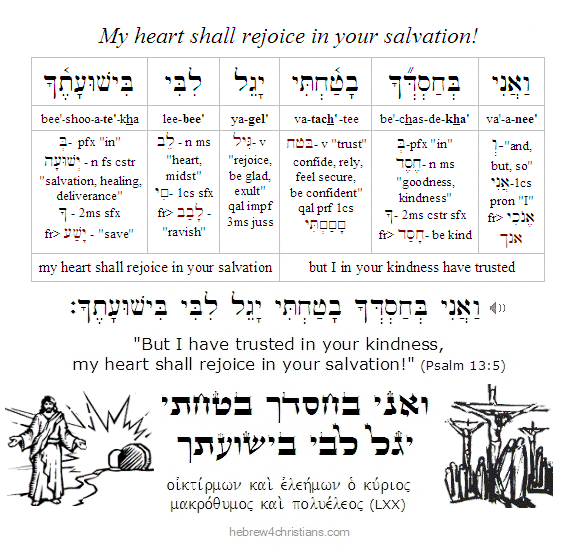
Hebrew Lesson
Psalm 13:5 reading (click):
 |
Believing and Seeing...
"In faith there is enough light for those who want to believe and enough shadows to blind those who don't." - Blaise Pascal
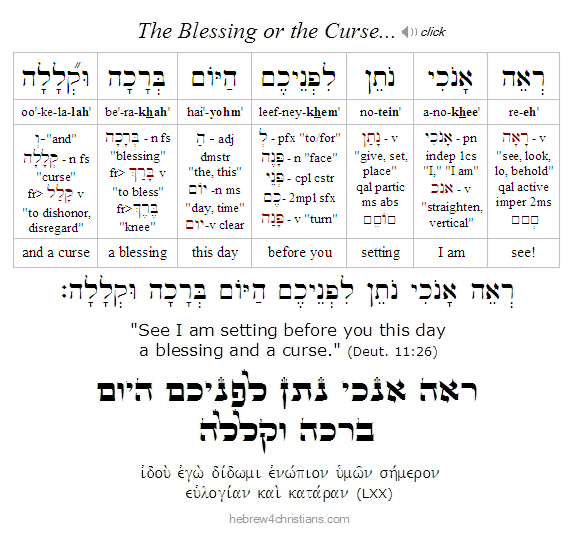
08.19.25 (Av 25, 5785) This week's Torah portion is about seeing. It begins with the imperative to understand the implications of our choices: "See (רְאֵה), I set before you today a blessing and a curse..." (Deut. 11:26). Moses challenges us to think clearly about the choices that lie before us and to choose the way of life and blessing.
Some concerns in life present mutually exclusive options, and everything is affected by what you will ultimately choose. Soren Kierkegaard, however, warned that many people opt out of making serious decisions by lethargy and procrastination. He writes: "Cowardice settles deep in our souls like the idle mists on stagnant waters. From it arise unhealthy vapors and deceiving phantoms. The thing that cowards fears most is decision; for decision always scatters the mists, at least for a moment. Cowardice thus hides behind the thought it likes best of all: the crutch of time. Cowardice and time always find a reason for not hurrying, for saying, "Not today, but tomorrow," whereas God in heaven and the eternal say: "Do it today. Now is the day of salvation." Indeed, dhoosing not to choose is itself a choice, and the moment calls for an immediate response. As Joshua said in the "valley of decision" to all of Israel: "Chose this day whom you will serve!"(וְאָנֹכִי וּבֵיתִי נַעֲבֹד אֶת־יְהוָה).
Making a non-trivial choice is a matter of consequence that echoes throughout your life. In this connection note that the Hebrew word for seeing (i.e., ראה) and the word for fearing (i.e., ירא) share the same root, suggesting that we cannot truly see apart from the reverence of God.
Some people say "I'll believe it when I see it," but the heart of faith believes in order to see... You will see it as you believe. "There are only two ways to live your life," Albert Einstein said, "one is as if nothing is a miracle; the other is as if everything is a miracle." The gift of seeing the truth of God is a miracle on the order of being born again. Regarding his conversion C.S. Lewis said, "I believe in Christianity as I believe that the sun has risen. Not only because I see it, but because by it I see everything else." If you believe in the love of God there are no questions; but if you refuse to believe, there are no answers.
"You teach," said Emperor Trajan to Rabbi Joshua, "that your God is everywhere, yet I cannot see him." Joshua said that unlike human kings, the LORD was too powerful for people to see; as it is written in the Torah: "No person shall see Me and live." The emperor was skeptical, however, and insisted that unless he could see God, he would be unable to believe. Joshua then pointed to the sun high in the sky: "Look into the sun and you will see God." The emperor tried to look into the sun, but was forced to cover his eyes to keep them from burning: "I cannot look into the sun," he said. Joshua then replied: "Listen to yourself: If you cannot look into the sun which is but one of God's creations, how can you expect to look at God?" (Sefer HaAggadah)
It's been said that the optimist believes this is the best of all possible worlds; whereas the pessimist is afraid that the optimist is right... Faith is the foundation for everything, and indeed, there can be no knowledge of anything whatsoever apart from faith. It is therefore supremely important for us to think clearly about our faith, since what we believe about God has eternal implications...
Hebrew Lesson
Deut. 30:19b reading (click):
Daily Dvar Podcast:
Torah of the Good Eye...

08.19.25 (Av 25, 5785) The way we choose to see is ultimately a spiritual decision. In this "Daily Dvar broadcast, I discuss the "Torah of the Good Eye" and the spiritual need to seek goodness in everyday reality. I hope you will find it helpful. Links are below.
Linked Podcasts:
The Place of God...
08.19.25 (Av 25, 5785) From our Torah portion this week (i.e., Re'eh) we read: "But you shall seek the place (הַמָּקוֹם) that the LORD your God will choose... there you shall go" (Deut. 12:5). This indicates the primacy of seeking: you must first seek "the place" and then you can go up (Matt. 6:33). The sages note that the gematria for this verse is the same as "You shall lay up these words of Mine in your heart and in your soul" (Deut. 11:18), which teaches that the Divine Presence, "HaMakom" (הַמָּקוֹם), is manifest within the place of our hearts...
If we seek God with all our hearts we will "come there," and we will find Him there. Our yearning for God leads us to the place of His Presence, as it says: "Open to me the gates of righteousness (שַׁעֲרֵי־צֶדֶק), that I may enter through them and give thanks to the LORD" (Psalm 118:19). It is our heartache, our hunger, thirst, and our yearning for love that opens the gate to come before God. Praise the LORD - His heart is the place we truly need.
Hebrew Lesson
Exodus 25:8 reading (click):
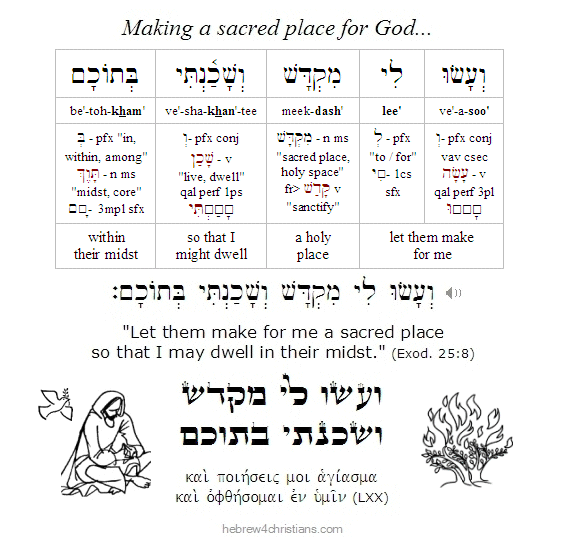 |
Of the "Place of God" (הַמָּקוֹם) the Torah says "that I may dwell in their midst" (Exod. 25:8), which can be translated as "that I may dwell within them," indicating that the point of the Tabernacle was to bring God within the hearts of His people... We must create a place within our hearts, in other words, for God to dwell within us. Yeshua likewise told us that we would experience peace and joy when we "abide in Him." Note that the numeric value of the word mishkan (מִשְׁכָּן) is the same as the word shema (שְׁמַע), "hear" or "listen" (Deut. 6:4). When we really stop to listen to the LORD, we will find His glorious and loving Presence...
God's Covenant Love...
08.19.25 (Av 25, 5785) The weekly "haftarah" portion (i.e., reading from the Prophets) is usually thematically connected with the weekly Torah portion; however, beginning with the Fast of the Fourth month until the end of the Jewish year, the connection changes. First we always read three prophetic portions of rebuke leading up to the fast day of Tishah B'Av. Then, following Tishah B'Av, and for the next seven weeks leading up to Rosh Hashanah (i.e., the new year), we read selections of comfort that foretell of the future redemption of the Jewish people and the coming Messianic Era.
The third of the "Seven Weeks of Comfort" that lead up to Rosh Hashanah is called Aniyah so'arah (i.e., עֲנִיָּה סעֲרָה, "O afflicted and storm-tossed one," Isa. 54:11-55:5), which reminds the Jewish people of God's eternal and unconditional covenant of peace. It begins: "O afflicted and storm-tossed one, and not comforted, Behold, I will set your stones in fair colors, and lay your foundations with sapphires" (Isa. 54:11). Nearly all of the Jewish commentators relate this great promise of coming comfort to Jerusalem. The Targum Yonatan says, "the walls about which the nations of the world said that you would never be comforted, the LORD says, "I will lay its foundation with sapphires."
Amen, the LORD our God will fulfill the promise of the New Covenant originally given to ethnic Israel, the Jewish people: "All your children shall be taught by the LORD, and great will be the peace of your children" (Isa. 54:13). In the coming Millennial Kingdom, Israel shall dwell securely, free from oppression. Unlike Nebuchadnezzar who was commissioned to bring judgment from the LORD, the enemies of Israel (Gog/Magog) will have no divine sanction and therefore be utterly defeated before the appearance of Yeshua the Mashiach. "No weapon that is fashioned against you shall succeed, and you shall confute every tongue that rises against you in judgment. This is the heritage of the servants of the LORD and their vindication from me, declares the LORD" (Isa. 54:17).
The LORD then invited the Jews to drink freely from the waters of life. "Incline your ear, and come to me; hear, that your soul may live; and I will make with you an everlasting covenant (בְּרִית עוֹלָם), my steadfast, sure love for David (Isa. 55:3; Luke 1:68-75; Acts 13:34). Radak understands this to refer to the time of the Messiah, when the everlasting kindness (chesed) that the LORD showed to David will be revealed in the greater Son of David. The Messiah is the witness (עֵד) to the peoples, a leader (נָגִיד) and commander for the peoples (Isa. 55:4). He will cause the nations of the earth that survived the Great Tribulation to come to Zion because of the glory God has bestowed upon the Jewish people (Isa. 55:5).
Hebrew Lesson
Isaiah 54:5 Hebrew reading (click):
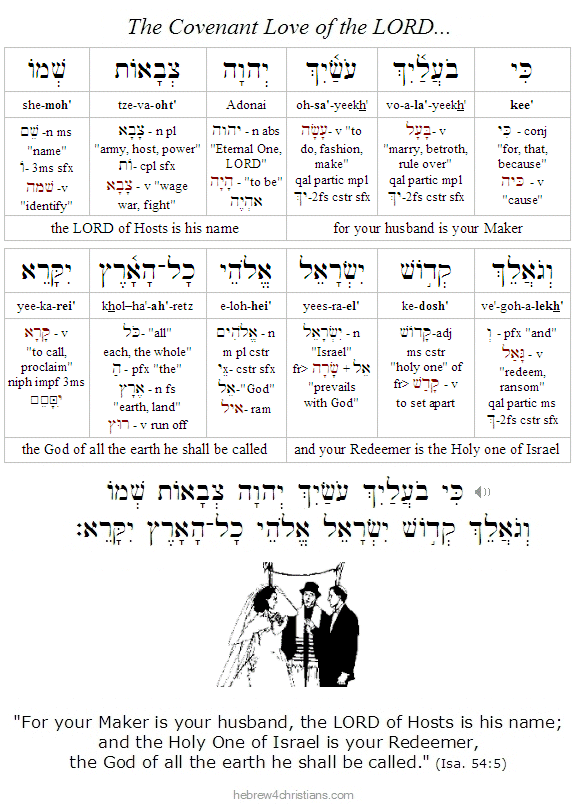 |
Remember who you are...
"Self-rejection is the greatest enemy of the spiritual life because it contradicts the sacred voice that calls us the Beloved..." - Henri Nouwen
08.18.25 (Av 24, 5785) One of the greatest mistakes is to forget who you really are and your beloved status before the LORD... The Spirit of God entreats: "Fear not, for I have redeemed you; I have called you by name, you are mine" (Isa. 43:1). Because we are small of faith, we tend to rely on the immediacy of experience and overlook what is ultimately real. There is danger in our lack of focus. Forgetting who you are leads to forgetting who the LORD is, just as forgetting who the LORD is leads to forgetting who you are...
In our Torah portion this week (i.e., parashat Re'eh) we read: "You are children of the LORD your God (בָּנִים אַתֶּם לַיהוָה אֱלהֵיכֶם); you shall not cut yourselves for the dead" (Deut. 14:1). Here Moses reminds the people that they are children of the Eternal (יהוה) and therefore they were not to mourn for the dead like those without hope of life beyond the grave... Our God, the Father of Israel, is the Source of Life, and even if our earthly fathers die, we will never be orphans, because the LORD, the Everlasting God who is the "God of the spirits of all flesh" (אֱלהֵי הָרוּחת לְכָל־בָּשָׂר), always watches over us: "He will not let your foot be moved; he who keeps you will not slumber" (Psalm 121:3).
If, on the other hand, we forget who we are, if we lose sight of our place in the Heavenly Father's heart, then we are likely to fall into a state of excessive and self-destructive mourning over the losses we experience in this world. In the most tragic cases, this can lead to the darkness of unremedied despair, "living among the tombs, crying out and cutting himself with stones" (Mark 5:5). On the other hand, if remember our place at the Father's table as his children, if we take hold that we are beloved of God - his very own "treasured people" (i.e., am segulah: עם סגלה) - then we will regard the difficulties we encounter in this world as a test of faith intended for our good (Deut. 8:3,16, Jer. 29:11).
God regards us as his beloved children, and therefore we trust him as a child trusts his father. We may not always understand all that our father does, but we have complete faith in his good will toward us, even in the face of death itself. We do not engage in self-destructive mourning, then, because we are treasured by God and we trust in God's promises for eternal life (John 11:25). Because of this, Jewish halachah (legal custom) puts limits to grieving practices. Excessive mourning, interminable gloom, self-destructive anger, or the refusal to let go of our fear may indicate a lack of faith in God's care as our Father. Remember where it says "God works all things together for good," for that includes even physical death... Let us therefore "hope to the LORD (קַוֵּה אֶל־יְהוָה); be strong and strengthen our heart; and (again) let us hope to the LORD" (Psalm 27:14).
Hebrew Lesson
Isaiah 43:1b reading (click):
 |
Today is the Day...
"The reward for doing one mitzvah is the opportunity to do another mitzvah." - Avot 4:2
08.18.25 (Av 24, 5785) It is written in our Torah portion this week (Re'eh), "Behold I am setting before you this day a blessing and a curse" (Deut. 11:26). The Hebrew for "I am setting" is a present active participle (נֹתֵן), however in context we might have expected for it to be written in the past tense: "I have set (נָתַתִּי) before you this day..." The Vilna Gaon said this shows us that Torah is written for the present time and God constantly gives us choices, day by day, hour by hour, wherein we may choose the good and reject the evil, or conversely that we may choose the evil and reject the good.
The admonition to "choose life" therefore is ongoing and inevitable. As Jean-Paul Sartre said, "man is condemned to be free," since people cannot deny their responsibility to choose apart from "bad faith," by which he meant passively playing the victim by blaming their circumstances or letting other people chose for them... Our present choice is ours to make for this hour, and it is not based on the past nor in the future. The blessing (or curse) is presented "this day," that is, the day of your present reality, and it is therefore your opportunity to "seek first the kingdom of God and his righteousness" and to "take no thought of tomorrow," as Yeshua taught (Matt. 6:33-34).
Note that the blessing (i.e., ha'berakhah: אֶת־הַבְּרָכָה) is realized if you "hearken" (i.e., shema: שׁמע) to God's commandments and do them (the direct object marker (את) signifying Yeshua, the First and the Last, precedes the blessing), which indicates that the keeping of God's commandments is the blessing itself, substantiating that you are loyal to God's will.
Rabbi Nachman of Breslov commented that God sends blessings every day, undifferentiated and given for all people, just as Yeshua said, "Your heavenly Father makes the sun to rise on the evil and on the good, and sends rain on the just and on the unjust alike" (Matt. 5:45). God's blessing descends upon all, but it is up to the individual to receive it, just as the manna fell silently in the darkness but later was to be collected before it would melt away... Amen. Blessed are the pure in heart, Yeshua said, for they shall see God (Matt. 5:8).
Hebrew Lesson
Psalm 118:24 reading (click):
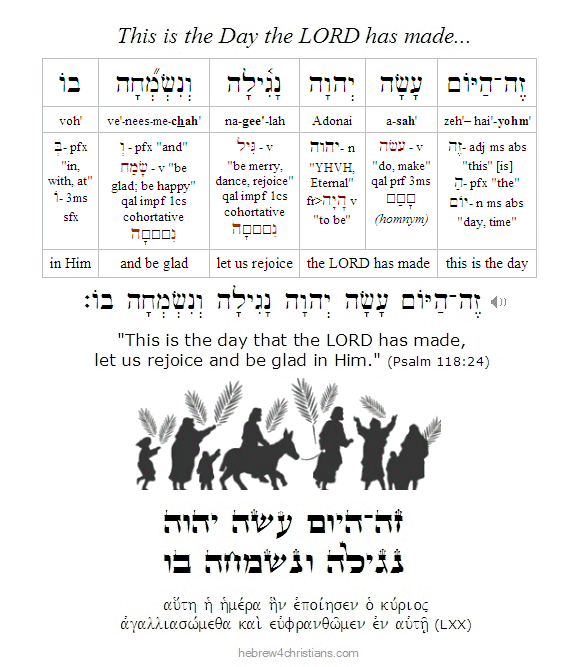 |
Connection with God...
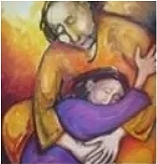
08.18.25 (Av 24, 5785) "And now, Israel, what does the LORD your God require of you, but to fear the LORD your God, to walk in all his ways, to love him, to serve the LORD your God with all your heart and with all your soul, and to keep the commandments and statutes of the LORD, which I am commanding you today for your good?" (Deut. 10:12-13).
Ultimately we must make the choice whether we will respect life or not, since that is the question set before us... In this present world, God "hides" so that people may seek him (Isa. 45:15; Matt. 13:10-15). The voice of conscience may be suppressed and the revelation of nature ignored; moreover, some things are perceived only if they are looked for in the right way, for instance, the Divine Presence is not apprehended apart from humility and reverence. We must "make room" for wonder; we must open the "eye of the heart" to see what is greater than our everyday vision.
"It is good to look at the sky often, as this helps develop the awe of God." Indeed the word for fear, yirah (יִרְאָה), is connected with the word for seeing, ra'ah (רָאָה). When we really see life as it is, we will be filled with wonder over the glory of it all. Every bush will be aflame with the Presence of God and the ground we walk upon shall suddenly be perceived as holy (Exod. 3:2-5). Nothing will seem small, trivial, or insignificant. In this sense, "fear and trembling" (φόβοv καὶ τρόμοv) before the LORD is a description of the inner awareness of the sanctity and eternal significance of life itself (Psalm 2:11, Phil. 2:12).
Connecting with God is paradoxical. We find verses in our Scriptures that teach both the fear of the Lord (i.e., his power), and others that teach the amazing love of the Lord (i.e., his grace). We are drawn to God in adoration, appreciation, wonder, and love, and yet we are compelled to shrink back because of His overwhelming power, glory, holiness, and radiance. Therefore we see "the disciple whom Jesus loved" both leaning on his chest but also falling on his face in "dreadful adoration" (John 13:23; Rev. 1:17). Only when these heart attitudes are combined is the heart balanced. Nevertheless the fear of the Lord is primary (see Psalm 111:10; Prov. 1:7, 9:10), and when we walk in it, we are released from the common fears of men by apprehending a far surpassing power and glory that overrules all things. Again, it is a paradox: if we fear lesser things we lose sight of the awe of God; but if we first revere God, we will lose sight of lesser fears.
In Jewish tradition, seeing the Presence of God in all things is called yirat ha-rommemnut (יִרְאַת הָרוֹמְמוּת), or the "Awe of the Exalted." We might get a sense of this reverential awe when we behold the canopy of stars in the night sky, or when we look down from atop a mountain peak, or when we catch site of a spectacular sunset. Or we might experience it during the birth of a baby or the death of a loved one... This sense of awe or "transcendent mystery" is also called yirat Adonai (יִרְאַת יְהוָה), the "fear of the Name." It presents a holy hush, a feeling that you are standing before something utterly wonderful, sacred, set apart, mysterious, and profoundly significant; it both attracts yet causes you to draw back...
Hebrew Lesson
Deuteronomy 8:6 reading (click):
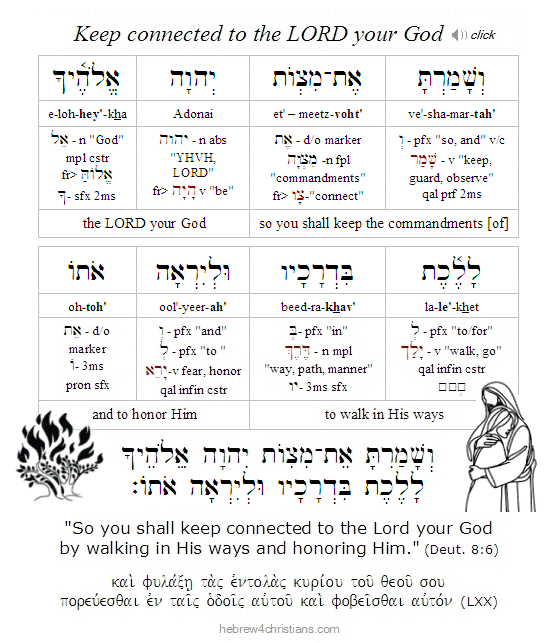 |
Deliver us from evil...
"God is present in the moment of choice, not in order to watch but in order to be chosen. Therefore, each person must choose. Terrible is the battle, in a person's innermost being, between God and the world. The crowning risk involved lies in the possession of choice." - Kierkegaard
08.18.25 (Av 24, 5785) There is the great danger of squandering and dissipating our lives... Be grateful, then, for afflictions that bring us the place of decision and move us inward. Examine yourself; consider what really moves you. Be careful not to deceive yourself by "reasoning around the truth" (i.e., παρα + λογίζομαι), as James the Righteous puts it (James 1:22). Many people fool themselves by assuming they know or understand what is good, but they confine this ideal to a matter of opinion rather than experiencing it as a matter of the will (or they confuse their opinion of the ideal with what is real).
There is something worse than death that should concern all people, however, and that is discovering that, upon your death, you had missed what is most important, that you sold your soul for vanities, and that you never learned the true reason for your existence...
Some of the ancient Greek philosophers assumed that moral evil was the result of ignorance, and that simply knowing the good would lead to doing the good. For example Socrates states (in the Protagoras) that no one knowingly does the wrong thing, and therefore all evil is the result of ignorance. He argued this way because he assumed that doing wrong harms the soul, and since no one willingly acts against his own interests, wrongdoing must be result of ignorance. This optimistic view implies that the answer to the problem of moral evil is "education," or leading people out of the dark cave of their lower nature to experience the light of reason. If we just really understood why doing this or that sinful thing hurts us, we would change our ways and repent, or so the theory goes... Alas, human experience proves that such "head knowledge" often does not change the way we choose, and we all know people who have habits they realize are harmful but continue to indulge in them anyway.
There may be some truth to the idea that evil is a matter of ignorance however, since ignoring what is good, being indifferent, apathetic, and cynical, is a defect of character (ἀκρασία), and learning to be honest, upright, courageous, unselfish, and so on, requires personal struggle to make the "ought" of moral reality an expression of the "is" of inner life. What is often most shocking about moral evil is that it expresses apathy or indifference toward the objections of conscience. Moral evil is essentially heartless and devoid of empathy, a state of cold-heartedness and callousness for the feelings and dignity of others.
According to the Jewish philosopher Hannah Arendt, the lack of moral thought and reflection creates what she called the "banality of evil," that is, the unthinking acceptance of evil so that it is no longer regarded as outrageous or strange. People deaden their conscience by refusing to honestly engage questions such as: "What is goodness?" "Is evil real?" "Do we have an obligation to observe moral truth?" "What is the good life?" "How should we live?" "Do our actions really matter?" "Will God judge my life?" and so on. On the other hand, our culture has been so shocked by the ongoing practice of lawlessness that people have lost their sense of shame. We are no longer outraged when we hear of the latest crimes or abuses of power in our postmodern world.... We must be careful, however, not to become evil by despising what is evil. For instance, we may feel so outraged and threatened by the evil actions of others that we deny their humanity, thereby becoming the very thing we hate.
"The heart is deceitful above all things and desperately sick; who can understand it?" (Jer. 17:9). "Oh there is nothing as deceitful and as cunning as a human heart, resourceful in seeking escapes and finding excuses; and there surely is nothing as difficult and as rare as genuine honesty before God." (Kierkegaard: Discourses). Therefore we pray: "Heal me, O LORD, and I shall be healed; save me, and I shall be saved. Be not a terror to me; you are my refuge in the day of evil" (Jer. 17:14, 17).
Hebrew Lesson
Jeremiah 17:14 reading (click):
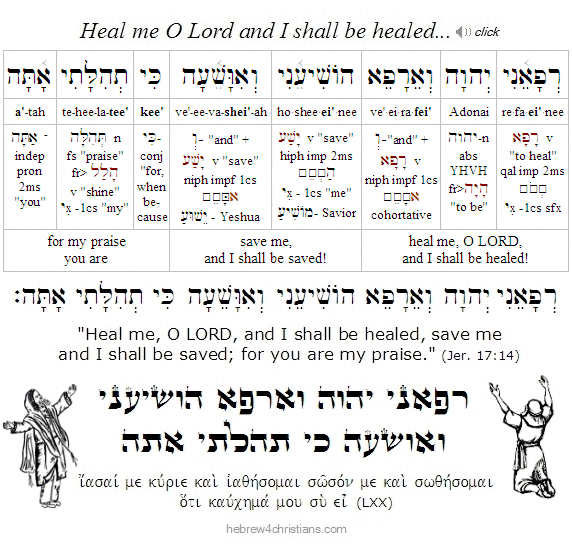 |
The 40 Days of Teshuvah...
08.17.25 (Av 23, 5785) The last month of the Jewish calendar (counting from Tishri) is called Elul (אֱלוּל), which begins at sundown on Saturday, August 23rd this year. Traditionally, Rosh Chodesh Elul marks the beginning of a forty day "Season of Teshuvah" that culminates on the solemn holiday of Yom Kippur. The month of Elul is therefore a time set aside each year to prepare for the Yamim Nora'im, the "Days of Awe," by getting our spiritual house in order.
During this time we make additional effort to repent, or "turn [shuv] toward God." In Jewish tradition, these 40 days are sometimes called Yemei Ratzon (יְמֵי רָצוֹן) - "Days of Favor," since it was during this time that the LORD forgave the Jewish nation after the sin of the Golden Calf (Pirke d'Reb Eliezar). Some of the sages liken these 40 days to the number of days it takes for the human fetus to be formed within the womb.
The advent of the "Season of Teshuvah" (עונת התשובה) reminds us that we all fail, that we all are broken people, and that errors and mistakes are part of our daily spiritual life... We journey toward humility and compassion rather than struggle for perfection; we confess our need for forgiveness and seek reconciliation with all those we might have harmed... During this season it is common enough to hear messages about our need to turn and draw near to God for life, but it is equally important to remember that God turns and draws near to the brokenhearted for consolation. As it is said, the Lord is near to the nishbar lev (נִשְׁבָּר לֵב), the one with a broken and crushed heart (Psalm 34:18).
Brokenness is the means through which God performs some of His deepest work within our hearts. A.W. Tozer once said, "It is doubtful whether God can bless a man greatly until he has hurt him deeply." Likewise Alan Redpath once wrote, "When God wants to do an impossible task, he takes an impossible individual – and crushes him." William James called this deep work of the spiritual life Zerrissenheit, a term that roughly can be translated as "torn-to-pieces-hood," or a state of being utterly broken and in disarray... The brokenhearted live in day-to-day dependence upon God for the miracle...
"Resolved, to act, in all respects, both speaking and doing, as if nobody had been so vile as I, and as if I had committed the same sins, or had the same infirmities or failings as others; and that I will let the knowledge of their failings promote nothing but shame in myself, and prove only an occasion of my confessing my own sins and misery to God." - Jonathan Edwards
Hebrew Lesson
Psalm 34:18 Hebrew reading (click):
Note that the word "Elul" (אֱלוּל) may be read as an acronym for the phrase,
ani le'dodi ve'dodi li (אֲנִי לְדוֹדִי וְדוֹדִי לִי), "I am my beloved's, and my beloved in mine"
(Song 6:3), to encourage to us become full of desire for the Beloved of our soul...
Parashat Re'eh:
The Blessing or the Curse...
08.17.25 (Av 23, 5785) Our Torah portion for this week (i.e., parashat Re'eh) begins, "See (רְאֵה), I give before you today a blessing and a curse: the blessing (הַבְּרָכָה), if you obey the commandments of the LORD your God, which I command you today, and the curse (הַקְּלָלָה), if you turn aside from the way that I am commanding you today, to go after other gods that you have not known" (Deut. 11:26-28).
We obtain God's blessing (i.e., berakhah: בְּרָכָה) when we obey the LORD, and our decision to obey manifests the blessed state of walking before the Divine Presence (the direct object marker et (את) before the word "the blessing" alludes to the blessings of "Aleph to Tav," that is from Yeshua, as described in Lev. 26:3-13). As King David said, "I have set (שִׁוִּיתִי) the LORD always before me..." (Psalm 16:8). David made a choice to "set" the LORD before his eyes, for he understood that opening his eyes to Reality was the only path of real blessing.
On the other hand, we obtain God's curse (i.e., kelalah: קְלָלָה) when we close our eyes and "forget" that the LORD is always present.... Suppressing God's truth invariably leads to idolatry, that is, to self exaltation. Note that the root word for the word "curse" (kalal) means to be treated as of little account, and therefore "ratifies" the rebellious heart's attitude toward God. This is middah keneged middah - we are ignored by the LORD as we ignore Him, just as we seen by Him when we truly seek His face (Isa. 55:6-7).
So we see that the blessing or the curse really comes from our own inward decision, and God establishes the path we have chosen. As King David said, "God supports my lot" (Psalm 16:5), and Solomon wrote: לב אדם יחשׁב דרכו ויהוה יכין צעדו - "The heart of man plans his way, but the LORD directs his steps" (Prov. 16:9).
Hebrew Lesson
Deut. 11:26 reading (click):
Note: Some of the sages say this admonition constitutes a severe reprimand of the immaturity of the people. Forty years after receving the Torah at Sinai and the people still need to be cajoled like children with promises of rewards and threats of punishments? Those who are mature in their faith recognize good and evil for what they are: they seek the good because it is the way of truth and life. It is a sign of carnality to seek God because of the manna he provides rather than to seek him as the giver of life itself....
Wounds of Loneliness...
"Any time you are with anyone or think of anyone you must say to yourself: I am dying and this person too is dying, attempting to experience the truth of the words you are saying." - de Mello
08.15.25 (Av 21, 5785) The late Henri Nouwen once said that there are two great fears (or wounds) that we all face. The first is the fear that we were not wanted at the time of our birth into this world, and the second is that we will not be wanted at the time of our death. "Not being welcome is your greatest fear. It connects with your birth fear, your fear of not being welcome in this life, and your death fear, your fear of not being welcome in the life after this. It is the deep-seated fear that it would have been better if you had not lived" (Inner Voice of Love). If you carry a wound of abandonment within your heart - if you live in dread over your worth as a human being, seriously wondering whether it would have been better had you never been born, then you know the taste of hell itself - the emotional prison of feeling lost, defective, rejected, shameful - unable to love or to be loved...
Is not the lament of the lonely heart to find a sense of welcome, or acceptance, or peace within? Is it not the heart's cry for connection? Yet even the very gospel message cannot make traction within a heart lost to its own shame... Therefore the miracle of salvation is profoundly connected with faith that you are loved and lovable - despite yourself - and that this love derives from the core of all that truly exists. Is this not "home" in the spiritual sense? Is this not "Zion, the perfection of holiness?" That God prepares a table for you in the presence of your enemies, yea, those enemies of self-rejection, abandonment, fear, and shame? And that there - in the midst of your lost and forlorn condition you are found, treasured, and celebrated? Is not that "place" God's very heart - Jesus dying upon the cross, gasping for each breath - knowing everything about you and loving you anyway?
In our Torah reading this week (Eikev), Moses asks us to "soften our hearts" by remembering that we are beloved of God (Deut. 10:12-16). He reminds us that the though Lord is "the God of gods" (אֱלהֵי הָאֱלהִים) - the power that transcends the gods of our idolatry (i.e., our fears, our disordered attachments, our shame), and the "Lord of lords" (אֲדנֵי הָאֲדנִים) - the Center and Authority of what is most real, he nevertheless cares for the lowly orphan and the grieving widow - he reaches out to the needy and the abandoned - and he desires to console the "stranger," the one shattered of heart, who has no sense of belonging, no pride of tribe, nor place to lay his head (see Deut. 10:17-18). God cares about those who are lost, hurting, and alone: He came to save all such from their despair.
But how does God reach the bound soul that walks alone among the tombs, cutting himself in his torment (Matt. 8:28-34)? How can he heal the deep trauma, the disassociated and broken of heart? How else but by the miracle of his intervention, quickening an otherwise numb and dead heart to come alive, to breathe in hope, and to begin to believe that - despite everything that has happened - he was wanted all along, from the very beginning, and that the wound of his sorrow was given so that he could find out who he really is and where he really belongs... The wound you were given is part of your story, and healing comes from accepting God's love for you -- and understanding how the Lord goes through the wound with you and for you...
Life in this fallen world is likened to a vapor or a passing shadow (Psalm 144:4). Nothing abides; good things here never last; and we labor under the unmentionable anxiety that death will separate us from everyone and everything we love. However, death is not the end for the us, for "love is stronger than death, passion fiercer than the grave; its flashes are flashes of fire, the very flame of the LORD" (Song 8:6). We will live for He lives...
"What will death be like?" they asked the Master. "It will be as if a veil is ripped apart and you will say in wonder, "So it was you all along!" (De Mello). Death is a most poignant homecoming, a place of joyful welcome, wherein all shall be well for ever. The righteous have an everlasting foundation in the faithful heart of God. Faith in the LORD believes that a single supreme, all-knowing, all-powerful and benevolent spiritual Power directs all things, and that Messiah is the beginning, middle, and end of all conscious meaning, truth, and substance, as it is written: כִּי הַכּל מִיָּדוֹ הַכּל בּוֹ וְהַכּל לוֹ הוּא, "For from him and through him and to him are all things" (Rom. 11:36). A life of faith in the one true God imparts the blessing of shalom (inner peace) and assures the heart that all shall be made well by the love of God. So then, "if we live, we live to the Lord, and if we die, we die to the Lord. So then, whether we live or whether we die, we belong to the Lord" (Rom. 14:8). For the believer in Messiah, death does not define us, and indeed, we trust that God will attend to us in the moment of our utmost extremity (John 5:24; 11:25-26). If we desire eternal life with all our hearts and remember our end before the Lord, we will be free of the fear of death. Amen ve'amen.
Hebrew Lesson
Psalm 147:3 reading (click):
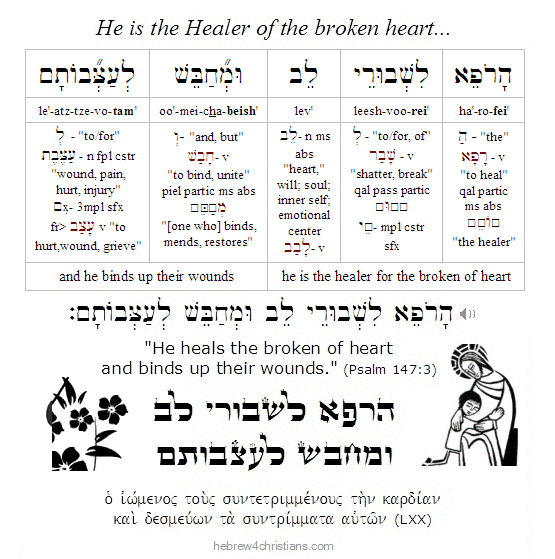 |
The Light of Faith...
08.15.25 (Av 21, 5785) C.S. Lewis once made the helpful distinction between "looking at" and "looking along" a sunbeam (Lewis: "Meditation in a Tool Shed," 1945). In the former case, the mind looks "at" the beam itself, in an "objective" sense, describing light as waves or particles or energy. In the latter case, the mind looks "along" the beam in relationship with it, not focusing on the beam itself but seeing other things through its agency.
Now Lewis' point was that modern scientific humanism makes the claim to a "truer" interpretation of experience through the mode of looking "at" things, as for example, when it "reduces" light as a waveform or when it describes religious experience as a matter of anthropology, psychology, or some other "natural" paradigm.
Naturalistic humanism claims that it is able to know the causes and effects of "objective" reality without any bias since it is otherwise constrained by the "scientific method" to ensure empirically verifiable (and repeatable) results. However the scientific methodology itself is not without its metaphysical assumptions about time (i.e., that the future will "resemble" the past), about motion (i.e., that natural processes are "uniform"), about space (that there is an external world that is knowable to the human mind); about the capability of the mind to define and represent things (e.g., that measurement "makes traction" with this external world and can be used to predict outcomes); about values (i.e., that it is "better" to know rather than not to know; or that the scientific method is an "good way" to develop inductive inferences, or that a given theory is "elegant," etc.).
Notice that these various axioms are not based on scientific inquiry itself (which is based on evidence and repeatable empirical measurement), but they are brought to science as assumptions used to frame or organize a particular "paradigm." In other words, science is a system of faith about what constitutes "reality," and like any other faith system, it needs to undergo testing to see if its inferences and claims provide the best explanation for what is real. For instance, does the naturalistic view of reality espoused by evolutionary cosmologists best explain the meaning of life? Does it account, for instance, for the electromagnetic pulse of the individual human heart? For the aesthetic wonder of the beauty? For poetry, or the longing of heart for love? for friendship? truth? for eternal life?
Knowledge is defined as "justified true belief," that is belief that is warranted or grounded in first principles of sound reasoning. Notice, however, the belief, or "faith," is a necessary condition of knowledge. This implies that people are bound by necessity to "walk by faith" of one kind or another, and everyone is therefore influenced by the biases and presuppositions they bring to their experience... C.S Lewis illustrated this by saying, "I believe in Christianity as I believe that the sun has risen: not only because I see it, but because by it I see everything else," and by "everything else" Lewis meant the full array of human experience, including intuitions about the big questions of why we exist, what we really are, and where we ultimately are going...
כִּי־עִמְּךָ מְקוֹר חַיִּים
בְּאוֹרְךָ נִרְאֶה־אוֹר
"For with you is the fountain of life;
in your light do we see light."
(Psalm 36:9)

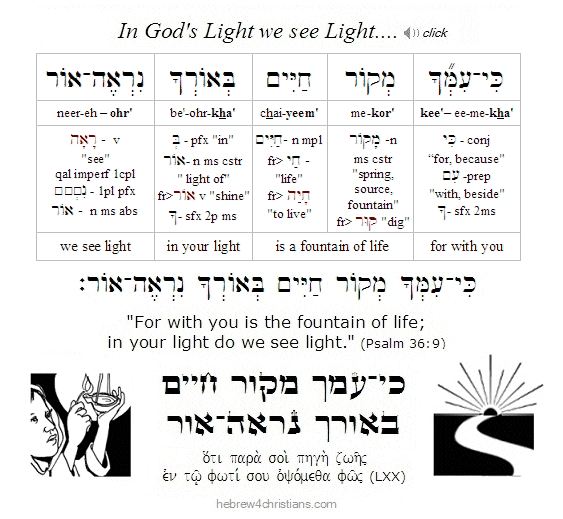
The intuitions of conscience and the revelation of nature itself reveal God's truth (Rom. 1:19-20). "The heart has its reasons that reason knows not of," a quote from Pascal that says that truth is something "given" before reason goes to work. "You can put this another way by saying that while in other sciences the instruments you use are things external to yourself (things like microscopes and telescopes), the instrument through which you see God is your whole self. And if a man's self is not kept clean and bright, his glimpse of God will be blurred - like the Moon seen through a dirty telescope" (Lewis: Mere Christianity).
King David, a man of great and proven faith, said of the LORD: "For with you is the fountain of life; in your light do we see light" (Psalm 36:9). "In Your light we see light..." When we enter a dark room with a lamp, the darkness flees and is overcome by the light. So also with teshuvah: When we turn to the Lord the spiritual darkness is overcome by the Divine Radiance. In Yeshua is life, for He is the light of the world. All those who receive Him will behold ohr ha'chayim (אוֹר הַחַיִּים) - the "light of life."
|
Blessing and Satisfaction...
08.14.25 (Av 20, 5785) Our Torah portion this week (Eikev) includes the remarkable commandment: "And you shall eat and be satisfied, and you shall bless the LORD your God" (Deut. 8:10), which immediately is followed by a warning to never forget the deliverance and grace of the LORD (Deut. 8:11-17). So what's the connection here?
The Scriptures make clear that the reason we are tested by God is to reveal what is within our hearts (Deut. 8:16). When we are tested by God, it is always for our good, though we might not think so at that time... "Are we always punished for our sins?" asks the student to his rebbe, who succinctly answers, "Only if we are fortunate." It is a terrible tragedy to be overlooked by God, to no longer be tested, to have an easy go of things in this life... Testing is God's tool for shaping our inner character, a refining fire. As the Apostle wrote, "Trials reveal the proven character of your faith, which is much more valuable than gold – even gold that is tested by fire, though it is passing away" (1 Pet. 1:7).
It may seem strange that the Torah commands that "you shall eat," since most of us don't need to be reminded to fill our stomachs, but in a deeper sense this means that we are to receive the goodness of life itself. "Taste and see that the LORD is good." That is why in this connection we are further told "and you shall be satisfied." We are to savor what is given and not to rush past the moment, looking for something more. It is only then, after we have received the goodness of the moment and savored it within our hearts that we are to "bless the LORD for the good land he has given you" (incidentally, this explains why Jews recite an additional blessing after they eat a meal called the Birkat hamazon).
Hebrew Lesson
Psalm 34:8 reading (click):
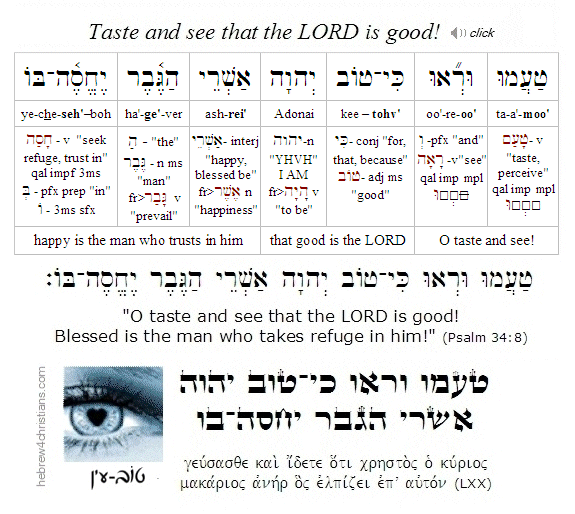
Addictions, cravings, lusts, etc., often arise from refusing to be satisfied, by hungering for more than the blessing of the present moment. "My people have committed two evils: they have forsaken me, the fountain of living waters, and hewed out cisterns for themselves, broken cisterns that can hold no water" (Jer. 2:13). The living waters are present for us, but we will only find them if we open our hearts to the wonder of God in this moment. We must slow down, savor the moment, and see God's hand in everything around us: "Holy, Holy, Holy is the LORD God of Hosts: The whole earth is filled with His glory" (Isa. 6:3). Opening our spiritual eyes will break the cycle of unthinking habit, of "mindless eating," and so on. Ultimately this is another aspect of shema, or listening to your body, your heart, your soul – and especially listening for God's word spoken to your inward being. We can "break the spell" of continual dissatisfaction, of the power of greed, ambition, and so on, when we discover that our constant hunger is really a cry for God and His blessing. Our sense of inner emptiness is an invitation to come to the waters and drink life... Godliness with contentment is "great gain."
The world and its promises are ultimately worthless, since it is possible to "have it all," that is, to have all the world's comforts and toys, and yet still be profoundly unsatisfied... The blessing of being satisfied means being set free from a sense of lack, deprivation, desire, hunger, and so on. Ambition is restless, greed is a taskmaster, and envy is cruel, but we overcome these inward drives by resting in the promise of the LORD, that is, by "eating His word" and being satisfied with His nourishment.
Being driven by chronic discontent creates a "numbness of being," a state of uncircumcised heart. We rush past the moment and its vividness, its disclosure, its power, is overlooked and unfelt. This in turn causes the heart to feel further deprived, leading to an never-ending cycle of hunger. This explains how people who seem to have everything – all of the world's luxuries and pleasures – can be bored, numb, and dead inside...
We have a Good Shepherd who promises to take care of us, to lead us beside still waters, to give us living water to restore our souls. If we surrender to the simplicity of the moment, trusting that God is present for us there, we find inner peace and satisfaction.
Therefore don't mindlessly consume the present moment. Yeshua told his followers, "I am the bread of life; whoever comes to me shall not hunger, and whoever believes in me shall never thirst" (John 6:35). Only Yeshua feeds our hearts and gives us everlasting satisfaction.
Hebrew Lesson
Deut. 8:10a reading (click):
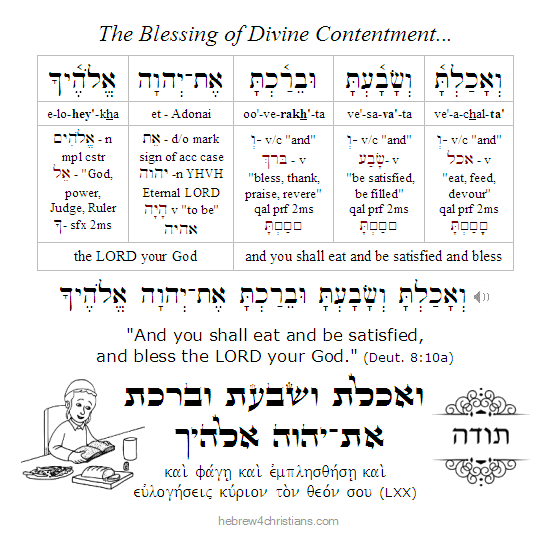 |
Grappling with Grace...

"Every now and again, our Lord lets us see what we would be like if it were not for Himself; it is a justification of what He said - "Without Me you can do nothing." That is why the bedrock of Christianity is personal, passionate devotion to the Lord." - Oswald Chambers
08.14.25 (Av 20, 5785) Some people think that "religious observance" is the way of salvation. Whether it's through the practice of a set of prescribed rituals, confessing to a particular creed, or becoming a member of a particular religious "in-group," such people have trouble accepting the idea that God's mercy may be given to those who -- unlike themselves -- haven't "worked for it" and therefore don't really deserve it... They apparently have yet to discover the shocking and tragic truth of their own radical need for healing and therefore they may be scandalized by the idea of God's unconditional love and acceptance. Perhaps they subconsciously believe that love must be earned and therefore they are careful to disguise the truth about who they really are (especially from themselves). They may hide behind ideologies, theologies, ritual acts, church affiliation or attendance, labels, pretenses, excuses, etc. -- all with the aim of being hidden within the crowd -- but they dare not view themselves as individuals who stand entirely dependent upon God alone for help... No, that is too terrifying, because the various self-made props given to shore up one's identity are rendered ineffectual and void before the Holy One.... All our attempts at self-justification invariably create ongoing anxiety within the soul.
I sometimes wonder about people who are obsessed over technical questions regarding "Torah observance" (i.e., dietary law, Sabbath Observance, ritual practices, etc.) Often they seem to be sincere, upright, and zealous for God, but when they're questioned about the ground of their acceptance in light of the Cross of Yeshua, it's often surprising how their lip service regarding the grace of God quickly reverts to talk about God's conditional love and acceptance. They imply, therefore, that the work of the Messiah somehow isn't enough (God forbid) and therefore "salvation" needs to be "completed" or "perfected" through human agency of some kind. Inwardly they think, "Salvation is a gift, yes, but sanctification is our job..." If hard pressed on the question, the self-justifying soul will either resound thunder from Sinai or else will reframe the question in terms of our personal responsibility as the determiner of salvation.
Whenever the question of moral obedience comes up (as it invariably does in these discussions), it is helpful to recall the first and most basic commandment of all, i.e., the commandment to love the LORD with all our heart, soul, mind and strength. THAT is the starting point. Indeed, the very first of the Ten Commandments is אָנכִי יְהוָה אֱלהֶיךָ - Anochi Adonai Eloheykha: "I AM the Lord your God." Without this personal acceptance of the LORD as our God (i.e., our willingness to trust and to love Him), we simply cannot fulfill any of the commandments with the right inward intent. It is because of the LORD's kindness that we are saved (Lam. 3:22). God loves us - despite our sinful state - yet that gloriously liberating truth often offends those who labor under the illusion that they can find favor before the LORD God of Israel through self-effort. Surrendering to God's love is a humbling venture...
|
The Hebrew word eikev (עֵקֶב), the name of our Torah portion this week, comes from the root akav (עָקַב, to "take by the heel"), as does the name Ya'akov (יַעֲקב, Jacob), who had "grabbed the heel" of his twin brother Esau while still in the womb of Rebekah. Ya'akov was later renamed Israel in commemoration of his grappling with Malakh Adonai (the Angel of YHVH) at Peniel. The Lord then declared to him, "Your name shall no longer be Ya'akov ("grappler") but Yisrael (יִשְׂרָאֵל), for as a prince (שַׂר, sar) you have striven (שָׂרִיתָ, sarita) with God and with men and have prevailed" (Gen. 32:28). The first occurrence of the root word appears in Genesis 3:15, where the LORD prophesied that although the Redeemer's heel (עָקֵב, akev) would be bruised, the very head (ראשׁ, rosh) of the serpent (satan) would be crushed.
Indeed, directly after the Akedah (the sacrifice of Isaac), the LORD said to Abraham, "in your offspring shall all the nations of the earth be blessed because (עֵקֶב) you have obeyed my voice" (Gen. 22:18). God blessed Abraham and his descendants because he grappled with the Voice of the LORD (YHVH). The great test of the Akedah centered on whether Abraham would accept the unconditional compassion of the LORD or if he would be tempted into seeking self-justification before God as Elohim (i.e, Judge). Ironically enough, Abraham's test was whether he would be "religious" or whether he would heed the compassionate intervention of the LORD... When the White Ram was caught in the thicket and sacrificed in Isaac's place, there was nothing left for Abraham to do other than accept God's gracious gift of love. Surrendering to God's love is the only genuine obedience, after all. "This is the work of God, that you believe in the one God has sent" (John 6:29).
Followers of Messiah are called to do works of healing and righteousness, as it is written: "For we are his workmanship, created in Yeshua the Messiah for good works that God purposed beforehand that we should do" (Eph. 2:10). The sages teach that we shouldn't put off performing acts of righteousness (e.g., tzedakah, visiting the sick, studying Torah, etc.) by thinking we can always do them at a later time; on the contrary, we should always regard the first opportunity presented to us as the only opportunity we might ever get. This is what is meant by the phrase "that I command you this day" (אֲשֶׁר אָנכִי מְצַוֶּה אֶתְכֶם הַיּוֹם). We should never trade a present opportunity for God's perfect will in our lives for a lesser good.... "Repent one day before you die..."
The call to love God with all our heart and soul might seem overwhelming, though we can heed the sages' advice, "It is not incumbent upon you to finish the task; yet you are not free to cease from it" (Avot 2:16). Though the Scriptures list a lot of commandments, all of these can be distilled to the all-encompassing principle of walking in love / לָלֶכֶת בְּאַהֲבָה (Eph. 5:2). "For in the Messiah Yeshua neither circumcision nor uncircumcision counts for anything, but only faith working through love" (Gal. 5:6). We can concentrate on heeding the immediate need of the hour. Walking in light of God's love - while not neglecting the "weightier matters" of the Torah: justice and mercy and faithfulness - ought to be the rule of faith in which we live (Matt. 23:23). This agrees with the New Testament's repeated focus that "love is the fulfillment of the Torah" / הָאַהֲבָה הִיא קִיּוּם הַתּוֹרָה (Rom. 13:10).
If you are sensing a tension while reading this, you are perhaps grappling with the idea of God's grace... May God give us a renewed revelation of His love for us.
Essential Healing...

08.13.25 (Av 19, 5785) Shalom chaverim. The biblical Hebrew word for "healing" is refuah (רְפוּאָה), from the root rapha (רָפָא), meaning to repair, restore, or make healthful. Some of the sages have said that the root letters indicate the meaning or essence of healing itself, namely, confessing the truth of God. This can be seen when we consider that the letter Resh (ר) refers to the head (i.e., rosh: ראשׁ), or that which is first -- suggesting that thinking and exercising the will to do teshuvah (Psalm 90:2-3) is primary; the letter Pey (פּ) refers to the mouth (i.e., peh: פֶּה), that is, to speech, confession, and therefore to prayer; and the letter Aleph (א) refers to faith in the LORD (i.e., ehyeh: אֶהְיֶה), the One and only true God who is the Master of the universe (Exod. 3:14).
So the Hebrew word for healing is connected first with changing our thinking by turning to God, confessing our sin, and trusting the LORD for life, as it says, "confess your sins to one another and pray for one another, that you may be healed" (James 5:16), and "I considered my ways, and turned my feet unto Thy testimonies" (Psalm 119:56). Refuah shleimah (רְפוּאָה שְׁלֵמָה), or a complete healing, is ultimately found when we turn to God with all our hearts and find shalom (שָׁלוֹם), as it says, "the Torah of the LORD is perfect, returning the soul" (Psalm 19:7). The Hebrew word for sickness (i.e., choleh: חוֹלֶה), on the other hand, comes from a root (חלה) that stands for blocked (חָסום) or profane (חל) learning (לִמוּד) regarding matters of the Holy Spirit (ה). The LORD comes to seek and to save those who are lost, saying "I am your Healer" (אֲנִי יְהוָה רפְאֶךָ). Therefore confess your confidence that he forgives all your iniquities and heals everything that blocks you from his blessing. Amen.
Hebrew Lesson
Psalm 103:3 reading (click):
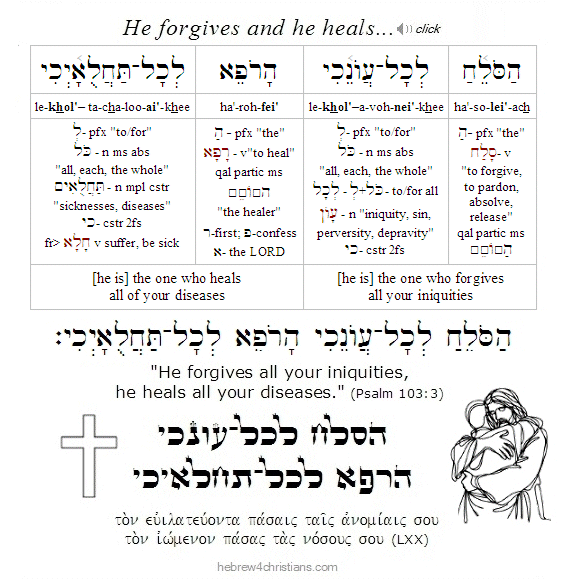 |
Sustenance for Life...
08.13.25 (Av 19, 5785) Our Torah reading for this week (Eikev) includes the famous statement: "Man does not live by bread alone, but from everything that comes from the mouth of the LORD shall he live" (Deut. 8:3). Note that Yeshua quoted this verse when he was tested with physical hunger in the wilderness (Matt. 4:3-4).
כִּי לא עַל־הַלֶּחֶם לְבַדּוֹ יִחְיֶה הָאָדָם
כִּי עַל־כָּל־מוֹצָא פִי־יהוה יִחְיֶה הָאָדָם
"Man does not live on bread alone, but by everything that comes
from the mouth of the LORD does man live" (Deut. 8:3)
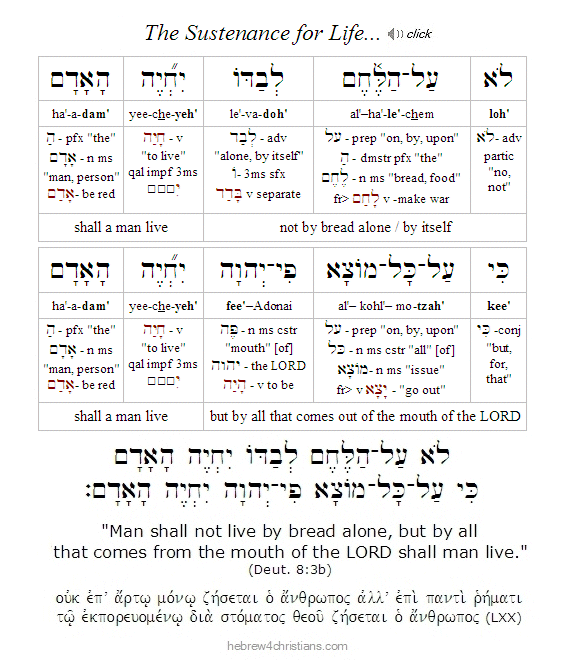
Eating is inherently a sacrificial act: We must "eat life" in order to live.... But while physical food helps us survive, we must ask the question, for what end? Do we live for the sake of eating (and thereby live to eat for another day, and so on), or do we eat in order to live? If the latter, then what is the goal of such life? What is the source of its nutrient and where is it taking you? What does your soul or "inner man" feed upon to gain the spiritual will to live?
Both the written Torah and Yeshua (who is the embodiment and expression of Torah) make it clear that we receive sustenance from the Word of God (דְּבַר הָאֱלהִים), the Source of spiritual life. But the word of God itself is a message of the very love of God (אַהֲבַת הָאֱלהִים) that is always sustaining us -- whether we are conscious of this or not. After all, for those of us who understand our brokenness and radical dependence, what "word" could we possibly endure were it not His words of hope, consolation, and even endearment? The Love of God is our life, chaverim, and the love of God is most clearly seen in the life and sacrificial death of Yeshua the Messiah... נֹתֵן לֶחֶם לְכָל־בָּשָׂר כִּי לְעוֹלָם חַסְדּוֹ - "He gives food to all flesh: for his mercy endures for ever" (Psalm 136:25).
God cleaves to us and therefore calls us to cleave to Him in return (devakut). Some scholars think that the Hebrew word for seeing (ראה) and the word for fearing (ירא) share the same root, and therefore we can close our spiritual eyes by not revering the works of the LORD. Similarly, we can close our spiritual ears by not heeding to His words of love for our soul...
Our very spiritual life -- its source and its end -- depends upon receiving the word of the Living God who is King of Eternity (אֱלהִים חַיִּים וּמֶלֶךְ עוֹלָם). He speaks words of hope and love to those who attend themselves to His Presence. May we hear Him speaking to us now...
Opening your Heart...
"Love is the expression of the one who loves, not of the one who is loved. Those who think they can love only the people they desire do not love at all. Love discovers truths about individuals that others cannot see." - Kierkegaard
08.12.25 (Av 18, 5785) Our Torah reading for this week (i.e., parashat Eikev) appeals for us to let go of our hurt and anger: "Circumcise (i.e., cut away) the barriers to your heart, and be no longer unresponsive to love" (Deut. 10:16). The metaphor of a "circumcised heart" (ברית מילה של הלב) symbolizes cutting away the outer covering of the heart so that it is "opened up" and softened to feel once again. God wants us to let go of "hard feelings" so we can experience compassion (i.e., com+passion: "feeling-with") and sympathy for other people... Heart circumcision represents a radical turning away from the insular realm of the self toward the emotional realm of others and God. When our hearts are open, we are able to receive the flow of the Spirit of God and obey the "law of the Messiah" (תּוֹרַת הַמָּשִׁיחַ) to bear one another's burdens (Gal. 6:2).
וּמַלְתֶּם אֵת עָרְלַת לְבַבְכֶם
וְעָרְפְּכֶם לא תַקְשׁוּ עוֹד
"Cut away the barriers to your heart,
and be no longer unresponsive to love."
(Deut. 10:16)

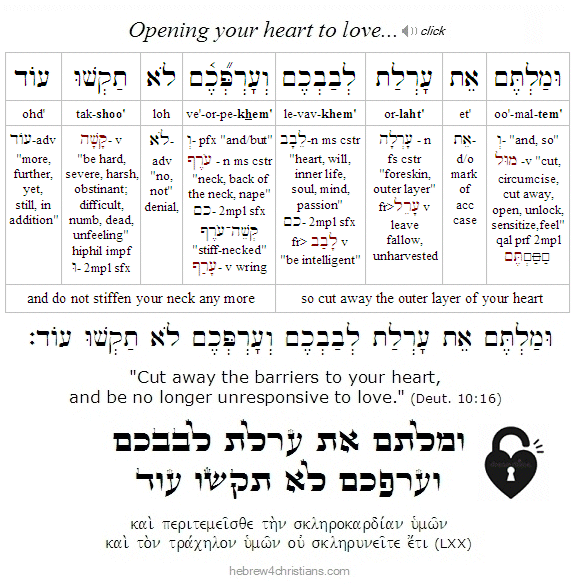
Physical circumcision represents a sign or mark of inclusion; it is a token that you are one of God's family, a Jew, though it is only a sign or token. Spiritual circumcision is an inner operation of the heart that marks you a true child of heaven. It is about your identity and purpose. Therefore we see the paradox that some physical Jews are not spiritual Jews, and some spiritual Jews are not physical Jews (though some are both), as the Apostle Paul said: For no one is a Jew who is merely one outwardly, nor is circumcision outward and physical. But a Jew is one inwardly, and circumcision is a matter of the heart, by the Spirit (ἐν πνεύματι), not by the letter. His praise is not from man but from God (Rom. 2:28-29).
Metaphorically speaking, a heart that is insensitive, indifferent, unfeeling, and callous toward the needs of others is "hard" or "uncircumcised." Often such hardness comes as a result of living in a fallen world. Many wounded people live with "scar tissue" that surrounds their heart, making them feel numb and unwilling to open up and trust others. Their affections have become disordered and they rationalize blaming others or seeking various forms of entitlement. "Turning off your heart" can mean suppressing any positive regard for others (empathy) while nurturing anger and self-righteousness, or it may mean withdrawing from others as a lifeless shell (both approaches vainly attempt to defend the heart from hurt). Although Yeshua always showed great compassion, especially to the wounded and broken in spirit (Isa. 42:3), He regularly condemned the "hardness of heart" (called "sclero-cardia," σκληροκαρδία) of those who resisted his message of healing and love.
A hard heart is closed off and impermeable to love from others, and especially from God. It is a "difficult" (קָשֶׁה) heart, inflexible and sometimes even cruel. Scripture uses various images to picture this condition, including a "heart of stone" (Ezek. 36:26, Zech. 7:12), an "uncircumcised heart" (Jer. 9:26), a "stiff neck" (Deut. 31:27), and so on. Stubbornness is really a form of idolatry, an exaltation of self-will that refuses to surrender to God. If you are wounded and afraid to open your heart in trust to others, ask God for healing...
|
Prophetic Listening...
08.12.25 (Av 18, 5785) Shalom friends. A passage from our Torah portion this week (i.e., parashat Eikev) implies that as we obey God so we will grow in our knowledge and love of Him, a sort of reciprocity between the heart and the head.
The passage in question reads: "And it shall come to pass if you diligently hear the commandments that I command you today, to love the LORD your God, and to serve him with all your heart and with all your soul, then he will give the rain for your land in its season, the early rain and the later rain, that you may gather in your grain and your wine and your oil" (Deut. 11:13-14). Now what is interesting here is not some sort of karmic "cause and effect" between keeping the commandments and obtaining material favor but rather the effect that comes from truly listening to God, that is, the awakening of heart, coming to know the truth, and the blessing of walking before the divine presence.
We can see this when we take a closer look at the first part of the passage, which reads: "and it shall come to pass if you diligently hear," but in Hebrew reads, "ve'hayah im shamo'a tishme'u" (וְהָיָה אִם־שָׁמעַ תִּשְׁמְעוּ), meaning "if you hear, you will hear," and which prophetically suggests that as we listen attentively to the words of Torah, we will hear more, and we will encounter spiritual connections and applications that are new and ready for this hour. The early sages commented: "If you listen to the old, you will listen to the new" (Berachot 40a). This recalls Yeshua's words: "every scribe who has been trained for the kingdom of heaven is like a master of a house, who brings out of his treasure what is new and what is old" (Matt. 13:53).
In this connection notice that the commandment to "love the LORD your God with all your being" (i.e, וְאָהַבְתָּ אֵת יְהוָה אֱלֹהֶיךָ בְּכָל־לְבָבְךָ, see Deut. 6:5) must first be grounded in the fear of the LORD (יִרְאַת יְהוָה), since without conscious reverence for the greatness of God we will likely make God in our own image and likeness, and therefore we will confound God's will to be about our own "felt needs" rather than the truth of God's love. "It is a fearful thing to fall into the hands of the Living God" (Heb. 10:31), and therefore we "work out" salvation with "fear and trembling" (Phil 2:12). The fear of the Lord awakens us to the "weight of glory" and the enormity of the significance of knowing the truth about reality...
Focusing our attention on the commandments may be likened to practice for the world to come, since then they will not be new to us when the final redemption appears. As it is written: "The statutes of the LORD are right, rejoicing the heart: the commandment of the LORD is pure, enlightening the eyes" (Psalm 19:8). Happy are those who love the Torah. More light comes as we live in (i.e., practice) the truth (John 13:17). As Yeshua also said: "For to the one who has, more will be given, and he will have an abundance, but from the one who has not, even what he has will be taken away" (Matt. 13:12). Amen.
Hebrew Lesson
Deut. 11:13a commentary (click):
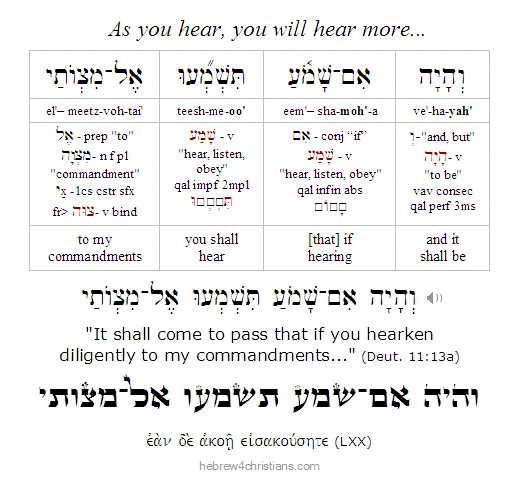 |
Believing in Love...
"The courage to be is the courage to accept oneself in spite of being unacceptable." - Tillich
08.11.25 (Av 17, 5785) In our Torah portion for this week (i.e., parashat Eikev) we read: "But now, Israel, what does the LORD your God ask from you ... but to love him with all your heart and with all your soul?" (Deut. 10:12). But how are we able to love God be'khol levavka (בְּכָל־לְבָבְךָ) – "with all our heart" – and be'khol nafshekha (וּבְכָל־נַפְשֶׁךָ) - "with all our soul," apart from healing of the brokenness that makes our hearts divided and sick? That is what the redemption from Egypt was about: we were personally chosen by God, redeemed by his grace, led out from from cruel bondage, only to be led into the desert, away from the world, where we slowly began to understand that we were valued, cared for, and beloved of God. We believed in the possibility of promise, of covenant... Only then could we hear the request from heaven: "Now love Me..." In other words, we can only truly love God by knowing we are beloved by God, and the invitation to love him is a response of his great passion for you (1 John 4:19). Accept that you are accepted in the heart of the Beloved (Eph. 1:4-6).
What the LORD asks from us is humanly impossible, since the human heart is unable to truly love and serve the LORD apart from intervening grace (Eph. 2:1-10). The real miracle of faith is found in a transformed heart. It is never a question of "will power" or the "zeal" of man; no - it is never a question of what I can do but rather what God can do (John 1:13).
We love because He loves us (and we receive and accept that love). It is the strength of his love that keeps you, not the strength of your own... Nevertheless it seems to be the pattern of God's grace to bring affliction and trouble into our lives so that we will begin to seek the Presence of God (i.e., the "troubles of love"). We all are delivered from Egypt by the blood (i.e., the love) of God in the tribulation of hard exile. After all, how many of us came to know the LORD apart from the pain that comes from apprehending our own slavery to inner brokenness? Indeed it is a "severe mercy." Therefore our Savior says: "Truly, truly, I say to you, unless a grain of wheat falls into the earth and dies, it remains alone; but if it dies, it bears much fruit" (John 12:24). The hard "outer shell" of the seed must be broken so that the life of the Spirit can come through... The commandment to love the LORD, then, only finds its voice after we come to faith, after we experience the Holy Spirit's power, indeed, after we are made alive from the dead.
Hebrew Lesson
Deuteronomy 10:12 reading (click for audio):
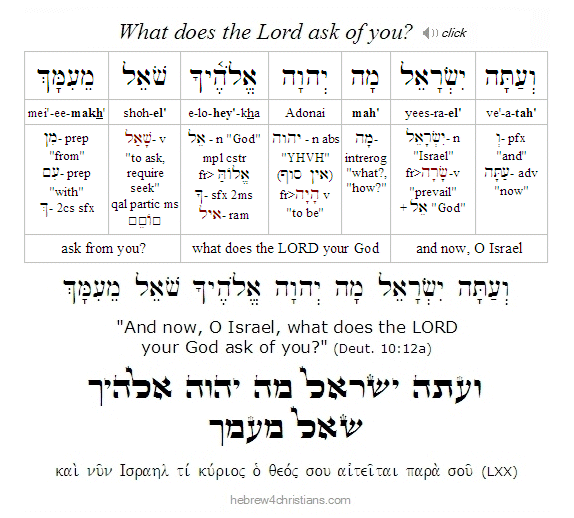 |
The Power of Forgiveness...
08.11.25 (Av 17, 5785) In the Gates of Repentance it is written: "I hereby forgive all who have hurt me, all who have wronged me, whether deliberately or inadvertently, whether by word or by deed. May no one be punished on my account. And as I forgive and pardon those who have wronged me, may those whom I have harmed forgive me, whether I acted deliberately or inadvertently, whether by word or by deed." Amen...
Yeshua taught us to pray "forgive us as we forgive others," which implies that our forgiveness (of others) is the measure of our own forgiveness. In other words, as we forgive others, so we experience forgiveness ourselves... Forgiveness releases the hurt, the anger, and the disappointment so these feelings do not inwardly consume and exhaust our souls. And yet forgiveness must be self-directed, too, since refusing to forgive yourself denies or negates the forgiveness given from others. Forgiving yourself means admitting that you act just like other people, that you are human, and that you are in need of reconciliation too. We have to move on, past the shame, and to turn back to hope. As a Yiddish proverb puts it, "You are what you are, not what you were..."
It is written, "in many things we offend all," and therefore we must confess our sins one to another to find healing (James 5:16). However the practice of love overlooks a multitude of sins, and if we do not condemn those who offend us, then we will not need to forgive them for their offenses. Walking in God's love sets us free from the slavery of negative emotions such as resentment, bitterness, anger, unresolved grief, and so on.
I love this affirmation and prayer attributed to Eusebius of Caesarea (c. 263-339 AD): "May I be the friend of that which is eternal and abides. May I never quarrel with those nearest me; and if I do, may we be reconciled quickly. May I never devise evil against anyone; and if any devise evil against me, may I escape uninjured and without any desire to hurt them. May I love, seek, and attain only that which is good. May I wish for the happiness of all and the misery of none. May I never rejoice in the ill-fortune of one who has wronged me. When I have done or said what is wrong, may I never wait for the rebuke of others, but always rebuke myself until I make amends."
"May I, to the extent of my ability, give all needful help to my friends and to all who are in want. May I never fail a friend in danger. When visiting those in grief, may I be able by gentle and healing words to soften their pain. May I respect myself. May I always keep tame that which rages within me. May I accustom myself to be gentle, and never be angry with people because of circumstances. May I never discuss who is wicked and what wicked things he has done, but know good men and follow their footsteps."
Hebrew Lesson
Psalm 86:5 reading (click for audio):
Parashat Eikev - עקב
Our Torah reading for this week is parashat Eikev, which is traditionally read during Shabbat Va'tomer, the second "Sabbath of Consolation" after Tishah B'Av....
08.10.25 (Av 16, 5785) Shavuah tov, chaverim. In our Torah reading for this week (i.e., parashat Eikev), Moses continues his farewell address to Israel by saying, "And because (עֵקֶב) you will listen to these rules and keep and do them, the LORD your God will keep with you the covenant and the love that he swore to your fathers" (Deut. 7:12). Note that the word eikev (עֵקֶב), often translated "because," literally means "heel," which recalls Jacob (יעקב) the "heel-holder" who wrestled with the pain of his past to learn to bear the name Israel (יִשְׂרָאֵל), the "prince of God" (Gen. 32:28)... And like Jacob, we must grapple to believe that the covenant of God's love and acceptance is for us, too...
The Sassover rebbe interpreted the opening verse of our Torah portion, "And because you will listen..." (וְהָיָה עֵקֶב תִּשְׁמְעוּן) as, "and it shall be when your heel is ready to take a step, you will listen to your heart." This is the step of faith. As you begin to walk with God, you will come to know yourself as a child of the great King. Likewise regarding the related verse in the Torah, "Because Abraham heard my voice" (עֵקֶב אֲשֶׁר־שָׁמַע אַבְרָהָם בְּקלִי), the sages read, "Abraham heard the word 'down to his heel'" (Gen. 26:5). Like Abraham, we will hear God's voice as we walk with him by faith...
The portion begins: "ve'hayah eikev..." (Deut. 7:12). Here translators differ about how to understand the Hebrew. The JPS version, for instance, renders this as "and if you listen," whereas others render it as, "and because you listen..." The former translation makes the blessing seem conditional upon obedience, whereas the latter reading affirms the obedience that leads to blessing... The Hebrew word eikev (i.e., עקב, "heel," "step"), however, refers to action, and therefore it may be regarded as a prophecy expressing faith that the blessing which God swore on oath will be fulfilled. May it be so for us, chaverim...
Hebrew Lesson
Deut. 7:12a reading (click):
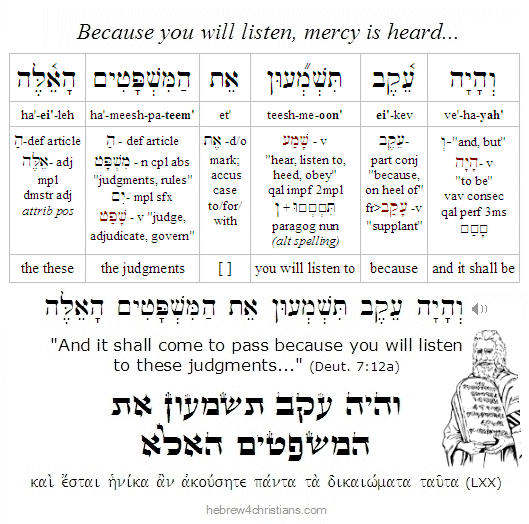 |
Eikev Audio Podcast...
The Mark of Faith...
08.09.25 (Av 15, 5785) "For God so loved the world, that he gave his only begotten Son, that whoever believes in him would not perish, but have everlasting life...." Most of us are familiar with John 3:16, the great summary verse from the New Testament that explains the meaning of the redemption of Yeshua in light of the "bronze serpent" (נְחַשׁ נְחֹשֶׁת) that was lifted up upon a stake. When the people gazed upon the judged serpent they were delivered from the curse of death (see Num. 21:8-9). Yeshua explained to Nicodemus that just as that serpent was lifted up in judgment, so He would become accursed and lifted up, so that all who looked upon him in faith would live (John 3:14-16).
Now there is another "3:16" passage in Scripture that is powerful and relevant, especially for those who realize that the judgment of God is happening in our world today and yet seek comfort from the LORD during this dark time. The passage is from the Book of Malachi:
"Then those who feared the LORD spoke with each other, and the LORD listened to what they said. In His presence, a Scroll of Remembrance (סֵפֶר זִכָּרוֹן) was written to record the names of those who feared him and always thought about the honor of his Name. "They will be my people," says the LORD of Heaven's Armies (יְהוָה צְבָאוֹת). "On the day when I act in judgment, they will be my own special treasure. I will spare them as a father spares an obedient child. Then once more you shall see the distinction between the righteous and the wicked, between one who serves God and one who does not serve him.
"For indeed the day is coming, burning like a furnace, and all the arrogant evildoers will be chaff. The coming day will burn them up," says the LORD of the Armies of Heaven. They will be consumed-- roots, branches, and all. But for you who fear my name, the Sun of Righteousness (שֶׁמֶשׁ צְדָקָה) will rise with healing in his wings. And you will go free, leaping with joy like calves let out to pasture" (Mal. 3:16-4:2).
Amen, the LORD watches over his remnant... In his vision of the fall of the Temple in Jerusalem due to the apostasy of the people, the prophet Ezekiel overheard the LORD commissioning a mysterious "man clothed in linen, with a writing case at his side, saying, "Pass through the city, through Jerusalem, and put a mark (lit. a Tav, תָּו, which resembled a cross) on the foreheads of the people who sigh and groan over all the abominations that are committed in it." But to the others he said in my hearing, "Pass through the city after him, and strike. Your eye shall not spare, and you shall show no pity... but touch no one on whom is the mark" (Ezek. 9:2-ff).
The Man clothed in linen is Yeshua our Lord (Dan. 10:5-6, Rev. 1:11-16) and God has set his seal of ownership upon those trusting in him. This is the "sign of faith," Alef-Tav (את). The Holy Spirit within our hearts serves as pledge and a witness of that which is to come (2 Cor. 1:22). God's solid foundation stands firm, sealed with this inscription: "The Lord knows those who are his," and "Let everyone who names the name of the Lord depart from iniquity" (2 Tim. 2:19). The day draws near, chaverim: Let us be ready to meet our King.
Hebrew Lesson
Malachi 4:2 reading (click for audio):
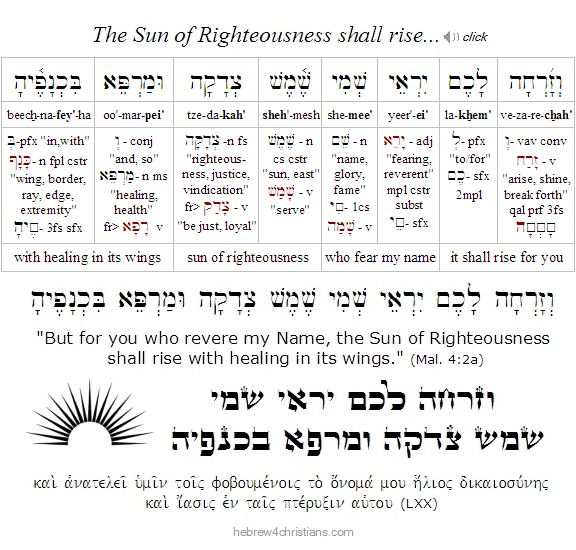 |
Endurance and Hope...
08.08.25 (Av 14, 5785) Sometimes we feel overwhelmed in our lives. There's so much going on; troubles, uncertainties, and so on. The world seems out of control; disinformation and "mind games" are the substance of the "postmodern news." We've become alienated, distracted, and anxious; our emotions get the better of us, and we lapse into fearful thinking.... We are tempted to despair over our sins, our sufferings, and our ignorance.
At such times it is essential to redirect our attention by turning to God in "teshuvah" (תְשׁוּבָה) or "repentance." Teshuvah is our response to the question given by our present life circumstances. Deliberately seeking God's presence in the midst of our struggles is sometimes called "kavanah" (כַּוָנָה), a word that means "focus," "attention," or "concentration."
"When the enemy shall come in like a flood, the Spirit of the Lord shall lift up a standard against him" (Isa. 59:19). Set your heart in trust before God and reaffirm that his presence is both with you and for you. Despite the apparent chaos, look up and find your bearings. When we turn to the Lord with all our heart — with "all-that-is-within me" earnestness — then he will guide us and make our paths straight, despite ourselves...
As it written in our Torah portion this Shabbat (Vaetchanan): "If from there you will seek the LORD your God, then you will find Him if you seek Him with all your heart and with all your soul" (Deut. 4:29). The "there" mentioned in this pasuk (verse) is the "there" of where we find ourselves, in our exile, awaiting the completion of our redemption... In this context teshuvah means believing that concealed good is present, despite the adversities we face...
Some people think they should turn to God for help only with their big problems, but not with the everyday struggles and inner conflicts that we face on a daily basis. This is a serious mistake. If God wants us to seek him be'khol levavkha -- "with all our heart," then understand that God wants all of us — and that includes our daily concerns, our missteps and sins, our sorrows and our joys. We turn to God in all that we are and in all that we do....
Yeshua taught us that the essence of Torah is mercy (Matt. 9:13; Matt. 23:23), and that God is close "in all our calling to Him" (Deut. 4:7), that is, in every appeal of our heart for Him. The Talmud says the central verse of Torah is "Know Him in all your ways" (Prov. 3:6), since by seeking the will of our heavenly Father, we attain the mitzvah (connection) of Torah.
The Hebrew word for trouble is "tzarah" (צָרָה), from the root idea of "constricting" or being bound (i.e., צָרַר). Indeed the land of Egypt, the house of slavery, is called mitzrayim (מִצְרַיִם), from a cognate root (צוּר) that means to "bind." This suggests that a narrow perspective is unable to understanding the "big picture." Of course it is impossible for us to fully fathom God's ways (Isa. 55:8), though we can rely on Him to lead us and to trust that our testing in this life is not in vain. That is why the sages remark that the Hebrew word lamah (לָמָה) "why?" also spells the word le'mah (לְמָה) meaning "for what?" In other words, instead of asking why afflictions befall you, ask how they may help you grow closer to God...
"Relax, nothing is in your control," though everything is in the hands of your Heavenly Father who is faithful and who has has promised to guide your way. Amen.
Hebrew Lesson
Psalm 25:4 reading (click for audio):
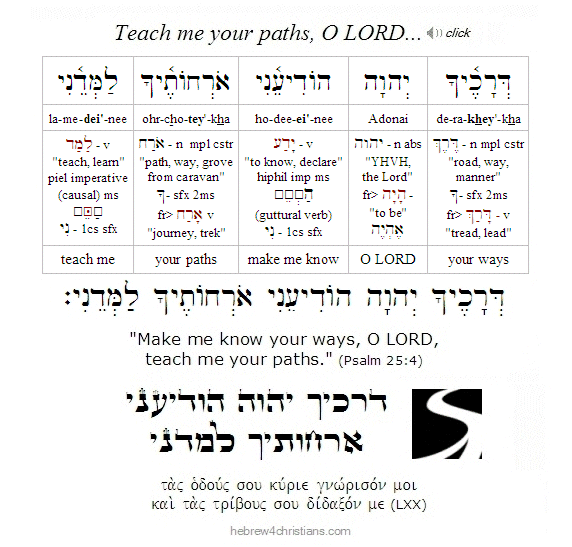 |
Faith and Double-mindedness...
There are two essentials about the life of faith. The first is to care deeply about the meaning of words and of truth, and the other is to know what time it is...
08.08.25 (Av 14, 5785) Though it is worthwhile to ask questions about what we believe, we must do so using the principle that "faith seeks understanding" rather than the converse principle that "understanding seeks faith," since the latter elevates human reason to be the judge and arbiter of the things of God, a role for which it is both incapable and unsuited (Isa. 55:8-9; Job 9:10; 11:7; Psalm 139:6; Rom. 11:33). God is not a "what" but a "Who," and that reality determines the means by which we are able to know him (John 4:24). We can indeed know truth about God, though the means for attaining such knowledge transcends the abilities of unaided human reason (see Deut. 29:29). In other words, we know the truth about God when we encounter the Divine Presence by means of revelation...
Some talk about "honest doubt" regarding matters of God, and while there may indeed be occasions to confess the limitations of our ability to understand the mysteries of heaven and earth, we must be on guard not to ply a present lack of "semantic closure" as an excuse for despair that hardens our hearts and justifies our sin... The lower nature's machinations are so cunning that we must be on guard and "test what manner of spirit" we are (Luke 9:55; 1 John 4:1; James 4:4). In the name of "honest doubt" a soul can invent all manner of difficulties of interpretation, the mind may become jaded and agnostic; the heart cools and steps away from the passion of faith... Doubt introduces hesitancy, compromise, and godless misgivings; it is a leech upon the soul, sapping the strength of conviction, weakening the balm of assurance. Be careful. Honest seeking is one thing, but practiced doubt may be an evasive measure - a diabolical ploy meant to distance yourself from responsibility to the truth of God's Presence....
Often enough people have a "problem" with faith not because there is insufficient reason to believe -- after all, every soul has intuitive awareness of the reality of God's reality and power (see Rom. 1:19-20; Psalm 19:1-4; Acts 14:17) -- but because secret sin lurking within the heart is cherished as the soul's ultimate concern and most precious value. Such idolatry of heart is the essence of much "doubt," since faith ultimately is an act of will. "The heart has its reasons that reason knows not of" applies both to the realm of God but also to the affections of the selfish heart... In that sense doubt serves as a deal made with the devil - an exchange of a "mess of pottage" for the blessing of God!
Charles Spurgeon once wrote: "It seems that doubt is worse than trial. I had sooner suffer any affliction than be left to question the gospel or my own interest in it" (Vol. 29, Sermons). Amen, the gospel cannot be esteemed apart from personal interest in its truth, for otherwise we are merely toying with its message. You must believe that the truth of God - and being properly related to this truth by means of a trusting relationship - is the most inestimably precious and important matter of your very existence... We cannot escape from the double-mindedness of our way apart from sincerely turning to God and asking Him to show us his glory, his beauty, and the wonder of his great love.
A divided house cannot stand. The way of deliverance from yourself - the way to be free of enslaving passions and dark desires that fragment the soul - is by means of the miracle of God: "For the flesh has desires that are opposed to the Spirit, and the Spirit has desires that are opposed to the flesh, for these are in opposition to each other, so that you cannot do what you want' (Gal. 5:17; Rom. 7:15-25), but if you are led by the Spirit, you are free from the law of sin and death and are enabled to live according to a new source of power and life, namely, the law of the Spirit of Life in Messiah Yeshua (Rom. 6:6,14; Gal. 2:20). Living in slavery to sin is to lose yourself - to have no "center," no self that unifies your heart and focuses your reason for being... It is the hell of no longer believing in anything at all, and especially no longer believing yourself.
Soren Kierkegaard once lamented: "The matter is quite simple. The Bible is very easy to understand. But we Christians are a bunch of scheming swindlers. We pretend to be unable to understand it because we know very well that the minute we understand we are obliged to act accordingly." There is a very real danger of "thinking about" truth rather than living it. For instance, you might study the Psalms as literature and attempt to understand the nuances of Hebrew poetry, but that is altogether different than reciting the psalms with inner passion, with simple conviction and the earnest desire to unite our heart's cry with the devotion that gave life to the words... We must read with a heart of faith to unlock the truth that speaks to the heart. If you believe only what you understand, your faith is actually grounded in your own reasoning, not in the Divine Voice of Love...
The way of trust is always a matter of the heart's passion and hope... The Spirit of God speaks gently: "My child, give me your heart, and let your eyes observe my ways" (Prov. 23:26). When we call God "Abba," we are not using a formal name that indicates distance, but rather a term that evokes intimate closeness and reliance. Calling out to God as "Abba" signifies that we genuinely accept that God regards us as his beloved child...
Hebrew Lesson
Proverbs 23:26 reading (click for audio):
The Battle Belongs to the Lord...
08.08.25 (Av 14, 5785) In light of the threat of an invasion from the east, King Jehoshaphat of Judah prayed: "O LORD, God of our fathers (יהוה אֱלֹהֵי אֲבֹתֵינוּ), are you not God in heaven? You rule over all the kingdoms of the nations. In your hand are power and might, so that none is able to withstand you... O our God, will you not judge them? For we are powerless against this huge army that attacks us; we do not know what to do: but our eyes are upon you (כִּי עָלֶיךָ עֵינֵינוּ)... After he prayed, the Spirit of God spoke forth: "Thus says the LORD to you, 'Do not be afraid and do not be dismayed at this great horde, for the battle is not yours but God's'" (2 Chron. 20). Amen, Lord, our eyes are upon you...
This teaches us the great principle of our spiritual warfare: "the battle is not yours but God's" (לֹא לָכֶם הַמִּלְחָמָה כִּי לֵאלֹהִים). So be encouraged in the midst of your struggle. Listen for that song singing: "Do not be afraid and do not be dismayed... for the LORD will be with you." (2 Chron. 20:15). Recall what King David said to the giant Goliath: "The LORD saves not with sword and spear. For the battle is the LORD's, and he will give you into our hand" (1 Sam. 17:47). Amen, let's look to the Lord and remain steady in our times of testing, friend!
Hebrew Lesson
2 Chron. 20:15 reading:
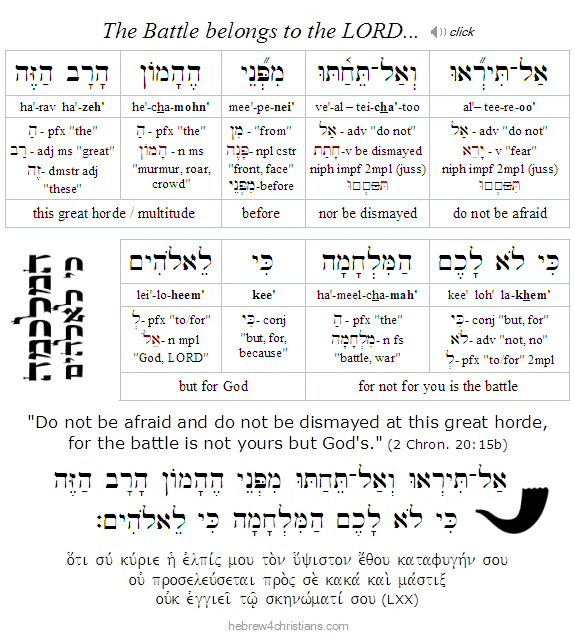 |
An Everlasting Love...
The prophetic holiday of Tu B'Av begins this evening at sundown, chaverim....
08.08.25 (Av 14, 5785) As I mentioned the other day, Tu B'Av, or the 15th day of the month of Av, is a date associated with love and joy in Jewish tradition. Just as Yom Kippur originally celebrated the reconciliation of Israel to the LORD after the sin of the Golden Calf, so Tu B'Av originally celebrated the reconciliation of Israel for the Sin of the Spies. Therefore both the fifteenth of Av and Yom Kippur became joyous times celebrating loving restoration to the LORD. The Babylonian Talmud (Ta'anit 31a) states "Israel had no holidays as joyous as the fifteenth of Av and the Day of Atonement, when the maidens of Israel would go out and dance in the vineyards..."
An old Jewish legend says that 40 days before a person is conceived in the womb, God decrees who that person's life partner will be (Talmud: Mo'ed Katan 18b). The sages calculate that Tu B'Av falls 40 days before Elul 25, the traditional date of the creation of the universe, and infer that at that time - before the foundation of the world - God "chose us to be His beloved (Eph. 1:4). At any rate, Tu B'Av reminds us of the deeper truth that you were created to be in a love relationship with God. As it is written in our Scriptures, "I have loved you with an everlasting love; therefore within lovingkindness I have drawn you" (Jer. 31:3).
Hebrew Lesson
Jeremiah 31:3b reading (click):
Note that the Hebrew word translated "I have drawn you" (i.e., מְשַׁכְתִּיךְ) comes from the Hebrew word mashakh (מָשַׁךְ), meaning to "seize" or "drag away" (the ancient Greek translation used the verb helko (ἕλκω) to express the same idea). As Yeshua said, "No one is able to come to me unless he is "dragged away" (ἑλκύσῃ, same word) by the Father" (John 6:44). God's chesed seizes us, takes us captive, and leads us to the Savior... Spiritual rebirth is a divine act of creation, "not of blood nor of the will of the flesh nor of the will of man, but of God" (John 1:13). God's love draws us near as we drawn near to him...
The Great Commandment...
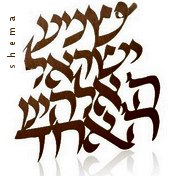
08.08.25 (Av 14, 5785) Our Torah reading for this week (i.e., Vaetchanan) includes the first part of the Shema (שמע) affirmation: "Hear, O Israel, the LORD is our God; the LORD alone, and you shall love (וְאָהַבְתָּ) the LORD your God with all your heart and with all your soul and with all your might" (Deut. 6:4-5). During its recitation we traditionally pronounce each word very carefully while covering our eyes with our right hand, focusing on the sovereignty of God and our primary need to love Him with our whole being.
Yeshua taught that the Shema was the "first" or "great" commandment of Torah (see Mark 12:28-31). Note that the opening declaration of the Shema includes three Divine Names: Lord (יהוה), God (אלהים), and Lord (יהוה) again, which suggests the multiplicity-in-oneness (unity) that the word "echad" implies (see below). The two letters Ayin (ע) and Dalet (ד) are written enlarged in the opening verse of the Shema. Together, these letters form the word 'ed (עֵד), which means "witness," suggesting that we recite the Shema to testify of the greatness of God and our duty to love Him bekhol levavkha, (בּכָל־לְבָבְךָ) with all our being.
שְׁמַע יִשְׂרָאֵל יְהוָה אֱלהֵינוּ יְהוָה אֶחָד
"Hear, O Israel, the LORD is our God, the LORD alone."
(Deut. 6:4)

Hebrew Study Card / Shema Reader Page
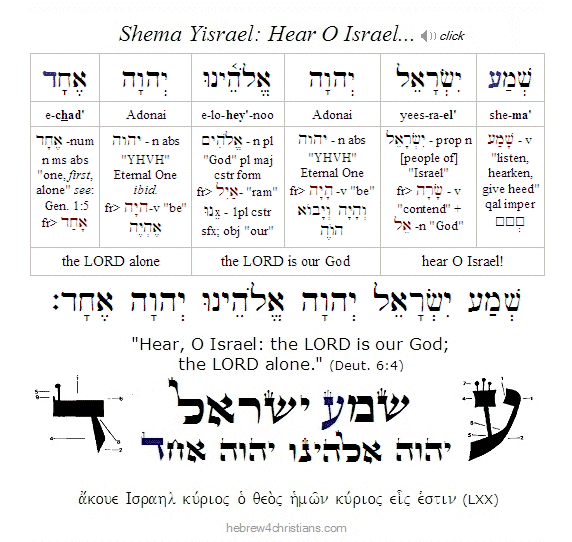
The Shema is commonly translated as: "The LORD is our God, the LORD is one" (יְהוָה אֱלהֵינוּ יְהוָה אֶחָד), though the word "one" here (i.e., echad: אֶחָד) should not be thought to imply "pantheistic monism," that is, the idea that everything ultimately is God or that everything is a mystical "oneness." In Hebrew, the word echad (אֶחָד) implies unity in diversity, not absolute numerical identity (the word for one and only one, i.e., "unique," is yachid (יָחִיד)). For example, in Exodus 26:6 the parts of the Tabernacle (Mishkan) are to be constructed so that "it shall be one (echad) tabernacle," and the prophet Ezekiel spoke of two "sticks" (representing fragmented Israel) as being reunited into one: "and they shall be one (echad) stick in My hand" (Ezek. 37:19).
Echad can also mean "first" or "preeminent," as describing "the first day" of the creation as "yom echad (יוֹם אֶחָד) in Geneis 1:5, and this, I believe, is the sense of "echad" used in the Shema, since it affirms that that the LORD alone is God and there is no other god beside Him.
Moses further used the word echad in Genesis 2:24 to describe the depths of love: "And they (husband and wife) will become one flesh (basar echad)." God's attributes as Compassionate Source of life, Eternal Judge, and Savior, are unified and affirmed in this verse. Ultimate Reality is multidimensional, personal and loving, and that is part of the very essence of God.
The kabbalistic view that the "LORD is one" suggests that good and evil are "coequal" aspects of oneness, and that "God" is more like Hinduism's univeral soul than the transcendent personal Creator who made everything and who reigns over all possible worlds as Master and King. "Woe to those who call evil good, and good evil; Who put darkness for light, and light for darkness; Who put bitter for sweet, and sweet for bitter! Woe to those who are wise in their own eyes, and shrewd in their own sight!" (Isa. 5:20-21). Good and evil are not "emanations" or "sefirot" that are resolved into cosmic oneness. There is no such thing as a "Person" - either human or Divine - that exists in an absolute vacuum, outside of relationship. Absolute monism is inconsistent with the idea of Divine Personhood, just as Aristotle's "Unmoved Mover" is a logical absurdity.
There is a "three-in-one" sacred place of the heart (represented by the inmost chamber of the Mishkan called the Holy of Holies) which contains the "three-in-one" sacred Throne of the Divine Presence (represented by the Ark of the Covenant covered by sacrificial blood that signifies the cross of Messiah), before which the "three-in-one" blessing of God is heard (represented by the the priestly benediction when the Sacred Name YHVH was uttered), as we affirm the great "three-in-one" affirmation of faith known as the Shema: "Hear, O Israel, the LORD our God is One LORD," which declares our duty to love God with the "three-in-one existence" he has given us: with all our heart (be'khol levavkha), with all our soul (be'khol nafshekha), and with all our strength (be'khol me'odekha).
At the revelation at Sinai, "the mountain burned with fire to the heart of heaven" (בָּאֵשׁ עַד־לֵב הַשָּׁמַיִם), wrapped in darkness, cloud, and heavy mist" (Deut. 4:11). Yet what is this divine Fire if it is not the very passion of God - a passion that descends from the "heart of heaven" to the place of revelation within the human heart? Indeed the fire is none other than the Word of God, "the Voice that speaks from the midst of the fire" (קוֹל אֱלהִים מְדַבֵּר מִתּוֹךְ־הָאֵשׁ) the truth revelation (see Exod. 3:2, Deut. 4:33). As the Spirit asks: "Who has ascended to heaven and come down? Who has gathered the wind in his fists? Who has wrapped up the waters in a garment? Who has established all the ends of the earth? What is his name, and what is his Son's name? Surely you know" (Prov. 30:4).
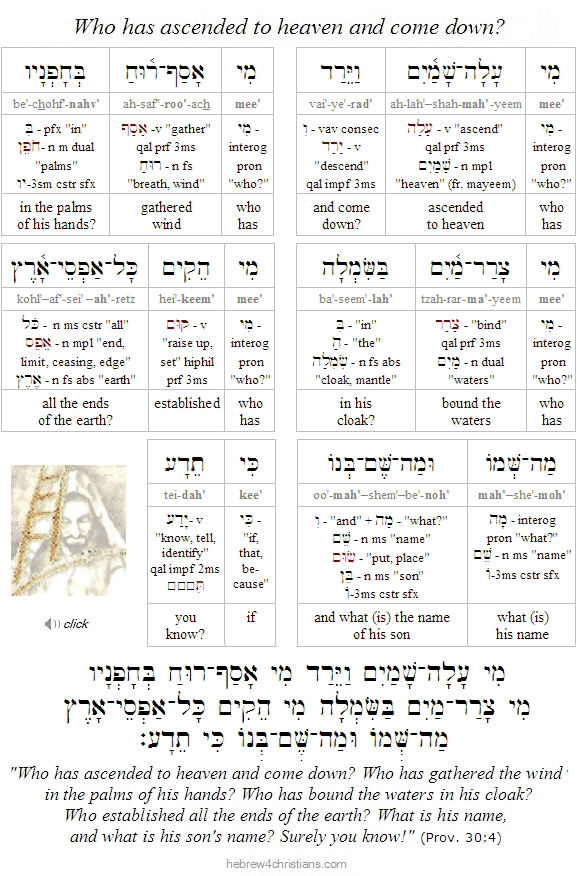 |
Yeshua is the Center of Creation - its beginning and end. As it is written: אָנכִי אָלֶף וְתָו רִאשׁוֹן וְאַחֲרוֹן ראשׁ וָסוֹף / "I am the 'Aleph' and the 'Tav,' the First and the Last, the Beginning and the End" (Rev. 22:13). "For from him and through him and to him are all things. To him be glory forever. Amen" (Rom. 11:36). Indeed he is called מֶלֶךְ מַלְכֵי הַמְּלָכִים / Melech Malchei Hamelachim: The "King of kings of kings" and the LORD of all possible worlds -- from the highest celestial glory to the dust of death upon a cross. Yehi shem Adonai mevorakh (יְהִי שֵׁם יהוה מְברָךְ): "Let the Name of the LORD be blessed" forever and ever (Psalm 113:2).
Note: In Hebrew, the "heart" of something represents its core. center, and essence. Revelation is a matter of the heart, written by the God's Spirit, yielding a life of praise and thanks to the Lord. For more information about the Shema and its blessings, or to download Shema study pages, please see the Shema section of the site. Shalom.
Comfort and Hope...
08.08.25 (Av 14, 5785) From this week's Torah (i.e., parashat Vaetchanan) we read: "if you seek for the LORD your God from there, you will find him, if you search for him with all your heart (בְּכָל־לְבָבְךָ) and with all your soul" (Deut. 4:29). From where do we search, from what place, except while we are in exile, after hardship, testing, and tribulation? If you seek for the LORD your God from there - in the midst of your exile, in the midst of your heart's cry - you will find him there, in your heart. This message is a prophecy, so that even after testing befalls you, in the end you will belong to the LORD and will hear his voice.
"Where is God to be found?" asks the Kotzker Rebbe, but "in the place where He is given entry!" As the Apostle Paul wrote, "The word is near you, in your mouth and in your heart" (that is, the word of faith that we proclaim); because, if you confess with your mouth that Yeshua is LORD and believe in your heart that God raised him from the dead, you will be saved. For with the heart one believes and is justified, and with the mouth one confesses and is saved. For the Scripture says, "Everyone who believes in Him will not be put to shame." For there is no distinction between Jew and Greek; for the same LORD is LORD of all, bestowing his riches on all who call on him. For "everyone who calls on the name of the LORD will be saved" (Rom. 10:8-13). Even in the face of the tribulations and distresses we may encounter in this world, the lovingkindess (chesed) of the Lord is always present for those who look to Him in trust (Lam. 3:22-23).
Hebrew Lesson:
Lamentations 3:22-23 reading (click):
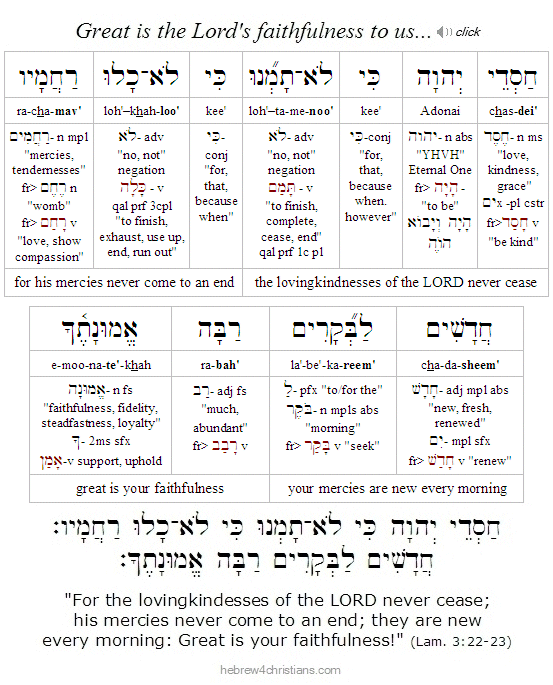 |
Love Stronger than Death...
08.07.25 (Av 13, 5785) Shalom friends. It is written in our Scriptures: "When the perishable puts on the imperishable, and the mortal puts on immortality, then shall come to pass the saying that is written: 'Death is swallowed up in victory'" (1 Cor. 15:54).
Paul here quotes from the prophet Isaiah: "He will swallow up death in victory; and the Lord GOD will wipe away tears from off all faces" (Isa. 25:8). Rejoice, dear one trusting in God's work of salvation. The good news is that we shall be forever changed and all that once defined us will be discarded like the shroud of Yeshua that was left behind in the tomb.
'Death is swallowed up in victory.' This is the climactic word given to us, namely that the promise of our salvation shall be fully realized, and that even dread death and all its powers shall be "devoured" and engulfed in the abyss of forgetfulness... "The righteous and elect shall be saved on that day, and they shall never thenceforth see the face of the sinners and unrighteous. And the Lord of Spirits will abide over them, and with the Son of Man shall they eat and lie down and rise up forever and ever" (Dan 7:13–14; 1 Enoch 3).
The wages of our sin is spiritual death, and the verdict of our sin is revealed and defined in the truth of the law of God (Rom. 3:20). No one can answer its demands; no one can endure its curse nor do away their own transgressions. The "sting of death" is our sin; but Yeshua - by dying in our stead and for our sin - has taken out this sting; by his atonement on the cross he has obtained full remission for us. "For God has made him who knew no sin to be sin for us, that we might become the righteousness of God in Him" (2 Cor. 5:12).
The language of the "everyday" world is used to describe the fallen world; its meaning is grounded in the profane, the carnal, and the forlorn. The "natural world" and its language is antithetical to the truth and substance of the spiritual world. In Hebrew, "devarim" means both words and "things," powers that have spiritual and unseen effect in our lives. What is said "echoes" and resounds a weightiness that extends beyond the phenomenal world. As it is written, "death and life are in the hand of the tongue" (מָוֶת וְחַיִּים בְּיַד־לָשׁוֹן), our words either are poison or fruit depending on how we use them (Prov. 18:21).
Faith takes account of the meaning and significance of words; it realizes that whatever we say is a confession of what we believe. Every "careless" word we utter has weight; every bit of sarcasm, cruelty, and gossip, but also our words of encouragement, praise, and the silent whispers of hope and expressions of love within our hearts. The language of the Holy Spirit edifies and "builds up" others (Eph. 4:29; Col. 4:6).
The vocabulary of the tzaddik focuses on what is real, true, abiding, and life-giving. The perishable is lost in the imperishable; the mortal is overcome by the immortal, and all the powers of death itself are devoured in the overmastering victory of God's love in Yeshua... "I am the resurrection and the life. The one who believes in me, though he die, he shall live. And whoever lives and believes in me shall never die. Do you believe this?" (John 11:25-26).
Hebrew Lesson
Isaiah 25:8 reading (click):
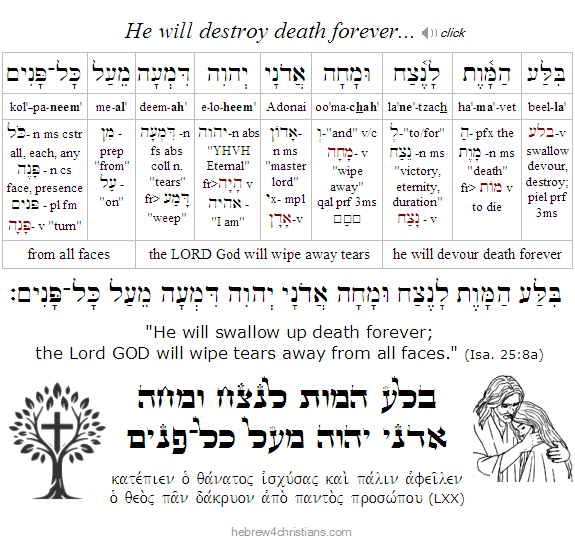 |
Unto the Heart of Heaven...
08.07.25 (Av 13, 5785) In our Torah reading for this Shabbat (i.e., Vaetchanan), Moses recalled the awesome revelation of the Torah at Sinai, describing how the mountain "burned with fire unto the heart of heaven" (בּעֵר בָּאֵשׁ עַד־לֵב הַשָּׁמַיִם) when the Ten Commandments were inscribed upon the two tablets of testimony (Deut. 4:11-13). In this connection the sages say that the tablets represented a heart, as it is written: "write them on the tablet of your heart" (Prov. 3:3), and God's word is likened to a consuming fire (i.e., esh okhlah: אֵשׁ אֹכְלָה) that reveals the great passion of his heart for us (Jer. 23:29; Deut. 4:24).
Tragically, the two tablets were smashed after the people lost sight of the heart of heaven (i.e., lev ha'shamayim: לב השמים), and therefore God requires a broken heart - teshuvah - to behold his glory once again. Therefore we see that Yeshua died of a broken heart upon the cross for our return to God, when the fire of his passion burned unto the very heart of heaven, and in his self sacrifice (מסירת הנפש) we see the greater glory of God...
Hebrew Lesson
Proverbs 3:3 reading (click):
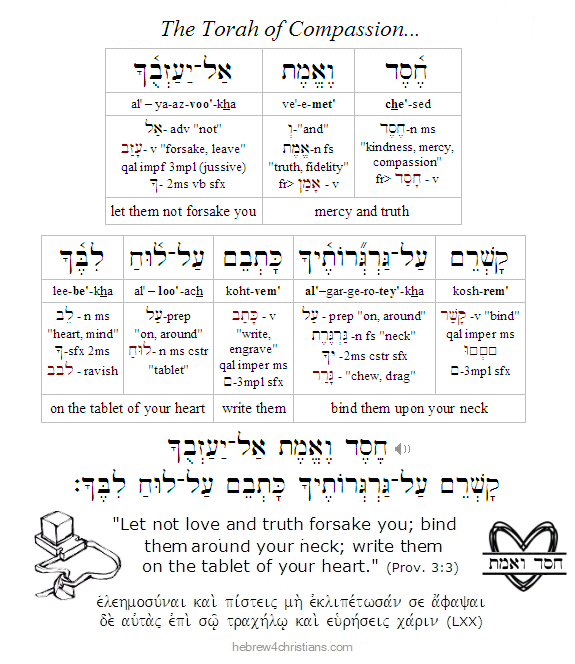 |
The Holiday of Tu B'Av...
The holiday of Tu B'Av begins Friday, August 8th at sundown this year...
08.07.25 (Av 13, 5785) Tu B'Av (ט"ו באב), or the "fifteenth [day] of [the month of] Av"), is a holiday of love celebrated in modern Israel that has its origins long before "Valentine's Day." According to the Jewish sages, just as Yom Kippur (the Day of Atonement) originally celebrated the reconciliation of Israel to the LORD after the sin of the Golden Calf, so Tu B'Av originally celebrated the reconciliation of Israel for the Sin of the Spies. Therefore both the fifteenth of Av and Yom Kippur became joyous times celebrating forgiveness and restoration to the LORD. Indeed, the Babylonian Talmud (Ta'anit 31a) quotes Shimon ben Gamliel as saying, "Israel had no holidays as joyous as the Fifteenth of Av and the Day of Atonement, when the maidens of Israel would go out and dance in the vineyards... What were they saying: Young man, consider whom you choose to be your wife..."
Moreover, since it marks the "last" festival of the Jewish year, Tu B'Av prophetically pictures our marriage to the Lamb of God (Seh Elohim), Yeshua our beloved Messiah. On a soon-coming day those who belong to him and are faithful to follow his ways will be blessed with the unspeakable joy as their "wedding day" finally has come. This is heaven itself - to be in the Presence of the LORD and to be His beloved (Rev. 19:6-9).
With the advent of the holiday of Tu B'Av, we are reminded of the beautiful phrase, ani l'dodi ve'dodi li (אֲנִי לְדוֹדִי וְדוֹדִי לִי), "I am my beloved's, and my beloved is mine" (Song. 6:3), a phrase the sages say is an acronym for the name Elul (אלול). Since the month of Elul begins in just a few weeks (i.e., August 23rd this year), the entire month is set apart to prepare us for the coming High Holidays in September. During this time it we engage in cheshbon ha-nefesh ("soul searching") and to derive comfort that God is forgiving and loving to those who turn to Him. The sages chose the seven "Haftarot of comfort" to encourage us to make our hearts ready for the upcoming High Holiday Season.
Hebrew Lesson
Song 6:3 reading (click for audio):
"To love someone means to see them as God intended them." (Fyodor Dostoyevsky)
Seeking things Above...
08.07.25 (Av 13, 5785) Then he said to them all, "If anyone wants to become my follower, he must deny himself, take up his cross daily, and follow me. For whoever wants to save his life will lose it, but whoever loses his life for my sake will save it" (Luke 9:23-24). Paradoxically only those willing to give up their lives will take up their cross, but the prospect remains an offense to those who seek to protect themselves. We must let go, say goodbye, and turn away from the allure of this world. The cross of Messiah crucifies our relationship to this world with its ignorance and vanities (Gal. 6:14). Through the cross we die to this world and its idolatry and cross over to a new realm of existence altogether (Gal. 2:20; Col. 3:1-4). The cross marks the beginning of life in the spirit...
"If then you have been raised with Messiah, seek the things that are above (τὰ ἄνω ζητεῖτε), where the Messiah is seated at the right hand of God (לִימִין אֱלהִים). Focus your thoughts on the things above, not on things here on earth. For you have died, and your life has been hidden with Messiah in God. Then when the Messiah, who is your life, appears, you too will appear with him in glory" (Col. 3:1-4).
All of this turns on our faith... If we are spiritually identified with Yeshua, we are "dead" to this age (olam hazeh), and therefore we are awakened to a realm that transcends the appeals of carnal flesh (olam habah). We no longer live chayei sha'ah (חַיֵּי שָׁעָה, "fleeting life") but chayei olam (חַיֵּי עוֹלָם, "eternal life"). The arorist verb "you have died" indicates "you have died once for all," that is, this is a condition granted by the power and agency of God on your behalf. You don't "try to die" to the flesh; you accept what God has done by killing its power over you through Yeshua... You are dead to this world; you are dead to sin's power; you are no longer enslaved to the deception of the worldly matrix, etc. Now you are made alive to an entirely greater and more powerful order and dimension of reality, namely, the spiritual reality that is not disclosed to the vanity of this age. Therefore we are to consciously focus our thoughts (φρονέω) on the hidden reality of God rather than on the temporal world that is passing away: "For we are looking not to the things that are seen but to the things that are unseen. For the things that are seen are transient (i.e., "just for a season," καιρός), but the things that are unseen are eternal" (2 Cor. 4:18).
"When faith in God begins to affect an individual, his entire existence is transformed. His obsession with immediate pleasures and pains dies away. Instead his attention is increasingly focused on God. He comes to conceive God in his heart not just at a particular moment, but at every moment. He desires to share the infinity of God, and so feels himself confined within his present existence. He is like a bird in a cage, dreaming of flying free; he is like a fish on dry land, dreaming of swimming in a pool. He is acutely aware of the contrast between God's power and his own frailty. Yet even in his confinement, he feels joy in the knowledge that soon he will be free." (Kierkegaard)
We share the (in)visibility of the Messiah in this age... Since He is presently hidden from view, "the world knows us not, because it knew him not" (1 John 3:1); on the other hand, when He is revealed from heaven, so we will appear with him in glory... Therefore "being dead" is an inversely reciprocal relationship: being dead to this world is to be alive in the other world, and vice-versa.... We have "hidden life" in the Messiah, as it is written: "your life has been hidden (i.e., κρύπτω, "concealed," "disguised") with the Messiah in God." By faith you are made dead to one order of reality so that you would be made alive to another order of reality, to the reality of God that transcends the shadows and decay of this world. Your life has been hidden - like a "hidden treasure" - with the Messiah, who holds its store for you and will reveal its glory in the coming age. Because Yeshua knows you by name, calls you to follow Him, and is your Sin-Bearer, Priest, Advocate, and Savior before the throne of God, your life is indeed "hidden with Him," and you are made secure through His all-powerful providential care... Praise His Name forever.
Salvation is forever a matter of life and death. We esteem earthly doctors because they are healers of the body, but how much more do people need true healers of the soul? "Be not deceived" about your own hope for eternity; "God is not mocked" (μυκτηρίζω). He knows your inner motivations with perfect clarity (Gal. 6:7; Heb. 4:12). To "serve" God in the truth means being willing to face ongoing self-examination, to own up to the truth about yourself, to be real, to be honest. We are here to share the message of God's love and to help bring others to eternal life. Yeshua's fiercest words of condemnation were reserved for those who played games with "religion" - for those who forgot that people were literally dying without God's love... May God help us remember what is closest to His heart, friends...
Hebrew Lesson
Psalm 73:25 Hebrew reading:
Words of the Heart...

08.06.25 (Av 12, 5785) During his lectures on Jewish values, Joseph Telushkin used to ask his audience if they can go 24 hours without saying any unkind words about, or to, anybody. Most people said no, they couldn't. Rabbi Telushkin then commended them for their honesty, but then pointed out that if he had asked them if they could go 24 hours without drinking alcohol and they likewise said they couldn't, wouldn't that mean they have a serious drinking problem? (Words that Hurt). His point is that if you can't go 24 hours without saying unkind words about others (or raging at the world), you have lost control of your tongue.
Yeshua said words express the condition of the heart, since "from the abundance of the heart the mouth speaks" (Luke 6:45). Therefore the root issue concerns the heart (לֵב), the "midst of the self" that wills, desires, and chooses how to interpret and describe the world. If we choose to see from a heart of fear, we will tend to use our words as a weapon; but if we see with a heart of faith, we will extend compassion and seek to build others up....
In the Book of Proverbs we read, "In the abundance of words transgression is not lacking: but whoever restrains his lips is wise" (Prov. 10:19). The Chofetz Chaim comments: "When people are preparing a telegram, notice how carefully they consider each word before they put it down. That is how careful we must be when we speak." As James admonishes us: "Let every person be quick to hear, slow to speak, slow to anger, for the anger of man does not produce the righteousness of God" (James 1:19-20). Amen, "Let the words of my mouth, and the meditation of my heart be acceptable in thy sight, O LORD, my Strength and my Redeemer" (Psalm 19:14).
Hebrew Lesson
Proverbs 10:19 reading (click):
Since our words represent our thoughts, the use of our tongues has to do with how we choose to think... "Think on these things..." We are instructed to "take every thought captive" (αἰχμαλωτίζω, i.e., lead away as a prisoner) to the obedience of Messiah... It is wise to restrain our speech, because, after all, we often have no idea what we are talking about, and therefore our words can become unruly and even dangerous. Whenever we open our mouth to speak, Heaven is listening (see Matt. 12:36-37).
Death and Salvation...
"Dearly loved friends, we would free ourselves from great fears in this life if we would simply fear death! We should live now so at the hour of death we may rejoice rather than cower. We must learn to die to the world now, so we can begin to live with Christ now." - Thomas a Kempis
08.06.25 (Av 12, 5785) "Pray that I die tonight..." These are words of someone at the cusp of eternity, trapped in the gloom of mortal twilight, looking for the dawning light; someone desperately listening for the whisper of God to call their name as they breathe their last...
Faith in God sees beyond pain, sorrow, and even the dread of death itself to foresee the place of promise, life, and ultimate healing. It is assured by the inner witness of God's Spirit that "the best and holiest dream is true after all," and that "all shall be well, and all manner of thing shall be well." Amen. Death is "swallowed up" in the victory of Yeshua over death.
"For what is your life? It is even a vapor that appears for a moment and vanishes away" (James 4:14). "Man is like a breath; his days are like a passing shadow" (Psalm 144:4). This is a recurring theme of Scripture. But there is Someone behind the veil that upholds our days of sojourn and who prepares a place for us. "For none of us lives to himself, and no one dies to himself. For whether we live, we live unto the Lord; and whether we die, we die unto the Lord: whether we live therefore, or die, we are the Lord's. For to this end Yeshua both died, and rose, and revived, that he would be Lord both of the dead and living" (Rom. 14:7-9).
The "problem of life" is death, and by death I don't mean simply physical death, but far more radically spiritual death - the separation of our heart and our essence from God. The early Jewish sages understood this by saying that the righteous, even after their passing, are regarded as alive; the wicked, even as they are alive, are regarded as dead." The problem of spiritual death is the catastrophic disorder that universally affects the human condition....
When we accept the truth of our lost condition and look to God alone as our Savior, we begin to come alive. This is the starting point of teshuvah, or repentance. When we trust in the divine remedy given in Yeshua for our personal atonement and believe in the reality and presence of God within our inmost being, we are "born from above" and find our true selves.
The life of faith is not without challenges and temptations, of course, not the least of which comes from habitual forms of godless and fearful thinking that entice us to regard ourselves as heirs of our former fallen estate. The battle is real and calls for ongoing teshuvah so that we remember who we really are as God's beloved children. But the battle is real. We are "two-souled" and double-minded; we wrestle with the desires of the flesh and the desires of the Holy Spirit that have been implanted within us in regeneration.
"I say then: walk in the Spirit, and you shall not fulfill the lust of the flesh. For the flesh lusts against the Spirit, and the Spirit against the flesh; and these are contrary to one another, so that you do not do the things that you wish" (Gal. 5:16-17). "Walk in the Spirit," or perhaps better, "live in the Spirit" (לחיות ברוח) which is the mandate of spiritual life. But note well that we cannot live in the Spirit if we are not led by the Spirit, and we cannot be led by the Spirit if we are not truly God's children who are regenerated by the miracle and agency of the Living God. As Yeshua said, "It is the Spirit who gives life; the flesh is no help at all. The words that I have spoken to you are spirit and life" (John 6:63).
Ultimately death is swallowed up in God's victory, that is, in His deliverance of your soul from the lethal condition of sin and death. Yeshua alone saves us from eternal death. It is God's plan to celebrate his love for your redeemed life. "Since before time began no one has ever imagined, no ear had heard, no eye has seen, a God like you who works for those who wait for him" (Isa. 64:4). Yeshua is the way to our everlasting healing. "I am the resurrection and the life. The one who believes in Me, though he may die, he shall live. And whoever lives and believes in Me shall never die. Do you believe this?" (John 11:25-26).
Hebrew Lesson:
Psalm 31:19a reading (click):
<< Return
|