|
August 2025 Updates (continued)
Note: If any page content appears to be missing, please refresh the page...
Return to your heart...

08.06.25 (Av 12, 5785) Although we pray for Israel and anticipate the coming of the Lord for us, the present state of this evil world has absolutely nothing to say regarding the life of faith in the LORD (יהוה)... Our duty is to live before the Divine Presence at all times -- regardless of whatever our circumstances. "In relationship to God one can not involve himself 'to a certain degree.' God is precisely the contradiction to all that is 'to a certain degree'" (Kierkegaard). A believer must be contemporary with Christ's presence on earth, since the Eternal entered historical time to offer a timeless relationship with all who would believe. Our Lord touches us because He connects with our hearts in the present hour...
So what do you truly believe? What do you love? How do you "relate" to life? For those who trust in the Presence of God in Yeshua, nothing "happens" randomly or at a distance from our Heavenly Father's care... We do not know Yeshua as some hoary figure of the past, nor as a remote hope of the heart, but in the "blood and guts" of our daily struggle -- in the midst of our connection with him as we journey in faith. God's love is not a secondhand gift... Yeshua asks each of us: 'Who do you say that I am?' (Mark 8:29) and awaits for us to "show up" in our faith to reach out to Him.
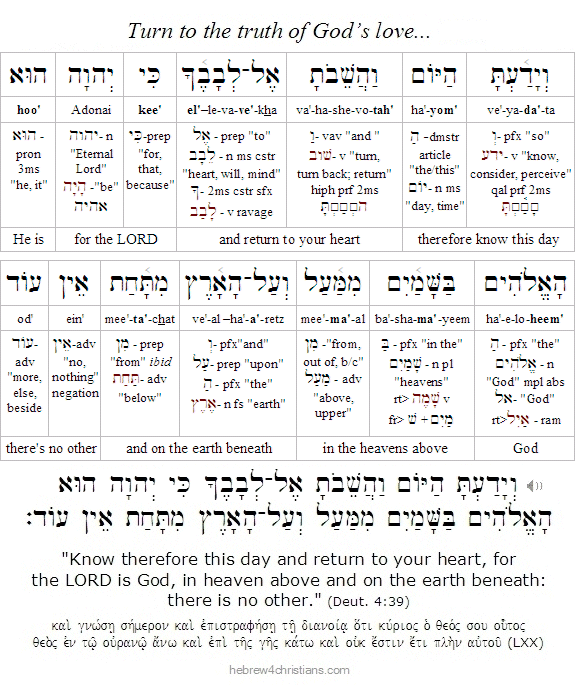
From our Torah portion this week (i.e., Vaetchanan) we read, "Know therefore today and return to your heart (והשׁבת אל־לבבך), for the LORD is God in heaven above and on the earth beneath; there is no other" (Deut. 4:39). Here again we see the centrality of the heart as the mode to encounter God (Luke 17:21). Savor the phrase, "Know therefore today and return to your heart..." It the heart that is the place of connection with God... As Yeshua said, "Behold, I stand at the door and knock. If anyone hears my voice and opens the door, I will come in to him and eat with him, and he with me" (Rev. 3:20). Today is the day to "return to your heart" and receive again God's love for your soul...
Hebrew Lesson
Deut 4:39 Hebrew reading (click):
 |
Connection with God...
08.06.25 (Av 12, 5785) Our Torah reading for this week begins, "I pleaded with the LORD" (Deut. 3:32). Prayer is our lifeline to God; it is the essential work of faith... Therefore we understand the Hebrew word "mitzvah" (מִצְוָה), which is often translated "commandment," to be about making a heart connection with God (i.e., the root צוה means to bind or unite). Being connected with the LORD means talking with him, relating to him as your heavenly Father, and trusting that he esteems you as his beloved child. Whatever else you may think about the commandments of God, the idea of a love connection is foundational and essential. Indeed the very first of the Ten Commandments is anochi Adonai Elohekha, "I am the Lord your God" (אנכי יהוה אלהיך) which summons the heart to receive the touch of the Spirit of God. There is no love like that of the Lord, but you can't feel that love if you don't speak with Him, pouring out your heart and clinging to the truth of his personal love for you....
Hebrew Lesson
Psalm 62:8 Hebrew reading:
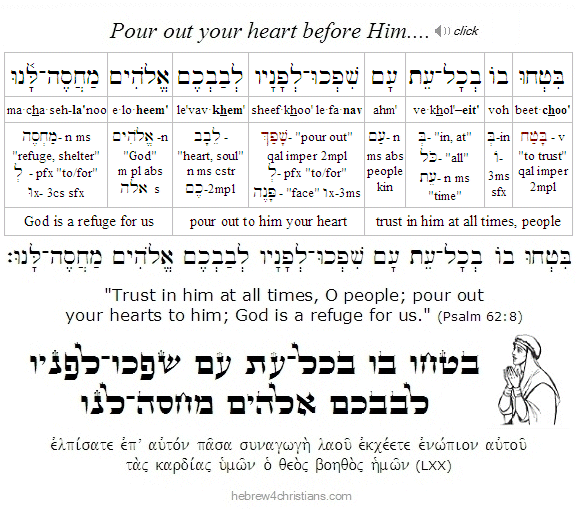 |
Privately pouring out your heart to God in an honest, transparent, and earnest way is called hitbodedut (הִתְבּוֹדְדוּת), a word that means "solitude" or "seclusion." As we unburden the secret of our souls before the Lord, we are readied to truly listen, as it says, "In returning and rest you shall be saved; in quietness and in trust shall be your strength" (Isa. 30:15). Only after we sigh deeply and surrender are we receptive to the voice of the Spirit's whisper. "Blessed are all those who wait for Him" - אַשְׁרֵי כָּל־חוֹכֵי לוֹ (Isa. 30:18). We wait, we abide, even when God seemingly takes his time or does not immediately intervene. We do not lose heart, for we find strength when we trust in God's love... No prayer uttered to the one true God in the passion of truth will ever go unanswered. The Light of the world still shines: Yeshua, be my inner word, my heart, and my groaning for life today, and forevermore, amen.
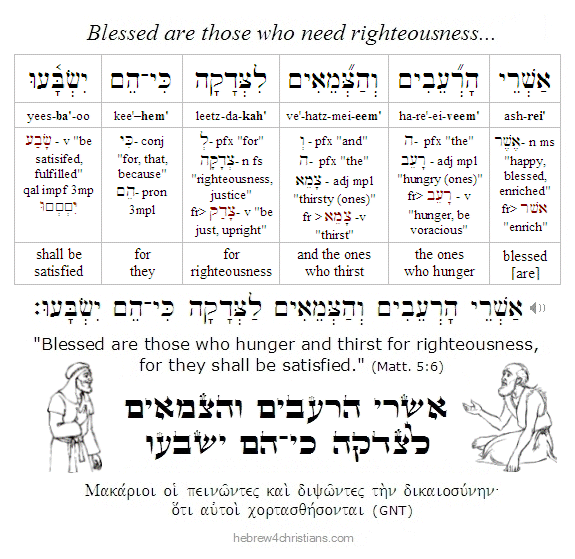
Since the essence of Torah is heart connection to God, the greatest blessing is to be filled with a steadfast desire to draw close to him, to experience hunger and thirst (visceral yearning) for God's presence and touch. Holy desire – expressed in the yearning of heartfelt prayer – is therefore a state of true blessedness, and the more desperate our need for God the more blessed we are. It is our desire, our holy need, that creates a bond between our soul and its Creator, and that is the deeper meaning of mitzvah... "Blessed are those who hunger and thirst for righteousness, for they shall be satisfied" (Matt. 5:6).
Hebrew Lesson
Matthew 5:6 Hebrew reading:
 |
Devakut: Cleaving to God...
The following is related to parashat Vaetchanan, which is always read on the Sabbath following Tishah B'Av, called Shabbat "Nachamu", or "the Sabbath of Comfort."
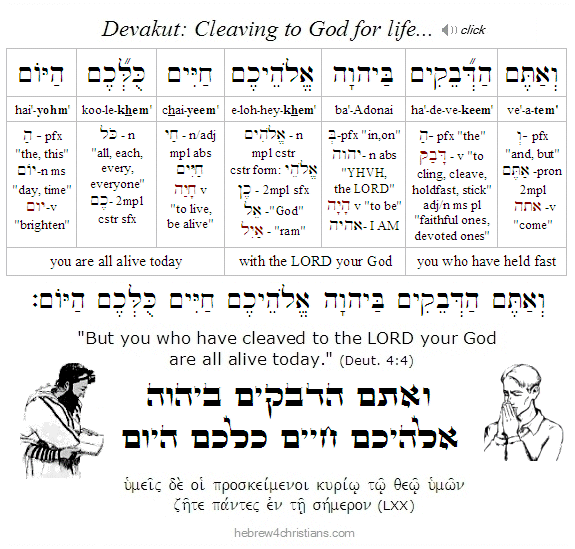
08.05.25 (Av 11, 5785) Our Torah portion this week, which is customarily read on the Sabbath following Tishah B'Av, says: "But you who have cleaved to the LORD your God are all alive today" (Deut. 4:4). The Hebrew word translated "cleave" is davak (דָּבַק), first used in the Torah to describe how a man would leave his father and mother to cleave to his wife so they would become "besar echad" (בָשָׂר אֶחָד), or "one flesh" (Gen. 2:24). The word is also used to describe how Ruth clung to Naomi (Ruth 1:14), how David pursued enemy armies (2 Sam. 23:10), how Solomon was attached to his foreign wives (1 Kings 11:2), how Job's bones stuck to his flesh (Job 19:20), how leviathan's scales were glued together (Job 41:17), how metal was welded together (Isa. 41:7), how the LORD cleaves to Israel (Jer. 13:11), and so on. It also is the word used to describe how Yeshua's tongue was so dried out that it stuck to his jaws as he agonized upon the cross (Psalm 22:15). Incidentally, in Modern Hebrew word for "glue" is devek (דֶבֶק), which also comes from the same root...
Another word that derives from davak is the noun form devakut (דְּבָקוּת), which means "cleaving" in devotion or attachment to God. Such cleaving to the LORD can be thought of as "stick-to-itiveness" or pertinacity, though it might better be understood as a form of clinging in dependency, surrender, and heart-desperation. So understood, devakut is a form of communion with and a reliance upon God for the blessing of life...
Cleaving to God is a day-to-day, moment-by-moment trusting of the heart. As Yeshua said: "Take therefore no thought for tomorrow: for tomorrow shall take thought for the things of itself. Sufficient for the day its own trouble" (Matt. 6:34). Live one day at a time. The LORD gives us daily bread (לֶחֶם חֻקֵּנוּ) so that we may persevere for this day. "For he is our God, and we are the people of his pasture and the sheep of his hand today -- if you hear his voice" (Psalm 95:7). Today, if you hear his voice, do not harden your heart (Heb. 3:15). "Take care, brothers, lest there be in any of you an evil, unbelieving heart, leading you to fall away from the living God, but encourage one another every day, as long as it is called "today," so that none of you may be hardened by the deceitfulness of sin" (Heb. 3:12-13).
Hebrew Lesson
Deut. 4:4 Hebrew reading (click):
Our Yearning for Heaven...

"To walk out of his will is to walk into nowhere." - C.S. Lewis
08.04.25 (Av 10, 5785) It is an ongoing struggle to live in this world without being devoured by its fear, insanity, and violence. Yeshua prayed for his followers saying, "I am not asking you to take them from the world but to keep them from the evil one. They do not belong to the world any more than I belong to this world" (John 17:15-16).
To live in the world without belonging to the world marks the life of the tzaddikim who are seeking the house of love, the place where God abides. Even though we are given "traveling mercies" for our journey in this world, we must lift our heart toward heaven, desisting the world and its vanities, and regarding the place of God's heart to be our true home.
Abraham closed his eyes to this world and was given the inner light of truth that would reveal his way to God. "By faith Abraham obeyed when he was called to go out to a place that he was to receive as an inheritance. And he went out, not knowing where he was going. By faith he sojourned in the land of promise as in a strange land, living in tents with Isaac and Jacob, heirs with him of the same promise. For he was looking forward to the city that has foundations, whose designer and builder is God" (Heb. 11:8-10). For here we have no lasting city, but we seek the city that is to come (Heb. 13:14).
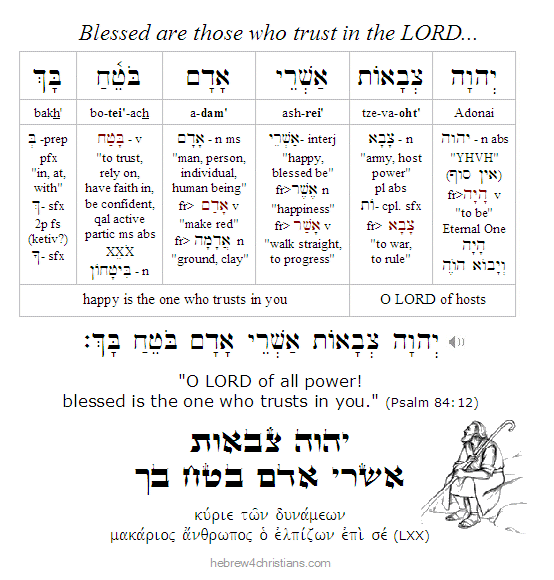
So let us lift up our souls unto the LORD and refuse to live in fear. Let us stand strong in faith, trusting God's promise even if we are sometimes in darkness. And let us take hope in God's word: "O LORD of all power, blessed is the one who trusts in you" (Psalm 84:12).
Hebrew Lesson
Psalm 84:12 reading (click for audio):
 |
Shavuah Tov Podcast:
Parashat Vaetchanan...
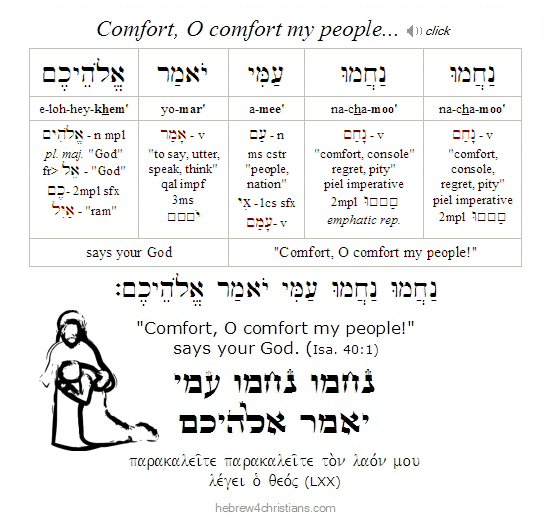
08.04.25 (Av 10, 5785) Our Torah reading for this week (i.e., Vaetchanan) is always read on the Sabbath that immediately follows the somber holiday of Tishah B'Av (תשעה באב). In Jewish tradition, this special Sabbath is called "Shabbat Nachamu" (שַׁבַּת נַחֲמו), "the Sabbath of Comfort" and assigned the prophetic portion from the Book of Isaiah that begins with the famous phrase: נַחֲמוּ נַחֲמוּ עַמִּי - Nachamu, Nachamu ami - "Comfort, O comfort ye, my people..." (Isa. 40:1). With the advent of this special Sabbath, we have just seven weeks to prepare for the new year (i.e, Yom Teruah or "Rosh Hashanah") and the High Holidays - a "jubilee" season that heralds the return of Yeshua.
Hebrew Lesson
Isaiah 40:1 reading (click for audio):
Va'etchanan: Moses' Plea...
Our Torah reading for this week, parashat Vaetchanan, is always read on the Sabbath immediately following Tishah B'Av, called Shabbat "Nachamu", or "the Sabbath of Comfort."
08.04.25 (Av 10, 5785) This week we will study parashat Vaetchanan (פרשת ואתחנן), a rich Torah portion that includes some of the most foundational texts of the Jewish Scriptures, including the Ten Commandments, the Shema (the duty to love God and study His Torah), as well as the commandments of tefillin and mezuzot. In addition, in this portion Moses predicted the worldwide exile and the eventual redemption of the Jewish people in acharit hayamim (the prophesied "End of Days").
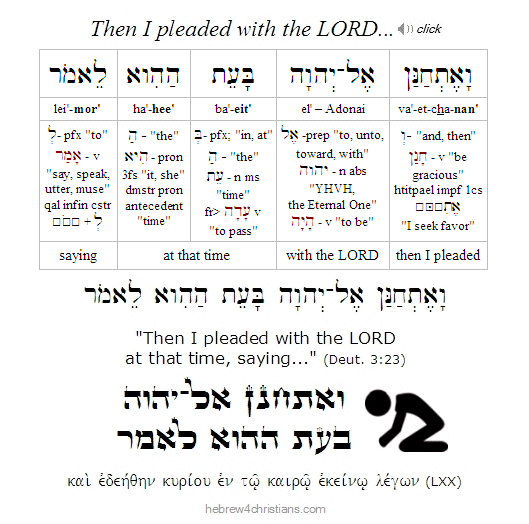
The Torah portion begins with Moses' plea to the LORD to be allowed entry into the Promised Land, despite God's earlier decree (see Num. 20:8-12; 27:12-14). The Hebrew word va'etchanan (וָאֶתְחַנַּן) comes from the verb chanan (חָנַן), which means to beseech or implore. It derives from the noun chen (חֵן), grace, implying that the supplication appeals to God's favor, not to any idea of personal merit (in Jewish tradition, tachanun (תַּחֲנוּן) are prayers recited after the Amidah begging for God's grace and mercy). Moses was asking God to show him grace by reversing the decree that forbade him to enter the Promised Land.
Hebrew Lesson
Deut:3:23 reading (click for audio):
In addition to our Torah readings, on the 15th day of the month of Av we observe chag ha-ahavah (חַג הָאַהֲבָה), or "the holiday of love." Since it marks the "last" festival of the Jewish year, prophetically the 15th of Av (called Tu B'Av) pictures our marriage to the Lamb of God (Seh Elohim), the LORD Yeshua our beloved Messiah. On a soon-coming day those who belong to the LORD and are faithful to follow His ways will be blessed with the unspeakable joy of an eternally intimate relationship with Him. This is heaven itself - to be in the Presence of the LORD and to be regarded as His beloved (Rev. 19:6-9). Maranatha.
Sinat Chinam and Tishah B'Av:
Why was the Temple Destroyed?
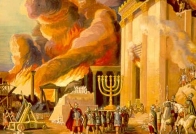
08.03.25 (Av 9, 5785) Tishah B'Av remembers the destruction of the two Holy Temples of Judaism. According to the Talmud (Yoma 9b), the first Temple was destroyed (586 BC) because of the sins of idolatry, immorality, and bloodshed, but the Second Temple was destroyed (70 AD) because of what the sages call "baseless hatred." This baseless hatred, or sinat chinam in Hebrew, is considered a more serious offence than the earlier sins that led to the destruction of the First Temple: It took 70 years to rebuild the First Temple, but Jews are still waiting to rebuild the Second Temple, even after more than 1,900 years....
Why was the first Sanctuary destroyed? Because of three [evil] things which prevailed there: idolatry, immorality, bloodshed. But why was the second Sanctuary destroyed, seeing that in its time they were occupying themselves with Torah, [observance of] precepts, and the practice of charity? Because therein prevailed hatred without cause. That teaches you that groundless hatred is considered as of even gravity with the three sins of idolatry, immorality, and bloodshed together. (Talmud: Yoma 9b)
Though sinat chinam (שִׂנְאַת חִנָּם) is often translated as "baseless hatred," it literally means "hatred of grace (חֵן, chen)," that is, an aversion to using ayin tovah (a good eye) to see good in others. Just as God freely loves, so the devil freely hates... In essence, then, sinat chinam is the rejection of God's grace. But since Yeshua is the embodiment of God's grace (John 1:17, etc.), sinat chinam is ultimately a rejection of His ministry. Is it any wonder, then, that he foretold the destruction of the Second Temple based on Israel's hatred and rejection of Him (Matt. 24:2)?
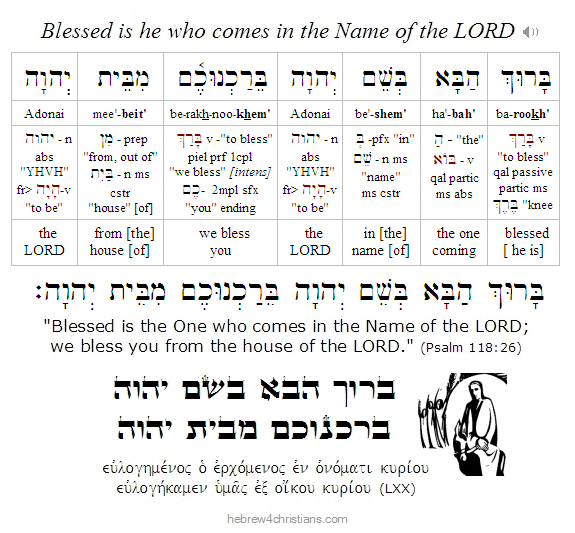
Recall the context. During His "triumphal entry" into Jerusalem (Matt. 21:1-11), Yeshua was greeted by the cries of Jewish Passover pilgrims: "Hosanna!" This word is actually the phrase "hoshiah na" (הוֹשִׁיעָה נָּא), meaning "please save" or "save now." The Jewish pilgrims were singing Psalm 118:25-26 and applying it to the greater Son of David, Yeshua, who had come:
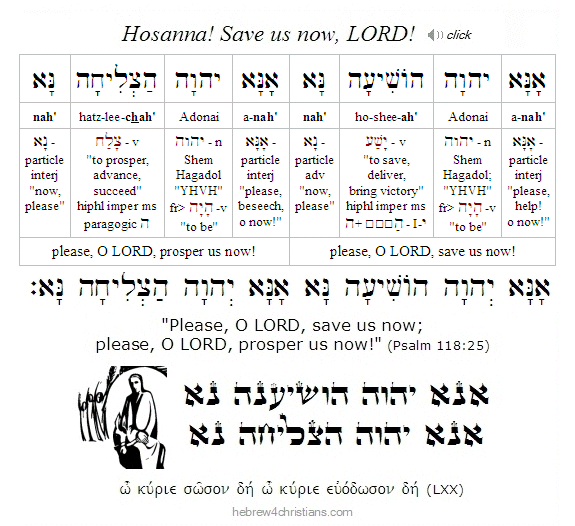 |
Matthew notes that hoshiah na was addressed to Yeshua Himself, "to the [greater] son of David" (לְבֶן־דָּוִד), thereby indicating that the Messianic Hope was presented to Israel (Matt. 21:9). For a flickering moment the proper praise was given to Yeshua as Mashiach ben David, though of course He had come to them as Mashiach ben Yosef, their Suffering Servant, the One of whom the prophet Isaiah clearly foretold.
Immediately after his "triumphal entry," Yeshua went directly to the Temple and drove out all who sold there, overturning the tables of the "money changers" and the seats of those who sold pigeons (Matt. 21:12). After this the blind and the lame were able to enter the Temple -- and Yeshua healed them.
Despite performing miraculous works of healing in the Temple that day -- including opening the eyes of the blind and causing the disabled to walk -- the kohanim (chief priests) and soferim (scribes) were "indignant" at His actions and therefore sought to put Him to death (Mark 11:18).
In the evening Yeshua left the Temple for Bethany, the home town of Mary, Martha and Lazarus, where He stayed the night. The following morning He walked back to Jerusalem, and being hungry, saw a fig tree along the way. When He saw that the fig tree was without any fruit, Yeshua pronounced these words: "May no fruit ever come from you again!" And the fig tree withered at once (Matt. 21:18-19).
He then returned to the Temple where he was once again accosted by the religious establishment who questioned his authority. Yeshua turned the tables on his accusers by giving them a dilemma to solve: the baptism of John: was it from God or from man? Unwilling to answer him, Yeshua then prophesied the parable of the two sons (Matt. 21:28-32), indicating that despite their supposed status as the "good sons" of Israel, even tax collectors and prostitutes would enter the Kingdom of God before them. He went on to say that "the kingdom of God will be taken away from them and given to a people producing its fruits" (Matt. 21:43).
The Pharisees and the Sadducees then attempted to "entangle him in his talk" and sent their disciples to ask him tricky questions. Yeshua, however, exposed their "baseless hatred" -- their sinat chinam - and confounded them (see Matt. 22). Beginning in Matthew 23, Yeshua then began his denuciation of the "scribes and the Pharisees," pointing out their hypocrisy and their unclean motives. חֲנֵפִים אַךְ־אוֹי לָכֶם סוֹפְרִים וּפְרוּשִׁים (akh-oy lachem soferim u'perushim, chanafim): "Woe to you scribes and Pharisees, hypocrites! (Matt. 23:13-ff).
After Yeshua ended his denunciation, he lamented for Jerusalem saying, "O Jerusalem, Jerusalem, the city that kills the prophets and stones those who are sent to it! How often would I have gathered your children together as a hen gathers her brood under her wings, and you would not! See, your house is left to you desolate. For I tell you, you will not see me again, until you say, 'Blessed is he who comes in the name of the Lord'" ( Matt. 23:37-39).
After this, Yeshua left the Temple for good and never looked back. In Matthew 24 Yeshua's disciples made a last-ditch appeal for Jewish tradition and ceremony by pointing out the glory of the Second Temple. "Look at these beautiful buildings of the Temple, Lord..." It was then that Yeshua pronounced judgment on the Temple and the Levitical system, predicted the Roman destruction of the Temple, and so on (Matt. 24:1-2). This was apparently unfathomable to the disciples, who apparently still considered Yeshua to be a "reformer" of Temple Judaism, perhaps the one who would restore it so that the Kingdom of God would be finally manifest upon the earth. Yeshua went on to explain the signs of the End of the Age (אַחֲרִית הַיָּמִים) that would precede the promised Days of Messiah (יְמֵי הַמָּשִׁיחַ), otherwise known as the Messianic Kingdom. He foretold that one day praise would rightly be given to Him as Israel's True King, but only after the travail of the coming Great Tribulation upon the earth. Only after the Jewish people cry out to Him as their LORD (Matt. 23:39) would the Kingdom of God be established in Zion.
Please note that there were at least two separate cleansings of the Temple recorded in the New Testament. The earlier cleansing is described in John 2:13-22 and the later one is described in (both) Mark 11:15-19 and Matthew 21:1-16. In Mark's account of the second cleansing, Yeshua actually stopped the "carrying of the ritual vessels" -- meaning He literally stopped the Temple sacrifices of Israel (עבודה של הלויים). Mark 11:16 shockingly states: "And he would not allow anyone to carry anything through the Temple." Here is the passage:
So they came to Jerusalem, and he entered the Temple and began to drive out those who sold and those who bought in the temple, and he overturned the tables of the money-changers and the seats of those who sold pigeons. And he would not allow anyone to carry anything through the Temple. And he was teaching them and saying to them, "Is it not written, 'My house shall be called a house of prayer for all the nations'? But you have made it a den of robbers." And the chief priests and the scribes heard it and were seeking a way to destroy him, for they feared him, because all the crowd was astonished at his teaching. And when evening came they went out of the city (Mark 11:15-19).
Yeshua certainly knew the Temple and its supposed beauty. He razed it because Israel forsook His greater sacrifice. The Jewish sages had it half right. It was indeed because of sinat chinam that the Second Temple was destroyed, but this was most clearly revealed in the rejection of Yeshua as Israel's King and Savior....
Daily Perush Podcast:
God's Glory and Tishah B'Av...

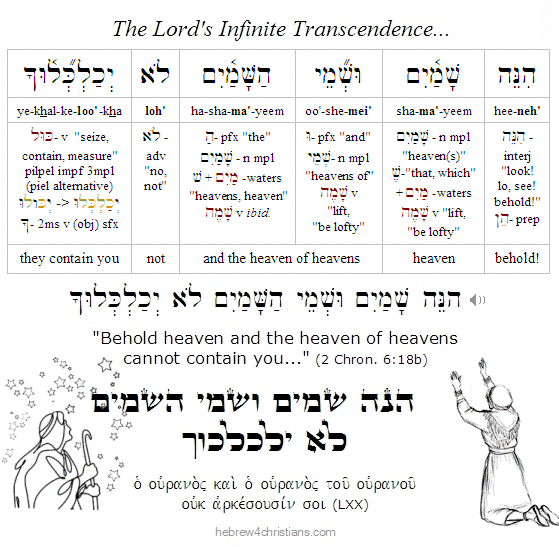
08.01.25 (Av 7, 5785) Shalom chaverim. In the following "Daily perush broadcast" (see link below) I provide exegesis and reading of a significant phrase in King Solomon's prayer at the dedication of the First Temple, namely, "Behold heaven and the heaven of heavens cannot contain you" (2 Chron. 6:18b), and then I take some to discuss the meaning of these words in relation to Tishah B'Av and the subsequent destruction of the Temple in Jerusalem.
Hebrew Lesson
2 Chron. 6:18b reading (click):
Additional Comments
During his earthly ministry, our Lord Yeshua referred to himself as "the True Temple of God" (המקדש האמיתי של אלוהים) that dwelt among us. The Mishkan (Tabernacle) was a temporary dwelling place as was the physical Bet Hamikdash (Temple). As Solomon said, God never could be contained in a house made of stone, cedar and gold (2 Chron. 6:18). These were shadows of a greater Substance that entirely embodied the Temple's purpose and essential truth (Col. 2:17).
Yeshua told the Pharisees of his day that he was greater than the Temple in Jerusalem (Matt. 12:6) and challenged them: "Destroy this Temple, and in three days I will raise it up" (John 2:19-21). Yeshua is the Shekhinah - the Presence of God - manifested in the temple of human form: "For in him the whole fullness of deity dwells bodily" (Col. 2:9, John 1:1,14).
As the Lamb of God, Yeshua is not only the Kodesh Hakodoshim (Holy of Holies) -- embodied within a human heart of flesh -- but also the substance and end of all sacrifice (Heb. 10:12). When his flesh was destroyed on the Cross, the curtain of the Temple was likewise rent asunder (Matt. 27:50). Access to the inner sanctum of the LORD was thenceforth available to all who would come in faith. Yeshua alone is the Spirit, Source and the End of the true Temple of God.
For more see: The Significance of Zion and the tragedy of Tishah B'Av
 |
Turn us back to You...
08.01.25 (Av 7, 5785) The Book of Lamentations, which is traditionally somberly chanted during the morning service of Tishah B'Av, is an acrostic (i.e., alphabetical) poem that begins with the Hebrew letter Aleph (א) in the word "eichah" (אֵיכָה), which also marks the Hebrew name of the book itself (i.e., megillat Eichah: מגילת איכה). It begins: "How (eichah) lonely sits the city that once was full of people; she has become as a widow!" (Lam. 1:1).
אֵיכָה יָשְׁבָה בָדָד הָעִיר רַבָּתִי עָם
הָיְתָה כְּאַלְמָנָה
ei·khah ya·she·vah ha·eer ra·ba·tee am
ha·ye·tah ke·al·ma·nah

"How lonely sits the city that once was full of people,
she has become as a widow!"
(Lam. 1:1a)
The sages note that this word "how" (i.e., eichah) could also be read as "where are you?" (i.e., ayekah: אַיֶּכָּה), which was God's first word of intercession spoken to Adam after he broke covenant in the Garden (see Gen. 3:9). Note that God's question is often our own: "Where are you? Where are you, God? Are you here, in the midst of this tedious moment? Do you know my loneliness, my hunger and ache for love? Do you understand the troubles of my heart?" And yet how many people have faith that God's call is one of comfort and restoration? How many shrink back in shame, vainly trying to hide themselves from God?
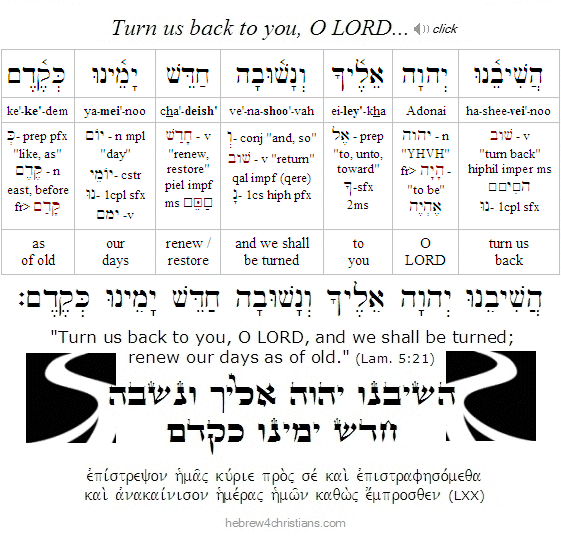
God uses our loneliness ("how lonely...") to search our hearts, asking each of us, ayekah – "Where are you?" Why have you turned away from me and chosen a state of exile? Return to me." Our sense of God's absence impels us to seek for him... God awaits our only possible response, "Hashivenu!" -- an imperative (urgent appeal) for the grace to repent: "Turn us back to you, O LORD, and we shall return; renew our days as of old" (Lam. 5:21).
Hebrew Lesson
Lamentations 5:21 Hebrew reading (click):
Our response to the questioning love of the LORD is called teshuvah ("turning [shuv] to God"). Teshuvah is an "answer" to a shelah (שְׁאֵלָה), or a question. God's love for us is the question, and our teshuvah – our turning of the heart toward Him – is the answer. As Jeremiah confessed in the hour of great trouble: "I called upon thy name, O LORD, from the depths of the pit; Thou hast heard my voice: hide not thine ear at my breathing, at my cry. Thou drewest near in the day that I called upon thee: thou saidst, Fear not" (Lam. 3:55-57).
The Tishah B'Av Prophecies...
Tishah B'Av begins Saturday Aug. 2nd at sunset and runs through the following day...
08.01.25 (Av 7, 5785) Yeshua foretold the destruction of the Second Temple when he lamented: "O Jerusalem, Jerusalem, the city that kills the prophets and stones those who are sent to it! How often would I have gathered your children together as a hen gathers her brood under her wings, and you were not willing! Behold, your house is left unto you desolate. For I tell you, you will not see me again, until you say, Barukh Haba Ba'shem Adonai: 'Blessed is he who comes in the name of the Lord.' Yeshua then left the Temple and was going away, when his disciples came to point out to him the buildings of the Temple. But he answered them, "You see all these, do you not? Truly, I say to you, there will not be left here one stone upon another that will not be thrown down." (Matt. 23:37-24:2).
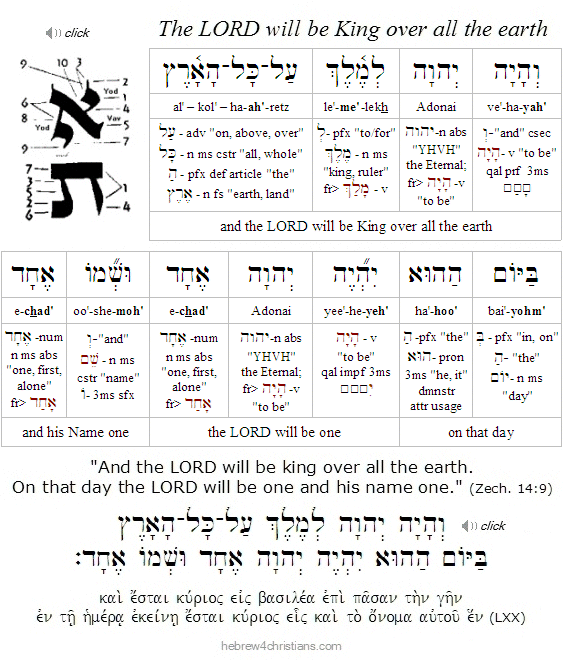
In this connection note that we are not awaiting the appearance of the "Third Temple" which will be hastily erected during the time of Jacob's Trouble during the Great Tribulation, but we await the "Fourth Temple," that is, the Temple that will be built by Tzemach Tzaddik (צֶמַח צַדִּיק), namely, Messiah the Son of David (מָשִׁיחַ בֶּן־דָוִד) who will come again to establish the Kingdom of Zion upon the earth in fulfillment of the promises of God (Zech. 6:12; Jer. 23:5). At that glorious time the mourning of the Jewish people will forgotten, as it is written: "Thus says Adonai Tzeva'ot (יהוה צְבָאוֹת): The fast of the fourth month (Tammuz), and the fast of the fifth month (Tishah B'Av), and the fast of the seventh month (Gedaliah), and the fast of the tenth month (Asarah b'Tevet), will be to the house of Judah for joy and rejoicing and for pleasant appointed seasons. Therefore love truth and peace" (Zech. 8:19). In that coming day, "the LORD will be king over all the earth. On that day the LORD will be one and his name one" (Zech. 14:9).
וְהָיָה יְהוָה לְמֶלֶךְ עַל־כָּל־הָאָ֑רֶץ
בַּיּוֹם הַהוּא יִהְיֶה יְהוָה אֶחָד וּשְׁמוֹ אֶחָד׃
"And the LORD will be king over all the earth.
On that day the LORD will be one and his name one."

Click to listen and learn the Hebrew text:
As I've mentioned over the years, the word "Zion" (i.e., tziyon: צִיּוֹן) is mentioned over 160 times in the Scriptures. That's more than the words faith, hope, love, and countless others... And since Zion is a poetic form of the word Jerusalem, the number of occurrences swells to nearly 1,000! It is therefore not an overstatement to say that God Himself is a Zionist.... "Out of Zion, the perfection of beauty, God shines forth" (Psalm 50:2). Zion represents the rule and reign of God in the earth and is therefore synonymous with the Kingdom of God. The entire redemptive plan of God -- including the coming of the Messiah Himself and our very salvation -- is wrapped up in the concept of Zion. It is the "historiography" of God -- His "philosophy of history," if you will.
The great vision of Zion is at the heart of the Gospel message and the focal point of God's salvation in this world. Zion represents our eschatological future -- our home in the world to come. Even the new heavens and earth will be called Jerusalem -- "Zion in her perfection" (Rev. 21). "This is what Adonai Tzeva'ot says: I am very jealous for Jerusalem and Zion, but I am very angry with the nations that feel secure" (Zech. 1:14-15). "For Zion's sake I will not keep silent, for Jerusalem's sake I will not remain quiet, till her righteousness shines out like the dawn, her salvation like a blazing torch" (Isa 62:1). "The builder of Jerusalem is God, the outcasts of Israel he will gather in, O Jerusalem, laud your God, O Zion" (Psalm 147:2-12).
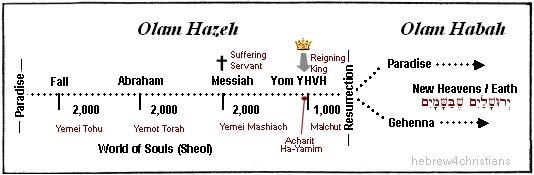
It is worth noting that in the discussion from the Talmud, the 6,000 years of human history are divided into three epochs of 2,000 years each. The period of "tohu" occurred from the time of the fall of Adam until the call of Abraham; the period of "Torah" occurred from Abraham until the time of the destruction of the Second Temple, and the period of the "Messiah" refers to the time when the Messiah could appear before the Kingdom is established in Zion. The time immediately preceding the appearance of the Messiah will be a time of testing in which the world will undergo various forms of tribulation, called chevlei Mashiach (חֶבְלֵי הַמָּשִׁיחַ) - the "birth pangs of the Messiah" (Sanhedrin 98a; Ketubot, Bereshit Rabbah 42:4, Matt. 24:8). Some say the birth pangs are to last for 70 years, with the last 7 years being the most intense period of tribulation -- called the "Time of Jacob's Trouble" / עֵת־צָרָה הִיא לְיַעֲקב (Jer. 30:7). The climax of the "Great Tribulation" (צָרָה גְדוֹלָה) is called the great "Day of the LORD" (יוֹם־יהוה הַגָּדוֹל) which represents God's wrath poured out upon a rebellious world system. On this fateful day, the LORD will terribly shake the entire earth (Isa. 2:19) and worldwide catastrophes will occur. "For the great day of their wrath has come, and who can stand?" (Rev. 6:17). The prophet Malachi likewise says: "'Surely the day is coming; it will burn like a furnace. All the arrogant and every evildoer will be stubble, and that day that is coming will set them on fire,' says the LORD Almighty. 'Not a root or a branch will be left to them'" (Mal. 4:1). Only after the nations of the world have been judged will the Messianic kingdom (מַלְכוּת הָאֱלהִים) be established upon the earth. The remnant of Israel will be saved and the 1000 year reign of King Messiah will then commence (Rev. 20:4).
 |
The concept of the King Messiah, the "Anointed One" who would one day come to deliver his people from oppression at the beginning of an era of world peace has been the sustaining hope of the Jewish people for generations. King Messiah is the instrument by whom God's kingdom is to be established in Israel and in the world. This hope runs throughout the entire Tanakh. According to rabbinical Judaism (following Maimonides), this Messiah figure is not divine, though he certainly has divine powers and attributes. Indeed, he functions as Israel's Savior who would be empowered by God to:
- Restore the Kingdom of David (Jer. 23:5, Jer 30:9, Ezek. 34:23)
- Restore the Temple in Zion (Isa. 2:2, Micah 4:1, Zech. 6:13, Ezek. 37:26-28)
- Regather the exiles (Isa. 11:12, 43:5-6, 51:11)
- Offer the New Covenant to Israel (Jer. 31:31-34)
- Usher in world peace and the knowledge of the true God (Isa. 2:4; 11:9). This will include the entire world speaking Hebrew (Zeph. 3:9).
- "Swallow up" death and disease (Isa. 25:8)
- Raise the dead to new life (Isa. 26:19)
- Spread Torah knowledge of the God of Israel, which will unite humanity as one. As it says: "God will be King over all the world -- on that day, God will be One and His Name will be One" (Zech. 14:9)
According to this general framework of history, we are currently living in the "days of the Messiah," just before the time of great worldwide tribulation that will lead to the prophesied acharit hayamim (אַחֲרִית הַיָּמִים), or the "End of Days." This is the age in which the spirit of the Messiah is available to all. These are "days of God's favor" that are ending soon. According to traditional Jewish sources (Pesachim 54b; Midrash Tehilim 9:2), no one knows the exact time when the Messiah will appear -- though there are some hints. The condition of the world during the end of days will be grossly evil (2 Pet. 3:3; 2 Thess. 2:3-4, 2 Tim. 3:1-5). The world will undergo various forms of tribulation, collectively called chevlei Mashiach (חֶבְלֵי הַמָּשִׁיחַ) - the "birth pangs of the Messiah" (Sanhedrin 98a; Ketubot, Bereshit Rabbah 42:4, Matt. 24:8). Some sages say the birth pangs will last 70 years, with the last 7 years as the most intense period -- the "Time of Jacob's Trouble" / עֵת־צָרָה הִיא לְיַעֲקב (Jer. 30:7). Just before the arrival of Yeshua as Mashiach ben David, a period of tribulation and distress for Israel will occur. After this "great tribulation" period, however, Yeshua will usher in Yom YHVH, the "Day of the LORD," and the sabbatical millennium, the 1000 year reign of King Messiah will commence (Rev. 20:4).
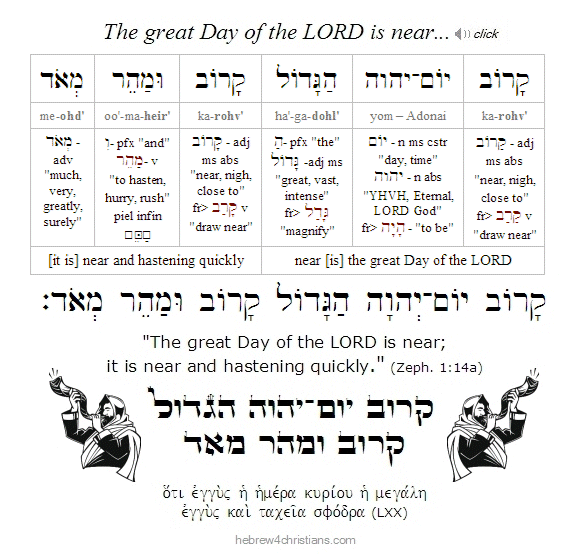 |
Although "Day of the LORD" (i.e., yom Adonai: יוֹם יְהוָה) is sometimes associated with Tishah B'Av and the catastrophic destruction of the Jewish Temple, the words of the prophets were only partially fulfilled, and there awaits another Day coming when God will terribly shake the entire earth (Isa. 2:19). "For the great day of their wrath has come, and who can stand?" (Rev. 6:17). The prophet Malachi likewise says: "'Surely the day is coming; it will burn like a furnace. All the arrogant and every evildoer will be stubble, and that day that is coming will set them on fire,' says the LORD Almighty. 'Not a root or a branch will be left to them'" (Mal. 4:1). For those who are godless, the great Day of the LORD is a time of horrific judgment, but for those who belong to the LORD, it represents a day of victory and great blessing. Regarding that day the prophet Malachi said, "Then you will trample down the wicked; they will be ashes under the soles of your feet on the day when I do these things" (Mal. 4:3).
Ultimately the Great Tribulation period is purgative and restorative for Israel (sometimes called yissurim shel ahavah, or "the troubles of love"). The prophets wrote that Zion will go through labor and then give birth to children (Isa. 66:8). Thus the Vilna Gaon wrote that the geulah (redemption) is something like rebirth of the nation of Israel. This accords with the prophetic fulfillment of Yom Kippur as the Day of Judgment and time of Israel's national conversion. In the verse from prophet Jeremiah regarding the "Time of Jacob's Trouble," it's vital to see the goal in mind -- "yet out of it he is saved" (וּמִמֶּנָּה יִוָּשֵׁעַ). When Yeshua returns to Zion, all Israel will be saved (Rom. 11:26). The sages note that childbirth is a time of radical transition and struggle for the baby -- from the time of relatively peaceful existence within the womb into the harsh light of day -- and therefore a similar transition between this world and the Messianic world to come is about to take place (for more click here).
|
Exile and Carelessness...
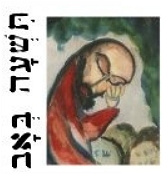
Tishah B'Av, or the Ninth day of the month of Av, is an annual fast day of mourning that recalls the many tragedies that have befallen the Jewish people over the centuries....
08.01.25 (Av 7, 5785) The theme of the fragility of life is part of the sober message of Tishah B'Av. After all, the great symbol of God's manifest presence on the earth, the Holy Temple, went up in smoke, and the very place (i.e., ha-makom: הַמָּקוֹם) where the LORD chose to "put His Name" was utterly destroyed. As the people were taken captive and led into exile, the great vision of Zion appeared to be forever lost (Psalm 137:1-4).
The LORD had forewarned that exile, persecution and progressively worse punishments would befall the people if they would break faith with Him (see Lev. 26:14-46). But how could all this have happened? Notice that the "rebuke" portion of the tochachah begins with ve'im loh tishme'u li (וְאִם־לא תִשְׁמְעוּ לִי), "if you do not listen to me" (Lev. 26:14), which recalls the Shema and the duty to love the Lord bekhol levavkha, "with all your heart." The sages point out that the refrain "if you walk contrary to me" (וַהֲלַכְתֶּם עִמִּי בְּקֶרִי) - which occurs several times during the rebuke - really means "if you walk carelessly (i.e., keri: קְרִי) with me." The commentator Rashi notes that the verb karah (קָרָה) means "to befall" or "to happen" and therefore suggests a sense of randomness (the related word mikreh [מִקְרֶה] means "coincidence"). If the people regarded the events of life as "random," then God would reciprocate by bringing senseless trouble into their lives. For this reason a careless attitude about the things of God is the first step toward apostasy...
It's been said that the opposite of love isn't hate, but rather indifference, and that explains why punishments came when the people "left their first love." If you walk carelessly with God, then you may be afflicted with "troubles of love" (i.e., yissurei ahavah: יִסּוּרֵי אַהֲבָה), that is, with various difficulties, intended to help you "come to your senses," to help you wake up, and to cause you return to the LORD for healing... This is a severe mercy of God.
The idea of tochachah is not simply something for ethnic Israel, of course, since the New Testament likewise warns us that God will punish those who likewise walk carelessly (i.e., keri: קְרִי) with Him. Have you forgotten the exhortation that addresses you as God's children? "My son, do not regard lightly (ὀλιγώρει) the discipline of the Lord, nor be weary by his reproof (תּוֹכֵחָה). For the Lord disciplines the one he loves, and reproves (יוֹכִיחַ) every child whom he receives" (Heb. 12:5-6; Prov. 3:11-12). The Lord charged the assembly at Ephesus that they had let go of their first love. Yeshua therefore urged them: "Remember from what high state you have fallen and repent! Do the deeds (ἔργα) you did at the first; if not, I will come to you and remove your menorah from its place – unless you repent" (Rev. 2:4-5). "God is not mocked (μυκτηρίζω - lit., "to turn up the nose at"), and what a man sows, he also reaps" (Gal. 6:7; Psalm 39:11). There are abiding consequences for the choices we make in our lives. "For you may be sure of this, that everyone who is sexually immoral or impure, or who is covetous (that is, an idolater), has no inheritance in the kingdom of Messiah and God. Let no one deceive you with empty words, for because of these things the wrath of God comes upon the sons of disobedience" (Eph. 5:6-7).
It is written, "Pain (or grief) handled in God's way produces a turning from sin to God (תְּשׁוּבָה) which leads to salvation (יְשׁוּעָה), and there is nothing to regret in that! But pain handled in the world's way produces only death" (2 Cor. 7:10). A common definition of insanity is doing the same thing over and over again and expecting different results. The world's "logic" for dealing with inner pain is to do things that will suppress it, thereby guaranteeing more pain. The only way out is through... During Tishah B'Av we weep over our sins that have brought us exile. The sages note that the word "weeping," i.e., בְּכִי, has the same numeric value as the word for "heart," i.e., לב. We weep from the heart, then, because the heart itself is what needs to be healed... Shalom and love to you.
Hebrew Lesson
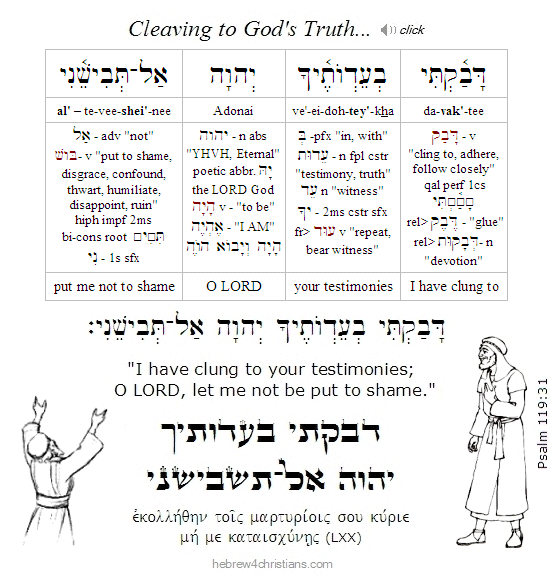
Psalm 119:31 Hebrew reading (click for audio):
 |
Solemn Date of Tishah B'Av...
08.01.25 (Av 7, 5785) The sages of the Mishnah (Ta'anit 26) taught that five tragedies befell the Jewish people on Tishah B'Av (תשעה באב, or the "ninth [day] of [the month of] Av"). First, God's decree was issued that the generation that left Egypt during the Exodus would not enter the promised land (Num. 14:1-2; 14:23). Second, the First Temple was destroyed by Nebuchadnezzar II (נְבוּכַדְנֶאצַּר) in 586 BC according to prophecy (Jer. 27:6-8). Third, the second Temple was destroyed by the Romans in 70 AD, according to the prophecy of Yeshua (Matt. 24:1-2). Fourth, the last stronghold of the "Bar Kokhba" revolt was destroyed by Roman Emperor Hadrian in 135 AD, and fifth, the City of Jerusalem and the Temple Mount was "plowed under" exactly one year later (Jer. 26:18). Emperor Hadrian then sold all Jewish prisoners into slavery, forbade the teaching of the Torah, renamed the middle east "Palaestina," and dedicated the City of Jerusalem to the idol Jupiter as "Aelia Capitolina." Besides all this, other tragedies are also coincidental with Tishah B'Av, such as the expulsion of the Jews from England in 1290 and their expulsion from Spain in 1492. Some of the sages even date the beginning of WWI, when Germany declared war on Russia, to the Ninth of Av, and since WWI inevitably led to WWII, they also connect Tishah B'Av with the horrors of the Holocaust as well...
Because of all this Tishah B'Av is generally regarded as the saddest day of the Jewish year (even sadder than Yom Kippur), and the sages designated it as an annual day of mourning that recalls these many tragedies that have befallen the Jewish people over the centuries. It is a time for teshuvah, fasting, and special prayers. This year Tishah B'Av begins Saturday August 2nd at sundown and runs 25 hours until Sunday August 3rd, one hour after sundown. The customs for observing the fast are similar to those of Yom Kippur.
It is customary to read Megillah Eicha (מגילה איכה), or the Book of Lamentations, during the Tishah B'Av evening service, since the scroll is an (acrostic) poem of lament prophetically written before the destruction of the First Temple. The scroll is chanted in a plaintive nusach (נוסח), as if lashon ha'kodesh, the holy tongue, weeps for the destruction of God's home.
Hebrew Lesson
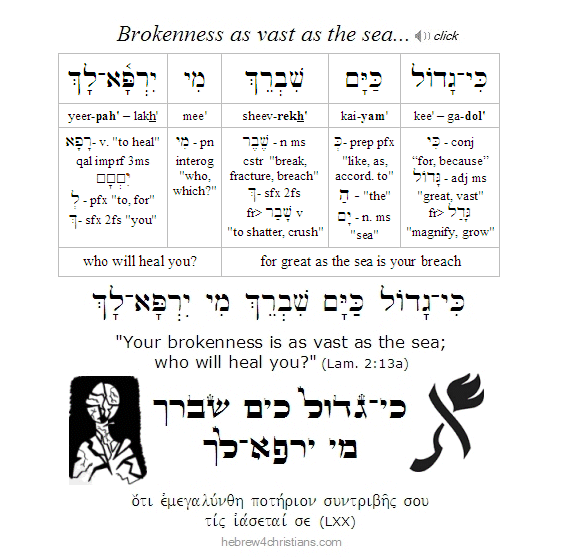
Lamentations 2:13 reading (click for audio):
 |
Tishah B'Av allows us to express heartfelt grief over the loss of Zion and therefore over the frailty of our human condition. During this time it is appropriate to grieve over our sins and to shed tears that attest to having lev nishbar ve'nidkeh (לֵב־נִשְׁבָּר וְנִדְכֶּה), a "broken and crushed heart" (Psalm 51:17). Indeed, during the entire "Three Weeks of Sorrow" we read selections from the prophets that forewarn of the coming destruction of the Temple (churban) and the subsequent exile of the Jewish people (galut). During this time of the year, we listen to the lamentations of the prophet Jeremiah crying out for our repentance...
During Tishah B'Av synagogue services, the lights are dimmed and the Aron Hakodesh (Holy Ark) is draped in black (in some synagogues the parochet (curtain) is removed as a sign of mourning). The decorations are removed from Torah scrolls. Congregants remove their leather shoes and do not greet each other. The cantor leads the prayers readings in a low, mournful voice, and the cantillation (chanting style) for the Scripture readings are set to elegiac, sorrowful melodies.
"Let everyone cry out to God and lift his heart up to him, as if he were hanging by a hair, and a tempest were raging to the very heart of heaven, and he were at a loss for what to do, and there were hardly time to cry out. It is a time when no counsel, indeed, can help a man and he has no refuge save to remain in his loneliness and lift his eyes and his heart up to God, and cry out to him. And this should be done at all times, for in the world a man is in great danger." - Martin Buber (Ten Rungs)
<< Return
|
|