|
|
 |
|
|
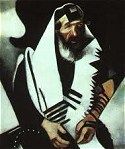
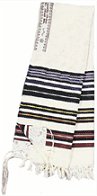
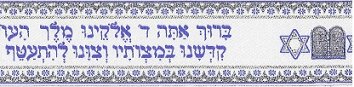
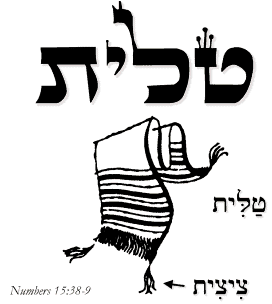
The Hebrew word tallit (טַלִּית, "little covering") refers to a rectangular "prayer shawl" that is traditionally worn during morning prayers on weekdays and Shabbat, and also during other Jewish holidays. All tallit have four knotted "fringes," called tzitzit (צִיצִת), that are attached at each corner. Most tallitot are beautifully woven from wool and have a neckband, called an atarah, that has a blessing or design embroidered on it. Although it has other ritual uses, the Torah states that the display of tzitzit is to remind oneself to observe all of the commandments of the Lord, and to guard against the sin of unbelief that marked the spies: "It shall be a tassel for you to look at ... not to "spy" after your own heart and your own eyes" (Num. 15:39). Note that the verb translated "spy" (תָתֻרוּ) is the same word used to "spy" the land of Canaan. Shrouding one's head in a tallit is a way to keep the eyes from straying and to create a sense of focus and kavanah.
|
|
|
|
The word "tallit" itself does not occur in the Torah (though the verb טָלַל appears and means "to cover over" (Neh. 3:15; Gen. 19:8)). Ruth asked Boaz to "cover" her with his garment because he was a near kinsman (Ruth 3:9). The base word tal (טל) means "dew" and the word tallit was perhaps chosen because it alludes to the morning dew in the wilderness that was accompanied by manna (Exod. 16:13-14; Num. 11:9). The unity of brothers is also likened to the dew (Psalm 133:3) as well as the favor of God (Prov. 19:12). The tallit was devised because of clothing changes over the centuries. At one time, garments included the use of "corners" from which fringes could be displayed; later, however, such garments were not worn, and the tallit was introduced to accomodate the Torah's commandments (Deut. 22:12).
|
|
|
|
|
|
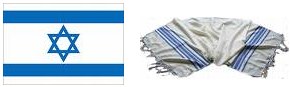
The tallit actually inspired the design of the Israeli flag:
|
|
|
|
|
|
|
|
|
|
|
|
|
|
 |
|
|
|
When is a Tallit worn?
|
|
|
|
According to Jewish tradition, only bar mitzvah men may wear a tallit during morning services (traditionally it is not worn for afternoon and evening prayers because of the commandment that one should see the tzitzit, which has been interpreted as meaning to be seen by the light of the day). Therefore, the shawl is traditionally worn during:
- Shacharit (morning) prayers (Num. 15:38-39)
- Torah Reading services (Shabbat, Monday, and Thursday)
- The Kol Nidre portion of Yom Kippur (and some other holiday services)
- Special occasions such as circumcisions, bar mitzvahs, weddings (used to sometimes make a canopy over the couple)
- Shabbat home ceremonies (for blessing the children)
- Burial. An orthodox Jewish man is wrapped in it when he is buried.
|
|
|
|
The Tzitzit Blessing
|
|
|
|
- Take the tallit out of the tallit bag (or remove it from the synagogue rack).
- Carefully unfold it.
- Hold it up and inspect the tzitzit.
- If there are no defects on it, recite the following blessing:
|
|
|
|
 |
|
|
|
 |
|
|
|
|
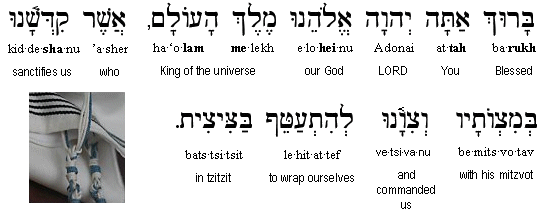
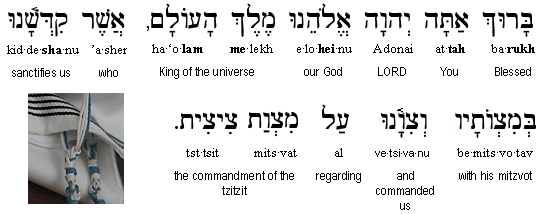
Blessed are You, LORD our God, Master of the Universe, who sanctifies us with His commandments and commanded us regarding the commandment of the tzitzit.
|
|
|
|
Barukh attah Adonai, eloheinu melekh ha-olam, asher kiddeshanu bemitzvotav,
al mitzvat tzitzit.
|
|
|
|
Blessing while putting on the Tallit
|
|
|
|
|
Next, put the tallit on and recite (or read the blessing written on the atarah):
|
|
|
|
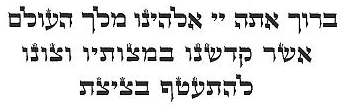
Blessed are You, LORD our God, Master of the Universe, who sanctifies us with His commandments and commanded us to wrap ourelves in tzitzit.
|
|
|
|
Barukh attah Adonai, eloheinu melekh ha-olam, asher kiddeshanu bemitzvotav,
vetzivanu lehitatef batzitzit.
|
|
|
|
|
|
- Kiss the end of atarah where the last word of the blessing is embroidered, and then again at the beginning where the first word is.
- Wrap the tallit around your shoulders, holding it over your head for a moment of private meditation.
- Adjust the tallit on your shoulders comfortably.
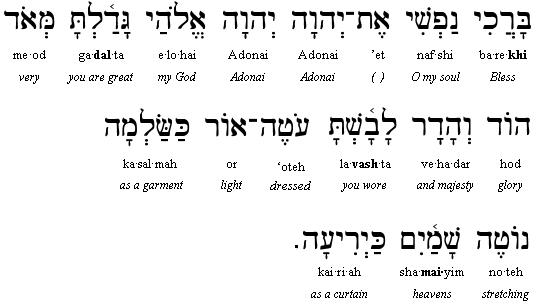
- You may also wish to add the following Scriptural blessing, after having put on the tallit:
|
|
|
|
|
Tallit Customs
|
|
|
|
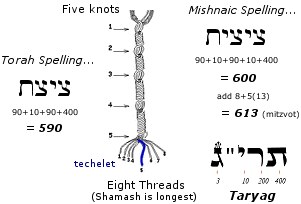
- A cord of techelet (תְּכֵלֶת), thought to be a royal blue/purple, is supposed to be added to the fringe at each corner, however since this dye was derived from a now-extinct snail found near Tyre, the color requirement for the tzitzit has been waived. As a reminder of the techelet, however, either blue (or sometimes black) stripes are added to the tallit itself. These tallit stripes became part of the emblem of the Israeli flag (most Orthodox Jews wear black for mourning the destruction of the Temple).
- Only bar mitzvah men wear a tallit during morning services (it is not worn for afternoon and evening prayers because of the commandment that one should see the tzitzit, which has been interpreted as meaning to be seen by the light of the day). Therefore, the tallit may be worn during: 1) Shacharit (morning) prayers (Num. 15:38-39), 2) during Torah Reading morning services (Sat., Mon., and Thurs.), and 3) during Yom Kippur (and some other holiday services), and on other special occasions. The Tallit Katan, however, may be worn at all times.
- There are many customs about the proper method of tying the tzitzit (tying Tzitzit is a Jewish art, a form of macrame).
- Do not wear a tallit into the bathroom (there are generally hooks for you to use outside the door).
- Many synagogues let you borrow a tallit for the morning service; say the normal blessing when putting on this tallit.
- Kissing the Tzitzit: Tzitzit are kissed during the recitation of the third paragraph of the Shema (Numbers 15:37-41) which mentions the tzitzit three times. They are also kissed during the hakafot service of Simchat Torah.
- When called to perform a Torah Reading, a corner of the tallit is first placed on the word where the reading begins and then removed and kissed.
- It is generally bad taste to cover your head with the tallit when praying the traditional synagogue prayers (though many cover their head for personal supplications).
|
|
|
|
Jesus and Tzitzit
Yeshua perhaps wore a tallit with tzitzit. Matthew 9:20-22 states "A woman who had a hemorrage for twelve years approached Him from behind and touched the tzizit on His robe. For she said to herself, "If I can only touch His robe, I will be healed."
On the other hand, the tallit was sometimes used to indicate the social status of the wearer. Indeed, the Pharisees sometimes wore "extra long fringes" to affect a display of piety - a practice that Yeshua condemned (Matt. 23:5).
The Tallit and Torah
As mentioned above, the word "tallit" itself does not occur in the Torah (though the verb טָלַל appears and means "to cover over" (Neh. 3:15; Gen. 19:8)). Ruth asked Boaz to "cover" her with his garment because he was a near kinsman (Ruth 3:9). The base word tal (טל) means "dew" and the word tallit was perhaps chosen because it alludes to the morning dew in the wilderness that was accompanied by manna (Exod. 16:13-14; Num. 11:9). The unity of brothers is also likened to the dew (Psalm 133:3) as well as the favor of God (Prov. 19:12). The use of the tallit primarily concerns the display of "fringes" or tzitzit, which is the essence of the requirement given in Numbers 15 and Deuteronomy 22.
The various customs and "laws" surrounding the tallit are mostly Rabbinical-Talmudic, not based on the Torah. Here are the Torah restrictions for use:
- The fringes must be on the border of your garment (Num. 15:38)
- The fringes must be put on the four corners (arba kanfot) of the garment (Deut. 22:12)
- The fringes must have one ribbon of tekhelet. Since the manner of obtaining this dye was lost, two schools of thought arose: a) use black - to indicate mourning for the destruction of the temple, and b) use all white because we do not have access to the tekhelet (Deut. 22:12, Num. 15:38).
- The garment and fringes are not of "divers kinds" (Deut. 22:11)
- That when you look upon them you are to remember God commandments "to do them" to guard against the sin of unbelief that marked the spies (Num. 15:39-41)
|
|