|
March 2026 Updates (continued)
Note: If any page content appears to be missing, please refresh the page...
Intercession as Incense...
03.09.26 (Adar 20, 5786) The last item described in the Mishkan (i.e., the "Tabernacle") was a "Golden Altar" (הַמִזְבַּחַ הַזָּהָב) that was to be placed in the Holy Place just before the veil separating the Holy of Holies (parochet). Every morning and evening the High Priest would burn sacred incense on this altar (symbolizing prayer and intercession), and the blood of atonement was also applied there during the Yom Kippur service (Exod. 30:6-10).
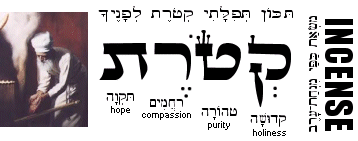
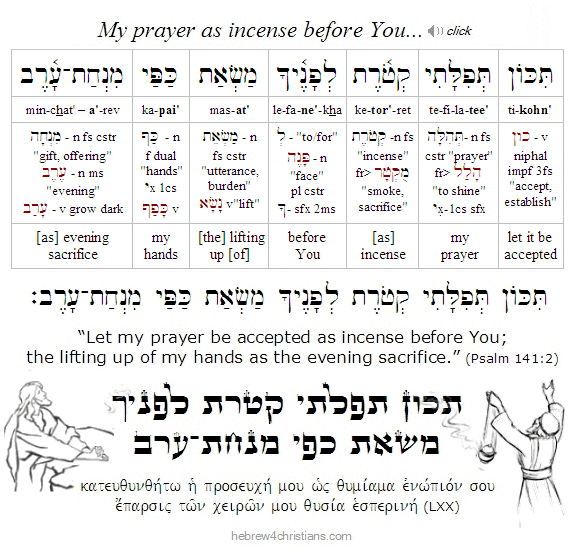
The sages say that the word "incense" – i.e., ketoret (קְטרֶת) – can be thought of as an acronym of the words kedushah (קְדוּשָׁה), "holiness," tahorah (טָהֳרָה), "purity," rachamim (רַחֲמִים), "compassion," and tikvah (תִקוָה), "hope," characteristics that marked the passion of Yeshua who interceded for us as he offered his blood before the heavenly kapporet as our High Priest of the new covenant. Indeed, the word ketoret comes from a root word (קטר) that means to offer sacrifice, further alluding to the intercession of Messiah on our behalf (Heb. 7:25). Disciples of Yeshua are likewise called priests of God (Rev. 1:6; 1 Pet. 2:5), and our prayers and service are regarded as a "sweet-smelling savor" offered to the Lord (Rev. 8:4). As it says in the Psalms: "Let my prayer be counted as incense before You; the lifting up of my hands as the evening sacrifice" (Psalm 141:2).
Hebrew Lesson
Psalm 141:2 Hebrew reading:
 |
Note: The Talmud states that the sacred incense recipe was made of eleven different spices, ten of which had pleasant fragrance, but one of which (i.e., galbanum) had an unpleasant odor. The sages have said the presence of an unpleasant odor in the sacred mixture represents our laments, our cries, and confession for the foulness of our sins.
Wisdom of the Heart...
03.09.26 (Adar 20, 5786) From our Torah portion this week (i.e., Vayakhel) we read: "Let every wise-hearted (חֲכַם־לֵב) among you come and make all that the LORD has commanded" (Exod. 35:10). The sages comment that none of the people actually had the skills to fashion the detailed furnishings and accouterments of the desert sanctuary, but they had something even better – a passionate desire to do God's will, and this enabled them to access God's help to do what was needed. The purpose of the commandment was to involve the heart, to refine the character: "And everyone whose heart moved him brought what was needed..." (Exod. 35:22). God could have created the sanctuary "yesh me'ayin," simply out of nothing, but he wanted the heart of his people to express their desire for his presence in their midst. The same is true for the inner sanctuary of our hearts...
Just as God creates the world in chesed (עוֹלָם חֶסֶד יִבָּנֶה), so the wise of heart are able to build up the sanctuary of God. "Love builds up." Being "wise of heart" (חֲכַם־לֵב) means having emotional maturity, humility, and rightly ordered affections. Such heart wisdom does not depend on how smart you are or what sort of education you might have, but rather whether you are able to emotionally comprehend a situation, whether you are willing to allow the heart to discern the inner meaning of a message. The wise of heart are those who "build up" God's kingdom and help provide sanctuary for others...
The beginning of wisdom is the awe of the LORD (Psalm 111:10), that is, relating to reality with reverence and learning to distinguish what is sacred. Note that God does not build the mishkan directly, but He wants us to bring our hearts and creativity to the task. Practically speaking being chacham-lev (חֲכַם־לֵב), "wise of heart," means knowing what you must do to help reveal divine beauty within your experience of life.
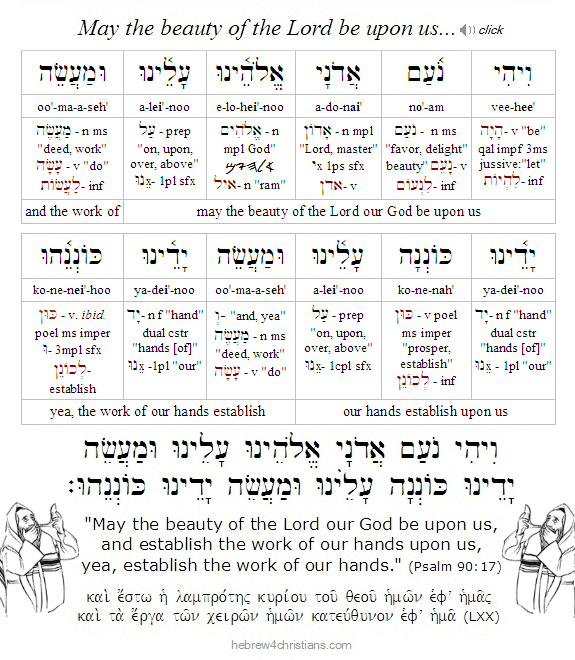
After Moses saw all the work that was done for the building of the Tabernacle, he blessed the people saying, "May it be the will of God that His Presence dwells within the work of your hands" (Exod. 39:33-43; Psalm 90:17). Rashi notes that even if a person feels entirely inadequate for the task, the Torah affirms that he should nevertheless do his or her part. "Every assembly for the sake of heaven must in the end stand" (Avot 4:11). When we apply our hearts to serve God, the Lord will give us the Spirit to empower our way; if we make ourselves his willing vessel, He will fill us to the full.
"Do your best, pray that it's blessed, and God will take care of the rest..." As any good cook knows, the "secret ingredient" for the tastiest food is the love that goes into making it. Likewise with"making a place for God" -- the most important factor is the heartfelt willingness to be present before the Lord, to show up and say, Hineini Adonai -- "Here I am, O Lord!" We first take the step of faith and then the sea will split and we will be able to walk on through.
Hebrew Lesson
Psalm 90:17 reading (click):
 |
Accounting for the Tabernacle:
Parashah Pekudei...
This week we have a "double portion of Torah, parashat Vayakhel and parashat Pekudei...
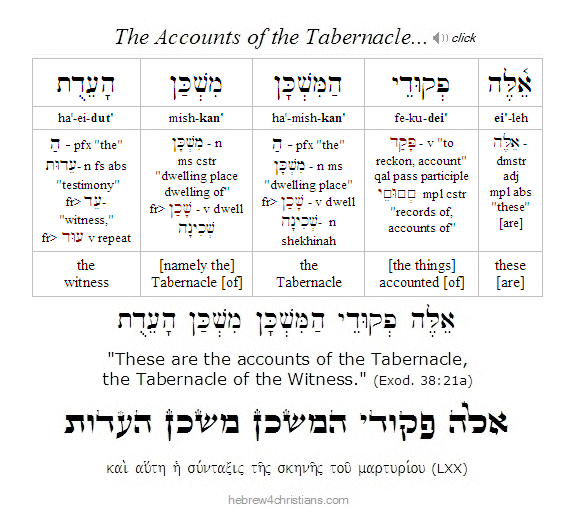
03.08.26 (Adar 19, 5786) Our (second) Torah reading for this week is called parashat Pekudei, which is the concluding portion of the great Book of Exodus (i.e., ספר שמות). It begins with Moses' accounting of (פקודי) all the materials that were donated for the construction of the Mishkan (i.e., Tabernacle). After Moses recorded the inventory of the building materials and furnishings, he carefully checked the special priestly garments. After all the work was confirmed to be in complete accordance with the LORD's instructions, Moses blessed the people. The LORD then commanded Moses to assemble the Mishkan on "the first month in the second year [from the date of the Exodus], on the first day of the month" (i.e., on Nisan 1, or Rosh Chodashim, Exod. 40:17).
Once the Tabernacle was completed and all its vessels were accounted for and inspected, Moses anointed all its components with the sacred anointing oil, called shemen ha-mishchah (note that the word "mishchah" (מִשְׁחָה) comes from the same root as "Messiah" (מָשִׁיחַ), indicating that the Mishkan (i.e., Tabernacle) would foreshadow God's plan of redemption given in Yeshua). Moses then formally initiated Aaron and his four sons into the priesthood, marking their hands and feet with sacrificial blood and "waving them" before the Lord to picture resurrection. God's Presence - manifest as the Shekhinah Cloud of Glory – then filled the Holy of Holies in the Tent of Meeting.
At the end of the portion we read, וַיְכַל משֶׁה אֶת־הַמְּלָאכָה / "Moses finished all the work" (Exod. 40:33), a phrase that has the same gematria (numeric value) as bereshit (בְּרֵאשִׁית, "in the beginning"), the very first word of the Torah (Gen. 1:1). This suggests that the creation of the universe was for the sake of the building of the Tabernacle, and by extension, for the sake of the sacrificial love of God to be demonstrated to all of creation. The Talmud states, "All the world was created for the Messiah" (Sanhedrin 98b) and indeed, Yeshua is called "the Lamb slain from the foundation of the world" in the New Testament (Rev. 13:8; 1 Pet. 1:18-20; Eph. 1:4; 2 Tim. 1:9).
The Presence of the Glory of God that descended from Sinai upon the newly dedicated Mishkan represented a climactic moment for the fledgling nation, since the Sin of the Golden Calf had jeopardized whether the God would indeed dwell within the midst of the camp of Israel... Recall that it was only after Moses had returned from Sinai bearing the second set of Tablets (on Yom Kippur) that the glow of the LORD's redeeming love radiated from his face, and new hope was given to Israel (prefiguring the New Covenant). The King of Glory would accompany the people from Sinai to the Promised Land! (The narrative continues in the Book of Numbers, beginning exactly one month after the Mishkan was assembled.)
Assembling the Mishkan:
Parashat Vayakel...
This week we have a "double portion of Torah, parashat Vayakhel and parashat Pekudei...
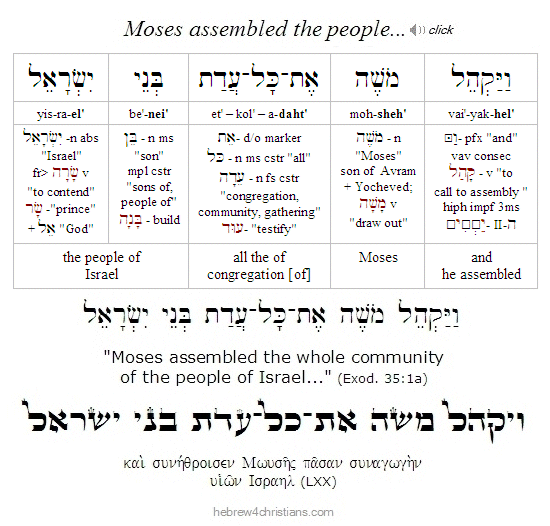
03.08.26 (Adar 19, 5786) According to tradition, Moses descended from Sinai (with the second set of tablets) on Yom Kippur (Tishri 10), and on the following morning he assembled (וַיַּקְהֵל) the people together to explain God's instructions regarding building the Mishkan (i.e., Tabernacle). First, however, Moses reminded the people to observe the Sabbath as a day of rest, and then he asked for contributions of gold, silver, bronze, and other materials for the construction of the sanctuary and its furnishings. Each contribution was to be a "free-will offering" (i.e., nedivah zevach: נְדָבָה זֶבַח) made by those "whose heart so moved him." As a sign of their complete teshuvah (repentance) for the sin of the Golden Calf, the people gave with such generosity that Moses finally had to ask them to stop giving!
Betzalel ben Uril and Oholiav were appointed to be the chief artisans of the Mishkan, and they led a team of others that created the roof coverings, frame, wall panels, and foundation sockets for the tent. They also created the parochet (veil) that separated the Holy Place (ha'kodesh) from the Holy of Holies (kodesh ha'kodeshim). Both the roof and the veil were designed with embroidered cherubim (winged angelic beings). Betzalel then created the mysterious Ark of the Covenant and its cover called the mercy seat (kapporet), which was the sole object that would occupy the innermost chamber of the Holy of Holies. Betzalel also made the three sacred furnishings for the Holy Place – the Table of Bread (shulchan), the lamp (menorah), and the Altar of Incense (mizbe'ach ha'katoret) – as well as the anointing oil that would consecrate these furnishings.
Betzalel then created the Copper Altar for burnt offerings (along with its implements) and the Copper Basin from the mirrors of women who ministered in the entrance of the tent of meeting. He then formed the courtyard by installing the hangings, posts and foundation sockets, and created the three-colored gate that was used to access the courtyard.
Signs of the Time...
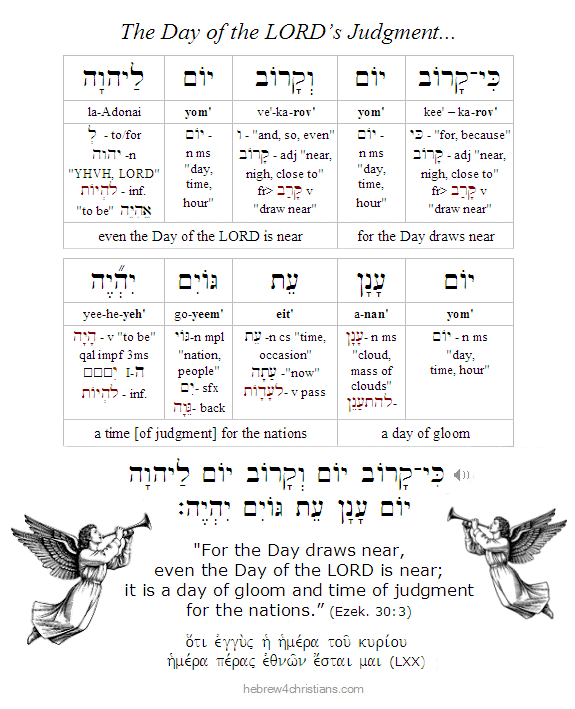
03.07.26 (Adar 18, 5786) I recently watched a video of excavation and restoration work being done under the Temple Mount and it is amazing. The third Temple is getting prepared for operation soon. And with the overthrow of Iranian oppression and its sponsored terrorism, Jerusalem will be poised to be the epicenter of the world - and with it the rise of the "Man of sin" who will broker a peace covenant between the Arabs and the Jews. The time is drawing near and we are seeing prophecy unfold before our eyes...
Of course we know that Yeshua spoke of the future "Tribulation Temple," as did the Apostle Paul, and they were not referring to the "Millennial Temple," or the "Fourth Temple" (mentioned by Ezekiel and other prophets) that will be built after the Second Coming of Yeshua and through which the establishment of the Kingdom of Zion on the earth will be manifested during the Millennial Kingdom. The Fourth Temple is significant because it enables the Jewish People to remember and honor the sacrifice of Yeshua as their great High Priest of the New Covenant, and to serve God in the Kingdom of Zion, fulfilling many prophecies in the Tanakh that foretell that all the nations shall come to Jerusalem to honor the LORD God of Israel. If you study the Hebrew prophets carefully you cannot escape their vision of the coming reign of Messiah and the kingdom of Zion literally fulfilled in the earth.
Meanwhile we are instucted The day and hour are unknown so we are commanded to "watch" and "be ready" (Matt. 24:42-44). This is essential according to Yeshua. "So then, let us not be like others, who are asleep, but let us be awake and sober" (1 Thess. 5:6). "For our citizenship is in heaven, and from it we await a Savior, the Lord Jesus Christ" (Phil. 3:20).
"For the grace of God that brings salvation has appeared to all people, teaching us that denying ungodliness and worldly lusts, we should live soberly, righteously, and godly, in this present world, looking for that blessed hope, and the glorious appearing of the great God and our Savior Yeshua the Messiah, who gave himself for us, that he might redeem us from all iniquity and purify to himself a treasured people, zealous of good works" (Titus 2:11-14).
"Who then is the faithful and wise manager, whom his master will set over his household, to give them their portion of food at the proper time? Blessed is that servant whom his master will find so doing when he comes. Truly, I say to you, he will set him over all his possessions. But if that servant says to himself, "My master is delayed in coming," and begins to beat the male and female servants, and to eat and drink and get drunk, the master of that servant will come on a day when he does not expect him and at an hour he does not know, and will cut him in pieces and put him with the unfaithful" (Luke 12:42-46).
In light of these things, let us "be sober-minded and watchful, for our adversary the devil prowls around like a roaring lion, seeking someone to devour" (1 Pet. 5:8). Like the five wise virgins who awaited the promised return of the groom in the parable (see Matt. 25:1-13), so we must remain awake and ready....
Hebrew Lesson
Ezekiel 30:3 reading (with comments):
 |
The Perpetuity of Sabbath...
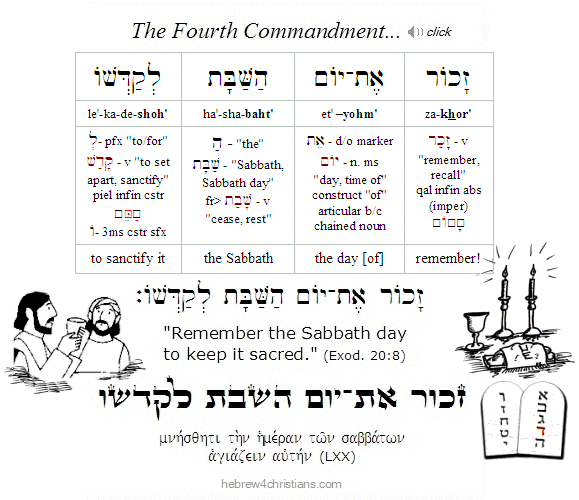
03.06.26 (Adar 18, 5786) Every Shabbat we are invited to recite kiddush and remember that God is both our Creator (Gen. 1:31-2:3; Exod. 20:8, 31:7) and our great Redeemer (Deut. 5:15). As it says in our Torah portion for this week (Ki Tisa), "Above all you shall keep my Sabbaths, for this is a sign (אוֹת) between me and you throughout your generations, that you may know that I, the LORD, sanctify you. You shall keep the Sabbath, because it is sacred for you, as a covenant forever (בְּרִית עוֹלָם)..." (see Exod. 31:12-17). When we usher in Shabbat on Friday evening, we bear witness that God is our Creator, our Redeemer, and our Savior. Note that the Hebrew word for "sign" (אוֹת) is formed using a Vav (וֹ) surrounded by an Aleph (א) and a Tav (ת), a word that pictures being surrounded by God's Presence. We enter into the all-encompassing rest that God provides - relying on His power and grace alone to make us whole. "It is finished," and the Sabbath testifies of the rest we have in Messiah, our Creator and Redeemer. We let go and are renewed by the grace of God.
 |
We are not legalistic about Sabbath observance, of course, since that surely misses the point. As Yeshua taught us: "The Sabbath was made for man, not man for the Sabbath" (Mark 2:27). Note that well. The Sabbath was made -- it is the result of God's work performed on our behalf: "Come unto me, all ye that labor and are heavy laden, and I will give you rest" (Matt. 11:28). There remains a "Sabbath rest" for the people of God, which is the principle of God's power effecting life within us and resting in his provision. The Sabbath is a delight – not a burden; a time for celebrating the finished work of Yeshua (Isa. 58:13; Heb. 4:9).
And of course the principle of Sabbath "surrender" applies to every day of our lives. After all, the "daily sacrifice," or korban tamid (קָרְבַּן תָּמִיד), was offered to the LORD every morning and evening upon the altar, which means we find our rest in Him every day, trusting in his sacrificial love to do the work of salvation within us... Surrendering to this truth enables us to be a "living sacrifice" (i.e., korban chai: קָרְבָּן חַי) and to die daily (Luke 9:23).
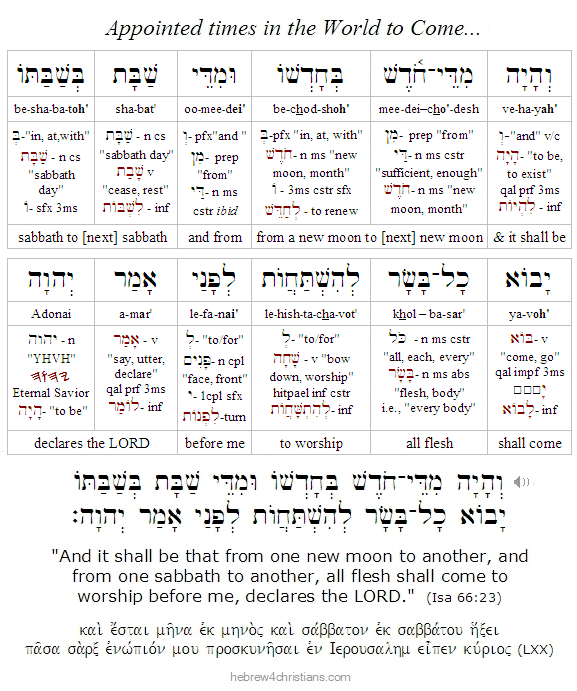
Sabbath will be honored in the Millennial Kingdom to come, and indeed, in heaven itself. Speaking of the coming Kingdom of God that will be established upon the earth, the prophet Isaiah foretold: "From new moon to new moon, from Sabbath to Sabbath (שַׁבָּת בְּשַׁבַּתּוֹ), all flesh shall come to worship before me, declares the LORD" (Isa. 66:23). Since this vision concerns the prophetic future, it is clear that the Sabbath day (as well as Rosh Chodesh, or the new moon) will be observed as well. Likewise, in the heavenly Jerusalem to come, the Tree of Life is said to yield "twelve kinds of fruit, yielding its fruit each month" (Rev. 22:2). Notice that the "twelve fruits" (καρποὺς δώδεκα) from the Tree of Life are directly linked to the "twelve months" of the Jewish year (κατὰ μῆνα ἕκαστον ἀποδιδοῦν τὸν καρπὸν αὐτοῦ: "each month rendering its fruit"). In other words, the sequence of the holidays (i.e., the mo'edim) - including the weekly Sabbath - was intended to teach us revelation about God.
Hebrew Lesson
Isaiah 66:23 reading (with comments):
 |
Sabbath of the "Red Cow"
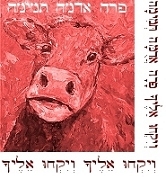
This Shabbat is called "Shabbat Parah," the Sabbath of the [red] Cow." Besides reading the regular Torah reading (i.e., Vayakhel), we read about the mysterious red heifer sacrifice....
03.06.26 (Adar 18, 5786) The Sabbath immediately following the holiday of Purim is called Shabbat Parah - the "Sabbath of the [red] Cow." In traditional synagogue services, two Torah scrolls will be removed from the ark, and from the first scroll will be read the Torah portion for the week (e.g., Ki Tisa), and from the second will be read the chapter regarding the laws of the sacrifice of the "Red Heifer" (Num. 19:1-22). The early sages decided to recite the laws of the Red Heifer at this time to recall the remedy of the sin of the Golden Calf, and to remind the people to purify themselves before coming to Jerusalem for the pilgrimage festival of Passover. It is thought that since the sprinkling of the "waters of separation" cleanses from the uncleanness of death, reading this portion will help prepare our hearts for the time of Passover when we celebrate deliverance from death.
The Red Heifer offering is considered a paradox to most Jewish thinkers, though it can be seen as a revelation of the Yeshua our Messiah. The paradox is that the one who offers this sacrifice becomes ritually impure, while the sprinkling of the ashes is used to make people clean... The ritual is considered chok within the Jewish tradition, meaning that it makes no rational sense. The Talmud states that of all the 613 commandments given in the Torah, even King Solomon with all his wisdom could not fathom this decee. However, the sacrifice of Yeshua the Messiah can be understood as the fulfillment of the symbolism of the parah adumah. Both were entirely rare and without defect (sin); both were sacrificed "outside the camp"; both made the one who offered the sacrifice unclean but made the one who was sprinkled by it clean; and finally, both sacrifices cleanse people for priestly service.
The parah adumah had to be a perfect specimen that was completely red, "without blemish, in which there is no defect (mum)." The rabbis interpreted "without blemish" as referring to the color, that is, without having so much as a single white or black hair. This is the only sacrifice in the Torah where the color of the animal is explicitly required. Moreover, the parah adumah was never to have had a yoke upon it, meaning that it must never have been used for any profane purposes.
Unlike all other sacrifices offered at the altar, the parah adumah was taken outside the camp and there slaughtered before the priest, who then took some of its blood and sprinkled it seven times before the Mishkan (thereby designating it as a purification offering). [During the Second Temple period, the High Priest performed this ceremony facing the Temple while atop the Mount of Olives.] Then the red heifer would be burned in its entirety: its hide, flesh, blood, and even dung were to be burned (unlike other Levitical korbanot). Unlike other offerings, all the blood of the sacrifice was to be burned in the fire.
Hyssop, scarlet yarn, and a cedar stick would then be thrown upon the burning parah adumah (these same items were used to cleanse from tzara'at, skin disease). In other words, the blood was assimilated into the ashes of the sacrifice, which were then gathered and mixed with water to create the "water of separation" (mei niddah) for the Israelite community. Note that the word "separation" (niddah) refers to menstrual impurity and harkens to Zech. 13:1: "On that day there shall be a fountain opened for the house of David and the inhabitants of Jerusalem, to cleanse them from sin and from niddah."
Anyone (or anything) that came into contact with a corpse (the embodiment of sin and death) was required to be purified using the mei niddah. The purification procedure took seven days, using stalks of hyssop dipped into the water and shaken over the ritually defiled person on the third day and then again on the seventh day. After the second sprinkling, the person undergoing the purification process would be immersed in a mikvah and then be unclean until the following evening.
According to Jewish tradition, the Red Heifer sacrifice was to atone for the sin of the Golden Calf, though the Torah itself does not make this association. The LORD Yeshua, our High Priest of the New Covenant, is the perfect fulfillment of the Parah Adumah, since he was completely without sin or defect (2 Cor 5:21; John 8:46); he was sacrificed outside the camp (Heb 13:13); he made himself sin for us (2 Cor 5:21); his sprinkling makes us clean (1 Pet 1:2; Heb 12:24; Rev 1:5); and the "water of separation" that his sacrifice created is the means by which we are made clean from the impurity of sin (Eph 5:25-6; Heb 10:22).
Hebrew Lesson
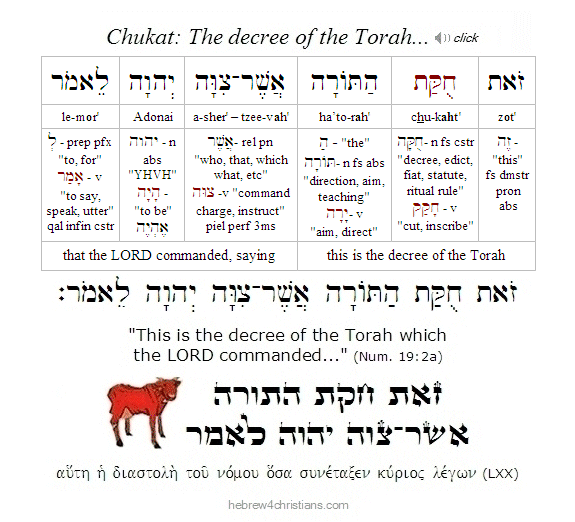
Num. 19:2a Hebrew (click):
Note: The red heifer to be used for the Third Temple (i.e., the false "Tribulation Temple") is of prophetic interest but of no real consequence... Yeshua will establish the Fourth Temple of Ezekiel's vision during the Millennial Kingdom after His return in glory.
For more information about the Red Heifer sacrifice, see the "Gospel of the Red Cow" article as well as the "Tenth Red Heifer" page.
The Torah of Mercy...
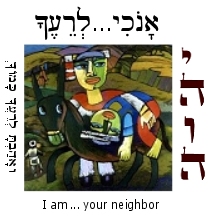
"The Sabbath was made for man, and not man for the Sabbath."
03.06.26 (Adar 18, 5786) In our Torah portion this week (i.e., Ki Tisa) we read: "Therefore the people of Israel shall keep the Sabbath, observing the Sabbath (לַעֲשׂוֹת אֶת־הַשַּׁבָּת) throughout their generations, as a covenant forever. It is a sign forever (אוֹת הִוא לְעֹלָם) between me and the people of Israel that in six days the LORD made heaven and earth, and on the seventh day he rested (שָׁבַת) and was refreshed (וַיִּנָּפַשׁ)" (Exod. 31:16-17).
Upon a closer consideration of this text we might wonder how we can both "do" and "not do" something at the same time? Note that the phrase "observing the Sabbath" (לַעֲשׂוֹת אֶת־הַשַּׁבָּת) can literally be understood as "making" or "doing" (עשׂה) the Sabbath, and yet we are told to "rest" -- שָׁבַת -- meaning to cease or desist from any labor (מְלָאכָה). Indeed God calls the Sabbath day "shabbat shabbaton" (שַׁבַּת שַׁבָּתוֹן), a day of complete rest, holy to the LORD (Exod. 31:15). So how can we "make" the Sabbath and yet cease from work?
The sages have attempted to resolve this paradox by saying that the words, "on the seventh day he rested and was refreshed" (וּבַיּוֹם הַשְּׁבִיעִי שָׁבַת וַיִּנָּפַשׁ) imply that God did something after he created the universe, namely he "made rest" by celebrating the work of his hands and savoring the beauty of his creation. God "set the table" for creation and paused to reflect on its significance and purpose, and he wants us to do likewise.
We can "make" the Sabbath day a time of "rest" or menuchah (מְנוּחָה), by letting go of our weekly concerns and the usual preoccupations that surround our lives. Sabbath is an invitation to "ascend" to a higher level, to consciously re-connect with God as both our Creator and our Redeemer. We lift up the cup of God's salvation; we partake of the bread of heaven.... We glorify the great Lamb of God. If we make the Sabbath a delight, a time of holiness and honor, then God "will cause you to ride upon the high places of the earth, and he will feed you with the heritage of Jacob thy father" (Isa. 58:13-14). "Behold, the LORD'S hand is not shortened, that it cannot save; neither is his ear heavy, that it cannot hear."
The Fourth Commandment says we are to keep the Sabbath day holy (קָדוֹשׁ), and it further connects this with separating from worldly preoccupation: "six days shall you labor and do all your work" (Exod. 20:9). Resting from work, as Abraham Heschel once said, "is not a depreciation but an affirmation of labor, a divine exaltation of its dignity." And because we are called aside from the burden of the mundane, we are "lifted out" of the process of time, not focusing on what we do but rather who we are as God's redeemed people...
This is further exemplified in the ministry of Yeshua who "worked" on the Sabbath in the sense of doing acts that were derived from his connection with heaven. It can be assumed that Yeshua and his family faithfully observed the Sabbath and regularly attended synagogue (Luke 4:16). However later on, during the time of his active ministry we read that Yeshua's idea of the Sabbath included doing works of lovingkindness (גְּמִילוּת חֲסָדִים): "At that time Yeshua went through the grain fields on the Sabbath. His disciples were hungry and began to pick some heads of grain and eat them. When the Pharisees saw this, they said to him, 'Look! Your disciples are doing what is unlawful on the Sabbath.'" But he said to them, 'Have you not read what David did when he was hungry, and those who were with him: how he entered the house of God and ate the bread of the Presence, which it was not lawful for him to eat nor for those who were with him, but only for the priests? Or have you not read in the Law how on the Sabbath the priests in the temple profane the Sabbath and are guiltless? I tell you, something greater than the Temple is here'" (Matt. 12:2-6).
Here we see Yeshua's understanding that Sabbath is to be centered upon life and healing and not merely the abstention from work. When Yeshua later was accosted by the Pharisees regarding healing a man on the Sabbath day, we read that he said to them, "Which one of you who has a sheep, if it falls into a pit on the Sabbath, will not take hold of it and lift it out? Of how much more value is a man than a sheep! So it is lawful to do good on the Sabbath" (Matt. 12:11-12). This is the principle of pikuach nefesh (פִּיקוּחַ נֶפֶשׁ), saving a life, which preempts other considerations of religious observance... As Yeshua said, "man was not made for the Sabbath, but the Sabbath was made for man" (Mark 2:27).
"And Pharisees came to test him and asked, 'Is it lawful for a man to divorce his wife?' He answered them, 'What did Moses command you?' They said, 'Moses allowed a man to write a certificate of divorce and to send her away.' And Yeshua said to them, 'Because of your hardness of heart he wrote you this commandment...'" (Mark 10:2-5; Matt. 19:8-9). Note here that Yeshua plainly explained that the "law" on divorce was given to accommodate the evil impulses of the heart, though such a law was never intended to be enacted. In other words, there are many laws given in the written Torah that, were it not for the problem of the heart, should never have been written down in the first place (see Mark 7:20-23).
The various laws against adultery, lying under oath, stealing, dishonoring parents, turning away from God, and so on, all were given in light of the "hardness of heart" (קשיות הלב) that is here referred to by Yeshua. Likewise the apostle Paul spoke of the law as being given to restrain the evil latent within the unregenerated heart: "We know that the law is good, if one uses it lawfully, understanding this, that the law is not laid down for the just but for the lawless and disobedient, for the ungodly and sinners, for the unholy and profane..." (1 Tim. 1:8-9). Indeed much of the law was written - not for the god-fearing and righteous, but for the unrighteous - as a "gilded cage" intended to restrain evil impulses until the blessing of salvation would transform the human heart. That is the message of the gospel, after all - that God would recreate people and impart a new nature that would willingly walk in ways of divine righteousness and truth (Jer. 31:33).
The Torah clearly forbade touching those afflicted with tza'arat (or "leprosy"; see Lev. 14:1-9), though the New Testament provides testimony that Yeshua did just that. "And behold, a leper came to him and knelt before him, saying, 'Lord, if you will, you can make me clean.' And Yeshua stretched out his hand and touched him, saying, 'I will; be clean.' And immediately his leprosy was cleansed. And Yeshua said to him, 'See that you say nothing to anyone, but go, show yourself to the priest and offer the gift that Moses commanded, for a proof to them'" (Matt. 8:2-4; see also Mark 1:41; Luke 5:13). Likewise the Torah forbade touching a corpse at the expense of becoming unclean, yet Yeshua both touched corpses and brought people back to life (Luke 7:14; Matt. 9:25). How was it possible for Yeshua to do these things and not be regarded as "unclean," unless he is the Authority of the Torah of God (for more on this see the Mystery of the Red Heifer and the Gospel of the Red Cow).
Again we read in the gospel: "And a man was there with a withered hand. And they asked him, 'Is it lawful to heal on the Sabbath?' -- so that they might accuse him. He said to them, 'Which one of you who has a sheep, if it falls into a pit on the Sabbath, will not take hold of it and lift it out? Of how much more value is a man than a sheep. So it is lawful to do good on the Sabbath.' Then he said to the man, 'Stretch out your hand.' And the man stretched it out, and it was restored, healthy like the other. But the Pharisees went out and conspired against him, how to destroy him" (Matt. 12:10-14).
Note how Yeshua used a kal va'chomer inference (i.e., קַל וְחמר, "light and weighty") to make his point, namely, that if a light condition is true, then a heavier one is certainly true. If saving the life of an animal is important, even if doing so involves "working" on the Sabbath day, then how much more should we save the life of a human being made in the image of God?
When we read the Scriptures, it is we ourselves who are tested so that our heart's condition is manifest (Jer. 17:10). Therefore we are instructed are to "rightly divide (ὀρθοτομέω, lit. "cut straight") the word of truth (2 Tim. 2:15). This is our responsibility as talmidim. Yeshua clearly taught the laws of Torah and moved them "inward," to be made a part of the heart. He faulted the Pharisees for tithing "mint and cumin" while neglecting the "weightier matters" of the law – that is, the deeper truth to love and care for others (see Matt. 23:23). He repeatedly stressed the need for the law to be "written upon the heart" and not to be regarded as a set of external decrees written upon tablets of stone. It is our personal responsibility, then, to apply these matters to our lives. May God give us his wisdom!
Hebrew Lesson
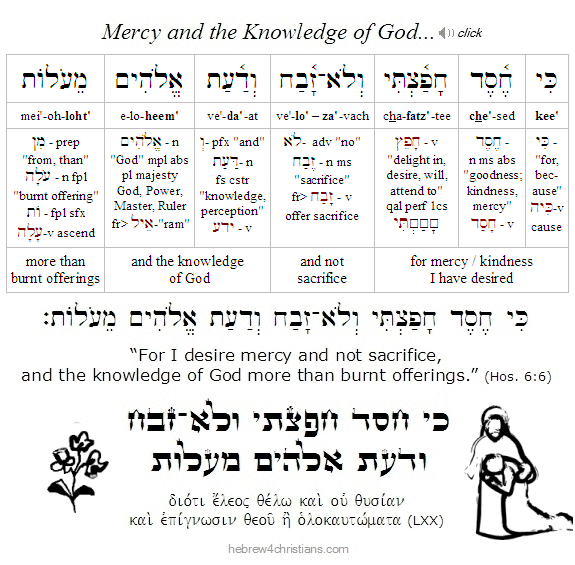
Hosea 6:6 Hebrew reading:
 |
Broken and Remade...

03.05.26 (Adar 17, 5786) No one wants find themselves needy, broken, weak, and so on, and indeed such a confession is abhorrent to the heart of the proud. The truth, however, is that we are indeed all these things, and Yeshua told us we were blessed if we understood this (Matt. 5:3-6). There is great danger to pretend you are strong and capable of living life on your own terms, since eventually you will be blindsided by the truth about your condition. On the other hand, the confession of our weakness opens the way to God's power, as Yeshua said to Paul in his affliction: "My grace is sufficient for you (דַּי־לְךָ חַסְדִּי), for my power is made perfect in weakness" (2 Cor. 12:9). Eventually Paul came to see that the various trials, persecutions, and afflictions in his life taught his profound dependence on God: "for when I am weak, then I am strong."
Access to this grace, however, comes at the expense of our pride. We must humbly confess who and what we are, and therefore we must entirely abandon hope in our own strength and virtues. "We are only as sick as the secrets we keep," especially those secrets we keep from ourselves - those self-deceptions and illusions we use to defend ourselves.
Suppose, for instance, that you have the bad habit of complaining and even cursing when you are beset by troubles, and you want to stop doing these behaviors. You may resolve to be more optimistic and grateful, or you may read self-help books -- or even take anger management classes -- but nothing will do you any lasting good until you know "in your bones" that you are powerless to change your heart. That is the first step to being set free. Or suppose that you are habitually unhappy, troubled, anxious, and in pain, yet you want to find inner peace and joy. Again, apart from the miracle of God there is no lasting remedy. You must be honest with yourself and confess the truth of your condition, asking God to do in you what you cannot do for yourself. As Yeshua said: "What is impossible with man is possible with God." So in this way God uses your sins to correct you or bring you to the end of yourself, and in that way awareness of your personal weakness is a blessing from God.
Recall that Yeshua said out of the heart proceed "evil thoughts," or more literally, "evil dialogs" or reasonings within yourself (διαλογισμοι πονηροι). You are tethered to yourself - you cannot escape yourself - yet a divided house cannot stand. Attempting to relate to yourself apart from a relationship with God leads to ongoing despair -- either the despair of resigning into yourself or else the despair of fleeing from yourself -- but either way, to a condition of anxiety derived from not being grounded in the life of God... "Unless a seed of wheat falls to the ground and dies, it abides alone..." (John 12:24). Yeshua is the source of all life, and we find nourishment, strength, and the meaning of who we are as we connect with him. By faith we affirm: "I have been crucified with Messiah, and it is no longer 'I' who live, but Messiah who lives in me" (Gal. 2:20). There is a new self that comes from above, known only in spiritual relationship with the Savior. The miracle of the exchanged life comes as we surrender to the truth of what God does for us (2 Cor. 5:17). That is the essence of the gospel, "the power of God for salvation for all who believe" (Rom. 1:16). Therefore we do not attempt to crucify ourselves, or labor to reform our corrupted lower nature, but we instead accept that we already have been crucified and healed by the mercy and miracle of God. We clothe ourselves in the robes of His righteousness as we celebrate God's redeeming love for our lives. Only then are we miraculously empowered by the Spirit to truly "love the LORD and keep his charge" (see Deut. 11:1).
The gate is narrow that leads to life, and few there be that find it (Matt. 7:14). That is part of the offense of the cross, after all - the confession you are lost, in darkness, and in need of salvation. Few receive this truth into their hearts because they want to be in control and refuse to let go; few regard their weakness as a blessing that opens the gate to God's strength. Let the weak say "I am strong" because of what the LORD has done. God's grace is sufficient, and his strength is perfected in weakness: "So then, I will boast most gladly about my weaknesses, so that the power of Messiah may reside in me" (2 Cor. 12:9). "I can do all things through the Messiah who strengthens me" (Phil. 4:13). Amen.
Hebrew Lesson
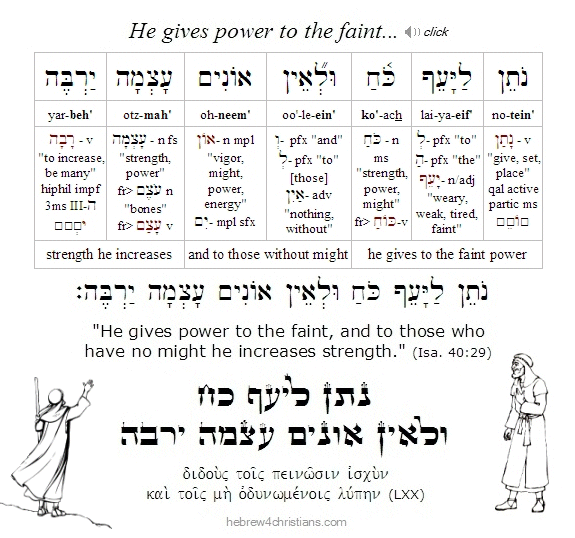
Isa. 40:29 reading (click):
Trusting God's love for you...
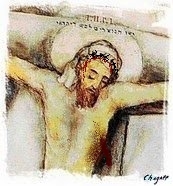
"When you think of what you are, and despair; think of what He is, and take heart." - Spurgeon
03.04.26 (Adar 16, 5786) "Father forgive them, for they know not what they do" (Luke 23:34). Yeshua's intercession is not just for the sins we have consciously committed but to the sins done in the blindness of our unconscious; his sacrifice was offered not just for our known acts of sin, but for the wayward condition of our darkened hearts... This is essential. When God forgives our sin, it goes beyond forgiveness of the sinful behavior to the innate sickness of the heart. Divine forgiveness is remedy for our alienation, our lostness. It is healing of our deepest self, our secret heart, wherein we become a new creation. If God accepts us at all, he accepts us completely, and that means we are made righteous by means of his love and grace.
Teshuvah ("repentance") is not about becoming better but about becoming different. It is about newness of life. As Yeshua said, "Unless you are born again, you cannot see the kingdom of heaven." Believe that you have received it and it will be yours (Mark 11:24).
Hebrew Lesson
Psalm 63:3-4 Hebrew reading:
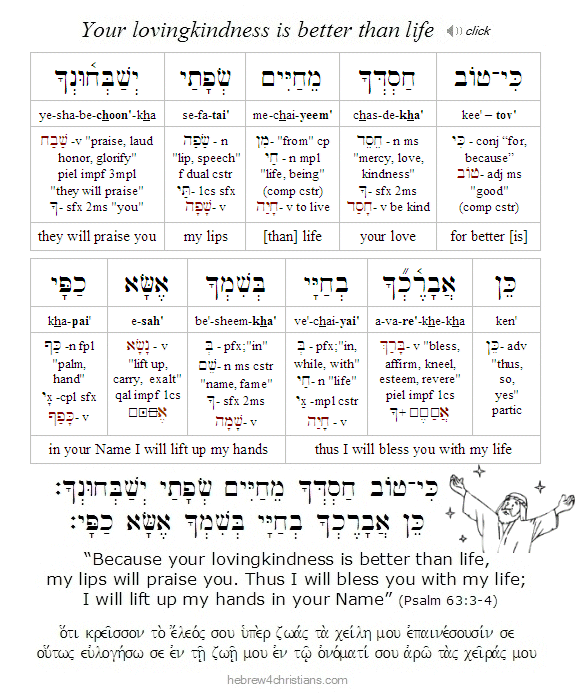 |
If there's hope for eternal life, it is found in the one who "loved me and gave himself for me" (Gal. 2:20). I put no trust in religion, nor in the reformation of my character, nor in my will to believe, but solely in the kindness of the one who heals me from the ruin of myself.
Knowing God Truly....
"Not everyone that says to me, 'Lord, Lord,' shall enter into the kingdom of heaven; but he that does the will of my Father who is in heaven. Many will say to me in that day, 'Lord, Lord, have we not prophesied in your name? and in your name have cast out devils? and in your name done many powerful deeds?' And then will I profess to them, 'I never knew you: depart from me, you that work iniquity.'" - Yeshua
03.04.26 (Adar 15, 5786) "I never knew you..." Are there any more terrible words that may be said? O dreadful thought to consider that we, even though we profess faith in God, may become strangers to the truth, and that the essence of our life was discovered to be a lie, a vanity, everlasting loss...
That is the substance of Yeshua's warning to all who profess faith in him. "The outer is not the inner" (and vice versa). Not every one who says that he believes in him truly does so, and not every one who thinks he knows him does so truly (Matt. 7:21). Truth is revealed by what a person does with his or her life, since this manifests who they are and what they really believe, far more than mere words. We can say a lot of things about what we may believe, but the test is whether we are doing the will of God - or not. Those who "enter the kingdom" are those who seek to do the will of God as the utmost passion of their existence.
Clearly none of this is about religion or religious "scrupulosity." It is far more serious than that. Yeshua warned that many people do various religious activities, "good deeds" such as feeding the poor, protesting social injustice, or ministering to the oppressed, and so on. Some may even teach or preach the very gospel message itself, but alas! all these may be outsiders who break the inmost law of truth by refusing to surrender to God.
Hear Yeshua's words: "Many will say to me, 'Lord, Lord, didn't we prophesy in your name, and in your name cast out demons and do many powerful deeds?' (Matt. 7:22). But note the plural pronoun used in this self-reference. Why does the crowd speak on its behalf regarding what "they" have done to justify themselves? Are these people trusting in their religious associations or virtues to make them right with God? Do they identify themselves with some church or righteous cause and assume that should suffice to obtain favorable judgment from heaven? Be careful. Yeshua always speaks to the individual heart, not to groups, tribes, or political parties... "I never knew you" is spoken in the plural: Οὐδέποτε ἔγνων ὑμᾶς, that is, He is unknown except for the individual heart that trusts in Him...
But nonetheless, Yeshua is saying something more. In this admonitory vision of judgment there is a surprising twist. There is no indication that he denied that these people objectively did such patently "good" things. Many did prophesy (or teach) about God; many did cast out demons and did "powerful" or miraculous works. The essence of the judgment, however, is that despite all this, despite their ostensible allegiance to God, they were really practitioners of lawlessness, they were secret workers of iniquity, and therefore they were cast out: "I never knew you" (Matt. 7:23).
Yeshua had warned us before. He made the matter clear: "Enter by the narrow gate. For the gate is wide and the way is easy that leads to destruction, and those who enter by it are many. But the gate is narrow and the way is hard that leads to life, and those who find it are few" (Matt. 7:13-14). The "wide" gate is the way of the crowd, spacious enough to accommodate the masses. It's the way of open-ended "tolerance" coupled with the unthinking repudiation of moral convictions. The "paradox of tolerance" is that absolute tolerance is self-contradictory and ultimately leads to self-destruction. As Karl Popper said: "If everyone is tolerant of every idea, then intolerant ideas will emerge. Tolerant people will tolerate this intolerance, and the intolerant people will not tolerate the tolerant people." Our world today.
The "narrow way," on the other hand, leads to life. It is not the popular way. It is not the way of the masses or the "politically correct" crowd. It is not amenable to the way of the jaded skeptic who has no faith in truth. It is not the path of the proud or arrogant. Nor is it the way of "religion" or social justice organizations. It does neither "jihad" nor simulate compassion through worldly philanthropy. It is certainly not the way of the State nor political movements driven by mass appeals of the tyrants, demagogues, and their followers. Nor is it the way of the "institutional" churches. It is not a mass "Christian" movement. It is not concerned with teachings of theologians, or professors, or even preachers who are simply "interested" in the things of God but who never engage in raw personal struggle and agony of heart to do the will of God. No, the way of true surrender involves confessing your brokenness and poverty - your need for deliverance from yourself - and in humility coming before the light to ask God for the miracle of salvation, for "life-from-death" deliverance, resurrection, and newness of life...
Something more is therefore needed than merely thinking about God or doing various forms of good works, and that "something more" is having an honest and genuinely tested relationship Yeshua, knowing him in the secret communion of your heart as you live whatever remains of your days in surrender to his will. What is more is the death of Yeshua given on your behalf and your regeneration. It is life "built upon the Rock" - the solid foundation of God's heart given in Christ - that will enable you to weather the inevitable storms of life without failing (Matt. 7:24-27).
So do you truly know the Lord, friend? Or better - does He really know you? Again, this does not concern abstract knowledge about God or the practices of religion, but the passion of the heart. It is the "knowledge" of knowing someone that you truly love. And that is the key: love. To know God is to know his love and to receive his passion. You simply cannot know Yeshua apart from knowing his love for you, for these are bound together as one.
God loves you despite yourself. It's not your love for God that saves you but God's love for you: ῾Ημεῖς ἀγαπῶμεν αὐτόν, ὅτι αὐτὸς πρῶτος ἠγάπησεν ἡμᾶς. "We love him because he first loves us" (1 John 4:19). We were born into this world alienated, lost, spiritually dead, and therefore unable to know the truth of God's heart. Our love (and knowledge) of God comes from God's love for us, and we receive that love by the miracle of his intervention in our lives. There is no other way. We do not ascend a "stairway to heaven" to find God, but he descends to the depths and rescues us from the shadowy world of exile and fear.
Yeshua was once asked: "What shall we do to do the works of God?" and he answered: "This is the work of God, that you believe in him whom he sent" (John 6:28-29). This, then, is the will of God; this is what the Lord requires from us; this is the key that opens the door to enter in the Kingdom: to believe and trust in God's personal love for us given in Yeshua and to live the truth of that love humbly and in all our ways.
If you forget the essence of your soul you may begin to lose sight of your reason for being, the "why" that underlies all other whys... This essence, however, is not discovered by means of reason, but by revelation -- it is a divine disclosure that awakens you to newness of life. Teshuvah is a return to the arms of your Heavenly Father...
Hebrew Lesson
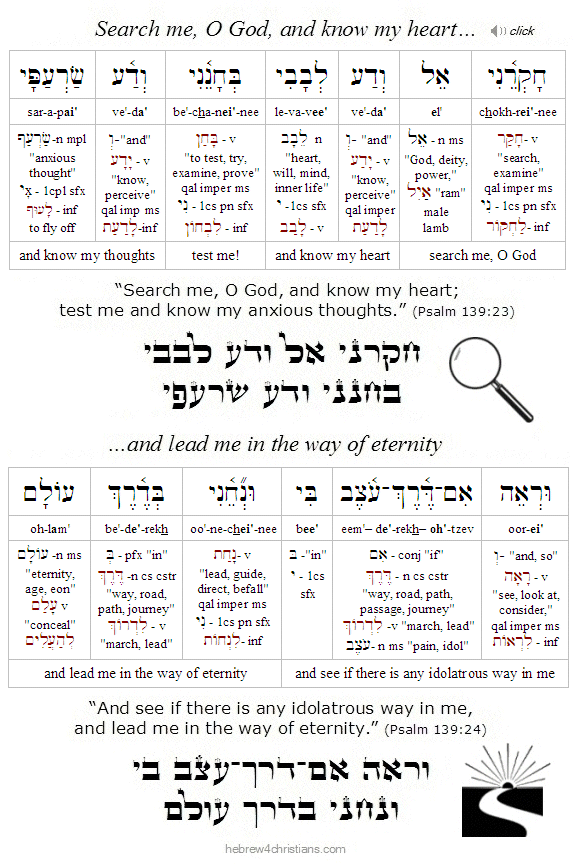
Psalm 139:23-24 Hebrew reading:
 |
Torah of the Half-Shekel...
03.04.26 (Adar 15, 5786) The sages say that the meaning of a holy place, or "mishkan," is not only something "within us" but is also something we share between us. As Yeshua said: "Where two or three are gathered in my Name, there I am in their midst" (Matt. 18:20).
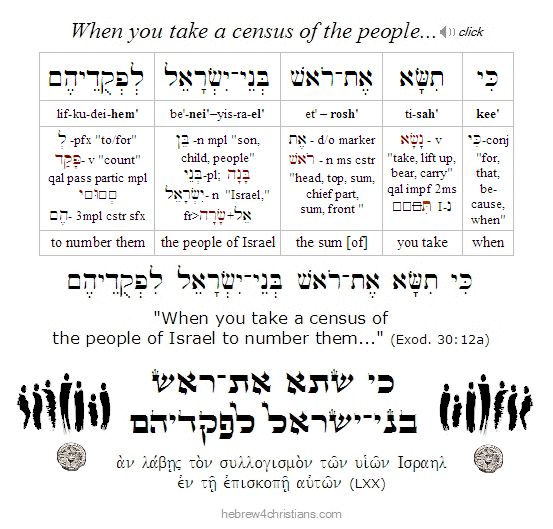
The offering of the "half-shekel" (i.e., chatzi ha'shekel: חֲצִי הַשֶׁקֶל) that is mentioned in this week's Torah portion (i.e., Ki Tisa) symbolizes how each of us individually contributes to make a shared holy place of the Lord. Recall that each person, no matter how rich or how poor, was required to offer a half-shekel, that is, a small silver coin equal to a few dollars in today's currency, for the sake of the upbuilding of the sanctuary (Exod. 30:-12-16). Originally these half-shekels were collected (in a census) and then melted down to make the silver sockets for the mishkan, that is, sockets used to anchor the frame of the Holy Place (אַדְנֵי הַקֹּדֶשׁ) as well as to make hooks for the beams (ווִים לָעַמּוּדִים) to hold the inner veil (Exod. 38:27-28). The sages comment that these sockets and hooks secured the foundation and held the sanctuary in place -- a beautiful picture of how a part of each person upholds the sacred place.
Interestingly the half-shekel contribution was said to be an offering to "atone for your souls" (לְכַפֵּר עַל־נַפְשֹׁתֵיכֶם), which some sages said represents the giving of the soul to God, but it also suggests the need for atonement within the innermost chamber of the Holy of Holies (i.e., the heart). The Torah's language, however, makes it clear that the giving of the half-shekel is quite a serious matter, since its contribution created a sense of community that is vital to our spiritual well-being. We all need each other, and the half-shekel only has its place among other half-shekels, which is to say that a given individual contribution may seem insignificant, but it is equally important to the whole. The whole may be greater than the sum of its parts, but the parts are essential to make the whole...
Every "jot and tittel," chaverim; the pattern of the Mishkan reveals much. Individual believers are "the temple of the living God" and "temples of the Holy Spirit" where God's presence dwells (1 Cor. 6:19; 2 Cor. 6:16). Collectively we are "joined together to become a dwelling place of God in the Spirit (Eph. 2:21-22). We are brought together as "living stones" to form a "spiritual house" and to serve as priests who offer sacrifices of praise to God (1 Pet. 2:5).
The "Torah of the Half-Shekel" teaches that each of us has something essential to contribute to the sanctuary of God, and no one can be left out. The Holy Place belongs to us all. Amen.
Hebrew Lesson
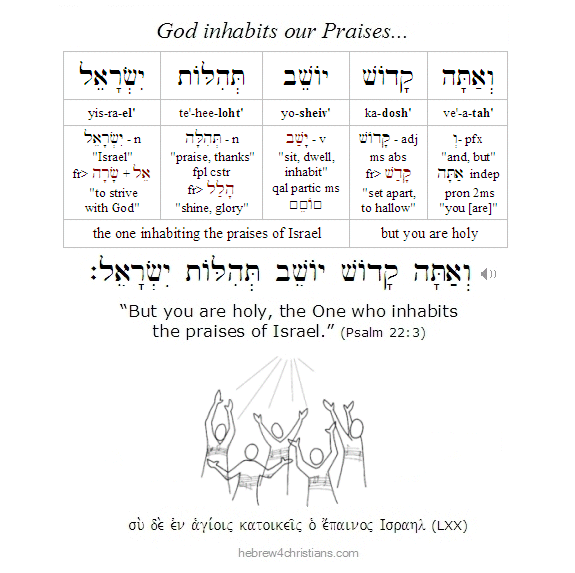
Psalm 23:3 Hebrew reading (click):
 |
The "Passion" of Moses...
03.03.26 (Adar 14, 5786) A midrash says that Moses when Moses came down the mountain and shattered the two tablets containing the Ten Commandments, he later gathered up the fragments and put them inside his "tent of study" (note that this was not the Tabernacle since it had not yet been erected). God then instructed him to relocate his tent far outside the camp, where the Shekhinah Glory descended in plain view of the people (Exod. 33:7-9). There - in the sanctity of his private tent - the LORD spoke intimately to Moses, "face to face" (i.e., panim el panim: פָּנִים אֶל־פָּנִים) from the midst of the cloud...
In the solitude of his tent Moses was deeply troubled, even distraught. Undoubtedly he pondered everything in his life that had brought him to this difficult place... Alas, in light of the recent disaster at Sinai, Moses realized he was now at an utter impasse. Would God continue His redemptive plan or was this the end of the great dream? He prayed, he fasted, and he waited for many days and nights...
After languishing some time before the LORD he poignantly appealed to God in hope: "If I have found favor (grace) in your eyes, let me know your ways, that I may know you and continue in your favor" (Exod. 33:13). God responded by reassuring Moses that His Presence would be with him (alone) and that he (alone) would "enter His rest." But Moses protested: "Unless You go in the lead, do not make us leave this place. For how shall it be known that I have found favor in your sight -- I and your people? Is it not in your going with us, so that we are distinct, I and your people, from every other people on the face of the earth?" And the LORD said to Moses, "This very thing that you have spoken I will do, for you have found favor in my sight, and I know you by name" (Exod. 33:15-17). Moses' poignant intercession touched God's heart, causing Him to change from a mode of strict judgment (middat ha-din) to one of mercy and forgiveness (middat ha-rachamim). This was the "gospel" moment at Sinai....
Upon hearing God's words of comfort, Moses was so overcome with joy that he exclaimed: "Oh, let me behold Your Presence!" (Exod. 33:18), whereupon God answered, "I will make all My goodness pass before you, and I will proclaim before you the name LORD (יהוה), and I will be gracious to whom I will be gracious, and will show mercy on whom I will show mercy" (Exod. 33:19, cp. Rom. 9:15). Note that Moses would receive the revelation of the Name when he "stands upon the Rock" (Exod. 33:21).
The LORD then instructed Moses to carve a new set of tablets and to meet him again at the place (i.e., makom: מָקוֹם) on the top of Sinai, where He would descend in the cloud to "declare His Name" (Exod. 33:17-34:7). This dramatic experience of revelation was later called middot ha-rachamim (מדות הרחמים) or the revelation of the attributes (or "measures") of God's mercy, and was considered a divine "addendum" to the original covenant terms. Rabbinic tradition later incorporated the recitation of middot ha-rachamim into the Yom Kippur service.
Hebrew Lesson
Exodus 34:6 reading (click for audio):
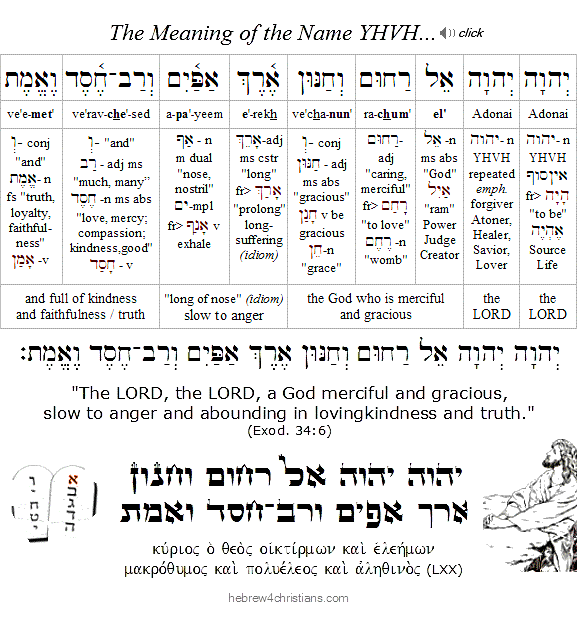 |
So what are some of these attributes? Note first that the LORD calls himself rachum v'chanun (רַחוּם וְחַנּוּן), often translated "merciful and gracious." The noun rechem (רֶחֶם) means "womb" in Hebrew, indicating that God's compassion is like a mother's deep love for her child. The word chanun (חַנּוּן) comes from the word for grace or favor (i.e., chen: חֵן), and indicates that God is a graceful giver who is favorably disposed to help those in need. The LORD is compassionate to those who call upon Him.
The phrase erekh apayim (אֶרֶךְ אַפַּיִם) literally means "long of nose," an idiom used to describe someone who is patient and slow to anger, i.e., "longsuffering" (Prov. 14:29), one who inhales slowly and with equanimity. The word chesed (חֶסֶד), is often translated as "lovingkindess" or "steadfast love," and implies devotion and fidelity. God describes Himself as rav chesed v'emet (רַב־חֶסֶד וֶאֱמֶת), that is abundant in His kindness and faithful love.
It is fascinating to see that this revelation prefigures the New Covenant (הברית החדשה) that was given to Israel. Just as the first set of tablets, based as they were on the justice and holiness of God, were broken, so a second set was given based on the middot (attributes) of the LORD's mercy and grace. Indeed, Yeshua was broken on behalf of the law but was raised again so that all who trust in Him can truly understand that God is "merciful and gracious, slow to anger and abounding in steadfast love and truth" (Exod. 34:6, Psalm 86:15, 103:8).
It can be readily argued that the revelation of the Name YHVH (Exod. 34:5-7) was a "gospel" moment for Israel. The episode of the Golden Calf revealed that the Jews were unable to keep the law, even though they personally experienced the power of God's deliverance from Egypt and His ongoing care on the way to Sinai. Despite the judgments brought upon Egypt, despite the overthrow of Pharaoh and his armies in the sea, despite the bitter waters made sweet, despite the manna from heaven, despite the miraculous well of Miriam, despite the awesome revelation at Sinai, and despite the pledge of the Israelites: kol asher diber Adonai na'aseh v'nishma, "All that the LORD has spoken we will do, and we will be obedient" (Exod. 19:8; 24:7), the Sin of the Golden Calf revealed that something more was needed, and that the law itself was insufficient to change the inner heart of man (Rom. 3:20). The intercession of Moses on behalf of Israel - his willingness to die on behalf of the people - revealed the heart of the New Covenant (בְּרִית חֲדָשָׁה) of the LORD, the deeper revelation of the God's character of mercy and grace. Apart from God's gracious love and compassion, the law by itself rendered only the righteous verdict of death for Israel...
For more on this, see "God's Stubborn Love: Further thoughts on Parashat Ki Tisa."
The Scandal of Esther...
03.02.26 (Adar 13, 5786) Over the centuries, virtually no other book of the Tanakh ("Old Testament") has received more "mixed reviews" than the Book of Esther. In general it may be said that the book has been well received by the Jews, but disliked by most Christian theologians and "church" leaders. For example, the Jewish scholar Maimonides (i.e., the Rambam) praised Esther as being close in rank to that of the Torah itself: "When the Messiah comes, only Esther and the Torah will remain" (Mishneh Torah, Megillah). On the other hand, the Christian scholar Martin Luther disapproved of the book and wished that it didn't exist at all, primarily because he thought it "Judaized" too much (see Luther: Table Talk 24). Sadly, many Christian theologians have tended to agree with Luther and to regard the book as unworthy of inclusion in the Bible, whereas others do not seem to understand its essential message. Some Christian teachers have defamed the Book of Esther as being "a memorial to the nationalistic spirit of Judaism" (A. Weiser, Intro to OT, 1961) and even a "bloodthirsty attempt to justify ethnic pride in being a Jew" (B.W. Anderson, Esther, 1950). Others have stated that "there is not one noble character in the entire book" (L. B. Paton, The Book of Esther, 1908). Indeed, more Christian anti-Semitic statements have been made regarding the Book of Esther than any other book of the Old Testament (Moore: Esther, 1971). Do you wonder why this might be the case?
Anti-Jewish Bias in the Church
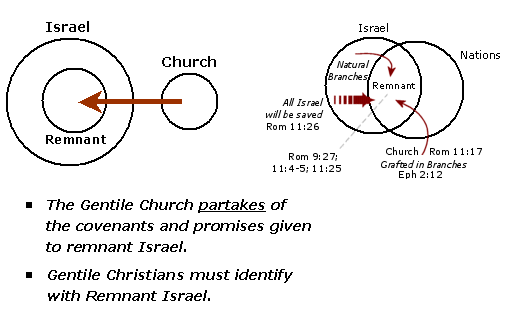
Perhaps such anti-Jewish statements have been made about the Book of Esther because (historically speaking) many Christian theologians have been essentially anti-Jewish in their thinking.... After all, the central point of the book reveals God's providential care for ethnic Israel, and some Christian theologians have found this conclusion abhorrent to their theological biases.. Indeed, the Book of Esther leads inescapably to the celebration of Jewish identity and survival despite the evil plans and designs of anti-Semites, and therefore those theologians that believe that the church replaces Israel will tend to regard the message of the book with suspicion (or they will attempt to reinterpret "Israel" to mean the "church"). For those who understand that the church partakes of the covenantal blessings given to Israel, however, the Book of Esther is a beautiful story about God's faithful love and care for His people... There is a future and a hope for Israel that will indeed be fulfilled!
 |
Some Christian teachers attempt to "excuse" their oversight of the Book of Esther because they find in it no obvious message for the Church. Unlike the Torah holidays of Passover and Shavuot (which they regard as fulfilled in the New Testament), the Book of Esther seems parochial in its focus and "disconnected" from the rest of the Scriptures. In other words, since the Book of Esther (and therefore the holiday of Purim) celebrates the existence and perpetuity of the Jewish people, these pastors regard it to be of little concern. This is actually quite an astonishing conclusion, however, especially since Esther is part of the Christian canon of Scripture, and the book clearly states that "these days should be remembered and kept throughout every generation, in every clan, province, and city, and that these days of Purim should never fall into disuse among the Jews, nor should the commemoration of these days cease among their descendants" (Esther 9:28). It is painfully obvious that the only way to ignore the message of the book is to deny the Jewish roots of the Christian faith. How your church leaders regard the Book of Esther is a test case of whether or not they accept the heretical doctrine of Replacement Theology...
God's Faithfulness to Israel
Did you know that the Brit Chodashim (בְּרִית חֲדָשָׁה), or the "new covenant," is described in only one place in the entire Old Testament? Here is the relevant passage:
Behold, the days are coming, declares the LORD (יהוה), when I will make a new covenant (בְּרִית חֲדָשָׁה) with the house of Israel and the house of Judah, not like the covenant that I made with their fathers on the day when I took them by the hand to bring them out of the land of Egypt, my covenant that they broke, though I was their husband, declares the LORD. For this is the covenant I will make with the house of Israel after those days, says the LORD: I will put my Torah (תּוֹרָה) into their inmost being and inscribe it upon their hearts; I will be their God, and they will be my people. No longer will they need to teach one another and say to one another, "Heed the LORD"; for all of them, from the least of them to the greatest, shall heed Me -- declares the LORD. For I will forgive their iniquities, And remember their sins no more. (Jer. 31:31-4)
Many Christian theologians stop here and ignore the surrounding context of this passage, namely, the remarkable promise that ethnic Israel would continue to exist as a unique people as long as the laws of nature are in operation:
Thus saith the LORD (יהוה) who gives the sun for a light by day and the ordinances of the moon and of the stars for a light by night, Who stirs up the sea into roaring waves, Whose name is LORD of Hosts (יהוה צְבָאוֹת שְׁמוֹ): If these laws should ever be annulled by Me -- declares the LORD -- only then would the offspring of Israel (זֶרַע יִשְׂרָאֵל) cease to be a nation (גּוֹי) before Me for all time (כָּל־הַיָּמִים). Thus said the LORD: If the heavens above could be measured, and the foundations of the earth below could be fathomed, only then would I reject all the offspring of Israel (זֶרַע יִשְׂרָאֵל) for all that they have done -- declares the LORD. (Jer. 31:35-37)
From this great passage -- the only in the entire Old Testament that explicitly mentions the New Covenant of Yeshua -- it's clear that the continuation and perpetuity of the physical descendants of Israel (zera' Yisrael) is to be reckoned as sure as the very "laws of nature" that are upholding the physical universe. In other words, so long as there is a sun shining during the day and moon and stars during the night, Israel will continue to be a nation (goy) before the LORD for all time (kol-hayamim). Using another analogy, it is as likely for someone to accurately measure the extent of the heavens and earth than it is to suppose that the LORD will cast off all of the seed of Israel. Note especially the last qualifying clause of this verse, "for all they have done," indicating that the unconditional faithfulness of the LORD is not based on the conditional behavior of national Israel.
Have you seen the sun, or the moon or the stars today? If so, then you can be assured that the ethnic nation of Israel retains a place in God's great plan for the ages. The gift and the calling of God is irrevocable (Rom. 11:29).
The Christian Neglect of Esther
It is shameful that so many Christian theologians miss the point of the Book of Esther and thereby become unwitting enemies of the God of Israel. The tragic character of Haman represents the Biblical archetype of all those who refuse to acknowledge God's faithful love for the Jewish people.... Those who disregard this message are impugning the faithfulness of God. After all, if God will not keep His covenant promises to ethnic Israel, what makes Christian theologians believe He will keep His promises to the "church"? Indeed, churches or theologians who claim that God has abandoned ethnic Israel are directly impugning the credibility of the Gospel message itself! Yes, it's that serious of an issue...
Throughout the centuries and in various places, many have tried to destroy the Jewish people, but none has succeeded. עַם יִשְׂרָאֵל חַי / am Yisrael chai: "The people of Israel live!" Israel is God's "super sign" that He is faithful to His covenant promises (Jer. 31:35-37). And since God keeps His promises to Israel, Christians can likewise trust that God's sovereign hand works all things together for good -- even if at times things appear bleak and desperate (Rom. 8:28).
The Scandal of Esther: "Chosenness"
The Book of Esther is all about God's faithfulness and care of the Jewish people, and by extension, for all those (among the nations) who become partakers of Israel's blessings through Yeshua the Messiah. The "scandal" of the book turns on the "scandal of election," or the idea that God personally chooses some people -- for reasons that are entirely His alone -- to be the recipients of His covenantal love. The Jews are called the "chosen people," am segulah, just as Christians are "chosen [εκλεγομαι] in Yeshua before the foundation of the world" (Eph. 1:4). In both cases we note God's sovereign prerogative to choose those who are in relationship with Him. Yeshua told his followers: "No one can come to me (δυναται ελθειν προς με) unless the Father who sent me drags [ἑλκύσῃ] him" (John 6:44, 6:65), and He also said "You did not choose me, but I chose you and appointed you" (John 15:16). God is the Initiator of the relationship; He is the Master of the Universe and "the God of the spirits of all flesh" (Num. 16:22). If there is revelation from heaven, it is Heaven's prerogative to bestow it on Heaven's own terms...
Regarding this divine prerogative, Paul reminded us of God's words to Moses: "I will be gracious to whom I will be gracious, and will show mercy on whom I will show mercy" (Rom. 9:15). He then follows this up with the statement: "So then it depends not on human will or exertion, but on God, who shows mercy" (Rom. 9:15-16). If this sounds "offensive" or "unfair," it may be that we are secretly appealing to our own supposed merit in order to find acceptance before God. The "scandal" of the gospel is that God loves whom He loves for reasons that are His alone, and this is likewise the scandal of God's sovereign choice of ethnic Israel. In either case, God is preeminent.
Israel's Election -- and your own!
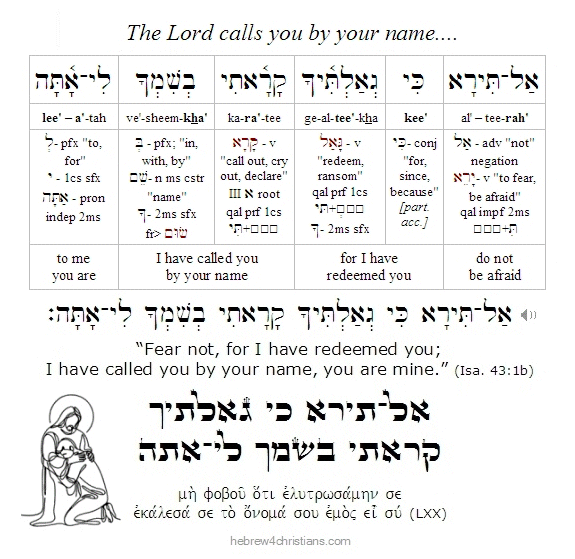
Israel's election says something about your own... God called you by name -- before He created the very universe itself. "God has chosen you from the beginning for salvation through sanctification by the Spirit and faith in the truth" (2 Thess. 2:13). God loves you with an "everlasting love" (אַהֲבַת עוֹלָם) and with lovingkindness (i.e., chesed, חֶסֶד) draws you to Himself (Jer. 31:3). There is no fear in God's sovereign and irresistible love for your soul (1 John 4:18). "If God is for us, who can be against us?" (Rom. 8:31).
Hebrew Lesson
Isaiah 43:1b reading (click for audio):
 |
It is interesting to note that the Book of Esther was "canonized" by the Jews at the Council of Yavne in AD 90, though there is little doubt that the book originated in Persia during the 4th century BC (Jewish tradition regards it as a redaction by the Great Assembly of an original text written by Mordechai). The Essene Community at Qumran appears to have rejected the book (i.e., it is the only canonical book of the Tanakh not found among the Dead Sea Scrolls), though this might be based on the book's omission of the Name of God, the fact that the Torah or the covenant is not made within its pages, or that the heroine of the book lived as an assimilated Jew during the years of exile... In other words, the Essenes might have rejected the Book of Esther for theological reasons similar to those they made about Chanukah (i.e., because of Chanukah's connection with the corrupt Hasmonean dynasty that controlled the Second Temple). On the other hand, Josephus (AD 37–100) clearly regarded the Book of Esther as canonical (Antiquities XI) as did the early church fathers who incorporated it into the canon of the Christian Bible.
Christians Should Observe Purim
In light of the aforesaid, it is evident that Christians, that is, those who love and serve the King of the Jews and who believe that the LORD God of Israel is true to His word -- should indeed recognize the value of the Book of Esther and celebrate the Biblical holiday of Purim. God does not "play dice with the universe," and we can trust in His sovereign care and plans -- both for ethnic Israel and for those who accept Yeshua as their Savior and Master. Purim is a time to celebrate that the LORD God of Israel is our Sovereign King, our Faithful Protector, our magnificent Savior. Like the Jews of ancient Persia we were delivered by God in order to experience the joy of His love... The goal or end of salvation is abundant life filled with "joy unspeakable and full of glory" (John 10:10, 1 Pet. 1:8).
Haman and the "Anti-Christ" Spirit
Finally, it is important to remind ourselves that the world is full of various sorts of "Hamans," and some of them are even teachers and pastors in various Christian churches and schools! We must be vigilant, chaverim. Haman accused the Jews of being "different" because they refused to submit to illegitmate claims of authority: "There is a certain people scattered abroad and dispersed among the peoples in all the provinces of your kingdom. Their laws are different from those of every other people, and they do not keep the king's laws, so that it is not to the king's profit to tolerate them. If it please the king, let it be decreed that they be destroyed" (Esther 3:8-9). The "princes of this age" -- the world's politicians and their enforcers -- are often quick to accept the lie that those who submit to the greater authority of the LORD God of Israel are to be regarded as enemies of the State....
Haman is clearly a type of Anti-Christ (lit., "replacement of Messiah") who desires to see the Jewish people exterminated once and for all. In the New Testament we know that there is soon coming one who is the embodiment of this "spirit of Haman," and of Hitler, and of all the other anti-Jewish murderers throughout the ages. This one is the "man of sin" or the Messiah of Evil (2 Thess. 2:3), who will broker peace in the Middle East and feign to be friendly to Israel, but who will ultimately betray her and seek to have her utterly destroyed.
Satan's final attempt to provide the ultimate "Final Solution" will be foiled, just as Haman's attempt was foiled. His plan will boomerang upon his own head, just as Haman's plan boomeranged upon him. And he and his children will all hang from the gallows, just as Haman and his children did.
When Yeshua returns at the end of the Great Tribulation, He will destroy the Messiah of Evil by the Word of His Power and physically deliver Israel as her rightful King and Lord. Israel's long-awaited Mashiach ben David will be clearly revealed and understood to be Mashiach ben Yosef Himself. Then, and only then, will Israel experience the true deliverance and salvation of God -- and the rejoicing of that Purim will be like none other!
Hebrew Lesson:
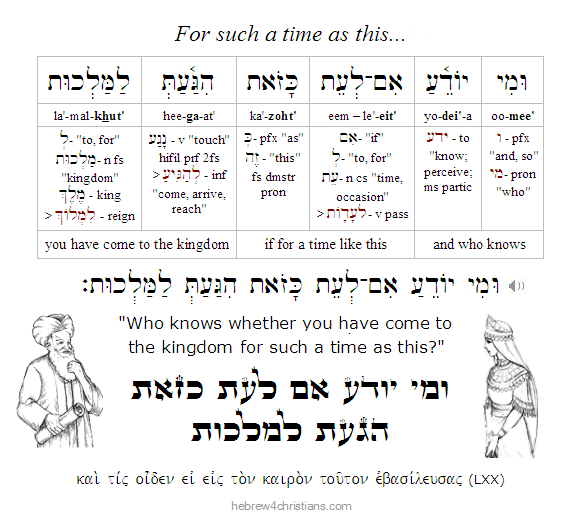
Esther 4:14b reading (click for audio):
 |
So Purim Sameach friends, and may Yeshua our LORD return speedily, and in our day. Amen.
The Cleft of the Rock...
The following is related to our Torah reading for this week, parashat Ki Tisa...
03.01.26 (Adar 12, 5786) When Moses asked the LORD, hareini na et-kevodekha - "Please show me your glory" (Exod. 33:18), the sages said he wanted to reconcile God's supreme power and goodness despite the prevalence of evil in the world. God answered, "I will make all my goodness pass before you, and I will proclaim before you my name the LORD (יְהוָה)... but," he said, "you cannot see my face, for man shall not see me and live" (Exod. 33:19-20).
The early sages interpreted God's answer to mean that once we encounter God's goodness and love (defined by the essential name י־ה־ו־ה), we must trust that what is beyond our understanding nevertheless works for our ultimate good, even if its purpose may be unknown to us at the present time (Rom. 8:28). The LORD said both: "I will make my goodness manifest to you," and "you cannot see me and live," which means that we "see through a glass darkly" as we sojourn through this world (1 Cor. 13:12). God manifests yet still we can't fully see...
In this life you may stand near God in the "cleft of the rock," on the very mountaintop of revelation, but you will still be in a cloud of unknowing (Exod. 33:22-23). Nevertheless God promises to "shelter you with his hand"; he will provide you a place of refuge and the strength to keep trusting despite incomprehensible times of testing...
Hebrew Lesson
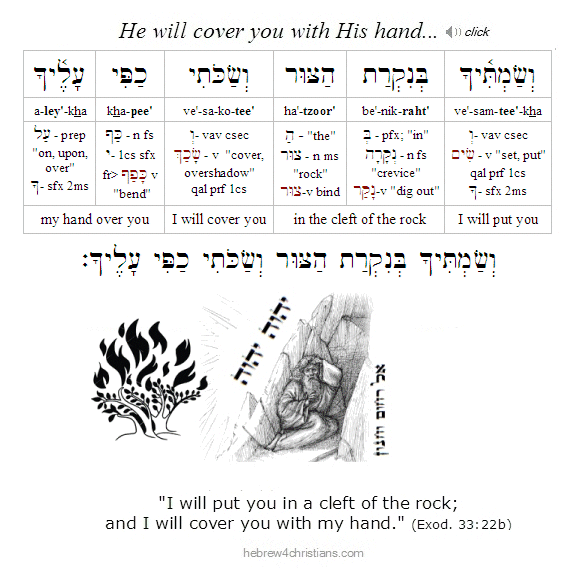
Exodus 33:22b reading (click for audio):
There is an opinion in the Talmud that says Moses was the author of the Book of Job, the ancient story that investigates why the righteous suffer (Bava Batra 15a). At the end of the book, God answers Job from the midst of a whirlwind, reminding him that while people can't comprehend His ways, he is the nevertheless the Source of all goodness and truth in the universe. After Job hears God speak, he says, "Behold, I am of small account; what shall I answer you? I lay my hand on my mouth... I know that you can do all things, and that no purpose of yours can be thwarted. I have uttered what I did not understand, things too wonderful for me, which I did not know. I had heard of you by the hearing of the ear, but now my eye sees you; therefore I despise myself, and repent in dust and ashes" (Job 40:4, 42:2-3,5-6). Both Job and Moses realized that trusting in the love of God is the key to accepting all other experiences that might befall him...
Note that God said that "no man can see My face and live" (Exod. 33:20), and yet Moses spoke with God "face to face" (Deut. 34:10). We reconcile this by understanding "face to face" (פָּנִים אֶל־פָּנִים) to be an idiom that means "intimately," or "personally," that is, without the use of mediators or outside agents. Nevertheless the "face of God" was disclosed in the advent of Yeshua, as it is written: "No one has ever seen God; the only begotten God (μονογενὴς θεὸς), the One who is in the heart of the Father (ὁ ὢν εἰς τὸν κόλπον τοῦ πατρὸς), has made him known" (John 1:18). Yeshua is the "image of the invisible God" (εἰκὼν τοῦ θεοῦ τοῦ ἀοράτου) who reveals the meaning of the Father (John 14:9). As it is written, "God who said, "Let light shine out of darkness," has shone in our hearts to give the light of the knowledge of the glory of God in the face of Yeshua the Messiah" (2 Cor. 4:6). Our Savior is "the radiance of the glory of God and the representation of his essence (χαρακτὴρ τῆς ὑποστάσεως αὐτοῦ), the One who upholds the universe by the word of his power" (Heb. 1:3). All this is very mysterious, of course: the Infinite enters the realm of the finite; God is revealed yet concealed; he is made known yet beyond our understanding. Indeed, the very One who entered the "leper colony of the world" and willingly died on the cross for our meanness and sin is none other than "the blessed and only Sovereign, the King of kings and Lord of lords, who alone has immortality, who dwells in unapproachable light (φῶς οἰκῶν ἀπρόσιτον), whom no one has ever seen or can see" (1 Tim. 6:15-16).
That Yeshua dwells in "unapproachable light" recalls the story of the Roman emperor who once asked Rabbi Joshua if the universe had a ruler. The sage answered, indeed, the LORD is the Creator of all things, as it is written, "In the beginning, God created the heavens and the earth." The emperor then asked, "Why is God not like the emperor of Rome, who is seen twice a year so that people may know and worship him?" Rabbi Joshua said that unlike human kings, the LORD was too powerful for people to see; as it is written in the Torah: "No person shall see Me and live." The emperor was skeptical, however, and insisted that unless he could see God, he would be unable to believe. Joshua then pointed to the sun high in the sky: "Look into the sun and you will see God." The emperor tried to look into the sun, but was forced to cover his eyes to keep them from burning: "I cannot look into the sun," he said. Joshua then replied: "Listen to yourself: If you cannot look into the sun which is but one of God's creations, how can you expect to look at God?" (Sefer HaAggadah).
It is interesting to compare this story with another... Lev Tolstoy tells the parable of an old cobbler who despaired of life and yearned to finally see God. In a dream one night a heavenly voice told that he would see God's face the very next day. The cobbler began the day on the alert, hoping to catch a glimpse of God, but he was distracted when he encountered a needy family. They were cold and desperate, so he took them in and cared for them. The day passed and as he finally laid down to sleep, the cobbler realized he had completely forgotten to look for God. He apologized to God and once again asked to die... As he fell asleep he dreamed that he saw the family he had helped walking by when the heavenly voice then said, "Rest assured: you saw God today in the faces of those you helped." "Truly, as you did it to one of the least of these, you did it to me" (Matt. 25:40).
 |
Parashat Ki Tisa:
Brokenness and Atonement...
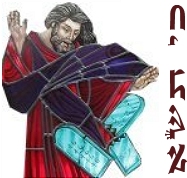
03.01.26 (Adar 12, 5786) In our last two Torah readings (Terumah / Tetzaveh), Moses was upon Mount Sinai receiving the vision of the Sanctuary (i.e., the Mishkan or "Tabernacle") and its various furnishings. In this week's portion, Ki Tisa (כִּי תִשָּׂא), God commanded that all Israelite men over the age of twenty were required to pay a tax for the upkeep of the Sanctuary: "Each shall give (וְנָתְנוּ) a ransom (i.e., kofer: כּפֶר) for his life to the LORD" (Exod. 30:12). After this tax was defined, the LORD described some additional elements that would be required for the priestly service at the Sanctuary, namely, a copper washstand, sacred anointing oil, and incense for the Golden Altar in the Holy Place.
The Lord then named Betzalel, a man "filled with the Spirit of God" to be the chief architect of the Mishkan. Before the construction would begin, however, the Lord warned the people to be careful to observe the Sabbath day. Immediately following this admonition, God gave Moses the two tablets of the Ten Commandments as inscribed directly by the hand of God.
Before Moses returned to the camp, however, "certain people" had talked his brother Aaron into making a golden idol which they began to worship as their "god." The LORD then told Moses of their treachery and threatened to destroy all the Israelites, but Moses interceded on their behalf. As he rushed down the mountain, with the tablets in hand, he saw the people dancing about the idol and smashed the Tablets in anger. Moses then destroyed the idol and led the Levites in slaying 3,000 of the ringleaders.
The following day, Moses returned up the mountain and begged God to reaffirm the covenant. After a 40 day period of intercession, the Lord finally told Moses to carve a second set of Tablets and to meet him again at the summit of Sinai, where He would show Moses his glory and reveal to him the meaning of His Name (יהוה). When Moses encountered the LORD in a state of brokenness and forgiveness, his face began to shine with glory - a glory that foretold of the New Covenant of God's mercy and grace to come in Yeshua.
When the people saw Moses coming down the mountain with the second set of Tablets, they understood they were forgiven and that the Covenant had been renewed. When they approached him, however, they drew back in fear, because his face was radiant with the glory of God. Moses reassured them, however, and then told them all that the Lord had commanded while he was on the mountain. When Moses had finished speaking with them, he put a veil (מַסְוֶה) over his face. From that time on, Moses wore a veil in the camp, though he removed it whenever he went before the Lord for further instructions.
Blessing the Jewish State...
03.01.26 (Adar 12, 5786) If you know the story of Esther, you see the irony. Radical Islam presents an intolerant theocratic ideology that openly calls for the eradication of the Jewish people. In a sense they represent the "spirit of Haman" that sought to destroy the Jewish people long ago (just as the Amalekites sought to do so when Israel left Egypt at the time of the Exodus). It is interesting that many of the most vocal critics of the US/Israeli liberation of the people of Iran are those who also despise Israel as a nation, whereas those who are celebrating most are those who have lived under Iranian oppression. Indeed, it seems that the only people who are not celebrating the overthrow of the fascist regime of Iran are modern day followers of Haman!
No one knows the day or the hour, but less than 100 years ago the idea of Zion was but a dream, and today we see Jerusalem as the "cup of trembling" for all the nations (Zech. 12:2). Am Yisrael Chai! חג פורים שמח לכל עם ישראל
<< Return
|
|