|
Jewish Holiday Calendar
For January 2026 site updates, please scroll past this entry....
The Torah divides the calendar into two symmetrical halves: the Spring and the Fall, indicating the two advents of Messiah. The Biblical year officially begins during the month of the Passover from Egypt (called Rosh Chodashim, see Exod. 12:2), and the spring holidays of Passover, Unleavened Bread, and Firstfruits both recall our deliverance from Egypt and also our greater deliverance given by means of the death, burial, and resurrection of the Messiah, the great Passover Lamb of God. Yeshua was crucified on erev Pesach, buried during Unleavened Bread, and was resurrected on Yom Habikkurim (Firstfruits). The holiday of Shavuot (i.e., "Pentecost") both commemorates the revelation of the Torah at Sinai as well as the revelation of the Ruach HaKodesh (Holy Spirit) at Zion.
The intermediate months of summer end with the advent of the sixth month of the calendar, called the month of Elul, which recalls the time Moses interceded on behalf of Israel after the sin of the Golden Calf. To commemorate this time of our history, we likewise focus on teshuvah (repentance) in anticipation of Rosh Hashanah and especially in anticipation of Yom Kippur, the great "Day of Atonement." In Jewish tradition the 30 days of Elul are combined with the first ten days of the seventh month (called the "Days of Awe") to set apart "Forty Days of Teshuvah" leading up to the Day of Forgiveness for Israel. Immediately following Yom Kippur, the mood changes as we begin preparing for a joyous week-long celebration called Sukkot (i.e., "Tabernacles") that concludes with the holiday of Simchat Torah.
The winter holidays (חגי החורף) remember special times when God acted on behalf of His people so that they would triumph over their enemies, and therefore they prophetically picture the final victory in the world to come:
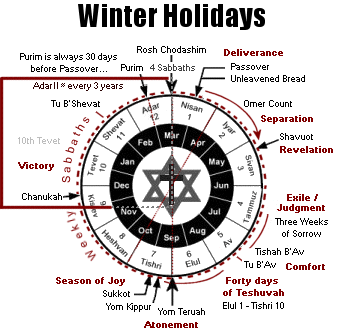 |
The Winter Holidays:
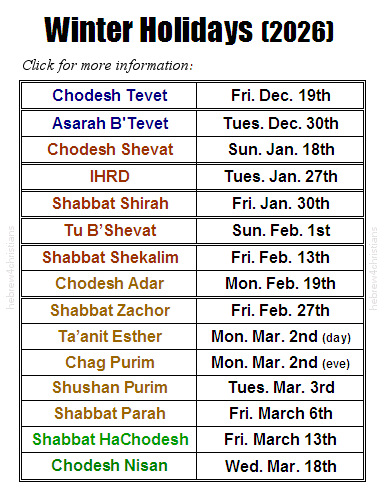
Note that in accordance with tradition, the following holiday dates begin at sundown:
- Month of Tevet (Fri., Dec. 19th [eve] - Sun. Jan. 18th [day])
- Four Sabbaths: Miketz, Vayigash, Vayechi, Shemot, Va'era
- Dates for Chanukah (continued):
- 7th Chanukah candle: Sat. Dec. 20th [i.e., Tevet 1]
- 8th Chanukah candle: Sun. Dec. 21st [Tevet 2] Zot Chanukah
- Last day of Chanukah: Mon. Dec. 22 until sundown
- Winter Solstice: Sun. Dec. 21st (Tevet 2)
- Christmas - Mon. Dec. 25th (Tevet 5, 5786)
- Asarah B'Tevet - Tues. Dec. 30th (dawn), fast for Jerusalem
- Secular New Year: Mon. Jan. 1st, 2025 (Tevet 12, 5786)
- Month of Shevat (Sun. Jan. 18th [eve] - Mon. Feb. 19th [day])
- Month of Adar (Mon. Feb. 19th [eve]) - Wed. March 18th [day])
- Month of Nisan (Wed. March 18th [eve]) - Thurs. April 16th [day])
- Note: The Spring Holidays begin on Rosh Chodesh Nisan:
- Rosh Chodesh Nisan - The Biblical New Year (Wed. March 18th, 1 Nisan, 5786)
- Four Sabbaths: Vayikra, Tzav (HaGadol), Sabbath of Passover, Shemini (parah)
 |
 |
Note: For more about the dates of these holidays see the Calendar pages....
January 2026 Updates
Note: If any page content appears to be missing, please refresh the page...
Blessing of Willingness...
"Let me seek you by desiring you, and let me desire you by seeking you; let me find you by loving you, and love you in finding you." - Anselm of Canterbury
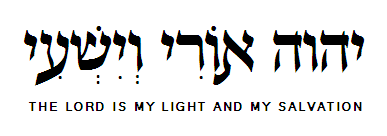
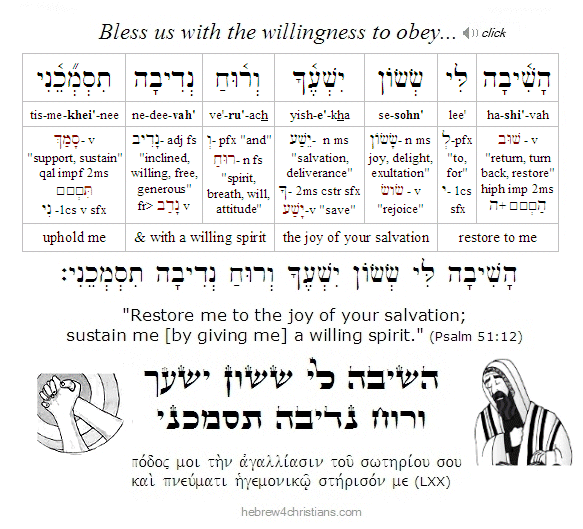
01.30.26 (Shevat 12, 5786) When King David repented from his sin and asked God's forgiveness, he appealed to the LORD: "Restore me to the joy of your salvation (יְשׁוּעָה) and sustain me with a willing spirit. Then I will teach transgressors your ways, and sinners will return to you" (Psalm 51:12-13). The sages comment that this is indeed the way of the LORD (דֶּרֶךְ יְהוָה), namely, to confess your sin, and in brokenness and heartfelt contrition, to return to the LORD full of hope in his steadfast love. In this way, sinners will understand the truth of Torah and return to the LORD God as well.... Hashiveinu, Adonai.
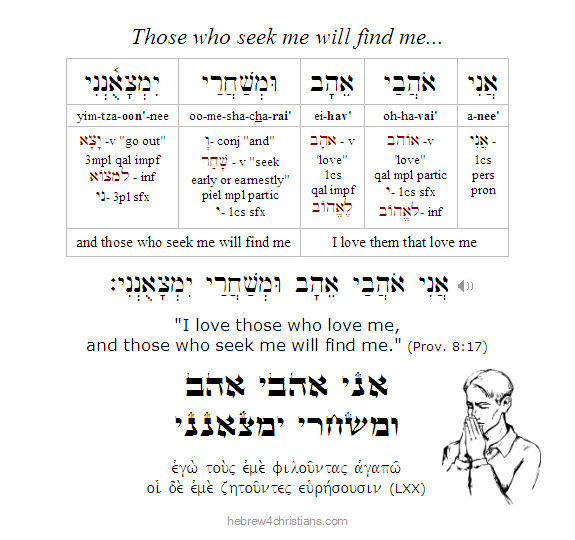
In the Torah we read: "if you seek for the LORD your God from there (i.e., in your place of exile), you will find him, if you search for him with all your heart (בְּכָל־לְבָבְךָ) and with all your soul" (Deut. 4:29). From where do we search, from what place, except from a place of hardship, testing, and tribulation? If you seek for the LORD your God from there - in the midst of your exile, in the midst of your heart's cry - you will find him there, in your heart. This message is a prophecy to the heart of faith, so that after testing befalls you, in the end you will belong to the LORD and will hear his voice. Amen, may God keep you close to his heart.
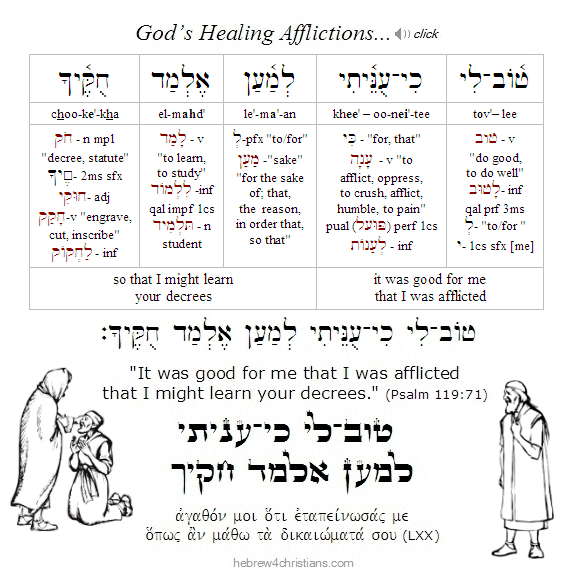
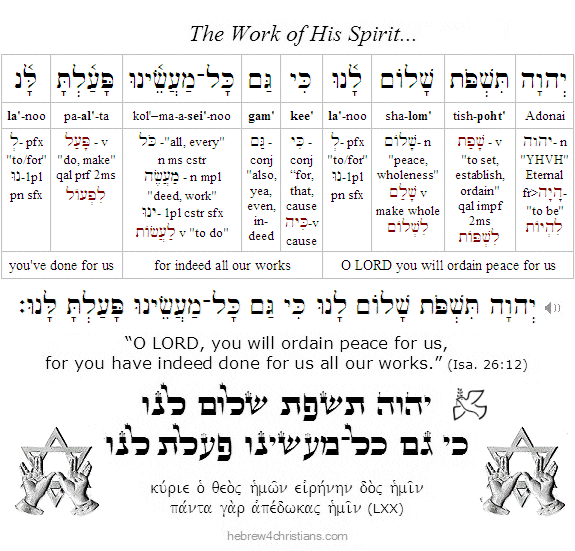
Hebrew Lesson
Psalm 51:12 reading (click):
 |
Oh Lord, you know me in my brokenheartedness and that I speak from the dust, and yet you lift me up from these ashes to console the cry of my heart, you call me up to behold the light of Thy countenance, you embrace me from the depths of your grace. Oh Yeshua, who is like you? Who loves as you do love? You are my favorite Person, the delight of my heart, my dream, my greatest good, my only true love... Draw me close to know the glory of your beautiful heart. Amen.
Eyes of the Heart...
"If your eye is good, your whole body will be full of light..."
01.30.26 (Shevat 12, 5786) The Danish philosopher Soren Kierkegaard (1813-1855) told the story of two young portrait artists who both eagerly sought to capture the essence of beauty in their paintings. One artist looked high and low for the "perfect face of beauty" but never found it. Tragically, he later gave up painting and lived in despair. The other artist, however, simply painted every face he saw and found beauty in each one.
Now here's your question: Which of the two was the true artist?
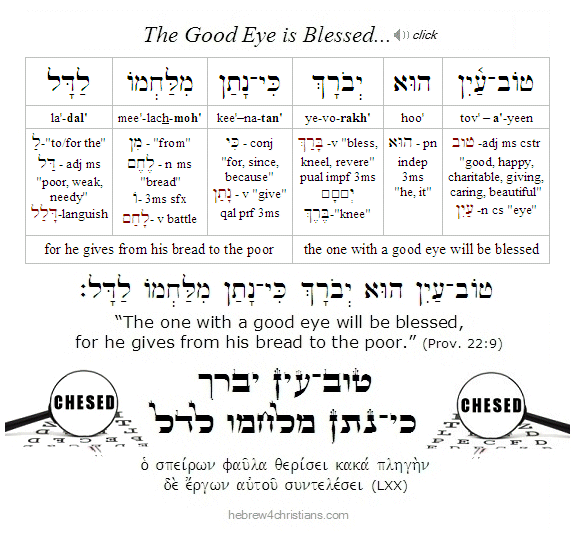
The heart looks through the eye.... The good eye (i.e., ayin tovah: עַיִן טוֹבָה) - sometimes called the "beautiful eye" (עין יפה) - refuses to think evil about others (it "does not impute the bad" - οὐ λογίζεται τὸ κακόν - in 1 Cor. 13:5), but it rejoices in the truth – even if such truth is found only in the hope of a future good (1 Cor. 13:7). The good eye is the instrument of a giving heart that looks upon the needs and pains of others with genuine compassion. The "evil eye" (i.e., ayin hara: עַיִן רָעָה), on the other hand, is cynical, jaded, envious, and unsympathetic to other people and their struggles... Using a good eye takes from the treasure within the heart and gives it out freely to others: "The good person out of his good treasure brings forth good, and the evil person out of his evil treasure brings forth evil" (Matt. 12:35). There never is a risk that love may be given away without warrant from heaven. In the future judgment to come, I'd rather be found guilty of "casting pearls before swine" than to be found guilty of withholding love from others...
A person with a "good eye" looks at things from the perspective of love. Ayin tovah looks at circumstances -- and especially at other people -- and finds something beautiful.... "Whoever sows sparingly will also reap sparingly, and whoever sows bountifully will also reap bountifully" (2 Cor. 9:6). As we give, so we are given...
Hebrew Lesson
Proverbs 22:9 reading (click):
Our Lord Yeshua told us, "The light of the body is the eye. If therefore your eye is good (i.e., ἁπλοῦς, sincere, heartfelt, compassionate), your whole body will be full of light, but if your eye is evil (i.e., πονηρὸς, wicked, malicious, ungracious), your whole body will be full of darkness. If then the light in you is darkness, how great is the darkness!" (Matt. 6:22-23). May it please God to make each of us shocher tov (שׁחֵר טוֹב), "a seeker of good." May He give us new hearts to behold the good in all things... Amen.
The Torah of Trees...

Sunday February 1st begins "Tu B'Shevat" (ט"ו בשבט), or the "New Year" for trees...
01.29.26 (Shevat 11, 5786) The Torah alludes that human life is like "the tree of the field," i.e., כִּי הָאָדָם עֵץ הַשָּׂדֶה, Deut. 20:19), and many people therefore observe Tu B'Shevat as time to assess man's place within creation as well. Since God created the world for a habitation (Isa. 45:18), some have pictured the world itself as a "great tree" with human beings as its fruit. Indeed, Yeshua often used such agricultural images in his parables. For example, he explained that people are known by the "fruits" of their lives (Matt. 7:16-20). He likened the spread of his message in terms of "sowing and reaping" (Matt. 13:3-23) and compared the Kingdom of Heaven to the secret working of a mustard seed (Matt. 13:31-32).
Yeshua regarded the world as a "field" for planting with different "types of soil" (Matt. 13:38-43), and told of the "great harvest" of souls at the end of the age (Luke 10:2; Matt. 13:30). He pointed to signs from a fig tree to indicate the nearness of the prophesied End of Days (Matt. 24:32-33). Yeshua also used the metaphor of a "vine and its branches" to explain how his followers are to be connected to Him (John 15:1-6).
The Scriptures explicitly state various laws regarding the use of trees. In other words, there is a "Torah of Trees." For example, "When you enter the land and plant any tree for food, you shall regard its fruit as "uncircumcised" (i.e., orlah: עָרְלָה) for three years; in the fourth year all its fruit shall be holy, an offering of praise to the LORD; only in the fifth year may you use its fruit, to increase its yield for you: I am the LORD your God" (Lev. 19:23-25; 26:3-4).
The Torah also clearly forbids the destruction of fruit trees during times of warfare: "When you besiege a city for a long time, making war against it in order to take it, you shall not destroy its trees by wielding an axe against them. You may eat from them, but you shall not cut them down. Are the trees in the field human, that they should be besieged by you?" (Deut. 20:19-20). Clearly, then, God cares for trees...
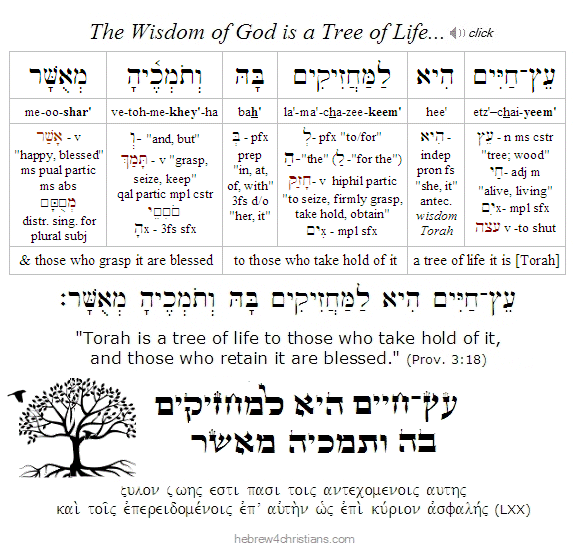
The psalmist describes the trees of the forest as singing for joy (Psalm 96:12), just as the prophet Isaiah foretold the day when the trees of the field shall "clap their hands" in praise to the LORD God of Israel (Isa. 55:12). Indeed the wisdom of Torah (chochmat haTorah) is metaphorically called etz chaim, a "Tree of Life," and the ideal righteous man is described as the one who delights in the Torah (תּוֹרָה) and meditates upon it daily. "He is like a tree planted by streams of water that yields fruit in its season" (Psalm 1:3).
Hebrew Lesson
Proverbs 3:18 reading (click for audio):
Saved by God's Hope...
Hope is about the possible, despair is about the impossible, and therefore despair is the precondition for the miracle of salvation, because it confesses the impossibility of salvation apart from the miracle of God's love...
01.29.26 (Shevat 11, 5786) The Scriptures teach that we are "saved by hope" (i.e., Τῇ ἐλπίδι ἐσώθημεν; Rom. 8:24), but this hope is not simply some vague kind of optimism that believes "everything will work out in the end" but rather is an affirmation that healing of Yeshua pervades all things, and therefore we can rejoice and anticipate the blessings of eternal life. Despair, on the other hand, sees no way to escape the inevitability of death, and this forlorn conviction leads to sorrow, depression, and anger. It dwells on what apparently cannot be changed and therefore concludes that change is not possible. The way of despair teaches that you are ultimately a hapless victim. Hope, on the other hand, believes that real change is genuinely possible - even in the worst of circumstances - and therefore it refuses to let despair have the last word.
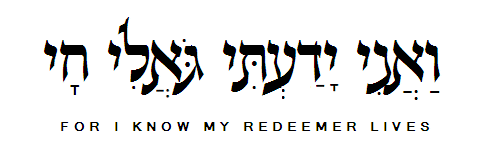
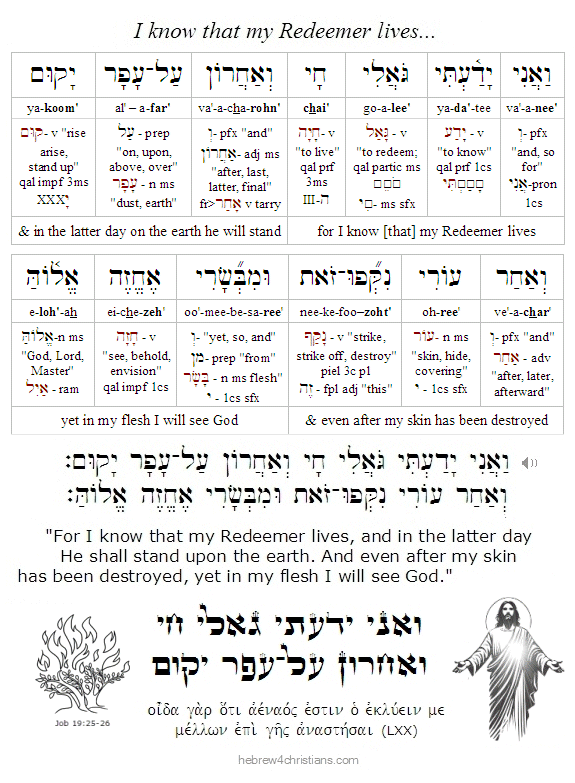
Hope agonizes through the darkness and refuses to let go until the blessing comes. It perseveres; it endures; and it overcomes. As the prophet Job testified in his grave darkness: "For I know that my Redeemer lives, and at the latter day he will stand upon the earth. And even after my skin has been destroyed, yet in my flesh I will see God - whom I shall see for myself, and my eyes shall behold, and not another. My heart faints within me!" (Job 19:25-27). Hope is grounded in the truth of faith, even if the truth is not presently evident.
Friend, if you are in despair, turn open your heart to hope. Believe the "impossible." Quiet your heart and listen for the invitation: "Come unto me, you who suffer, and I will give you rest." Faith gropes in the darkness, reaches out in hope, and finds courage in the conviction that the lonely wound of your heart, the thought that you are unwanted, unimportant, and unacceptable, is not the truth about who you really are, but on the contrary, you are terribly loved, forgiven, and welcomed before God, and that there is place prepared for you, an eternal place of home, life, and blessing. Do not let despair consume your heart in grief. "All shall be well, and all manner of thing shall be made well." Can you believe it? Are you willing to open your heart to the possibility of God's love that will make you whole?
Hebrew Lesson
Job 19:25-26 Hebrew reading:
 |
As Close as your Breath...
01.29.26 (Shevat 11, 5786) Yeshua told us: "If you live in Me, and My words live in you, ask whatever you wish, and it will be done for you. By this My Father is glorified, that you bear much fruit; so you will be My disciples" (John 15:7-8).
If you really believe that Yeshua is alive right now, with ears and heart open to your every prayer, then wouldn't this be the most important truth you could possibly know? and wouldn't your prayer to Him be the most significant thing you could ever do? Nothing is more significant and relevant to your life than your hearrt connection with the Living God....
A life of prayerful communion with the Lord is the highest form of life we can experience this side of heaven. As our Lord further said: "You did not choose Me but I chose you, and appointed you that you would go and bear fruit, and that your fruit would remain, so that whatever you ask of the Father in My name He may give to you" (John 15:16). Amen, this is the "now" covenant we have with the Lord...
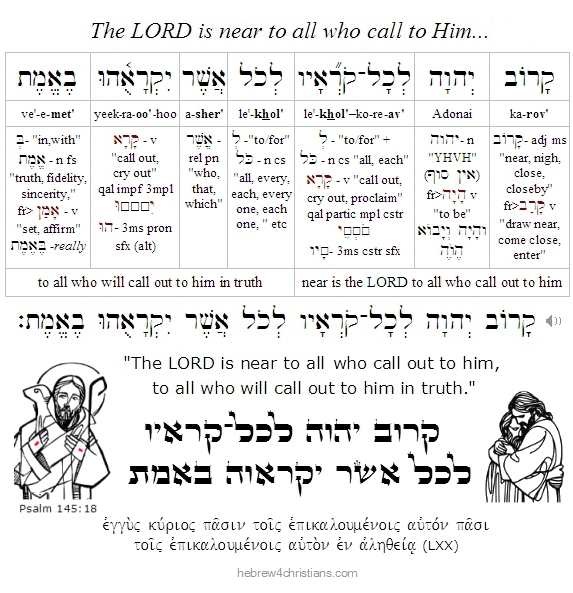
So be encouraged to call upon the Lord for help: Come boldly before the Throne of his Grace (Heb. 4:16). "Ask, and it will be given to you; seek, and you will find; knock, and it will be opened to you. For everyone who asks receives, and he who seeks finds, and to him who knocks it will be opened" (Matt. 5:7-8). Amen.
Hebrew Lesson
Psalm 145:18 Hebrew reading:
 |
The Unseen Blessedness...
"Now faith is the substance of things hoped for, the conviction of things not seen.... By faith we understand that the worlds were framed by the word of God, so that the things which are seen were not made of things which are visible... By faith Moses forsook Egypt, not fearing the wrath of the king: for he endured, as seeing him who is invisible." (Heb. 11:1; 27)
01.28.26 (Shevat 10, 5786) This week's Torah portion (i.e., parashat Beshalach) contains some of the most dramatic episodes recorded in all of the Scriptures. Here we read about the great exodus of the Israelites on the day of Passover and Pharaoh's last-ditch pursuit of the Hebrew slaves. We read how the "Shekhinah Glory" held back Pharaoh's army, how the LORD split the Sea of Reeds so that the Israelites could safely pass through the waters, and how Pharaoh's forces were all drowned in the sea. We further read how God personally led the Israelites into the desert and sustained them by transforming "bitter water" into sweet water, sending manna from heaven, and providing a miraculous water source from the rock that Moses struck. Yet despite all the miracles and wonders performed on their behalf, the people inexplicably seemed to "forget" about their miraculous redemption. Indeed, it was just a few days after the awe-inspiring deliverance from Egypt that the people began to murmur, complain, and "kvetch." The sorry state of the Israelites was so bad that the Midrash Rabbah plaintively wonders how it was possible that the Israelites could have so quickly forgotten all of God's miracles performed on their behalf (Psalm 78:41-56).
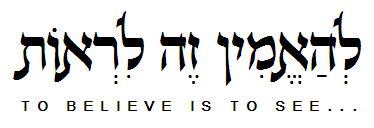
The story of the disgruntled Israelites teaches us that miracles are never enough to sustain our faith. Seeing isn't believing, but rather the other way around.... This explains why those church groups that emphasize "signs and wonders" often contain so many exhausted people. Miracles are insufficient for faith; people may get excited about them when they are said to occur, but they soon forget them and return to a state of desperation and despair. Necessarily the cycle must repeat itself, with ever-increasing claims of the miraculous, in order to keep the illusion alive.... In light of this, it is wise to consider that the passion for "signs and wonders" may be little more than a counterfeit of the real need to surrender and serve God. After all, truly loving the LORD with all your heart, with all your soul, and with all your strength is the goal of faith. A genuine heart of faith, then, is a miracle of a greater kind than even that of splitting the Sea of Reeds.
Regarding the case of the redeemed Israelites, what has struck some commentators is not so much the incredible signs and wonders that the LORD performed on behalf of Israel, but rather the people's persistent inability or unwillingness to believe... Some of the Jewish sages have gone so far as to say that the entire Bible may be read as a book about God's apparent inability to teach the Jewish people how to be grateful. The same certainly can be said about many professing Christians today. How many of us need to see in order to believe?
As I mentioned last week, disciples of Yeshua are called talmidim (תַּלְמִידִים) -- a word that comes from lamad (לָמַד) meaning "to learn" (the Hebrew word for teacher is melamad (מְלַמֵּד) from the same root). In the Greek New Testament, the word for "disciple" is μαθητής (the word "math" comes from this), that is, a pupil of a διδάσκαλος, or a teacher. In other words, disciples of Yeshua are automatically "enrolled" in the school of truth, which is also a "school of suffering" (Col. 1:24). As I also mentioned recently, the Torah of the "daily sacrifice," or korban tamid (קָרְבַּן תָּמִיד), was offered to the LORD every morning and evening upon the altar, which corresponds to being a "living sacrifice" (i.e., korban chai: קָרְבָּן חַי) to the LORD (Rom. 12:1-2). We must take up our cross daily (Luke 9:23). Yeshua plainly said: "For this purpose I was born and for this purpose I have come into the world -- to bear witness to the truth. All who are of the truth listen to my voice" (John 18:37). It is hard to imagine a follower of Yeshua who does not love, study, and value the truth...
Hebrew Lesson
Proverbs 4:7 Hebrew reading (click):
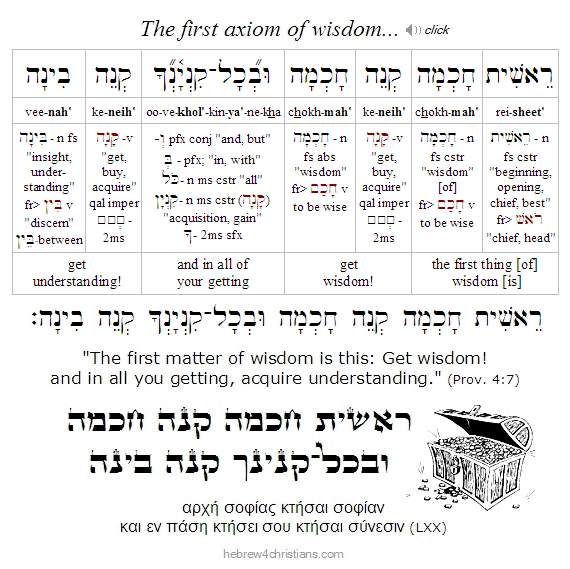 |
The Hebrew word for education is chinukh (חִנּוּךְ), a word that shares the same root as the word for "dedication" (i.e., chanukah: חֲנֻכָּה). True education of the Scriptures is therefore foundational to being a student of the Messiah. We are called to "rightly divide" (ὀρθοτομέω, lit. "cut straight") the "word of truth (2 Tim. 2:15). Among other things, then, following Yeshua means becoming a student of the Jewish Scriptures that He loved and fulfilled (Matt. 5:17-18; Luke 24:44-45). Only after learning from Yeshua as your Teacher will you be equipped to "go to all the nations and teach" others (Matt. 28:19). This is accomplished not merely by explaining (propositional) doctrine but by kiddush HaShem -- sanctifying the LORD in our lives (1 Pet. 1:15-16). As the sages noted long ago: "Upon three things the world does stand: upon the Torah (truth), upon worship, and upon acts of lovingkindness" (Avot 1:2). We are a "living letter" sent to the world to be "read" (2 Cor. 3:2-3).
It has been said that it was easier for the LORD to get Israel out of Egypt than it was for Him to get Egypt out of Israel... The LORD knew the process would be an arduous one, requiring 40 long years of study in the desert under the instruction of Moses, and yet despite all this the people "were unable to enter because of unbelief" (Heb. 3:19; 4:11; Psalm 95:7-11). This is a truly sobering warning, and we are encouraged to open our hearts to the miracle of God's love for us. "Today, if you hear His voice, do not harden your hearts." May it please God to help us make a new commitment to study and to live the truth of the Torah and Scriptures for the glory of His Name. Amen.
 |
Our Heavenly ABC's...
01.28.26 (Shevat 10, 5786) A verse from our Torah portion this week (i.e., Beshalach) contains all the letters of the Hebrew alphabet (i.e., aleph (א), bet (בּ), gimmel (ג), etc.). The special verse reads, "This is what the LORD has commanded: 'Gather of it, each one of you, as much as he can eat. You shall each take an omer (עמֶר), according to the number of the persons that each of you has in his tent'" (Exod. 16:16).
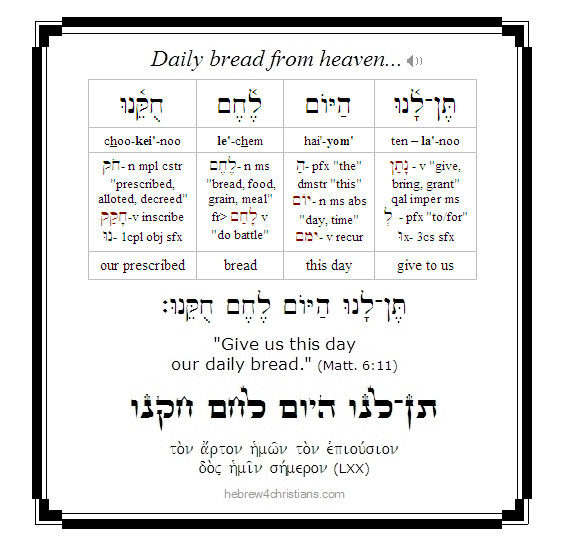
Since this refers to the manna the Israelites were to collect for their daily bread, and this verse contains all the letters of the alphabet, we may "poetically" infer that if we immerse ourselves in the Scriptures, "from Aleph (א) to Tav (ת)," God will provide us with the "daily bread" (לֶחֶם חֻקֵּנוּ) we need, just as He did when the bread from heaven (לֶחֶם מִן־הַשָּׁמָיִם) was miraculously given to feed the Israelites in the desert.
Therefore Yeshua, who is the Aleph and Tav, taught us to pray, "Give us this day our daily bread," which surely refers to the spiritual food (i.e., encouragement, hope, life) that we receive from the Word of Life (Deut. 8:3; Matt. 4:4).
The Lord said to those trusting Him: "Don't be anxious about tomorrow, for tomorrow has its own troubles. Live one day at a time" (Matt. 6:34). It makes no sense to worry about the future if the LORD is the Good Shepherd who tenderly watches over your way (Psalm 23:1). Every day we are given daily bread, but we must remember that manna could not be stored up without becoming rotten (Exod. 16:20). God's provision is "sufficient unto the day...."
Hebrew Lesson
Matt. 6:11 Hebrew reading (click):
 |
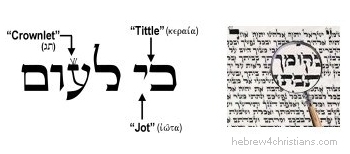
Isn't it amazing how studying the Hebrew text reveals further insights into the Scriptures? Kotzo shel Yod: the tip of the letter Yod... And may you rest in the promise: "My God will supply every need of yours - "from A to Z" - according to his riches in glory in Yeshua the Messiah" (Phil. 4:19). He is lechem ha'chaim - the Living Bread from heaven! (John 6:51).
A New Year for Trees?
Sunday February 1st at sundown begins "Tu B'Shevat" (ט"ו בשבט), or the 15th of the month of Shevat, the traditional date celebrating the "New Year" for Trees...
01.28.26 (Shevat 10, 5786) The Bible begins and ends with the great Tree of Life -- first in the orchard of Eden, and later in the midst of the paradise of heaven: "The Tree of Life (i.e., etz ha' chayim: עֵץ הַחַיִּים) was in the midst of the garden..." (Gen. 2:9). "Then the angel showed me the river of the water of life, bright as crystal, flowing from the throne of God and of the Lamb through the middle of the street of the city; also, on either side of the river, the Tree of Life (etz ha-chayim) with its twelve kinds of fruit, yielding its fruit each month" (Rev. 22:1-2). Notice that the "twelve fruits" (καρποὺς δώδεκα) from the Tree of Life are directly linked to the "twelve months" of the Jewish year (κατὰ μῆνα ἕκαστον ἀποδιδοῦν τὸν καρπὸν αὐτοῦ: "each month rendering its fruit"). Twelve months; twelve fruits.... This teaches us that the sequence of the biblical holidays (mo'edim) was intended to teach us revelation about God. That is why God created the Sun and the Moon for signs and for "appointed times" (Gen. 1:14), as it also says: "He made the moon to mark the appointed times (לְמוֹעֲדִים); the sun knows its time for setting" (Psalm 104:19).
Hebrew Lesson
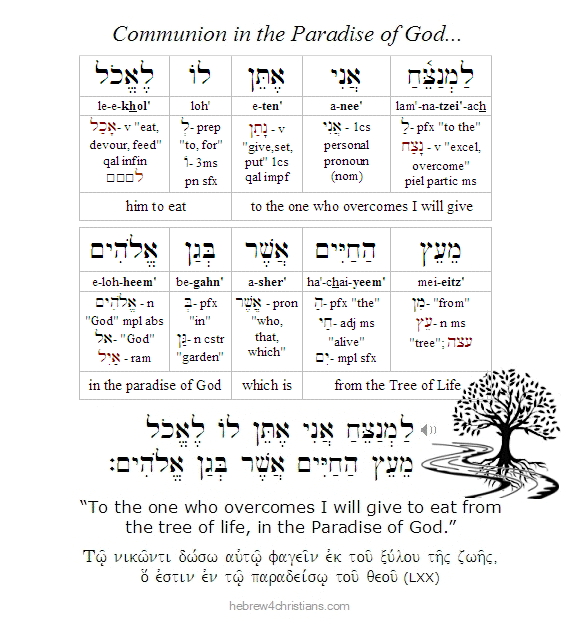
Revelation 2:7 reading (click):
 |
The Scriptures state twice: "Take root downward and bear fruit upward" (2 Kings 19:30; Isa. 37:31). As Yeshua said, "unless a grain of wheat falls to the ground and dies, it abides alone; but if it dies, it brings forth much fruit (John 12:24). We pray we might surrender ourselves to the Lord fully, being immersed in His passion, "bearing fruit in every good work (ἐν παντὶ ἔργῳ ἀγαθῷ καρποφοροῦντες) and growing in da'at HaShem (דַעַת אֱלהִים) - the knowledge of God" (Col. 1:10). The "fruit of the righteous is a Tree of Life" lit., etz chayim (עֵץ חַיִּים), literally, "the Tree of lives" (Prov. 11:30). It is the fruit of Yeshua, the Tzaddik of God, the Righteous One, who bears fruits of healing in the lives of those trust in Him...
The "Tree of Life" is mentioned a total of ten times in Scripture, corresponding to the "ten words of God" (i.e., the Ten Commandments). It is first mentioned in the center of the original garden of Eden (Gen. 2:9; 3:22-4), but it was soon lost to humanity because of Adam's transgression. In the book of Revelation, it reappears in the center of the heavenly Paradise of God (Rev. 2:7, 22:2), resurrected on account of the faithful obedience of Yeshua as mankind's "last Adam" (1 Cor. 15:45). Those who have washed their robes by means of His righteousness are given access to this Tree in the heavenly Jerusalem (Rev. 22:14). The paradise lost by Adam has been regained by the greater "Son of Man," Yeshua the Messiah, the Savior of us all. Amen.
Every Soul's Battle...
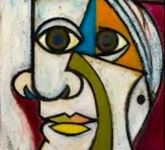
"Truth is not something you can appropriate easily and quickly. You certainly cannot sleep or dream yourself to the truth. No, you must be tried, do battle, and suffer if you are to acquire the truth for yourself. It is a sheer illusion to think that in relation to the truth there is an abridgment, a short cut that dispenses with the necessity for struggling for it." - Kierkegaard
01.27.26 (Shevat 9, 5786) The central problem we all have is the strife and unrest we encounter with God, the war within our hearts and souls whether we will truly believe. This secret strife underlies and pervades all other concerns, for it is intuitively sacred and it haunts us as we hurry through our distracted lives. What's wrong with your heart? "We have peace with God" yet there is still something unsettling within, a question, a secret fear that we are still outside, a failure, even a disappointment before love. We are "two-souled," double minded, and therefore unsure of who we are and why we exist.
Our ability to walk with God is given to us by God's Spirit. When Yeshua said, "Seek first the Kingdom of God and his righteousness," he added, "and all these things shall be added to you" (Matt. 6:3). What are "these things" except those daily cares that consume the soul? When we worry or complain we are in effect accusing God of faithlessness; we suspect that what we do is more vital than what God has promised to do for us...
"Seek first" is the call to do battle within the secret place of our hearts before God. That is the brazen altar wherein we make sacrifice. It is the struggle of the will to make the decision, to let go in surrender to God's promise. The question is not about any particular issue but is the heart of the issue itself, whether you will trust and press forward or doubt and fall back into despair. The battle is fought in the secret place of the heart, behind the closed doors, where your Father sees in secret.
 |
Deliverance from Fear...

01.27.26 (Shevat 9, 5786) Many of us need to grow up and take responsibility for our lives. Often we are full of anger and inner conflict. We rage at life and are quick to blame others, but inwardly we are really afraid, for our "outrage" is just a disguised form of fear. And yet fear itself ultimately arises from unbelief, or rather from the faith that either God doesn't exist or doesn't care for us, and therefore the voice of fear seduces us to feel alone, victimized, insecure and afraid (if you verbalize what you are afraid of, eventually you will hear yourself questioning whether God is in control or whether he is there for you).
Tragically, the more we cling to our fear, believing that it will somehow "protect us," the more we become fearful (and angry) people. To worry is to "practice the absence" of God instead of practicing his presence, and the longer we practice that kind of "faith," the more we will experience exile. We must decide to renounce our fears by trusting in the LORD our God and relying on his promises.
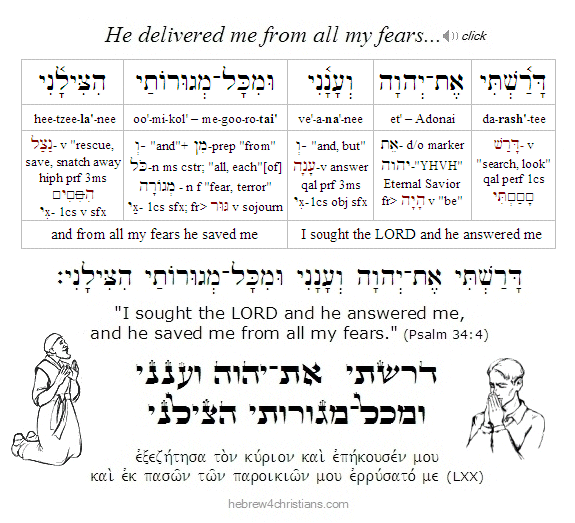
Refuse, therefore, those anxious thoughts that weigh in upon you, creating pressure and "dis-ease" (Psalm 139:23-24). Seek the LORD for deliverance in the midst of your storm. Be still and know that God is real; quiet your heart and listen for the holy whisper: "It is I; do not be afraid..." There is no fear in God's love. As the Spirit says, "In returning and rest you shall be saved; in quietness and in trust shall be your strength" (Isa. 30:15). The truth of God sets you free indeed (John 8:32).
Hebrew Lesson
Psalm 34:4 Hebrew reading (click):
 |
"The trouble with the world," sighed the teacher, "is that human beings refuse to grow up." "When can a person be said to grow up?" asked a student. "On the day he does not need to be lied to about anything" (Anthony de Mello).
טבילת משה
Baptism into Moses...
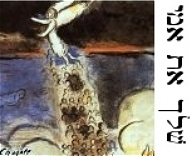
[ The following concerns this week's Torah reading (Beshalach) and the Exodus from Egypt... ]
01.27.26 (Shevat 9, 5786) Egypt symbolizes the world system that enslaves people (the Hebrew word for Egypt, "mitzrayim," comes from the word tzur (צוּר), meaning "restriction"). As the ruler of this world, Pharaoh therefore represents Satan, the original serpent who deceived Eve in the orchard. Egypt therefore represents a state of exile (similar to the original exile from Eden), and just as the blood of the lamb applied to the doorposts in Egypt caused the plague of death to pass over, so the blood of Yeshua saves us from the wrath of God and spiritual death. Yeshua said that by nature people were in bondage to the dictates of this world system and its forces and needed to be set free. The Hebrew word for salvation (יְשׁוּעָה) means to be set free from the restrictions of "Egypt" and its forces.
The Apostle Paul likened the crossing of the sea as a metaphor of baptism: "All were baptized into Moses in the cloud and in the sea" (1 Cor. 10:1-2,11). In the New Testament, baptism symbolizes our identification with Yeshua's death, burial, and resurrection (Col. 2:12; Rom. 6:3-5). Some Christian commentators make a strong distinction between these two baptisms (i.e., baptism into Moses and baptism into Messiah), though there are many profound correspondences. For instance, the Israelites were facing death and were therefore at the "end of themselves." They had no other appeal or hope than God's gracious intervention on their behalf (i.e., salvation). Still, they needed to act and move forward. After they took the step of faith, they could see the Shekhinah Glory lighting up the way of deliverance, though this meant their past lives were to be "buried" within the midst of the sea. Their earlier fear of death was replaced with a song of God's great deliverance. The other side of the sea represented new life, the life that comes from above, by the power and agency of the Holy Spirit... The Israelites died to their old life, were symbolically buried in the waters, but rose to new freedom by the grace and power of God... In a way, the crossing of the sea represented a "birth canal" into the realm of true freedom as God's redeemed children.
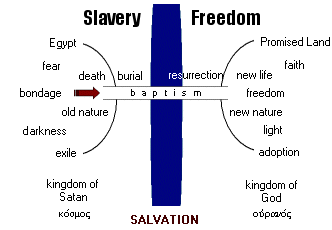 |
Just as the Israelites were made free from the tyranny of Pharaoh when they crossed the Sea - being "baptized into the death of the waters" to be reborn to serve God in freedom – so those who trust in Yeshua are "baptized into His death" and reborn to serve God by the power of the Holy Spirit.
Note that this "baptism into Moses" was not a water baptism, since even though the people went through the water, they crossed over the sea on dry ground... No, it was a baptism or "immersion" into the Shekhinah Cloud, an identification with Moses and his mission (Heb. 11:29). At Sinai Moses would later ascend into the midst of that Cloud to behold the vision of the altar of Messiah (i.e., the Mishkan, or Tabernacle) - a vision that later became a reality during the time of Yeshua's transfiguation before his crucifixion (see Luke 9:28-31).
Ultimately baptism is about identifying with the redemptive mission of God through Yeshua our Savior. The meaning of baptism is to be immersed by the Ruach HaKodesh (Holy Spirit) to be made part of the greater redemptive mission of God's people.
Hebrew Lesson
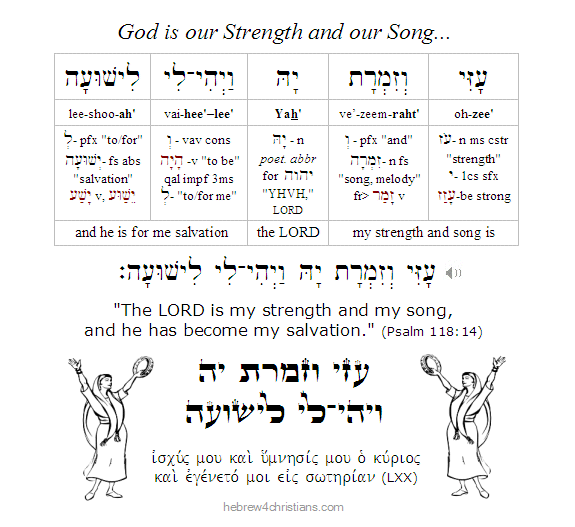
Psalm 118:14 Hebrew reading (click):
 |
Stepping out in Faith...

The divine consequence of the Exodus from Egypt (יציאת מצרים) is still felt to this day, as indeed is the greater exodus Yeshua secured by the atonement of his sacrifice (Luke 9:30-31).
01.26.26 (Shevat 8, 5786) From our Torah this week (i.e., Beshalach) we read how the children of Israel were trapped before the sea with no way of escape... Moses then cried out to God who told him to march forward -- right into the waters -- as the Pillar of Cloud settled between the people and Pharaoh's advancing army.
According to midrash, when Moses lifted his staff to divide the sea, at first nothing happened. The people waited anxiously at the seashore, wondering what to do. Finally, Nachshon ben Aminadav, a descendant of Judah (Num. 1:7), waded into the water "up to his nose," and the winds then began blowing to divide the waters (Shemot Rabbah). The great miracle of kiryat yam suf (קרית ים סוף)- the splitting of the Sea of Reeds (the word "suf" means "reed,"see Exod. 2:3) therefore happened because someone found courage and took a step of faith: "And the people of Israel went into the midst of the sea on dry ground, the waters being a wall (חוֹמָה) to them on their right hand and on their left" (Exod. 14:22). They marched across the sea all night (i.e., Nisan 21), under the light of the Shekhinah Glory...
The Talmud says "kasheh le'zavgom ke'kriat yam suf," which means it is more difficult for God to create a marriage than to split the sea. They reason this way because each person needs to take individual action to trust the other. Likewise with God. It is more difficult for God to get us to be in a trusting relationship with Him than it is for Him to split a sea. Of course the problem is not with God, who is the perfect "husband," but with our adulterous inner nature. It took the LORD a year to deliver Israel from Egypt, but it took Him 40 years to teach Israel to trust in His promises of love. God always awaits our teshuvah - our "answer" - to His invitation before He reveals more to us. As Yeshua once said to his followers, "I still have many things to say to you, but you cannot bear them now" (John 16:12). Some things about God can only be known by stepping out in faith and surrendering ourselves to Him.
Hebrew Lesson
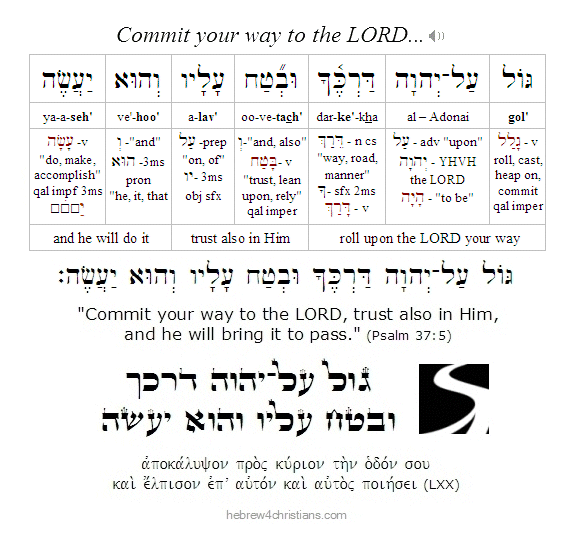
Psalm 37:5 Hebrew reading (click):
 |
Note: For more on this subject, see "Stepping out in Faith..."
Not losing your mind...
01.26.26 (Shevat 8, 5786) The Apostle Paul warned that the time before the "End of Days" would be "perilous" and full of unrelenting human depravity and lawlessness (2 Tim. 3:1-5). Yeshua warned that apostasy would abound and that the hearts of many would run cold as ice (Matt. 24:12). In light of the raging spiritual war going on all around us, the following needs to be emphatically restated: "The important thing is to not lose your mind..."
The mind is the "gateway" to your heart, and it is therefore essential to guard your thinking by immersing yourself in the truth... "Not losing your mind" therefore means being grounded in what is real, and it therefore means understanding your identity and provision as a child of God. "God has not given us the spirit of fear, but of power and of love, and of a sound mind" – literally, a "delivered" mind, "healed" from chaos and despair (2 Tim. 1:7). The Greek word "sound mind" (σωφρονισμός) comes from a verb meaning "to be made safe," in the sense of being under restraining influence of the Spirit of God... The closest Hebrew word might be musar (מוסר), or "moral discipline."
With the appearance of "mass formation psychosis" rampant today (i.e., collective insanity), it's now more important than ever to guard your heart and mind. Learn to practice clear thinking; define terms you use without equivocation; take care to avoid biased ways of seeing, and avoid common fallacies such as making appeals to fear, blaming others (tu quoque), and so on... Be on guard because the enemy of your soul wants to lead you astray. Above all ask God for wisdom for this hour, which is full of peace (James 3:17).
Hebrew Lesson
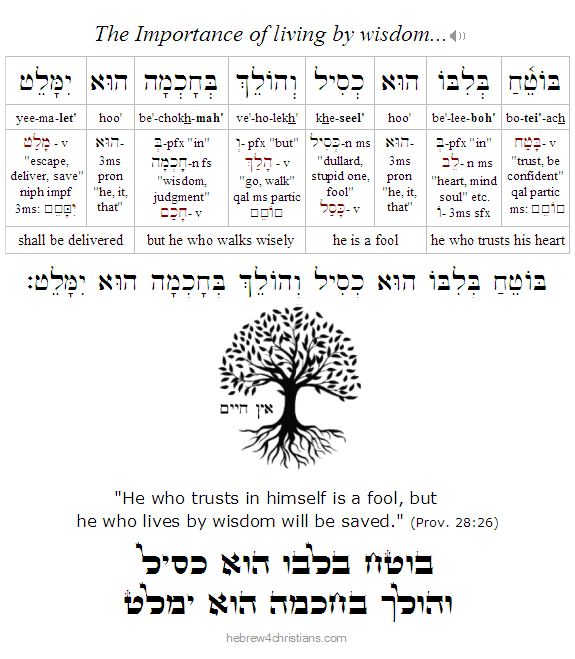
Prov. 28:26 Hebrew reading (click):
 |
"Sabbath of the Song"
About Shabbat Shirah...
This Sabbath is called "Shabbat Shirah" because its Torah reading (Beshalach) contains the great "Song of the Sea" that commemorates how God saved Israel at the Sea of Reeds...
01.26.26 (Shevat 8, 5786) The central event of this week's Torah portion is how the LORD split the waters of the sea to make a path for His people to escape from Egypt. This event is commemorated in the great "Song the Sea" (i.e., Shirat Hayam: שִׁירַת הַיָּם), a hymn praising God for His deliverance (see Exod. 15:1-19). Because of its critical significance for the Jewish people, the Sabbath on which this song is chanted is called Shabbat Shirah ("Sabbath of the Song"), and the custom is for all the congregation to rise while it is recited...
Since the crossing of the sea represents a "baptism," if you will, of the Jewish people, the Song of the Sea is customarily sung on the seventh day of Passover (i.e., on Nisan 21), which marks the date when Israel crossed the sea after leaving Egypt. When the Temple stood in Jerusalem, the song was sung every day by the Levites during the afternoon offering. After the Temple was destroyed, however, it was incorporated into the morning service to fulfill the Torah's commandment to "remember the day of your departure from the land of Egypt all the days of your life" (Deut. 16:3).
|
After the Israelites left Egypt, the LORD did not lead them along the most direct route to the land of Canaan (through territory occupied by the Philistines), but rather toward Yam Suf - the Sea of Reeds. The LORD led the Israelites in a Pillar of Cloud (עַמּוּד עָנָן) by day and a Pillar of Fire (עַמּוּד אֵשׁ) by night, and had them "turn back" from Etham toward Egypt to encamp before Baal-Tzefon (בַּעַל צְפן) - an Egyptian idol - by the Red Sea, so that Pharaoh would be led to believe that the Israelites were lost in the wilderness (according to rabbinic literature, this idol - the only one that remained undestroyed after God sent the tenth plague upon Egypt - was intentionally spared by God in order to "bait" Pharaoh into thinking that the God of Israel was powerless over him).
When the Egyptian calvary caught up to them, the Israelites were trapped against the sea, and the people were terrified that they were to be slaughtered. God then moved the Pillar of Cloud so that it stood between the Egyptians and the Israelites. The Cloud grew black and the Egyptian cavalry could no longer see the Israelites. Meanwhile, a Pillar of Fire appeared in front of the people, lighting their way. Moses then raised his staff and a strong east wind blew and divided the waters, forming a wall of water on the right and left, and the Israelites began to cross safely.
According to Midrash, the sea formed a "tent" over the heads of the Israelites, protecting them on all sides. Moreover, the waters divided into twelve tunnels, one for each tribe. The walls of the water were perfectly clear, like translucent glass, so that the tribes could see one another as they crossed.... Another midrash says that all of the waters of the earth split at the same time as the Sea of Reeds - including rivers and lakes around the world.
At any rate, by daybreak all of the Israelites had safely reached the other side, and the Pillar of Cloud lifted. The Egyptians then began to follow in pursuit, but the ground beneath them turned to mud and the wheels of their chariots became stuck (this is considered retribution for forcing the Israelites to make bricks of mortar without straw). As the Egyptians attempted to retreat, Moses stretched out his staff and the wall of waters collapsed over them. The Israelites watched in awe as the waters engulfed all of Pharaoh's mightiest warriors. There were no survivors.
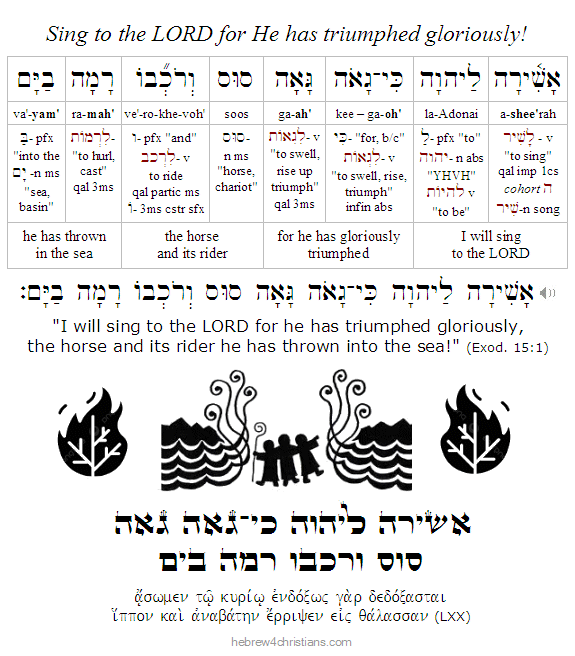
Overjoyed that they no longer need fear Pharaoh, the people began to cheer and rejoice. Then Moses composed a great song (Exod. 15:1-21), a spontaneous hymn of praise and thanks to the LORD for Israel's deliverance (the song opens with ashirah (אָשִׁירָה): "I will sing..." and apparently will also be sung in the Heavenly Jerusalem: see Rev. 15:3). Miriam, Moses' sister led Israel in a dance of victory, as the people all sang out: "Sing to the LORD, for he has triumphed gloriously; the horse and his rider he has thrown into the sea."
Hebrew Lesson
Exodus 15:1: Hebrew reading (click):
 |
The Torah states that when the Israelites entered the sea, it became dry land, with the water as "a wall (חוֹמָה) to their right and to their left" (Exod. 14:29). To commemorate this miracle, the Hebrew text of the "Song of the Sea" is stylized to resemble a "wavy wall," with the words written in alternating "blocks" to suggest a wave of water:
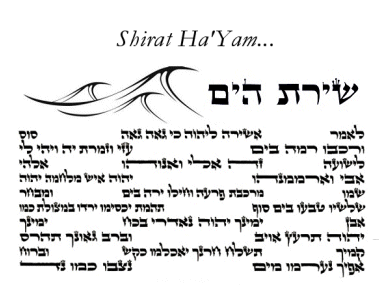 |
According to Yalkut Me'am Lo'ez, the alternating "bricks" are intended to resemble waves of water, while the blank spaces separating these (i.e., text blocks) suggest "blank spaces in our knowledge and praise of God" which we are encouraged to add to the "building." The sages count exactly 198 words in this song, which is the numerical value for the word tzchok (צחק), a word that means "laughter" and is the word used to describe Sarah's response when she finally gave birth to Isaac (Gen. 21:6). According to Rabbi Bachya, the laughter in Isaac's name comes from Abraham's joy (Gen. 17:17). The joy of Isaac's birth, then, is linked with the "birth" of the nation of Israel at the time of the Exodus, just as his symbolic death during the Akedah represents Israel's rebirth...
It is also noteworthy to remember that the Lord Yeshua was the One who saved Israel on that very day. He is the Angel of the LORD and YHVH the Redeemer, as Moses likewise stated: וַיּוֹשַׁע יהוה בַּיּוֹם הַהוּא אֶת־יִשְׂרָאֵל מִיַּד מִצְרָיִם / "On that day, the LORD saved Israel from the hand of the Egyptians" (Exod. 14:30).
It's been said that all the signs and wonders performed during the Exodus served two purposes: 1) to convince the Egyptians of the greatness of God, and 2) to convince the Israelites of the same thing... An even greater blessing, however, is to trust in the LORD without the need for signs and wonders (John 20:29). May the LORD God of Israel help us live by true bittachon (בִּטָּחוֹן) - trusting in Him and rejoicing in His salvation. Amen.
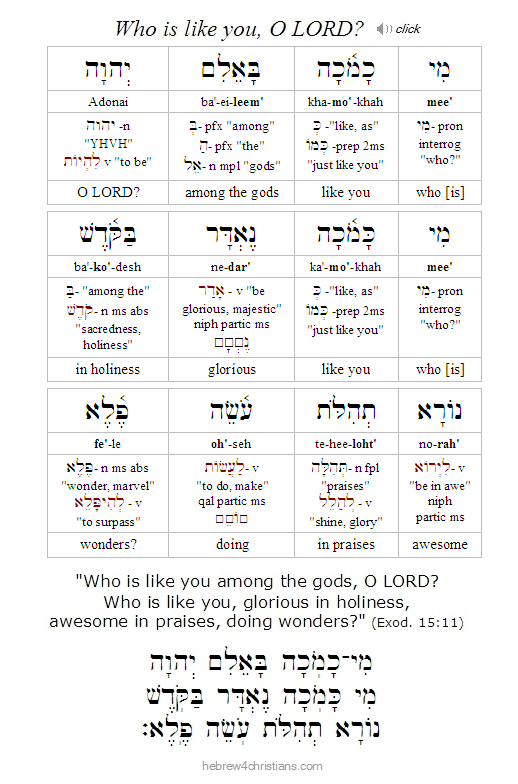
Hebrew Lesson
Exodus 15:11 Hebrew reading (click):
 |
This week's Torah:
Parashat Beshalach - בשלח
In our Torah portion this week, the Lord divided the waters of the sea to make a path for the Israelites, a miracle that symbolized newness of life as God's liberated people...
01.25.26 (Shevat 7, 5786) Recall that last week's Torah portion (i.e., parashat Bo) told how the Israelites were finally released from Egypt after God issued the final plague during the time of Passover. In this week's portion (parashat Beshalach: Exod. 13:17-17:16), the Israelites begin their journey home, after 430 years of troubled exile. Instead of leading them along a direct route to the Promised Land, however, God directed them south, toward the desert, where the Glory of God appeared as a Pillar of Cloud by day and as a Pillar of Fire by night to lead them on their way. When Pharaoh heard that the Israelites were at the border of the desert, however, he perversely decided to pursue them and bring them back to Egypt. God then redirected the Israelites to camp near the edge of the Sea of Reeds, where the Egyptian army finally caught up with them. Dramatically, the Israelites were caught between the sea on one side, and Pharaoh's formidable army on the other!
The terrified people then began to blame Moses for their predicament. Moses reassured them of God's final deliverance and raised his staff to miraculously divide the waters of the sea. All that night the Shekhinah Glory enshrouded the Egyptian army but gave light to Israel as the people crossed through the sea on dry ground. Just before dawn, the dark pillar of cloud that veiled the Egyptian army lifted, and the soldiers immediately rushed after the Israelites into pathway of the sea. God then told Moses to lift his staff again so that the waters would overwhelm the Egyptians with their chariots and horsemen. By the time dawn arrived, the Israelites saw the dead bodies of Pharaoh's army lining the seashore.
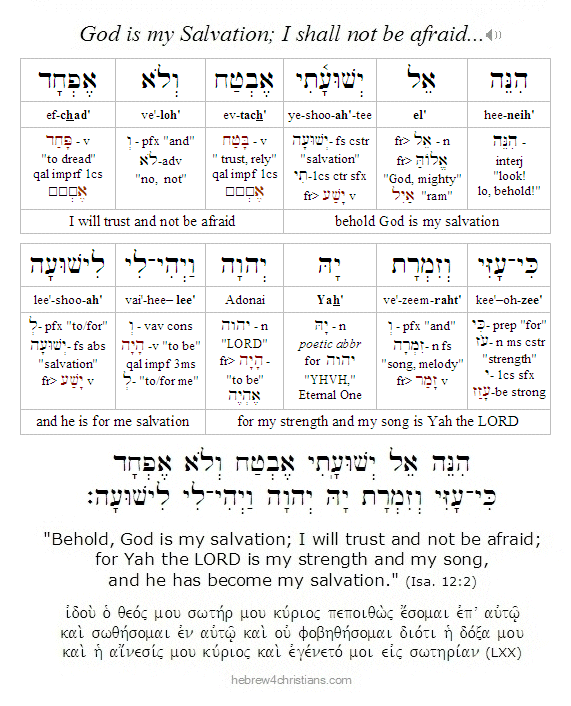
Moses and Miriam then led the people of Israel in a spontaneous hymn of thanks and praise to God for their complete deliverance from Pharaoh, which is often called the "Song of the Sea" (i.e., shirah hayam). The song begins, "The Lord is my strength and song, and he is become my salvation" / עָזִּי וְזִמְרָת יָהּ וַיְהִי־לִי לִישׁוּעָה (Exod. 15:2, cp. Isa. 12:2). For Orthodox Jews, singing Shirat Hayam every day is thought to fulfill the biblical commandment to "remember the day of your departure from the land of Egypt as long as you live" (Deut. 16:3). Note that Shirat Hayam is also sung on the 7th day of Passover, as a memorial of the deliverance by God through the waters of the Sea of Reeds.
|
The great message of our deliverance resounds throughout Jewish history, and indeed it is regarded as a theme of the faithful love of LORD for His people:
Hebrew Lesson
Isaiah 12:2 Hebrew reading (click):
After the jubilation for their deliverance, the narrative resumes as God led the Israelites away from the sea, into the desert of Sin (מִדְבַּר־סִין), a desolate region about midway to Mount Sinai. Instead of taking the people along a direct route to the promised land, however, the Lord led them directly to the "school" of the desert. After traveling three days without finding any water, however, the people complained and God provided them with fresh water at Marah. Awhile later, the matzah (unleavened bread) the people had brought with them ran out and God tested their obedience by giving them "bread from heaven" (i.e., manna). The portion ends with the Amalekites' surprise attack of Israel at Rephidim, near Mount Sinai, and the selection of Joshua as the leader of the army of Israel.
The Torah of Passover...
01.25.26 (Shevat 7, 5786) The very first occurrence of the word "Torah" in the Scriptures refers to the faith of Abraham (Gen. 26:5), and the second occurrence refers to the law of Passover: "There shall be one law (תּוֹרָה) for the native and for the stranger who sojourns among you" (Exod. 12:49).
There is a link here. Abraham lived before the time of the Exodus, of course, and therefore he obeyed the Torah of Passover by means of the Akedah (the sacrifice of his beloved son Isaac and the substitution of the lamb of God upon the altar). Abraham's faith revealed that the inner meaning of Torah is that the "righteous shall live by faith" (Hab. 2:4, Rom. 1:17), that is, by trusting God's justification of the sinner (Heb. 11:17-19).
The Torah of Passover likewise teaches that redemption from death is possible through the exchange of an innocent sacrificial victim. The blood of the lamb was "a sign" of imputed righteousness obtained entirely by faith - with no "leaven," or human works, added. This is the "korban" principle of "life-for-life" that underlies the sacrificial system of the Tabernacle as well. Ultimately all true Torah points to Yeshua, the Lamb of God, who is the divinely appointed Redeemer and promised Slayer of the Serpent...
"When the fullness of time (τὸ πλήρωμα τοῦ χρόνου) had come, God sent forth his Son, born of woman, born under the Torah, to redeem those who were under the Torah, so that we might receive adoption as sons" (Gal. 4:4-5).
Hebrew Lesson
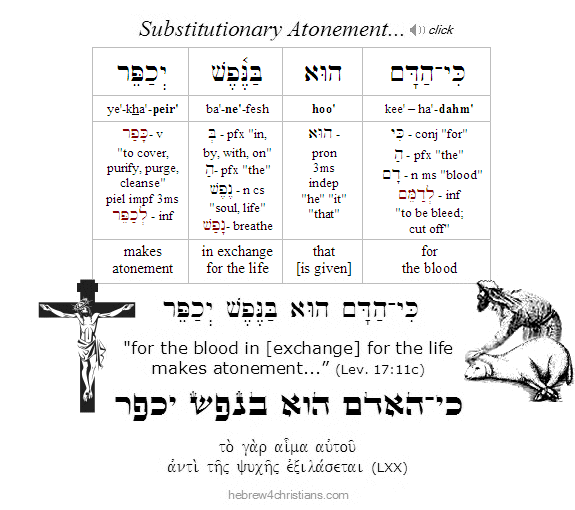
Leviticus 17:11 reading (click):
The Blood of the Lamb...
The following is related to our Torah reading for this week, parashat Bo...
01.23.26 (Shevat 5, 5786) In connection with our Torah reading this week (i.e., parashat Bo) it is interesting to note that the biblical holiday of Passover, that is, the commemoration of the original passover that occurred in Egypt, has not been observed by the Jewish people since the destruction of the Second Temple in 70 CE., and in this regard we recall that Yeshua foresaw the destruction of the Temple and explicitly connected it with his sacrificial death as the great Lamb of God (John 2:19; Matt. 27:51; Matt. 26:61; Mark 14:58).
Rabbinical Judaism has circumvented the Torah's requirement by "passing over" the holiday of Passover by focusing on Chag HaMatzot, or the days of Unleavened Bread, though the story of the Exodus is retold during the seder on the original date along with the tradition of drinking the four cups to honor God's redemption of the people from slavery (Exod. 13:8-10).
Moses is not mentioned in the reading of the traditional "Haggadah" (the text that sets forth the order of the service), and this likely has to do with the historical challenges of the Jewish Diaspora. Instead of focusing on the traditional themes of freedom and living in the promised land, the hope of a future Zion has become prominent. "Next year in Jerusalem!" Today Passover anticipates the completion of the future redemption of the Jewish people.
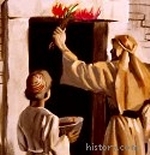
Recall that the blood of the Passover lamb sacrifice in Egypt was daubed on the doorposts and lintel of the homes of the Israelites. The Torah says that when the Lord saw the blood he would "pass over" the house and not allow death to enter (Exod. 12:23). The blood was not a "token" to help God identify the Israelites, of course, but instead served as a sign of their faith in God's deliverance as secured by the sacrificed lamb of God.
The same faith is true for us today, as we trust in the blood of Yeshua, the great Lamb of God, that was daubed on the "doorposts" to the habitation of heaven. When we take shelter under his shed blood, the power of death is destroyed and we are set free. Amen!
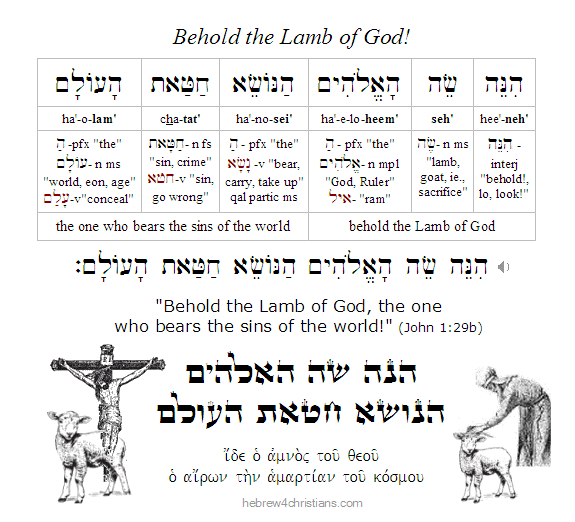
Hebrew Lesson
John 1:29 reading (click for audio):
 |
Redemption and Holiness...
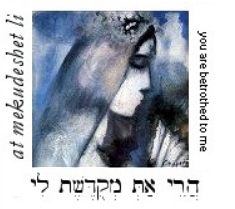
01.23.26 (Shevat 5, 5786) In our Torah portion for this week (i.e., Bo) we revisit the institution of the Passover sacrifice and the deliverance of the Israelites from their bondage in Egypt. Later in the Torah we read God's reason for the redemption: "For I am the LORD who brought you up out of the land of Egypt to be your God. You shall be holy for I am holy" (Lev. 11:45). Because we are God's people, his redeemed children, we are made sacred, as God is sacred (1 Pet. 1:15-16). Holiness, however, is not a matter of what you do (such as wrapping yourself in religious rituals) but instead is a matter of what you "allow" to happen: You let go and allow yourself to be taken up from the "depths of Egypt" to be with your God. Holiness is something you receive by faith; it is a gift of being "set apart" to be sacred and beloved by God. Genuine holiness (i.e., kedushah) is connected with love and grace.
In Hebrew, the word kedushah (קְדוּשָׁה) means sanctity or "set-apartness" (other Hebrew words that use this root include kadosh (holy), Kiddush (sanctifying the wine), Kaddish (sanctifying the Name), kiddushin (the ring ceremony at a marriage), and so on). Kadosh connotes the sphere of the sacred that is radically separate from all that is sinful and profane. As such, it is lofty and elevated (Isa. 57:15), beyond all comparison and utterly unique (Isa. 40:25), entirely righteous (Isa. 5:16), glorious and awesome (Psalm 99:3), full of light and power (Isa. 10:7), and is chosen and favored as God's own (Ezek. 22:26).
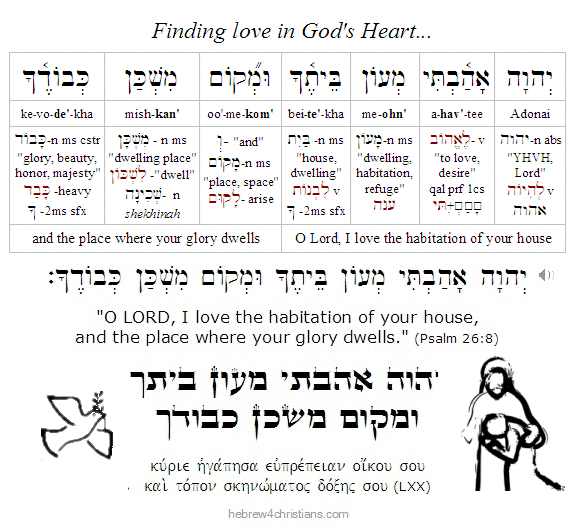
Hebrew Lesson
Psalm 26:8 reading (click for audio):
 |
Praise in Lamentation...
"God has chosen things that are not, to bring to nothing things that are: That no flesh should glory in his presence" (1 Cor. 1:27-29).
01.23.26 (Shevat 5, 5786) What if we were to come to such brokenness of heart that there would be nothing left to say, nothing but an inward groaning that renders naught our every word, leaving us in muted sorrow, perplexity, and fear... Is not our silence heard?
We need to trust God in our darkness and with our darkness, and by that I mean that we need to believe that the Lord is allowing trouble for our ultimate good, despite our inexplicable losses, our grief, our sorrow and our pain. It takes great faith to trust God in our anguish, to offer our pain in praise.
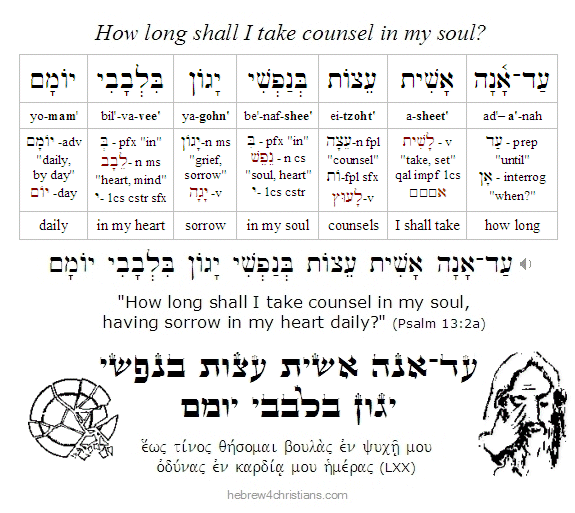 |
"So it was, while they conversed and reasoned, that Yeshua himself drew near and went with them. But their eyes were held back so that they did not recognize Him. Then said to them, 'What kind of conversation is this that you have with one another as you walk and are sad?'" (Luke 24:15-17). Note that when the disciples were confused and distraught, Yeshua drew near to them in their anxiety and sadness...
It was only later, after he took bread, blessed it, broke it, and then gave it to them were their eyes open, and they rejoiced in the truth of God. The bracha (blessing) was the signature statement of our Lord regarding his role as the Lamb of God. The entire account reminds me somewhat of John 21:3-13.
Power of Forgiveness...
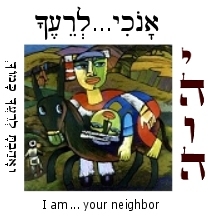
"To forgive is to set a prisoner free and discover that the prisoner was you." - Lewis B. Smedes
01.22.26 (Shevat 4, 5786) In the Gates of Repentance it is written: "I hereby forgive all who have hurt me, all who have wronged me, whether deliberately or inadvertently, whether by word or by deed. May no one be punished on my account. And as I forgive and pardon those who have wronged me, may those whom I have harmed forgive me, whether I acted deliberately or inadvertently, whether by word or by deed." Amen...
Yeshua taught us to pray "forgive us as we forgive others," which implies that our forgiveness (of others) is the measure of our own forgiveness. In other words, as we forgive others, so we experience forgiveness ourselves... Forgiveness releases the hurt, the anger, and the disappointment so these feelings do not inwardly consume and exhaust our souls. And yet forgiveness must be self-directed, too, since refusing to forgive yourself denies or negates the forgiveness given from others. Forgiving yourself means admitting that you act just like other people, that you are human, and that you are in need of reconciliation too. We have to move on, past the shame, and to turn back to hope. As a Yiddish proverb puts it, "You are what you are, not what you were..."
It is written, "in many things we offend all," and therefore we must confess our sins one to another to find healing (James 5:16). However the practice of love overlooks a multitude of sins, and if we do not condemn those who offend us, then we will not need to forgive them for their offenses. Walking in God's love sets us free from the slavery of negative emotions such as resentment, bitterness, anger, unresolved grief, and so on.
I love this affirmation and prayer attributed to Eusebius of Caesarea (c. 263-339 AD): "May I be the friend of that which is eternal and abides. May I never quarrel with those nearest me; and if I do, be reconciled quickly. May I never devise evil against anyone; and if any devise evil against me, may I escape uninjured and without any desire to hurt them. May I love, seek, and attain only that which is good. May I wish for the happiness of all and the misery of none. May I never rejoice in the ill-fortune of one who has wronged me. When I have done or said what is wrong, may I never wait for the rebuke of others, but always rebuke myself until I make amends."
"May I, to the extent of my ability, give all needful help to my friends and to all who are in want. May I never fail a friend in danger. When visiting those in grief, may I be able by gentle and healing words to soften their pain. May I respect myself. May I always keep tame that which rages within me. May I accustom myself to be gentle, and never be angry with people because of circumstances. May I never discuss who is wicked and what wicked things he has done, but know good men and follow their footsteps."
Hebrew Lesson
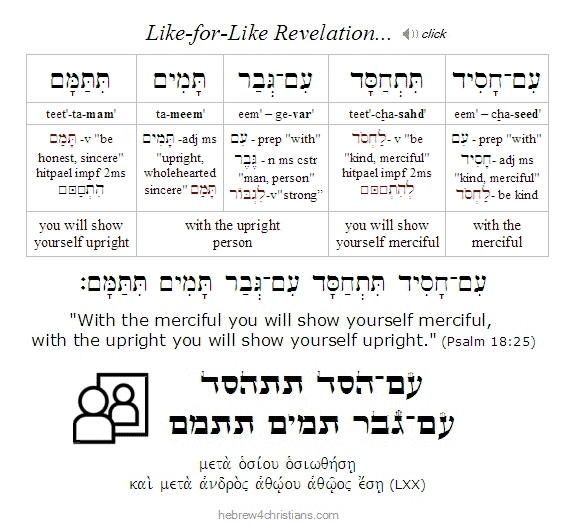
Psalm 18:25 reading (click for audio):
The Focus of the Heart...
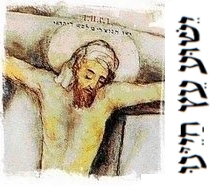
01.22.26 (Shevat 4, 5786) "I determined not to know any thing ... apart from Yeshua the Messiah and him crucified" (1 Cor. 2:2). This mode of "not knowing apart" bespeaks a radical intimacy that mediates and transforms all other thought within you. It is the axiom of spiritual existence, the matter of "first importance," the heart of everything: to know the healing love of Messiah and the power of his resurrection on your behalf (Phil. 3:10).
When you accept the Divine Presence in Yeshua, everything becomes simple, unified, and focused. Choosing to know everything "through" Yeshua moves you to the center of reality - where the present moment is lit up with the glorious light of the eternal... You begin to see past the distractions of this world - "for God is not in the earth, wind or fire" (1 Ki. 19:11-12) - beyond the ups and downs of your life, the hunger and thirst of your heart, past all your fears, desires, and sorrows, to hear the "still small voice" (i.e., kol demamah dakkah: קוֹל דְּמָמָה דַקָּה), to enter wonderful peace, the place of God (i.e., ha'makom: הַמָּקוֹם) which is your true home, the habitation of our all-loving Father who calls you by name...
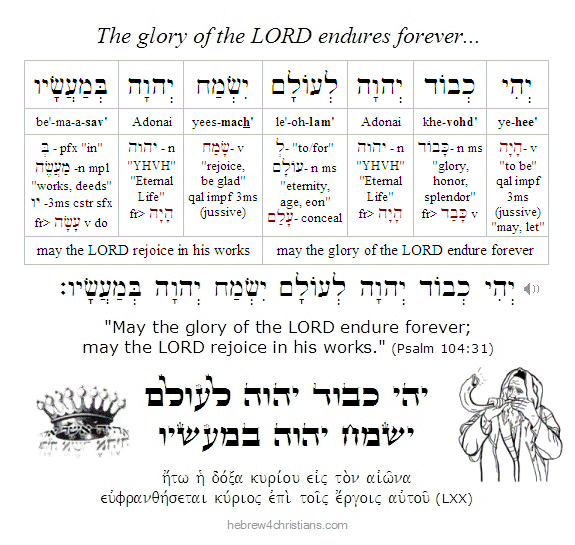
"To all who overcome I will give a bright stone..." (Rev. 2:17). But what do you overcome if not unbelief, the fear that the miracle is not for you, the terror that you are not welcome in the most significant sense of reality? Many forfeit the highest for the sake of lesser things. We overcome despair by means of faith - by trusting in the One who gives us the victory (1 Cor. 15:57; 1 John 5:4-5). There is no "overcoming" apart from the love of God, who takes us up into his life and gives us his triumph over sin and death. Glory belongs to the Lord...
Hebrew Lesson
Psalm 104:31 Hebrew reading (click):
Retelling the Story...
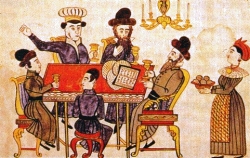
We are always re-telling the great story of God's salvation, chaverim...
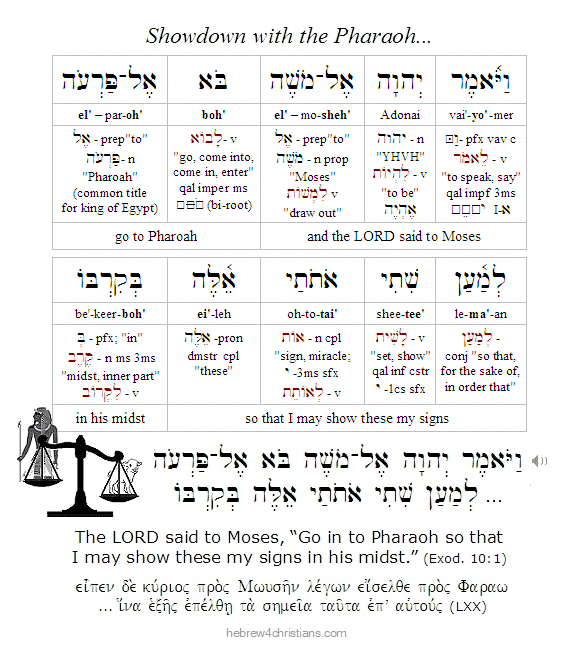
01.22.26 (Shevat 4, 5786) In our Torah reading for this week (i.e., parashat Bo) we are commanded to retell "in the hearing of your son and your grandson" how the LORD overthrew the arrogance of the Egyptians and performed wonders to deliver us" (Exod. 10:2). This commandment is the basis of the Passover haggadah (i.e., הַגָּדָה, "telling"), the "oral tradition" of our faith, when we personally retell the story from generation to generation so that the spirit of the message is not lost. We participate in the Passover seder to make it "our own story," a part of who we are. Therefore b'khol-dor vador: "Every Jew must consider himself to have been personally redeemed from Egypt." Retelling the story of the exodus enables us to "know that I am the LORD" (Exod. 10:2). We recall the words, bishvili nivra ha'olam – "For my sake was this world created," while we also recall the words, anokhi afar ve'efer – "I am but dust and ashes." When we retell the story of the great redemption, we draw close by blood of the Lamb to know the LORD God our Savior.
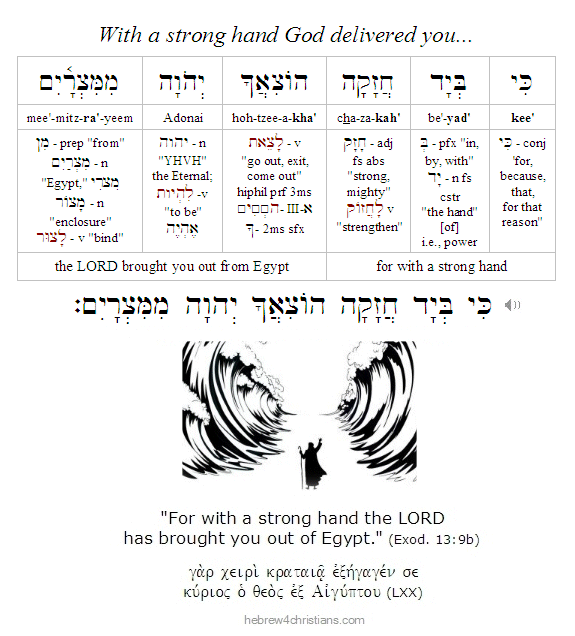
God admonishes that the story of our redemption should be "as a sign on your hand and as a memorial (זִכָּרוֹן) between your eyes, that the Torah of the LORD may be in your mouth" (Exod. 13:9). We are instructed to "remember" (זָכַר) over and over again because our disease, our sickness of heart, induces us to forget how we were enslaved in the house of bondage. We must consciously remember and never forget that only by means of God's strong hand (בְּיָד חֲזָקָה) are we ever made free (John 8:36). Amen.
וְהָיָה לְךָ לְאוֹת עַל־יָדְךָ
וּלְזִכָּרוֹן בֵּין עֵינֶיךָ
לְמַעַן תִּהְיֶה תּוֹרַת יְהוָה בְּפִיךָ
כִּי בְּיָד חֲזָקָה הוֹצִאֲךָ יְהוָה מִמִּצְרָיִם
ve·ha·yah · le·kha · le·oht · al- ya·de·kha
ool·zee'·ka·rohn · bein · ei·ney'·kha
le·ma'·an · tee·he·yeh · to·rat · Adonai · be·fee'·kha
kee · be·yad · cha·za·kah · ho·tzee·a·kha · Adonai · mee·mitz·ra'·yeem

"And it shall be to you as a sign on your hand
and for a memorial between your eyes,
that the Torah of the LORD may be in your mouth.
For with a strong hand the LORD has brought you out of Egypt."
(Exod. 13:9)

The Great Lamb of God...
01.22.26 (Shevat 4, 5786) From our Torah portion this week (i.e., parashat Bo) we learn that though God instructed each household to select its own lamb for the Passover, the Torah refers to "the" Lamb of God, as if there was only one: "You shall keep it [i.e., the Passover lamb] until the fourteenth day of this month, when the whole assembly of the congregation of Israel shall slaughter him (אתוֹ) at twilight (Exod. 12:6).
Note that the direct object "him" (i.e., oto) can be read as Aleph-Tav (את) combined with the letter Vav (ו), signifying the Son of Man who is First and Last... Yeshua is the great "Sign" and miracle of God. Indeed there is only one "Lamb of God" that takes away the sins of the world, and that is our Savior, Yeshua the Messiah... Amen.
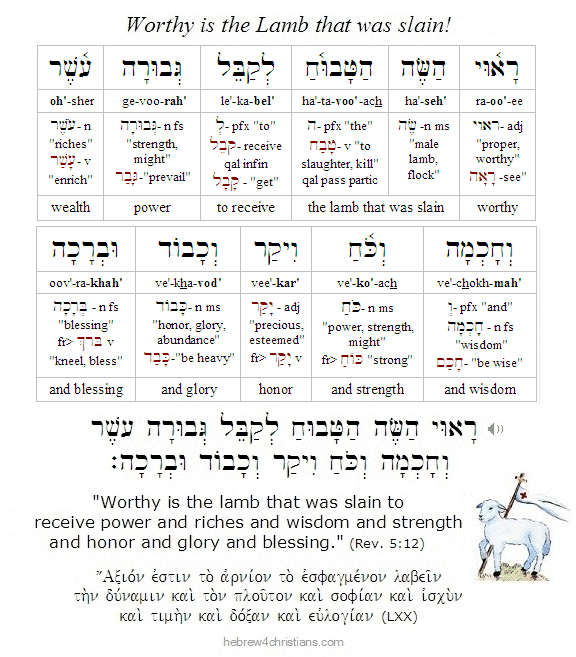
רָאוּי הַשֶּׂה הַטָּבוּחַ לְקַבֵּל גְבוּרָה
עשֶׁר וְחָכְמָה וְכּחַ וִיקַר וְכָבוֹד וּבְרָכָה
rah·oo'·ee · ha·seih · ha·tah·voo'·ach · le·ka·beil · ge·voo·rah
oh'·sher · ve·chokh·mah · ve·koh'·ach · vee·kar · ve·khah·vohd · oov·rah·kha
"Worthy is the Lamb who was slain, to receive power and wealth and wisdom
and might and honor and glory and blessing"
(Rev. 5:12)
Study to be Approved...
01.21.26 (Shevat 3, 5786) Lasting transformation of the heart comes from "following" the LORD God of Israel, as it is says, "The beginning of wisdom is this: Get wisdom, and whatever you get, get insight" (Prov. 4:7). Disciples of Yeshua are therefore called talmidim (תַּלְמִידִים) -- a word that comes from lamad (לָמַד) meaning "to learn" (the Hebrew word for teacher is melamad (מְלַמֵּד) from the same root). In the Greek New Testament, the word for "disciple" is μαθητής (the word "math" comes from this), that is, a pupil of a διδάσκαλος, or a teacher. In other words, disciples of Yeshua are automatically "enrolled" in the school of truth, which is also a "school of suffering" (Col. 1:24).
In the Torah the "daily sacrifice," or korban tamid (קָרְבַּן תָּמִיד), was offered to the LORD every morning and evening upon the altar, which corresponds to being a "living sacrifice" (i.e., korban chai: קָרְבָּן חַי) to the LORD (Rom. 12:1-2). We must take up our cross daily (Luke 9:23). Yeshua plainly said: "For this purpose I was born and for this purpose I have come into the world -- to bear witness to the truth. All who are of the truth listen to my voice" (John 18:37). It is hard to imagine a follower of Yeshua who does not love, study, and value the truth, for it is the truth of God (אמתו של יהוה) that sets us free (John 8:32).
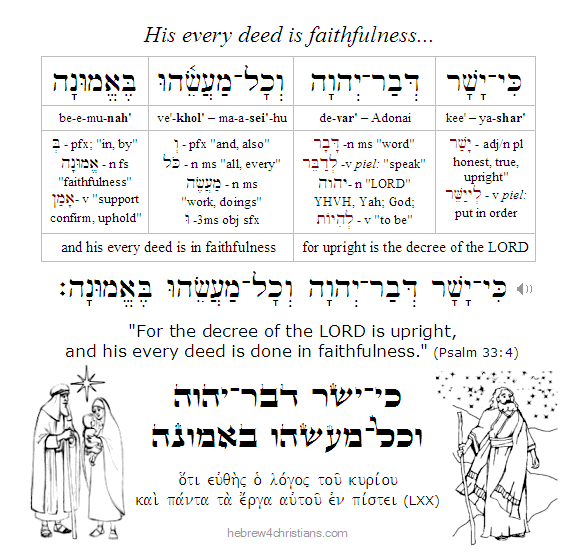
"Study (σπουδάζω) to show yourself approved to God, a workman that is unashamed, rightly dividing (ὀρθοτομέω, lit. "cutting straight") the word of truth" (2 Tim. 2:15). "Those who study Torah give light wherever they are," which means they attest to the truth of the Scriptures. God gives us light to overcome the darkness, and that light is His Word.
Hebrew Lesson
Psalm 33:4 reading (click for audio):
 |
Coming to the Place of God...
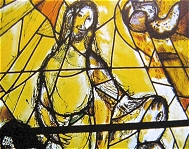
01.21.26 (Shevat 3, 5786) What was it about Yeshua that made him so special? For the moment, put aside your theology or "Christology" and ask what made him so attractive and endearing to people on a human level. What sort of a man was he? What made people want to follow him? Did he have special "charisma" or an aura about him?
We really don't know the answer to these questions, of course, since the New Testament says little about his physical appearance, though the prophet Isaiah foretold that he would be a man of "no reputation," with no regal form or "comeliness" with which we would desire him. Indeed, he would be "despised and rejected of men, a man of sorrows, and acquainted with grief" (Isa. 53:2-3). Indeed Yeshua was born into this world in obscurity, grew to become an unassuming man, a "nobody" in the eyes of the world, without power or political authority. For all the more reason then does this suggest that what made him so attractive was his heart, his kindness, and his accessibility, and that's part of the lesson we learn by the invitation he gave to the two disciples of John the Baptist to come to his home.
Recall that the New Testament records how John the Baptist began announcing the imminent coming of the Messiah, calling the people to repentance. One day John saw Yeshua of Nazareth and proclaimed: "Behold the Lamb of God who takes away the sins of the world!" (John 1:29-30). Two of John's disciples (by tradition Andrew and John, author of the fourth gospel) were standing with him at the time and they believed John's testimony that Yeshua was the promised Savior of Israel. Indeed John had explained the purpose of his ministry was to herald the coming of Messiah, and his preaching was intended to prepare the people for the momentous hour. Therefore when John identified Yeshua as the "Lamb of God who takes away the sins of the world," they understood the implications and immediately decided to follow Yeshua as he walked away. When Yeshua turned to them and asked: "What are you looking for?" they replied, "Rabbi, where do you live?" And Yeshua then graciously invited them to "come and see." So they went to his house and stayed with him for the rest of the day (see John 1:35-39). We may wonder, what did they see? What did they do? What did they discuss with him? We are not told, though it is clear Yeshua was a kind and approachable person, accessible to the seeking heart.
And this presents a sort of "parable" or pattern for anyone who would come to know Yeshua. First there is a deep awareness of the need to repent before God, as John the Baptist had preached, along with the realization that true repentance, or personal salvation, is impossible apart from divine intervention that would free the soul from its bondage to sin. Second there is revelation that points to Yeshua alone as our healer and deliverer. Third there is sincere desire to learn more about him and the nature of his character, and there is an "inner sense" that you are called to "come and see" where Yeshua lives...
This invitation is for all people who are burdened by their sins and who hunger and thirst for deliverance. Yeshua's message finds it place in the heart of the broken: "Come to me, all who labor and are heavy laden, and I will give you rest. Take my yoke upon you, and learn from me, for I am gentle and lowly in heart, and you will find rest for your souls. For my yoke is easy, and my burden is light" (Matt. 11:28-30).
It is your willingness to accept the invitation to know his heart that marks the first step from which all others may follow. Yeshua asks you to feel welcome and safe in his presence, as if you have belonged to him all along, to realize that you are accepted, respected, and dearly valuable to him. This is the "place" of God, the "where" of his presence and the "who" of his character. And indeed, God's Presence is liked to a "house," a "miskhan" or dwelling place, a refuge and sanctuary for the soul, a secret garden, a strong habitation, the everlasting arms of a loving Father, Abba, the one who makes a place for us, an everlasting domicile that will enshrine us in the comfort and blessing of eternal love.
Some people wrestle with shame and feel unworthy of love and blessing. It is hard for them to believe that God bears their sins because they do not believe they matter enough for God to do so. But God affirms and demands that we take his love seriously, that we esteem ourselves as people he loves and cares for despite our sins and failings... His heart extends to the "poor in spirit," to those who mourn over their lives, to the humble, the broken, the wandering outcast, the despised and rejected of men. Yeshua is the "friend of sinners" who calls out to their weariness: "Come to me, and I will give you rest..."
So what do you want? What do you truly desire of the Lord? Yeshua encourages us to come and see who he is and to repose in the place of his dwelling, the habitation of his heart. "Live in me - in the truth of my heart - and let my heart live in you" (John 15:4). This "house" of the Lord is found in heart connection with him, where you accept yourself as beloved in him. It is found in God's presence as Father, Son and Holy Spirit as we are made part of his family, members of his household, and partakers of the blessing of his love.
We start "following" the Lord by first trusting that he really desires us, for assuredly we will cannot do so unless we believe his heart for us, after all. We begin by praying, "Lord, how am I to be with you? How can my heart know your heart for me? How can I connect with you, finding life in your life? Is this not essential - to know who you really are, to experience your mercy and grace, to rest in your steadfast love and faithfulness? How can I experience your acceptance and kindness in light of my brokenness, shame and disappointment? Will you heal the wounds of my heart - wounds that you yourself bore for me in your suffering? I bow down in hope before the cries of my heart. I wait, O Lord, for your touch, the breath of your Spirit, the true balm of Gilead that forever heals my brokenness.
Recall the story about Elijah, dejected, weary, and feeling abandoned. The Lord instructed him, "Go out, and stand on the mountain (i.e., Sinai) before the LORD." And behold, the LORD passed by, and a great and strong wind tore into the mountains and broke the rocks in pieces before the LORD, but the LORD was not in the wind; and after the wind an earthquake, but the LORD was not in the earthquake; and after the earthquake a fire, but the LORD was not in the fire; and after the fire a still small voice... And, suddenly there came a Voice to him that asked, "What are you doing here?"
Or consider Job who was described as "a man blameless and upright, one who feared God and shunned evil" who nevertheless was tested and brought to despair and the knife's edge of death. After languishing in dismay, he found himself beneath the whirlwind, beholding the revelation of God's glory, and only afterward was he able to say, "I have heard of thee by the hearing of the ear (לְשֵׁמַע־אֹזֶן שְׁמַעְתִּיךָ): but now mine eye seeth thee (וְעַתָּה עֵינִי רָאָתְךָ). Therefore I forsake myself, and I repent in dust and ashes" (Job 42:5-6).
There is no recipe or formula for following the Lord since it involves turning to God from the depths of your soul, allowing him to be the center of your heart. In a sense it is a matter of losing yourself to find yourself, letting go of your fears and attachments in surrender to God. As we go through the refining fires, we leave behind the old life for the new - crossing over into the realm of the Spirit. Once we take hold of who we are in God's house, the despair that has haunted us fades away and we live in God's provision and abundance.
Faith in the truth of God's love sets us free, though we must be careful not to let our hope wane in quiet desperation. The temptation is to lose sight of God's heart for us or to be dissuaded from our hope because of sadness or fear. God is merciful and will beckon us to return to his love, though if we begin to fall away, he may lead us to confess once again that we are unable to control our lives, that we desperately need him, and to know once again that all that we are or ever shall be is bound up in his presence and love for us.
Yeshua is the answer to our hurting and desperate hearts. It may not be an "easy" answer, but it's the only answer that is real, with love forged in the passion of God's heart, the expense and expanse of which surpasses all of creation, forever and ever. Amen.
Hebrew Lesson
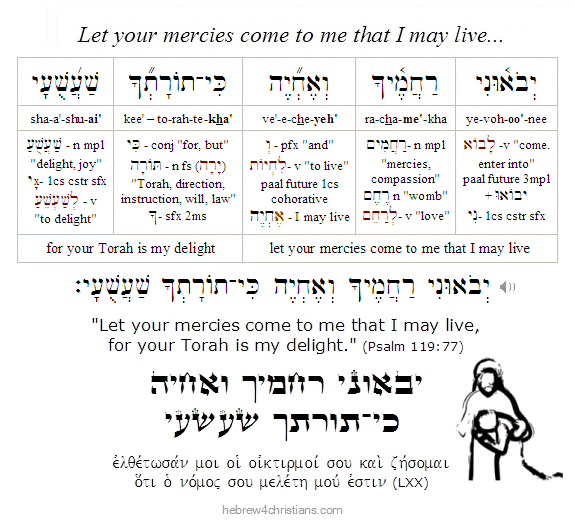
Psalm 119:17 reading (click for audio):
 |
Finding the Way of Escape...
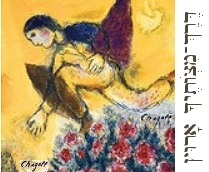
01.20.26 (Shevat 2, 5786) Where it is written, "God is faithful, and he will not let you be tempted beyond your ability, but with the temptation he will also provide the way of escape, that you may be able to endure it" (1 Cor. 10:13), we note that the Greek text says that God will actively "make with the temptation the way of escape" (ποιήσει σὺν τῷ πειρασμῷ καὶ τὴν ἔκβασιν) so that you may be able to bear it....
When I was younger, I thought of temptation as the appeal to gratify my flesh, to impulsively seek hedonistic pleasure, and so on, but now I understand "temptation" (πειρασμό) to encompass far more than just that.
For instance, whenever I regard my life in human or "natural" terms, apart from the consciousness of God's all-pervading and sustaining Presence, then I am surely under temptation. Fear, anger, despair, grumbling self-pity, and so on -- all are temptations to unbelief... This encouraging verse, then, assures us of the Divine Presence in every moment, at every turn of our journey, and in every circumstance. God is always present to help you as you turn to him in faith -- even when you are ashamed, fearful, or in dismay over your present circumstances.
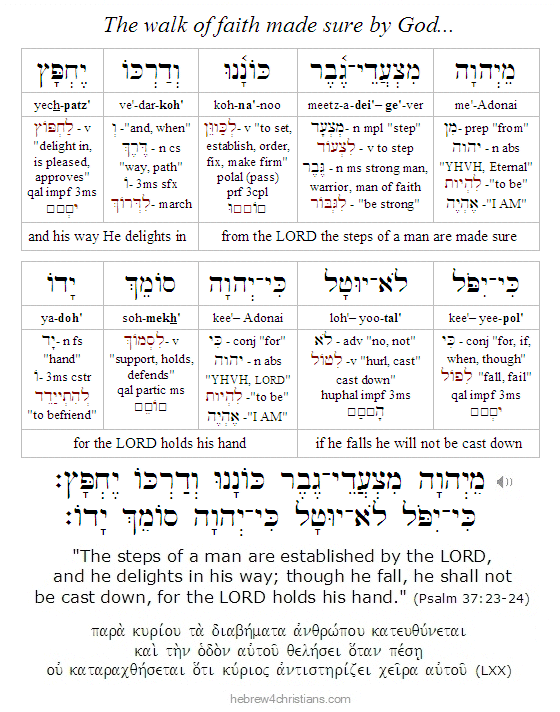
The sages state in this regard: "God creates the cure before the plague," meaning that His love is the foundation of all things: עוֹלָם חֶסֶד יִבָּנֶה / olam chesed yibaneh: "steadfast love built the world" (Psalm 89:2). Just as God created mankind only after He created the pathway of repentance (i.e., the "Lamb slain from the foundation of the world": Eph. 1:4, Heb. 4:4, Rev 13:8), so the escape from temptation was likewise foreseen and provided. In all things, then, may we humble ourselves and seek God's face, understanding our radical dependence upon Him for our deliverance.
Hebrew Lesson
Psalm 37:23-24 reading (click):
When you become alive to the truth that the LORD is your "Rock" -- the very ground upon which you live, move, and have your being -- then your steps are made sure. When you are unsure of your way, however, when you walk in uncertainty, you are unsteady in your resolve and are tempted to regard your life as being without any solid foundation or direction (James 1:5-8). As you commit your way to the LORD, your steps are made sure, for you are walking before his Presence, and therefore you are upheld by his power...
In all your struggle remember that salvation is found in the power and righteousness of God, and not your own will or resolve (Rom. 1:16). I'm so glad it's not the strength of my grip that keeps me holding on to God, but the strength of his...
Anxiety and True Love...
01.20.26 (Shevat 2, 5786) It is written in our Scriptures: "Be anxious for nothing, but in everything by prayer and supplication, with thanksgiving, let your requests be made known to God; and the peace of God, that surpasses all understanding, shall guard your hearts and your thoughts in Yeshua the Savior" (Phil. 4:6-7).
"Be anxious for nothing..." What liberation of heart and soul is here commended; what consoling balm for wounded past; what divine remedy offered to meet our need! "Be anxious for nothing," and this includes the anxiety of being nothing, for the word is perhaps better (though less poetically) rendered as "don't be anxious for anything." That is, don't be troubled with cares; don't be inwardly divided, unsure of what matters most. "Be anxious for nothing." Don't allow anything to steal your secret hope and joy...
Salvation means deliverance from what binds you. It relieves you from heavy burdens, the crack of the whip upon your back, the tiresome realm of meaninglessness and monotony. Salvation is "lightness of being," heavenly repose that passes all "natural" reasoning.
This is the very message of peace embodied in our Lord, spoken plainly and without condition: "Come unto me, all you that labor and are heavy laden, and I will give you rest. Take my yoke upon you, and learn of me; for I am meek and lowly in heart: and ye shall find rest unto your souls." Come unto him and find your comfort. Come as you are, but come...
You might object by saying that you are unworthy; you are weak and wretched of heart, that your faith is small... Indeed it is so, but what of it? What are you saying before the face of God's Redeemer and our Savior? Could it be any other way for you?
"Come unto me all who that labor and are heavy laden..." Weary over you afflictions, the common sorrows in this vale of tears, yet, even more so weary of your own self, that tiresome inner conversation within yourself, the self you have contemned and reprimanded because you have measured yourself against illusion, the self that has at times betrayed you and even enticed you to self-destruction...
Do you compare yourself to others? Do you measure yourself against some ideal and judge yourself unfavorably? Do you recoil at your own mediocrity? Are you ashamed of your inadequacies? Do you want to be someone else? To "lose" yourself in the fantasy of being other than who you are? Or do seek above all to be in control? Do you push back in defiance, drink sour grapes, and become bitter over at your unjust fate? Do you protest that you were given a bad hand of cards? Are you in despair over your lack of perfection, your "dust and ashes" existence?
O "fearfully and wonderfully made," do you fear being invisible, unknown, small, insignificant, and unworthy? Are you embarrassed over your own image?
God is so awesome he made himself as nothing for your sake... Before the Lord we "fall at his feet as one dead," but it is he who lays his hand upon you, saying "Fear not; I am the first and the last." I hear profound pathos in these words of comfort from our Lord. Wisdom realizes we are but nothing, but love insists we are everything. A note for each pocket: one says "I am dust and ashes," the other, "For me the world was created."
Before God we will indeed feel our insignificance and our wretchedness, but before God we will also find our eternal value and beauty. We fall on our face in our nothingness; we rise to our feet as God's beloved child.... We fall at his feet as one dead -- this is our despair over ourselves -- yet the pierced hands of his love take hold of us, consoling us... "Don't be afraid... I am the First and I am the Last... I am the source and end of all that matters most; I reach out and touch you in love for you.
The first and most significant step is to "show up" (or to be taken up in a vision) to confess your great need for God. We may have "sanctified ambivalence" when we do so; we may feel both fear and desire; we may look upon ourselves in despair as we are drawn to God's glory and beauty... But like Ruth we dare to lay at the feet of Boaz in hope of his love.
Find God or die. And even if you have failed as much as "seventy times seven times" in your faith, and even if - as Peter did - you have denied him in your heart, you have found courage to come back, to refuse to give up your hope. As the holy Scripture encourages: "Lord, to whom shall we go? you alone have the words of eternal life." There is no other...
When you die and come before God's glorious presence, the Lord will not compare you to Moses or the great prophets but will simply require you to confess who you really are. "Your heavenly Father sees in secret and will reward you openly." True, there is judgment but it will turn on whether you have accepted God's love for your life. You may have squandered some opportunities to serve and honor God, but even that is redeemed by our gracious and compassionate Savior. God is able to work "all things together" for his glory and for your good... Confessing the truth of God's salvation is the heart of right judgment.
So accept yourself as accepted in the beloved. Your life is not an accident; it's not a mistake; you were meant to be born and to come into this world. Your life really does matter, and it matters on levels of which you cannot yet comprehend. God has a purpose and deep reason for your life, exactly and such as it is (Jer. 29:11). Trust that God's love is overcoming all your darkness and fear. "Be anxious for nothing..." Amen.
Hebrew Lesson
Psalm 139:14 reading (click):
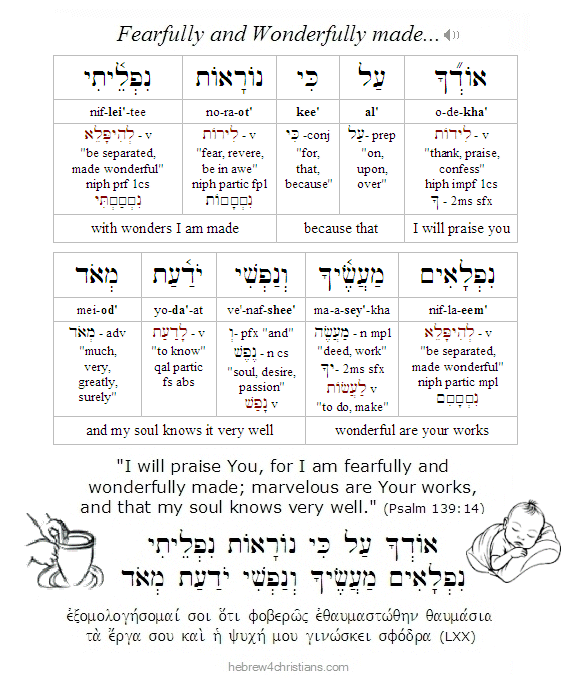 |
The Centrality of the Exodus...
This week we are re-reading the story of the exodus for the current Jewish year...
01.19.26 (Shevat 1, 5786) Chodesh Shevat Tov, chaverim. The exodus from Egypt (i.e., metziat mitzrayim: יציאת מצרים) is perhaps the most fundamental event of Jewish history; it is "the" miracle of the Torah. In addition to being commemorated every year during Passover (Exod. 12:24-27; Num. 9:2-3; Deut. 16:1), it is explicitly mentioned in the first of the Ten Commandments (Exod. 20:2), and it is recalled every Sabbath (Deut. 5:12-15). The festivals of Shavuot (Pentecost) and Sukkot (Tabernacles) likewise derive from it (the former recalling the giving of the Torah at Sinai and the latter recalling God's care as the Exodus generation journeyed from Egypt to the Promised Land), as does the Season of Teshuvah (repentance) that culminates in Yom Kippur (the Day of Atonement). Indeed, nearly every commandment of the Torah (including the laws of the Tabernacle and the sacrificial system) may be traced back to the great story of the Exodus, and in some ways, the entire Bible is an extended interpretation of its significance. Most important of all, the Exodus both prefigures and exemplifies the work of redemption given through the sacrificial life of Yeshua the Messiah, the true King of the Jews and the blessed Lamb of God...
The deeper meaning of exile concerns blindness of the Divine Presence. The worst kind of exile is not to know that you are lost, away from home, in need of redemption... That is why Egypt (i.e., Mitzraim) is called metzar yam - a "narrow strait." Egypt represents bondage and death in this world, and the exodus represents salvation and freedom. God splits the sea and we cross over from death to life. Since Torah represents awareness of God's truth, Israel was led into a place of difficulty to learn and receive revelation (Gen. 46:1-7). Out of the depths of darkness God's voice would call his people forth. Likewise we understand our "blessed fault," the trouble that moves us to cry out for God's miracle in Yeshua... Indeed the New Testament states that Yeshua "appeared in glory and spoke of his exodus (τὴν ἔξοδον αὐτου) which he would accomplish at Jerusalem" (Luke 9:31). Amen, thank God for the greater exodus given by the strong outstretched arms of our great Savior Yeshua!
Hebrew Lesson
Exodus 20:2 reading (click to listen):
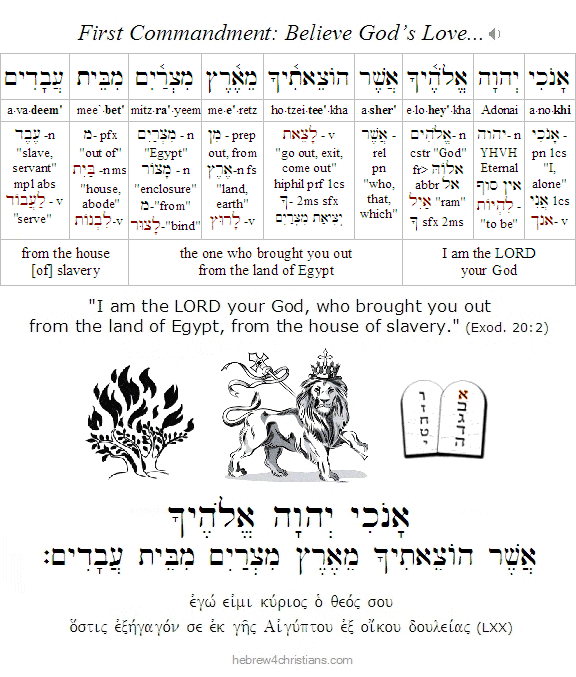 |
Tears in His Bottle...
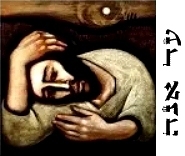
01.19.26 (Shevat 1, 5786) It's written in our Scriptures: "Godly sorrow works teshuvah (repentance) unto salvation" (2 Cor. 7:10). This deep sorrow is more than just sadness or regret over some sin or wrongdoing of your past. Genuine godly sorrow expresses inner poverty - being "poor in spirit" - wherein the heart realizes that sin is not something "out of character"- as if it did not really come from you - but rather that it is a dreadful sickness of your own soul, an inner corrupting force from which you need divine intervention and deliverance (Jer. 17:9). We are not sinners because we sin; we sin because we are sinners...
The Puritans prayed for the "gift of tears" by which they meant the healing virtue of experiencing genuine repentance before God. They asked God for help because doing teshuvah - really doing it as opposed to just thinking you did - requires a miracle, a profound change of direction, a new way of seeing. In general our lives are a tangled web of deceit, self-deception, ignorance, folly, and so on, and when we are confronted with a particular sin, we are quick to rationalize and even deny our responsibility. Jean Paul Sartre would call this mauvaise foi, or "bad faith," that is, the habit of denying that our actions have real consequences for which we alone must bear. Often it takes many years to truly understand the depth of our inner corruption, the sickness of our souls, the way we deceive ourselves and make excuses for the sorrows and pains we have caused others and ourselves.
So how long has it been since you have wept over your sinful condition? Not how long has it been since you have revisited some regret from your past - but how long has it been since you have "collapsed in on yourself," confessing the horror and revulsion over your forlorn and desperate soul? Do you feel in your bones the awfulness of your sinful life? Or are you quick to make excuses for your wretchedness? Do you find fault in others to justify your own hardness of heart? Do you harbor secret resentment enabling you to hold on to your sickness? These are "worldly sorrows" that work death (2 Cor. 7:10). We may give lip service that we are sinners, but do we feel the grief and weight of our sin? Do we abhor ourselves and repent in dust and ashes? (Job 42:6). Dear friend, how can God wipe away every tear from our eyes in the next world if we have not wept in this one?
On the other side of our confession of brokenness we discover that God consoles us for the wounds we suffer in this life. It is written in our Scriptures: "You have kept count of my miseries; store my tears in your bottle. Are they not in your book?" (Psalm 56:8). The LORD "numbers" or "recounts" the heartaches and wanderings of your life; He keeps an account or a record of your trouble in His "scroll of remembrance" (Mal. 3:16). God does not overlook the anguish of your heart but carefully numbers each of your tears, storing them "in His flask," which may allude to the ancient custom of putting tears shed for the death of someone into a small container (i.e., "tear bottles"). The picture is one of profound intimacy and comfort, when in the world to come the LORD will personally console you for your sorrows. Not one pain of your life will be overlooked by heaven.
May our hearts be both softened and full of conviction as we ponder these things. Amen.
Hebrew Lesson
Psalm 56:8 Hebrew reading (click):
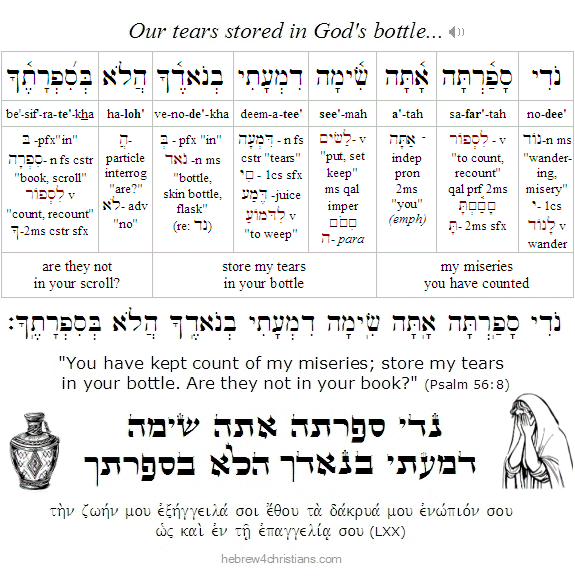 |
Should we live in fear of ourselves? After all, "the heart is deceptive above all things and desperately wicked" (Jer. 17:9), and it is woefully easy to fool ourselves regarding our sins (1 Cor. 8:2; Gal. 6:3; James 1:26). Well on the one hand we should indeed be afraid of our own sinful condition and abhor the sin in our lives, but on the other we must practice hope in God and trust in his healing and deliverance. Moreover, we can experience freedom from dread by receiving the joy that comes from the assurance that we are accepted in the Beloved. We must understand our sin in relationship to the wounds of the Savior, since without that connection, our repentance will be vain indeed.... God has not given us a spirit of slavery to fall back into fear; and there is no fear in His love (Rom. 8:15; 2 Tim. 1:7; 1 John 4:18). Of course we all will fail the test apart from the grace and love of God, and no one can be approved by means of the unaided will. We all need a miracle from God to love Him in the truth and to pass the test -- but God is the One who performs miracles for us. The LORD is Adonai Nissi (יהוה נִסִּי), the God of my miracle...
Torah reading Bo:
The Passover and Exodus...
This week we think about the great Passover prophecy and the subsequent exodus from Egypt, and how these foretell and reveal the "greater Exodus" that was given by Yeshua (Luke 9:29-31). Moreover the Exodus judgments against Pharaoh foretell of the coming "End of Days" when God's judgments will befall the "Pharaoh" ("man of sin," or Antichrist) on a global scale...
01.18.26 (Tevet 29, 5786) Shalom dear friends... Our Torah reading for this week (i.e., parashat Bo, Exod. 10:1-13:16) begins with God commanding Moses "to go" (i.e., bo: בּא) before the Pharaoh to announce further apocalyptic judgments upon Egypt. The purpose of this power encounter was to vindicate God's justice and great glory (deliverance/salvation) by overthrowing the tyranny of unjust human oppression. Pharaoh's nightmare of "one little lamb" outweighing all the firstborn of Egypt was about to be fulfilled....
Hebrew Lesson
Exodus 10:1 Hebrew reading (click):
Recall that last week's Torah (i.e., parashat Va'era) retold how Pharaoh defiantly refused to listen to Moses' pleas for Israel's freedom, despite seven devastating makkot (plagues) that came upon Egypt in God's Name (יהוה). In this week's portion (i.e., parashat Bo), the battle between the LORD and Pharaoh comes to a dramatic conclusion. The last three of the ten plagues are unleashed upon Egypt: a swarm of locusts devoured all the crops and greenery; a palpable darkness enveloped the land for three days and nights; and all the firstborn of Egypt were killed precisely at the stroke of midnight of the 15th of the month of Nisan... In this connection note that the word בּא ("go") and פרעה ("Pharoah") added together equal the gematria of משׁיח ("mashiach"), providing a hint of the Messianic redemption that was foreshadowed in Egypt. Every jot and tittle, chaverim!
Before the final plague, God instructed the Jewish people to establish a new calendar based on the sighting of the new moon of spring. On the tenth day of that month, God told the people to acquire a "Passover offering" to Him, namely an unblemished lamb (or goat), one for each household. On the 14th of that month ("between the evenings") the animal would be slaughtered and its blood sprinkled on the doorposts and lintel of every Israelite home, so that God would "pass over" these dwellings when He came to kill the Egyptian firstborn that night. The roasted meat of the offering was to be eaten that night with unleavened bread (matzah) and bitter herbs (maror). God then commanded the Israelites to observe a seven-day "festival of matzah" to commemorate the Exodus for all subsequent generations.
Because of this, our corporate identity begins with a shared consciousness of time from a Divine perspective. The mo'edim (festivals of the LORD) all are reckoned based on the sacred calendar given to the redeemed Israelite nation. As it is also written in the Book of Psalms: "He made the moon for the appointed times" / עָשָׂה יָרֵחַ לְמוֹעֲדִים (Psalm 104:19). Undoubtedly Yeshua followed this calendar, as did His first followers (Gal. 4:4).
Hebrew Lesson
Psalm 104:19 Hebrew reading (click):
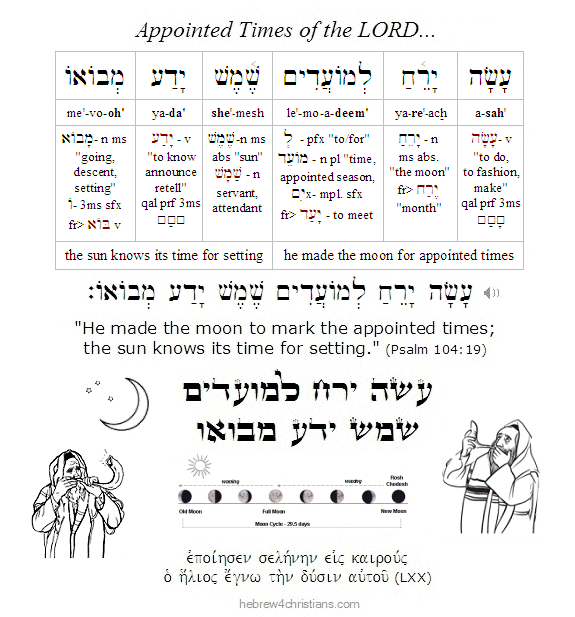 |
Just before the dreadful final plague befell, God instructed the Israelites to ask their Egyptian neighbors for gold, silver and jewelry, thereby plundering Egypt of its wealth (this was regarded as "uncollected wages" for hundreds of years of forced labor and bondage - not to mention for the services of Joseph, whose ingenuity brought the world's wealth to Egypt in the first place). Moses then instructed the people to prepare the Passover sacrifice, that is, the korban Pesach (קָרְבָּן פֶּסַה) - the Passover lamb - and to smear its blood on the two sides and top of the doorway, resembling the shape of the Hebrew letter Chet (ח). This Hebrew letter, signifying the number eight, is connected with the word חי (chai), short for chayim (חַיִּים), "life." The blood of the lamb (דַּם הַשֶּׂה) not only saves from the judgment of death, but also is a symbol of divine life given for our redemption. The "life is in the blood."
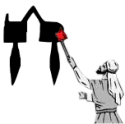
The dreadful final plague - the death of the firstborn - at last broke Pharaoh's resistance and he not only allowed the Israelites to depart without any conditions, he urged them to go. Because they left in great haste there was no time for their dough to rise. The Torah states that there were 600,000 adult men who left Egypt, along with the women, children, and a "mixed multitude" of other Egyptian slaves who tagged along.
The Israelites were commanded to consecrate all the firstborn to God and to commemorate the anniversary of the Exodus each year by celebrating the LORD's Passover in conjunction with the Feast of Unleavened Bread. During this time they were to remove all leaven from their homes for seven days, eat matzah, and retell the story of their redemption to their children. The portion ends with the commandment to wear tefillin (phylacteries) on the arm and head as a reminder of how the LORD saved the Israelites from their bondage in Egypt.
The Humility of Moses...
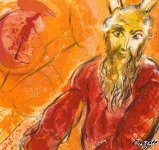
The following entry is related to this week's Torah reading, Parashat Va'era...
01.16.26 (Tevet 27, 5786) From our Torah reading this week we read how Moses objected to serve as God's emissary to the Pharaoh: "Behold, the children of Israel have not listened to me, so how will Pharaoh listen to me? And I have sealed lips!" (Exod. 6:12). Moses' argument is that if his own people would not listen to him, for all the more reason the Pharaoh would not listen.... His statement "I have sealed lips" (אֲנִי עֲרַל שְׂפָתָיִם) may be interpreted to mean that he would be regarded as without persuasive speech before Pharaoh, as an "uncircumcised" or unrefined person, or, more likely, that his lifelong speech impediment would be regarded as an offence before the niceties of Pharaoh's audience.
In this connection the sages have commented regarding Moses' great humility, saying that it was greater than even that of Abraham, for Abraham regarded himself as "dust and ashes" (עָפָר וָאֵפֶר) before the Lord (Gen. 18:27), whereas Moses regarded himself as "nothing at all" (i.e., k'lum: כְּלוּם) - less than dust itself. When the Israelites later demanded bread from Moses and Aaron in the desert, Moses rhetorically asked "what are we?", indicating that he regarded himself as utterly powerless apart from the will and agency of God.
Yet it is precisely this "nothingness" that made Moses a fit vessel to witness and proclaim the greatness of the Lord. William James wrote about "Zerrissenheit," or the idea of being inwardly shattered within your heart. Moses understood his bankruptcy as a "failed Messiah" in Egypt as a young man; he walked as the living dead for 40 years in the desiccation of Midian before God raised him up in newness of life. And Moses continually experienced his own powerlessness as he led the Israelites out of the death throes of Egypt.
Yeshua - who was with Israel in the desert (Exod. 12:21; 1 Cor. 10:4; Jude 1:5) - is "able to save to the uttermost those who come to God through Him, since He always lives to make intercession for them" (Heb. 7:25) -- and that includes intercession for those regarded as dead on account of their own infirmities and sins, for those for whom all hope is lost, and for those who understand from the depths that there is no real life in them apart from the miracle of God who gives life to the dead. "For if anyone thinks himself to be something, when he is nothing, he deceives himself" (Gal. 6:3); but if someone confesses truth and looks to God, new life can arise. The "uttermost," the farthest extent, from the deepest pitch, in the vast expanse of stars that sweep across the cosmos, the furthest star, barely perceptible, is sustained by the mighty hand and outstretched arm of the Lord, our great deliverer. This is not a star consigned to outer darkness because of its lost estate or cast off because of proud defiance, no, this is a star that barely flickers in its self-effacement, as vulnerable as an unsteady flame ready to be extinguished.
Of our loving Savior it is written: "A bruised reed shall he not break, and the smoking flax shall he not quench" (Isa. 42:3). People conscious of their frailty and who have been crushed because of it are likened to "bruised reeds" of whom the loving Messiah shall attend. As it is written, "The LORD is near to the brokenhearted and saves the crushed in spirit." Indeed, He binds up the broken of heart and gives liberty to those in bondage (Isa. 61:1). "A smoking flax shall he not quench" likewise means that our Lord will not snuff out an unsteady flame ready to expire, but will tend to it with special oil to cause it to burn more brightly.
The Spirit of the LORD is always saying to the listening heart, "My grace is sufficient for you, for my power is made perfect in weakness" (2 Cor. 12:9). God doesn't need our religious acts of service, our worship, our prayers, or our approval; on the contrary, we desperately need Him... Prayer is a mirror of the heart, and we either come to God in our emptiness, our brokenness, and in real humility, or we are just playing religious games. Those who truly call upon the LORD understand their radical need for deliverance, inwardly confessing, "Woe is me, for I am ruined..." (Isa. 6:5).
The Savior seeks the "trampled and bruised," the poor in spirit, and those crushed by the blows of this fallen world and offers them healing. "The Son of Man came to seek and to save the lost" (Luke 19:10), and therefore He is found in the midst of the leper colonies of the hurting, the forgotten, and the rejected. As a "man of sorrows" he understands the language of our pain (Isa. 53:3). He is the healer of the broken heart and the Savior of those who are crushed in spirit. Blessed be His Name forever... Amen.
Shabbat shalom chaverim, and thank you for being part of Hebrew for Christians...
Hebrew Lesson
Psalm 34:18 reading (click):
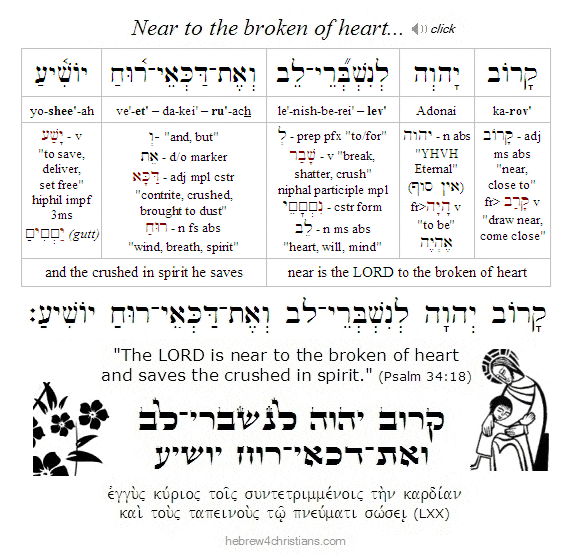 |
Endurance unto Life...
01.16.26 (Tevet 27, 5786) Though our promised healing assuredly will come to us, it remains the exclusive prerogative of God to allow trials in our lives for our ultimate good. Therefore faith is the key here: Steadfastly affirm your healing even in the midst of your anguish, because your suffering is a test designed to teach you to trust God and to receive the blessing apart from any empirical evidence (2 Cor. 4:18). As the Torah declares of our father Abraham: והאמן בּיהוה ויּחשׁבה לו צדקה -- "And he believed in the LORD, and He counted it to him for righteousness" (Gen. 15:6); and also of Job's faith in the midst of his agonizing struggle: הֵן יִקְטְלֵנִי לוֹ אֲיַחֵל -- "Though he slay me, I will hope in him" (Job 13:15).
Sometimes all we can do is cry out to the LORD for deliverance... Our heart's cry does not question God's goodness to us, though we may silently wonder about the extent to which affliction may be required to mend our hearts. As C.S. Lewis once said, "We are not necessarily doubting that God will do the best for us; we are wondering how painful the best will turn out to be" (Letters of C.S. Lewis, 1964). There is a trust issue in suffering, and an intimacy that comes through its fires. Do not jump to conclusions; resist any insinuation that the Lord is being unjust! And as Kierkegaard reminds us, "It is one thing to conquer in the hardship, to overcome the hardship as one overcomes an enemy, while continuing in the idea that the hardship is one's enemy; but it is more than conquering to believe that the hardship is one's friend, that it is not the opposition but the road, is not what obstructs but what develops, is not what disheartens but ennobles" (Four Upbuilding Discourses, 1844).
The difficulty of ongoing personal suffering is deeply existential: how do you keep hope in the midst of this tension? "Lord I believe; help my unbelief" (Mark 9:24). How do you affirm that your heavenly Father will heal you but at the present hour you must continue to endure suffering? Do you then devise a "soul-building theodicy" to explain your struggle – providing a narrative to answer the "why" of your suffering -- or do you attempt to sanctify suffering as a means of healing others by the grace of the Messiah (Col. 1:24)?
When Yeshua victoriously proclaimed, "It is finished" just before he died on the cross, he foreknew that his followers would experience a "purging process," a "refining fire," and time on the "potter's wheel" to perfect their sanctification. At the cross of Yeshua death itself was overcome – and all that it implies – and yet it is nevertheless true that we will suffer and die ourselves and that death persists an enemy (see 1 Cor. 15:26). While we celebrate the reality of the final redemption, the "instrumentality of our sanctification" needs to be willingly accepted and endured. I say "endured" here because I don't think we will ever have a complete answer to the question of "why" we undergo the various tests we face in this life. Our disposition in the midst of seemingly unanswered prayers is where our faith is disclosed: will we despair of all temporal hope or not? Will we console ourselves with the vision of a future without tears and loss - a heaven prepared for us -- or will we resist the present darkness and seek to find deliverance in this hour? Do we trust God with our pain and submit to his will, or will we "die" inside – losing hope and despairing of all remedy?
As King David once wrote, "At an acceptable time, O God, in the abundance of your steadfast love answer me in your saving faithfulness. Deliver me from sinking in the mire; let me be delivered from my enemies and from the deep waters. Let not the flood sweep over me, or the deep swallow me up, or the pit close its mouth over me. Answer me, O LORD, for your compassion is life; in the abundance of your mercies turn to me" (Psalm 69:13-16).
ענני יהוה כי־טוב חסדך
כרב רחמיך פנה אלי
"Answer me, O LORD, for your compassion is life;
in the abundance of your mercy turn to me."
(Psalm 69:16)

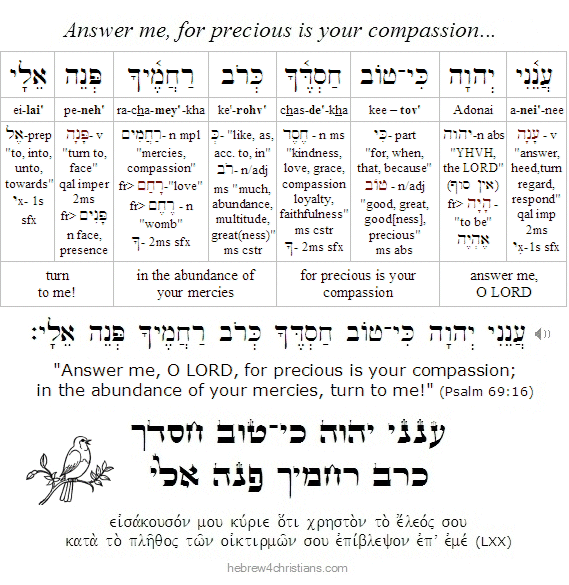
"But You, O GOD my Lord, do Thou for me for your own Name's sake; because your steadfast love is good, deliver me" (Psalm 109:21). "Do thou for me" is the confession that God alone has the power to help. Asking God to bring glory to His own Name -- to honor and magnify His Name -- is the theme of all true intercession.
Suffering has a way of focusing the heart and mind, reminding us that "today is the tomorrow of yesterday." Life is short, and our need is great to turn to the LORD and take hold His promises. We take comfort that God is for us the God of salvation: "Blessed be the Lord, who daily bears us up; God is for us our salvation. Selah. Our God is a God of salvation (יְשׁוּעָה), and to GOD, the Lord, belong deliverances from death" (Psalm 68:19-20).
Be encouraged, brothers and sisters in the Lord. All those who are "fathered by God" conquer the world, since God imparts to us the victory of faith by means of His powerful Spirit (1 John 5:4). Therefore the heart of faith steadfastly affirms, "In all these things [afflictions, tribulations, etc.] we are 'more than conquerors' (lit., "hyper-conquerors," i.e., ὑπερνικῶμενfromὑπέρ, "hyper" + νικάω, "to overcome") through Him that loved us (Rom. 8:37).
|
The Power of Truth...
The following is related to our Torah reading for this week, Parashat Va'era...
01.16.26 (Tevet 27, 5786) In this week's Torah reading (i.e., parashat Va'era), the LORD sent Moses and Aaron to Pharaoh with the timeless message: "shalach et ami" (שׁלַּח אֶת־עַמִּי), "let my people go!" However, because of Pharaoh's pride and hardness of heart, God began a sequence of supernatural plagues that would demonstrate the LORD's sovereignty over all the powers and so-called "gods" of Egypt (Exod. 12:12).
The ten plagues (i.e, eser ha'makot: עֶשֶׂר הַמָּכּוֹת) were given not just to vanquish the hubris of Pharaoh, however, but to awaken the people of Israel themselves. After hundreds of years of slavery, the people had forgotten who they really were and had passively accepted that all real power was vested in humans. Among other things, God's intervention was meant to deliver the people from the fallacy of ascribing greatness to worldly powers. Ultimately the people of Israel - and eventually the entire world itself - would come to understand ein od mil'vado (אֵין עוֹד מִלְבַדּו), "there is no true power apart from the LORD" (Deut. 4:35).
Hebrew Lesson
Deuteronomy 4:35 reading (click):
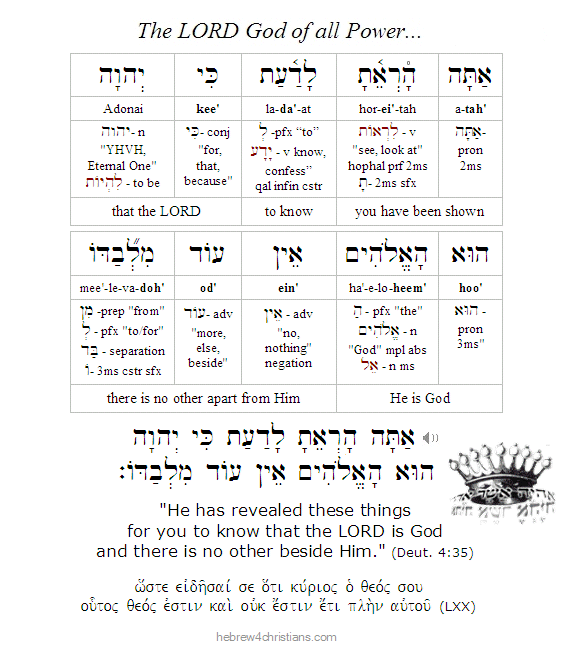 |
Seeing God's Light...
"Do not marvel that I say to you, 'You must be born again...'" - Yeshua
01.15.26 (Tevet 26, 5786) We find ourselves "thrown" into existence, subject to historical forces and pressures over which we have no control, bound to our DNA and biochemistry, hemmed in on all sides, powerless, full of ignorance and dark impulses. Yet the more we try to disentangle ourselves from what cannot be changed, the more enmeshed we become. The natural order of life seems to be that we come forth out of the darkness of birth and return to the darkness of death - a pilgrimage of the unknown.
We need light to conquer our darkness, but we are blind. We cannot forgive ourselves or make ourselves feel loved. We can't find our way. By ourselves we cannot be delivered from fear, anger, or despair. Aristotle's logic is tragically sound: "All people are mortals; all mortals fear death; therefore all people fear death." We cannot escape ourselves; we cannot heal ourselves; we cannot save ourselves. Therefore all that hope believes can only be graciously given by God, for we are lost and must be found. We cannot find our way to eternal life: we must be brought home by the Good Shepherd who seeks for us.
We are saved by the miracle of divine intervention in our lives, and that alone truly changes us. This is called "regeneration" or spiritual rebirth. Just as we were powerless when we were physically brought into this world, so we are powerless when we are spiritually brought into the realm of the divine. We cannot change ourselves, that is, by our own strength or resources. Salvation is "of the LORD," which means it is God's power and love that sets us free. We become a "new creation" that finds its life in the blessing of the Living God. Before we see this, however, we have to become "sick of our sickness," tired, exhausted, and utterly conscious of our need for deliverance from ourselves. We can only come to know God as our Savior when we turn to Him as our only hope.
"Unless you are born again, you cannot see the kingdom of God." We are blind until God opens our eyes. When Yeshua gave sight to a man born blind, the Pharisees concluded that he could not be a true prophet of God because he healed someone on the Sabbath day (John 9). In response Yeshua said, "For judgment I came into this world, that those who do not see may see, and those who 'see' may become blind." When the Pharisees heard this they asked, "Are we blind then?" and Yeshua replied: "If you were blind, you would not be guilty of sin, but now because you claim that you can see, your guilt remains." Likewise the Apostle Paul was made blind in order to see; he had to lose the blindness of his seeing in order to behold the truth of God's kingdom (Acts 9). As long as Paul thought he could see he remained blind, but as soon as he realized he was blind, he began to be able to see...
The difference between believers and unbelievers does not turn on the problem of sin and the condition of spiritual death - for both are in the same helpless state before God - but rather with the different responses they have toward "the light," that is, the revelation of God manifest in Yeshua. Those who love evil hate the light and turn away from its disclosure, whereas those who "do truth" love the light so that their deeds are revealed as God's power at work within their hearts (John 3:19-21; Eph. 5:13). There is an "exclusive disjunction" in the realm of the spirit: either you will love what is evil and hate the light, or you will love the light and hate what is evil. As Yeshua said: "No one can serve two masters, for either he will hate the one and love the other, or he will be devoted to the one and despise the other" (Matt. 6:24).
Followers of Yeshua are told to "walk as children of light" / ὡς τέκνα φωτὸς περιπατεῖτε (Eph. 5:8). The children of light are called to be "am kadosh" - a holy people - separate from the evil engendered by the fallen world and its forces, just as the very first creative expression of God was the separation of light from darkness (Gen. 1:3-4). The children of light "hate evil and love the good," and conversely, the children of darkness "hate the good and love evil" (Psalm 34:21, Prov. 8:13, Amos 5:15, John 3:20-21). Regarding the heavenly Zion to come, it is written: "nothing ritually unclean will ever enter into it, nor anyone who does what is detestable or practices falsehood (lit. "makes a lie"), but only those whose names are written in the Lamb's book of life" (Rev. 21:27).
This is the question of the gospel, after all: Are you willing to believe in the light of God's love, or not? What is your destiny? Yeshua is the light of the world, and those who follow him will not walk in darkness, but will have the light of life (John 8:12). So, do you have "ohr ha-chayim" (אוֹר הַחַיִּים), "the light of Life," shining within your heart? The light beckons: "wake up, open your eyes, and believe" the good news: darkness and despair will not prevail; your mourning will find comfort, your grief its solace. Your heart's deepest longing shines brightly, even now, if you will but believe... Now may you find courage and remember what is written: "The LORD is my light and my salvation (i.e., my Yeshua); whom shall I fear? The LORD is the refuge of my life; of whom shall I be afraid?" Amen.
Hebrew Lesson
Psalm 27:1 reading (click):
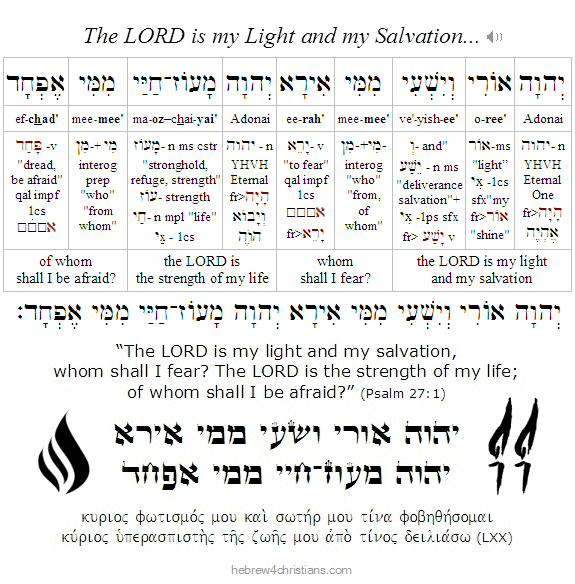 |
The Way of Blessedness...
01.14.26 (Tevet 25, 5786) The "Beatitudes" of Yeshua are a series of short descriptions of heart qualities that mark the truly blessed life (see Matt. 5:1-12). Yeshua spoke these words as a prelude to his famous "Sermon on the Mount."
He began by saying "blessed are the poor in spirit" (Matt. 5:3a). But how is being poor a blessing? Indeed, doesn't Torah teach us that the godly person will flourish "like a tree beside rivers of water" and prosper in all that he does? (Psalm 1:3).
Here Yeshua regards being "poor in spirit" as the desperate condition of one who realizes they are terminally sick and without hope. Such a poor soul knows they are lost, dying, and are powerless to heal themselves. Like Job they may wonder whether life is worth living, and they may even wish they were never born (see Job 3:3-4).
Being aware of our great need for healing is a necessary prerequisite for entering the kingdom of heaven, and therefore Yeshua adds: "for theirs is the kingdom of heaven" (Matt. 5:3b). The gateway to heaven is open for those who understand their spiritual poverty and great need for God's salvation (see Isa. 61:1).
Yeshua followed this opening statement by saying: "Blessed are they that mourn" (Matt. 5:4a), which is another surprising thing to say. Doesn't the Torah command us to be happy (Psalm 1:1; Deut. 28:47-48)? Yes, but again, Yeshua's definition of blessedness means something beyond happiness or pleasure. He is making the point that a person cannot be truly blessed until they lament the depravity of their heart and deeply regret their sin. As the Apostle Paul wrote: "Godly sorrow brings teshuvah (repentance) that draws us away from sin to salvation, but worldly sorrow brings death" (2 Cor. 7:10). Happiness is a blessing, but it comes as a byproduct of seeking God and doing his will...
So according to Yeshua, those who mourn over their sinful condition and cry out for deliverance are actually blessed, for they are awake to the truth of their life and understand their great need. Yea, blessed are those who smite their own breast, aware of their inner corruption, and cry out, "God be merciful to me, a sinner" (Luke 18:13).
Being poor in spirit and mourning over our lives are "birthmarks" of the true children of God. They are foundational characteristics of those who enter into the kingdom of heaven. Have you cried out: "O wretched man that I am! Who shall deliver me from my life of sin and death?" (Rom. 7:24). Grief over our sinful lives reveals our profound need for salvation, and this need will accompany us for all the days of our sojourning in this world...
Yeshua continues by explaining why those who mourn over their lives are blessed: "for they shall be comforted" (Matt. 5:4b). Though we are sorrowful we also rejoice. We are given real comfort from God; we find remedy in his salvation; we receive consolation in the promise of God's forgiveness given in Christ, and our hearts are being slowly transformed while we are being remade into His image and likeness. But such "sanctification" is a lifelong task; it is a refining fire. We must live with the contradiction that we are both unconditionally "accepted in the Beloved" while we still struggle with sin, and we must endure tribulation while we are being fully made new. We rejoice as we sigh and we hope as we groan for the completion of our redemption. By God's grace alone we endure to the end...
"For our temporary affliction, which is but for a moment, is working for us a far more exceeding and eternal weight of glory, as we do not look at the things that are seen, but at the things which are not seen. For the things which are seen are temporary, but the things which are not seen are eternal. For we know that if our earthly house, this tent (i.e., our body), is destroyed (i.e., when we die), we have a building from God, a house not made with hands, eternal in the heavens. For in this house we do groan, earnestly desiring to be clothed with our habitation (i.e., our eternal body) which is from heaven... While we live in this tent we groan and sigh, not because we want to die but rather to be clothed in our new bodies, that our mortality will be forever swallowed up by life" (2 Cor. 4:17-5:2,4).
We suffer our days of sojourning by receiving the promises of God and are assured by the Holy Spirit that we are God's children "accepted in the Beloved" (Eph. 1:6). God has imparted to you the spirit of his child so that you now call him "Abba" Father (Gal. 4:6). The new life within you testifies that you belong to God. While it is true that we still sin and must "deal with ourselves" we are consoled by the greater power of God that overcomes the verdict of our shame. We are "sorrowing yet always rejoicing" as we make our pilgrimage home...
Yeshua continued by saying "blessed are the meek" (Matt. 5:5a), for the humble of heart know that they cannot live without God and therefore they throw themselves before him for life. The proud person, on the other hand, believes he or she can gain God's approval and inwardly crave honor for themselves. The humble person "denies himself" and asks "Who am I to suppose any honor for myself?" God resists the proud but gives grace to the humble. It is to the lowly of heart that God promises to teach His way (Psalm 25:9).
The blessing of humility comes from knowing yourself as inwardly bankrupt and powerless to change, which leads to mourning over your life and groaning over the condition of your sinful heart. It is to become "dust and ashes" before the Lord, and it leads to earnest prayer to be healed and transformed by the kindness and mercies of God.
Meek people are blessed because they are able to hear the good tidings of the gospel (Isa. 61:1). Their humility leads to "sweet surrender" as they trust that God accepts them as his beloved children despite the struggles and failures that may beset their lives...
When Yeshua added that the meek "shall inherit the earth" (Matt. 5:5b) he undoubtedly was thinking of Psalm 37:11 where it says: "the meek (i.e., עֲנָוִים, or the "afflicted ones") shall inherit the earth (i.e., יִירְשׁוּ־אָרֶץ, the promised land) and shall delight themselves in the abundance of peace." We inherit the blessing of God's peace, his shalom, by humbly trusting in his gracious provision for our lives. We find "perfect peace" when we keep our focus on Him (Isa. 26:3). One day all our mourning shall be turned to dancing...
Finally let's consider Yeshua's statement that those who "hunger and thirst for righteousness" shall be filled (Matt. 5:6). This is a promise made to the poor in spirit, the mourners, and the meek; it is a strong message given to those who are God's children. Though we begin with God by faith, we are still being "sanctified" and trained in righteousness as we live the remainder of our days. Note that Yeshua used the present tense when he said this beatitude which can be rendered: "Blessed are those who are hungering and thirsting for righteousness." It is an ongoing need to receive God's manna for our lives, his daily bread, and his revelation to our hearts. This hunger and thirst is a great blessing for it marks the life of faith, as Paul said: "The power of God unto salvation is revealed from "faith to faith," a phrase that literally means that salvation comes "by faith and is for faith" (ἐκ πίστεως εἰς πίστιν), or that it is received by faith to be lived by faith. As it is written, "the righteous person shall live by his faith" (Hab. 2:4).
A lot more could be said about the Beatitudes, and I've written about them in other places on the Hebrew for Christians site, but this will have to suffice for now. Those who are regenerated by God, who are given the "seed of eternal life," are being "trained for eternity," and it is therefore a great gift to "hunger and thirst" to be more like Yeshua. Our Savior delivered us from death's stranglehold over us so that we would draw closer to him and to be filled with God's life. We are given the great promise that one day we shall be utterly and forever transformed as we awaken to be in his likeness (1 John 3:2; Psalm 17:15).
Amen.
Hebrew lesson
Psalm 17:15 reading (click for audio):
Note that the initial phrase of each of the Beatitudes does not contain a verb. There is no "are," no "is," no "blessed are..." Instead of reading them as statements, then, (e.g., "blessed are the poor in spirit") they should be read as exclamations: "O the blessedness of the poor in spirit!" This way of reading agrees with the Hebrew use of ashrei (אשׁרי), a particle interjection that means "how happy!" (from the root (אשׁר) that means to walk righteously in joy) that is often used in the Psalms. Each initial phrase therefore does not function as a conditional statement but rather expresses a present reality: "O the joy of the poor in sprit, of the mourners, of the humble, of those who sincerely care for what is right, of those who are merciful, of those pure in heart," and so on.
The Reign of God's Spirit...
01.14.26 (Tevet 25, 5786) Yeshua told his followers that the Kingdom of God (i.e., mamlekhet Adonai: ממלכת יהוה) is "within you" (Luke 17:21). This teaches us that the reign of the Spirit is not to be found "out there," nor is the kingdom to be regarded as a political structure of this world, but is realized in spiritual relationship - namely, in redeeming communion between the LORD God with your heart and your heart with the LORD God: וְאָהַבְתָּ אֵת יְהוָה (Deut. 6:5).
When we learn to believe clearly, that is, when informed by the truth of God's salvation and yielding to the authority of his heart, Yeshua says we experience the divine Presence within and among ourselves (John 8:32). As we turn to God, we understand that who we are is more vital than our outer appearance and contingent circumstances, and even more important still is who we are in relation to the blessing of our Heavenly Father. Life in the kingdom means having a new identity, being a new creation (בְּרִיָּה חֲדָשָׁה), and that changes everything (2 Cor. 5:16-17).
Hebrew Lesson
Isaiah 41:3 Hebrew reading:
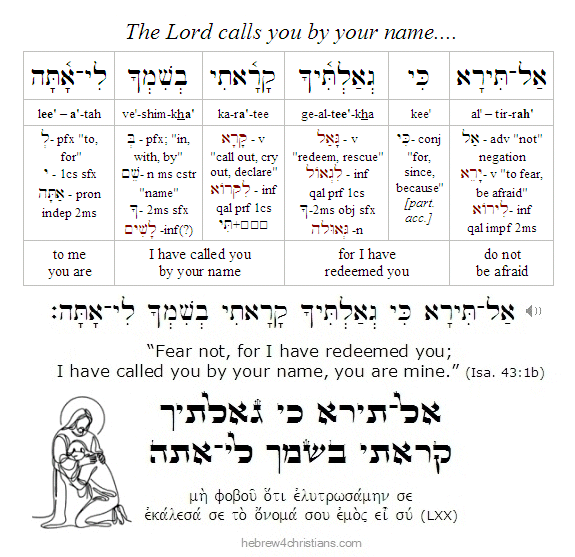 |
Awakening to Redemption...
The following is related to our Torah for this week, Parashat Va'era...
01.13.26 (Tevet 24, 5786) The Divine promise was "I will bring you out (וְהוֹצֵאתִי) from under the burdens of Egypt" (Exod. 6:6), though later the people "romanticized" their captivity and wanted to return there to eat their "free fish" (Num. 11:5). The sages note the word "burdens" (i.e., sivlot: סִבְלת) can also mean "tolerance" (the related word savlanut, סַבְלָנוּת, means "patience" or "tolerance") which suggests that the people had tolerated their enslavement and made it "work" for them... Despite the hardship of their slavery, the Israelites rationalized their condition as being "normal" or acceptable.
There is no worse slavery than to be enslaved to your own heart and mind, to believe that you cannot escape or are not worthy to be redeemed. Is this not one of the devices of Satan - to blind our hearts to the truth of God's love for us? The "bringing out" (יְצִיאָה) of the LORD is therefore something more than the physical escape from the shackles of the body, but instead involves freedom (חֵרוּת) from the shackles of the mind. The most severe form of slavery is to not understand that you are slave, that is, to be asleep, full of vanity and illusion, as you imprison your own heart in the hopelessness of fate.
And are we not likewise at risk to be enslaved by the various comforts and deceptions offered up by this world and its principalities? Have we not likewise tolerated our own slavery - addictions to comfort, pleasures, a life of worldly propaganda and "free fish"? Are we really ready to leave all that behind to experience the glory of Zion? People may profess that they want to know God, that they "hunger and thirst for righteousness" and earnestly desire that the kingdom of heaven be manifest, and yet they can't get away from their favorite television shows, super bowls, political intrigues, pop idols, and other the fads of the day... We must be careful not to become comfortable in our exile – to become "friends of this world" – by losing faith's voice of protest; we must be careful not to be distracted from beholding spiritual reality and the ultimate healing to come. We are away from home, friends! When the hour comes and we hear "gemar ha'tikkun" – the great "it is finished" sound of the shofar summoning us all to follow Yeshua to the Holy Land -- will we be ready to leave everything behind?
The story is told by Abraham Twerski how Rabbi Nachum of Chernobyl once stayed at an inn, and as was his custom, he arose at midnight to recite lamentations over the destruction of the Temple and the exile of the people... The innkeeper, hearing his wailing, arose to see what the trouble was, and could not understand why the rabbi was sitting on the ground, mourning and praying... Nachum explained that we continually mourn the loss of our land and our exile, and that we cry out to God to hasten the ultimate redemption, when Mashiach will take us out of exile and lead us back to Jerusalem, our beloved Zion....
The innkeeper asked, "Will we all go to Jerusalem?" "Of course," Rabbi Nachum said. "But what will become of my little farm, my cows and chickens?" the innkeeper asked. "What account are these compared to our being in exile? Nachum replied. "We are repeatedly attacked by the Tartars, they carry out pogroms, killing and pillaging our people! In Jerusalem we will be free of such persecutions!"
The innkeeper was still not satisfied. "I must talk to my wife about this," he said. When he later told his wife what Rabbi Nachum said about the redemption by Mashiach, she said, "And how can we leave our farm and the cows and chickens that we worked so hard to get?" The innkeeper then explained how we would be free of the pogroms and persecutions of the bands of Tartars. The wife thought a bit and then said, "Go tell the rabbi that when Mashiach comes, he should take the Tartars to Jerusalem, and we can live here in peace."
There is hope, however, for all of us to be redeemed. Later in our Torah reading God said to Pharaoh, "I will bring about redemption (i.e., pedut: פְדֻת) between my people and your people (Exod. 8:23). The sages note that the word redemption (i.e., pedut) occurs three time in the Scriptures, explaining three types of exile. The first concerns the redemption from Egypt (יציאת מצרים), as mentioned above; the second refers to the remnant (שְׁאֵרִית) of the Jewish people redeemed in the days of Messiah: "He will send redemption to his people" (Psalm 111:9); and the third refers to the ultimate deliverance of the individual soul's bondage to his lower nature and evil characteristics. This is the "abundant" redemption mentioned in Psalm 130 - "for with the LORD there is the mercy, and with him is abundant redemption." This is the redemption and the "abundant" life given through Yeshua our Messiah (John 10:10).
Hebrew Lesson
Psalm 130:7b reading (click for audio):
The Shelter of the Most High...
01.13.26 (Tevet 24, 5786) The "world" is a place of fearful exile from the Lord. To find healing, turn away from its faithless messages and listen (shema) to the great promises of God. As it is written: "He who abides in the secret of the Ascended One will dwell in the shadow of Shaddai" (Psalm 91:1).
The sages say that Moses wrote Psalm 91 as he dwelt in the secret place (סֵתֶר) of the Most High God, in the "midst of the dark cloud" (Exod. 24:18), a place of sacred and holy concealment. The thick clouds are a "hiding place" for him (Job 22:14). Notice that the one who "abides" in the secret of the Most High dwells in an ascended place of rest – being lifted up above the surrounding madness of this fallen world with its flux and shadows. The Hebrew word means to lodge or to "sleep" (לִין), connecting it with death and resurrection. By dwelling in the death and resurrection of Yeshua, God will shield you with His Presence and make evil powerless before you.
When you "abide" in the secret of Elyon - the Ascended One - you are concealed by the dark clouds of His Glory, and the Presence of Shaddai overshadows you... The LORD will save you from the ensnaring trap and from the devastating pestilence (Psalm 91:3). By abiding in the truth that God's Presence pervades all things at all times - you become a "stranger" (גֵּר) with the LORD in this world, a "sojourner" (תּוֹשָׁב) who awaits the recompense of the wicked and the healing of the world at the end of the age. "You will tread on the lion and the adder; the young lion and the serpent you will trample underfoot" (Psalm 91:13).
We are made sure only on account of the LORD our God Yeshua, who gloriously ascended over the powers of this age, the hidden "principalities of darkness," who made safe passage for us to return to life by means of his sacrificial death on the cross. Yeshua is the Bridge and the Way to the truth that sets you free, though He indeed is the narrow bridge. Because of Him alone, we have access to the Divine Presence, the Holy of Holies made without human hands. There is no other Savior (Isa. 43:11). Yeshua is the Ascended LORD of Glory, the Master of all possible worlds, and the King over all things. Nothing can stop Him or thwart His victory secured for those who trust in Him.
Hebrew Lesson:
Psalm 91:1 Hebrew reading (click):
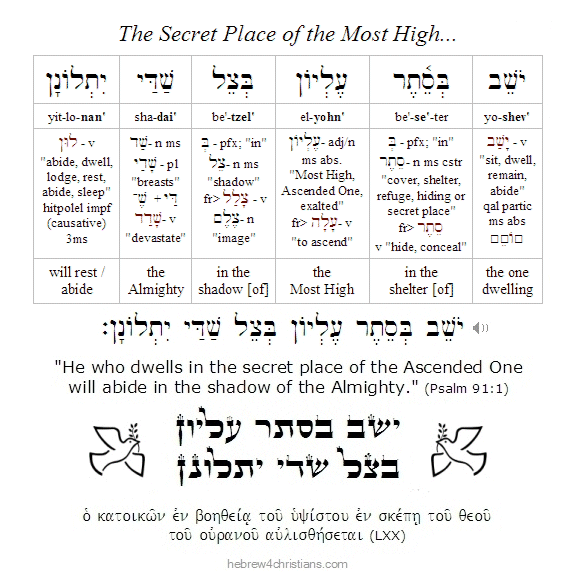 |
Since God hides Himself in this world (see Isa. 45:15), we must humbly seek His face to enter into the place of His holy concealment in all things. God is Elyon – High above - but He dwells "with the lowly and the broken of heart" (Isa. 57:15). Therefore the LORD our God is called Shaddai (שַׁדַּי) – our Sustainer, Provider, Refuge, and Home. Just as we can be surrounded by the "shadow of death" (tzal mavet), so we can be surrounded by the "shadow of Shaddai" (tzal Shaddai). Like a powerful eagle brooding over her chicks, so Shaddai covers you with wings of protection (Psalm 91:4).
The "Torah" of Pharaoh...
01.13.26 (Tevet 24, 5786) Though he sometimes appeared to change his mind in light of the revelation of God, Pharaoh nevertheless reverted to his older thinking after the crisis seemed to pass. Therefore the Torah states that after each of the first five plagues, Pharaoh hardened (lit., "strengthened") his heart. It was only after five successive opportunities to face reality, to renounce his claim to be god, and to turn to the LORD in humility, however, that God "ratified" Pharaoh's will by "helping him" become the person he decided to be. Therefore after the sixth plague we read, ve'chazek Adonai et-lev paroh: וַיְחַזֵּק יְהוָה אֶת־לֵב פַּרְעֹה - "And the LORD strengthened Pharaoh's heart" (Exod. 9:12).
"The Torah of Pharaoh" (התורה של פרעה) teaches us that God will never force a sinner to turn away from their sin, though if they willfully continue to sin, they may eventually become unable to turn, trapped within their own devices.... The Shemot Rabbah states: "The Holy One, blessed be He, gives someone a chance to repent, and not only one opportunity but several chances: once, twice, three times. But then, if the person still has not repented, God locks the person's heart altogether, cutting off the possibility of repentance in the future." There is a very real risk that those who choose to be at war with God, who flatly refuse repeated appeals to turn to the LORD, will become progressively "strengthened" in their resolution to defy reality... And that, friends, is the "Torah" that Pharaoh teaches....
There are midrashim that Pharaoh eventually did repent after seeing the destruction of his armies in the sea, so there is still hope for the most hardened of heart, but alas....
Hebrew Lesson
Proverbs 16:18 reading:
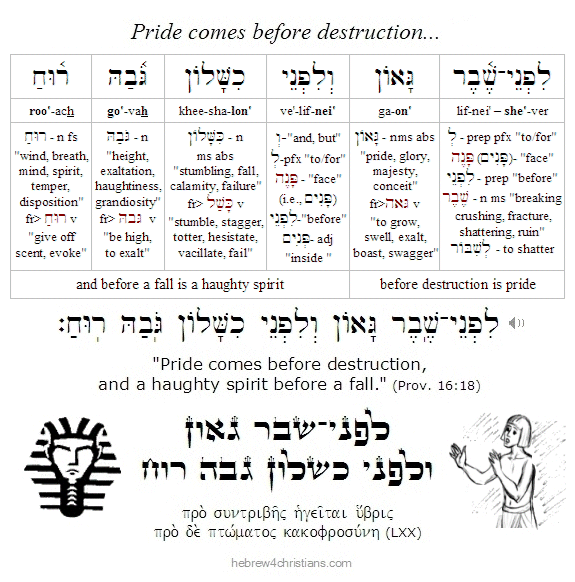 |
The tragic story of Pharaoh reminds us how pride blinds the heart. As Abraham Heschel said, "In a controversy, the instant we feel anger, we have already ceased striving for truth and have begun striving for ourselves." The truth needs no defense. If we find ourselves getting defensive or hostile, we need to take a step back and ask ourselves what we really believe... If we seek to use truth as a weapon, or as a means to rationalize our self-will, then we are not "in the truth," even if our facts in the matter may be correct. We must be careful not to find ourselves using the truth for our own agenda. Yeshua's words haunt the heart: "Without me you can do nothing" (John 15:5).
Soren Kierkegaard notes: "The proud person always wants to do the right thing, the great thing, but because he wants to do it in his own strength, he is fighting not with man, but with God." Indeed, how many people seek visions, dreams, and private prophecies while they forsake the Spirit as it broods over the hearts of those around him or her? How many seek to "know God" as a matter of the pride of heart?
The Koritzer Rebbe was asked for instruction how to avoid sin. He replied, "Were you able to avoid offences, I fear you would fall into a still greater sin - that of pride" (Hasidic). The antidote to pride is the "fall of the soul," that is, those besetting sins and painful failures that (hopefully) bring us back to reality - namely, to the place of brokenness and our need for divine intervention... When we get "sick of our sickness" we enter into holy despair, and then the cry of the heart for lasting deliverance can be truly offered.
The warning of Pharaoh's tragedy is not just for those who, like Pharaoh, willfully defy the God of Israel but also for those Israelites who questioned the faithfulness of God. Recall that after their great deliverance from slavery in Egypt, the people wandered in the desert on their way to the Promised Land. When they came to Sinai, however, they found no water in the area and began to lament their estate. Soon the people turned against Moses and said that he was responsible for all their troubles. Some even went so far as to say that it would have been better had they never been redeemed from their slavery in Egypt.
After Moses prayed to God for help, he was instructed to take his staff and to assemble all the elders to a place near Mount Sinai: "Behold, I will stand before you there (הִנְנִי עֹמֵד לְפָנֶיךָ שָּׁם) upon the rock in Horeb; and you shall strike the rock and water shall come out of it so that the people may drink" (Exod. 17:6). Despite this amazing miracle, however, Moses commemorated the rebellion of the people by calling the name of the place "Massah" ("testing") and "Meribah" ("strife"), because it was there that the people lost faith and tested the LORD by asking, 'הֲיֵשׁ יְהוָה בְּקִרְבֵּנוּ אִם־אָיִן' - 'Is the LORD among us or not?'
Hebrew Lesson
Psalm 95:8 reading (click for audio):
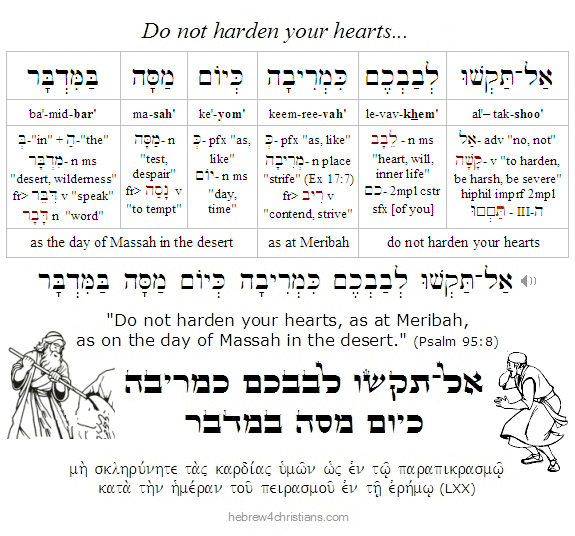 |
The incident of Massah and Meribah is mentioned in the New Testament as a stern warning to followers of Yeshua not to harden their hearts through unbelief as well:
"For who, having heard, rebelled? Indeed, was it not all who came out of Egypt, led by Moses? And with whom was he provoked for forty years? Was it not with those who sinned, whose bodies fell in the desert? and to whom did he swear that they would not enter his rest, but to those who were disobedient? So we see that they were unable to enter because of unbelief. Therefore, while the promise of entering his rest still stands, let us fear lest any of you should seem to have failed to reach it. For good news came to us just as to them, but the message they heard did not benefit them, because they were not united by faith with those who listened." (Heb. 3:16-4:2)
The other side of the "Torah of Pharaoh" is that faith in God is the state of blessedness. As Soren Kierkegaard once wrote: "And this is one of the most crucial definitions for the whole of Christianity; that the opposite of sin is not virtue but faith." Surrendering to God in obedience to his will is the way of real freedom, and as we live in trust and yield our hearts to God, our trust is ratified and we are progressively "strengthened" in our convictions.
The Hell of a Hard Heart...
"The descent to hell is easy and those who begin by worshipping power, soon worship evil." - C.S. Lewis, The Allegory of Love (1936)
01.12.26 (Tevet 23, 5786) Spiritually speaking, a heart that is insensitive, indifferent, unfeeling, and callous toward the needs of others is regarded as "hard" or "difficult." Often such hardness comes as a result of living in a fallen world. Many wounded people live with "scar tissue" that surrounds their heart, making them feel numb and unwilling to open up and trust others. Their affections have become disordered and their ego rationalizes blaming others or seeking various forms of entitlement.
"Turning off your heart" can mean suppressing any positive regard for others (empathy) while nurturing anger and self-righteousness, or it may mean withdrawing from others as a lifeless shell (both approaches vainly attempt to defend the heart from hurt). Although Yeshua always showed great compassion, especially to the wounded and broken in spirit (Isa. 42:3), He regularly condemned the "hardness of heart" ("sclero-cardia," σκληροκαρδία) of those who opposed his message of healing and love.
A hard heart is closed off and impermeable to love from others, and especially from God. It is a "difficult" (קָשֶׁה) heart, inflexible and even cruel. Scripture uses various images to picture this condition, including a "heart of stone" (Ezek. 36:26, Zech. 7:12), an "uncircumcised heart" (Jer. 9:26), a "stiff neck" (Deut. 31:27), and so on. Stubbornness is really a form of idolatry, an exaltation of self-will that refuses to surrender to God. If you are wounded and afraid to open your heart in trust to others, ask God for healing...
God wants us to have "soft" hearts that are malleable and subject to His touch and influence. Consider the Biblical analogy of a potter who works with clay (Isa. 64:8, Jer. 18:6). Hard clay is brittle and hard to work with, though soft clay can be molded and adapted for a variety of uses. Applied to our heart attitudes, soft clay represents being open and amenable, whereas hard clay represents being inflexible, intolerant, and so on.
A "hard hearted" person is closed-minded, assured of his own righteousness, and unwilling to admit the possibility of being wrong. He is really a "fragile" soul who is often hidebound by traditions, unwilling to be corrected, and usually so driven by fear and suspicion that he is unable to look at other possibilities. When we find ourselves becoming rigid, inflexible, and intolerant, we may be demonstrating hardness of heart.
Hardness of heart is something all of us deal with, even those who trust in Yeshua. After all, New Covenant believers are commanded to "put off the old self with its practices" (Col. 3:9) and are urged not to harden their hearts (μὴ σκληρύνητε τὰς καρδίας) through unbelief (Heb. 3:8,15, 4:7). The flesh dies hard, however, and "putting off" the old self requires divine intervention; however, if we cry out to the LORD for deliverance (especially from ourselves) He has promised to hear us (Rom. 10:13, Joel 2:32).
The awareness that we are hardhearted and self-deceived can lead to a (blessed) sense of brokenness and despair -- i.e., to the realization that own self-sufficiency is futile and ultimately self-destructive. Turning to the LORD in despair of ourselves is a mark of humility. When we are emptied of ourselves, we are delivered from pride and self-deception and thereby enabled to truly ask for God's help... This is a miracle, since all of us have "a little Pharaoh inside," clamoring ti be the center of our universe and refusing to submit to the Presence of the LORD...
May God's blessing keep our hearts soft and open toward others... May the LORD give us a new heart, and put a new spirit within us. May He remove the heart of stone (לֵב הָאֶבֶן) from us and give us a heart of flesh (לֵב בָּשָׂר). May we be lev echad - "one heart" - with one another and with the Father (Ezek. 11:19). May we be so sensitized to the Presence of God that we detect the slightest touch from His hand upon us. Amen.
Hebrew Lesson
Ezekiel 36:26a Hebrew reading (click):
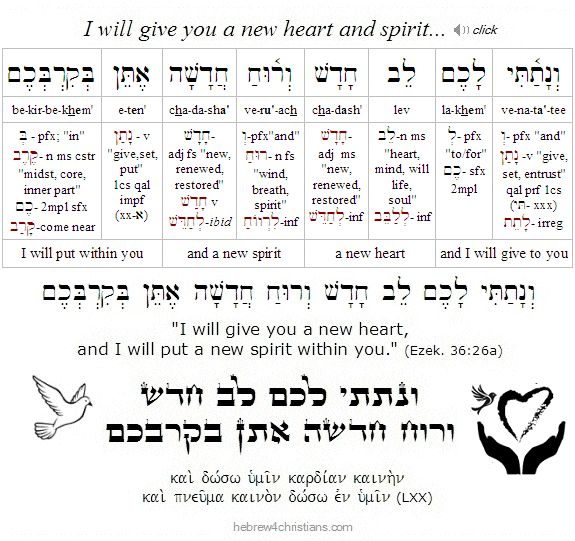 |
Slavery of Passivity...
01.12.26 (Tevet 23, 5786) "I will bring you out from under the burdens of the Egyptians" (Exod. 6:6). The sages say the Hebrew word for "burdens" (sevalah: סְבָלָה) in this verse can also be read as "passivity" (sevilut: סְבִילוּת): "I will deliver you from passivity toward your slavery." As long as the people regarded their enslavement as tolerable, they could excuse it, rationalize it, and even defend it. Therefore God allowed tribulation to progressively increase so that the people would understand their need.
Likewise we cannot even begin to understand our need for deliverance as long as we are comfortable, numb, and dead inside... The first step toward moral freedom, then, is to be set free from our denial, to wake up, to resist evil, and to find faith that God desires something better for our lives. Passively accepting the values of this evil world means succumbing to its false claims to authority. As Dietrich Bonhoeffer solemnly reminds us: 'Silence in the face of evil is itself evil: God will not hold us guiltless. Not to speak is to speak. Not to act is to act.'
"What constitutes the bulwark of our own liberty and independence? It is not our frowning battlements, our bristling sea coasts, the guns of our war steamers, or the strength of our gallant and disciplined army. These are not our reliance against tyranny in our fair land. All of them may be turned against our liberties, without making us stronger or weaker for the struggle.
Our reliance is in the love of liberty which God has planted within us. Our defense is in the preservation of the spirit which prizes liberty as the heritage of all men, in all lands, everywhere. Destroy this spirit, and you have planted the seeds of despotism at your own doors." - Abraham Lincoln (Edwardsville, 1858)
Hebrew Lesson
Psalm 118:5 reading (click):
The Puzzle of Va'era...
01.12.26 (Tevet 23, 5786) Our Torah portion this week (Va'era) begins with God saying to Moses: "I appeared (וָאֵרָא) to Abraham, Isaac, and Jacob as El Shaddai (אֵל שַׁדָּי), but by my name the LORD (יהוה) I did not make myself known to them" (Exod. 6:3).
Immediately we are faced with a puzzle, since the Torah clearly states that God revealed Himself as the LORD to the each of the patriarchs. For example, to Abraham God said, "I am the LORD (אֲנִי יְהוָה) who brought you out of Ur of Kasdim" (Gen. 15:7); Isaac prayed to the LORD on behalf of his wife Rebekah (Gen. 25:21), and to Jacob God said: "I am the LORD (אֲנִי יְהוָה), the God of Abraham your father and the God of Isaac (Gen. 28:13). In light of this, how then do we make sense of God's statement that He was not known as YHVH (יהוה) to them? Does the Torah contradict itself, as some "higher critics" of the Scriptures allege? Should we accept their liberal scholarship that claims that the narratives were "pieced together" by a series of later editors (i.e., the JEDP theory)? Not so fast....
Instead of making the dubious inference that the different Names of God denote different authors of the Torah, it is better to regard the Scriptures as divinely inspired, with each word and phrase carefully preserved by the hand of God for its intended purpose. After all, Yeshua regarded the Torah this way (Matt. 5:18; John 10:33), as He did the rest of the Jewish Scriptures (see Luke 24:44). Jewish tradition likewise maintains that the Torah has been meticulously preserved from the time of Moses to this day, and comparing the texts of the Dead Sea Scrolls with the Masoretic texts of the Hebrew Scriptures validates this claim. If we reject the liberal assumption that the Torah was "redacted" by different editors (i.e., that it contradicts itself), we must assume that this verse is intended to teach us something...
We must remember that the Scriptures speak from an omniscient, "third person" perspective. When we read, for example, "In the beginning, God (אֱלהִים) created the heavens and the earth," we must ask who is speaking? Who is the narrator of the Torah? Jewish tradition maintains that Moses received the Torah by direct revelation from God while at Sinai, and that revelation included the infallible accounts of the lives of the early patriarchs. The New Testament elaborates that "all Scripture is inspired by God..." and is therefore the outworking of the Holy Spirit (2 Tim. 3:16; 2 Pet. 1:21, etc.).
The traditional Jewish commentators have said that God's statement (i.e., "I did not make my Name known to them") was actually a form of rebuke of Moses' request to know God's Name.... They connect this statement with the end of the last Torah portion, when Moses complained to God that He has made the situation of the Israelites worse (see Exod. 5:22-23). The Talmud comments on the connection: "Many times I revealed myself to Abraham, Isaac and Jacob; but they did not question my ways, nor did they say to me, 'What is Your name?' You, on the other hand, asked from the start, 'What is Your name?' and now you are saying to me, 'You have not saved your people!' (Sanhedrin 111a). Rashi agrees with the Talmud's opinion: "You questioned my ways; unlike Abraham, to whom I said, 'Isaac shall be considered your seed' and then I said to him, 'Raise him up to me as an offering,' and yet despite all this he never questioned me." Similarly Nachmanides stated that the patriarchs were content to know God as El Shaddai, realizing that they could never fathom His essence, but Moses wanted to know the secrets of God and therefore asked for His Name.
Another approach to the puzzle is to suggest that when God said to Moses "with my Name YHVH I did not make myself known to them" (Exod. 6:3), he was explaining that the patriarchs had not witnessed His mastery over creation through the signs and wonders He would perform as Israel's Redeemer. The patriarchs understood God as El Shaddai (אֵל שַׁדָּי), the all-sufficient "Promise Maker" who nurtured the fledgling nation and who foretold of Israel's future, but Moses (and the Israelites) would now understand God's attributes of covenantal faithfulness (chesed) as the "Promise Keeper" by directly witnessing his revelation and saving acts. Rashi therefore states that YHVH implies that there is no power that can prevent God from keeping His word and fulfilling His promise of redemption. God is the Lord of lords and King of kings, and therefore His word can never fail (Deut. 10:17; Dan. 2:47). Amen, "there is no power apart from Him" (Deut. 4:35,9; 1 Kings 8:60).
Hebrew Lesson
Psalm 145:3 reading (click for audio):
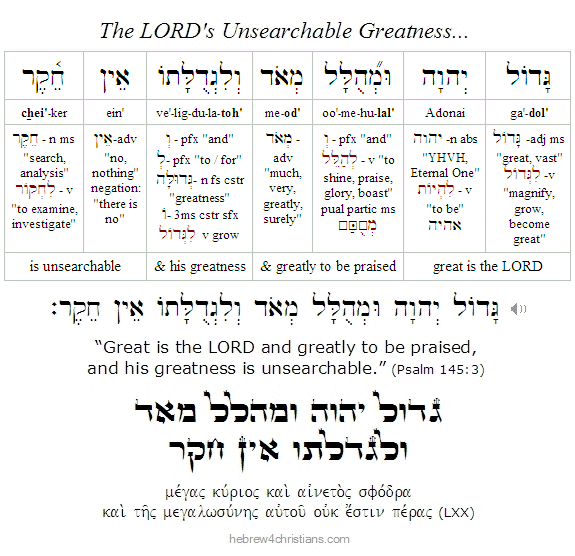 |
Parashat Va'era:
Setting the Stage for the Exodus...
01.11.26 (Tevet 22, 5786) Shavuah tov, chaverim. Recall that last week's Torah portion (i.e., parashat Shemot) explained how Moses and Aaron were commissioned to go before Pharaoh and deliver the message: shalach et-ammi (שַׁלַּח אֶת־עַמִּי), "Let my people go" that they may hold a feast to me in the desert" (Exod. 5:1). Not only did Pharaoh dismiss the request, but he imposed even harsher decrees against the Israelites and caused them to suffer miserably. Moses then appealed to the LORD, who reassured him that Pharaoh would eventually relent because "the greater might" of the LORD's power would deliver His people.
Hebrew Lesson
Exodus 5:1b reading (click):
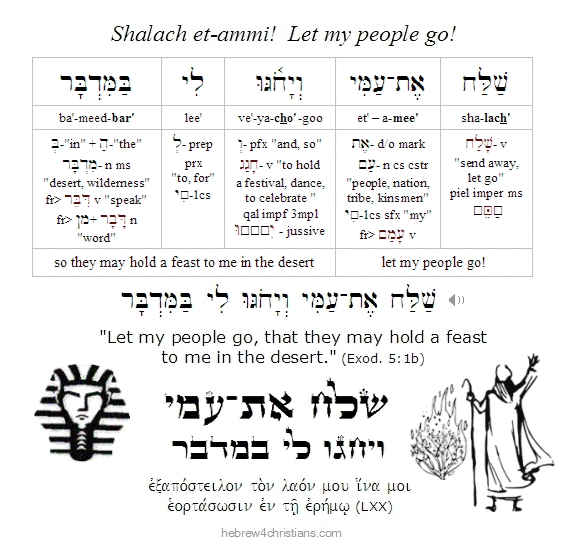 |
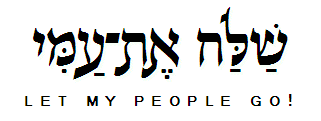 |
In this week's portion, parashat Va'era, (i.e., Exod. 6:2-9:35), the LORD told Moses that He was now going to fulfill His promise to Abraham, Isaac, and Jacob by giving the Israelites the land of Canaan, and that he had heard the "groaning of the people of Israel whom the Egyptians held as slaves" (Exod. 6:5). The LORD (יהוה) was now coming down to earth to fight and save his people! Israel would now know that He alone is their Savior and God! The "showdown" between the LORD and the so-called gods of Egypt was imminent, and God therefore encouraged the people with precious promises: "I AM the LORD (אֲנִי יְהוָה) and I will bring you out from under the burdens of the Egyptians, and I will deliver you from their bondage, and I will redeem you with an outstretched arm and with great judgment; and I will take you to me for a people and I will be to you a God; and I will bring you into the land promised to Abraham, Isaac and to Jacob as an inheritance forever (these are the "expressions of redemption" we recall during the Passover Seder every year).
Despite these wonderful promises, however, the people were unable to listen because of their "shortness of breath" (מִקּצֶר רוּחַ) on account of their harsh slavery. The LORD then told Moses: "Go in, tell Pharaoh king of Egypt to let the people of Israel go out of his land," and the great battle between the LORD and the so-called "gods" of Egypt began. However, even after repeatedly witnessing the series of miraculous plagues issued in the Name of the LORD, the despot remained proud and unmoved, thereby setting the stage for the final devastating plagues upon the land of Egypt and the great Passover redemption of Israel.
Hebrew Lesson
Exodus 6:3 Hebrew reading (with comments):
Source of our Breath...
"The name of the infinite and inexhaustible depth and ground of all being is God". - Tiliich
01.11.26 (Tevet 22, 5786) Though the meaning of God's Name (YHVH) was initially revealed to Moses as simply eheyeh (אֶהְיֶה), "I AM," or "I WILL BE" (Exod. 3:14), it is wonderful to realize that His Name was also revealed as eheyeh imakh (אהְיֶה עִמָּךְ), "I WILL BE WITH YOU" (see Exod. 3:12; Josh. 1:5,9; Isa. 41:10,13; John 10:28; Matt. 28:20, etc.).
Just as the LORD is called Elohei ha-ruchot lekhol basar (אֱלהֵי הָרוּחת לְכָל־בָּשָׂר), "the God of the breath of all flesh" (Num. 16:22), so He is the Source of your breath, the One who exhales to you nishmat chayim (נִשְׁמַת חַיִּים), the "breath of life" that enables you to live (Job 12:10). Indeed the Name YHVH (יהוה) first appears in the Torah in regarding imparting the breath of life to Adam (Gen. 2:7).
Note further that each of the letters of the Name YHVH represent vowel sounds (i.e., breath), suggesting again that God's Spirit is as close as your very next breath. Like the wind that cannot be seen, so is the spirit the essential part of your identity. Yeshua breathed on his followers and said, "Receive the Holy Spirit" (John 20:22).
Hebrew Lesson
Job 12:10 Hebrew reading (click):
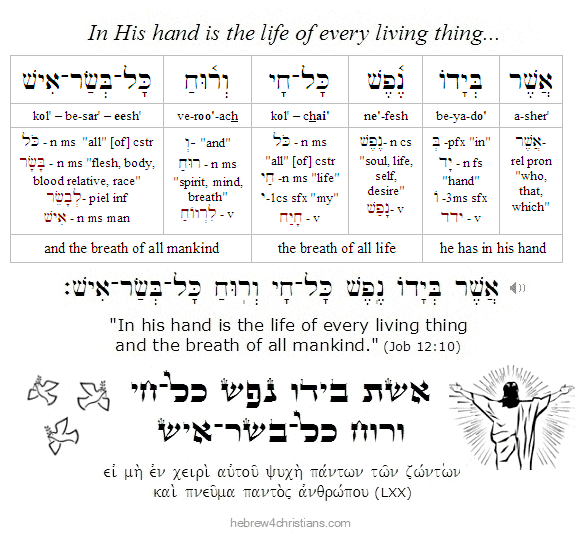 |
Providential Impediments...
"No faith is so precious as that which lives and triumphs through adversity. You would never have believed your own weakness had you not needed to pass through trials. And you would never have known God's strength had His strength not been needed to carry you through." - Spurgeon
01.11.26 (Tevet 22, 5786) The midrash says Moses had a speech impediment, and that is why he described himself as "heavy of mouth and of tongue" (כְּבַד־פֶּה וּכְבַד לָשׁוֹן), unfit to speak on behalf of God (Exod. 4:10). God reassured him, however, by reminding him that his limitation was by divine providence: "Who has made man's mouth? Who makes him mute, or deaf, or seeing, or blind? Is it not I, the LORD? Now therefore go, and I will be with your mouth and teach you what you shall speak" (Exod. 4:11-12).
The sages comment that God did not cure Moses of his stuttering because He wanted the Israelites to know Moses as his chosen messenger. When he spoke in the Name of the LORD, the stuttering disappeared and Moses spoke with fluent ease. This was to teach the people not to trust in human oratory or wisdom, but rather in the power of God (see 1 Cor. 2:1-5). Just as Paul, the "Moses of the New Covenant," was given a "thorn in the flesh" (σκόλοψ τῇ σαρκί) to keep him humbly relying upon God for his sufficiency to serve (2 Cor. 12:7-10), so Moses was rendered entirely dependent upon the LORD to speak as his mediator.
But he said to me, "My grace is enough for you" (i.e., dai lekha chasdi: דַּי לךָ חַסְדִּי), "for My power is made perfect in weakness" (i.e., ki ba'chulshah tushlam gevurati: כִּי בַּחֻלְשָׁה תֻּשְׁלַם גְּבוּרָתִי). Therefore I will boast most gladly of my weaknesses, that the power of Messiah may tabernacle (ἐπισκηνόω) within me (2 Cor. 12:9).
Hebrew Lesson
Isaiah 40:29 commentary (click):
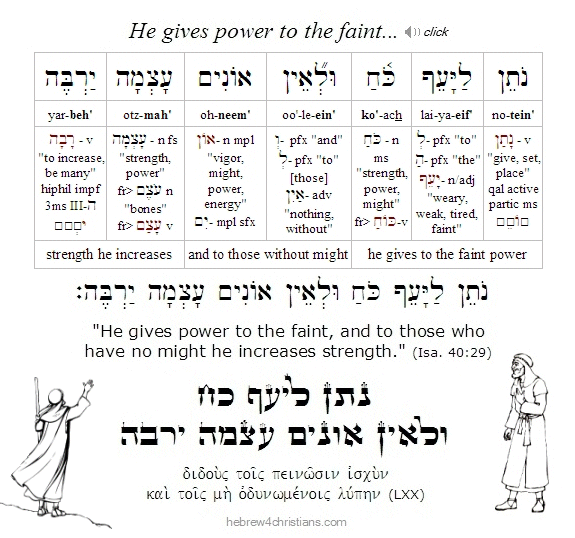 |
My Lord and My God...
01.09.26 (Tevet 20, 5786) God's power is present in all things, in every world, every soul. Yeshua is the Source of all life in the universe, as it says: "All things were made by Him" (John 1:3). Amen. God is Light, and Yeshua reveals the Light of God (John 8:12). The "Word made flesh" is the "image of the invisible God" and the "radiance of the glory of God and the exact imprint (χαρακτήρ, 'character') of his nature" (Col. 1:15). All of creation is being constantly upheld by the word of His power (Heb. 1:3): "All things were created by Him (i.e., Yeshua), and for Him" and in Him all things consist (συνεστηκεν, lit. "stick together") (Col. 1:16-17).
Creation begins and ends with the redemptive love of God as manifested in the Person of Yeshua our Mashiach... He is the Center of Creation - it's beginning and end. As it says: אָנכִי אָלֶף וְתָו רִאשׁוֹן וְאַחֲרוֹן ראשׁ וָסוֹף / "I am the 'A' and the 'Z,' the First and the Last, the Beginning and the End" (Rev. 22:13). Indeed, Yeshua is the "King of kings of kings" (מֶלֶךְ מַלְכֵי הַמְּלָכִים), the LORD of all possible worlds -- from the highest celestial glory to the shame of bearing our sin and guilt upon a cross... All Reality centers upon Him.
Hebrew Lesson
Psalm 8:1 reading (click):
God's abiding provision for our need is revealed in the "face of Messiah" (בִּפְנֵי הַמָּשִׁיחַ), not in the fading glory of the former covenant (2 Cor 3:4-18). Unlike Moses - who veiled his face to hide the fact that the glory of the former covenant of Sinai was indeed fading away - "we all, with unveiled face, reflecting the glory of the Lord, are being transformed into the same image from one degree of glory to another. This comes from the Lord who is the Spirit" (2 Cor. 3:12-4:1). Each of us, like Moses, must ascend the mountain of Zion to behold the Glory of God: "And when they lifted up their eyes, they saw no one but Yeshua only" (Matt. 17:8). "The face of Yeshua the Messiah" is therefore the radiance and glory of God Himself.
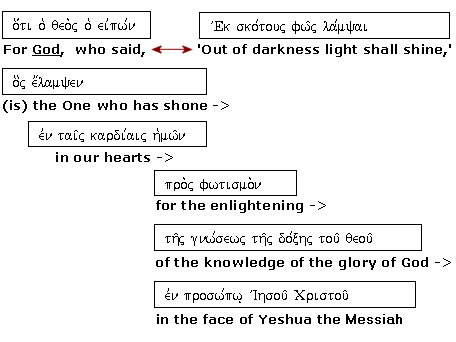 |
"Stand up and bless the LORD your God from everlasting to everlasting. Blessed be His glorious Name, which is exalted above all blessing and praise" (Neh. 9:5; Psalm 138:2; Phil. 2:9-11; Isa. 45:23). We have to stand for the truth, because the truth is what sets us free (John 8:32). As Yeshua said, "For this purpose I was born and for this purpose I have come into the world -- to testify to the truth. Everyone who is of the truth listens to my voice" (John 18:37). The way of life is found in Yeshua: "Whoever has the Son has the life (הַחַיִּים); whoever does not have the Son does not have the life" (1 John 5:12).
Therefore, as Yeshua said: "Walk while you have the light, lest darkness overtake you... As you have the light, believe in the light. Then the light will be within you, and shining through your lives. You'll be children of light (בְּנֵי הָאוֹר). I have come into the world as light, so that whoever believes in me may not remain in darkness" (John 12:35-6, 46).
|
From the Midst of Thorns...
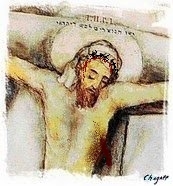
01.09.26 (Tevet 20, 5786) Why did the LORD, the Holy One, reveal Himself to Moses out of the midst of a thorny bush (סְנֶה), and not some grand tree? God lowered himself to speak from within the bush, as it is written: "For though the LORD be high, he regards the lowly" (Psalm 138:6); and "I will be with him in trouble" (Psalm 91:15).
The midrash imagines God saying to Moses: "Don't you feel that I suffer anguish whenever Israel does? Know, therefore, from the character of the place from which I speak, out of the thorn bush, that I, as it were share their suffering" (Shemot Rabbah 2:7).
God speaks to us from the place of thorns – even those about his own head – words of great comfort and deliverance. From the midst of the fire (בְּלַבַּת־אֵשׁ מִתּוֹךְ הַסְּנֶה), within the lowliest of places, covered in the thorns of our sin and shame, Yeshua speaks words of healing love. Bless his name forever!
Hebrew Lesson
Psalm 138:6 reading (click):
The Breath of Hope...
01.09.26 (Tevet 20, 5786) When Moses proclaimed the good news of God's forthcoming redemption for Israel, the Torah states that the people could not listen because they were "short of breath" (Exod. 6:9). Interestingly, this phrase (i.e., mi'kotzer ru'ach: מִקּצֶר רוּחַ) can also mean "lacking in spirit" (רוּח) as if in a paralyzed state of hopelessness. But how did the people become so downhearted? Had they forgotten the promise given to Abraham (Gen. 15:12-14)? Had they disregarded Joseph's final words (see Gen. 50:24-25)?
According to some of the sages, part of the reason for their "shortness of breath" (besides the cruel bondage and hard labor imposed on them) was that the Israelites miscalculated the duration of their 400 year exile, and therefore they began to lose hope. When members of the tribe of Ephraim tried to escape from Egypt some 30 years before the time of the redemption, they were all killed by the Philistines, and many of the Israelites began to believe that they would remain as perpetual slaves (Shemot Rabbah, 20:11). They became "short of breath" and could no longer receive the message of the Holy Spirit...
Indeed, life in this evil world can be suffocating at times. And though we may not be under the oppression of a cruel Pharaoh, we are affected by the "princes of this age" who spurn the message of the Messiah's redemption and love, and we are still subjected to bondage imposed by taskmasters who defy the LORD and who seek to enslave us by means of lies, propaganda, and threats of violence... The devil is still at work in the hearts and minds of many of his "little Pharaohs" that govern the world system... The Scriptures make it clear that we are engaged in genuine spiritual warfare: "For we do not wrestle against flesh and blood, but against the rulers, against the authorities, against the cosmic powers over this present darkness, against the spiritual forces of evil in the heavenly places" (Eph. 6:12).
It is evident that one of the central purposes of God's redemption is to bestow freedom and dignity upon his people. As the story of Pharaoh reveals, God does not take kindly to oppressors, dictators, and other megalomaniacal world leaders who deny the truth and who therefore seek to enslave (or kill) human beings created in His image and likeness. Just as God judged Egypt for its oppression and violence, so He will one day break the "rulers of this world" with a rod of iron and dash them in pieces like a potter's vessel (Psalm 2:9-10).
To help us "catch our breath" during this time of waiting, it is important to remember that the LORD redeems us so that we may become His children and therefore be clothed with everlasting dignity... Our redemption makes us heirs of the Kingdom of God and citizens of heaven. We must never regard ourselves as slaves - not to the State, not to the bankers, not to fear, and not to religion (Gal. 5:1). God gave up His Son for us so that we could be made free to live with honor as his dearly loved children.... All the threats of the world system - economic, political, religious, social, etc. - are ultimately made empty and vain by the glorious redemption promised to us in Yeshua our Savior.
The Scriptures declare that "we are saved by hope" (ελπιδι εσωθημεν), that is, we are saved through an earnest expectation of good to come on account of the promises of the LORD God of Israel. Amen. The LORD is called "The God of Hope" (אֱלהֵי הַתִּקְוָה), indicating that He is its Author and its End (Rom. 15:13). God both gives birth to our hope (tikvah) and is the satisfaction of our heart's deepest longings. For those with God-given hope, gam zu l'tovah – all things work together for good (Rom. 8:28). In light of God's promises, hope is the one "work" that we are called to vigorously perform: "What shall we do, that we might work the works of God?" Yeshua answered, "This is the work of God, that you trust (i.e. hope) in the one whom He sent" (John 6:28-29).
Don't let the world system destroy or impugn your hope, chaverim... If the devil can't seduce you with illusory hope or counterfeit joy, he will attempt to oppress you with fear and doubt. Fight the good fight of faith and refuse to succumb to despair. Run the race before you with endurance (Heb. 12:1). Look up, for the time of your deliverance draws near... God redeems us for the sake of His love and honor... It is the "breath of God" that gives us life and courage to face this dark and perverse world (John 20:22). May you be filled with the hope and strength that comes from the Holy Spirit. Amen.
Hebrew Lesson
Psalm 25:1-2a Hebrew reading (click):
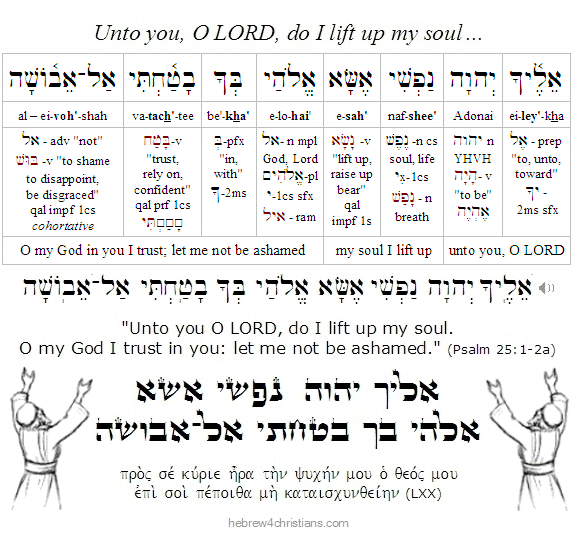 |
The Names of God...
The following is related to our Torah for this week, Parashat Shemot...
01.08.26 (Tevet 19, 5786) This week's Torah portion is called Shemot (שְׁמוֹת, "names") because it begins with a list of the "names" of the descendants of Jacob who came to dwell in the land of Goshen (Exod. 1:1). Now while it's interesting that the Torah here lists the various names of the sons of Jacob, this portion of Torah more importantly refers the Names (plural) of the LORD God of Israel Himself.
To see this, let's consider the central story of this portion of Torah, namely, the commissioning of Moses at the Burning Bush (see Exod. 3:1-20). Note that the Torah states that it was the Angel of the LORD (i.e., Malakh Adonai: מַלְאַךְ יהוה) who appeared to Moses בְּלַבַּת־אֵשׁ מִתּוֹךְ הַסְּנֶה / "in a flame of fire out of the midst of a bush" (Exod. 3:1-2). But then the Torah goes on to say that the LORD (יהוה) saw Moses drawing near to the bush while God (i.e., Elohim: אֱלהִים) called out to him. God (i.e., Elohim) then commanded Moses to remove his sandals and identified Himself as the "God of Abraham (i.e., Elohei Avraham: אֱלהֵי אַבְרָהָם), the God of Isaac (i.e., Elohei Yitzchak: אֱלהֵי יִצְחָק), and the God of Jacob (i.e., Elohei Ya'akov: אֱלהֵי יעֲקב)." In this short and dramatic account we have several Names of God presented - the Angel of the LORD, the LORD, God (Elohim), and the "God of Abraham, the God of Isaac, and the God of Jacob" - all of which refer to the One true God!
When God commissioned Moses to be His shaliach (שָלִיחַ) - His emissary - to go before Pharaoh and lead the children of Israel back to the Promised Land, he objected that he was unfit for the task. He protested that he was kevad peh - "heavy of mouth" and kevad lashon, "heavy of tongue," and therefore unable to speak on behalf of the LORD (Exod. 4:10). God reminded him that He was the Creator of the mouth: "Who makes him mute, or deaf, or seeing, or blind? Is it not I, the LORD?" (Exod. 4:11).
Perhaps it was because Moses was "heavy of mouth" that he continued to object to God's decision to send him to to Egypt. After all, what would Moses say if he were asked what God's Name was? Perhaps Moses couldn't speak well enough to properly enunciate the Name? It is revealing to understand the LORD's reply: אֶהְיֶה אֲשֶׁר אֶהְיֶה / "Ehyeh Asher Ehyeh ('I will be what I will be'); and He said, "Say this to the people of Israel, 'I AM (אֶהְיֶה) has sent me to you.'" Then God (i.e., אֱלהִים) went on to "spell it out" for Moses: "Say this to the people of Israel, 'The LORD (יהוה), [namely] the God of your fathers, [namely] the God of Abraham (אֱלהֵי אַבְרָהָם), [namely] the God of Isaac (אֱלהֵי יִצְחָק), and [namely] the God of Jacob (אֱלהֵי יעֲקב), has sent me to you.' This is my name forever (זֶה־שְּׁמִי לְעלָם), and thus I am to be remembered throughout all generations" (Exod. 3:14-15).
Now I included the Hebrew text here to make it explicit that the distinct Names of God in this passage (i.e., יהוה, אֱלהִים, מַלְאַךְ יהוה, and so on) all refer to the One true LORD God of Israel, Maker of Heaven and earth. Indeed, the Torah makes it clear that the Name of the LORD YHVH (יהוה) is associated with the phrase ehyeh asher ehyeh (rendered as "I AM THAT I AM" in the KJV), which derives from the Qal imperfect first person form of this verb hayah (הָיָה): "I will be." In other words, there is a direct connection between the Name YHVH and Being and Reality itself. YHVH is the Source of all being and has being inherent in Himself (i.e., He is necessary Being). Everything else is contingent being that derives existence from Him. The name YHVH also bespeaks the utter transcendence of God. In Himself, God is beyond all "predications" or attributes of language: He is the Source and Foundation of all possibility of utterance and thus is beyond all definite descriptions.
In Jewish thought, the numerous names of God revealed in Scripture (Elohim, Shaddai, Adonai, the King of Israel, etc.) are thought to reveal different aspects or attributes of God's character and will to us. They function as "short hand" for descriptions of His essence - revelations of the hidden mystery and glory of the LORD. Since taking the name of the LORD "in vain" is one of the Ten Commandments, certain conventions are used to restrict the use of any of the Names of God. These conventions derive from Jewish law (halachah) that requires that secondary rules (גְּזֵרוֹת - "fences") be placed around a primary law to reduce the chance that the main law will be violated. For example, it is common practice to refer to God as "Hashem" (the Name) or to deliberately alter the sound or spelling of a divine name. The name Havayah (היוה) is also sometimes used to refer to YHVH, which is formed by transposing the letters of the Tetragrammaton.
According to Maimonides, one of the greatest Jewish theologians of the Middle Ages, all the various names and titles of God – with the possible exception of YHVH (יהוה) – are appellations that denote the Divine attributes. There is only one God revealed within Scripture and the multiplicity of names refers to different aspects of revelation rather than supposing that there is a multiplicity of deities. This idea also finds expression in the designation of God as Ein Sof (אֵין סוֹף), a theological term used to express that the essence of God is "without end" or "infinite." The revealed names of God therefore all represent some aspect of the divine nature to us in language that we can apprehend.
Some people seem to be preoccupied with finding out how to pronounce or utter the Sacred Name of the LORD (i.e., יהוה), though Jewish tradition maintains that the Divine Name is entirely ineffable and therefore intrinsically mysterious. Indeed, attaching a name to something "labels" it and claims authority over it (e.g., when David put his name over a conquered city). Since the LORD is utterly unique, without rival, the Creator and LORD who is answerable to no one, He cannot be named. The Jewish mystics say (surely as a form of hyperbole) that the proper Name of the LORD is all the letters of the Torah sounded at once -- without interruption. This is called the "304,805 letter Name of God." That is, string together all 304,805 letters of the Torah - from the first letter of Bereshit (Bet) through the last letter of Devarim (Lamed) - and "read" this as a single "Word." Of course the point here is that no one can do this. Indeed, the Angel of the LORD asks, "Why do you ask my name, seeing it is incomprehensibly wonderful?" (Judges 13:18).
Hebrew Lesson
Judges 13:18b Hebrew reading (7 min. podcast):
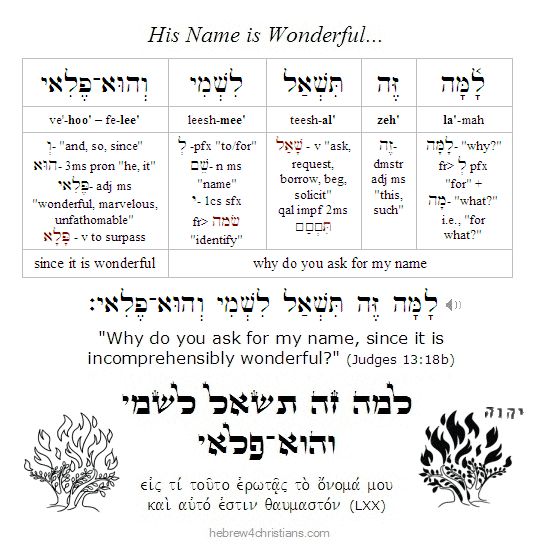 |
There are literally hundreds of different names, titles, metaphors, similes, allegories, and allusions given in the Hebrew Scriptures that refer to the one true God. Though YHVH is God's special Name, it is clearly a play on the verb "to be" (hayah). We do not "invoke" the Name like a magician might utter a "divine spell." God is near to us -- He's in the wind, in the heavens and earth, as close to you as your own heart (Deut. 30:14; Rom. 10:8). The hard part is to love and obey the LORD -- not to learn how to say His incomprehensible Name. Indeed, what good would it be to know how to properly pronounce the Sacred Name of the LORD if you do not love and obey Him? If you want to call upon the Name of the LORD, seek first His kingdom and His righteousness (Matt. 6:33). Learn to know Him as your Abba...
Mystery and God's Name...
"You are encircled by the arms of the mystery of God." - Hildegard of Bingen
01.08.26 (Tevet 19, 5786) When Moses asked why he (of all people!) was chosen to be God's emissary, the LORD did not explain His decision in natural terms; nor did not appeal to Moses' past experiences, his potential, his family lineage, or even his great humility... Instead God simply said that whatever inadequacies Moses might have, being in relationship "with Him" was entirely sufficient: ki ehyeh imakh (כִּי־אֶהְיֶה עִמָּךְ): "for I will be with you" (Exod. 3:12). That is all that Moses would truly need...
When Moses nevertheless sought for some way to justify his role as a prophet sent from God, he asked to know God's secret "name" (see Exod. 3:13). God's response to the request was enigmatic: אֶהְיֶה אֲשֶׁר אֶהְיֶה - ehyeh asher ehyeh: "I will be what I will be" (or I am what I am), which may be understood as, "I will be what I will be - and all that matters is that I will be with you (ehyeh imakh), for that is infinitely enough! Indeed, God's name is nifla (נִפלָא) - "wonderful and incomprehensible" (Judges 13:18; Psalm 139:6), since the LORD is infinite and beyond comparison to finite things (Psalm 147:5). God is the great "I AM" that pervades all of Reality (אָנכִי), the glorious Eternal Personal Presence (i.e., hayah, hoveh, ve'yihyeh) whose power constantly sustains all things. Most of all, God is declared and expressed as our Savior, the One who reveals the face of God to us all (2 Cor. 4:6).
Hebrew Lesson
Exodus 3:14a reading (click):
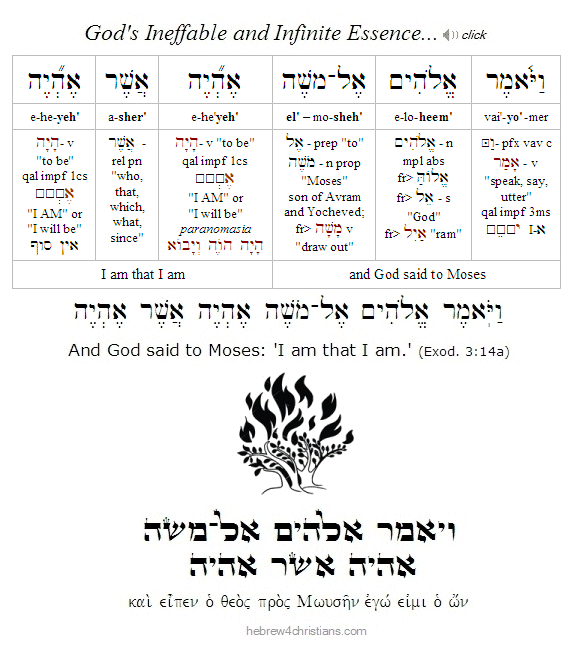 |
Regarding the theological question of whether we can apprehend the inner meaning of the Name of God, we read the following vision from the New Testament: "Then I saw heaven opened, and behold, a white horse! The one sitting on it is called 'Faithful and True' (נֶאֱמָן וְיָשָׁר), and in righteousness he judges and makes war. His eyes are like a flame of fire, and on his head are many diadems, and he has a Name written that no one knows but himself (שֵׁם כָּתוּב אֲשֶׁר לא־יָדַע אִישׁ כִּי אִם־הוּא לְבַדּוֹ). He is clothed in a robe dipped in blood, and the Name by which he is called is 'the Word of God' (דְּבַר הָאֱלהִים). And the armies of heaven, arrayed in fine linen, white and pure, were following him on white horses. From His mouth comes a sharp sword with which to strike down the nations, and He will rule them with a rod of iron. And He will tread the winepress of the fierce fury of the wrath of God, the Ruler over All, the LORD God Almighty (יְהוָה אֱלהֵי צְבָאוֹת). On his robe and on his thigh he has a Name written, the King of kings (מֶלֶךְ הַמְּלָכִים) and the Lord of lords (אֲדנֵי הָאֲדנִים). And with the breath of his lips He will slay the wicked" (Rev. 19:11-16).
Notice that in this passage the LORD both has a Name that no one knows but Himself and also that is He is called 'Faithful and True,' 'the Word of God,' and so on... In other words, within Himself God's Name is something that only He can truly understand, though we can know what He is called (in human terms) based on His revelation in nature and by the analogical and experiential language of the Scriptures.
Just as the "essence" of who you are is the "I am that I am" of your self-reflective consciousness (cogito ergo sum), so it is with God, who calls himself "Eheyeh asher Ehyeh," or "I AM what I AM." God is not a "What" but a "Who," and therefore God is not a "thing" to be named but a Person and spiritual reality that is the Ground of Being....
Ultimately the best way to know God's name is to look to Yeshua and to learn from Him, for He embodies the revelation of the LORD, that is, he shows us the meaning of Who God is and how much God loves us. Yeshua is the Word "God" expressed in humanity, He is God's Name written in human flesh. There is no other name whereby we find salvation (Acts 4:12).
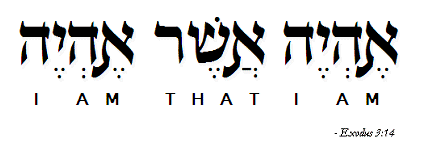 |
|
Teshuvah of Waste Places...
"When God wants to do an impossible task He takes an impossible man and crushes him" (Alan Redpath). The following considers the breaking of Moses in parashat Shemot.
01.07.26 (Tevet 18, 5786) Forty years before encountering the LORD in the burning bush, Moses was full of himself, a prince of Egypt "mighty in word and deed" who regarded himself as Israel's deliverer (Acts 7:22-25). But Moses' "Egyptian-styled" ego led him to regard murder and human uprising as the means of deliverance, and consequently God sent him into exile to think things through...
And it was there, in the waste places of the desert, that God's education began - the school of brokenness, teshuvah, and heart-listening... Only after this did God appear to him, calling out to the man who had lost all his former confidence in the flesh. Moses' humility mirrored the emptiness of the desert: "Who am I?" he protested, "I can't do this thing..." (Exod. 3:11). Exactly! Now he understood. Similarly, we must be careful not to regard ourselves as "strong," since the power of the flesh is useless for the purposes of heaven (Zech. 4:6). As it is written, "Thus says the LORD: 'Cursed is the man who trusts in man and makes flesh his strength, whose heart turns away from the LORD. He is like a shrub in the desert, and shall not see any good come. He shall dwell in the parched places of the desert, in an uninhabited salt land" (Jer. 17:5-6). It was only after Moses' question, "Who am I?" was answered by God's "I AM who I AM," that the "useless shrub" became aflame with power...
Moses' rod, which he had relied upon for years as a shepherd in the desert, was then transformed to be used as an instrument of Divine Power (Exod. 4:1-5). God entrusts the rod of His authority only in the hands of a truly broken man.... Similarly, though Moses was described as a man "mighty in word and deed," these were attributes of the flesh unrefined by the Spirit of God. Therefore, after being humbled in the desert, Moses confessed that he was kevad peh (כְבַד־פֶּה) - "heavy of mouth" - and kevad lashon (כְבַד לָשׁוֹן) "heavy of tongue," and unable to speak on behalf of the LORD. God then told him that He would "be with his mouth" to teach him what to say (Exod. 4:10-12). This likewise teaches that God entrusts the utterance of his word to the tongue of a genuinely broken man...
Hebrew Lesson
Psalm 119:71 Hebrew reading lesson (click):
The New Pharaoh's Dream...
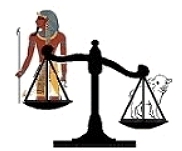
01.07.26 (Tevet 18, 5786) According to midrash, just as Pharaoh during the time of Joseph was troubled by his dreams (Gen. 41:1-7), so was the "new king" that arose during the time of Moses (Exod. 1:8).
In the new Pharaoh's dream, an old man was standing before him as he sat on his throne, holding a balance in his hand. The old man placed all the nobles and governors of Egypt on one side of the balance, and on the other side, he placed one small lamb. To Pharaoh's astonishment, however, the lamb outweighed all the leaders of Egypt!
When the king asked his advisors to interpret the dream, they said it foretold of a coming king who would overthrow the kingdom of Egypt and set the Israelites free. This coming one would excel in wisdom and his name would be remembered forever as the Savior of Israel.
Of course the rest of the Book of Exodus is essentially God's interpretation of the new Pharaoh's dream, as the great events of the Exodus would reveal.
At the very outset the LORD commissioned Moses to warn Pharaoh that Egypt would come into judgment (Exod. 4:22-23). Indeed, the only way to escape this judgment and the wrath of God was by being covered by the sacrificial blood of the lamb... The Lamb of God is central to Israel's deliverance and is the focal point of the revelation of the sanctuary given at Sinai.
Israel was redeemed from Egypt by trusting in the promise of their deliverance, as it is written, "and the people believed" (וַיַּאֲמֵן הָעָם) ... and bowed their heads and worshiped" (Exod. 4:31). Recall that the blood of the korban Pesach - the Passover lamb - was to be smeared on the two sides and top of the doorway, resembling the shape of the letter Chet (ח). This letter, signifying the number 8, is connected with the word חי (chai), short for chayim (life). The blood of the lamb (דַּם הַשֶּׂה) not only saves from the judgment of death, but it also is the means of imparting divine life and power...
Hebrew Lesson
Psalm 72:18 reading (click):
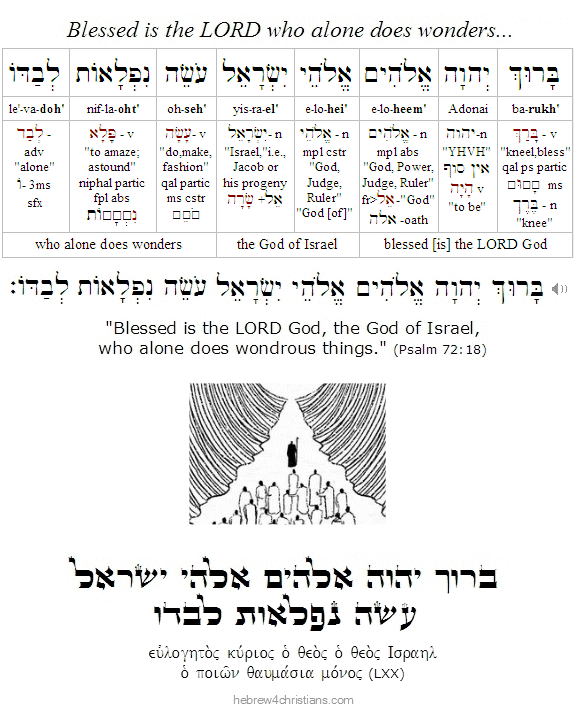 |
Moses' Thorn in the Flesh...
"God will give us all the strength we need to help us to resist in all time of distress, but he never gives it in advance, lest we rely on ourselves and not on him alone." - Bonhoeffer
01.06.26 (Tevet 17, 5786) According to midrash (Shemot Rabbah), as a very young lad Moses was once seen throwing Pharaoh's gold crown to the ground. Upon learning of this apparent act of insolence, Pharaoh devised a test to see if the child understood what he was doing. He therefore commanded that a platter with a piece of gold and a glowing piece of coal were to be presented before Moses and ordered the little boy to choose one. If Moses chose the gold, it would imply that he understood its value, and therefore he would be killed. On the other hand, if Moses chose the burning coal, he would be spared since he was unable to differentiate between gold and a glowing piece of coal. Moses began to reach out for the gold when an angel pushed his hand aside and he grabbed the coal instead. He then immediately put his hand in his mouth, but that burned his lips and tongue so badly that he had a permanent speech impediment as a result.
Later, when God commissioned Moses to speak to the children of Israel, he protested to the LORD that he was "heavy of mouth and heavy of tongue" (i.e., kevad peh ve'kaved lashon: כְּבַד־פֶּה וּכְבַד לָשׁוֹן) and therefore was unable to eloquently speak on behalf of the LORD to Pharaoh (Exod. 4:10). But the LORD said to him, "Who has made man's mouth? Who makes him mute, or deaf, or seeing, or blind? Is it not I, the LORD? Now therefore go, and I will be with your mouth and teach you what you shall speak" (Exod. 4:11-12).
When the time arrived for Moses to actually go before Pharaoh to declare God's message to let the Israelites go, he again protested to the LORD that he was a man of "uncircumcised lips" (עֲרַל שְׂפָתָיִם), an idiom that meant that he regarded his lips to be of no acceptable use to God. (Ironically the prophet Isaiah later had his lips burned to purify them to speak on behalf of God; Isa. 6:6-7). In this connection it is interesting to ask why God did not simply heal Moses of his impairment. After all, the LORD had earlier told him that He had the power to make the blind to see, the deaf to hear, and the mute to speak...
According to many of the classical Jewish commentators, God did not cure Moses of his stuttering because He wanted the Israelites to know that he was a divine messenger. When he spoke in the Name of the LORD, the stuttering miraculously entirely disappeared and Moses spoke with fluent ease. This was to teach the people not to trust in human oratory or wisdom, but rather in the power of God (see 1 Cor. 2:1-5). Just as the Apostle Paul, the "Moses of the New Covenant," was given a "thorn in the flesh" (σκόλοψ τῇ σαρκί) to keep him humbly relying upon God for his sufficiency to serve (2 Cor. 12:7-10), so Moses was rendered entirely dependent upon the LORD but thereby became a "man of words" who spoke with "circumcised lips."
"O LORD, you will establish peace for us, for You have indeed done for us all our works" (Isa. 26:12). We must always remember that God does the work "for us" (לָּנוּ) and we are His witnesses. Salvation is "of the LORD," and is not the result of our own efforts. Anything of eternal value comes from God alone, who is the beginning and end of grace. "Not by (human) might, nor by (human) power, but by my Spirit, says the LORD of hosts (Zech. 4:6).
יְהוָה תִּשְׁפּת שָׁלוֹם לָנוּ
כִּי גַּם כָּל־מַעֲשֵׂינוּ פָּעַלְתָּ לָּנוּ
"O LORD, you will establish peace for us,
for You have indeed done for us all our works."
(Isa. 26:12)

Hebrew Lesson
Isaiah 26:12 Hebrew reading (click):
The LORD establishes peace for us because He is the healing source of our life. If we lose sight of this truth, we are again made subject to the "law of sin and death" (תּוֹרַת הַחֵטְא וְהַמָּוֶת), that is, the futile principle of self-justification that constitutes the "wheel of suffering." We can escape this cycle only when we accept the truth about our condition and trust God for our deliverance. It is the "law of the Spirit of Life" (תוֹרַת רוּחַ הַחַיִּים), that is, the inner reign of the Holy Spirit, that sets us free from the reign of sin that leads to death...
Out of the Straits...
"God, Who is everywhere, never leaves us. Yet He seems sometimes to be present, sometimes to be absent. If we do not know Him well, we do not realize that He may be more present to us when He is absent than when He is present." - Thomas Merton
01.06.26 (Tevet 17, 5786) The name for ancient Egypt in Hebrew is "mitzrayim" (מִצְרַיִם) a word that can be translated as "straits" or "narrow places" (i.e., -מ, "from," and צַר, "narrow"), suggesting that "Egypt" represents a place of constriction, tribulation, oppression, slavery, and despair. The Hebrew word for salvation, on the other hand, is "yeshuah" (יְשׁוּעָה), a word that means deliverance from restriction, that is, freedom and peace. As it is written: "From my distress (מִן־הַמֵּצַר), i.e., from "my Egypt," I cried out to the LORD; the LORD answered me and set me in a wide open place" (Psalm 118:5).
But why, it may be asked, did God tell Jacob: "Do not be afraid to go down to Egypt" (Gen. 46:3)? Why did God allow this excursion into "heavy darkness" that Abraham clearly foresaw (Gen. 15:12-13)? What is there about "Egypt" that prepares us to take hold of our promised inheritance? Joseph become a prince of Egypt; however, he was still captive to Pharaoh, and later, after he died, a "new Pharaoh arose" that did not acknowledge his contribution to Egyptian history (Exod. 1:8). All that remained of Joseph were his bones – a chest of bones that were carried by Moses (and later buried by Joshua in Shechem). The "bare bones" of Joseph represented the essence of his faith, as he foresaw the time when God would rescue the family from Egypt and raise him up in the land of promise (Gen. 50:24-26; Heb. 11:22).
A general principle of spiritual life is that the "the way up is the way down" (John 12:24). As Yeshua said, "Whoever would be first among you must be slave of all" (Mark 10:44). Becoming nothing (i.e., ayin) in this world is the condition for seeing something in the world to come. Unless a seed falls to the ground it abides alone (John 12:24). But we become "nothing" by trusting in the promise of God, not by trying to do it ourselves... This is not another venture of the ego. Life in the Spirit means trusting that God will do within you what you cannot do for yourself... We can only take hold of what God has done for us by "letting go" of our own devices (Phil. 2:13). When we let go and trust, we will be transformed, carried by the "Torah of the Spirit of life" (i.e., תּוֹרַת רוּחַ הַחַיִּים, Rom. 8:2), The way is not trying but trusting; not struggling but resting; not clinging to life, but letting go...
God's way of deliverance is entirely different than man's way. Man tries to enlist carnal power in the battle against sin (i.e., religion, politics, etc.), but God's way is to remove the flesh from the equation. The goal is not to make us stronger and stronger, but rather weaker and weaker, until the ego is crucified and only the sufficiency of the Messiah remains. Then we can truly say, "I have been crucified with Messiah. It is no longer I who live, but the Messiah who lives in me. And the life I now live in the flesh I live by faith in the Son of God, who loved me and gave himself for me" (Gal 2:20). The word "Hebrew" (עִבְרִי) means one who has "crossed over" (עָבַר) to the other side, as our father Abraham did when he left the world of Mesopotamia (Gen. 14:13). Likewise it is on the other side of the cross that we experience the very power that created the universe "out of nothing" (i.e., yesh me'ayin: יֵשׁ מֵאַיִן) and that raised Yeshua the Messiah from the dead.
Hebrew Lesson
Psalm 118:5 Hebrew reading (click):
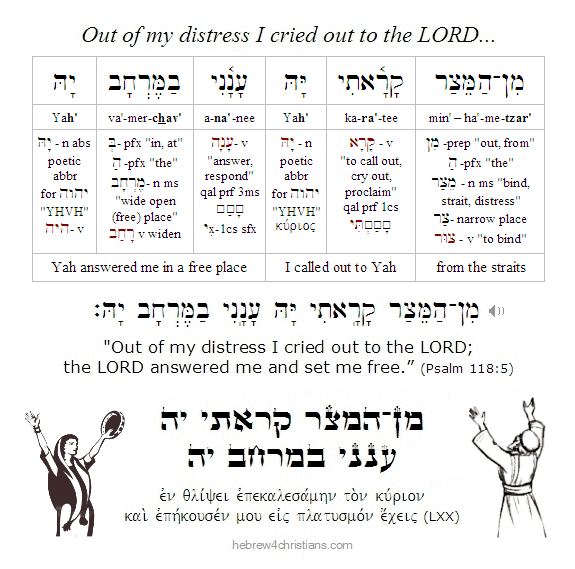 |
Truth and Passion...
01.06.26 (Tevet 17, 5786) During the prophesied "end of days" (אַחֲרִית הַיָּמִים) many people will have an outer "form" (μόρφωσιν) of godliness but will deny its inner power, since their hearts will be turned away from the truth: "And because lawlessness (i.e., ἀνομία, lit. a=without; nomos=Torah) will be increased, the love of many will grow cold" (Matt. 24:12).
In this connection we note that the Hebrew word for "falsehood" (or "lie") is sheker (שֶׁקֶר), which can also be read as shekar (שֶׁקַר), meaning "that which" (-שׁ) makes cold (קַר). The truth of God can't be known apart from His passion, inner fire, desire. And that is where despair can become useful, for "not until a person has become so wretched that his only wish, his only consolation, is to die not until then does Christianity truly begin."
Indeed, the Hebrew word for "sin" (חֵטְא) means "missing the mark," though that essentially means missing the revelation of God's glory because lesser fears consume the heart and cool the passion for the truth... Let us beseech the LORD to better know His heart by kindling his fire within our hearts!
"Be still and know that I Am..." Prayer is a type of listening (shema), a turning back to heed the message of God's love and hope in Messiah. Indeed, the word "teshuvah" (תְּשׁוּבָה), often translated as "repentance," also means an answer or response to a question. God's love is the question, and the heart's response is the answer.
Some of us may find it difficult to trust, to open our heart to receive grace and kindness. For those of us wounded by abandonment, it can be a great struggle to hear the voice of God calling you "beloved," "worthy," "valued," and "accepted." When you find faith to receive God's word of love, however, your heart comes alive and you begin to heal...
Hebrew Lesson
Deut. 6:4 reading (click for audio):
True and False Worship...
There is something worse than death that should concern all people, and that is discovering that, upon your death, you had missed what is most important, that you sold your soul for vanities, and that you never learned the true reason for your existence...
01.05.26 (Tevet 16, 5786) Asks the Savior: "Why do you call me 'Lord, Lord,' and not do what I tell you?" (Luke 6:46). Regarding this question Soren Kierkegaard comments: "True worship quite simply consists in doing God's will. But that kind of worship was never to people's liking. What occupies people in every age is to arrange another kind of worship that consists of doing their own will, but in such a way that God's name, calling upon God, is connected with it, whereby people think themselves protected against being ungodly – alas, although precisely this is the most definite kind of ungodliness" (The Moment: 1854).
It is easy to go wrong here. The will of God is forever to trust in his Son, and indeed, this is the "work of God" (John 6:28-29). Yet this means suffering for God, needing him, yearning for his daily blessing, being abandoned to his care for your life... When out of the depth of our need – without pretense and in despair over ourselves – we cry out to the LORD, he will surely help us. As it is written: "If we ask according to his will, he hears us" (1 John 5:14), and therefore it is the heart's need for Him that is the will of God...
"Not everyone who says to me, 'Lord, Lord,' will enter the kingdom of heaven, but the one who does the will of my Father who is in heaven. On that day many will say to me, 'Lord, Lord, did we not prophesy in your name, and cast out demons in your name, and do many mighty works in your name?' And then will I declare to them, 'I never knew you; depart from me, you workers of lawlessness'" (Matt. 7:21-23). Despite the profession and practice of their faith, these people were strangers to God... They had a false sense of assurance, believing that they were "serving God" while they really were not... Therefore the essential question here is whether Yeshua truly knows you and the need of your heart. You may know a lot about God, religion, spirituality, and yet you may remain unknown by him... Where do you find life? What are you loving? Where are you going?
"On that day many will say to me, 'Lord, Lord, did we not ... do many mighty works in your name?' And then will I declare to them, 'I never knew you" (Matt. 7:22-23). From this we understand that good works - even those done in the name of Messiah - are insufficient for life, and that something more is needed... That "something more" is the reality of relationship with him. However, even Yeshua's sacrifice on the cross can't bring you into relationship with him apart from personally receiving it for your healing... By faith you encounter Yeshua clothed in your flesh, your sin, and suffering death for you. "As long as Christ remains outside of us we are separated from him."
Hebrew Lesson
Psalm 16:2 reading (click for audio):
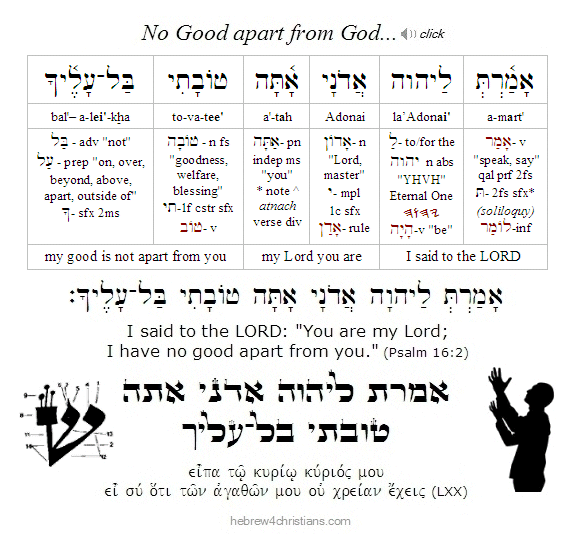 |
<< Return
|