|
February 2026 Updates (continued)
Note: If any page content appears to be missing, please refresh the page...
Mystery of God's Name:
The Ineffable Glory...
02.05.26 (Shevat 18, 5786) In the Hebrew Bible the verb hayah (היה), expresses the idea of being and existence, and that is the root idea indicated by the name "YHVH" (יהוה), which is the personal name of God and his most frequent designation, occurring over 6,800 times. The name is not pronounced by Jewish custom and is substituted with other designations such as "HaShem" (the Name) or "Adonai" (Lord) whenever the Scriptures are recited. In English it is common to translate YHVH as "the LORD" (all caps) to indicate its special sanctity. This is the Mysterious or "Unutterable Name" of the God of Israel. Because it is composed from the four Hebrew letters Yod, Hey, Vav, and Hey, the name is also referred to as the "Tetragrammaton," which simply means "the four letters."
The Name YHVH first appears at the outset of the Torah, in Genesis chapter two, where it is written: "This is the history of the heavens and the earth when they were created, in the day that the LORD God (יְהוָה אֱלֹהִים) made the earth and the heavens" (Gen. 2:4). A few verses later the name appears again when it says "Then the LORD God (יְהוָה אֱלֹהִים) formed man of the dust of the ground, and breathed into his nostrils the breath of life (נִשְׁמַת חַיִּים), and the man became a living being" (Gen. 2:7). So the Name of God, YHVH, was known from the beginning to be the Source and giver of life and existence to all things...
In addition, Torah reveals that the LORD God interacted with people and with angels. For instance, we read that LORD God spoke directly to Adam and Eve (2:19; 3:13), to the Serpent (3:14), to the angels (3:22), to Adam and Eve's son Cain (4:6), to Noah (7:1), and then particularly to Abram (12:1), to Isaac (26:2), and to Jacob (31:3). And we may include the "Angel of the LORD" (מַלְאַךְ יְהֹוָה) as an equivalent name for YHVH, since the Angel is "theophany" or manifestation of the LORD God himself, and indeed it was the Angel of the LORD that appeared to Abraham during the sacrifice of Isaac (22:1), to Jacob at Peniel (32:30), and who later appeared to Moses as YHVH at the Burning Bush (Exod. 3:2-4).
This revelation of the LORD God to Moses at the burning bush is of particular importance for understanding more of the meaning of the name YHVH because it adds information not given earlier to the patriarchs (Exod. 6:3). Recall that when God called out to Moses from the midst of the flame he identified himself by saying: "I am the God of your father, the God of Abraham, the God of Isaac, and the God of Jacob," and then he told Moses that he had seen the affliction and sorrows of his people and had come to deliver them and bring them to the promised land (Exod. 3:6-9). When God then asked Moses to go to Pharaoh and to bring the people out of Egypt, Moses immediately objected that he was unqualified for such a task, but God reassured him by saying: "I will be with you" (כִּי־אֶהְיֶה עִמָּךְ) and I will return you with the people to this very mountain to worship (3:12). Note that the Hebrew word for "I will be" used here (i.e., ehyeh: אֶהְיֶה) is from the same root hayah used in the name YHVH.
Moses then asked God why anyone would believe that he was truly sent on a mission from God: "If I come to the people of Israel and say to them, 'the God of your fathers has sent me to you,' and they ask me, 'What is his name?' what shall I say to them?" (3:13). Note that Moses wanted a description of God's name that would go beyond "the God of Abraham, the God of Isaac, and the God of Jacob." The LORD then said to Moses: "I AM WHO I AM." And he said, "Say this to the people of Israel, 'I AM has sent me to you'"(3:14). Moreover, this special Name of the LORD was forever to be connected with the patriarchs of Israel: "Say this to the people of Israel, 'The LORD (יְהוָה), the God of your fathers, the God of Abraham, the God of Isaac, and the God of Jacob, has sent me to you.' This is my name forever (זֶה־שְּׁמִי לְעֹלָם), and thus I am to be remembered throughout all generations" (3:15).
The phrase ehyeh asher ehyeh (rendered as "I AM THAT I AM" in the KJV) indicates a connection between the Name YHVH and being itself. YHVH is the Source of all being and has being inherent in Himself (i.e., He is necessary Being). Everything else is contingent being that derives existence from Him. The name YHVH also bespeaks the utter transcendence of God. In Himself, God is beyond all "predications" or attributes of language: He is the Source and Foundation of all possibility of utterance and thus is beyond all definite descriptions.
With this background in mind, let us reflect a bit about the significance of the LORD God being identified both as the historical God of the patriarchs as well as "ehyeh," the great "I AM."
To get started, recall that Torah begins with the LORD (i.e., YHVH) named as the Creator of the world (and of mankind) who is also the promised Redeemer from the curse inherited by Adam and Eve. The LORD is also named as the deliverer of Noah and his family, and the one who personally called Abram to go to the promised land to inherit the kingdom of God. The Book of Genesis recounts the generations of Abraham, his son Isaac, and his grandson Jacob who was renamed "Israel" and the progenitor of the Jewish people. The book ends with Jacob's son Joseph foretelling the exodus of the Jewish people from their bondage in Egypt to return to the promised land (Gen. 50:24-25).
The story of the Exodus begins where the book of Genesis left off, with the people in Egypt awaiting the prophecy of Joseph to be fulfilled, and gives the account of the birth of Moses who later would be Israel's deliverer. I will not repeat the details of Moses' early life here, nor of his uprising against the Pharaoh that led him to flee the land of Egypt, but after 40 years of exile in the desert of Midian, Moses one day saw a "burning bush" and heard the voice of the LORD call out to him from the midst of its flames, and it was there that the mystery of who God is in himself, that is, in his "essence," was first articulated. This "deeper" understanding of the name was first intimated in God's promise to Moses, "I will be with you" (אֶהְיֶה עִמָּךְ), though God commissioned Moses to speak these same words to the nation as a whole: "Say this to the people of Israel, 'I AM (ehyeh: אֶהְיֶה) has sent me to you'"(3:14).
At this point let me forewarn you that this discussion may go into some deeper waters. Are you ready to take the plunge? If so then consider that the name YHVH is the expression of God's omnipresence and his incomprehensibility, which is to say that everything is connected to Him and yet everything is profoundly mysterious. "I am that I am" (or "I will be what I will be") signifies the Divine Presence that encompasses all things, "the place" of God's Spirit that hovers over the face of the deep (Gen. 1:2). This means, among other things, that God "in Himself," God qua God, is beyond our comprehension and natural understanding...
If we want to speak about the "life" or "being" of God, what can we truly say? In "natural" terms, that is, using our human language derived from reasoning, we are at best able to say what God is not rather than what God is. This is sometimes called "via negativa," a Latin phrase meaning "the way of negation." For instance, when we say that God is "infinite" we mean that God is not finite, or when we say that God is "omnipresent" (everywhere present) we mean there is no place where God is not... Likewise when we say that God is "omnipotent" (all-powerful) we mean that there is no limitation to what God can do, and that there is no other power that is greater than God.
Such reasoning can disclose a basic understanding of God as the "Supreme Being," or as Anselm stated "a Being that than which nothing greater can be conceived," but this definition suggests an abstract and impersonal idea of the "god of the philosophers" rather than the living and intimately personal God of Abraham, Isaac, and Jacob. If we were left only with Greek speculations that "God" is the "Unmoved Mover" (Aristotle) or the "magnetic" Architect of ideas that seek to "participate" in his Being (Plato), we are left with God being forever "out of reach," ineffable, self-absorbed, and disengaged with our lives.
But God is a Person who speaks and reveals himself in creation and within our hearts. Our faith believes that God is intensely personal and has revealed himself in human terms - both both by using "analogical" language, or the language of resemblance (i.e., metaphor, similes, and so on) but most especially by means of divine "inspiration" -- first through the prophets who "incarnated" the Spirit of God when they spoke in YHVH's name -- but superlatively and most importantly in the incarnation of the true life of God in Yeshua (see Heb. 1).
In most discussions about "theological" language or "God talk," there are three basic approaches about how our words may "map" or correspond to what is real, namely the univocal view, the analogical view, and the equivocal view. The central idea of "univocal" language is the idea that descriptive words and declarative statements about God correspond in the same way with how God really is and even to how God uses these words. This view implies, however, that we can discern the metaphysical meaning of the words found in the Scriptures, that is, how these words are properly translated to correspond with things beyond the realm of natural experience, and moreover that this meaning is identical or shared with the thoughts of God himself. Perhaps one example of "univocal" language in the Bible is God's self-disclosure as "I AM," or ehyeh (אהְיֶה), a self-referential description of God as "Being" or "Presence" itself. However it doesn't take long to realize how difficult it is to interpret this as a direct and literal description of God's nature and self-existence.
At this point I should interject that the language of our prayers, praise, and cries from the heart directed to God are indeed meaningful and are intelligible to God, for the LORD has no problem "interpreting" our language or words. The language we are considering here is more about how we interpret God's words as recorded in the Scriptures, those "descriptive" and "declarative," statements that seek to define or understand the nature of God as God is in himself, and that is a very different thing than the language of prayer...
The study of the Scriptures reveal a "two-tiered" or dualistic structure to reality. There is a "divided line" between this earthly realm (מַמְלֶכֶת הַאֲרַצִית) and the heavenly realm (מַמְלֶכֶת שְׁמִימִית), and likewise between material reality (מְצִיאוּת חוֹמְרִית) and spiritual reality (מְצִיאוּת רוּחֲנִית). God created human beings as "mediators" between the two realms, being composed of both flesh and spirit, and therefore it appears that we must use "analogical" reasoning to understand the resemblance (and differences) between the two realms.
For example, when the prophet Ezekiel saw heaven open he had no earthly language he could use to describe his vision of the "merkavah" (chariot of God) and he therefore described what he saw by attempting compare what was seen in this world with that of the heavenly realm. "Then I looked, and behold, a whirlwind was coming out of the north, a great cloud with raging fire engulfing itself; and brightness was all around it and radiating out of its midst like the color of amber, out of the midst of the fire. And from within it came the likeness of four living creatures. And this was their appearance: they had the likeness of a man. Each one had four faces, and each one had four wings...." (Ezek. 1:4-6).
Likewise the prophet Isaiah saw the Lord seated on a high throne with the hem of his robe filling the Heavenly Temple, surrounded by a number of "seraphim" (winged divine beings) singing "Holy, holy, holy is the Lord of hosts" (Isa. 6:2-3), and the prophet Daniel saw one "like a Son of Man" coming with the clouds to receive an everlasting dominion (Dan. 7:13-14). The prophet Zechariah also had many "night visions," including a mysterious Man on a red horse standing among myrtle trees in a ravine watching over Israel, a golden menorah fed by two olive trees, and a large "flying scroll" of God's judgment on those who swear falsely....
When the Torah says God created us in his own "image and likeness," it does not mean that our physical image corresponds to him, but rather that our "inner image," our self-reflective consciousness and the structure of our soul are analogous or "similar" to God. We are like unto God as "similes"; we resemble God in the depths of our consciousness, for we too are "I am that I am" beings whose essence is both mysterious and wonderful...
Despite this inner resemblance to God, a human being is not a literal "counterpart" to God in terms of God's attributes and glory. Indeed, if we elevate the human soul to the divine we commit idolatry, for we make "god" in our image and likeness rather than understand ourselves as beings God created to connect with him in meaningful ways...
Paradoxically the human soul intuitively "knows that it does not know" God in his essence, and it further "knows that it cannot know" God unless and until God makes himself known to us in "finite" terms. This is the deeper meaning of the "incarnation" or manifestation of God in finitude. The Angel of the LORD is a visible "theophany" (appearance of God) in angelic form so that the angels might see him and "communicate" with him; the prophets saw the Spirit of God hover and appear in a flame of fire, they heard the voice from the whirlwind, and so on, but the greatest revelation was given in the incarnation of Yeshua, God in the flesh and the Living Word of divine truth.
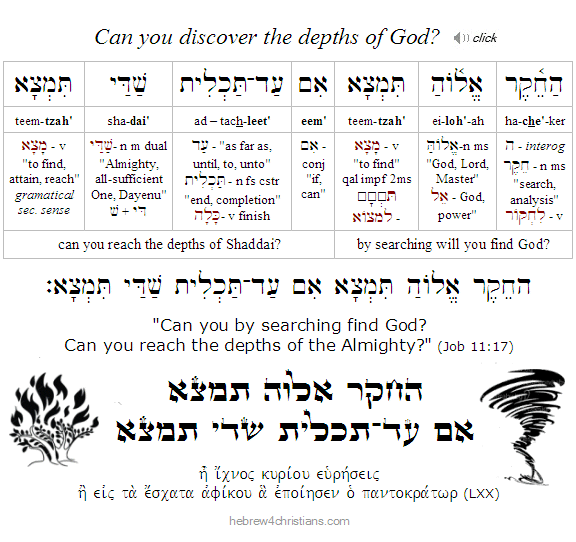
"Can you search out the deep things of God? Can you reach the depths of the Almighty?" (Job 11:17). In the "dark light" of the great mystery of God - who God is and what we can know of Him - we learn that we can only apprehend truth by the agency of the Holy Spirit who reveals Yeshua as "the Word made flesh" (John 1:14; 14:26; 1 Cor. 2:10-11).
God transcends all things, yet he "empties himself" to become known to us in Yeshua. God is also immanent or present in all things, which is what YHVH also means. In this way he fills "heaven and earth" and redeems and sanctifies every sphere of the creation. The mercy and love of God breaks through the veil between heaven and earth in the passion and sacrifice of our Savior. His flesh is the "curtain" torn asunder that completes the way to God's eternal redemption. "It is finished" is the final and triumphant cry from the cross.
Soren Kierkegaard wrote about the "Absolute Paradox" of Christ, by which he meant the "contradiction" that the eternal and infinite God has entered time and became a finite human being, and that the holy and sinless one offers himself to become defiled and sinful for our eternal healing. The "collision" between faith and reason is regarded as a "scandal" that offends the proud sensibilities of worldly assumption. However when a person encounters the truth at the intersection of time and eternity it is the "moment" of decision, and faith may then abandon itself to God in Yeshua. The antithesis between faith and reason is absolute, and the only way to know God is by "pressing forward" by faith in Christ, the narrow gate, by an "infinite passion of inwardness" as imparted by God's Spirit that leads to the life of blessing. All our natural understanding, our "old self," must be left behind...
It is this obscure knowledge of faith - spoken using "equivocal" language - that is inscrutable to worldly wisdom that reveals and expresses the "wings of love," that is, the glorious beautiful and grace of the Beloved One... Such words express the amazing "encounter" with God to be miraculous and beyond language, known in groans of the heart, in sighs of longing, and in the rise of unspeakable joy of God's great love. Even so, God has indeed revealed truths about Himself in the holy Scriptures that we can understand, even if analogically, or "through a glass darkly," and these truths reveal the glory of his character, his attributes, and his will for our lives. Amen. "Thy Word is a lamp for my feet and a light to my path."
Hebrew Lesson
Job 11:17 reading (click for audio):
 |
Revelation and the Law...
The following is related to Parashat Yitro and the giving of the Ten Commandments at Sinai...
02.04.26 (Shevat 17, 5786) The climactic event of this week's Torah portion (Yitro) is of course the great revelation of God at Mount Sinai - a transformative experience in which the people heard the voice of the LORD (קוֹל יהוה) speaking directly to them. And while this awesome event marked the birth and commissioning of the nation of Israel at the time of the Exodus, it also serves as a parable for each sojourning soul. As it is said in the traditional Passover hagadah, "Dor va'dor: Each person in every generation must regard himself or herself as having been personally redeemed from Egypt" (Pesachim 116b).
For instance, in our "desert wanderings" today we may come upon a time of revelation as we begin to understand the truth of our connection to God who is the Source of our lives and of all that exists (1st Commandment). We then realize that God alone is our ultimate concern and our Deliverer, and our idols of heart and mind - those desires that attach us to vanity and illusions - are suddenly regarded as worthless (2nd Commandment). Like a moment of "satori," the fragments and shattered pieces of our lives come together into a vision of beauty and unity. We understand that the LORD is greater than all our conceptions and imaginations. We confess our limitations as we honor God and thank him for the miracle of life (3rd Commandment).
Continuing with the allegory, we let go of our daily cares and preoccupations to set apart time to reflect on what is sacred, beautiful, and true (4th Commandment). We reconnect with the gift of life and remember that we are all part of one another (5th Commandment), and therefore we cannot hurt others without thereby hurting ourselves (6th-8th Commandments). We realize that we are to respect and honor others, to use the "good eye," and to abhor any temptation to envy them or to say false things about them (9th Commandment). Instead of comparing ourselves to others, we affirm our connectedness before God. This enables us to let go of our inner turmoil that comes from a feeling of lack, since we understand that with God we have everything that really matters, and that we are therefore rich beyond all measure (10th Commandment).
This allegory (or parable) suggests that the commandments are not to be regarded as an external burden imposed upon the soul but rather a by-product or "out flowing" of revelation itself. To know God is to love him, and heartfelt faith in his love reveals the way to live. The pieces and fragments of life are resolved as we find shalom living before God's presence.
Our Torah portion offers guidance about how to prepare for revelation through the advice of Yitro, Moses' father-in-law, who counsels us to "make space" for God by letting go of our busyness and allowing others to help us carry our burdens. That was Yitro's advice concerning the establishing judges and leaders to help Moses fulfill his particular mission (Exod. 18:13-16). Yitro's wisdom is about finding balance and inner peace to become more receptive to God's presence. Moses was overrun and overwhelmed in his service to others, and it was essential for him to quiet his heart and pray. Yeshua did this often by getting alone with the Father (Mark 1:35; Luke 5:15-16; Luke 6:12; Matt. 14:13). Likewise the apostles were harried in their service and needed help from others so they could devote themselves to "prayer and the ministry of the word" (Acts 6:2-4). Each of us has needs for solitude, private prayer, quiet reflection, rest, experiencing nature, and so on.
This way at looking at the revelation at Sinai is helpful, since it discerns God's heart beneath the imperative language of the commandments, but of course the moral imperatives of the law are nevertheless the expression of God's will, and -- as we will see later in both parashat Bechukotai and Ki Tavo -- there are serious consequences for disregarding God's commandments, namely, the "curses of the law" and the "tochachah" judgments that result from disobedience. So we must qualify what has been said by noting that the law reveals both that we are guilty for breaking covenant with God and furthermore that we are powerless not to do so apart from the power of the Holy Spirit. And this is part of what Paul meant when he said that faith "establishes" the law in the book of Romans (Rom. 3:1).
The law reveals our sin and therefore our need for deliverance. It is acknowledgment both of the just verdict for our guilt and God's remedy given in Yeshua which restores us and enables us to fulfill the heart of the law by means of the agency of God's power and Spirit. The law is holy and just and good, but our sinful condition alienates us from God because we are in dread over judgment for our sins. The grace and truth of God, the "righteousness of God," is what saves us, not by nullifying the truth of the law but by reconciling that truth with the mercy and kindness of God embodied in the sacrificial life of Yeshua on our behalf (Psalm 85:10). Amen, the essence of the gospel is that "God made him who had no sin to be sin for us, so that in him we might become the righteousness of God" (2 Cor. 5:21).
Hebrew Lesson
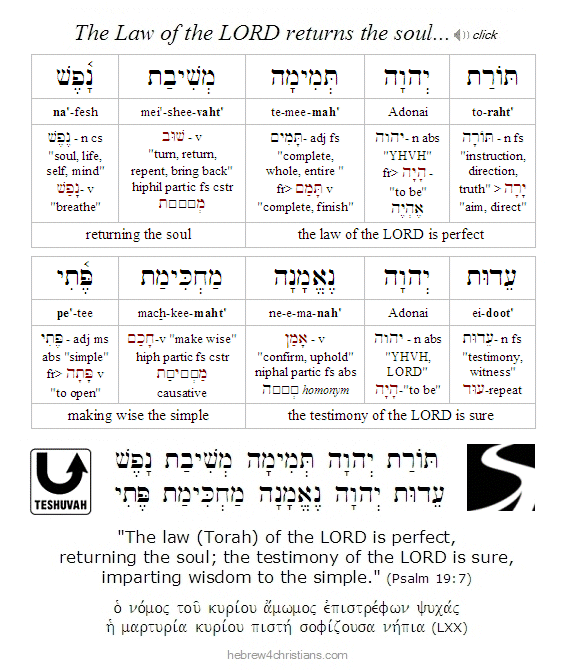
Psalm 19:7 Hebrew reading:
 |
Chosen Unchosen People...
02.04.26 (Shevat 17, 5786) There's an old story (midrash) that says that before God offered the Torah to the children of Israel, He first asked the other nations if they wanted it. God did this so that the nations wouldn't be able to claim that they would have accepted the Torah if only they had been asked. So God first asked the children of Esau. "What's in the Torah?" they asked. "You shall not murder," God replied. "Well, we could never accept that," they admitted. "Isaac's blessing to Esau said that we would live by our swords (Gen. 27:40), so how could we stop doing that?" And so they refused to accept the Torah. God then went to ask the children of Ishmael. "What's in it?" they asked. "You must not steal," God answered. "Well, we could never accept a Torah like that, since we make our living by stealing," they admitted. So God decided to ask each of the 70 nations whether they would accept the Torah, but each refused it for one reason or another. Finally God came to the Israelites. "Do you want my Torah?" He asked them. "Of course we want the Torah," they replied -- without even asking what was required of them. kol asher diber Adonai na'aseh ("all that the LORD has spoken, we shall do"). So God gave the Torah to the children of Israel...
We might wonder if this midrash wasn't developed to defend against the charge by various anti-Semites that the Jewish people are ethnocentric, elitist, etc. After all, from a strictly "egalitarian" point of view it seems somewhat scandalous to suggest that God would exclusively choose one group of people at the expense of others.... And perhaps this would be offensive if, like aristocrats who live with a sense of inborn entitlement, the "chosen ones" believed they were chosen for the sake of their own self-importance....
But this is certainly not what Torah means by "chosenness" at all. On the contrary, being a Jew (i.e., yehudi: יְהוּדִי) means that you have been "chosen" to take on additional responsibilities to live in holiness for the glory of God and for the welfare of the world. Therefore a true Jew (יהודי אמיתי) takes the role of being a both a mediator (i.e., "priest") and an ambassador for the LORD God. The performance of various mitzvot are for the greater purpose of tikkun olam (תיקון עולם), or the "repair of the world." After all, Israel was always meant to be a "light to the nations" (אור לגויים) just as followers of Yeshua, the King of the Jews, are intended to reveal God's light of salvation (Matt. 5:16). God's greater plan was for all the families of the earth to come to know Him and give Him glory, as Abraham was called: Av hamon goyim (אַב הֲמוֹן גּוֹיִם), the father of a multitude of nations (Gen. 17:4; Rom. 4:16). "Jewishness" is therefore not an end in itself but rather a means to bring healing truth to the nations... Indeed, the entire redemptive story of the Scriptures is about the cosmic conflict to deliver humanity from the "curse" of death by means of the "Seed of the woman" who would come. As the Apostle Paul affirmed, any talk of genetics, bloodlines, lineage, and so on are a means to this greater redemptive end (Phil. 3:2-9).
In fact, a chosen person is not selected on the basis of their genetics or family lineage, but solely from the personal call and election of God. "For not all who are descended from Israel belong to Israel, and not all are children of Abraham because they are his offspring, but "through Isaac shall your offspring be named." This means that it is not the children of the flesh who are the children of God, but the children of the promise are counted as offspring" (see Rom. 9:6-8). The idea of "chosenness" therefore is independent of considerations of "flesh" but is directly related to our response to God's promises.... This was true of "Israel at large" in relation to its faithful subset called she'arit Yisrael (i.e., the faithful remnant), just as it is true of those who trust the promise of life in Yeshua the Messiah.
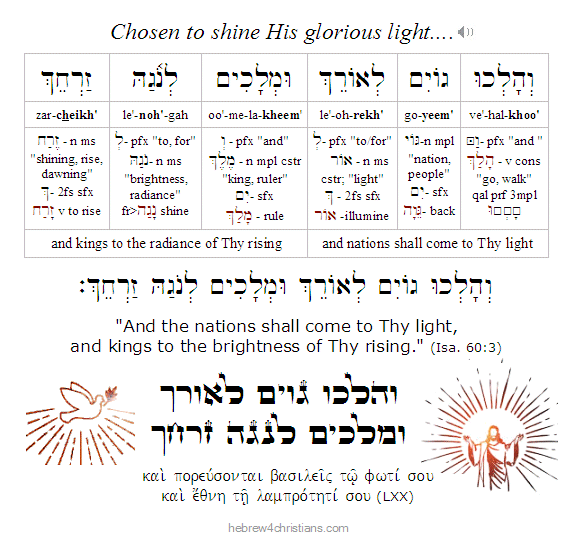
Hebrew Lesson
Isaiah 60:3 Hebrew reading:
 |
Therefore the Apostle Peter refers to followers of Yeshua as "a chosen race (עַם נִבְחָר), a royal priesthood, a holy nation, a people for his own possession" (1 Pet. 2:9, cp. Exod. 19:6, Deut. 7:6). This refers to both Jews and Gentiles who receive Yeshua as their Savior, since he adds: "Once you were not a people (לֹא־עַמִּי אַתֶּם), but now you are children of God (בְּנֵי אֵל־חָי)" (1 Pet. 2:9-10; Hos. 1:10). Likewise the Apostle Paul understands Christians to be "chosen people" (Eph. 1:4; 2 Thess. 2:13). All true Christians are be'kehunat Mashiach - in the priesthood of Messiah Yeshua and therefore have direct access to God. This priestly lineage began with Malki-Tzedek (Melchizedek), culminated in Yeshua, and is passed directly to the believer by means of his or her justification and identification with the Lord, "who gave himself for us, that he might redeem us from all iniquity, and purify unto himself a 'peculiar people' (i.e., am segulah: עַם סְגֻלָּה), zealous of good works" (Titus 2:14).
Within certain sects of Messianic Judaism, non-Jewish believers are regarded as "second-class" members in the family of God. Such believers often tend to be self-deprecatory, referring to themselves as "wild olive shoots," "Gentile believers," or even "righteous converts" (i.e., zerim tzedakim: זרים צדיקים). This is unfortunate, since it robs these beloved souls of their Messiah-given identity as co-heirs of the Kingdom (Gal. 3:9; Titus 3:7), and it also destroys the unity that Yeshua sought to bring among all of God's people (John 17:20-23; Eph. 2:14-15).
While it is true that ancient Israel was stratified by various classes of people (priests, Levites, Israelites, women, converts, slaves, etc.), it is clear that Yeshua did not come to create a "caste system" among His followers. On the contrary, Yeshua turned the established order upside-down by saying that the "greatest would be the slave of all" (Mark 10:44; Matt. 18:1-4, Matt. 20:25-28). Whoever would be great in the Kingdom must humble himself and walk hatzne'a lechet - in childlike simplicity before the Lord (Micah 6:8). Yeshua transposed the all-too-human view of social relationships by inverting the "natural" order. Do you "seek great things for thyself"? Then take hold of your absolute nothingness before the LORD and serve your fellow man with a pure heart (Jer. 45:5).
The Apostle Paul - the assuredly the greatest Torah sage of the Second Temple period - taught that in the Messiah there "is neither Jew nor Greek, slave nor free, male nor female" since we are all one (echad) in the Messiah (Gal. 3:28). But what does this mean? Despite the egalitarian ideal, don't we use these very distinctions to this day? On a fleshly or carnal level we certainly do. After all, we clearly distinguish between men and women, rich and poor, and various ethnic identities. This is a de facto way people see and understand. We all live with such distinctions in the world of basar - the carnal world that is known through sensuous apprehension. However, "from now on we regard no one according to the flesh" (2 Cor 5:16) but we aim to understand, with the help of God, that a follower of Yeshua is briah chadashah - a "new creation." Together we are ish-echad chadash ("one new man"), ke'ish echad, be'lev echad - "like a single person with a single heart."
Again, God is "respecter of persons" (Acts 10:34, Rom. 2:11). He is able to make the unclean clean (Acts 10:28) and to regard those who were once called "Not My People" as "My People" (Hosea 2:23, Matt. 3:9). Therefore a true Jew is one who is circumcised inwardly, someone who has undergone spiritual brit millah - "covenant of the word" (Deut 10:16, 30:6; Rom. 2:28-29, 1 Cor. 7:19, Gal. 5:6; 6:15; Phil. 3:3, Col. 2:11, etc.). Indeed, Paul insisted that any merit obtained either through his pedigree or his adherence to the moral law code is accounted as less than nothing (i.e., σκύβαλα) in comparison to the imputed righteousness given by means of his relationship with Yeshua (Phil. 3:3-8).
Regardless of your ethnic background, then, or your gender, or your social status in this world, know that you are am segulah (עַם סְגֻלָּה), precious and elect, and part of the family of God. You are Kohanim l'El Elyon - priests of the Most High God - "living stones being built up as a spiritual house, to be a holy priesthood, to offer spiritual sacrifices acceptable to God through Yeshua the Messiah" (1 Pet. 2:5). Amen. Your heritage is the God of Israel.
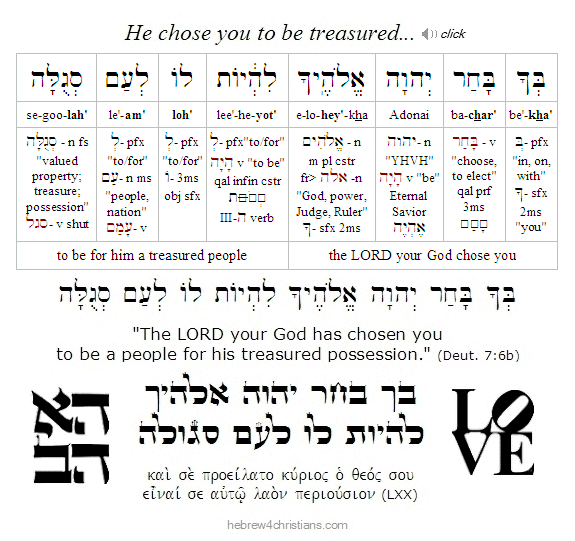
Hebrew Lesson
Deut. 7:6b Hebrew reading:
 |
Strength of God's Peace...
I don't need to understand as much as I need to trust. How my sins were taken away at the cross is a mystery, though I need to believe that God loves and heals me. What good is knowledge - even of things divine - without comfort? The struggle is to trust the heart of God - for everything - and especially for what breaks your heart...
02.03.26 (Shevat 16, 5786) The ultimate question is whether you feel "safe" with the truth of who you really are... When you are all alone, in a moment of still silence, when the entire world is asleep and suspended, what is the message of your heart's cry? Are you okay? Do you trust who you are or what is happening to you, or do you experience anxiety, a sense of lostness, inner pain?
Comfort is found in God's grace. His promise is given to the sick at heart, to those who understand their need for a physician (Matt. 9:12). Since there is nothing about you to commend before God, you are made free to abandon yourself to the divine love. This is the "Name of the LORD," after all, and your heart's cry for love is a "prayer" uttered in that Name.
Your heavenly Father sees in secret (Matt. 6:6). Consider the birds of the air; they are unreflective, alive in the atmosphere of God's care. What a great blessing to let go of your fear; what sweet relief! Surrender to the truth of your helplessness; rejoice that you are "poor in spirit," and discover that yours is the Kingdom of Heaven (Matt. 5:3).
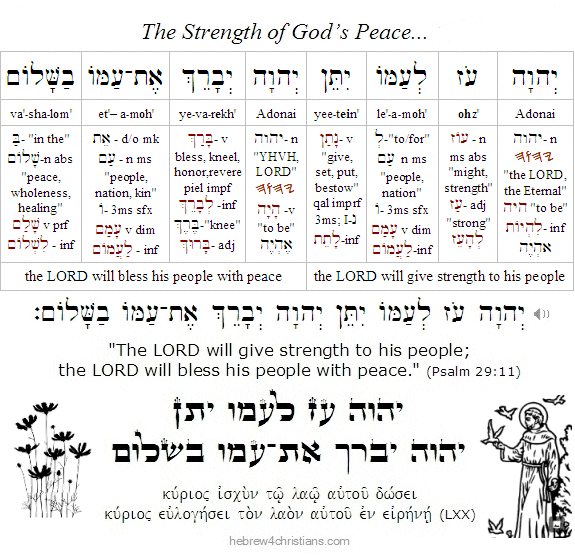
So don't give up your faith! The Lord will give strength to his people; the Lord will bless his people with peace. There is hope for your future. God has promised to be with you to the end, leading you to the place where your heart will forever be satisfied in his love.
Hebrew Lesson
Psalm 29:11 Hebrew Reading:
 |
Love Story of Exodus...
02.03.26 (Shevat 16, 5786) The story of the Exodus from Egypt can be read as a great "Cinderella-like" love story. The beloved is imprisoned in far away castle, made to do the lowliest of labor, but the Lover soon appears and heroically rescues her from her distress. Together they run away to a land of promise, but they must traverse dangerous desert places, where the Lover protects and cares for his beloved. Eventually they pledge their undying love for one another and their married life begins...
Or so goes the story... But practically speaking, how would God - the Creator and LORD of all - "woo" a nation? What would such a courtship be like? How would the betrothed come to understand the Heavenly Bridegroom? For that matter, how would the betrothed come to understand herself?
Recall that after the LORD split the sea and led his people safely across, Israel sang a song of praise to Him. In Jewish tradition this is called Shirat Hayam, "the Song of the Sea," which is an "antiphon," or song of response to their deliverance from Egypt. In the Torah we read "Then Moses and the children of Israel sang this song to the LORD, and spoke, saying: "I will sing to the LORD, For He has triumphed gloriously! The horse and its rider He has thrown into the sea! The LORD is my strength and my song, and he has become my salvation; this is my God, and I will praise him, my father's God, and I will exalt him..." "Who is like you, O LORD, among the gods? Who is like you, majestic in holiness, awesome in glorious deeds, doing wonders? ... You have led in your steadfast love the people whom you have redeemed; you have guided them by your strength to your holy abode... You will bring them in and plant them on your own mountain, the place, O LORD, which you have made for your abode, the sanctuary, O Lord, which your hands have established" (see Exod. 15:1-21).
Note that the opening statement, "Then Moses and the children of Israel sang" is actually in the future tense: "Then they will sing" (אָז יָשִׁיר־מֹשֶׁה וּבְנֵי יִשְׂרָאֵל) which the sages say refers to the coming of Messiah. Indeed, in Revelation 15:3 we read that this song of Moses, as well as the song of the Lamb of God, will be sung in heavenly places: "They sing the song of Moses (שׁירַת מֹשֶׁה), the servant of God, and the song of the Lamb (שִׁירַת הַשֶּׂה), saying: "Great and marvelous are Your works, Lord God Almighty (יהוה אֱלֹהֵי צְבָאוֹת)! Just and true are Your ways, O King over the nations (מֶלֶךְ הַגּוֹיִם)" Note also that in the closing phrase of Shirat Hayam we read: יְהוָה יִמְלֹךְ לְעֹלָם וָעֶד - "the LORD will reign forever" (Exod. 15:18), but the word "will reign" (יִמְלךְ) is spelled with a missing letter Vav (ו), which suggests the Messiah our King Yeshua. The LORD will indeed reign when the rightful heir to the throne of David and the true King of Israel soon appears....
Going back to the "love story" analogy, at this point in their relationship, the betrothed knew the Divine Bridegroom in terms of His heroic deliverance and power, and even held hope of being led to His "holy abode" to dwell with Him... But how well did she know Him? Would she willingly give herself to Him because she truly loved and trusted Him, or would she merely submit because she was overawed or obliged by His power and glory? How could she learn her own heart, and how could God show her who she was meant to be?
In a word - testing... When God delivered Israel from Egypt, He did not take them on the fast track to the Promised Land (though He certainly could have done so). No, there was a circuitous route to take, a divinely appointed wandering, a Divine Stroll of betrothal, if you will. In order to reveal Himself to the Israelites, God had to led them directly into the desert. He embittered waters to make them sweet once again; He let stomachs growl to provide the Bread of life; He parched mouths to give Living Water from the "Rock that was struck" (1 Cor. 10:4). God did all this to reveal to his newly redeemed people that He is the satisfaction of all their longings... He rescued his bride from the house of slavery and now wanted to refine her to receive greater revelation to come. He was "wooing" or "courting" her in order to bring her beneath a canopy of stars at Sinai...
Hebrew Lesson
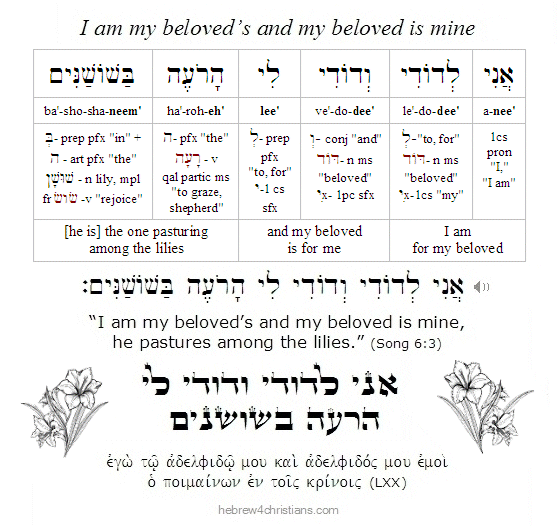
Song 6:3 Hebrew reading (click):
 |
The "Old Covenant" at Sinai?
"In your Seed shall all the nations of the earth be blessed; because Abraham obeyed my voice and guarded my call, keeping my commandments, my statutes, and my laws." (Gen. 26:4-5)
02.02.26 (Shevat 15, 5786) In our Torah portion this week (i.e., parashat Yitro), God revealed the Ten Commandments (i.e., עֲשֶׂרֶת הַדִבְּרוֹת, literally, "the ten declarations") to the Israelites at Sinai, a dramatic event that represented the giving of the law, or the "Old Covenant," to Israel.
Now it may be said that the revelation at Sinai represents an "older covenant" compared with the ministry of Yeshua (see 2 Cor. 3:14; Heb. 7:18, 8:6,13, and here), when looked at from another perspective, Sinai actually represents a relatively new covenant, since it was given later and served as a proviso to the covenant given earlier to Abraham (Gal. 3:18).
As we will see in next week's Torah reading, the culmination of the covenant at Sinai was the revelation of the Altar (i.e., the Tabernacle), which pictured the sacrificial blood "covering" the tablets of God's judgment. This, in turn, recalled Abraham's great sacrifice of his son Isaac (the Akedah), which further recalled the very first sacrifice of the Bible, namely the lamb slain in the orchard of Eden to cover the shame of Adam and Eve's sin (Gen. 3:21; Rev. 13:8). Therefore it was the promise God made to Eve regarding the "Seed to Come" that was the original covenant (Gen. 3:15), and it was this covenant that was later fulfilled by Yeshua, the "Serpent Slayer" of God (Num. 21:9; John 3:14).
This is the "Gospel in the Garden" message, the original promise of the lamb of God that was slain from the foundation of the world... In other words, the "new covenant" (בְּרִית חֲדָשָׁה) may better be understood as the fulfillment of the original covenant, the promise to redeem all of humanity from the curse of sin and death. The redemptive plan of God therefore moves in an ascending circle. The "Tree of Life" (עץ החיים) reaches back to the primordial orchard of Eden and extends into the World to Come...
Because there has been so much confusion regarding the topic of the role of the law, particularly among certain "Messianic believers," I would like to reiterate a few things mentioned elsewhere on this site. Let me first remind you that the legal aspect of the "Torah" refers to the subset of the written Torah called Sefer Ha-Brit (סֵפֶר הַבְּרִית), a portion that defined various ethical, social, and ritual obligations given at Sinai (Exod. 24:7-8). It is therefore a "category mistake" to simply regard the first five books of the "Torah" as the "law," since the law was given later in sacred history, after the Exodus.
Moreover, the Book of Genesis reveals that the very first "priest" (i.e., kohen: כּהֵן) was neither a Jew nor a Levite nor a descendant of Aaron, but rather Someone who is said to have "neither beginning of days nor end of life" but is made like (ἀφωμοιωμένος) the Son of God, a priest continually (Heb. 7:3). This priest, of course, was Malki-Tzedek (מַלְכִּי־צֶדֶק), the King of Salem (מֶלֶךְ שָׁלֵם) to whom Abraham offered tithes after his victory over the kings (Gen. 14:18). The author of the Book of Hebrews makes the point that the priesthood of Malki-Tzedek is greater than the Levitical priesthood and is therefore superior to the rites and services of the Tabernacle (Heb. 7:9-11). It was to Malki-Tzedek that Abram (and by extension, the Levitical system instituted by his descendant Moses) gave tithes and homage -- and rightly so, since Yeshua is the great High Priest of the better covenant based on better promises (Heb. 8:6). As the Scriptures teach, in everything Messiah has preeminence (John 5:39; Luke 24:27; Col. 1:18).
Hebrew Lesson
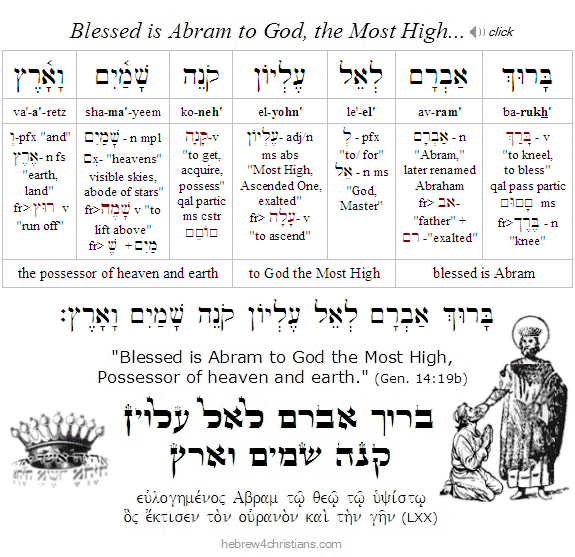
Genesis 14:19b Hebrew reading:
 |
Matters of First Importance...
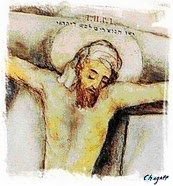
02.02.26 (Shevat 15, 5786) How we think about "ultimate reality," and in particular our idea of God, affects every realm of our lives, for such thinking is foundational to all our reasoning and all the decisions we make. Like axioms of geometry or first principles of logic, our idea about God frames or contextualizes the contours of all our subsequent thinking.
Therefore it is of utmost importance to think clearly about our assumptions and to uncover what we really believe about what is true, for the risk of ignoring such "big questions" is incalculable, a life built upon the sand which will not stand when the inevitable tempest and flood does come...
"The" question of life, the question of all questions, is whether there is a God and what this God is like. Of course some people opt out of these questions by insisting either that there is no God (atheism), or that even if there is a God, we cannot know God (agnosticism), but both these answers are superficial and meant to evade the question altogether. They are superficial because they do not seriously engage the horror of our finitude and the problem of death, and they evade the question because they abhor the idea of moral responsibility for their lives.
It's important to understand that both atheism and agnosticism are forms of "religion" since they attempt to answer the "big questions" about the meaning and purpose of life, albeit without reference to a sovereign and personal creator before whom they are responsible. The same may be said of religions like Zoroastrianism, Hinduism, Buddhism, Taoism, Shintoism, Confucianism, animistic tribal religions, paganism, hedonism, Satanism, secular humanism, Bahai universalism, Marxist utopianism, and so on, as well as the traditional monotheistic traditions of Judaism, Christianity, and Islam. Indeed since "religion" expresses a worldview or set of ideas that defines what is true about reality, it must be noted that every person is fundamentally religious, and the only thing that may differentiate them is whether they have philosophically reflected on what they actually believe, why they believe it, and whether it is ultimately true... C.S. Lewis once noted that everyone is a theologian because ignoring theology does not mean having no ideas about God, but rather having many wrong and muddled ones.
"The heavens declare the glory of God, and the firmament declares his handiwork" (Psalm 19:1). These words, written by King David many centuries before any of the philosophers of the world - both east and west - began to reflect on what is metaphysically real, point out the "problem" of the existence of the universe itself, that is, why the world exists and whether it was designed or is rather the result of random and irrational forces. King David pointed to the heavens above as evidence of God's creative presence in all things, and while this may not conclusively prove there is Creator, it provided a compelling clue of the power and greatness of the God who was "behind the scenes" of the phenomenal world. Later ancient Greek philosophers such as Plato and Aristotle tried to make sense of "the world" by regarding the one God to be the necessary "First Cause" of all that exists, the "ground of all being," and the Architect of reality, but the deeper question has to do with whether this God was "personal" and if so, what (if anything) is our responsibility to him as part of his creation.
The primordial Jewish "theology" of the Jewish patriarchs and Moses was based on mystical experience of the divine Presence, and they connected the power and greatness of God as our Creator with the idea that He is also our personal lawgiver before whom we are responsible. Their collective experience explains the role of the "conscience" and how it reveals the moral order of the Creator and our liability to do truth and live in righteousness.
The revelation of conscience, that is, the existence of the moral imperative, coincidentally reveals that we are beset with something within us that resists God's moral order and that actively seeks to suppress its "witness," and this inevitably creates inner conflict, anxiety, and guilt over "being wrong" within ourselves, ashamed and inwardly divided, fragmented and full of despair. The human soul engages in an ongoing dialog about what constitutes its moral authority, but left to itself it lapses into the idolatry of self-worship. Narcissism, too, is a "religion."
This inner conflict arises from the idea that we are "sovereign" over the sphere of our own lives, yet the voice of conscience, or the intuitive awareness of the moral law, signifies our obligation to what is "good," what is right and what is wrong, and that we are not "gods" but souls subject to a transcendent moral authority and divine law. The essence of idolatry arrogates divine attributes to the self in the name of "autonomy," and ultimately, self-worship. As Paul wrote: "But the invisible things of him from the creation of the world are clearly seen, being understood by the things that are made, even his eternal power and Godhead; so that they are without excuse, because while they know God, they do not glorify him as God nor give him thanks, but became vain in their imaginations and their foolish heart was darkened" (Rom. 1:20-21).
So this is the starting point to the question of what is ultimately real: Is there a God who created you, or are simply a random part of the cosmos? Is ultimate reality something personal or mechanistic? Does it have a design or is it inherently rational or absurd? Does your life have transcendental significance, or are you embedded into a "naturalistic" cosmic process that ultimately is meaningless? "Death cannot explain itself. The earnestness consists precisely in this, that the observer must explain it to himself" (Kierkegaard).
What do you "worship?" Everyone worships something or another; everyone has ultimate values, secret hopes, ideals, and dreams. Even those who castigate existence and consider it a nightmare hold to some ultimate values that has led them to such defiance and despair. The ideal haunts the real and makes us cry out for healing...
If we do not raise these sorts of questions and wrestle to discover why we exist and what is the purpose of our lives, we will drift into a place of anomie and despair, and ultimately we will lay our wasted lives down to die in profound regret and fear. The unexamined life is not worth living because it is a life of "ignorance," literally a life that ignores what is most essential. Now is the time to wake up and seek the truth. Today is the day of salvation. As Moses prayed, "Teach us to number our days that we may obtain a heart of wisdom" (Psalm 90:12).
There is a Savor for those who will believe. We all intuitively desire life - eternal life - wherein we are healed of our fears and our ideals are manifest, yet we are bound in time and inevitably approaching death. We are haunted by the ideal as we trudge through the real. There is hope, however, given to those who are willing to confront their sickness of heart and confess their need. Abiding hope is found in the Savior Yeshua, "who has abolished death and has brought life and immortality to light through the gospel" (2 Tim. 1:10).
No other god bleeds for us; no other came to save us from the ruin of all hope. Yeshua alone heals us from the curse of eternal death. There is salvation in no other. He alone died for our sins as our Mediator before Heaven and was raised from the dead. He was foretold by the Hebrew prophets and attested to by the Jewish people. Those who have come to believe in Him over the centuries confess the reality of his resurrected life and his power to give eternal life. He alone is the way, the truth and the life of God. He invites you to come to Him to find abiding comfort and rest by the power of His Spirit.
Hebrew Lesson
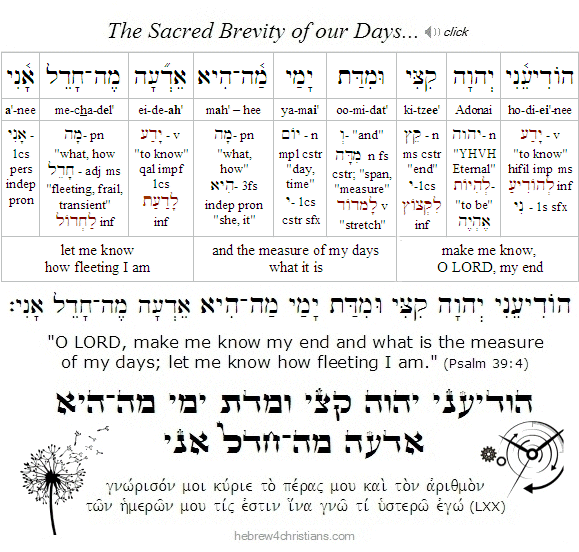
Psalm 39:4 reading (click for audio):
 |
These are the words...
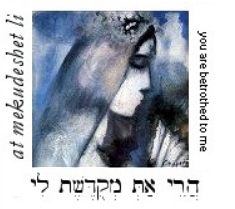
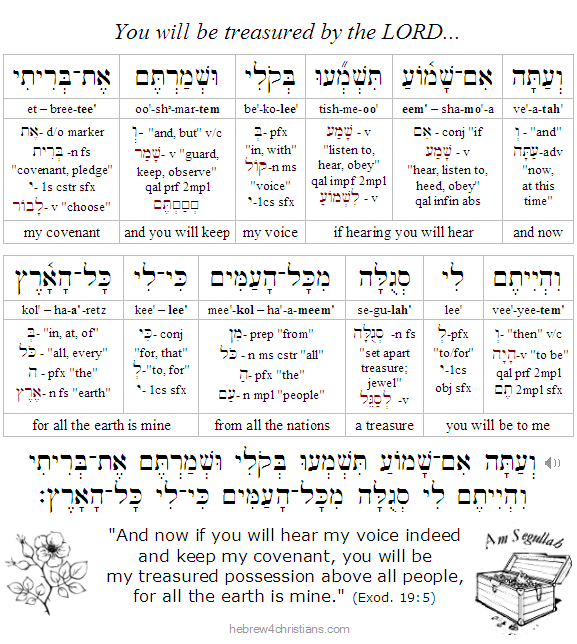
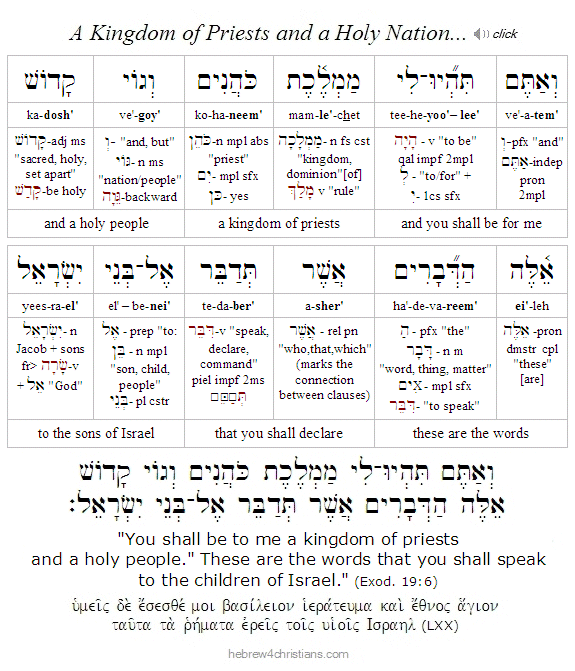
02.01.26 (Shevat 14, 5786) From our Torah portion this week (i.e., parashat Yitro) we read words of great promise and comfort as the LORD "proposed" betrothal with his redeemed people: "You shall be for me a treasured people; you shall be children of the King; you shall be priests who will help others draw near to God... these are the words (אֵלֶּה הַדְּבָרִים) that you (Moses) shall speak (to the people)" (Exod. 19:5-6).
These are the words of love God speaks forth and which evoke the antiphon: "And you shall love the LORD your God with all your heart, with all your soul, with all your substance. Set these words (הַדְּבָרִים הָאֵלֶּה), which I command you this day, upon your heart" (Deut. 6:5-6).
We store up these words so that, in a holy moment, they are quickened within us and we are able to hear the Voice of the LORD speaking from the midst of the fire that burns within our hearts. As Simone Weil said, "love is revelation, and revelation comes only with love."
Hebrew Lesson
Exodus 19:6 Hebrew reading:
 |
Giving of the Law:
Parashat Yitro - יתרו
Our Torah reading this week (Yitro) includes the account of the giving of the Torah at Sinai...
02.01.26 (Shevat 14, 5786) Last week's Torah portion (i.e., Beshalach) recounted how the LORD delivered the children of Israel from Pharaoh's advancing armies by dramatically drowning them in the Sea of Reeds. The Israelites were overjoyed over their new freedom and celebrated by singing the "Song of the Sea." Despite their newfound freedom, however, the people soon began complaining about the hardship of life in the desert. Nonetheless God was gracious and provided fresh water and manna from heaven as he led them by the Pillar of Cloud by day and the Pillar of Fire by night to Mount Sinai (Exod. 13:21-22).
In our Torah portion for this week, parashat Yitro, Moses' remarkable father-in-law Jethro (i.e., "Yitro") heard how God delivered Israel from Egypt and set out from the land of Midian to the desert area of "Rephidim" to meet with Moses. There Moses recounted the great story of the Exodus, telling him all that the LORD had done to Pharaoh and to the Egyptians for Israel's sake. Jethro rejoiced, blessed the LORD, and offered sacrifices which were communally eaten with Moses' brother Aaron and the 70 elders of Israel (Exod. 18:1-12).
After this celebration, Jethro observed how Moses sat every day to judge the people "from morning to evening" and expressed concern that his son-in-law was taking on too much responsibility. Jethro then advised his son-in-law to appoint a hierarchy of magistrates and judges to help him govern the people, thereby freeing Moses to be a more effective prophet and intercessor before the LORD. Jethro's wise counsel helped implement the system of justice that later became the basis of Jewish social law (i.e., the Sanhedrin, etc.).
Six weeks after leaving Egypt (i.e., the 1st day of the month of Sivan), the Israelites encamped opposite Mount Sinai, the place where Moses was initially commissioned at the "burning thornbush." Moses then ascended the mountain, and there God instructed him to tell the leaders that if they would obey the LORD and keep His covenant, then they would be mamlekhet kohanim ve'goy kadosh -- a "kingdom of priests and a holy nation." After returning down the mountain to deliver this message to the elders, the people responded by proclaiming, kol asher diber Adonai na'aseh ("all that the LORD has spoken, we shall do"). Moses then ascended the mountain again and was told to command the people to prepare themselves to experience the presence of God upon the mountain in three days.
According to Jewish tradition, on the morning of the "third day" (i.e., the sixth of Sivan, exactly seven weeks (49 days) after the Exodus), all the children of Israel gathered at the foot of Mount Sinai, where the LORD descended amidst thunder, lightning, billowing smoke, fire, and the voluminous blast of the heavenly shofar. The LORD then declared the foundation of moral conduct required of the people, namely, the Ten Commandments, which begins with the words: "I AM" (Exod. 20:2). Because the vision was so overwhelming, the terrified Israelites began beseeching Moses to be their mediator lest they die before the Presence of God. The portion ends as the people stood far off, while Moses alone drew near to the thick darkness where God was (Exod. 20:21).
Hebrew Lesson
Exodus 19:5a Hebrew reading:
<< Return
|
|