|
November 2025 Updates (continued)
Note: If any page content appears to be missing, please refresh the page...
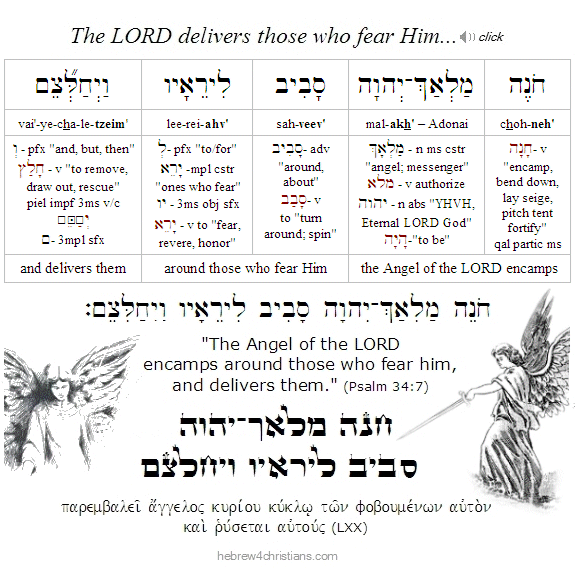
מַלְאַךְ יהוה
The Angel of the LORD...
11.07.25 (Cheshvan 16, 5786) In Hebrew, an "angel" is called malakh (מַלְאַךְ), a word that basically means "messenger" or representative (from the root לאך, meaning "to send"). God created many angels, of course (Psalm 68:17, 103:20), but there there is one malakh who stands out from all the rest of the malakhim (angels) as a King stands above his subjects. This "King of Angels" is called Malakh Adonai (מַלְאַךְ יהוה), or "the Angel of the Lord." Unlike the other angels that function as emissaries of God, Malakh Adonai is the supreme representation or Message of God Himself. His Word/Voice is "one" with the Person of God, just as the Spirit of God is "one" with the Person of God. Since the glory and power of God's infinite Being is incomprehensible to finite creatures, the Angel of the LORD is a form of God's condescension in a visible or audible manner so that an angel or a human being can apprehend His message.... Malakh Adonai is God represented in Angelic Form.
This unique King of the Angels (מלך המלאכים), or "Angel of the LORD," is named in about 50 verses of the Tanakh (i.e., "Old Testament"), though he is alluded to in various other places as well (e.g., Gen. 18:1-ff; Gen. 48:16, Exod. 23:20-23, etc.). He is first mentioned in Genesis 16:7-13 where He is clearly called God. After he spoke with Hagar in the desert, she called him "the LORD" (יהוה) and identified Him as El-Roi (אֵל ראִי) -- the "God who sees me" (Gen. 16:13). He later appeared to Abraham in the grove at Mamre (Gen. 18:1-ff) to reaffirm the promise of a coming heir, and later still, during the most terrifying moment of the sacrifice of Isaac, he cried out to stop Abraham from bringing down the knife on his son (Gen. 22:11, see also Gen. 22:15-ff). And note especially that it was the "Angel of the LORD" who appeared to Moses in the "burning bush" and identified himself as YHVH, the "God of Abraham, Isaac, and Jacob" (see Exod. 3:2-ff).
Other examples from the Tanakh should be noted. The Angel of the LORD helped Gideon deliver Israel from Midian (Judges 6:11-13); he prophesied regarding the birth of Samson (Judges 13); he led Elijah to Mt. Horeb (1 Kings 19); he commanded David to build an altar which later became part of the Holy Temple (1 Chron. 21:18), and he is mentioned in Psalm 34:7 ("The Angel of the LORD camps around those who fear him") and in Psalm 35:6-7. In light of all this, it is clear that that Malakh Adonai is nothing less than a manifestation of the LORD Himself. Indeed, the prophet Isaiah calls him the "Angel of His Face" (מַלְאָךְ פָּנָיו, Isa. 63:9). And since Yeshua is the "radiance of the glory of God and the exact imprint of his nature, who upholds the universe by the word of his power" (Heb. 1:3), it is clear that He is the Angel of God's face -- the "message of God" -- that was "sent" (לאך) in human flesh (John 1:1,14). Yeshua is the King of Angels -- He is the Angel of the LORD! Indeed, Yeshua is none other than Melekh Ha-kavod (מֶלֶךְ הַכָּבוֹד) the King of God's Glory (Psalm 24) and Adonai Tzeva'ot (יהוה צְבָאוֹת), the LORD of the heavenly host.
Hebrew Lesson
Psalm 34:7 reading (click):
Biblical Hebrew Wordplay...
11.06.25 (Cheshvan 15, 5786) The Hebrew Scriptures are filled with various kinds of wordplay (i.e., "mischak milim": מִשְׂחָק מִלִים). In addition to some humorous play on words (i.e., puns), you will discover alliteration, acrostics, parables, similes, metaphors, theophorisms, hyperboles, gematria, and other literary devices present in the Hebrew text. Some scholars even suggest that the first two words of the Torah (i.e., בְּרֵאשִׁית בָּרָא / bereshit bara) were intentionally spelled using the same initial three letters (בּ.ר.א) for the sake of "alliteration" (i.e., repetition of sound). At any rate, examples of wordplay often appear on the surface-level of the texts. For example, "Adam" (אָדָם) is a play on the word adamah (אֲדָמָה, "ground"); Chavah (חַוָּה, "Eve") is a play on the word chai (חַי, "life"); Kayin (קַיִן, "Cain") is a play on the verb kanah (קָנָה, "to get"), and so on (see Gen. 2:7, 3:20, 4:1). Even the name "Jesus" (i.e., Yeshua: יֵשׁוּעַ) plays on the Hebrew word for deliverance or salvation (i.e., yeshuah: יְשׁוּעָה). Many other examples could be cited.
Of particular relevance to our Torah reading this week (Vayera) is the name Yitzchak (יִצְחָק, "Isaac"), which plays on the verb tzachak (צָחַק, "to laugh"). Some have said that tzachak is "onomatopoeic," that is, it imitates the sound of laughter itself. Appropriately enough, the root appears a number of times in the story of Isaac, though often with different connotations. The simple stem (kal) of tzachak conveys the idea of laughter, whether in joy or incredulity, though the stronger stem (piel) suggests more intense expressions, for example rejoicing, playing, and making love -- or (negatively) mocking, scorning, and deriding. In other words, the motive for laughter is only contextually understood. After all, there's a big difference between laughing at someone and laughing with them.
At any rate, God Himself named Isaac in response to Abram's laughter over the prospect of having a child in his old age. Here's some of the "back story." God originally called Abram to leave Ur of Mesopotamia for the land of Canaan (Gen. 12:1). When he arrived there, God appeared to him and promised that his descendants would inherit the land (Gen. 12:7). Abram was 75 years old at this time. Abram wandered through the land waiting for God's promise to be fulfilled. Some time later (but before the birth of Ishmael), God came to him in a vision and reaffirmed his promise that he would have a son "from his own loins" (Gen. 15:1-5). Abram "believed in the LORD, and He credited it to him as righteousness" (Gen. 15:6). The LORD then made the "covenant of the pieces" to seal the agreement to give the land of Canaan to Abram's descendants (Gen. 15:7-20). Ten more years passed, however, and Abram and Sarai were still childless. In a lapse of faith, Sarai urged Abram to sleep with her Egyptian maidservant, Hagar, in order to produce the family heir. Ishmael was born when Abram was 86 years old (Gen. 16:16).
Another thirteen years passed before God appeared to Abram to renew his earlier promise that he would become a "father of a multitude" (Gen. 15; 17:7). Abram was now 99 years old. To symbolize Abram's changed status, God changed his name from Avram ("exalted father" [from אָב, "father," + רָם, "exalted"]) to Avraham ("father of a multitude" [from אָב, "father" + המוֹן, "crowd"]). (Note that some scholars regard Avraham's name to mean "father of mercy" (from אָב, "father" + רחם, "womb"). Likewise God changed Sarah's name from Sarai (שָׂרַי, "princess") to Sarah (שָׂרָה) -- the exchanged Hey (ה) for the Yod (י) was given to indicate that the Divine Presence was to replace of the "hand" of Sarah's design. (Indeed, the root of Sarah's name (i.e., שׂר, "prince") later reappears when her grandson Jacob was renamed "Israel." The wordplay occurs in the phrase "for you have striven (sarita) as a prince (sar) with God and with men and have prevailed" (Gen 32:28)). God reaffirmed his promise to make Abram into a great nation and then gave him the commandment of brit millah (בְּרִית מִילָה, ritual circumcision) as a token or "sign" of the agreement. (There's another play on words here: Abraham's male descendants who refuse to "cut off" their foreskins would be "cut off" from the terms of the covenant).
Getting back to the wordplay on Isaac's name, when the LORD repeated his promise that Abraham would sire a son in his old age, he "threw himself on his face and laughed (וַיִּצְחָק) as he said to himself, "Can a child be born to a man a hundred years old, or can Sarah bear a child at ninety?" (Gen. 17:17). When Abraham attempted to recommend Ishmael as his heir, God said "No, but Sarah your wife shall bear you a son, and you shall call his name Yitzchak (יִצְחָק, "he laughs").... (Gen. 17:19). After this vision of the LORD, Abraham promptly circumcised himself along with his son Ishmael (Gen. 17:23-26).
Rashi says it was the third day after Abraham's circumcision when he was visited by the Angel of the LORD (מַלְאַךְ יהוה) accompanied with the two other angels. When Sarah overheard the Angel of the LORD say, "I will certainly return to you next year, and your wife Sarah shall have a son" (Gen. 18:10), she laughed (וַתִּצְחַק) within herself (lit, "at her insides") and thought, "Now that I am withered, am I to have enjoyment, my husband being so old?" (Gen. 18:12). The LORD (יהוה) then asked, "Why did Sarah laugh (צָחֲקָה)? Sarah denied it (לא צָחַקְתִּי, "I didn't laugh"), but the Angel of the LORD said, "No, but you did laugh" (לא כִּי צָחָקְתְּ).
Jewish tradition maintains that Abraham laughed in joy at the prospect of becoming a father, whereas Sarah (initially) shook her head in disbelief. Sarah underwent teshuvah, however, even before her conception (see Heb. 11:11), and after the miraculous birth of her son exclaimed in heartfelt joy: "God has made laughter (צְחק) for me; everyone who hears will laugh for me (יִצְחַק־לִי)" (Gen. 21:6).
After Isaac was weaned, however, Abraham held a celebration, but Sarah saw Ishmael mocking (מְצַחֵק, i.e., the piel participle of צָחַק, "to laugh") her son and demanded that he be sent away. This grieved Abraham greatly, but God reassured him that Ishmael would nevertheless become a great nation with numerous descendants (Gen. 21:11-13). The promise of being Abraham's heir belonged to Isaac alone, who was the miraculously given son that would bring laughter to the hearts of all those who believe...
A further example of wordplay on the name "Isaac" occurs when the Torah records how he fled to the Philistine city of Gerar to escape a famine in the land. Like his father Abraham, Isaac lied by telling people that his wife Rebekah was his "sister." The Torah records that his deception was detected when Abimelech saw him "playing" with Rebekah: יִצְחָק מְצַחֵק אֵת רִבְקָה אִשְׁתּוֹ / "Isaac was 'sporting' with his wife Rebekah" (Gen. 26:8). The verb translated "sporting" is the intensive (piel) form of tzachak (צָחַק, "to laugh"), and clearly suggests the idea of caressing and fondling -- i.e., making love.
Hebrew wordplay was also applied to Isaac's sons. When the twins were born, the first came out hairy and was named Esau (עֵשָׂו), perhaps from the word esev (עֵשֶׂב), "grass" or "weed" of the field), whereas the second came out with his hand on his brother's heel, and was named Ya'akov (יַעֲקב, "grappler," from the word עָקֵב, "heel"). Later, when Esau learned that Jacob had taken away his blessing, he exclaimed, "Is he not rightly named "heel holder" (i.e., יַעֲקב)? For he has taken me by the heel (יַּעְקְבֵנִי) these two times. He took away my birthright, and behold, now he has taken away my blessing" (Gen. 27:36).
Hebrew Lesson
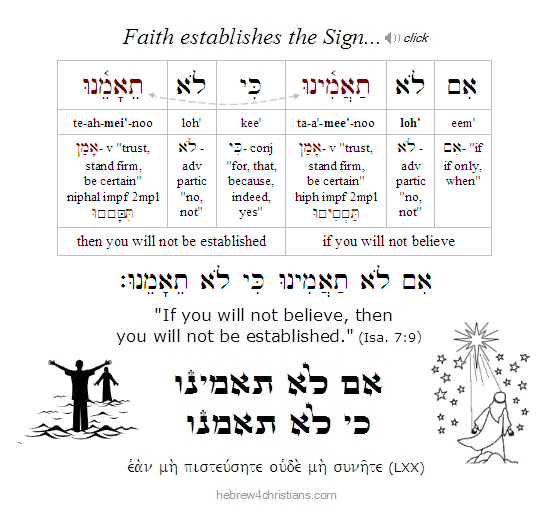
Isaiah 7:9b reading (click):
The Heart of Sacrifice...
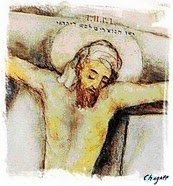
Undoubtedly Abraham's most dramatic test revealed the heart of a father willing to give up his beloved son, and the heart of the beloved son willing to be sacrificed on behalf of his father's will... Together they walked on, united in resolve and one in their passion.
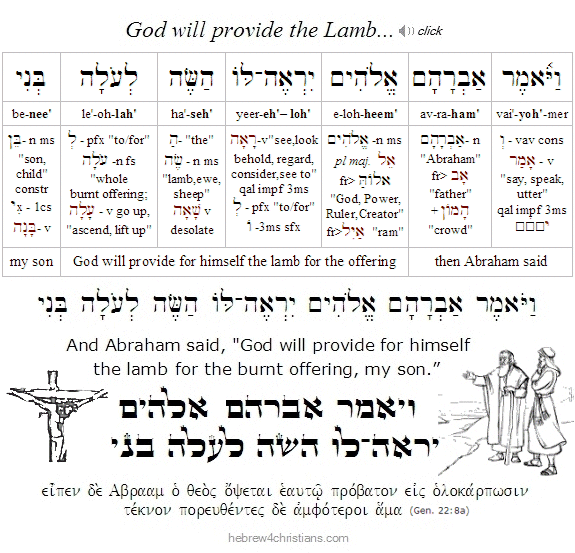
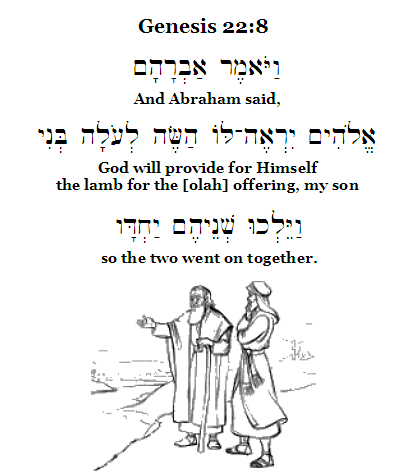
11.06.25 (Cheshvan 15, 5786) "And Abraham took the wood of the burnt offering and laid it on Isaac his son. And he took in his hand the fire and the knife. So they went both of them together" (Gen. 22:6). Isaac was about 37 years old at this time and needed to understand what was being asked of him: "And Isaac said to his father Abraham, "My father!" And he said, "Here am I, my son." And he said, "Behold, the fire and the wood, but where is the lamb for a burnt offering?" (Gen. 22:7). This is the first word of dialog recorded over the three day journey... It is hard to imagine Isaac's pathos during this exchange. Abraham replied, "God will provide for himself the lamb for a burnt offering, my son." So they went both of them together (Gen. 22:8). Notice that the Hebrew could be read: "God will provide for himself the lamb for the burnt offering -- my son!" (ירְאֶה־לּוֹ הַשֶּׂה לְעלָה בְּנִי) - making it plain that Isaac would be offered upon the altar. The Torah then repeats the phrase, "and they both walked on together," indicating that Isaac had accepted his sacrificial death in obedience to his father's will...
"And when they came to the place of which God had told him, Abraham built the altar there and laid the wood in order and bound Isaac his son (וַיַּעֲקד אֶת־יִצְחָק בְּנוֹ) and laid him on the altar, on top of the wood" (Gen. 22:9). According to the Talmud, Isaac asked his father to make the knots on his hands and feet tighter - not out of fear that he would change his mind and begin to resist - but in order to encourage his father to offer the sacrifice properly (Bereshit Rabbah 56:8). Like the Suffering Servant who would come after him, Isaac "set his face like a flint" to fulfill God's will (Isa. 50:7).
Hebrew Lesson
Genesis 22:8 reading (click for audio):
Isaac kept his eyes directed toward heaven as he lay tightly bound and motionless upon the altar. He awaited the final blow and wanted it to fall with trust and obedience within his heart. It was to be a shared sacrifice between the beloved son and his father. Finally "Abraham stretched out (שׁלח) his hand and took the knife to slaughter (i.e., לִשְׁחט, from shechitah) his son" (Gen. 22:10). The Talmud says that when Abraham "stretched out" his hand, he briefly looked at the knife to determine if it was ritually fit, and this delay was the precise moment when the Angel of the LORD (מַלְאַךְ יהוה) called out to him from heaven and said, "Abraham, Abraham!" (Gen. 22:11). (Note the repetition of the name "Abraham" during this second call.) According to various midrashim, when Abraham put his knife to his son's neck, Isaac's soul departed from him, but it returned when the Angel of the LORD said, "Do not lay your hand on the boy or do anything to him, for now I know that you fear God, seeing you have not withheld your son, your only son, from me" (Gen. 22:12). Abraham then immediately released Isaac and recited the blessing, "Blessed are You, LORD, who revives the dead" (בָּרוּךְ אַתָּה יהוה מְחַיֶּה הַמֵּתִים).
"I believe in You, O Holy One, though at times there no longer seems any reason for believing..." Here is Abraham, who counted the stars in hope, who trusted God for an heir, a promised son - and from this son another, and from that another, and another, until he envisioned his descendants "as the dust of earth" (Gen. 13:16; 15:5-6), and yet here is Abraham lifting up his knife to sacrifice his son, his beloved child, his promise, his future, his dream. Remember that Abraham did not know the end of the story before it began, and therefore his faith attested: "Though he slay me, I will trust in him."
Some people tend to "explain away" the passion of Abraham and Isaac by quoting the New Testament verse: "He [Abraham] considered that God was able even to raise him [Isaac] from the dead, from which, figuratively speaking, he did receive him back" (Heb. 11:19) -- as if this would make the sacrificial act any easier! Again we must bear in mind that neither Abraham nor Isaac knew "the end of the story" before they chose to obey God. As I've mentioned before, simply "knowing about" God is not the same thing as personally trusting Him with your life... This is the distinction between emunah (אֱמוּנָה) and bittachon (בִּטָּחוֹן). Simply knowing about God can lead to a sense of "distance," to theological abstractions, to dogmas and creedal formulas. Rabbi Bechaya put the distinction this way: "Everyone who trusts has faith, but not everyone with faith trusts." Bittachon is an intuitive awareness of the personal love of God for your life, coupled with complete trust that He cares for you (Rom. 8:28). It is an expectation that the love of God is for you, too, despite the test.
For more on this crucial subject, see:
The Work of Faith...
11.05.25 (Cheshvan 14, 5786) Shalom friend. Our Torah for this Shabbat (i.e., Vayera) gives the account of the terrible test given to Abraham when God asked him to offer up his son as a sacrifice (see Gen. 22). The apostle James later said that Abraham was "justified by works when he offered his son Isaac upon the altar" (James 2:21), whereas the apostle Paul seemed to say just the opposite, that Abraham was not justified by works (see Rom. 4:1-3). So is there a contradiction here in our Bibles regarding the idea of "justification"?
To answer this first understand that when James said that Abraham was justified "by works" he was referring to the work of faith and certainly not to the works of the law (מַעֲשֵׂי הַתּוֹרָה), since the Torah explicitly prohibited human sacrifice (Gen. 9:5), and furthermore the Angel of the LORD restrained Abraham's hand during the great test of faith (Gen. 22:12) thereby indicating that it was not God's will (i.e., Torah). On the other hand, the apostle Paul's seemingly contrary statement that Abraham was not justified by works refers to Abraham's unwavering trust in God's promise that his descendants would be as numerous as the stars in the heavens (Gen. 15:1-6). There is no real contradiction, then, since the two apostles were referring to two different episodes in their discussion of justification. Faith and works are two sides of the same coin: true faith will show up in your life and character. As Yeshua said, "This is the work of God, that you believe in the One whom He has sent" (John 6:29). Amen, the "work of faith" is foundational for the life of faith.
However, the life of faith is paradoxical, as Kierkegaard noted: "Ethically speaking, what Abraham planned to do was to murder Isaac; religiously, however, he was willing to sacrifice Isaac. In this contradiction lies the very anguish that can indeed make anyone sleepless. And yet without that anguish Abraham is not the one he is. Neither would faith be what it is." Although Abraham understood that God must be obeyed, he also understood that human sacrifice was immoral, and hence his struggle represented the collision between the imperative of reason and the imperative of faith. Choosing to heed the voice of reason (i.e., the "ethical," the "universal") over the personal voice of God created a state of "fear and trembling" and a sense of being unable to communicate his passion and mission to others.
"God cannot stand good works in the sense of earning merit. Yet good works are required. They shall be and yet shall not be. They are necessary and yet one ought humbly to ignore their significance or at least forget that they are supposed to be of any significance. Good works are like a child giving his parents a present, purchased, however, with what the child has received from his parents. All the pretentiousness which otherwise is associated with giving a present disappears when the child understands that he has received from his parents the gift which he gives to them." - Soren Kierkegaard (Fear and Trembling).
As Kierkegaard further commented: "Faith's conflict with the world is not a battle of thought with doubt, thought with thought. It is a battle of character. The person of faith is a person of character who does not insist upon comprehending everything. Now comes the conflict. The world insists that to believe what you cannot comprehend is not only blind obedience but obscurantism, stupidity, and so on. The world wants to alarm the believer against such foolishness. This is precisely why faith is a task for the person of character."
Hebrew Lesson
Isaiah 26:12 reading (click for audio):
In the Book of Hebrews we read: "By faith Abraham, when he was tested, offered up Isaac, and he who had received the promises was in the act of offering up his only son, of whom it was said, "Through Isaac shall your offspring be named." Abraham considered that God was able even to raise Isaac from the dead, from which, figuratively speaking, he did receive him back" (Heb. 11:17-19). The Greek text for "from which, figuratively speaking, he did receive him back" (i.e., ὅθεν αὐτὸν καὶ ἐν παραβολῇ ἐκομίσατο; Heb. 11:19b) seems to suggest Abraham believed (beforehand) that God would do a miracle and bring his son back from the dead after being sacrificed, though, of course, saying this does not imply that it was any "easier" for him to go through with the dreadful sacrifice or that it required anything less than a complete surrender of his will to do God's will... The key phrase in 11:19b, however, has to do with receiving Isaac back, and the language here means that he did receive him back from the dead "symbolically" or "figuratively" (i.e., as a "parable"). This is restated by the apostle Paul when he wrote of Abraham's courage: "All This accords with the Torah, where it is written, "I have appointed you to be a father to many nations" (Gen. 17:5). Abraham is our father in God's sight because he trusted God as the One who gives life to the dead and who calls nonexistent things into existence" (Rom. 4:17).
And that is the substance of our hope, is it not? To believe in Yeshua, to receive eternal life and to be resurrected from the dead by trusting in the LORD our God who "calls that which is not as that which truly is" - καλοῦντος τὰ μὴ ὄντα ὡς ὄντα. It is the Spirit that gives life; the flesh is of no help at all (John 6:63). "Blessed are those who have not yet seen yet have believed (John 20:29). The act of believing in Yeshua and the reality of his resurrected glory is avodat ha'emunah (עבודת האמונה) - the work of faith (Rom. 10:19).
 |
Forget not His Love...
"We ought to give the more earnest heed to the things that we have heard, lest at any time we should drift away..." - Hebrews 2:1
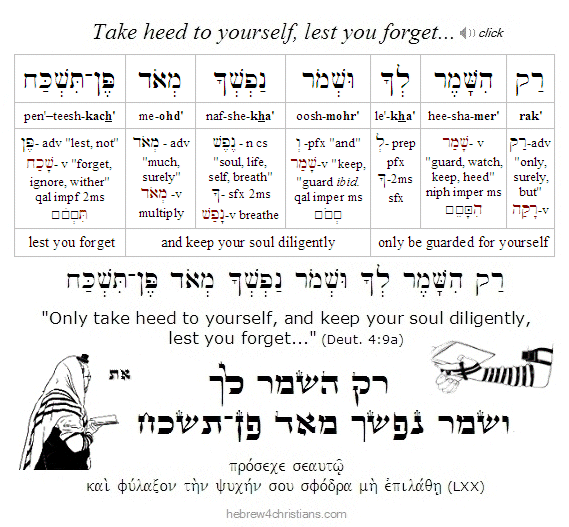
11.05.25 (Cheshvan 14, 5786) If something is truly worth saying, it is worth saying more than once... We learn by repetition. Consider how Yeshua retold his parables and messages throughout his ministry. God knows we are dull of heart and full of ourselves and therefore he says: וזכרת את־יהוה אלהיך- "Now remember the LORD your God!" and "Take heed to yourself, and keep your soul diligently, lest you forget the things that your eyes have seen, and lest they depart from your heart all the days of your life" (Deut. 4:9). Likewise the Shema teaches us to rehearse Torah "diligently" - again and again - so that our lives are imbued in its language and its significance (Deut. 6:4-9). When we sit in our house, when we walk by the way, when we lie down, and when we rise up -- in every place and at every time -- we are to remember the truth and thereby walk before the Living God.
"Take heed to yourself..." This warning underscores the danger we face of "forgetting" God, of losing sight of the truth of reality, and thereby lapsing into the realm of the profane... We must, therefore, foster within us a state of ongoing vigilance that regards the greatness of God in the midst of our daily lives. "Give us this day our daily bread." Your life, your being, and your very existence come from God, but forgetting this leads to "tohu va'vahu," a life of vanity and chaos. Therefore practice God's presence; believe to see the goodness of the LORD in the land of the living. The language God uses bespeaks his imperative passion for us: "Do not forget me! Keep your heart open to my Presence! Know me in all your ways..."
Hebrew Lesson
Deut. 4:9a reading (click):
Note: The niphal verb in this verse is interesting. Niphal is the passive voice of the simple Hebrew verb, but it's an imperative here, so it's commanding that we passively receive something, yet what is this but the blessing that God bestows as we diligently look to him?
Learning Hebrew Verbs...
11.05.25 (Cheshvan 14, 5786) Shalom chaverim. Ah the Hebrew verb! If you were not born and raised in Israel, learning Hebrew may be difficult, even for those who are committed to learning the language. And that's even more true regarding learning Biblical Hebrew....
When I develop some Biblical Hebrew grammar materials here, I try to keep things as simple as possible. Presently I am reworking some of the grammar material here, particularly on the intricate subject of verbs (פְּעָלִים), a section of the site that I've procrastinated over for years now. Well this evening I began writing a succinct overview of the present, the past, and the future conjugations for the simple form of the Hebrew verb (בניין קל). You can see some of the work in progress now, though please bear in in mind that this is only a draft version:
The Sins of Sodom...
11.04.25 (Cheshvan 13, 5786) From our Torah reading this week (i.e., parashat Vayera) we read: "And the LORD said, 'The outcry of Sodom and Gomorrah is indeed great, and their sin is exceedingly grave...'" (Gen. 18:20). But what was the grave sin of Sodom and Gomorrah? Why did God destroy the two cities of the plain? Was it because the people there refused to show hospitality to the angelic visitors (as claimed by some), or was it because of some ongoing sin of the people?
Though the sin of Sodom undoubtedly included practices of sexual perversion (called "strange flesh" (σαρκὸς ἑτέρας) in the Book of Jude), such behavior was symptomatic of a nihilistic culture that glorified violence, despised moral authority, perverted spiritual truth, and condoned the exploitation of others. Indeed, throughout the Scriptures "Sodom" symbolically represents gross immorality, depravity, and inevitable judgment from heaven. For example, the prophet Ezekiel later wrote of Judah: "Behold, this was the guilt of your sister Sodom: she and her daughters had arrogance, abundant food, and careless ease, but she did not help the poor and needy. Thus they were haughty and committed abomination (תּוֹעֵבָה) before me; therefore I removed them when I saw it" (Ezek. 16:49-50). The New Testament refers to the fate of Sodom as "a fearful example of the everlasting fire of retribution" (Jude 1:7) -- the destructive result of spiritual anarchy, lawlessness, perversion, and the violence of indifference (2 Pet. 2:6-10).
In this connection it should be noted that the word "sodomy" involves any form of violence, perversion, exploitation, or lawless expression of sexuality regardless of gender... In general, it is more helpful to think of it as a code word for egregious sin, "in-your-face" spite toward God, and defiant immorality that celebrates spiritual anarchy, moral nihilism, and death... Adultery, fornication, sexual perversions, viewing pornography (i.e., the lust of the eyes), covetousness, gluttony, arrogance (idolatry), unbridled anger (rage), sloth, worshiping the values and ideologies of this world (i.e., political activism, godless scientism, the world's value system), and so on, all may be called "sodomy." Whenever we consider such things, it is better to look at how we are healed rather than what makes us sick.... The answer to the trauma of a sinful heart is to turn to God and ask for deliverance in the name of Yeshua.
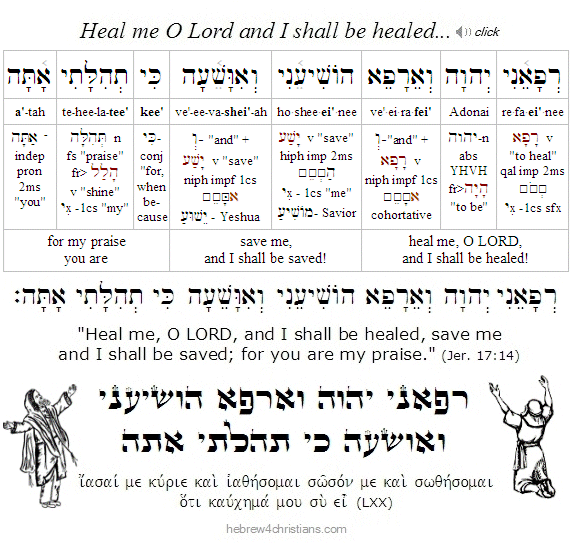 |
The world and its "group-think" always calls for the abolition of the individual conscience. Like the people of ancient Sodom that repudiated God's authority to their indulge their selfish desires and "autonomy," so the world system today repudiates a person of real conviction and conscience. Indeed, the only thing regarded as "intolerable" in the devil's world is the objection that people have the supposed "liberty" to sin in whatever way they please. This godlessness is "anathema" to one who truly fears God, of course, since tolerating sin in a world ripe for judgment is a cowardly form of "collaboration" with the enemy (James 4:4). "Woe to those who call evil good and good evil, who put darkness for light and light for darkness, who put bitter for sweet and sweet for bitter! Woe to those who are wise in their own eyes, and who are shrewd in their own sight!" (Isa. 5:20-21).
The "original sin," that is, eating from the Tree of Knowledge of good and evil, meant that man sought to transcend God's will to determine what is valuable, true, beautiful, and so on. Man became autonomous, "the measure of all things." Such was the "logical" method of the German idealism of Kant and Hegel, which led to way for Karl Marx, Friedrich Nietzsche, and Adolf Hitler (and some present day politicians) to unleash their nightmares upon the earth. Understand that the deep untruth that lies behind cynical "postmodernism" expresses little more than the godless desire to control the world... Today, more than ever before, the world is like "Sodom," and therefore ripe for judgment from heaven.
The judgment of God indeed came upon the moral anarchy of that realm... After the angels rescued Lot (and his immediate family), we read "then the LORD rained on Sodom and Gomorrah sulfur and fire from the LORD out of heaven. And he overthrew those cities, and all the valley, and all the inhabitants of the cities, and whatever grew on the ground" (Gen. 19:24-25). The sages note the word translated "overthrew" is vayahafokh (וַיַּהֲפךְ), which means "overturned," suggesting that besides the fire and brimstone that rained down from the sky, an enormous earthquake engulfed the plain, forming a crater filled with salt that became known as the "Dead Sea" (ים המלח).
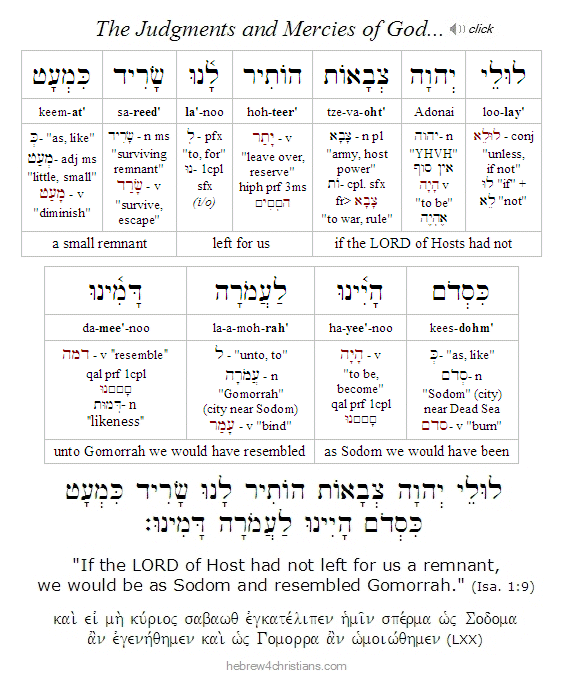
"Except the LORD of hosts had left unto us a very small remnant, we should have been as Sodom, and we should have been like unto Gomorrah" (Isa. 1:9). There is real hope for those who seek to escape from the wrath to come by turning to God and trusting in his healing power of salvation, though it is only a "remnant" that will genuinely seek such deliverance (Matt. 7:14). Speaking of the final salvation of Israel, the Apostle Paul quotes Isaiah: "If the LORD of Hosts hadn't left us a few survivors (i.e., a remnant), we would have become as desolate as Sodom, doomed just like Gomorrah" (Rom. 9:29).
 |
For more on this topic see, "The Sins of Sodom: Further thoughts on parashat Vayera."
Our Reason for Being...

11.04.25 (Cheshvan 13, 5786) During an intense bout of sickness that nearly took her life, Julian of Norwich said that God showed her a "little secret" about an ordinary hazelnut. As she considered the vision of the hazelnut, she wondered, "What may this be?" and God answered her heart's pondering: "It is all that is made..."
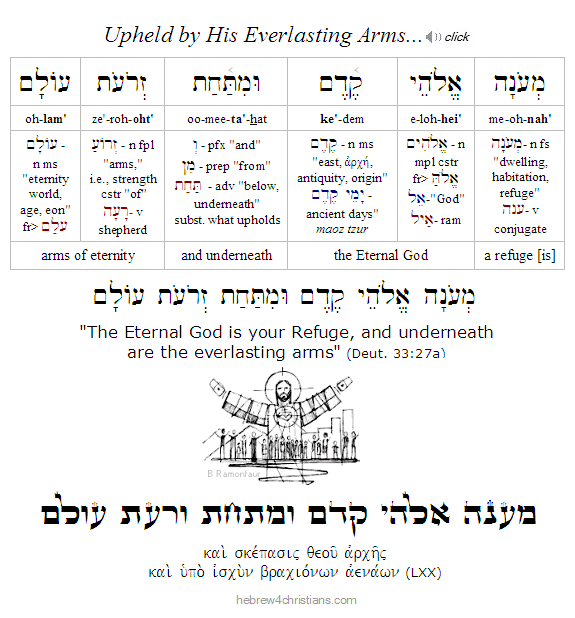
Julian then realized that the secret of the thing was not found in what it was, but in how it had its being. "In this little thing I saw three properties. The first is that God made it, the second is that God loves it, and the third, that God keeps it." She then reasoned that if something exists, it is because God loves it into being, and therefore everything that exists is what it is because of the love of God who sustains and upholds it. What makes something real is God's love, for love is the ground and context of all that exists.
This simple yet profound thought applies to our own lives as well. "What is he indeed that is Maker and Lover and Keeper?" We can only know who we really are in God's love for our souls. And we see God's love for us in the passion of the Lord Yeshua who clothed himself in our likeness to touch and to mediate the cry of our hearts before the Father. Amen, Yeshua is the one who brings us into God's heart, "Between God and the soul there is no between."
"I saw that He is to us everything that is good: God is our clothing that wraps, clasps and encloses us so as to never leave us, being to us everything that is good." Amen. God loves us with an everlasting love; his love draws us unto his heart.
Hebrew Lesson
Deut 33:27a reading (click for audio):
Abraham's Three Visitors...
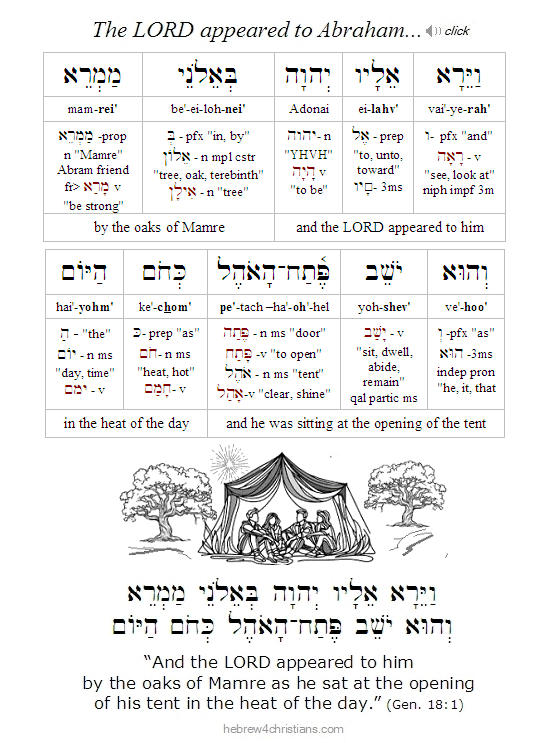
11.04.25 (Cheshvan 13, 5786) Shalom chaverim. Our Torah portion for this week, parashat Vayera, begins: וַיֵּרָא אֵלָיו יהוה / Vayera elav Adonai: "and the LORD appeared to him (i.e., Abraham) by the oak trees of Mamre, as he sat at the door of his tent in the heat of the day" (Gen 18:1). The midrash Bereshit Rabbah colorfully states that the phrase "by the oak trees of Mamre" (בְּאֵלנֵי מַמְרֵא) could be read as "in the oak trees," suggesting that God manifested Himself "as a tree," perhaps to recall Abraham's arrival into the land when he camped before a "teaching tree" (אֵלוֹן מוֹרֶה) in Shechem (see Gen. 12:6).
Rashi says it was the third day after Abraham's brit millah (i.e., circumcision) and God came (in a vision) to inquire as to his friend's welfare (this is regarded as a divine example of bikkur cholim (בִּקּוּר חוֹלִים), "visiting the sick"). During the vision, Abraham suddenly saw "three men" (שְׁלשָׁה אֲנָשִׁים) standing "above him." Who were these strangers? According to the Jewish sages, they were the archangels Michael, Gabriel, and Raphael disguised as Arab wayfarers. Each angel had a distinct mission. Michael came to announce that Sarah would give birth to a son; Raphael came to heal Abraham from his circumcision; and Gabriel came to overthrow Sodom (Bava Metzia 86b). After Abraham made a hasty (but doubtlessly sumptuous meal for his guests (and note, despite what the rabbis have said, meat and dairy surely may be eaten together, as it is written: "And he (Abraham) took butter and milk and the meat (חֶמְאָה וְחָלָב וּבֶן־הַבָּקָר) he prepared and set it before them (the angels, including the Angel of the LORD) and they ate" (Gen. 18:8). Yum! kosher cheeseburgers!).
According to Jewish tradition, when Abraham said, "My Lord (אֲדנָי), if I have found favor in your sight, do not pass by your servant" (Gen. 18:3), he was not speaking to the three visitors (as might be inferred from casual reading of the text) but rather was addressing the LORD Himself. (As a point of Hebrew grammar, Rambam notes that the Hebrew vocalization of the word Adonai (אֲדנָי) with the qamets vowel refers to God; whereas if it's vocalized with a patach (i.e., אֲדנַי) it refers to others, i.e., "sirs.") In other words, when Abraham saw the three strangers, he is said to have interrupted the vision of God and asked permission to take leave of the LORD: "My Lord, if you would, please do not go away from your servant." This interpretation has led to the Talmud's statement that showing hospitality to strangers (i.e., hachnasat orechim / הַכְנָסַת אוֹרְחִים) is more important than even welcoming the Shekhinah (Shabbat 127a). On the other hand, Rashi notes that the literal flow of the narrative suggests that Abraham was addressing the angels by requesting that they (plural) stay. In this case, the verse would be rendered, "My lords (אֲדנָי), if I have found favor in your sight, do not pass by your servant" (Gen. 18:3).
The most accepted Christian interpretation has been that the chief Angel was a pre-incarnate appearance of Yeshua the Messiah (i.e., a "theophany"). Understood in this light, the first verse of the portion, "and the LORD appeared to him" is immediately connected with the vision of the three archangels. In other words, the LORD appeared to Abraham as one of these angels, namely, the Angel of the LORD (מַלְאַךְ יהוה) accompanied with two others (Michael and Gabriel). This explains why it is written that the LORD (יהוה) stayed back with Abraham after the other two angels left for Sodom (Gen. 18:22). (Note that the patriarch Jacob later referred to the LORD (יהוה) as מַּלְאָךְ הַגּאֵל אתִי מִכָּל־רָע / "the Angel who redeemed me from all evil" (Gen. 48:16), just as he earlier had wrestled with a "Man" whom he later identified as God (Gen. 32:30)).
The dialog gets somewhat confusing, however, since it's unclear just who is speaking in the narrative. For instance, after graciously providing the three guests with a meal (meat and dairy!), the visitors (plural) asked where Sarah was (וַיּאמְרוּ אֵלָיו / "they asked him..."), but then then the Angel of the LORD said, "I will certainly return to you next year, and your wife Sarah shall have a son" (Gen. 18:10). Most of the Jewish sages (i.e., Rashi, Maimonides, etc.) understand this to be the Shekhinah "Voice of God" that was interjected into the conversation, though the text suggests this came directly from one of the angels, not from a "disembodied Voice" among the oakes of Mamre. At any rate, the purpose of the question was to confirm God's promise (originally given to Abraham in Gen. 17:16) to Sarah herself.... When Sarah heard this, she laughed within herself (lit, "at her insides") and thought, "Now that I am withered, am I to have enjoyment, my husband being so old?" (Gen. 18:12).
When the LORD (יהוה) repeated Sarah's inward thoughts to the others present, however, He omitted some of her words so that Abraham would not feel ashamed: "Why did Sarah laugh, saying, 'Shall I indeed bear a child, now that I am old?' Is anything too wonderful for the LORD?" (Gen. 18:13). The midrash says that the LORD overlooked her reference to Abraham being "too old" for the sake of shalom bayit (family harmony) and to refrain from lashon hara (evil speech). Perhaps some of this exchange was meant to reprove Sarah for disbelieving her husband's faith about a having future son. The sages note that when Abraham first heard the news about an heir "from his own loins," he laughed joyfully, but Sarah later laughed derisively... The Angel continued: "At the appointed time I will return to you (אָשׁוּב אֵלֶיךָ), about this time next year, and Sarah shall have a son" (Gen. 18:14). It should be noted here how the miraculous conception of Yitzchak - the promised "only begotten" son (בֵּן יָחִיד) who was to be sacrificed at Moriah - was meant to foreshadow the miraculous conception of Yeshua and His later sacrifice for our sins....
After reaffirming the promise of the coming heir to Sarah, the angels set out to finish their mission. Abraham escorted them on their way. The chief Angel (i.e., the Angel of the LORD) then rhetorically asked his angelic companions, "Should I hide from Abraham what I am about to do (i.e., go to Sodom), seeing that Abraham shall surely become a great and mighty nation, and all the nations of the earth shall be blessed in him? For I know him (כִּי יְדַעְתִּיו), that he will command his children and his household after him, and they shall keep the way of the LORD (דֶּרֶךְ יהוה), to do charity and justice (לַעֲשׂוֹת צְדָקָה וּמִשְׁפָּט); that the LORD may bring upon Abraham that which he has spoken of him" (Gen. 18:17-19). Note that this is the only place in Torah where the "way of the LORD" (i.e., derekh Adonai) is explicitly defined.
Abraham was destined to be the father of a multitude of nations (אַב־הֲמוֹן גּוֹיִם) - and the land promised to him included the cities of Sodom and Gomorrah and the adjacent plain. Moreover his nephew Lot dwelt in Sodom with his family. The LORD went on to say that "because the outcry against Sodom and Gomorrah is great and their sin is very grave, I will go down to see whether they have done altogether according to the outcry that has come to me. And if not, I will know." The "outcry" has been interpreted to mean the cries caused by violence, and in particular, of the brutal murder of a young girl who dared to help a poor man by giving him bread. According to midrash, it was this girl's cry that "broke through" to heaven and moved the LORD to investigate the matter personally. The LORD's "going down to see" has been interpreted to mean descending from the attribute of mercy to that of judgment. The midrash (citing Ezekiel 16:49) states that the sin of Sodom was primarily because of their pride and their refusal to give charity.
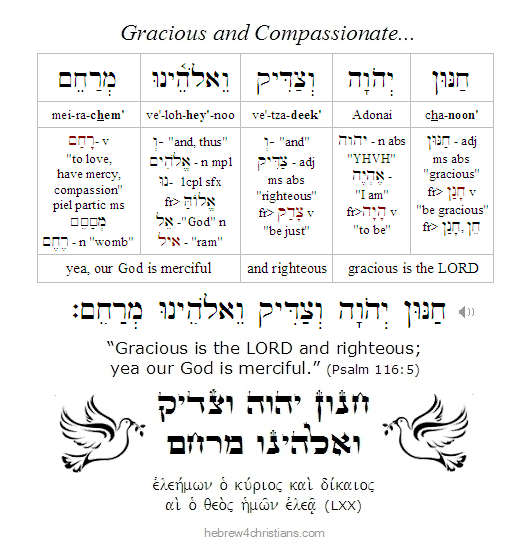
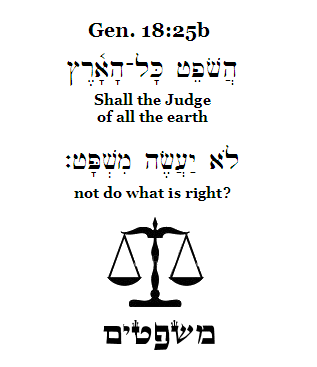
According to Midrash Genesis Rabbah, Abraham was perplexed about the generation of the Flood and thought it was impossible that there were not ten or twenty righteous people on the earth at that time. Because of this, he felt compelled to question and to negotiate with the LORD. Would God destroy the righteous along with the wicked? Perhaps Noah thought the decree of the world's destruction was irreversible, but in this case, God told Abraham that His verdict was not sealed, and that emboldened him to intercede on behalf of Sodom. Abraham's chesed (חֶסֶד), his goodness and compassion, prompted him to "draw near" to the LORD as an advocate on behalf of others. Would God's anger cause Him to indiscriminately stamp out the righteous along with the wicked? May it not be so! The wrath of God is the manifestation of His attribute of justice, but what about his attribute of mercy? Surely the Judge of all the earth will do what is right (הֲשֹׁפֵט כָּל־הָאָרֶץ לֹא יַעֲשֶׂה מִשְׁפָּט); surely the reputation of the LORD was at stake!
Abraham began his plea bargaining with 50 righteous (10 for each of the surrounding cities) and went down to 10. Some of the sages say that he did not fulfill his mission since he did not beg that no matter what the circumstance, Sodom should not be destroyed. As it is written in Proverbs: צַדִּיק יְסוֹד עוֹלָם / "The righteous (even one) is an everlasting foundation" (Prov. 10:25). Moses had interceded on behalf of Israel after the sin of the Golden Calf, even asking God to take his life for the sake of God's pardon of his people. Likewise Yeshua went to Cross and died for the sinful and wicked. Abraham appealed to God to spare the righteous. After learning there were none, he no longer negotiated on their behalf.... A midrash, however, states that Abraham did not pray for fewer than 10 righteous men because he believed that if there were less than this, God would destroy the entire world (as He did with Noach and his family, which totaled eight souls). Ultimately, however, God saved Lot and his daughters on the merit of Abraham's intercession ("God remembered Abraham" - Gen. 19:29). In other words, though God might judge the world, He always makes a way of escape for those who are righteous.
Hebrew Lesson
Psalm 116:5 reading (click):
Eyes of the Heart...
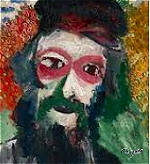
"Turn around and believe that the good news that we are loved is better than we ever dared hope, and that to believe in that good news, to live out of it and toward it, to be in love with that good news, is of all glad things in this world the gladdest thing of all." - Buechner
11.03.25 (Cheshvan 12, 5786) Yeshua told us: "Blessed are those who have not seen and yet have believed" (John 20:29). Despite the struggle of this life - our sorrows, pains, and even death itself - we believe in God's love and promise for us, even if we do not presently see the fulfillment of our hope, just as Abraham believed the promise that he would be the father of an innumerable multitude long before he saw any sign of its fulfillment. Abraham "believed the impossible" and "hoped against hope" (παρ᾽ ἐλπίδα ἐπ᾽ ἐλπίδι), meaning that hope moved within him even though there was nothing to see in the realm of the natural -- he believed in an unseen good; he trusted in the One who gives life to the dead and who "calls into existence the things that do not exist" (Rom. 4:17).
The Scripture comments: "He did not weaken in faith when he considered his own body, which was as good as dead (since he was about a hundred years old), or when he considered the deadness of Sarah's womb. He did not stumble over the promise of God through unbelief but was strong in faith, and gave glory to God, fully persuaded that God was able to do what he had promised, and that is why his faith was counted to him as righteousness" (Rom. 4:19-22).
Likewise we are called to believe in an unseen good, an unimaginably wonderful destiny for our lives, as it says, "Things no eye has seen, nor ear heard, nor mind imagined, are the things God has prepared for those who love him" (1 Cor. 2:9). Faith does not use natural reason or the evidence of the senses to see the unseen, but it "believes to see" through "eyes of the heart" to know the hope of God's calling and to attain the blessing (Eph. 1:18). Faith in God's love comes from a different source and has a different means of apprehension than human wisdom, so that no matter how things might appear in this fallen world, the LORD God may be known and trusted to work all things for our ultimate good. "Blessed are those who have not seen and yet have believed." Amen.
Hebrew Lesson
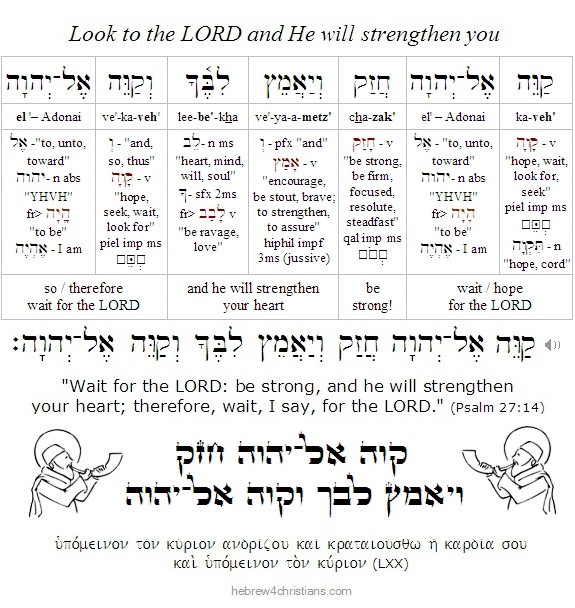
Psalm 27:14 reading (click):
Affirming the Plan of God...
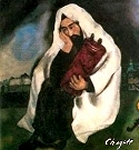
11.03.25 (Cheshvan 12, 5786) Do you have a Jewish heart? If you say that you love the "LORD God of Israel" (יהוה אֱלהֵי יִשְׂרָאֵל) -- and it's clear that the LORD God of Israel loves the Jewish people -- it follows that you likewise will love the Jewish people (see Deut. 7:6-8; 14:2; 2 Sam. 7:23-24; 1 Kings 8:53; 10:9; 1 Chron 17:20-21; Isa 43:1-3; Jer. 31:31-37; Ezek. 36:24-28; Rom. 11:1-2;11:28; Hos. 11:1-11, etc.). After all, the LORD Yeshua is called מֶלֶךְ הַיְּהוּדִים / melech ha-Yehudim: the "King of the Jews" (Matt. 2:2, 27:11, etc.), and the very term "Mashiach" [i.e., "Christ"] is a regal term denoting the anointed King of Israel.
Christians who pray to "Jesus Christ" are really praying to Yeshua as the anointed King of the Jews... And one day (very soon) Yeshua will indeed return to Jerusalem, the "City of the Great King" (Matt 5:35), to assume the throne of David and complete the redemption originally promised to the Jewish people (Zech. 12:1-13:1; 14:1-9, Ezek. 37:12-14, etc.). God will prove faithful to ethnic Israel, friends, and to deny this is to radically question God's faithfulness to the "Church." Indeed, let me say this as plainly as I can: Churches or teachers who claim that God has abandoned ethnic Israel are directly impugning the credibility of the Gospel message itself. Yes, it's that serious of an issue...
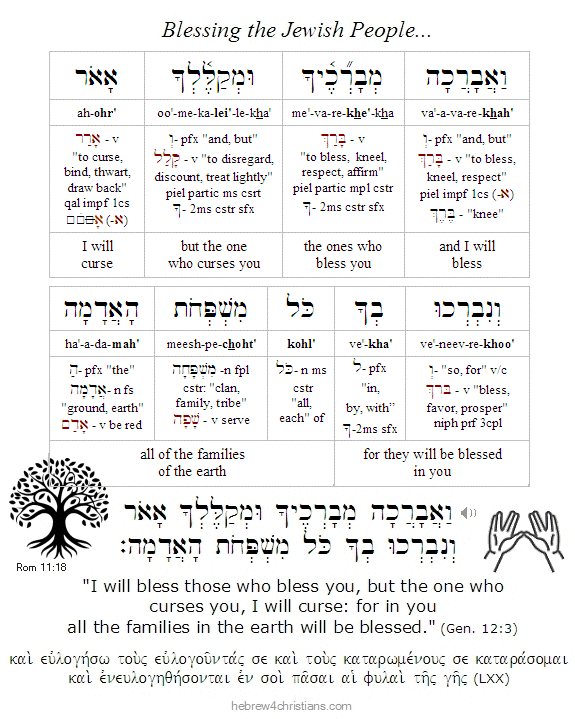
Note the verse in Torah that says, "I will bless those who bless you, but the one who discounts you will be cursed" (Gen 12:3). Why is this the case, chaverim? The answer is found in the second half of the verse: "Because in you all the families of the earth shall be blessed" [i.e., through the advent of your Seed, the Messiah]. We cannot impugn the promises of God given to the Jewish people without thereby impugning God's promises given to us in Messiah. To say that God is "done with the Jewish people" or to consign them to a dark fate, is to disregard them, to curse them, and that results in reciprocal judgment.
Hebrew Lesson
Genesis 12:3 reading with comments (click):
 |
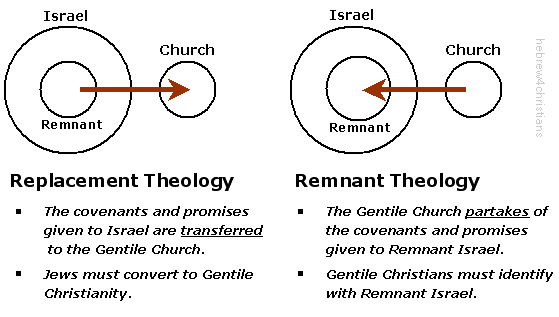
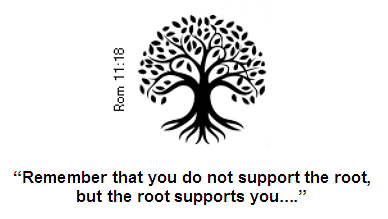
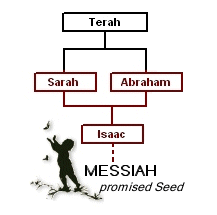
The physical descendants of Abraham are called בָּבַת עֵינוֹ (bavat eino), the "pupil of God's eye" (Zech. 2:8), a term of endearment that the LORD uses for no other nation on earth. Indeed the very habitations of the nations were established based on the number of the children of Israel (see Deut. 32:8). The Scriptures declare that the LORD will never abandon His original covenant people but will chose them for His Name's sake (Isa. 14:1). The church has not replaced Israel in God's redemptive plan but is merely "grafted in" to the original "root" of Israel. "Remember," Rabbi Paul warns, "it is not you who support the root, but the root supports you" (Rom. 11:18). Abraham is the father of us all. "Blessed be the LORD God of Israel From everlasting to everlasting! And let all the people say, "Amen!" (Psalm 106:48).
 |
Note: Please don't regard the "curse" mentioned in Genesis 12:3 to suggest that God is somehow vindictive, petty, etc. No, the reason the curse befalls those who reject God's plan for Israel is because Israel was the means God chose to bring salvation to the world: Yeshua was born the King of the Jews who came to ransom all those who trust in him from the curse of spiritual death (Gal. 4:4, Rom. 3:2, John 4:22). The reason God can't bless people who hate the Jewish people or Israel is because that would mean he would bless those who hate the truth, who spurn salvation, and who love darkness... The same God who promises us life and healing in Yeshua is the one who promised never to cast of Israel or to eternally disown the Jewish people. To paraphrase C.S. Lewis, God cannot give us a good apart from himself, since there literally is no such thing.
Related Topics:
Parashat Vayera (וַיֵּרָא):
God Provides the Lamb...
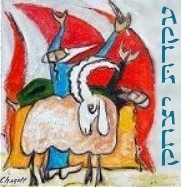
11.02.25 (Cheshvan 11, 5786) Our Torah reading for this week (i.e., parashat Vayera) is very dramatic and extraordinarily prophetic. Among other things (including the miraculous birth of Isaac, the fiery judgment upon Sodom and Gomorrah, the fate of Hagar's son Ishamel, and so on), the reading further includes what I have called the "Gospel according to Moses," that is, Moses' account of how the patriarch Abraham was tested by God to offer his "only begotten son" (בֵּן יָחִיד) Isaac as a whole-burnt offering sacrifice on Mount Moriah -- the place of the future Temple. This astonishing story is referred to as the "Akedah" (עֲקֵדָה), or rather Akedat Yitzchak (עֲקֵידָת יִצְחָק) - the "binding of Isaac" (Gen. 22:1-18). As Abraham lifted up his knife to slay his beloved son, at the very last moment, the Angel of the LORD (מַלְאַךְ יהוה) called out and stopped him from going through with the sacrifice, and a ram "caught in a thicket" was offered as the vicarious substitute. Upon offering the sacrifice in place of his son Abraham named the sacred location Adonai-Yireh (יהוה יִרְאֶה), "the LORD will provide/see" (from the 3ms imperfect of the verb ra'ah (רָאָה), "to see").
The binding of Isaac perfectly illustrates both the principle of sacrificial love and the principle that we must first unreservedly believe in that love in order to understand the ways of the LORD. Those who believe in Yeshua further understand the Akedah as a foreshadowing of the ultimate sacrifice the heavenly Father would give on our behalf. Unlike Abraham, God the Father actually offered His only begotten Son (בֵּן יָחִיד) at Moriah in order to make salvation available for all who will believe (John 3:16-18; 1 John 4:9). As Abraham himself confessed: אֱלהִים יִרְאֶה־לּוֹ הַשֶּׂה / Elohim yireh-lo haseh ("God will provide for himself the lamb"). Later Yeshua told the leaders of Israel that Abraham had "seen His day" and understood the deeper meaning of the Akedah sacrifice (John 8:56).
Hebrew Lesson
Genesis 22:8a reading (click):
As I've mentioned over the years, the very first occurrence of the word "love" in the original Scriptures (i.e., ahavah: אַהֲבָה) refers to Abraham's love for his "only" son who was to be sacrificed as a burnt offering on Moriah (the very place of the crucifixion of Yeshua), a clear reference to the gospel message (Gen. 22:2; John 3:16). Some scholars have noted that the word ahavah comes from a two-letter root (הב) with Aleph (א) as a modifier. The root means "to give" and the Aleph indicates agency: "I" give (i.e., the Father gives). Love is essentially an act of sacrificial giving... The quintessential passage of Scripture regarding love (αγαπη) in the life of a Christian is found 1 Corinthians 13: "Love seeks not its own..."
Whereas the Akedat Yitzchak foreshadowed God's provision for the coming Temple, the Akedat Yeshua (i.e., the crucifixion of Yeshua at Moriah) was the altar where the justice and chesed (love) of the Father fully met (Psalm 85:10). For more on this incredibly rich subject, please see the articles, "The Passion of Isaac" and "The Sacrificed Seed."
Hebrew Lesson
Genesis 18:1 reading (click):
Parashah Outline:
- The LORD reaffirms the promise of the coming heir (Gen. 18:1-15)
- The judgment of Sodom and Gomorrah foretold (Gen. 18:16-21)
- Abram's intercession for Sodom (Gen. 18:22-33)
- God delivers Lot's family (Gen 19:1-22)
- The Destruction of Sodom and Gomorrah (Gen. 19:23-29)
- The origin of the Moabites and Ammonites (Gen. 19:30-38)
- The Abduction of Sarah - and the Exodus from Abimelech (Gen. 20:1-17)
- The Birth of Isaac and rejection of Ishmael from the family (Gen. 21:1-21)
- Abraham's Covenant at Beersheba (Gen. 21:22-34)
- The Sacrifice of Isaac (Gen. 22:1-19)
<< Return
|
|