|
July 2025 Updates (continued)
Note: If any page content appears to be missing, please refresh the page...
Teshuvah and Sanity...
"Victory over fear is the first spiritual duty of man." - Nikolai Berdyaev
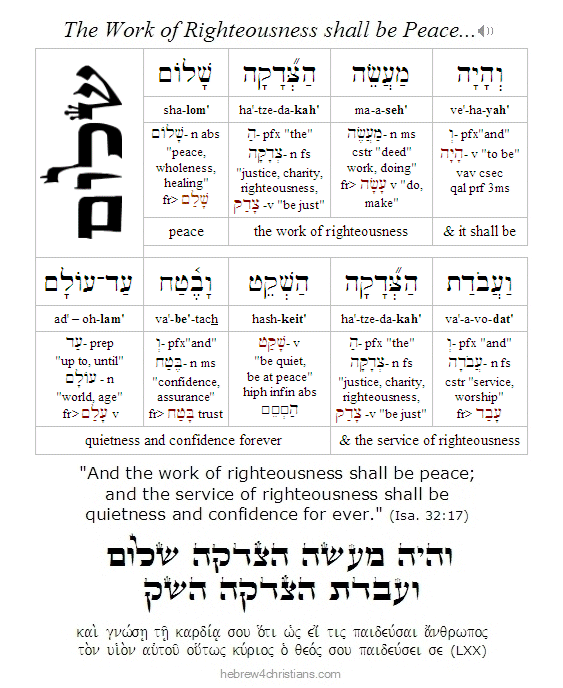
07.07.25 (Tammuz 11, 5785) It is written in our Scriptures (2 Tim. 1:7) that "God has not given us the spirit of fear (πνεῦμα δειλίας), but of power, and love, and a sound mind" (the term "sound mind" comes from the word saos (σάος) "safe," or under the restraining influence of the Spirit of God). Understand the connection between fear and confusion, then, and note further the connection between having a sound mind and a heart of peace (Isa. 32:17).
A fearful or shameful attitude, then, weakens your resolve, quenches your love, and introduces pain to your thinking. It is the old ruse of the enemy of our souls to lead us to despair, the exile of shame, and cruel bondage to untruth.
As always the answer is the same, namely doing teshuvah, that is, turning to God and embracing the grace and love given in Yeshua as our deepest reality, our power, our heart, and our mind. May we be set free from all our fears by the wonder of his unfailing love!
Hebrew Lesson
Isa. 32:17 Hebrew reading (click):
 |
Parashat Balak:
Overruling the Wicked...
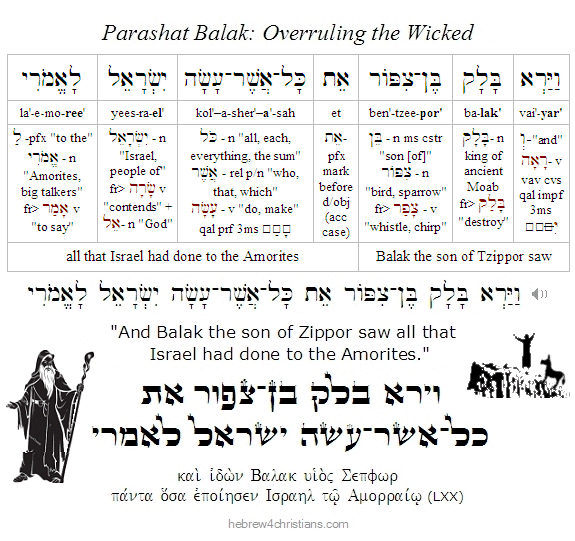
07.06.25 (Tammuz 10, 5785) Shalom chaverim. Our Torah reading for this week is named after an ancient Moabite king named "Balak" (i.e., בָּלָק, "the destroyer") who sought to curse Israel by hiring the services of a flamboyant Midianite conjurer named "Balaam" (i.e., בִּלְעָם, "one set above the people"). It begins this way: "And Balak the son of Zippor saw all that Israel had done to Amalek (e.g., אֱמרִי) and grew fearful.
King Balak's malicious plan was to employ Balaam's sorcery (i.e., kashafut: כַּשָׁפוּת) against the Israelites to prevent them from entering the Promised Land. Similar to the delicious irony that befell the villain "Haman" in the Book of Esther, however, King Balak's scheme was likewise upended, and the curse he sought to put on the Jewish people was repeatedly pronounced as a blessing by Balaam instead. After several foiled attempts, Balak fretfully dismissed the prophet, but before departing from the dejected king, Balaam ironically prophesied the destruction of the Moabites and the victorious establishment of Israel.
Some peoples lives, it seems, are meant to serve as warning of the dangers of self-destruction.... The shameful story of Balaam reveals that "there is no enchantment against Jacob, no divination against Israel" (Num. 23:23). Ein od milvado (אֵין עוֹד מִלְבַדּו) - no weapon or scheme devised against God will ever prosper (Isa. 54:15-17).
But who was this mysterious prophet named Balaam? According to Jewish tradition, Jacob's wicked uncle Laban had a son named Beor (בְּעוֹר), who became the father of Balaam. In other words, the "cursing prophet" Balaam was none other than the grandson of Laban:
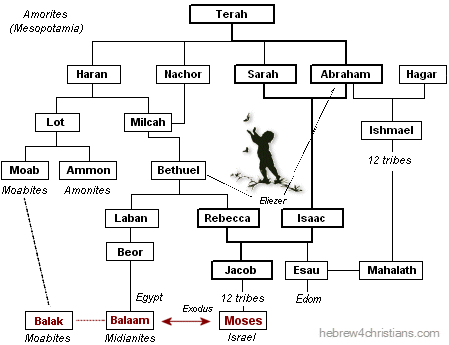 |
Note that the name "Beor" first appears in connection with a king of Edom (Gen. 36:32), which suggests that Balaam might have once been a king of the Edomites (i.e., the descendants of Esau). Further note the phonetic similarity to Peor. If Beor and Peor are the same, then Balaam was actually a prophet of Baal Peor, a local Semitic god.
Balaam was regarded as a great seer, magician and an adept in the occult. He had an "evil eye" and drew the spirit of demons to anything he gazed upon (Avot 5:22). His notoriety made him famous, and powerful people asked him to invoke curses on their enemies. The Talmud (Sanhedrin 106a) states that Balaam became so famous as a magician that he later became a chief advisor to Pharaoh. If so, then it might have been none other than Balaam who advised the new Pharaoh to enslave the Israelites and to afflict them with brutal taskmasters (Exod. 1:8-11). For more about the genealogy of Balaam, see the article entitled, "The Curses of Laban."
Daily Dvar Podcast:
Choosing to Believe...
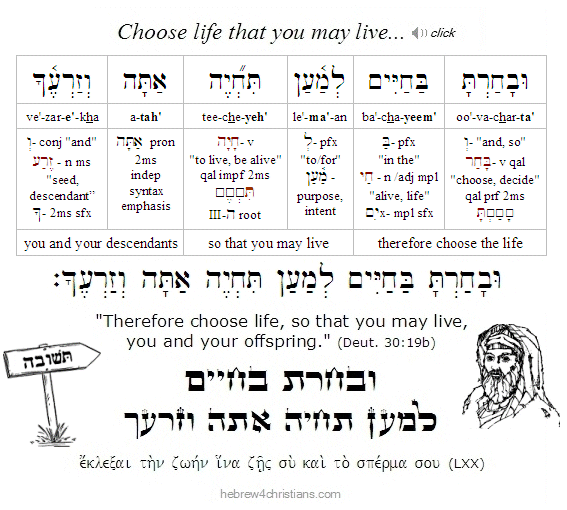
07.04.25 (Tammuz 8, 5785) The Spirit of God cries out, "choose life that you may live!" (Deut. 30:19), which implies that is our responsibility to believe in the Reality of God, to trust in his providential care, to affirm that "all is well and all manner of thing shall be well," and to understand that our present struggle is designed by heaven to help us grow in grace and the knowledge of the truth (1 Pet. 3:16).
In this Daily Dvar podcast (see link below), I discuss the challenge of faith and how we can draw closer to the Lord despite the ambiguity and challenges we regularly face. I hope you find it helpful friends...
Podcast:
Hebrew Lesson
Deuteronomy 30:19 reading (click):
Daily Dvar Podcast:
The Meaning of Independence Day...
07.04.25 (Tammuz 8, 5785) I rarely write about worldly politics, though in the United States on July 4th we commemorate the Declaration of Independence and the establishment of a Constitutional Republic -- matters that many today discount and some even want to overthrow. So this is an opportune time to think about the significance of "Independence Day" and whether it is something we should indeed honor and celebrate.
In this "Daily Dvar" broadcast (link below) I discuss the meaning and significance of the Fourth of July "Independence Day" observed the United States, particularly in light of the radical agenda to "deconstruct" American values and to incite a "second American revolution" at the hands of Antifa and globalists. I recorded this back in 2020 but repost it here because the issues are even more relevant today. I hope you will find it helpful.
Podcast:
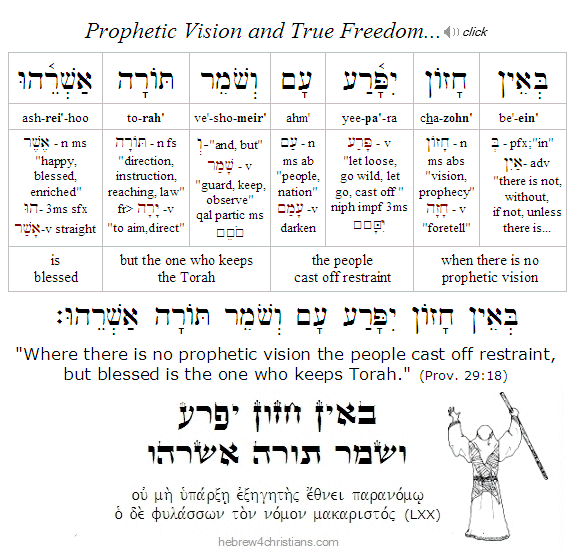
Hebrew Lesson
Proverbs 29:18 reading (click):
The Hidden Kingdom...
07.04.25 (Tammuz 8, 5785) When the disciples asked Yeshua how they should pray, he began with the words: "Our Heavenly Father, sacred is your Name; may your kingdom come, may your will be done..." (Matt. 6:9-10). You might overlook it, but these words imply that God's kingdom is not naturally within us, and indeed, as Yeshua taught elsewhere, what is "naturally" within the heart is just the opposite: "For from within, out of the heart of a person, come evil reasonings (οἱ διαλογισμοὶ οἱ κακοι), adulteries, fornications, murders, thefts, covetousness, wickedness, deceit, lewdness, an evil eye, blasphemy, pride, foolishness. All these evil things come from within and defile a person" (Mark 7:21-23). So when Yeshua told the Pharisees that the kingdom of God is "within you," he meant that the kingdom is a matter of a heart that has been reborn by the Spirit - not that people are naturally endowed with a divine "spark" (i.e., nitzot: נִצוֹץ) within them. No, the default condition of the unregenerated heart is one of selfish autonomy that refuses to submit to God's right to reign (Rom. 8:7). Its creed is: "I am the master of my fate: I am the captain of my soul" (Henley). The natural man is a rebel against God; a usurper of the prerogatives of God, and therefore he "eats from the apple" to define "good" and "evil" in his own self-serving terms (Isa. 5:20-21).
The "default" condition of the soul is one of "spiritual death," a semblance of life that is "cut off" or alienated from the truth of God, and is therefore devoid of eternal life. As Yeshua told Nicodemus, "unless a person is born again (i.e., γεννηθῇ ἄνωθεν, "born from above"), they cannot see the kingdom of God" (John 3:3). The spiritual seed of the kingdom must be planted within the heart by the Spirit of God. "That which is born of the flesh is flesh, and that which is born of the Spirit is spirit. Do not marvel that I said to you, 'You must be born again.' The wind blows where it wishes, and you hear the sound of it, but cannot tell where it comes from and where it goes. So is everyone who is born of the Spirit" (John 3:6-8).
The miracle of new life comes through a supernatural conception, "from above" (ἄνωθεν), which means that we are entirely powerless in our natural state to impart life to ourselves. And that, of course, is the essential problem of human nature -- that despite our natural desire to be "godlike," we are monstrous in our estate, and therefore what we most need is "deliverance from ourselves," that is, salvation from the horrors of selfish existence.
The Scriptures declare that all our supposed acts of righteousness are "as filthy rags" before the LORD God (Isa. 64:6), so again, we need divine intervention, an "external healing" that comes from Yeshua alone, an entirely new existence that does not derive from "blood, nor the will of the flesh, nor of the will of man" (John 1:13). Only those who are reborn by God's Spirit are given "power to become the children of God" (John 1:12). Interestingly the Greek word translated "power" is eksousia (ἐξουσία), a compound word formed from the preposition ek- (ἐκ), meaning "out of," and the noun ousia (ουσία), meaning "being," thereby suggesting something ontologically different than "natural" reality. Indeed, the word points to the indestructible life of the resurrection of the Lord himself.
From our point of view, the agency of attaining newness of life is a matter of the "mustard seed" of faith, a humble image that from something seemingly insignificant will come forth blessing and abundant life. This is how the kingdom of God grows - from the "bottom up," or from our brokenness and humility. Recall that when King David prayed, "Create in me a clean heart O God," he did not use the word "yatzar" (יָצַר), meaning to "form" or "shape" something into being, but he instead used the word "bara" (בָּרָא), the same word used to describe God's sovereign creation of the universe (Gen. 1:1; Psalm 51:10).
We may affirm "I can do all things through God who strengthens me," but we should understand what "all things" means... We can love the unlovely; we can bless those who curse us; we can suffer more than we know; we can endure in our desperation; we can thank God despite our afflictions, and we can do all these things because we have been crucified with Messiah, and that the life we now live is grounded in our relationship with the indwelling Spirit of God. Paradoxically, the Christian life is a dying life, and our union with the death of Yeshua is also the gateway to the power of the resurrection life. We gain ourselves when we lose ourselves: "Not I, but Christ lives in me." By faith we are "incorporated" into Messiah: the 'unregenrated nature' has been crucified with him, and the 'new man' (i.e., regenerated nature) is created to know him as the central reason and purpose of life.
The kingdom of God is "within you" only when God the true King lives within your heart, though this is hidden from the "eyes of the flesh," that is, from the pretenses of the natural man (1 Cor. 2:14). Consider the focus of our Lord. Yeshua did not esteem the things man regards as important; he was detached from the dramas and affairs of the political world. He pointed to flowers, birds, seeds, yeast in dough, fish, and other simple matters to illustrate the principles of the kingdom of God. Moreover his disciples were "nobodies" in the world; the people he healed were outcasts, strangers, unknown... And even our Lord himself was disguised in poverty and insignificance: "He sprouted up like a twig before God, like a root out of parched soil; he had no stately form or majesty that might catch our attention, no special appearance that we should desire him" (Isa. 53:2). God Almighty emptied himself of glory to become "baby Jesus" for us; he was born in a manger, in poverty and obscurity.
The "mustard seed" of faith... the hidden miracle of life that grows by God's power into a place of refuge and grace. It may seem like a slow or even tedious process, but the fruit of the Spirit is produced according to his will: "like a tree planted by the rivers of water that brings forth its fruit in its season" (Psalm 1:3). The process of spiritual growth is ultimately mysterious and divine: "The Kingdom of God is like someone who spreads seed on the ground. He goes to sleep and gets up, night and day, and the seed sprouts and grows, though he does not know how. By itself (αὐτομάτη, "automatically") the soil produces a crop, first the stalk, then the head, then the full grain in the head. And when the grain is ripe, he comes in with his sickle because the harvest has come" (Mark 4:26-29).
In light of all of this, be patient and continue to trust that the Lord to do the impossible within your heart (Matt. 19:26). "For I am sure of this very thing, that the one who began a good work in you will perfect it until the day of Yeshua the Messiah" (Phil. 1:6). "He will strengthen you to the end, so that you will be blameless on that day" (1 Cor. 1:8). "Now to Him who is able to keep you from stumbling, and to present you faultless before the presence of His glory with exceeding joy, to God our Savior, Who alone is wise, be glory and majesty, Dominion and power, Both now and forever" (Jude 1:24-25). Amen.
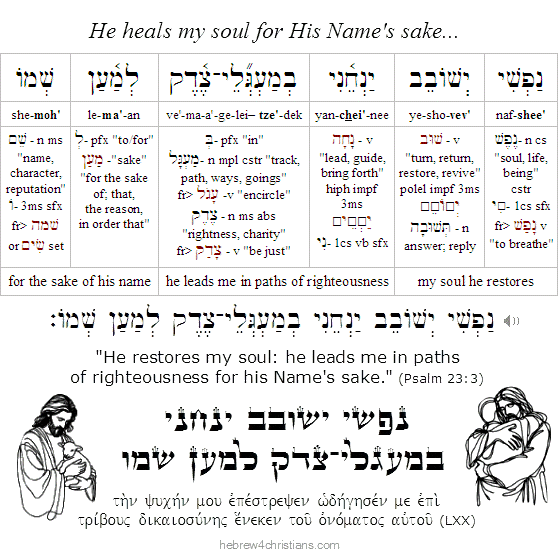
Hebrew Lesson
Psalm 23:3 reading (click):
Moses in the Promised Land...
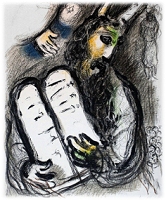
07.03.25 (Tammuz 7, 5785) In our Torah for this week (i.e., parashat Chukat), we read that after Miriam had died, the people yet again complained about the lack of water, though this time God instructed Moses to "speak to the rock" to satisfy their thirst. Moses, however, perhaps still grieving the death of his sister, then rebuked the people, saying: "Hear now, you rebels: shall we bring water for you out of this rock? And he lifted up his hand and struck the rock with his staff twice, and water came out abundantly, and the congregation drank, and their livestock" (Num. 20:10-11). The LORD, however, was not pleased by this representation and rebuked Moses and Aaron saying: "Because you did not believe in me (יַעַן לא־הֶאֱמַנְתֶּם בִּי), to reveal me as sacred in the eyes of the people of Israel, therefore you shall not bring this assembly into the land that I have given them" (Num. 20:12).
Jewish commentators have long struggled to understand this tragic episode, wondering whether it was because Moses had lost his temper with the people, or whether he had arrogantly claimed to be able to bring forth water by himself, or whether he had simply failed to obey God's explicit instruction to speak to (rather than to strike) the rock... We desire a straightforward explanation, a clear reason why God punished Moses and Aaron, but we are left wondering, questioning, struggling... Yet perhaps this is the point of the narrative – that there are reasons known only to God, and we must surrender our need to resolve the ambiguity of the outcome by means of trust.
We might resist or object to this solution, this great "cloud of unknowing," and we may continue searching, asking questions, and wondering; but often enough we will discover there are no definitive answers, and even if we should accept a tentative one, our solution will inevitably lead to even further questions. As it is written: "One thing God has spoken, two things I have heard" (Psalm 62:11), which means that the Torah leads us to think, to enter into dialog, to search for truth. With one word, we often hear two things, which suggests the process of understanding in light of trust. Indeed we often hear and only later are able to listen to what was heard.
The Scriptures do not command us to believe "on cue," but rather reveal a world of questions for our hearts to ponder. Indeed, instead of regarding the Bible as a "Book of Answers" for our questions, it is worthwhile to think of it as a "Book of Questions" for our answers. As we listen, God questions us so that we can know him by means of the dialog within our hearts. As any good teacher knows, when a student earnestly wrestles with a question he learns more than if he were given a straightforward answer.
The Lord allows us to be without answers so that we will be free to seek, to struggle, and to "own" what we come to understand through our relationship with him... That way our learning will be real, substantive, and born from the urgency our own inner need. Indeed, God's very first question to man is always, ayekah: "Where are you?" (Gen. 3:9), which appeals for us to acknowledge how we hide from the truth. "Where are you?" is the poignant call of the Seeking Father for his lost child, and the question only becomes "our own" when we are willing to look at how we've come to be at this place in our lives. God's question to our heart is meant to lead us out of hiding to respond to his loving call...
Our God is "rachum ve'chanun" (רַחוּם וְחַנּוּן), merciful and gracious, and there is a happy ending to the story. Moses did eventually enter into the Promised Land, as revealed in the account of the "transfiguration" of Messiah given in the Gospels (Matt. 17:3-4; Mark 9:4-5), and therefore the prophetic reason that he was unable to enter the land after the Exodus from Egypt may have been to foretell the need for Yeshua to arise for Israel.
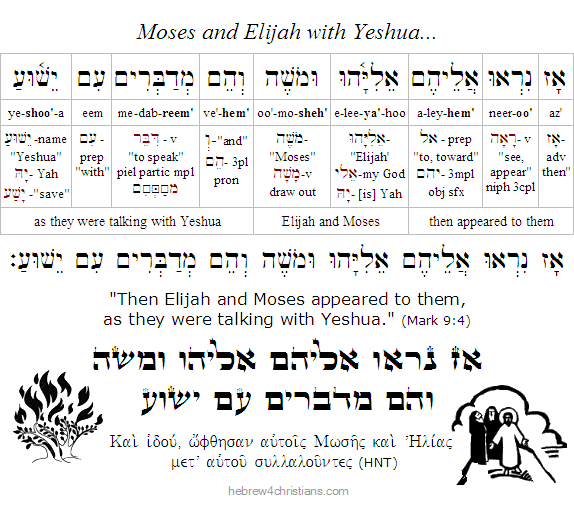
Hebrew Lesson
Mark 9:4 reading (click for audio):
Beauty for Ashes....
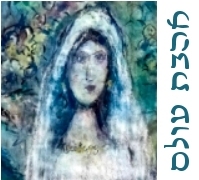
The following is related to this week's Torah reading, parashat Chukat...
07.03.25 (Tammuz 7, 5785) The ashes of the red heifer represented the death and sacrifice of something extremely rare, valuable, and precious. The ashes were mixed with "living water" (מַיִם חַיִּים) to reveal the truth that though the end of all flesh is but dust and ashes, the Spirit gives cleansing and life.
Indeed the word ashes (אֵפֶר) may be rearranged to spell both cure (רַפֵא) and beauty (פְאֵר). The author of the book of Hebrews argues from the lesser to the greater: If the sprinkling of water mixed with the ashes of a red heifer purify the flesh from contamination with physical death, how much more does the blood of Messiah purify the soul from the deeds that cause spiritual death? (Heb. 9:13-14).
Amen, because of Yeshua's sacrifice we are given "beauty for ashes, the oil of joy for mourning, the garment of praise for the spirit of heaviness," that we may be called oaks of righteousness, the planting of the LORD, that He may be glorified (Isa. 61:3).
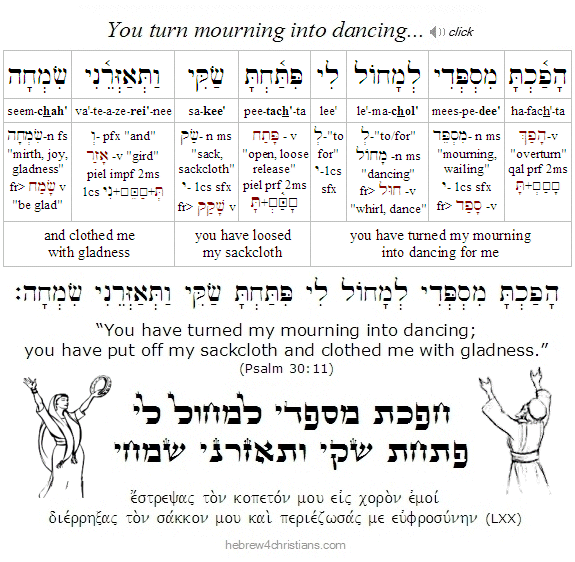
Hebrew Lesson
Psalm 30:11 reading (click):
Saved from Death's Sting...
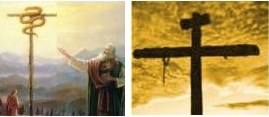
07.03.25 (Tammuz 7, 5785) Where it says, "All Scripture is breathed out by God and profitable for teaching, for reproof, for correction, and for training in righteousness" (2 Tim. 3:16), we note that the "Scriptures" referred to are the words of Torah, since the New Testament had not yet been compiled when Paul had written these words. Paul further said: "These things (i.e., the stories recounted in the Torah) happened to them as examples for us. They were written down to warn us, who are living at the end of the age" (1 Cor. 10:11). "The deeds of the fathers are signs for the children," meaning that the narratives of the Bible serve as allegories for us.
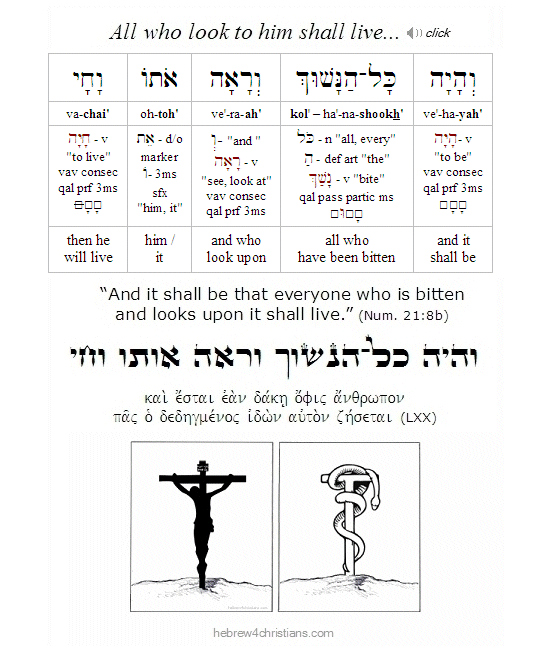
From our Torah portion this week (i.e., Chukat) we read how the people became discouraged along the way and complained against God and Moses, saying: "Why have you brought us up out of Egypt to die in the desert? For there is no food and no water, and our soul loathes this worthless bread (i.e., לֶּחֶם הַקְּלֹקֵל, lit. "cursed bread," referring to the heavenly manna). So the LORD sent venomous serpents (i.e., ha'nechashim ha'seraphim: הַנְּחָשִׁים הַשְּׂרָפִים, i.e., bronze colored snakes that gave a burning bite) among the people, and they bit the people and many of the people of Israel died. Then the people came to Moses and said, "We have sinned, for we have spoken against the LORD and against you. Pray to the LORD that He take away the serpent (ha'nachash: הַנָּחָשׁ) from us." So Moses prayed for the people and the LORD then said to him, "Make a fiery serpent (i.e., saraf: שָׂרָף), and set it on a pole (i.e., nes: נֵס); and it shall be that everyone who is bitten, and who looks upon it (i.e., the serpent), shall live" (Num. 21:4-8).
The "fiery serpent" – the venomous sting of which brings death – is what must be looked upon, confronted, and confessed. We must look at that which kills us, and by seeing it, we can then see God's miracle (i.e., nes: נֵּס) that delivers us... Therefore we look to the cross – the place where Yeshua clothed himself with our sickness and sin – to behold God's remedy for our eternal healing. As Yeshua explained to Nicodemus, "As Moses lifted up the serpent in the wilderness, so must the Son of Man be lifted up, that whoever believes in him may have eternal life" (John 3:14-15). Humanity as a whole has been "bitten by the snake" and needs to be delivered from its lethal venom. And just as the image made in the likeness of the destroying snake was lifted up for Israel's healing, so the One made in the likeness of sinful flesh (Rom. 8:3) was to be lifted up as the Healer of the entire world. In Yeshua the miraculous exchange takes place: "For our sake he made him to be sin who knew no sin, so that in him we might become the righteousness of God" (2 Cor. 5:21). This is the essence of the gospel message itself...
Hebrew Lesson
Numbers 21:8b reading (click):
The sickness of sin is lethal, and there is no remedy apart from turning to behold Yeshua, the "fiery serpent" lifted upon a stake, the One crucified for our deliverance (Num. 21:8; John 3:14; Gal. 3:13). The teshuvah of God is to turn away from yourself to behold the miracle of God's righteousness given for your sake, and therefore it is a matter of radical faith.
Receiving God's Light...
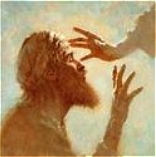
"Do not marvel that I say to you, 'You must be born again...'" - Yeshua
07.03.25 (Tammuz 7, 5785) By nature human beings are seemingly "thrown" into existence, subject to historical forces and pressures over which they have no control, bound to their DNA and biochemistry, hemmed in on all sides, powerless, full of ignorance and dark impulses. Yet the more people try to disentangle themselves from what cannot be changed, the more enmeshed they become. The natural order of life seems to be that we come forth out of the darkness of birth and return to the darkness of death - a pilgrimage of the unknown.
We need light to conquer our darkness, but we are blind. We cannot forgive ourselves or make ourselves feel loved. We can't find our way. By ourselves we cannot be delivered from fear, anger, or despair. Aristotle's logic is tragically sound: "All people are mortals; all mortals fear death; therefore all people fear death." We cannot escape ourselves; we cannot heal ourselves; we cannot save ourselves. Therefore all that hope believes can only be graciously given by God, for we are lost and must be found. We cannot find our way to eternal life: we must be brought home by the Good Shepherd who seeks for us.
We are saved by the miracle of divine intervention in our lives, and that alone truly changes us. This is called "regeneration" or spiritual rebirth. Just as we were powerless when we were physically brought into this world, so we are powerless when we are spiritually brought into the realm of the divine. We cannot change ourselves, that is, by our own strength or resources. Salvation is "of the LORD," which means it is God's power and love that sets us free. We become a "new creation" that finds its life in the blessing of the Living God. Before we see this, however, we have to become "sick of our sickness," tired, exhausted, and utterly conscious of our need for deliverance from ourselves. We can only come to know God as our Savior when we turn to Him as our only hope.
"Unless you are born again, you cannot see the kingdom of God." We are blind until God opens our eyes. When Yeshua gave sight to a man born blind, the Pharisees concluded that he could not be a true prophet of God because he healed someone on the Sabbath day (John 9). In response Yeshua said, "For judgment I came into this world, that those who do not see may see, and those who 'see' may become blind." When the Pharisees heard this they asked, "Are we blind then?" and Yeshua replied: "If you were blind, you would not be guilty of sin, but now because you claim that you can see, your guilt remains." Likewise the Apostle Paul was made blind in order to see; he had to lose the blindness of his seeing in order to behold the truth of God's kingdom (Acts 9). As long as Paul thought he could see he remained blind, but as soon as he realized he was blind, he began to be able to see...
The difference between believers and unbelievers does not turn on the problem of sin and the condition of spiritual death - for both are in the same helpless state before God - but rather with the different responses they have toward "the light," that is, the revelation of God manifest in Yeshua. Those who love evil hate the light and turn away from its disclosure, whereas those who "do truth" love the light so that their deeds are revealed as God's power at work within their hearts (John 3:19-21; Eph. 5:13). There is an "exclusive disjunction" in the realm of the spirit: either you will love what is evil and hate the light, or you will love the light and hate what is evil. As Yeshua said: "No one can serve two masters, for either he will hate the one and love the other, or he will be devoted to the one and despise the other" (Matt. 6:24).
Followers of Yeshua are told to "walk as children of light" / ὡς τέκνα φωτὸς περιπατεῖτε (Eph. 5:8). The children of light are called to be "am kadosh" - a holy people - separate from the evil engendered by the fallen world and its forces, just as the very first creative expression of God was the separation of light from darkness (Gen. 1:3-4). The children of light "hate evil and love the good," and conversely, the children of darkness "hate the good and love evil" (Psalm 34:21, Prov. 8:13, Amos 5:15, John 3:20-21). Regarding the heavenly Zion to come, it is written: "nothing ritually unclean will ever enter into it, nor anyone who does what is detestable or practices falsehood (lit. "makes a lie"), but only those whose names are written in the Lamb's book of life" (Rev. 21:27).
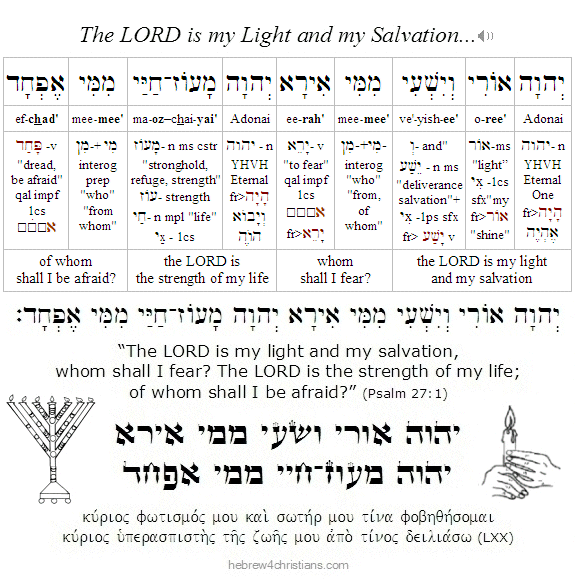
This is the question of the gospel, after all: Are you willing to believe in the light of God's love, or not? What is your destiny? Yeshua is the light of the world, and those who follow him will not walk in darkness, but will have the light of life (John 8:12). So, do you have "ohr ha-chayim" (אוֹר הַחַיִּים), "the light of Life," shining within your heart? The light beckons: "wake up, open your eyes, and believe" the good news: darkness and despair will not prevail; your mourning will find comfort, your grief its solace. Your heart's deepest longing shines brightly, even now, if you will but believe... Now may you find courage and remember what is written: "The LORD is my light and my salvation (i.e., my Yeshua); whom shall I fear? The LORD is the refuge of my life; of whom shall I be afraid?" Amen.
Hebrew Lesson
Psalm 27:1 reading (click):
 |
Beware the Seeming Way...
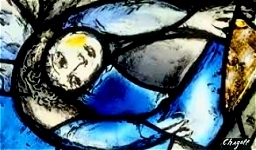
"The human race in the course of time has taken the liberty of softening and softening Christianity until at last we have contrived to make it exactly the opposite of what it is in the New Testament." - Kierkegaard
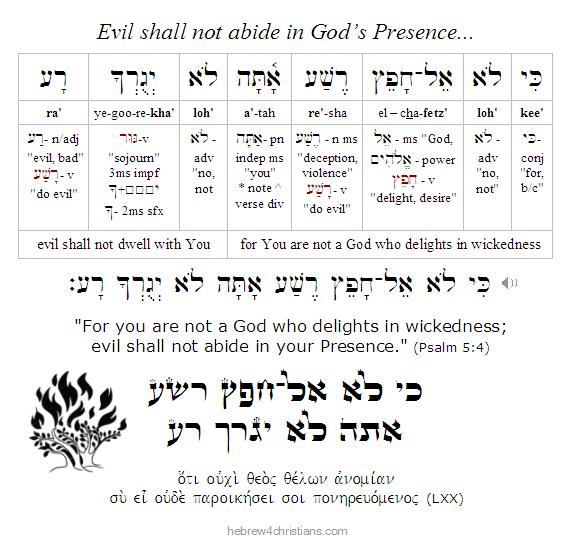
07.02.25 (Tammuz 6, 5785) The Scriptures warn that "there is a way that seems right to a person, but its end is the way to death" (Prov. 14:12). Our postmodern culture celebrates "relativism," or the spurious notion that there is no such thing as objectively knowable truth... Apart from the self-contradiction that arises by saying that it is (objectively) true that there is no objective truth, the unthinking acceptance of this sophistical perspective leads to mindlessness, the lack of creativity, moral stupidity, apathy, and delusional thinking. Popular culture inculcates and preaches there are no moral absolutes and therefore terms like "right" and "wrong," "just" and "unjust," "true" and "untrue" should (ahem) be translated as expressions of subjective preference without any reference to moral categories or structures that extend beyond the individual (or a particular "group"). According to this backwards view, Mother Theresa was no better a person than was Adolf Hitler; and therefore genocide, slavery, murder, and so on, are "lifestyle choices" that express individual or collective preference, but nothing else. Indeed such a viewpoint claims there is no way to infer an "ought" from an "is" (no "prescription" from "description") and therefore assigning moral praise, blame or responsibility is ultimately meaningless.
Understand, then, that the uncritical acceptance of epistemological and moral relativism stifles the life of the mind by implying that there is no difference between truth and error, between good and evil, between beauty and ugliness, between logical and illogical thinking, and so on. It is therefore a form of insanity, or deranged thinking. However, since language and meaning are necessarily grounded in logic, naive relativism is ultimately unintelligible and incommunicable, since logic assumes that meaning and rules of inference serve as the conditions of any expression of thought. I share this to point out that the thinking of our culture is not based on careful reflection or reasoning but is essentially a matter of brute force, and therefore it is rightly to be regarded as irrationalism, an implied appeal to violence, and depraved thinking. Of course this sort of relativism is a very useful indoctrination technique regularly used by political agitators, the mass media, by government propagandists, con artists, and by all those who rely on dimwitted people to manipulate and control. Therefore the thoughtful person of truth, that is, the person of genuine moral conviction derived from intuitive axioms of reasoning, will always be regarded as an enemy to those who live and practice the lie.
Martin Buber once said, "What is accomplished through lies can assume the mask of truth; what is accomplished through violence can go in the guise of justice, and for a while the hoax may be successful. But soon people realize that lies are lies at bottom, that violence is violence - and that both lies and violence will suffer the destiny history has in store for all that is false." As Yeshua himself said, "For this purpose I was born and for this purpose I have come into the world -- to bear witness to the truth. Everyone who is of the truth listens to my voice" (John 18:37). "Blessed are those who wash their robes, so that they may have the right to the Tree of Life and that they may enter the city by the gates. Outside are all those who love and practice the lie..." (Rev. 22:14-15).
Hebrew Lesson
Psalm 5:4 reading (click for comments):
Trust in Difficult Days...
07.02.25 (Tammuz 6, 5785) When Andrew Murray was bedridden and sick, he advised another sufferer using these words: "In time of trouble say: "First, He brought me here. It is by His will I am in this straight place; in that I will rest. Next, He will keep me here in His love, and give me grace to behave as His child. Then, He will make the trial a blessing, teaching me the lessons He intends me to learn, and working in me the grace He means to bestow. Last, In His good time He can bring me out again – how and when He knows. [Therefore] let me say I am here, (1) by God's appointment; (2) in his keeping; (3) under His training; and (4) for His time." Of course this applies not only to physical sicknesses but to emotional pain and afflictions of the soul.
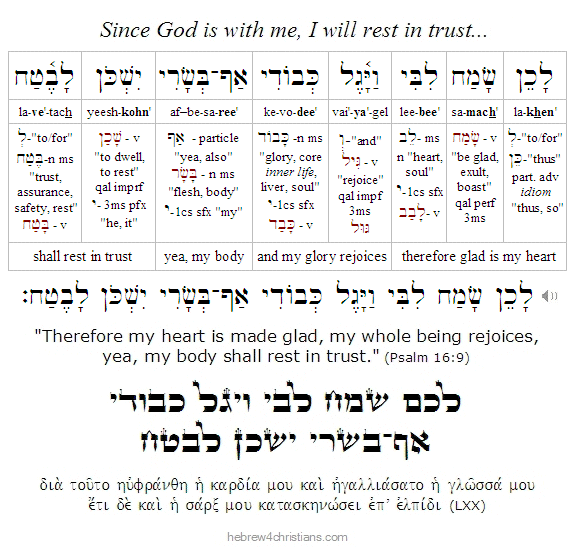
Deep within I discover that I can bless the Lord, losing sight of myself and my fears as I affirm my deepest purpose and heritage: "My lines have fallen to me in pleasant places; indeed, my inheritance is beautiful to me" (Psalm 16:6). Though I might have felt bereft and even tempted to lament my estate, by God's grace I am made able to give thanks and to bless, even in the midst of my troubles and pain: "I will bless the LORD who has counseled me; my conscience disciplines me in the night" (Psalm 16:7). Therefore שִׁוִּיתִי יְהוָה לְנֶגְדִּי תָמִיד - "I have set the Lord always before me" – especially in desperate moments when I feel overwhelmed – since I have learned that "because he is at my right hand, I shall not come undone" (Psalm 16:8). God gives me strength to renew my hope: therefore "my heart is made glad, my whole being rejoices, and my body rests in trust" (Psalm 16:9).
 |
When I feel hopeless, I seek hope; when in pain, I seek strength; when in despair over besetting sins, I yearn again for a place I can call home... In the midst of these things, my heart wonders whether my suffering has come because I deserve it or somehow "need" it. I reason that it may make sense that God extends special care for his favored ones, for those who are righteous and who seem free from the vexation of despair, but does it make sense for me, one who is undone, broken, alone, and unworthy? My heart protests that this is not the whole story of my life, and that more to be said. I need God and I know that he cares for me. I recall his promises to heal, to bind up the broken of heart, and extend his comfort for our afflictions. Might pain herald the advent of something new to come? Might there be a deeper beauty and surpassing grace going "through the wound" instead of objecting to it?
Our Daily Deliverance...
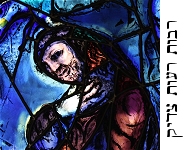
"How does God save His people from the pleasure of sin? The answer is, by imparting to them a nature which hates evil and loves holiness. This takes place when they are born again, so that actual salvation begins with regeneration. Of course it does; where else could it commence? Fallen man can neither perceive his desperate need of salvation, nor come to Christ for it, till he has been renewed by the Holy Spirit" - Arthur W. Pink
07.02.25 (Tammuz 6, 5785) "Lead us not into temptation, but deliver us from evil" (Matt 6:13). Just as we ask God for our daily bread (לֶחֶם חֻקֵּנוּ), so we ask him for our daily deliverance. Note that the term translated "evil" in many translations ("deliver us from evil") is a substantive rather than an adjective: τοῦ πονηροῦ, the evil one... "Give us this day our daily deliverance from the evil one...."
Our daily bread and our daily deliverance are connected with our decision to "choose life" (בַּחַרְתָּ בַּחַיִּים) -- and to always choose life -- even in moments we find difficult, distressing, and even when we might wish that we were no longer living... Choosing life means refusing to escape reality by evading the significance of our choices; it means finding the will to regard life as worthy; it implies that we will eat our bread in trust that the Lord is at work even in the darkest of hours (Passover occurred at midnight)...
"The descent to hell is easy and those who begin by worshiping power, soon worship evil." Choosing life means refusing to eat the fruit of death and to seek Yeshua, the Tree of Life. We live one day at a time; we only have today: We are given daily bread for this hour of our need. Today is the day of your deliverance - if you are willing to walk in it. Therefore, the Spirit of the Living God cries out, "Choose life and live!"
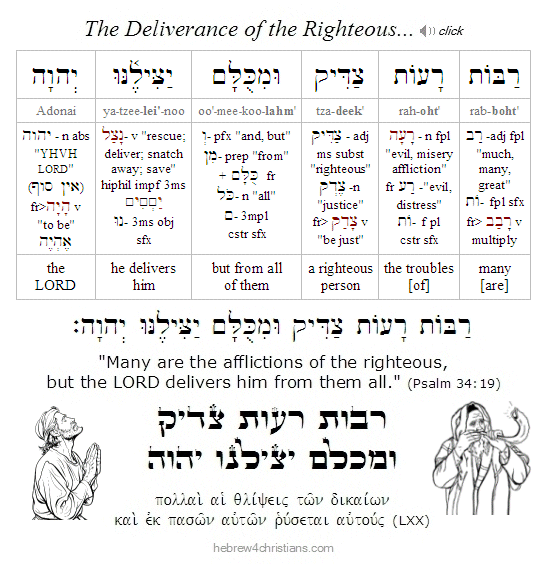
"Do not be grieved [even over yourself], for the joy of the LORD (חֶדְוַת יְהוָה) is your strength" (Neh. 8:10). Affirming the love, faithfulness, compassion, and salvation of God is a powerful way to defeat the enemy of our souls, who regularly entices us to despair. King David constantly asked God to help him in his spiritual struggles. "Though I walk in the midst of trouble (בְּקֶרֶב צָרָה), you preserve my life; you stretch out your hand against the wrath of my enemies, and your right hand delivers me" (Psalm 138:7). "For the enemy has pursued my soul; he has crushed my life to the ground; he has made me sit in darkness like those long dead. Therefore my spirit faints within me; my heart within me is appalled" (Psalm 143:2-3).
Despite whatever struggle we may face, "the LORD is near to the brokenhearted and saves the crushed in spirit (Psalm 34:18). Indeed, the Lord God is far greater than your heart's sin and will one day entirely deliver you of sin's effect and influence. Amen.
Hebrew Lesson
Psalm 34:19 reading (click):
The Love of Truth...
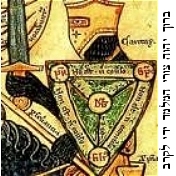
"Correctitude implies nowadays a formal or fastidious use of words; and what is wanted is not so much the correct as the living use of words. It is the memory of the meaning of a word which is the life of the word." - Chesterton
07.01.25 (Tammuz 5, 5785) Christian (and Jewish) theology insists that spiritual truth matters, and knowing the truth about God is absolutely essential for life itself. Nothing is more important. Nothing is more vital. "This is eternal life (חַיֵּי עוֹלָם), that they may know you, the only true God (אֶל־אֱמֶת), and Yeshua the Messiah (יֵשׁוּעַ הַמָּשִׁיחַ) whom you have sent (John 17:3). The truth sets us free; it is the unbreakable seal that bears witness of reality. In the Gospel of John it is recorded that Yeshua said, "I am the way, the truth, and the life" (i.e., ᾽Εγώ εἰμι ἡ ὁδὸς καὶ ἡ ἀλήθεια καὶ ἡ ζωή). The Greek word translated "truth" in this verse is aletheia (ἀλήθεια), a compound word formed from an alpha prefix (α-) meaning "not," and lethei (λήθη), meaning "forgetfulness." (In Greek mythology, the "waters of Lethe" induced a state of oblivion or forgetfulness.) Truth is therefore a kind of "remembering" something forgotten, or a recollecting of what is essentially real. Etymologically, the word aletheia suggests that truth is also "unforgettable" (i.e., not lethei), that is, it has its own inherent and irresistible "witness" to reality. In that sense light is a metaphor for truth: "The light shines in the darkness, and the darkness has not overcome it" (John 1:5). There can be no truth apart from moral reality. People may lie to themselves, but ultimately truth has the final word.
Greek scholars note that the word lethei itself is derived from the verb lanthano (λανθάνω), which means "to be hidden," so the general idea is that a-letheia (i.e., truth) is non-concealment, non-hiddenness, or (put positively) revelation or disclosure. Thus the word of Yeshua - His message, logos (λόγος), revelation, and presence - is both "unforgettable" and irrepressible. Yeshua is the Unforgettable One that has been manifest as the express Word of God (דְּבַר הָאֱלהִים). Yeshua is the Light of the world (אוֹר הָעוֹלָם) and the one who gives us the "light of life" (John 8:12). Though God's message can be suppressed by evil and darkened thinking, the truth is self-evident and intuitively certain (see Rom. 1:18-21).
We have a moral imperative, given by God Himself, to receive the truth and to live according to the nature of spiritual reality. Those who reject or suppress the truth, however, are responsible for their actions, as it is written, "No one who practices deceit shall dwell in my house; no one who utters lies shall continue before my eyes" (Psalm 101:7).
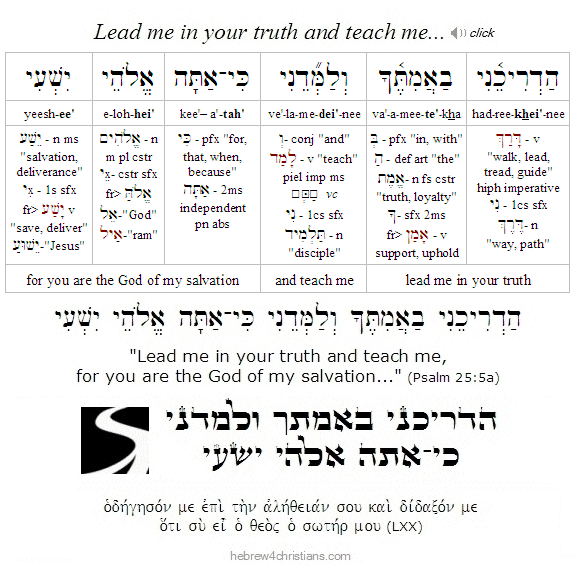
Hebrew Lesson
Psalm 25:5a reading (click):
 |
Comfort in Affliction...
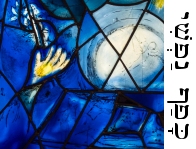
"The truth, even though I cannot feel it right now, is that I am the chosen child of God, precious in God's eyes, called the Beloved from all eternity and held safe in an everlasting embrace... We must dare to opt consciously for our chosenness and not allow our emotions, feelings, or passions to seduce us into self-rejection." - Henri Nouwen
07.01.25 (Tammuz 5, 5785) One of the ultimate tests of faith is to refuse to succumb to despair in the face of personal suffering. For those who struggle with the loss of a loved one, or some terminal disease, the test of faith calls for the heart to look beyond the realm of appearance, where the "outward man" perishes, to the realm of ultimate healing, where the "inward man" is finally liberated from the ravages of sin and death.
Our present condition is one of a "divided house" that cannot stand. The old nature is earthbound, a creature of the dust of the earth, whereas our new nature comes from the breath of life imparted through faith in Jesus. In His infinite wisdom, God has imparted the treasure of hope in "jars of clay" so we can understand that our sufficiency comes from Him alone (Psalm 119:25; 2 Cor. 4:7).
Our natural tendency is to seek comfort and to flee from pain. We fret over the insecurities of our world and instinctively seek shelter from threats we perceive. Yet the world itself is subject to vanity (Rom. 8:20); it is pain-riddled and constrained to ongoing bereavement: "All flesh is grass, and all its beauty is like the flower of the field" (Isa. 40:6). As Job said, ruach chayai (רוּחַ חַיָּי), "my life is but a breath" (Job 7:7).
God uses suffering to do a "deep" work of change within us. Indeed, the tribulations of life are described using the image of the "squeezing of grapes," which yield something far more precious than any kind of this-worldly happiness. "For our light affliction, which is but for a moment, prepares us for a far more exceeding and eternal weight of glory" (2 Cor. 4:17).
Of course there are dark moments where pain can almost blind us to all hope. For those who know it, there are long hours where there seems no respite or consolation from affliction. But genuine faith affirms with Job that, "though He slay me, yet will I trust in Him" (Job 13:15). This is comfort we have in affliction: God's promise revives our hearts to say, "I know that my Redeemer lives, and at the last he will stand upon the earth" (Job 19:25). Even in the "shadow of the valley of death" (i.e., this moribund and broken world), the LORD is with us and comforts us with His Presence (Psalm 23:4).
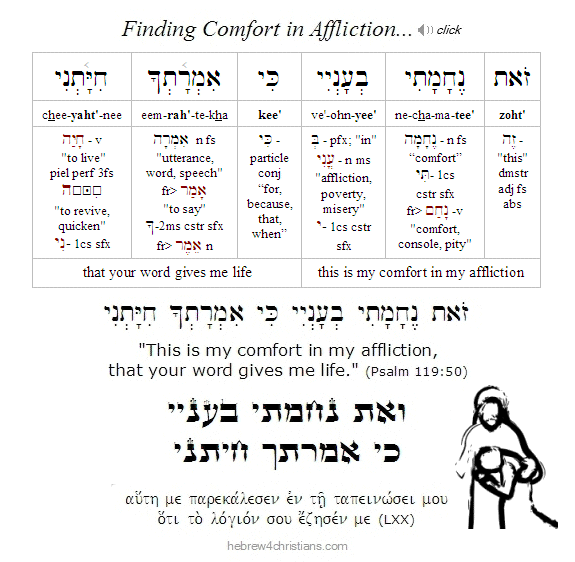
Hebrew Lesson
Psalm 119:50 Hebrew reading:
 |
Paradox and Faith...
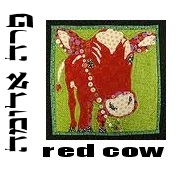
07.01.25 (Tammuz 5, 5785) Our Torah portion this week (i.e., Chukat) describes the sacrifice of parah adumah (פרה אדומה), or the "Red Heifer" (see Num. 19:1-10). The Red Heifer is considered paradoxical to most Jewish thinkers, since the one who offers this sacrifice becomes ritually impure, while the sprinkling of the ashes from it makes people clean... The ritual is considered chok (חק) within Jewish tradition, meaning that it makes no rational sense. The Talmud states that of all the 613 commandments given in the Torah, even King Solomon with all his wisdom could not fathom this decree. However, the sacrifice of Yeshua the Messiah can be understood as the fulfillment of the symbolism of the Red Heifer: Both were entirely rare and without defect (sin); both were sacrificed "outside the camp"; both made the one who offered the sacrifice unclean but made the one who was sprinkled by it clean; and finally, both sacrifices cleanse people for priestly service.
The Red Heifer had to be a perfect specimen (temimah) that was completely red, "without blemish, in which there is no defect (mum)." The rabbis interpreted "without blemish" as referring to the color, that is, without having so much as a single white or black hair. This is the only sacrifice in the Torah where the color of the animal is explicitly required. Moreover, the Red Heifer was never to have had a yoke upon it, meaning that it must never have been used for any profane purposes.
Unlike all other sacrifices offered at the altar, the red heifer was taken outside the camp and there slaughtered before the priest, who then took some of its blood and sprinkled it seven times before the Mishkan (thereby designating it as a purification offering). [During the Second Temple period, the High Priest performed this ceremony facing the Temple while atop the Mount of Olives.] Then the red heifer would be burned in its entirety: its hide, flesh, blood, and even dung were to be burned (unlike other Levitical korbanot). Do not miss this: unlike all other animal sacrifices, all the blood of the offering was to be burned in the fire.
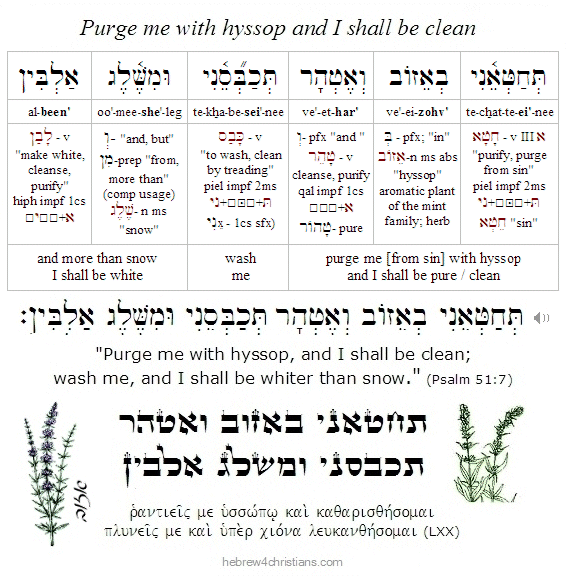
Hyssop, scarlet yarn, and a cedar stick would then be thrown upon the burning Red Heifer (these same items were used to cleanse from tzara'at, skin disease). In other words, the blood was assimilated into the ashes of the sacrifice, which were then gathered and mixed with water to create the "water of separation" (mei niddah) for the Israelite community. Note that the word "separation" (niddah) refers to menstrual impurity and hearkens to Zech. 13:1: "On that day there shall be a fountain opened for the house of David and the inhabitants of Jerusalem, to cleanse them from sin and from niddah."
Anyone (or anything) that came into contact with a corpse (the embodiment of sin and death) was required to be purified from tumah by means of the mei niddah. The purification procedure took seven days, using stalks of hyssop dipped into the water and shaken over the ritually defiled person on the third day and then again on the seventh day. After the second sprinkling, the person undergoing the purification process would be immersed in a mikvah (pool of running water) and then be unclean until the following evening.
According to Jewish tradition, the red heifer sacrifice was to atone for the sin of the Golden Calf, though the Torah itself makes no such association. The LORD Yeshua, our High Priest of the New Covenant, is the perfect fulfillment of the Red Heifer, since he was completely without sin or defect (2 Cor 5:21; John 8:46); he was sacrificed outside the camp (Heb 13:13); he made himself sin for us (2 Cor 5:21); his sprinkling makes us clean (1 Pet 1:2; Heb 12:24; Rev 1:5); and the "water of separation" that his sacrifice created is the means by which we are made clean from the impurity of sin (Eph 5:25-6; Heb 10:22).
As mentioned above, commandments (mitzvot) that defy reason are called "chok" (חק). The sages tend to focus on the Red Heifer as the "mother of all mystery mitzvot," but surely we must go back to the Akedah - that is, to the sacrifice of Isaac at the hand of his father Abraham - as the greatest of God's decrees that defy human reason. The willingness of both Abraham and Isaac to obey - despite their inability to understand - was a direct result of their unwavering faith in God's love and promises. Likewise the heart of our faith says simply: "Jesus saves." His sacrifice saves us from sin and death, yet this also is "chok" - a matter of faith... We may seek reasons or explanations, but ultimately it is a matter of divine mystery, just as the darkness covered the earth while the Savior suffered for us on the cross at Calvary (Mark 15:22). "Jesus saves" is the mystery of our confession (Rom. 10:9-10). We are cleansed by our contact with sin and death through him, just as he bears our sin and defilement on our behalf. as it is written: "God made the One who did not know sin to be sin for us, so that in him we would become the righteousness of God" (2 Cor. 5:21).
"But when Messiah appeared as a High Priest (כּהֵן גָּדוֹל) of the good things that have come, then through the greater and more perfect tent (not made with hands, that is, not of this creation) he alone entered once for all into the Holy Places, not by means of the blood of goats and calves but by means of his own blood, thus securing an eternal redemption (גְּאוּלַּת עוֹלָם). For if the blood of goats and bulls, and the sprinkling of defiled persons with the ashes of a heifer (אֵפֶר הַפָּרָה), sanctify for the purification of the flesh, how much more will the blood of Messiah (דַּם הַמָּשִׁיחַ), who through the eternal Spirit (בְּרוּחַ עוֹלָם) offered himself without blemish to God, purify our conscience from dead works to serve the living God (אֱלהִים חַיִּים)?" – Heb. 9:11-14
The Torah of the new covenant is inner, deeper, and eternal, whereas the Torah of the older covenant is outer, limited, and subject to transformation (Heb. 7:12; 8:13). The older covenant foretold of the coming Substance by means of the "ashes that purify the impure yet make the pure, impure." Only after we have been "sprinkled with the ashes" are we made clean from death; only when we make contact with the "ashes of Yeshua" offered on our behalf are we cleansed from sin and death (1 Pet. 1:2; Heb. 10:22).
Hebrew Lesson
Psalm 51:7 reading (click):
<< Return
|
|