|
Providentially, Pharaoh's daughter came to bathe in the Nile and discovered the ark among the reeds. Moved by pity, the princess decided to adopt the baby even though he was a "despised Hebrew." The baby's sister Miriam (who witnessed all this) then approached the princess and offered to find a nursemaid for the child - and cleverly arranged for Moses' own mother (Yocheved) to do the job!
When the child grew up, Yochebed brought him to Pharaoh's daughter, and he became her son,a prince of Egypt. She named him Moses (משֶׁה), "Because," she said, "I drew him out of the water" (a play on the word mashah (מָשָׁה), which means "to draw out, to save").
According to midrash (Shemot Rabbah 1:31), as a very young lad Moses was once seen throwing Pharaoh's gold crown down to the ground. Upon learning of this apparent act of insolence, Pharaoh devised a test to see if the child understood the implications of his actions. He therefore commanded that a platter with a piece of gold and a glowing piece of coal be brought before Moses and ordered the little boy to choose one. If Moses chose the gold, it would imply that he understood its value, and therefore he would be killed. On the other hand, if Moses chose the burning coal, he would be spared since he was unable to differentiate between gold and a glowing piece of coal.
Moses began to reach out for the gold when an angel pushed his hand aside and he grabbed the coal instead. Moses then immediately put his hand in his mouth, but that burned his lips and tongue so badly that he had a permanent speech impediment as a consequence.
מִי שָׂמְךָ לְאִישׁ שַׂר וְשֹׁפֵט עָלֵינוּ
"Who made you to be judge over us?"
After he had matured, Moses went to be among his kinsmen and observed their suffering. One day, he noticed an Egyptian overseer beating an Israelite and (seeing no one else around) killed the man and hid the body in the sand. The following day, Moses attempted to mediate a quarrel between two Israelites, during which one of them prophetically asked him, mi samekha le'ish sar ve'shofet aleinu? ("Who made you a prince and judge over us?") - and then further asked Moses if he intended to kill them as he had killed the Egyptian overseer the previous day. Moses then was afraid that his crime was known, and sure enough, Pharaoh heard the news and sought to have Moses killed.
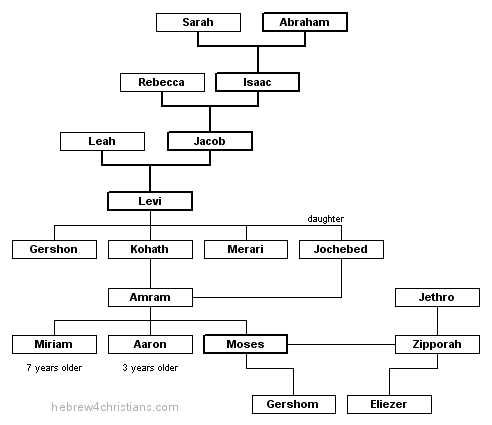
Moses then fled from Egypt to Midian (in the Sinai's southeastern region), to the land of his distant cousins. There he came to a city well where he magnanimously defended the seven daughters of Jethro (also known as Reuel) from some unfriendly shepherds. After learning of his kindness and bravery, Jethro rewarded Moses by employing him as a shepherd and giving his daughter Zipporah to him as a wife (Moses and Zipporah later had two sons, Gershom and Eliezer).
וַיַּרְא אֱלֹהִים אֶת־בְּנֵי יִשְׂרָאֵל וַיֵּדַע אֱלֹהִים
"God saw the people of Israel - and God knew."
While Moses dwelt in Midian, the Pharaoh who wanted to kill him finally died, though his successor intensified the Israelites' oppression. The Israelites cried out to the LORD for help, and God heard their groaning, and remembered his covenant with Abraham, with Isaac, and with Jacob. "God saw the people of Israel - and God knew" (Exod. 2:25).
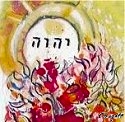
מַלְאַךְ יְהוָה
"Malakh Adonai" - the Angel of the LORD
One day, as Moses was tending Jethro's sheep in the west, near Mount Horeb (i.e., Sinai), the Angel of the LORD (i.e., malakh Adonai: מַלְאַךְ יהוה) appeared to him in a flame of fire mitokh ha-seneh – "out of the midst of a bush" (Exod. 3:1-2). As Moses gazed in wonder, God (אֱלהִים) spoke to him and commanded him to remove his sandals, and informed him that he was selected to be the LORD's shaliach (שָלִיחַ), His emissary, to take the Israelites from Egypt back to Israel.
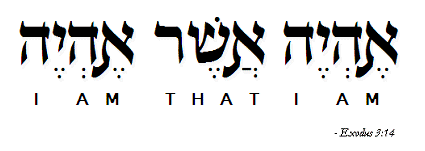
אֶהְיֶה אֲשֶׁר אֶהְיֶה
Eheyeh Asher Eheyeh - "I am what I am"
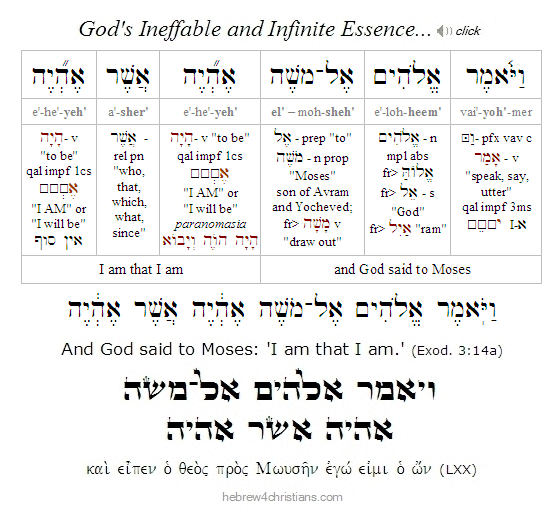
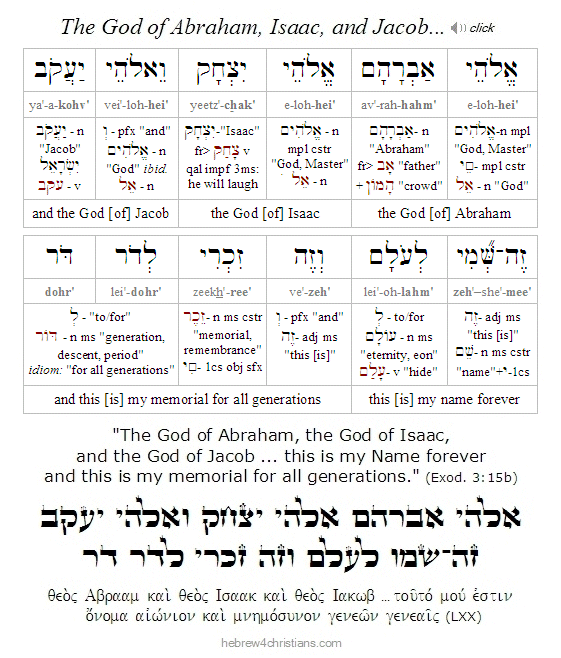
Moses was stunned and objected that he was unfit to the task, despite God's promise to be with him and bring him (and all Israel) back to this very mountain (Exod. 3:11-12). Moses said to God, "If I come to the people of Israel and say to them, 'The God of your fathers has sent me to you,' and they ask me, 'What is his name?' what shall I say to them?" God then gave His Name as "I AM WHO I AM" (i.e., eheyeh asher eheyeh: אֶהְיֶה אֲשֶׁר אֶהְיֶה). God then went on to further denote the meaning of His Name through a series of personal relationships: "Say this to the people of Israel, 'The LORD (יהוה), [namely] the God of your fathers, [namely] the God of Abraham (אֱלהֵי אַבְרָהָם), [namely] the God of Isaac (אֱלהֵי יִצְחָק), and [namely] the God of Jacob (אֱלהֵי יַעֲקב), has sent me to you.' This is my name forever (זֶה־שְּׁמִי לְעלָם), and thus I am to be remembered for all generations":
וַיּאמֶר אֱלהִים אֶל־משֶׁה אֶהְיֶה אֲשֶׁר אֶהְיֶה
וַיּאמֶר כּה תאמַר לִבְנֵי יִשְׂרָאֵל
אֶהְיֶה שְׁלָחַנִי אֲלֵיכֶם׃
וַיּאמֶר עוֹד אֱלהִים אֶל־משֶׁה
כּה־תאמַר אֶל־בְּנֵי יִשְׂרָאֵל
יְהוָה אֱלהֵי אֲבתֵיכֶם אֱלהֵי אַבְרָהָם
אֱלהֵי יִצְחָק וֵאלהֵי יַעֲקב שְׁלָחַנִי אֲלֵיכֶם
זֶה־שְּׁמִי לְעלָם וְזֶה זִכְרִי לְדר דּר
vai·yoh'·mer · E·loh·heem · el · Moh·she · e·he·yeh · a·sher · e·he·yeh
vai·yoh'·mer · koh · toh·mar · leev·nei · Yees·rah·el
e·he·yeh · she·lah·cha'·nee · a·le·khem
vai·yoh'·mer · ohd · E·loh·heem · el · Mo·she
koh · toh·mar · el · be·nei · Yis·rah·el
Adonai · E·loh·hei · a·voh·te·khem · E·loh·hei · Av·rah·ham
E·loh·hei · Yeetz·chak · vei·loh·hei · Ya·a·kohv · she·la·cha'·nee · a·le·khem
zeh · she·mee · le·oh·lahm · ve·zeh · zeekh·ree · le·dohr · dohr

"God said to Moses, "I AM WHO I AM."
And he said, "Say this to the sons of Israel,
'I AM has sent me to you.'"
God also said to Moses,
"Say this to the sons of Israel,
'The LORD, the God of your fathers, the God of Abraham,
the God of Isaac, and the God of Jacob, has sent me to you.'
This is my Name forever, and thus I am to be remembered for all generations."
(Exod. 3:14-15)
Hebrew Lesson
Exodus 3:14a Hebrew reading (click):
Note that the LORD (יהוה), the great "I AM" (אֶהְיֶה) plainly and explicitly identifies himself as the God of Abraham, Isaac, and Jacob, and his revelation is rooted in them (John 4:22):
The phrase eheyeh asher eheyeh (rendered as "I AM THAT I AM" in English) derives from the Qal imperfect first person form of the verb hayah (הָיָה), "I will be," and therefore indicates a connection between the Name YHVH (יהוה) and being itself. YHVH is the Source of all being and has being inherent in Himself (i.e., He is necessary Being), and everything else - from the most gigantic of cosmic objects to the structure of cellular DNA - contingently derives its existence and being from Him. The name YHVH also bespeaks the utter transcendence of God. In Himself, God is beyond all "predications" or attributes of language: He is the Source and Foundation of all possibility of utterance and thus is beyond all definite descriptions.
 |
After giving Moses His Name, God said, "Go and gather the elders of Israel together and say to them, 'The LORD, the God of your fathers, the God of Abraham, of Isaac, and of Jacob, has appeared to me, saying, "I have observed you and what has been done to you in Egypt and I promise that I will bring you up out of the affliction of Egypt to ... a land flowing with milk and honey" (Exod. 3:16-17). God then foretold that the elders would listen to Moses' voice and would accompany him to go before Pharaoh and say to him, "The LORD, the God of the Hebrews (אֱלהֵי הָעִבְרִיִּים), has met with us; and now, please let us go a three days' journey into the wilderness, that we may sacrifice to the LORD our God." The LORD further foretold that the Pharaoh would harden his heart and refuse to let the people go, and theregore God would stretch forth His hand and strike Egypt with wonders until the Pharaoh would relent and let the Israelites go...
Moses next protested that the Israelites would not believe him, whereupon he was given the power to perform three miracles to convince them: 1) his staff would turn into a snake and vice versa; 2) his hand would contract leprosy and then be cured; and 3) he would turn water from the Nile into blood. Still hesitant, Moses protested to the LORD that he was kevad peh - "heavy of mouth" and kevad lashon, "heavy of tongue," and therefore unable to speak on behalf of the LORD (Exod. 4:10). God reminded him that He was the Creator of the mouth: "Who makes him mute, or deaf, or seeing, or blind? Is it not I, the LORD?" (Exod. 4:11). When Moses finally asked God to send someone else, the LORD expressed anger at Moses for his reluctance and decreed that "because of your words" he would not be permitted to be a kohen (priest), but his brother Aaron would. Moses finally relented and accepted the will of God.
After this, Moses told his father in law that he wanted to return to Egypt (with his wife and sons) to see how his kinsmen were doing. Along the way back to Egypt, however, the LORD threatened to kill Moses on account of a delay in the circumcision of his son Eli-Ezer (Exod. 4:24). Moses reasoned that God's commandment to go to Egypt was more important than the commandment to perform brit milah on the 8th day of his son's life, and had he performed the circumcision, travel would have been impossible. However, when Moses failed to immediately perform the ritual at the lodging place along the way (affording the opportunity for healing for his son during the trip), the LORD came to kill him. Tzipporah (Moses' wife) then performed the circumcision but actually needed to do it twice, as indicated by the phrase: Chatan damim lamulot - You are a bridegroom of blood to me, because of the circumcisions (mulot, the plural form of mulah).
Afterward, Moses met with his brother Aaron at Sinai and told him about their mission. When they reached Egypt, Moses and Aaron assembled the elders of Israel and told them about God's coming deliverance. When the people heard Aaron's speech and saw the miracles Moses performed, they believed that the LORD answered their cry for help and bowed down to worship.
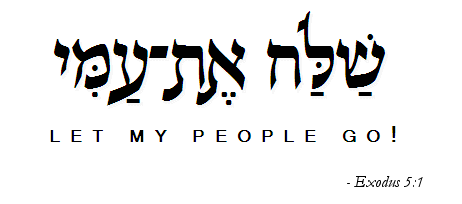
שׁלַּח אֶת־עַמִּי
Shelach et ammi! - "Let my people go!"
Some time later, Moses and Aaron appeared before Pharaoh to deliver the message from the LORD: "Let my people go, that they may hold a feast to me in the wilderness." To this the Pharaoh replied, mi Adonai asher eshma' be'kolo le'shalach et-Yisrael? (Who is the LORD, that I should obey his voice and let Israel go?). Not only did Pharaoh reject their request, but he imposed even harsher decrees against the Israelites -- commanding that they now deliver the same amount of bricks but without any straw supplied to them. The overseers then flogged the Hebrew foremen because they were unable to meet the quotas.
When the foremen later appealed to Pharaoh for mercy, they were accused of being idle, since they listened to Moses and Aaron, and were told to keep the quota of bricks despite the lack of straw. The foremen then blamed Moses and Aaron for worsening their situation, and Moses then complained to the LORD that the mission was turning out quite badly.
As the Israelites suffered even more, Moses despaired over his mission and asked the LORD why he sent him to Pharoah in the first place: "For since I came to Pharaoh to speak in your Name, he has done evil to this people, and you have not delivered your people at all." The parashah ends with God reassuring Moses by saying, "Now you shall see what I will do to Pharaoh; for he shall let the people go because of a greater might; indeed, because of a greater might he shall drive them from his land."
Hebrew Lesson
Exodus 5:1b Hebrew reading (click):
 |
|