|
|
 |
|
|
|
|
Weekly Torah Reading
|
|
|
|
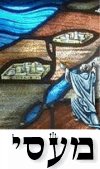
Parashat Masei ("Journeys of")
|
|
|
Click on the links to display the Scriptures:
|
|
|
|
|
|
|
Torah Reading Overview
|
|
|
|
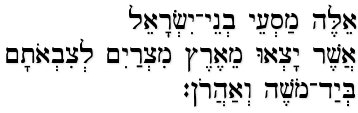
Last week's Torah portion (Mattot) ended with the Israelites camped east of the Jordan River, near the plains of Moab, ready to finally enter the Promised Land. In anticipation of their return to the land, this week's portion begins with Moses recounting 42 sites the Israelites stayed during their 40 years of wandering in the desert - from their first camp after the Exodus (called Sukkot) to their current encampment across the river from the land of Canaan.
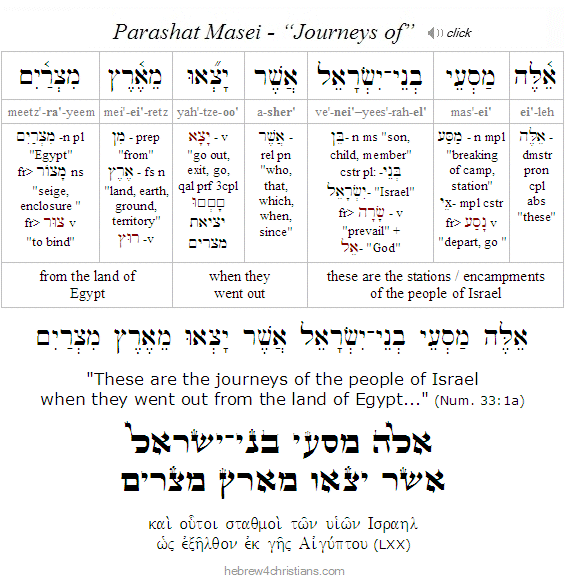
The parashah begins:
|
|
|
|
|
|
Recounting the Journey...
|
|
|
|
From the time they left Ramses in Egypt until they reached the plains of Moab (at the border of the Promised Land), Israel camped at 42 named locations. Before the Sin of the Spies (at Kadesh), Israel had camped at 14 locations en route to the land, but was then forced to wander for 38 more years until the original generation that sinned had died off. That leaves 28 more places listed. Eight of these, however, are places Israel camped at during their 40th year in the desert (after the death of Aaron), so we have 20 places that Israel camped during a period of roughly 38 years -- an average of one place for every two years in the wilderness.
During this entire time, the LORD showed great chesed for Israel, as the people were fed with manna, given water from the Rock that miraculously accompanied them, were unmolested by marauders or wild animals, and were surrounded by the Shechinah glory cloud of the LORD God Almighty.
|
|
|
|
|
The Mandate to Possess the Land of Canaan
|
|
|
|
After recounting the various stations of the journey, God told Moses that when the Israelites were to pass over the Jordan into the land of Canaan, they were to drive out all the inhabitants and to utterly destroy all traces of their culture and religion. In particular, they were to destroy all their idols and demolish all their high places. After this, the land of Canaan would be divided by lot according to the tribes of Israel, based on the size of each tribe (the tribes of Reuben, Gad, and half Manasseh had already received their inheritance). God then warned Moses that if the people would not drive out the inhabitants of the land, they would become a snare for Israel, and God would judge and exile Israel as He intended to do to them....
|
|
|
The Borders of Conquest
|
|
|
|
|
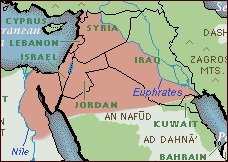
The boundaries of the Promised Land are then given (Num. 34:1-15). Note that these borders are not the same as those described earlier to Abraham (Gen. 15:18-21), since that area will be given to Israel after the Messiah returns to restore Zion during the Millennial Kingdom (see Ezekiel 47:15-48:35). During that time, the Jerusalem will be the center of the earth and renamed Adonai Shammah (יְהוָה שָׁמָּה), "the LORD is there."
|
|
|
|
|
|
While the earlier promise that Israel would occupy 'from the Nile to the Euphrates' awaits its fulfillment, in this Torah portion the description of the promised land is restricted to "the land of Canaan according to its borders" (34:2-13), that is, to the local region occupied by the seven Canaanite nations living there at the time of the conquest under Joshua.
|
|
|
|
|
Some replacement theologians claim that God's promise to Israel was fulfilled under the reign of King Solomon, but this is simply untrue. Certain parts of present-day Lebanon and Syria (to the north) were never possessed nor annexed, even during the reign of Solomon. The prophetic borders of the land do not correspond with any historical settlement of Israel, so the possession of the land as promised to Abraham (and as foreseen by the prophets) is yet to be fulfilled. This is significant, because it refutes the "amillennial" view that the Church has replaced Israel and that the promise of the land was fulfilled in ancient times. According to the Apostle Paul, Abraham's descendants (i.e., both the "natural branches" and those "grafted in" to the original covenantal blessings given to Israel) will one day inherit the entire earth (see Rom. 4:13). In other words, ultimately the borders of Israel will encompass the world...
|
|
|
|
Cities of Refuge - Arei Miklat (עָרֵי מִקְלָט)
|
|
|
|
"Cities of refuge" (arei miklat) are then designated as havens and places of exile for those involved in accidental manslaughter. Three cities were to be established east of the Jordan, and three in the west (in the Promised Land itself). If any Israelite was involved in accidental manslaughter, he could escape to an ir miklat for refuge from the go'el hadam - the "blood redeemer" (i.e., avenger), usually the victim's closest blood relative. The go'el hadam could lawfully execute the killer only if he were outside one of the arei miklat.
It must be stressed that the cities of refuge were not meant to harbor murderers, who would be tried in court and put to death at the hand of the avenger of blood. The death penalty required testimony from at least two witnesses and admitted of no "ransom" (plea bargain) to be offered in place of the murderer's execution. On the other hand, a person responsible for involuntary manslaughter of another was required to dwell within the confines of a city of refuge until the death of the High Priest, after which time he was free to return to his home without fear of retribution from an avenger of blood.
A person banished to a city of refuge must remain there until the death of the High Priest, but how does the High Priest's death "compensate" for the loss of a life? Interestingly, the sages report that refugees in the city could hardly wait for the death of the High Priest so they could be released and restored to their family. What a striking analogy for those of us who trust in Yeshua as our great High Priest after the order of Malki-Tzedek! Only the death of a High Priest could atone for the loss of life and release those who were made captive through sin!
Since they were apportioned no territories in the Promised Land, the Levites were given 48 separate cities (six of which were the cities of refuge). Each of the Levites cities was to have an open area nearly a half mile surrounding it. When they were not on duty for service at the Mishkan (and later at the Temple), the Levites were to teach the people Torah and the ways to please the LORD. In this way God placed Torah teachers throughout the Promised Land. According to the sages, all 48 of the Levitical cities also served as arei miklat and therefore were centers of teshuvah and learning for Israel.
|
|
|
|
The Case of Zelophehad
|
|
|
|
The leaders of the tribe of Manasseh then came before Moses to discuss the legal implications of the case of Zelophehad (i.e., Tzelafchad: צְלָפְחָד), whom you will recall was a man of the tribe of Manasseh who died in the desert without any sons to be his heir, but only daughters whom the LORD allowed to inherit their father's portion in the land. These leaders were now concerned that if these daughters were to marry men from another tribe, the original inheritance would be transferred to the other tribe, thereby diminishing the inheritance given to their own tribe. Moses then ruled that to prevent the transference of inheritance from one tribe to another, the daughters of Zelophehad were only permitted to marry men within their own tribe. Therefore it became a general law that no family clan's inheritance may be transferred to another tribe, and any woman who had a land inheritance could only marry someone within her own tribe.
The Book of Numbers – and the historical narrative of the Torah itself – concludes with the resolution of this legal question just before the Israelites invaded the land of Canaan under the leadership of Joshua. The book ends with this statement: "These are the commandments and the rules (הַמִּצְוֹת וְהַמִּשְׁפָּטִים) that the LORD commanded through Moses to the people of Israel in the plains of Moab by the Jordan at Jericho."
|
|
|
|
Note: The weekly readings from the New Testament come from rather new traditions in the Messianic community (such as David Stern and other Messianic teachers). However, my experience has shown that the connection between their recommended Brit Chadashah passage and the Torah parashah is sometimes obscure. That appears to be the case for this week's reading.
The passage from James deals with pride and the spiritual adultery it engenders. Friendship with the world is enmity against God. When we humble ourselves before God He will lift us up. Of course, Israel was to wage war against the seven nations of Canaan and not befriend them, and we can therefore see an application with the Torah reading of this week's parashah. Thankfully, as recipients of the overcoming life of Yeshua, we operate from a place of victory -- and do not need to fight for it. He is our Rest and the Victor over all the powers of darkness, blessed be He.
Blessing:
|
|
|
|
|
|
Related Discussion:
|
|
|
|
|
|
|
Hebrew Audio Files:
|
|
|
|
|
Click the following links to hear the desired chapters read from this week's Torah:
|
|