|
|
 |
|
|
|
|
Weekly Torah Reading
|
|
|
|
Parashat Ki Tavo ("When you go in")
|
|
|
Click on the links to display the Scriptures:
|
|
|
|
|
|
|
|
Torah Reading Overview
|
|
|
|
Last week's Torah portion (Ki Teitzei) listed no less than 74 of the Torah's 613 commandments, covering a wide assortment of rules related to social life in Israel. In this week's portion, Moses concludes the legal section of his discourse by first ordaining that the first fruits (bikkurim) of the crops be brought to the priests in the central sanctuary in a prescribed ritual.
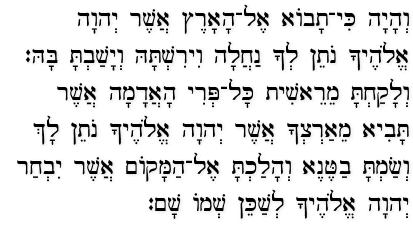
The parashah begins:
|
|
|
|
|
|
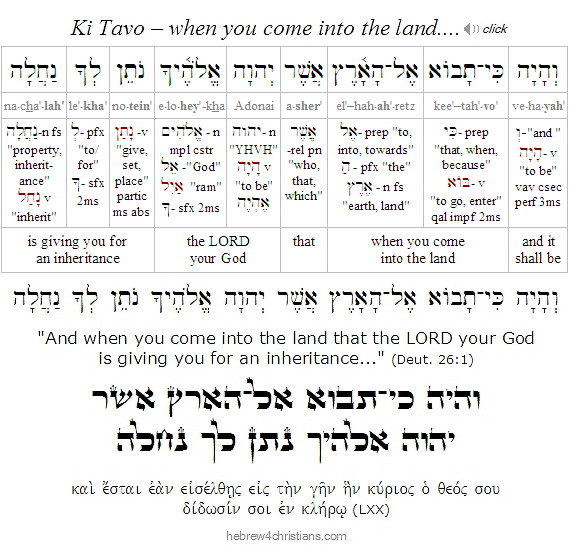
"When you come into the land that the LORD your God is giving you for an inheritance and have taken possession of it and live in it, you shall take some of the first of all the fruit of the ground, which you harvest from your land that the LORD your God is giving you, and you shall put it in a basket, and you shall go to the place that the LORD your God will choose, to make his name to dwell there." (Deut. 26:1-2)
|
|
|
|
Bikkurim - First Fruits of the Harvest
|
|
|
|
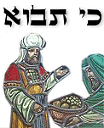
To fulfill the commandment to offer first fruits (i.e., "bikkurim"), each Jewish farmer was required to travel to the Sanctuary with the best samples of his new crops to present before the altar. He would then recite a brief history of the Jewish people concerning Jacob's wanderings, the experience of slavery in Egypt, the great Exodus, and their present possession of the promised land. When he was finished, he would sacrifice peace offerings to celebrate God's provision with his family and friends.
|
|
|
|
|
|
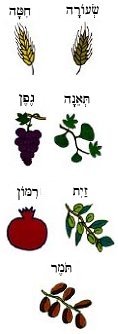
According to Jewish tradition, the first fruits of the crops referred particularly to shivat ha-minim (the seven species of fruits) of the Promised Land: Wheat, barley, grapes, figs, pomegranates, olives, and dates (Deut. 8:8). As soon as a Jewish farmer saw the first sign of ripening fruit in his field or orchard, he would tie a string or reed around it and designate it as bikkurim (בִּכּוּרִים). Later he would pick the best samples from these fruits, put them in a basket woven of gold and silver (the poor used wicker baskets of peeled willow branches) and set off for the Mishkan (or later to the Temple in Jerusalem) to present his offering at the Sanctuary.
Technically speaking, the "season of bikkurum" began after the holiday of Shavuot, in late spring, and indeed Shavuot is sometimes called chag ha-bikkurim (הַג הַבִּכּוּרִים) – the "festival of firstfruits." Bikkurim were associated with the harvest season, though they could be presented throughout the summer, until the time of Sukkot (fall harvest). The Talmud relates that a large procession of Jewish farmers would place their baskets on oxen adorned with garlands of flowers in a grand parade to the sanctuary (the oxen would later be sacrificed as a peace offerings). As the pilgrims passed through various towns along the way, they would be accompanied by still others who wished to rejoice with them in Zion (Deut. 26:1-3).
|
|
|
|
|
The Formal Declaration
|
|
|
|
At the Mishkan (or Temple), each family would present the basket of first fruits to a kohen (priest) that would be waved in seven directions (tenufah) and then placed before the altar. The following passage would then be recited (first by the priest, and then repeated by those presenting their offering):
אֲרַמִּי אבֵד אָבִי וַיֵּרֶד מִצְרַיְמָה וַיָּגָר שָׁם בִּמְתֵי מְעָט
וַיְהִי־שָׁם לְגוֹי גָּדוֹל עָצוּם וָרָב׃
וַיָּרֵעוּ אתָנוּ הַמִּצְרִים וַיְעַנּוּנוּ
וַיִּתְּנוּ עָלֵינוּ עֲבדָה קָשָׁה׃
וַנִּצְעַק אֶל־יְהוָה אֱלהֵי אֲבתֵינוּ
וַיִּשְׁמַע יְהוָה אֶת־קלֵנוּ
וַיַּרְא אֶת־עָנְיֵנוּ וְאֶת־עֲמָלֵנוּ וְאֶת־לַחֲצֵנוּ׃
וַיּוֹצִאֵנוּ יְהוָה מִמִּצְרַיִם בְּיָד חֲזָקָה וּבִזְרעַ נְטוּיָה
וּבְמרָא גָּדל וּבְאתוֹת וּבְמפְתִים׃
וַיְבִאֵנוּ אֶל־הַמָּקוֹם הַזֶּה וַיִּתֶּן־לָנוּ אֶת־הָאָרֶץ הַזּאת
אֶרֶץ זָבַת חָלָב וּדְבָשׁ׃
וְעַתָּה הִנֵּה הֵבֵאתִי אֶת־רֵאשִׁית פְּרִי הָאֲדָמָה
אֲשֶׁר־נָתַתָּה לִּי יְהוָה וְהִנַּחְתּוֹ לִפְנֵי יְהוָה אֱלהֶיךָ
וְהִשְׁתַּחֲוִיתָ לִפְנֵי יְהוָה אֱלהֶיךָ׃
a·ra·mee o·ved a·vee, va·ye'·red meetz·ra'·mah va·ya·gar sham beem·tei me·at
va·ye·hee sham le·goy ga·dol a·tzoom va·rav;
va·ya·rei o·ta'·noo ha·meetz·reem va·a·noo'·noo,
va·yee·te'·nee a·lei'·noo a·vo·dah kash·ah;
va·neetz·ak el Adonai E·lo·hei a·vo·tei'·noo,
va·yeesh·ma Adonai et ko·lei'·noo;
va·yar et ohn·yei'·noo, ve·et a·ma·lei'·noo, ve·et la·cha·tzei'·noo;
va·yo·tzee·ein'·oo Adonai mee·meetz·ra'·yeem, be·yad cha·za·kah oo·veez·ro'·a ne·too·yah
oov·mo·ra ga·dol oo·ve·o·toht oov·mo·fe·teem;
va·vi·ei·nu el ha·ma·kom haz·zeh, va·yit·ten la·nu et ha·a·retz haz·zot
e'·retz za·vat cha·lav oo·de·vash;
ve·a·tah hee·neh he·ve'·tee et rei·sheet pree ha·a·da·mah,
a·sher na·ta'·tah lee Adonai ve·hee·nach·to leef·nei Adonai E·lo·hei'·kha
ve·heesh·ta·cha·vee'·ta leef·nei Adonai E·lo·hei'·kha

"A wandering Aramean was my father. And he went down into Egypt and sojourned there, few in number, and there he became a nation, great, mighty, and populous. And the Egyptians treated us harshly and humiliated us and laid on us hard labor. Then we cried to the LORD, the God of our fathers, and the LORD heard our voice and saw our affliction, our toil, and our oppression. And the LORD brought us out of Egypt with a mighty hand and an outstretched arm, with great deeds of terror, with signs and wonders. And he brought us into this place and gave us this land, a land flowing with milk and honey. And behold, now I bring the first of the fruit of the ground, which you, O LORD, have given me."
(Deut. 26:5-11)
|
|
|
|
|
|
|
|
The Passover Connection
|
|
|
|
These verses are the essence of the "maggid" section of the Passover Seder. The Egyptians were cruel to the Jews and made them suffer through forced labor. The Jews cried out to the LORD, and God heard their cries. God saw our suffering, harsh labor and distress and brought us out of Egypt with a strong hand and outstretched arm, with great visions, signs, and miracles. God then brought us to "this place" (i.e., ha-makom -- the sanctuary) and gave us "this land" (i.e., the promised land), which flows with milk and honey (i.e., zavat chalav u'devash: זָבַת חָלָב וּדְבָשׁ). The redemption from Egypt was intended to yield fruitfulness and joy for the Jewish people....
Note that the word "Aramean" (אֲרַמִּי) mentioned in this declaration means one from "Aram," which later was known as Syria, where the city of Aleppo now stands (the word "Aramaic" comes from this word). Rashi thought the Aramean mentioned here was Laban, the nefarious uncle of Jacob, and therefore translated this as "An Aramean [Laban] sought to destroy (oved) my father." Rashbam thought the Aramean was Abraham, since he was born and raised in the easternmost part of Aram (i.e., Ur of Mesopotamia). Ibn Ezra thought it referred to Jacob who "went down to Egypt (וַיֵּרֶד מִצְרַיְמָה) few in number... and there became a nation, great, mighty, and populous."
|
|
|
The Ma'aser - Tithe of the Tenth
|
|
|
|
After explaining the law of first fruits, Moses again reviewed the laws of tithing. An individual's yearly tithe is one-tenth of the harvest (or its equivalent), which was to be distributed among the priests and Levites. From the remainder, an additional one-tenth was to be set apart for use at the Sanctuary during holidays, or -- during the third and sixth years of the seven-year Sabbatical cycle -- distributed locally to the poor. Here is a list of several types of tithes commanded in the Torah:
- Terumah (תְּרוּמָה): After harvesting any crop, 1/50th of the yield was to be separated for the kohen (priest) as a contribution.
- Crop Remainders: Jewish farms were required to leave grain at the edge of a cultivated field so that the poor can harvest it every season (Lev. 19:9). This mitzvah is called pe'ah (פֵּאָה), the "edge" (or corner) of a field. Generally a farmer would leave 1/50th of his crops as pe'ah for the poor. In addition, leket (לֶקֶט), leaving dropped stalks for the poor, and shikchah (שִׁכְחָה), leaving "forgotten" bundles for the poor during the harvest were commanded.
- Ma'aser behemah (מַעְשַׂר בְּהֵמָה): All Kosher cattle were tithed and one tenth of these animals were to be brought to the sanctuary to be offered as a sacrifice to the LORD God of Israel.
- Ma'aser Rishon (מַעְשַׂר רִאשׁוֹן): A tenth of a farmer's produce was to be given to the Levite (who did not have their own portion of land in Israel) as a regular tithe. This amounted to supporting the priesthood and Torah teachers of Israel.
- Ma'aser Sheni (מַעְשַׂר שֵׁנִי): The harvest was tithed a second (additional) time (after separating the ma'aser rishon) on the 1st, 2nd, 4th, and 5th years of the seven-year Sabbatical cycle (shemittah). This produce was taken to the appointed place of worship (i.e., Shiloh, later, Jerusalem) and eaten there in celebration.
- Ma'aser Oni (מַעְשַׂר עָנִי): In the 3rd and 6th years of the seven-year shemittah cycle, the ma'aser sheni was given to the poor, the Levites, and the strangers instead of being brought to the appointed place. The poor could then partake from the crops and enjoy the good of the land.
- Ma'aser Kesafim (מַעְשַׂר כְּסָפִים): Today most tithing is done in terms of money, called ma'aser kesafim (a tenth of money). This is the traditional term for the tithe on money income and is distinguished from agricultural and cattle tithes. Every Jew is obligated to give a tenth of his earnings to charity, a custom that goes back to Abraham (Gen. 14:20) and Jacob (who pledged to God that "everything that You give me, I will surely tithe to You" (Gen. 28:22).
|
|
|
|
 |
|
|
|
|
Declaring the Tithes
|
|
|
|
All tithes were to be given on the "honor system" and were not enforced by religious authorities. Instead, a formal vow was made every three years stating that the proper amounts had been separated and given as tithes. This is called vidui ma'aser (as explained in Deut. 26:13-14). After making this declaration, the farmer would ask the LORD to bless the land to yield bountiful harvest: 'Look down from your holy habitation, from heaven, and bless your people Israel and the ground that you have given us, as you swore to our fathers, a land flowing with milk and honey.'
הַשְׁקִיפָה מִמְּעוֹן קָדְשְׁךָ מִן־הַשָּׁמַיִם
וּבָרֵךְ אֶת־עַמְּךָ אֶת־יִשְׂרָאֵל
וְאֵת הָאֲדָמָה אֲשֶׁר נָתַתָּה לָנוּ
כַּאֲשֶׁר נִשְׁבַּעְתָּ לַאֲבתֵינוּ
אֶרֶץ זָבַת חָלָב וּדְבָשׁ
hash·kee'·fah mee·me·ohn kod·she·kha meen ha·sha·ma'·yeem
oo·va·rekh et a·me'·kha et Yis·ra·el
ve·et ha·a·da·mah a·sher na·ta'·tah la'·noo
ka·a·sher neesh·ba'·ta la·a·vo·tei'·noo
e·retz za·vat cha·lav oo·de·vash
Look down from your holy habitation, from heaven,
and bless your people Israel
and the ground that you have given us,
as you swore to our fathers, a land flowing with milk and honey."
(Deut. 26:15)
The tithe for the poor was very important, since the fruitfulness of the land itself depended upon its observance. The declaration itself (i.e., Deut. 26:13-14) was recited in a "low voice" until the words "Look down from Your Holy Habitation..." which was proclaimed loudly (Sotah). In a year of blight or drought, the sages turned to an individual who was scrupulous in separating his tithes saying, "Recite the declaration connected with tithes; surely God will listen and bless His people Israel" (Ta'anit 1:4).
|
|
|
|
The Blessings and Curses
|
|
|
|
Moses then instructed that the people were to set up twelve stones on Mount Ebal (near the city of Shechem) after they had crossed the Jordan River. These stones were to be covered with plaster and inscribed with the laws the people were to obey in the promised land. After the stones were set up, the people were to build an altar made of uncut stones and offer whole burnt offerings and peace offerings to commemorate the occasion of entering the land as God's chosen nation.
Moses then gave further instructions regarding how to proclaim the blessings and the curses of the covenant in the promised land (as mentioned earlier in parashat Re'eh). The tribes were to be divided into two groups, with six tribes on Mount Gerizim representing the blessings, and the other six tribes were to stand on Mount Ebal, representing the curses. The zekanim (elders), the Kohanim (priests) and the Levites (the priest's assistants), along with the Ark of the Covenant, stood in the valley in between. The Levites then proclaimed curses on those who performed various sins (such as idolatry) and blessings on those avoided them. All members of the twelve tribes were to respond to each blessing and curse with "Amen." (For a brief mediation on Yehoshua's enactment of this ritual, click here.)
In a way, this ritual was like a second Matan Torah, a new giving and acceptance of the Torah in the Promised Land, since the generation present did not experience the giving of the Torah as their ancestors who died in the desert had.
Gramamtical Note: The Hebrew word used to "bless" is barakh (בָּרַךְ), which means to bestow favor and protection. The noun "blessing" is berakhah (בְּרָכָה), which generally refers to a list of good things -- from "Aleph to Tav" -- as listed in Lev. 26:3-13. Being in a blessed state means being under God's favor and protection. On the other hand, the Hebrew word used for "curse" is arar (אָרַר), meaning to "to snare, bind," which is an antonym for "blessed." In English, the closest counterpart would be the word "damned." The first person who was put under divine curse was not Adam, but rather the nachash (Gen. 3:14). Later Cain came under the general curse of the land (Gen. 4:11). Another verb used to mean "to curse" is kallal (קָלַל), which refers more to speaking evil, "hexing," or wishing evil on others by means of words, invocations, etc. The noun form kellalah (קְלָלָה) is used to introduce the series of curses that would come for disobedience to God's covenant (Deut. 28:15). Interestingly, in Genesis 12:3 both words for "curse" likewise appear: "The one who curses (kallal) you, I will curse (arar)."
The Decalog at Shechem...
The list of curses in Deut. 27:15-26 is sometimes called the "Decalogue of Shechem," and it is interesting to compare these curses to the Ten Commandments listed in Exodus 20:1-17 or Deuteronomy 5:1-21. For example, the first curse is upon those who make graven images or idols to worship them in secret. This corresponds to the first commandment not to have any other gods before the LORD God of Israel. Transgressing this commandment is the equivalent of denying all the Torah, since it negates the principle: "I AM the LORD thy God (אָנכִי יְהוָה אֱלהֶיךָ). The second curse comes from disrespecting your parents. This corresponds to the 5th commandment (Exod. 20:12; 21:17; Lev. 19:3; Deut. 5:16). The third curse is directed to those who attempt to steal the inheritance rights of others. This corresponds to the 8th commandment (Exod. 20:15; Deut. 19:14), though others have extended it to apply to the 7th commandment (not to commit adultery).
"Amen" - Ratifying the Terms
Each curse was to be ratified by everyone saying "Amen." The word "amen" (אָמֵן) comes from the verb aman (אָמַן), meaning to confirm, establish, or uphold. The word for "faith" (i.e., emunah: אֱמוּנָה) comes from the same root, as does the word for "truth" (i.e., emet: אֱמֶת). "Amen" is therefore an affirmation and confession of the truth: "Let it be so!" The Jewish sages say that "amen" serves as an declaration of the Kingship of God (often said quietly before the reciting the Shema) that may be understood as an acronym for the phrase El Melekh Ne'eman (אֵל מֶלֶךְ נֶאֱמָן), "God (אֵל) is a faithful (נֶאֱמָן) king (מֶלֶךְ)."
|
|
|
|
The Rebuke at Moab...
|
|
|
|
After describing this ritual, Moses delivered a terrifying rebuke (i.e., tochechah: תוֹכֵחָה) in which he foretold a horrifying litany of curses, including the prospect of being scattered among the nations, because of the people's future disobedience. Before the great rebuke is delivered, however, Moses listed a series of blessings that will result from observing the Torah (Deut. 28:1-14).
In this connection it is important to understand that the word tochechah means "rebuke" or "reproof" for the sake of correction. Tochechah is a confrontation over sin – whether an actual sin or the possibility of sinning (Lev. 19:17). When applied to Israel, it refers to a warning and prophecy of certain fearful judgment and progressively painful punishments if the terms of the covenant are unfulfilled.
There are two main tochechot ("rebukes") given to Israel in the Torah. The first is in given in at the end of the Book of Leviticus, in parashat Bechukotai (Lev. 26:14-46), and the second (and longer one) is given during Moses' farewell speech (Deut. 28:15-68). The rebuke in Leviticus ends with some hope: "Nevertheless, when they are in the land of their enemies, I will not have rejected them, nor will I have abhorred them, to destroy them, to break My covenant with them, for I am the LORD their God" (Lev. 26:44), but the rebuke in Deuteronomy intensifies without any sense of reprieve. The tochechah in Leviticus is stated in the plural and was delivered to the nation as a whole directly from the mouth of God, whereas the tochechah in Deuteronomy is stated in the singular and was delivered to individuals from the mouth of Moses. The longer rebuke given by Moses contains 98 curses - exactly twice as many as the 49 curses listed in Leviticus. According to the sages, the first rebuke concerns the destruction of the First Temple and the Babylonian exile, whereas the second rebuke concerns the destruction of the Second Temple and the Roman exile (which continues to this day in the Diaspora).
Ezra the Scribe decided that the curses in Leviticus were to be read before Shavuot (the time of the giving of the Torah), and the curses in Deuteronomy were to be read before Rosh Hashanah, "so that the year and its curses can conclude" (Megillah 31b). As with the rebuke found in the Book of Leviticus (Bechukotai), it is often difficult to find volunteers to publicly read Ki Tavo during synagogue services....
In general it may be said that disregarding the voice of the LORD (לא תִשְׁמַע בְּקוֹל יְהוָה) and failing to perform God's commandments (mitzvot) and decrees (chukkim) will eventually bring about all the curses (הַקְּלָלוֹת) listed in Deut. 28:15-68. The sages, however, state that the punishments given to Israel are intended to help the people return to the LORD and to re-embrace His love. These are the "troubles of love" - yissurim shel ahavah - that afflict those who are chosen by God. The idea that "this too is for good"(גַּם זוּ לְטוֹבָה) expresses the faith that all things – including various curses in our lives – ultimately help us return to the Lord for healing and life (Rom. 8:28).
The parashah ends with Moses telling the people that even after forty years from their birth as a nation they had yet to obtain "a heart to know, eyes to see, and ears to hear." Sadly, to this day the veil remains over Israel...
|
|
|
|
The Haftarah of Ki Tavo is called the sixth of the "Haftarot of Consolation," offering encouragement to Israel even in the face of their exile.
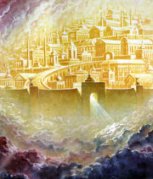
This reading from Isaiah 60 is a picture of the Heavenly Jerusalem, which is irradiated with the Light of Mashiach Himself. The multitudes of the righteous dead will be present after the Techiyat Ha-Metim (resurrection of the dead) and finally all Israel will be united in the paradise of the LORD. May this day come soon and may Israel one day all be saved!
Note: For more information, see the comments on the Haftarah for Ki Tavo.
|
|
|
|
 |
|
|
|
|
Brit Chadashah Overview
|
|
|
|
The Brit Chadashah reading from the book of Ephesians reveals that she'arit Yisrael (remnant Israel) - that is, both Jews and Gentiles who have been grafted into the Mashiach and are thereby made partakers of the New Covenant of the LORD - are blessed with all spiritual blessings.
The reading from the book of Revelation corresponds with the Haftarah reading, providing a clearer picture of the Heavenly Jerusalem, wherein all those raised up into newness of life by the Techiyat Ha-Mashiach (resurrection of the Messiah) will dwell forever and ever.
|
|
|
|
|
|
Curses of the Law...
|
|
|
|
The New Testament teaches that we can only escape the curses listed in the Sinai covenant by means of Yeshua, who died on the cross as a sacrificial substitute for us, the very "Lamb of God who takes away the sin of the world" (John 1:29). As it is written, "God made the One who did not know sin to be sin for us, so that we would become the righteousness of God (δικαιοσύνη θεοῦ) in Him" (2 Cor. 5:21).
It is the righteousness of God (דְקַת אֱלהִים) that saves us, after all, and not any righteousness we may merit (Titus 3:5-7). "Salvation is of the LORD." And just as the death of a spouse releases a married person from the terms of their marriage contract, so the death of the Messiah frees us from the marriage contract made at Sinai (Rom. 7:1-4). Consequently our relationship with law itself has radically changed. We are "not under the law, but under grace" - οὐ ἐστε ὑπὸ νόμον ἀλλ᾽ ὑπὸ χάριν (Rom. 6:14). Indeed, we are "released from the law, having died to that which held us captive, so that we serve in the new way of the Spirit and not in the old way of the written code (Rom. 7:6). "For Messiah is the end of the law (τέλος νόμου) for righteousness to everyone who trusts in Him" (Rom. 10:4).
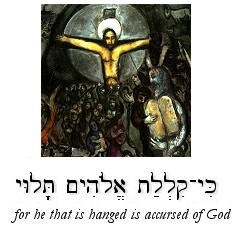
The Messiah delivered (ἐξαγοράζω) us from the curse (קְלָלָה) pronounced in the Torah by becoming cursed on our behalf; as it is written, 'Everyone who hangs from a stake comes under a curse' (Gal. 3:13; Deut. 21:23). Therefore we have a new and better covenant with Yeshua (Heb. 8:6), just as we have a new and better altar than that provided by the older sacrificial system of the Temple (Heb. 13:10).
People are still free to attempt to justify themselves according to the "everlasting" terms of the Sinai Covenant, but then they are liable to the provisions of punishment emphatically stated in that covenant (i.e., the curses listed in Deut. 28:15-68). The new covenant, on the other hand, operates according to the "law of the Spirit of Life" by the gracious agency of the Holy Spirit (Rom. 8:2), enabling us to obey the inner meaning of the Torah by the power and glory of God. We are no longer under the "law of sin and death."
It is the Messiah in you that makes all the difference (Col. 1:27). Only those who love the Messiah and His salvation can be truly Torah observant, and indeed, what value is there in the law apart from the Lawgiver Himself, the Messiah who is our rightful King?
Note: For more on this vital subject, see the article entitled "Curses of the Law."
 |
Blessing:
|
|
|
|
 |
|
|
|
|
|
Related Discussion:
|
|
|