|
Perhaps the central event of this week's Torah portion is how the LORD split the waters of the sea to make a path for His people to escape from Egypt. This event is commemorated in the great "Song the Sea" (i.e., Shirat Hayam: שִׁירַת הַיָּם), a hymn praising God for His deliverance (see Exod. 15:1-19). Because of its critical significance for the Jewish people, the Sabbath on which this song is chanted is called Shabbat Shirah ("Sabbath of the Song"), and the custom is for all the congregation to rise while it is recited...
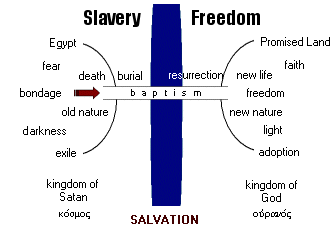
Since the crossing of the sea represents a "baptism," if you will, of the Jewish people, the Song of the Sea is customarily sung on the seventh day of Passover (i.e., on Nisan 21), which marks the date when Israel crossed the sea after leaving Egypt. When the Temple stood in Jerusalem, the song was sung every day by the Levites during the afternoon offering. After the Temple was destroyed, however, it was incorporated into the morning service to fulfill the Torah's commandment to "remember the day of your departure from the land of Egypt all the days of your life" (Deut. 16:3).
 |
After the Israelites left Egypt, the LORD did not lead them along the most direct route to the land of Canaan (through territory occupied by the Philistines), but rather toward Yam Suf - the Sea of Reeds. The LORD led the Israelites in a Pillar of Cloud (עַמּוּד עָנָן) by day and a Pillar of Fire (עַמּוּד אֵשׁ) by night, and had them "turn back" from Etham toward Egypt to encamp before Baal-Tzefon (בַּעַל צְפן) - an Egyptian idol - by the Red Sea, so that Pharaoh would be led to believe that the Israelites were lost in the wilderness (according to rabbinic literature, this idol - the only one that remained undestroyed after God sent the tenth plague upon Egypt - was intentionally spared by God in order to "bait" Pharaoh into thinking that the God of Israel was powerless over him).
When the Egyptian calvary caught up to them, the Israelites were trapped against the sea, and the people were terrified that they were to be slaughtered. God then moved the Pillar of Cloud so that it stood between the Egyptians and the Israelites. The Cloud grew black and the Egyptian cavalry could no longer see the Israelites. Meanwhile, a Pillar of Fire appeared in front of the people, lighting their way. Moses then raised his staff and a strong east wind blew and divided the waters, forming a wall of water on the right and left, and the Israelites began to cross safely.
According to Midrash, the sea formed a "tent" over the heads of the Israelites, protecting them on all sides. Moreover, the waters divided into twelve tunnels, one for each tribe. The walls of the water were perfectly clear, like translucent glass, so that the tribes could see one another as they crossed.... Another midrash says that all of the waters of the earth split at the same time as the Sea of Reeds - including rivers and lakes around the world.
At any rate, by daybreak all of the Israelites had safely reached the other side, and the Pillar of Cloud lifted. The Egyptians then began to follow in pursuit, but the ground beneath them turned to mud and the wheels of their chariots became stuck (this is considered retribution for forcing the Israelites to make bricks of mortar without straw). As the Egyptians attempted to retreat, Moses stretched out his staff and the wall of waters collapsed over them. The Israelites watched in awe as the waters engulfed all of Pharaoh's mightiest warriors. There were no survivors.
Overjoyed that they no longer need fear Pharaoh, the people began to cheer and rejoice. Then Moses composed a great song (Exod. 15:1-21), a spontaneous hymn of praise and thanks to the LORD for Israel's deliverance (the song opens with ashirah (אָשִׁירָה): "I will sing..." and apparently will also be sung in the Heavenly Jerusalem: see Rev. 15:3). Miriam, Moses' sister led Israel in a dance of victory, as the people all sang out: "Sing to the LORD, for he has triumphed gloriously; the horse and his rider he has thrown into the sea."
אָשִׁירָה לַיהוה כִּי־גָאה גָּאָה
סוּס וְרכְבוֹ רָמָה בַיָּם׃
עָזִּי וְזִמְרָת יָהּ וַיְהִי־לִי לִישׁוּעָה
זֶה אֵלִי וְאַנְוֵהוּ אֱלהֵי אָבִי וַאֲרמְמֶנְהוּ׃
יהוה אִישׁ מִלְחָמָה יהוה שְׁמוֹ׃
ah·shee'·rah · la-Adonai · kee-gah·oh · gah·ah
soos · ve·roh·khe·voh · rah·mah · ba·yahm
oh·zee · ve·zeem·raht · Yah, · va·hee-lee · lee·shoo·ah
zeh · ei·lee · ve·an·vei'·hoo · e·loh·hei · ah·vee · va·a·roh·me'·noo.
Adonai · eesh · meel·chah·mah · Adonai she·moh

"I will sing to the LORD, for he is high, high;
the horse and his rider he has thrown into the sea.
Yah is my strength and my song, and he has become my salvation;
this is my God, and I will enshrine Him, my father's God, and I will exalt him.
The LORD is a warrior; the LORD is his Name." (Exod. 15:2-3)
Download Study Card
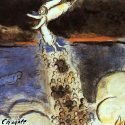
The Torah states that when the Israelites entered the sea, it became dry land, with the water as "a wall (חוֹמָה) to their right and to their left" (Exod. 14:29). To commemorate this miracle, the Hebrew text of the "Song of the Sea" is stylized to resemble a "wavy wall," with the words written in alternating "blocks" to suggest a wave of water:
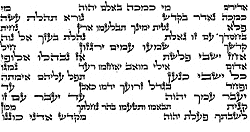 |
According to Yalkut Me'am Lo'ez, the alternating "bricks" are intended to resemble waves of water, while the blank spaces separating these (i.e., text blocks) suggest "blank spaces in our knowledge and praise of God" which we are encouraged to add to the "building." The sages count exactly 198 words in this song, which is the numerical value for the word tzchok (צחק), a word that means "laughter" and is the word used to describe Sarah's response when she finally gave birth to Isaac (Gen. 21:6). According to Rabbi Bachya, the laughter in Isaac's name comes from Abraham's joy (Gen. 17:17). The joy of Isaac's birth, then, is linked with the "birth" of the nation of Israel at the time of the Exodus, just as his symbolic death during the Akedah represents Israel's rebirth...
It is also noteworthy to remember that the Lord Yeshua was the One who saved Israel on that very day. He is the Angel of the LORD and YHVH the Redeemer, as Moses likewise stated: וַיּוֹשַׁע יהוה בַּיּוֹם הַהוּא אֶת־יִשְׂרָאֵל מִיַּד מִצְרָיִם / "On that day, the LORD saved Israel from the hand of the Egyptians" (Exod. 14:30).
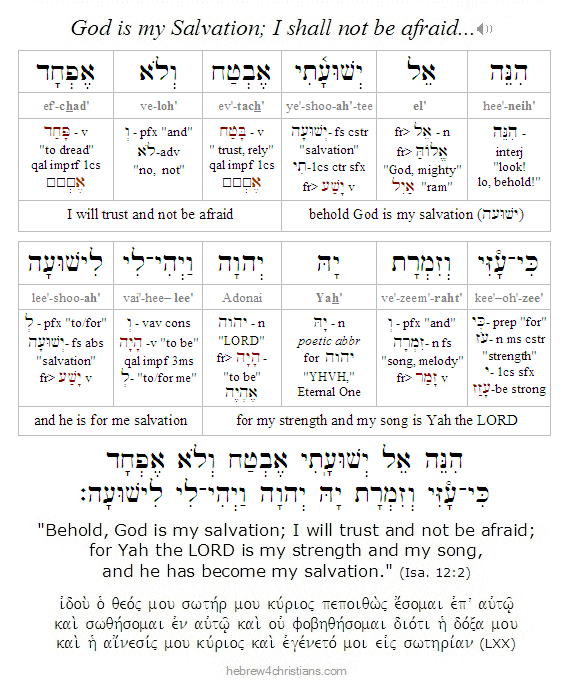
The great message of deliverance resounds throughout Jewish history, and indeed it is regarded as a theme of the faithful love of LORD for His people:
הִנֵּה אֵל יְשׁוּעָתִי
אֶבְטַח וְלֹא אֶפְחָד
כִּי־עָזִּי וְזִמְרָת יָהּ יְהוָה
ויְהִי־לִי לִישׁוּעָה
hee·nei · el · ye·shoo·ah'·tee
ev·tach · ve·loh · ef·chad
kee-oh·zee · ve·zeem·raht · yah · Adonai
vai·hee-lee · lee·shoo·ah
"Behold, God is my salvation;
I will trust, and not be afraid;
for Yah the LORD is my strength and my song,
and he has become my salvation."
(Isaiah 12:2)
Hebrew Study Card

Hebrew Lesson
Isaiah 12:2 Hebrew reading (click):
It's been said that all the signs and wonders performed during the Exodus served two purposes: 1) to convince the Egyptians of the greatness of God, and 2) to convince the Israelites of the same thing... An even greater blessing, however, is to trust in the LORD without the need for signs and wonders (John 20:29). May the LORD God of Israel help us live by true bittachon (בִּטָּחוֹן) - trusting in Him and rejoicing in His salvation. Amen.
Hebrew Lesson
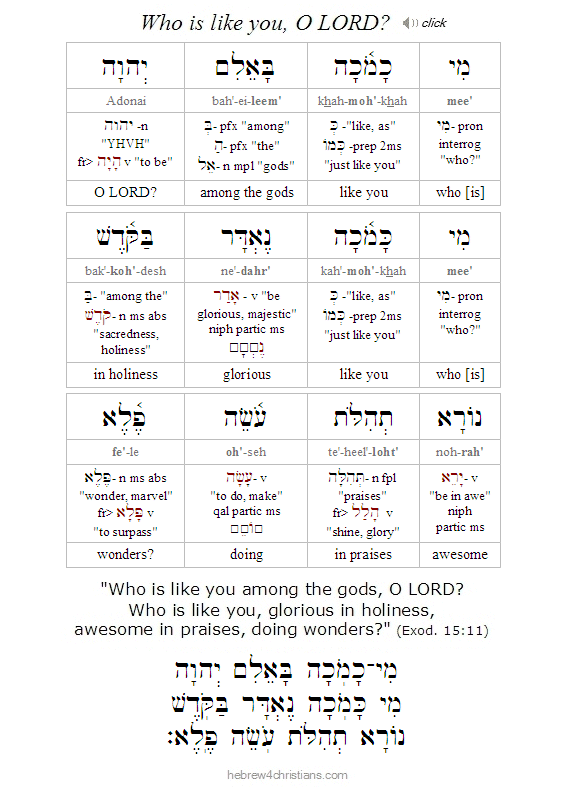
Exodus 15:11 Hebrew reading (click):
|