|
|
 |
|
|
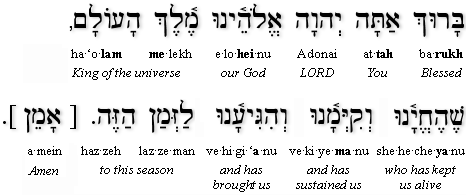
The home ceremony for Rosh Hashanah takes place at sundown, just before the start of Tishri 1. The main event of this holiday consists of a special festive seder meal, somewhat similar to a Friday evening Shabbat meal. The Rosh Hashanah celebration begins with the lighting of candles (hadlakat nerot), symbolizing the transition from profane to sacred time and the recitation of the blessing thanking God for enabling us to reach this season (the Shehecheyanu). Other customs such as eating apples dipped in honey are enjoyed.
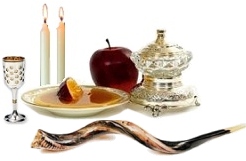
Here's what you'll need for a basic Rosh HaShanah simchah (celebration):
|
|
|
|
- A festive kosher dinner
- A least two candles
- A hand washing basin with towels
- Wine (or grape juice) in a Kiddush cup
- Round challah loaves
- Fresh apples and honey
- A plate with carrots, leeks, beets, dates, pomegranate, and fish.
- A shofar (ram's horn)
- A pomegranate (for the second night)
|
|
|
|
|
|
Remembering the Akedah
|
|
|
|
Rosh Hashanah ("the head of the year") is also called as Yom Ha-zikaron, the Day of Remembrance, since in Leviticus 23:24 it is referred to as "a memorial" (zikaron) day.
As Yom Hazikaron, Rosh Hashanah recalls the story of Isaac's near-sacrifice (said by Jewish tradition to have occurred on Tishri 1), when God commanded Abraham to sacrifice his "only begotten" son (בֵּן יָחִיד) as an offering (this is known as the Akedah). Abraham obeyed God's command, built an altar, and prepared to sacrifice Isaac, but at the very last minute was stopped by the Angel of the LORD. The Angel pointed out a ram caught by its horns in a nearby bush and told Abraham to sacrifice it in place of Isaac. Here again is a clear picture of the sacrifice of the Son of God by the Father performed on behalf of those who trust in Him.
Since Rosh Hashanah is about teshuvah, or returning to God through repentance, the Akedah is retold to remind us that submission to God is the way to demonstrate a repentant attitude before the LORD.
|
|
|
|
Candle-Lighting Blessing
|
|
|
|
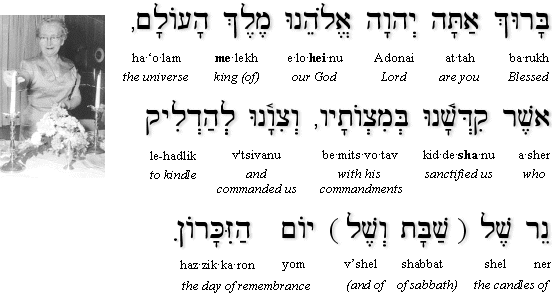
On Erev Rosh Hashanah, about 18 minutes before sundown, the following blessing is recited while kindling the holiday candles:
|
|
|
|
Note: It is customary to bless the children at this time, as well as to offer up spontaneous prayer and thanks to God.
|
|
|
|
Kiddush and HaMotzi
|
|
|
|
|
|
After this, the holiday is sanctified by reciting kiddush (the blessing over wine) for Rosh Hashanah and, before eating the holiday meal, by reciting the haMotzi (the blessing over bread).
|
|
|
|
|
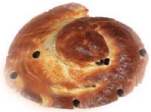
Since Rosh Hashanah celebrates the cyclical passage of time and the recurring progression of holidays of the New Year, it is customary to recite the haMotzi blessing over round loaves of challah (symbolizing the revolving seasons or the Crown of God). Often these are sweetened with raisons for the holiday. To wish that the coming year will be an especially sweet one, the pieces of challah are drizzling with honey just before eating them.
|
|
|
|
|
|
Thanking God for the appointed times
|
|
|
|
Just as the spring festivals (Passover, Firstfruits, and Shavuot) have been perfectly fulfilled in the first coming of Yeshua as Mashiach ben Yosef, so the fall festivals (Rosh Hashanah, Yom Kippur, and Sukkot) will be fulfilled in His second coming as Mashiach ben David. Since the first advent fulfilled all of the spring mo'edim to the smallest of details, we believe that His second advent portends similar fulfillment as revealed in the fall mo'edim. Let us thank God for His great plan of salvation revealed in the festivals:
בָּרוּךְ אַתָּה יהוה אֱלהֵנוּ מֶלֶךְ הָעוֹלָם
אֲשֶׁר נָתַן לָנוּ חַגִּים חֻקּוֹת וּמוֹעֲדִים לְשִׂמְחָה
לִכְבוֹד יֵשׁוּעַ הַמָּשִׁיחַ אֲדוֹנֵינוּ ־ אוֹר הָעוֹלָם
ba·rukh · at·tah · Adonai · E·lo·he·nu · me·lekh · ha·o·lam,
a·sher · na·tan · la·nu · chag·gim, · chuk·kot, · u'mo·a·dim · le·sim·chah,
likh·vod · Ye·shu·a · ha·ma·shi·ach · A·do·ne·nu - ohr · ha·o·lam

"Blessed art You, LORD our God, King of the universe,
who has given to us holidays, customs, and seasons of happiness,
for the glory of our Lord Yeshua the Messiah, the light of the world."
(Download Study Card)
|
|
|
|
 |
|
|
|
The Simanim Service - סִימָנִים
|
|
|
|
|
|
Some people actually have two seders during the year: one in the spring (i.e., the Passover seder), and another in the fall for Rosh Hashanah. A Rosh Hashanah seder will include simanim, "symbolic foods" served at the beginning of a Rosh Hashanah meal that are used as an occasion to symbolically bless the New Year.
|
|
|
|
|
After lighting the yom tov candles and performing kiddush, it is customary to recite a short blessing and prayer about the symbolism of diferent foods before eating them for the first time in the New Year. The order is not important, though the following blessings and rituals are usually included in the service.
|
|
|
|
|
Apples Dipped in Honey (tapuach b'dvash)
|
|
|
|
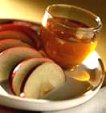
It is customary to eat apples dipped in honey before the meal. Why? It is a tradition to eat a newly ripened fruit for the first time during that fruit's harvest season, and since Rosh Hashanah falls around the beginning of apple season, the apple has become the "first fruit." This provides the opportunity to recite the blessings both over the fruit of the tree (bore pri ha'etz) as well as another Shehecheyanu. Before eating the apple dipped in honey, we ask God "to renew this year for us with sweetness and happiness."
We dip the apple in honey and recite the following blessing:
|
|
|
|
|
|
בָּרוּךְ אַתָּה יהוה אֱלהֵינוּ מֶלֶךְ הָעוֹלָם
בּוֹרֵא פְּרִי הָעֵץ
ba·rukh · at·tah · Adonai · E·lo·he·nu · me·lekh · ha·o·lam
bo·rei · pe·ri · ha·eitz
"Blessed are You, LORD our God, King of the universe
who creates the fruit of the tree."
|
|
|
|
Before finishing eating the apple we say:
|
|
|
|
יְהִי רָצוֹן מִלְּפָנֶיךָ יהוה אֱלהֵינוּ
וֵאלהֵי אֲבוֹתֵינוּ
שֶׁתְּחַדֵּשׁ עָלֵינוּ שָׁנָה טוֹבָה וּמְתוּקָה
בַּאֲדנֵינוּ יֵשׁוּעַ הַמָּשִׁיחַ אמן
ye·hi · ra·tzon · mil·fa·ne·kha, · Adonai · E·lo·hei·nu
ve·lo·hei · a·vo·tei·nu,
she·te·cha·desh · a·lei·nu · sha·nah · to·vah · u·me·tu·kah
ba·A·do·nei·nu · Ye·shu·a · ha·Ma·shi·ach [a·men]
"May it be your will, LORD our God
and God of our fathers,
that you renew for us a good and sweet year
in our Lord Yeshua the Messiah." [Amen]
Download Study Card
|
|
|
|
|
|
Eating Carrots (rubya)
|
|
|
|
|
We eat carrots as a play on the word rubya, a word that resembles the Hebrew word for increase (i.e., may God increase our merits). We begin, however, by first blessing the fruit of the earth (ha-adamah):
|
|
|
|
בָּרוּךְ אַתָּה יהוה אֱלהֵינוּ מֶלֶךְ הָעוֹלָם
בּוֹרֵא פְּרִי הָאֲדָמָה
ba·rukh · at·tah · Adonai · E·lo·he·nu · me·lekh · ha·o·lam
bo·rei · pe·ri · ha·a·dah·mah
"Blessed are You, LORD our God, King of the universe
who creates the fruit of the earth."
|
|
|
|
We then eat some carrots. Before finishing we say:
|
|
|
|
יְהִי רָצוֹן מִלְּפָנֶיךָ יהוה אֱלהֵינוּ וֵאלהֵי אֲבוֹתֵינוּ
שֶׁיִּרבּוּ זְכֻיּוֹתֵינוּ
ye·hi · ra·tzon · mil·fa·ne·kha, · Adonai · E·lo·hei·nu ve·lo·hei · a·vo·tei·nu
sheh·yeer·bu · ze·khoo·yo·tey·nu
"May it be your will, LORD our God and God of our fathers,
that our merits increase (she-yirbu z'chutenu)."
|
|
|
|
|
|
Eating Leeks (karsi)
|
|
|
|
|
We eat leeks, called karsi in Aramaic, as a play on the Hebrew word karat - to cut down - i.e., "May our enemies be cut down." Note that we do not repeat the ha-adamah blessing before eating since we've already recited this. After eating, however, we add:
|
|
|
|
יְהִי רָצוֹן מִלְּפָנֶיךָ יהוה אֱלהֵינוּ וֵאלהֵי אֲבוֹתֵינוּ
שֶׁיִּכָּרְתוּ שׂוֹנְאֵינוּ
ye·hi · ra·tzon · mil·fa·ne·kha, · Adonai · E·lo·hei·nu ve·lo·hei · a·vo·tei·nu
she-yeek-kar-tu · son-ei-nu
May it be your will, LORD our God and God of our fathers,
that those who hate us be cut away (i.e., yikarsu – play on karsi –"leeks" in Aramaic)
|
|
|
|
|
|
Eating Beets (selek)
|
|
|
|
|
We eat beets as a play on word selek, which reminds us of the Hebrew word lesalek – to remove (i.e., our enemies). Note that once again we do not repeat the ha-adamah blessing before eating since we've already done so previously. After eating, however, we add:
|
|
|
|
יְהִי רָצוֹן מִלְּפָנֶיךָ יהוה אֱלהֵינוּ וֵאלהֵי אֲבוֹתֵינוּ
שֶׁיִּסְתַּלְקוּ אוֹיְבֵינו
ye·hi · ra·tzon · mil·fa·ne·kha, · Adonai · E·lo·hei·nu ve·lo·hei · a·vo·tei·nu
sheh-yees-tal-koo · oy-vei-nu
"May it be your will, LORD our God and God of our fathers,
that our enemies be taken away (yistalku – from selek, beets in Aramaic)
|
|
|
|
|
|
Eating Dates (tamar)
|
|
|
|
|
Dates are another sweet food often associated with Rosh Hashanah. We have fun making the connection between the word for date (tamar) that reminds us of the Hebrew word for 'an end' (i.e., may evil end in our lives). After eating the dates, we recite:
|
|
|
|
יְהִי רָצוֹן מִלְּפָנֶיךָ יהוה אֱלהֵינוּ וֵאלהֵי אֲבוֹתֵינוּ
שֶׁיִּתַּמּוּ שׂוֹנְאֵינוּ
ye·hi · ra·tzon · mil·fa·ne·kha, · Adonai · E·lo·hei·nu ve·lo·hei · a·vo·tei·nu
she-yee-ta-mu · son-ei-nu
"May it be your will, LORD our God and God of our fathers,
that those who hate us be ended (yitamu – from tamar, dates in Aramaic)
|
|
|
|
|
|
Eating Pomegranate (rimon)
|
|
|
|
|
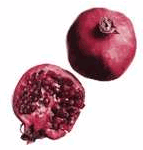
Eating a pomegranate reminds us of the sweetness of the Torah. May the new year be good and sweet for us all, and may our righteous deeds increase, like the many seeds of the pomegranate (1 John 2:29). Again, since we've already recited ha-etz blessing, we do not need to repeat it. After eating the pomegranate, however, we add:
|
|
|
|
יְהִי רָצוֹן מִלְּפָנֶיךָ יהוה אֱלהֵינוּ וֵאלהֵי אֲבוֹתֵינוּ
שֶׁנַּרְבֶּה זְכֻיּוֹת כְּרִמּוֹן
ye·hi · ra·tzon · mil·fa·ne·kha, · Adonai · E·lo·hei·nu ve·lo·hei · a·vo·tei·nu
sheh-nar-beh · ze'khoo-yoht · ke'ree-mohn
"May it be your will, LORD our God and God of our fathers,
that our merits be numerous as the seeds of a pomegranate."
|
|
|
|
|
|
Eating Fish (dagim)
|
|
|
|
|
The fish symbolizes that we teem and multiply. First we recite the appropriate blessing for eating fish (the she-hakol blessing):
|
|
|
|
בָּרוּךְ אַתָּה יְהוָה אֱלהֶינוּ מֶלֶךְ הָעוֹלָם
שֶׁהַכֹּל נִהְיָה בִּדְבָרוֹ
ba·rukh · at·tah · Adonai · E·lo·he·nu · me·lekh · ha·o·lam
sheh·ha-kol · nee-he-yah · beed·va·ro
"Blessed art Thou, LORD our God, King of the universe,
Who by His Word brings about all things."
|
|
|
|
After tasting the fish we say:
|
|
|
|
יְהִי רָצוֹן מִלְּפָנֶיךָ יהוה אֱלהֵינוּ וֵאלהֵי אֲבוֹתֵינוּ
שֶׁנִּפְרֶה וְנִרְבֶּה כְּדָגִים
ye·hi · ra·tzon · mil·fa·ne·kha, · Adonai · E·lo·hei·nu ve·lo·hei · a·vo·tei·nu
she-neef-reh · ve-neer-beh · ke'dagim
"May it be your will, LORD our God and God of our fathers,
that we be fruitful and multiply like fish."
|
|
|
|
We then look at the head of the fish and say:
|
|
|
|
יְהִי רָצוֹן מִלְּפָנֶיךָ יהוה אֱלהֵינוּ וֵאלהֵי אֲבוֹתֵינוּ
שֶׁנִּהְיֶה לְרֹאשׁ וְלֹא לְזָנָב
ye·hi · ra·tzon · mil·fa·ne·kha, · Adonai · E·lo·hei·nu ve·lo·hei · a·vo·tei·nu
she-nee-yeh · le-rosh · ve'lo · le'zah-nav
"May it be your will, LORD our God and God of our fathers,
that we be the head and not the tail" (Deut 28:13)
|
|
|
|
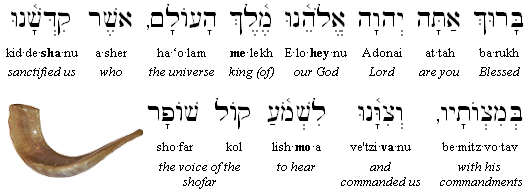
We sound the shofar - the horn of a male lamb - to recall the Akedah, the sacrifice of Isaac, during Rosh Hashanah. The teruah blast is meant to awaken us to remember this supreme act of faithful obedience, which of course prefigured the sacrifice of Yeshua by God for our atonement. Indeed the first time the word "love" occurs in the Torah concerns this very sacrifice.
If you have a shofar (ram's horn), you may want to fulfill the mitzvah of listening to its sound by blowing it at this time. The one who blows the shofar recites the blessing:
|
|
|
|
"Blessed art Thou, Lord our God, Master of the universe, who has sanctified us with His commandments and commanded us to hear the sound of the shofar."
|
|
|
|
Hebrew Blessing Study Card:
|
|
|
|
Since Rosh Hashanah is a two-day festival, all of these ceremonies are repeated on the second evening as well, except that there is a tradition to use a different newly ripened fruit of the season, such as a pomegranate. This fruit is a popular since it is mentioned as native to the land of Israel and because there is a legend that there are 613 seeds in each fruit (corresponding to the number of commandments in the Torah). Most do not dip the pomegranate in honey, however, since its seeds are already sweet enough by themselves.
|
|
|
|
|
|
Eating a pomegranate reminds us of the sweetness of the Torah. May the new year be good and sweet for us all, and may our righteous deeds increase, like the many seeds of the pomegranate (1 John 2:29). B'shem Yeshua Adoneinu: Amen.
|
|
|
|
|
יְהִי רָצוֹן מִלְּפָנֶיךָ יהוה אֱלהֵינוּ וֵאלהֵי אֲבוֹתֵינוּ
שֶׁנַּרְבֶּה זְכֻיּוֹת כְּרִמּוֹן
ye·hi · ra·tzon · mil·fa·ne·kha, · Adonai · E·lo·hei·nu ve·lo·hei · a·vo·tei·nu
sheh-nar-beh ze'khoo-yoht ke'ree-mohn
"May it be your will, LORD our God and God of our fathers,
that our merits be numerous as the seeds of a pomegranate."
|
|