 |
|
|
|
|
|
|
|
|
|
|
|
|
|
|
Hebrew Syllables - |
|||||||||||||
|
Understanding the Hebrew Quiescent Letters |
|||||||||||||
|
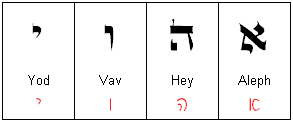
The letters Aleph, Hey, Vav, and Yod can sometimes be "quiescent," that is, silent under certain circumstances: |
|||||||||||||
 |
|||||||||||||
|
Quiescent Letters |
|||||||||||||
|
Examples: |
|||||||||||||
 |
|||||||||||||
|
The Aleph in the word above is quiescent. This word would be transliterated as reishehon (the sheva is vocal since Tsere is long). |
|||||||||||||
 |
|||||||||||||
|
Again, the Aleph in the word above is also quiescent. This word would be transliterated as berosh or b'rosh. |
|||||||||||||
 |
|||||||||||||
|
The letter Yod in the word above is also quiescent. This word would be transliterated as elohav. |
|||||||||||||
|
From a syllabification point of view, the quiescent letter becomes incorporated as part of the syllable of the preceding vowel. |
|||||||||||||
|
|
|||||||||||||