|
"Two things fill the mind with ever new and increasing admiration and awe, the oftener and the more steadily we reflect on them: the starry heavens above and the moral law within."- Kant
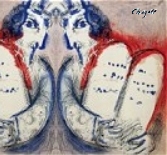
While at Mount Sinai the Ten Commandments were dramatically uttered amidst thunder, lightning, smoke, and the roar of the heavenly shofar, they essentially restate spiritual and moral truth intuitively known by all people (see Rom. 1:19-32).
In light of this, we may wonder why God made such a terrifying presentation of principles he had implanted within the souls of those he created in his image, and especially to the direct descendants of Abraham, Isaac, Jacob, Joseph, and Moses... After all, God's truth may be spoken using a "still small voice" rather than in fiery displays (1 Kings 19:12).
In reply, it may be said that while most people intuitively understand the whisper of "right and wrong," they often suppress the voice of conscience because they do not genuinely fear God, and therefore they fail to connect the significance of their choices with the Divine Lawgiver who is the Source of moral reality. They separate, in other words, the idea of transcendental "Supreme Being" (i.e., the cosmic Creator) from the Source of immanent value and meaning (i.e, the Judge of all).
The First Commandment, however, reminds us: "I AM (anokhi) the LORD (YHVH) your God (Elohim)," which identifies divine power with righteousness and holiness. The drama of the revelation at Sinai was therefore intended to instill yirat haShem - the awe of God - within the heart, connecting the Supreme Power with moral truth and its implications (i.e., conscience).
The Israelites drew back in fear because they realized that the Holy One himself was present in their private thoughts, attitudes, and motives of the heart, and this produced a sense of dread within them (Exod. 20:19). "There is no creature hidden from His sight, but all things are naked and open to the eyes of Him to whom we must give account" (Heb. 4:13). Moses reassured them, however, by saying that the surrounding terrors - which undoubtedly resembled the wonders they had earlier witnessed in Egypt - would do them no harm if they would heed the Voice of the LORD. In other words, the terrifying glory of Sinai was meant to impart a sense of reverence and to help the people know that the LORD God is both the Lawgiver and the Source of all power and glory...
Hebrew Lesson
Psalm 97:6 Hebrew reading:
 |
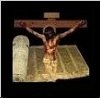
Note: Thankfully after the giving of the law to Israel, the Lord later revealed the vision of the Mishkan ("Tabernacle") and the Altar of God's Atonement (Mercy) which finds its climactic expression in the cross of Yeshua our Messiah...
<< Return
|