|
From a "macro" or high-level view, we can understand the book of Leviticus to provide a spiritual map that points the way to connect with God. It was written to speak to our need and desire to enter into the holy space of the divine reconciliation...
Recall that the book of Genesis explains our origin, the fall of our souls into sin and our subsequent alienation from God. It also foretold of the coming Redeemer who would heal us from our fallen estate and establish the kingdom of God upon the earth.
The book of Exodus further reveals the LORD as our Deliverer who saves us from bondage to olam hashkerim (עוֹלָם הַשְׁקְרִים), the false world, and who then graciously leads us to freedom by awakening our souls to divine truth.
The Exodus from Egypt (יציאת מצרים) serves as a parable of the salvation experience (Rom. 15:4; 1 Cor. 10:11). First, faith in God's promise is expressed by sheltering under the blood of the lamb of God as a "passover" sacrifice (as it was with Abel's offering), and through it we are delivered from the plague and curse of death. We are then graciously led by the Spirit of God through the waters into newness of life when we begin our journey to our true homeland. We begin to understand the covenant promise to be God's people. The revelation at Sinai pulls back the curtain of the phenomenal world to disclose the underlying and overarching spiritual reality. Hearing the divine voice imprints us with God-consciousness. We are awed and overwhelmed with the divine presence and desire to enshrine it within our hearts forever.
The building of the Mishkan (Tabernacle) "reifies" the vision to create a habitation of the divine Presence. It embodies our gratitude to God. As Solomon later said as he dedicated the Temple in Jerusalem, however: "Will God indeed dwell on the earth? Behold, heaven and the heaven of heavens cannot contain You. How much less this Temple which I have built! Yet regard the prayer of Your servant and his supplication, O Lord my God, and listen to the cry and the prayer which Your servant is praying before You today" (1 Kings 8:27-28). Nevertheless, the desire to know God to be present calls for a sacred place to be made within the heart...
And this is what the book of Leviticus, or Vayikra, is really about: hearing the call of God to draw near to Him. Therefore the Mishkan was structured with inner chambers or "gateways" that led ever closer to the throne of God himself. We come to the first gate by faith: the Curtain of the outer courtyard is opened and we enter. We see the outer altar where the Lamb of God was continually offered, reminding us of the original sacrifice and promise given at Eden. We wash ourselves at the basin and enter the Holy Place where we behold the divine light of the Menorah. We eat of the "bread of Presence" (לֶחֶם פָּנִים) and offer prayer at the golden Altar of Incense. At the appointed time, we reverently open the veil to enter the Holy of Holies, appealing to the blood offered on our behalf to make atonement for breaking God's heart. In a cloud of smoke we descry the blood sprinkled seven times over the broken tablets stored in the sacred Ark. We confess the Name of the LORD and sense His blessing and acceptance...
The great and overarching lesson of Vayikra is that God delivers us so that we can know his heart. And this is the message of the Cross of Messiah as well -- the great Altar of God, the Tabernacle "made without hands," where Yeshua entered the Holy of Holies to willingly offer up his blood in intercession for our brokenness (Heb. 9:11-12). Yeshua entered the dark cloud of darkness to bring you into God's light.... Amen, and may His Name forever be praised.
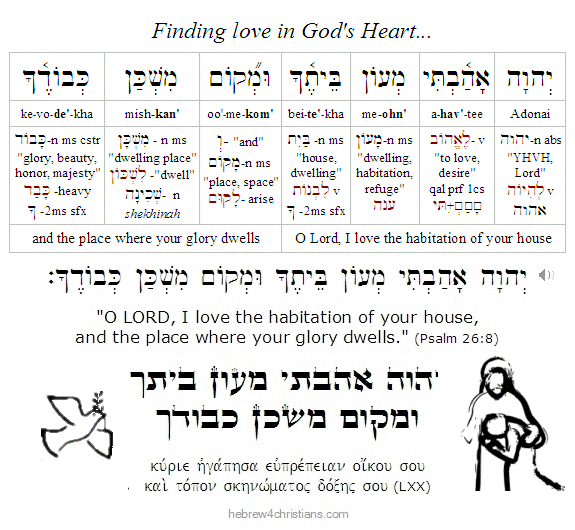
Hebrew Lesson
Psalm 26:8 reading (click):
 |
<< Return
|