|
The theme of the fragility of life is part of the sober message of Tishah B'Av. After all, the great symbol of God's manifest presence on the earth, the Holy Temple, went up in smoke, and the very place (i.e., ha-makom: הַמָּקוֹם) where the LORD chose to "put His Name" was utterly destroyed. As the people were taken captive and led into exile, the great vision of Zion appeared to be forever lost (Psalm 137:1-4).
The LORD had forewarned that exile, persecution and progressively worse punishments would befall the people if they would break faith with Him (see Lev. 26:14-46, which is called the "tochechah (תוֹכֵחָה)," or "rebuke"). But how could all this have happened? Notice that tochachah begins with the phrase ve'im loh tishme'u li (וְאִם־לא תִשְׁמְעוּ לִי), "if you do not listen to me" (Lev. 26:14), which recalls the Shema and the duty to love the Lord bekhol levavkha, "with all your heart." The sages point out that the refrain "if you walk contrary to me" (וַהֲלַכְתֶּם עִמִּי בְּקֶרִי) - which occurs several times during the rebuke - really means "if you walk carelessly (i.e., keri: קְרִי) with me." The commentator Rashi notes that the verb karah (קָרָה) means "to befall" or "to happen" and therefore suggests a sense of randomness (the related word mikreh [מִקְרֶה] means "coincidence"). If the people regarded the events of life as "random," then God would reciprocate by bringing senseless trouble into their lives. For this reason a careless attitude about the things of God is the first step toward apostasy...
It's been said that the opposite of love isn't hate, but rather indifference, and that explains why punishments came when the people "left their first love." If you walk carelessly with God, then you may be afflicted with "troubles of love" (i.e., yissurei ahavah: יִסּוּרֵי אַהֲבָה), that is, with various difficulties, intended to help you "come to your senses," to help you wake up, and to cause you return to the LORD for healing... This is a severe mercy of God.
The idea of tochachah is not simply something for ethnic Israel, of course, since the New Testament likewise warns us that God will punish those who likewise walk carelessly (i.e., keri: קְרִי) with Him. Have you forgotten the exhortation that addresses you as God's children? "My son, do not regard lightly (ὀλιγώρει) the discipline of the Lord, nor be weary by his reproof (תּוֹכֵחָה). For the Lord disciplines the one he loves, and reproves (יוֹכִיחַ) every child whom he receives" (Heb. 12:5-6; Prov. 3:11-12). The Lord charged the assembly at Ephesus that they had let go of their first love. Yeshua therefore urged them: "Remember from what high state you have fallen and repent! Do the deeds (ἔργα) you did at the first; if not, I will come to you and remove your menorah from its place – unless you repent" (Rev. 2:4-5). "God is not mocked (μυκτηρίζω - lit., "to turn up the nose at"), and what a man sows, he also reaps" (Gal. 6:7; Psalm 39:11). There are abiding consequences for the choices we make in our lives. "For you may be sure of this, that everyone who is sexually immoral or impure, or who is covetous (that is, an idolater), has no inheritance in the kingdom of Messiah and God. Let no one deceive you with empty words, for because of these things the wrath of God comes upon the sons of disobedience" (Eph. 5:6-7).
It is written, "Pain (or grief) handled in God's way produces a turning from sin to God (תְּשׁוּבָה) which leads to salvation (יְשׁוּעָה), and there is nothing to regret in that! But pain handled in the world's way produces only death" (2 Cor. 7:10). A common definition of insanity is doing the same thing over and over again and expecting different results. The world's "logic" for dealing with inner pain is to do things that will suppress it, thereby guaranteeing more pain. The only way out is through... During Tishah B'Av we weep over our sins that have brought us exile. The sages note that the word "weeping," i.e., בְּכִי, has the same numeric value as the word for "heart," i.e., לב. We weep from the heart, then, because the heart itself is what needs to be healed... Shalom and love to you.
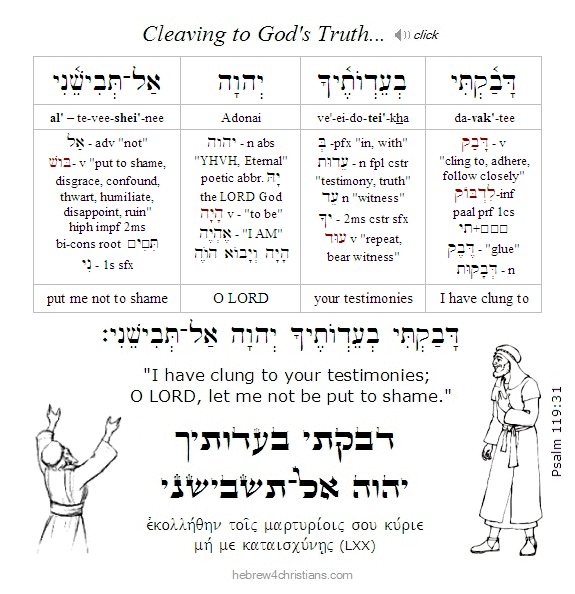
Hebrew Lesson
Psalm 119:31 Hebrew reading (click for audio):
 |
<< Return
|