|
June 2026 Updates (continued)
Note: If any page content appears to be missing, please refresh the page...
Shelach-Lekha:
The Sin of the Spies...

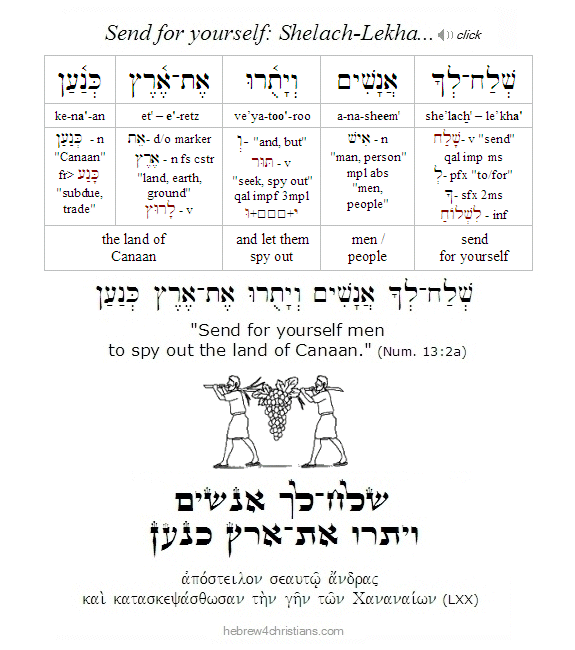
06.07.26 (Sivan 22, 5786) Shalom friends. Our Torah this week, called "Shelach Lekha," recounts how Moses sent twelve spies from the desert region of Kadesh (קָדֵשׁ) into the land of Canaan to search it out and give a report of its condition. The spies returned 40 days later extolling the land, saying that was indeed fruitful and zevat chalav u'devash (זבת חלב ודבשׁ), "flowing with milk and honey." However, ten of the spies also gave a discouraging report, expressing their fear that the people could not conquer the land. Only Joshua (יהושע) and Caleb (כלב) kept faith in God's promise....
Upon hearing the report of the ten spies, however, the people rebelled and cried out to return to Egypt. Angered by their lack of faith, God sought to destroy the people, but Moses interceded on their behalf. The LORD then decreed to lengthen the Israelites' wandering in the desert to 40 years -- one year for each day the spies were in the land -- until all of the faithless over the age of 20 would die in the desert, except for Joshua and Caleb, the two spies who kept faith with the LORD. After hearing the judgment of God, a group of remorseful Israelites decided to "repent" by taking matters into their own hands. Without either the "Ark of the Covenant of the LORD" or Moses' leadership, they presumptuously decided to storm a mountain on the border of land but were decisively routed by the Amalekites and Canaanites.
If last week's Torah might be called "sefer kvetch" (the book of complaint), this week's Torah reveals the fateful outcome... The people's lapse of faith in God's power serves as a profound and very sober warning, and indeed is a primary warning regarding the dreadful sin of unbelief in the New Testament (see Heb. 3:7-4:11). Indeed, Jewish tradition states that the decree that "none of the men who had seen my glorious Presence and my signs I performed in Egypt and in the desert will see the land that I swore to give to their fathers" (Num. 14:22-23) was given on the Ninth of Av (i.e., Tishah B'Av), which was prophetic of the destruction of the Temple and the worldwide exile of the people from the Promised Land. The sin of unbelief may rightly be regarded as the "unpardonable sin" of the Torah (as well as the New Testament).
The tragedy of the sin at Kadesh ultimately has a happy resolution, however, since the LORD is never thwarted by man's sin and weaknesses. After the 38 years of exile were complete, Moses' faithful successor Joshua sent a second spying expedition to the promised land, though this time God led the spies to a prostitute named Rahab (רחב), a direct ancestor of Yeshua the Messiah, who later identified her faith in the LORD's victory by displaying the scarlet cord (i.e., chut ha'sheni: חוט השׁני) during the fall of Jericho (Joshua 2). Rahab was the (grand)mother of Boaz, who later married Ruth, the great grandmother of King David. May God likewise give us courage to walk in the power of His promises, even if our present circumstances seem daunting. May the LORD clothe each of us with the "spirit of David" to stand before all the giants of the land who defy the LORD and His power.
Visions of the Far Country...

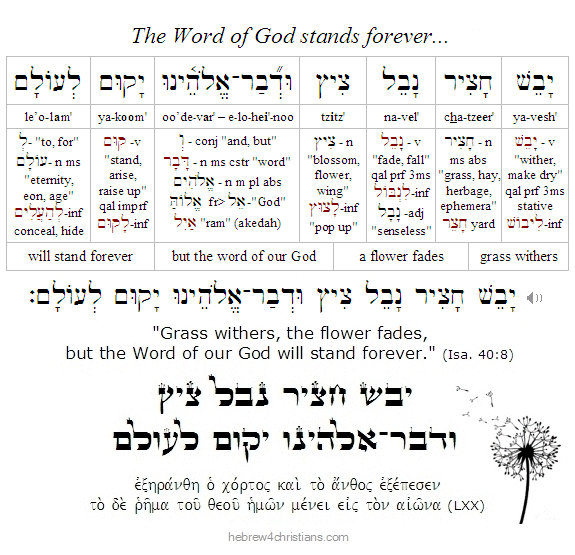
06.05.26 (Sivan 20, 5786) "Grass withers, the flower fades, but the word of our God will stand forever" (Isa. 40:8). This is a great word of hope. Despite experiencing exile and living in oppression, the Lord speaks words of everlasting consolation: Nachamu, nachamu ammi: "Comfort, comfort my people..." (Isa. 40:1). These were God's words of encouragement to the Jewish exiles that were carried away into Babylonian captivity. Despite the appearance of ruin, God promised to establish Zion as the praise of the earth. There is a glorious future ahead, even if present circumstances seem overwhelming and your heart's cry is stifled.
The LORD God is the only enduring Reality in a constantly changing world, and He has designed it this way to cause our hearts to search for him. "All flesh is grass, and all its beauty is like the flower of the field" -- such is the condition of this ephemeral world with its flux and fortunes. The flesh fades because the breath of the LORD blows upon it (Isa. 40:7). God Himself has ordained human life to be a vapor...
Nonetheless we are told not to fear, because there is good news for Zion: the LORD is coming with might to reward those who are waiting for him. "He will tend his flock like a shepherd; he will gather his lambs and carry them close to his heart" (Isa. 40:11). As the apostle Peter said, this good news is the eternal life given through the imperishable "Seed" - the Word of God that rises forever in Yeshua (1 Pet. 1:23-25).
The nations of this world are reckoned as less than nothing; their glory is "tohu" (תהוּ) - confusion and unreality - and their princes are regarded as utter vanity (Isa. 40:23). "Scarcely are they planted and have taken root when He blows upon them and they wither to become dust carried off by the storming winds" (Isa. 40:24). The nations of the earth are dried grasses; the kings of the earth are withered flowers.
But the LORD God is incomparably great and will faithfully fulfill his promises to Israel: "The word of our God will stand forever." He created the heavens and calls each star by name. He is invincible in power and no one can overrule His will.
This world is not our home; we are "strangers" here. It is an affliction to wait for the LORD, a "homesickness" of heart... The apostle Paul says our loneliness and alienation prepare for us an "eternal weight of glory" beyond all comparison, because we are not looking at what can be seen but at what cannot be seen. "For what can be seen is temporary, but what cannot be seen is eternal" (2 Cor. 4:17-18). Just as the "two-souled" man is unstable in all his ways, so the process of being "educated for eternity" means learning to focus our heart's passion and hope on the glory of heaven. "For where your treasure is, there will your heart be also."
Those who wait for the LORD inwardly groan to be clothed with immortality and eternal life, and their consolation is great indeed. Yeshua is "preparing a place for you," an everlasting place of refuge whose builder and maker is God (Heb. 11:10). Faith sees beyond the shadows of this world to behold your true home with your Heavenly Father. Amen. Believing is seeing, not the other way around. "Keep yourselves in the love of God, waiting for the mercy of our Lord Yeshua the Messiah that leads to eternal life." (Jude 1:21)
Hebrew Lesson
Isaiah 40:8 reading (click for audio):
Through His Strength...
"Perhaps you think that a preacher of repentance is like a rushing violent wind that terrifies physically. No, the true preacher of repentance, like God's voice, also comes in a gentle breeze – yet it is not soft but rigorous, as rigorous as the earnestness of eternity." - Kierkegaard
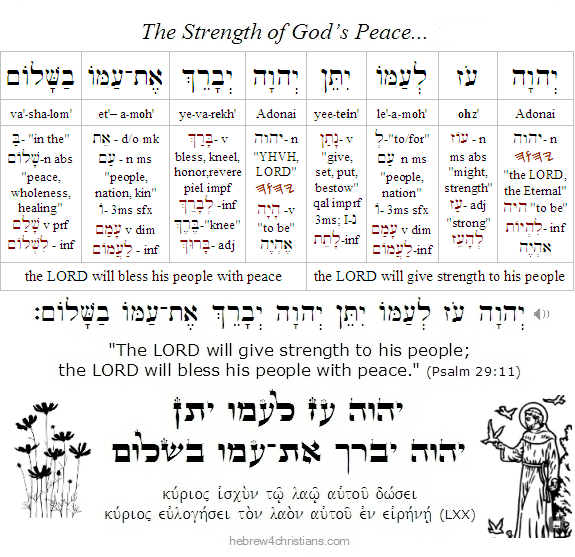
06.04.26 (Sivan 19, 5786) There are moments – dark, gnawing, raw – when you may lose sight of hope, when you might even fear that you have lost your faith – not in God or his promises – but rather in yourself, in your own strength to continue, to stay focused, to keep pressing on "hope against hope..." The remedy here is always the same: to remember that within you – that is, in your flesh - "there is no good thing" and that the miracle of salvation is made secure by God's passion for you, not your own power or desire. "Not by might, nor by power, but by my Spirit, saith the LORD of Hosts."
We don't trust in ourselves nor in the strength of our inner resolve, but solely in the power of God to make the way (John 1:13). We must turn away from ourselves to regain the message of God's unfailing love; only when we lose sight of ourselves do we find ourselves. God redeems you from your lost estate and touches you in your uncleanness; He clothes himself in your pain so that you may be clothed in his love. That never changes, despite dark moments, and to that we must always return...
Hebrew Lesson
Psalm 29:11 reading (click):
 |
Where we read, "I can do all things through Messiah who strengthens me" (Phil 4:13), that includes overcoming the inner pain of your life: your failures, your shame, the ache of rejection, abandonment, and so on. It means being set free from disillusionment, despair, and the oppression of relentless fear. "I can do all things through Messiah" means no longer accepting messages of self-hatred and hopelessness, no longer heeding the malicious whispers that say: "I am of no value," "I am unlovable," "my life is hopeless." No, "I can do all things through Messiah" means learning to be accepted, honored, and esteemed by God; it means opening your heart to God's love and blessing for your life; it means allowing your heart to be made right, to have inner peace... After all, Yeshua's great prayer was that we would know the truth of God's love for us (John 17), and this is the central need our lives.
Come unto the Savior...
"Jesus didn't come to merely speak words that were true, He is the Word that makes us true." - Frederick Buechner
06.04.26 (Sivan 19, 5786) "I thank thee, O Father, Lord of heaven and earth, because you have hidden these things from the wise and prudent, and have revealed them to babes.... Come unto me, all you that labor and are heavy laden, and I will give you rest. Take my yoke upon you, and learn from me; for I am meek and lowly in heart: and you shall find rest unto your souls. For my yoke is easy, and my burden is light" (Matt. 11:25, 28-30).
"Come unto me..." (בּוֹא אֵלַי). These are timeless words from our Savior who opens his heart to receive the "babes," that is, those who are simple at heart and cry out in their urgent need for God's help. "Come." This is his invitation to your heart, his personal call that beckons you to draw near to him in your trouble. In the midst of a confusing world and the babble of voices, the Savior cries out, "Come to me!" Turn away from the religionists and the so-called wise of the world, because the Father (את אבא), the Lord of heaven and earth (יהוה שמים וארץ) has hidden the truth of salvation from the proud of heart. God calls out to the humble, the lowly, and the broken; he looks to the poor and contrite of heart.
"Come unto me, all you who labor and are heavy laden." This includes you of doubting heart, weighed down by your anxieties and cares. You have gathered the sheaves and found little flax; you have toiled in the heat of day for little gain. "Come, you who are weary" of the news of the day, the sorrows of loss, the cruelly of the proud. "Come unto me" all who are weary of life, who ache in heart and dismay over the vain repetition of wickedness and sin. "Come unto me" all who feel like giving up, all who feel like they are dying inside...
"Come unto me," this is a message to your heart from the One who calls you, the heart behind the call, the Lord who reaches out to you in revelation and compassion, saying, "Come to me in your heaviness of heart, the utter depths of your sigh, in your weariness, your sorrows, and in your mourning, and I will give you rest, I will comfort you, I will heal your grief and give to the strong consolation of God's tender mercies and love.
"Take my yoke upon you. This is my yoke, my burden, and my passion - that you may enter my rest, know my peace, and draw strength from my love for you. Take hold and embrace my life given for you, to free you from the burden of suffering for your sins. This is the yoke of My love; this is the depths of spiritual rebirth, to know yourself as beloved because of the yoke of My love for you." This yoke "joins you" to his love. His yoke is for your heart, and you respond by taking up that yoke and sharing in what it means.
"Learn from me." This is the yoke of the disciple - to come under the tutelage of the love of God, and to know him in all your ways. "I am meek and lowly in heart," that is, he is mild, patient, kind, and gracious to you - and by responding to his acceptance and affirmation you will find "rest for your soul," you will be unburdened by the fears and distress of the ego, you will be set free from bondage to yourself.
"My yoke is easy." The Greek word translated "easy" means "full of grace," gentle and agreeable, and in Hebrew the word (נָעִים) is translated as "pleasant" and "joyful." Being in relationship with Yeshua is a matter of grace and communion. "My burden is light." The Hebrew word for "light" is "kal" (קל), meaning light, swift of foot, easily managed. Kal can also mean "simple" or essential. Indeed the burden of the Lord is weighty in earnestness but is carried by the grace of God's joy.
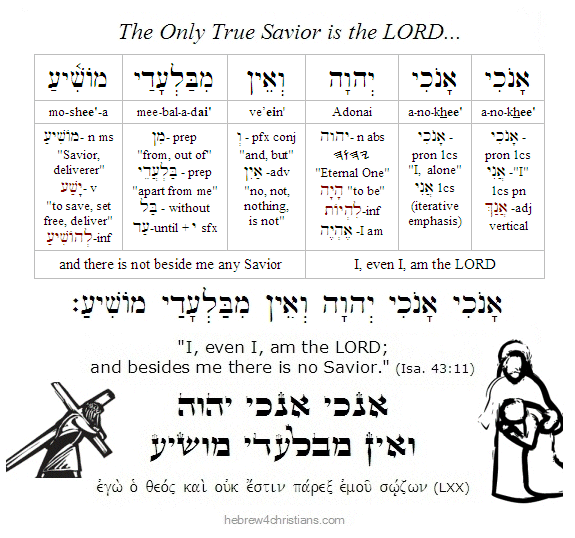
Paradoxically, this beautiful passage of Scripture distills the message of teshuvah with poignant simplicity and grace. "Come to me" is the essence of teshuvah, that is, turning to God for life. It is not about religious practices or liturgies; it is not even about morality or spiritual curiosity. It is about a radically new kind of life that is only known in a trusting relationship with Yeshua. He is the "way and the truth and the life" (John 14:6). No one can find eternal life apart from him. When we come to him and learn (i.e., receive) his love, we become new creations, reborn as beloved children, and heirs of all the promises of God. Teshuvah is the means to the greater end of knowing the heart of God. This is the essence of salvation itself, for there is no turning to God apart from Yeshua, who alone is the Savior and is the only one who brings us back to God...
Hebrew Lesson
Isaiah 43:11 reading (click for audio):
 |
Trusting God for your Life...
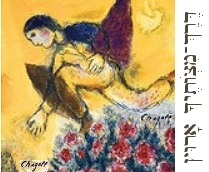
"The whole world is a very narrow bridge and the main thing is to have no fear at all."
06.03.26 (Sivan 18, 5786) "And now abide faith, hope, love: these three" (1 Cor. 13:13). The opposite of faith is fear; of hope, despair; and of love, indifference. Fear is the "default mode" of the soul that dwells in darkness. This is because the "fallen" soul regards the empirical world and its flux as ultimately real -- and therefore "sees in order to believe." The life of faith, on the other hand, looks beyond the realm of transient appearance to behold an abiding glory -- and therefore "believes in order to see." How we choose to see is ultimately a spiritual decision for which we are each responsible....
It isn't always easy to be courageous, and the temptation to yield to fear often seems compelling. The test of our faith is of more value to the LORD than our material or emotional comfort, however, and therefore we will all experience tribulation of various kinds.
Remember that the most frequently occurring commandment in Scripture is simply al tirah (אַל־תִּירָא), "don't be afraid." If living without fear were easy, it would be of little spiritual worth, but since it requires all of our heart, soul, mind, and strength, it is therefore considered precious. It requires, in short, an infinite (and divinely given) passion. And it is part of God's plan for us to be "in but not of" the world system, to be alienated, to be misunderstood, to be persecuted... We are called to "take up the cross" and to die daily. Following Yeshua means denying ourselves along the way.
Ultimately fear distills to the fear of death, or rather, of "the one who has the power of death, namely the devil" (Heb. 2:14-15). If we come to peace with our own finitude, our own mortality, and our eventual blessed estate in the Messiah, death has no more power over us. Perhaps this is part of the reason why the Christian faith is so hated in communist and in other places of "absolutist" secular ideologies (including "deconstructed" America or Shiite Muslim autocracies). If you are free from the greatest threat that man can menace over you, if you are free of the fear of man, then you are free to be a voice crying in the wilderness, a bold and courageous witness of truth....
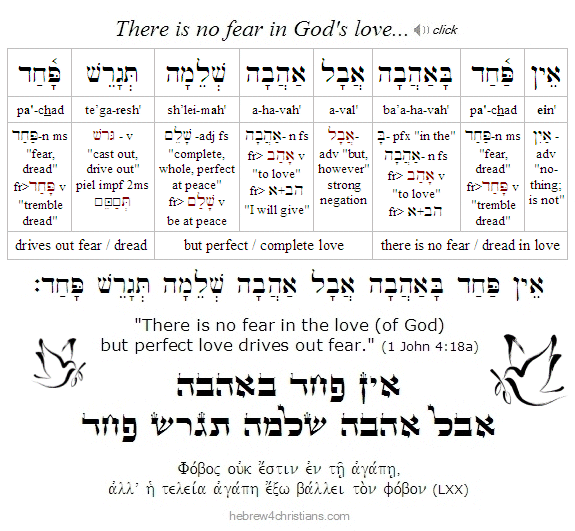
Fear is the antithesis of faith, though living without fear is certainly not easy. After all, how do we naturally choose to be unafraid of what we in fact fear? Is this power within our conscious control? Only by a miracle are we set free from fear... Indeed, true faith working within the heart is one of the greatest miracles of God. May it please God to impart to each us real courage that comes from Heaven itself. Amen.
Hebrew Lesson:
John 4:18 reading (click):
The Central Light...
"I believe in Christianity as I believe that the sun has risen: not only because I see it, but because by it I see everything else." - C.S. Lewis (God in the Dock)
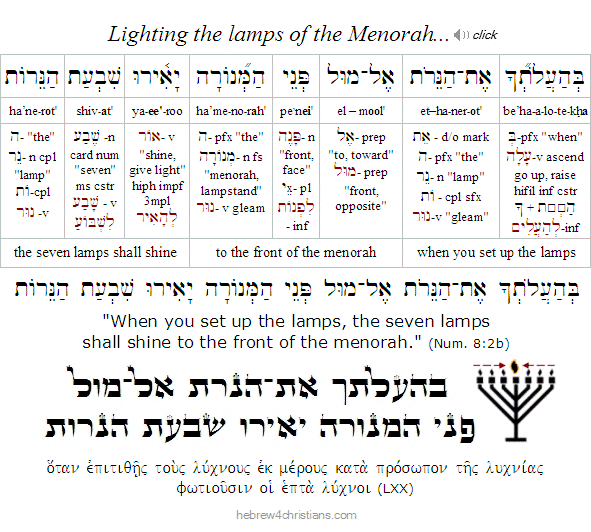
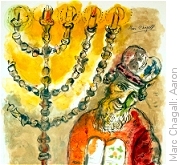
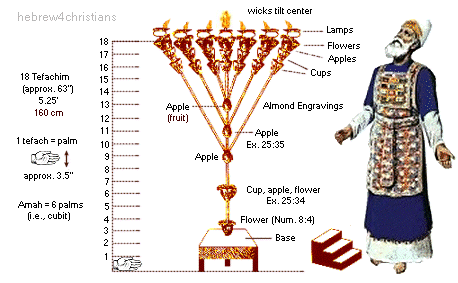
06.03.26 (Sivan 18, 5786) Our Torah portion this week (i.e., Beha'alotekha) begins with the LORD instructing Aaron to kindle the seven lamps of the Menorah (מְנוֹרָה) so that the light from each would be "turned" toward its central shaft (Exod. 25:37; Num. 8:4). The entire Menorah was formed mik'shah (מִקְשָׁה), that is, beaten from a single piece of pure gold (זָהָב טָהוֹר), and its base, shaft, branches, cups, fruits, and flowers were all "one" with its substance (Exod. 25:31). The central shaft upheld the light of the Shamash (servant or helper lamp) which also served as the trunk for the other branches.
The radiance of the Menorah symbolized the Divine light (the word "shamash" can also be read as shemesh, "sun"), which is the radiance of Yeshua, the Tree of Light and the great Servant of the LORD (John 8:12; 1 John 1:5; Prov. 3:18). Yeshua is the light that gives light to every person created in the image of God (John 1:9). Our spiritual life stems from our connection with Him, since he provides us with support, sustenance, and illumination from the oil of the Holy Spirit (John 15:1-5).
Amen. Yeshua is the Light of the LORD (אוֹר יי). As it is written, "God is our light and our yeshuah (יְהוָה אוֹרִי וְיִשְׁעִי), our salvation" (Psalm 27:1; 1 John 1:5). He alone is the Light of the world (אוֹר הָעוֹלָם), the Shamash (שַׁמָּשׁ) who descends to ignite the "light of life" (אוֹר הַחַיִּים) within all who will believe. Our Savior is the Radiance (זוֹהַר) of the glory of God (Heb. 1:3), the Fire of God's holy countenance. The person who has the Son has life, but the one who refuses this life is spiritually dead. May we all walk in the Light of His countenance; "O house of Jacob, come, let us walk in the light of the LORD" (Isa. 2:5).
The essential question is whether you are willing to believe in the light of God's love. Will you choose to receive his promise? Yeshua said that He is the light of the world, and that those who follow him will not walk in darkness, but will have the light of life (John 8:12). So, do you have ohr ha-chayim (אוֹר הַחַיִּים), "the light of Life," shining within your heart? The light radiantly beckons: "Wake up, open your eyes, and believe! Darkness and despair will not prevail; your mourning will find comfort, your grief its solace. Your heart's deepest longing shines brightly, even now, if you will but believe...
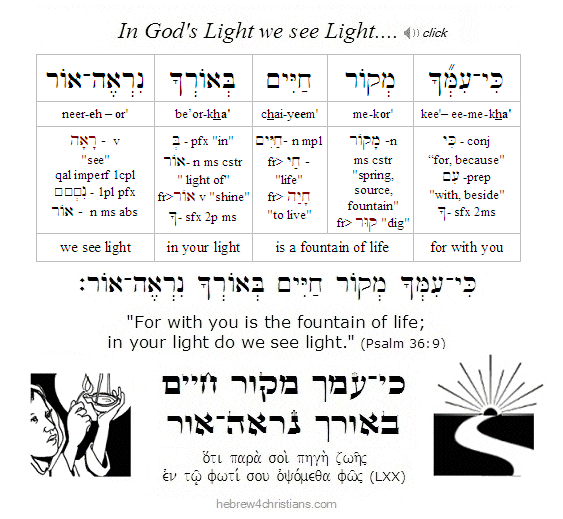
Let us press on in our confession, chaverim; let us take courage and affirm the promise of our faith: "The LORD is my light and my salvation (i.e., my Yeshua); whom shall I fear? The LORD is the refuge of my life; of whom shall I be afraid?" Amen, it is in God's light that we see light...
Hebrew Lesson
Psalm 36:9 reading (click):
 |
Note: For more on this topic, see "The Menorah and the Tree of Life."
Faith in the Unseen Good...
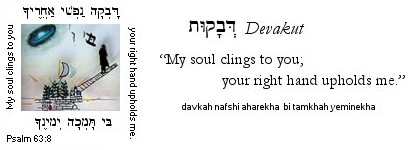
"How can we turn our knowledge about God into knowledge of God? The rule for doing this is simple but demanding. It is that we turn each Truth that we learn about God into matter for meditation before God, leading to prayer and praise to God." - J.I. Packer
06.02.26 (Sivan 17, 5786) From our Torah portion this week (i.e., Beha'alotekha) we read: "At the command of the LORD they camped, and at the command of the LORD they set out" (Num. 9:23). This teaches us that God's Name is to be heeded every step of the way.
Whenever we journey someplace, near or far, say, "With God's help (i.e., be'ezrat ha'shem: בעזרת השם) I am going to this place, and I will stay for so long, if it pleases God (i.e., im yirtzei ha'shem: אם ירצה השם)." As James reminds us, "You do not know what tomorrow will bring. For what is your life? You are a mere mist that appears for a little time and then vanishes (James 4:14-15). Likewise Tehillim affirms: "Man is like a breath; his days are like a passing shadow" (Psalm 144:4).
We share exile with the LORD in this age, as strangers and sojourners with Him; indeed, our lives are "hidden with Him," waiting to be revealed (Col. 3:1-4; Psalm 17:15). "The present form (τὸ σχῆμα) of this world is passing away" (1 Cor. 7:31), and the heart of faith looks for a city whose designer and builder is God Himself (Heb. 11:10). "So we do not lose heart, though our outer self is wasting away... For the things that are seen are turning to dust, but the things that are unseen shall endure forever" (2 Cor. 4:16-18).
Hebrew Lesson:
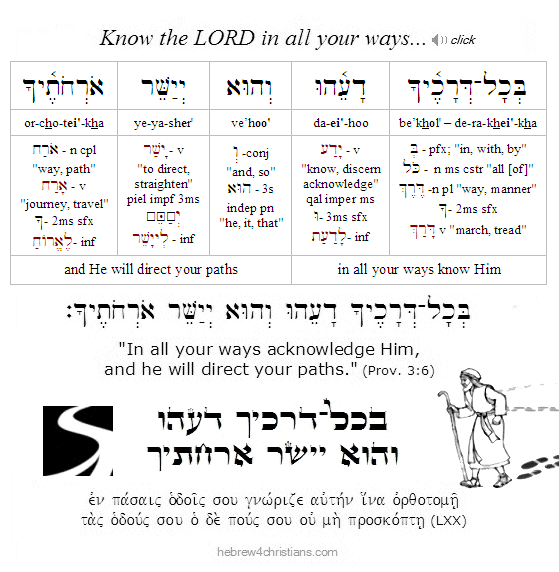
Proverbs 3:6 reading (click):
"In all your ways know Him," that is, in all that you put your hand to do respect the Lord and ask for divine guidance (1 Cor. 10:31). As King David stated, Shiviti: "I have set the Lord always before me, because He is at my right hand, I shall not be moved" (Psalm 16:8). "Do do be wise in your own eyes, fear the LORD and turn away from evil" (Prov. 3:7).
Finding Right Desire...
"He who has a desire desires what is not at hand and not present, what he does not have, and what he is not, and that of which he is in need; for such are the objects of desire and love." - Socrates (Symposium)
06.02.26 (Sivan 17, 5786) Our Torah portion this week (i.e., Beha'alotekha) recounts the rebellion of the people during the desert sojourn... Instead of joyfully anticipating the promise of their inheritance, the people grew dissatisfied and bored. The Sefat Emet noted that just after we read how the people complained bitterly to the LORD, they had a "strong craving" (הִתְאַוּוּ תַּאֲוָה), which in Hebrew literally means they "craved a craving."
Moses could tolerate the people's desire for food and water, but when they began to actively cultivate their cravings, lusting after the imaginary "free fish" they enjoyed in Egypt, he began to realize that the problem was deeper, a matter of the heart (Deut. 9:22)... Moses understood that what the people really wanted was impossible, since it involved denying who they were as God's redeemed people.
The issue was not about wanting to eat "meat," after all, but rather hungering after the forbidden, desiring to desire, etc. Creating desires, fomenting a sense of deprivation, and choosing to see yourself as a victim, is a lethal sickness of spirit, a disease of the soul. It is a "burning" (i.e., taberah: תַּבְעֵרָה) that destroys inner peace. It is the spirit behind all sorts of addictions. May God help us understand and seek what truly matters; may he deliver us from self-destruction; and may he help us to be satisfied with the manna he provides! Amen.
Hebrew Lesson
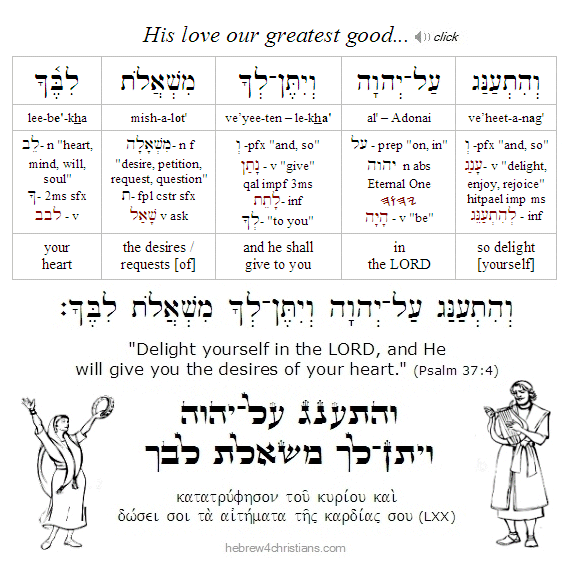
Psalm 37:4 reading (click for audio):
The Divine Light...
"The light shines in the darkness and the darkness cannot overcome it." (John 1:5)
06.01.26 (Sivan 16, 5786) "If I say, surely darkness covers me ... the night shines as the day; nothing hides from your radiance" (Psalm 139:11-12). We have to trust that God is in our darkness, in the silence, in the unknown... We come out of the shadows when we admit that we act just like other people, that we are human, in need of reconciliation ourselves...
Above all we need God. We need help. We need a miracle to help us to truly love. We may find excuses for many things, but we cannot escape the "wretched man that I am" reality that is grounded in our fears. God sees in the darkness and is present there, too. When you feel alone, like an unbridgeable gulf lay between you and all that is good; when you feel like you want to scream but are afraid that even then no one would hear, may the LORD shine His light upon you... Amen, may His light shine upon you.
גַּם־חשֶׁךְ לא־יַחְשִׁיךְ מִמֶּךָ
וְלַיְלָה כַּיּוֹם יָאִיר
כַּחֲשֵׁיכָה כָּאוֹרָה
gam-cho'·shekh · lo-yach·shikh · mee·me'·kah
ve·lai'·lah · kai·yom · ya·eer
ka·cha·shei·khah · ka·o'·rah

"The darkness is not made dark to you;
but the night shines as the day:
as the darkness so is the light...
(Psalm 139:12)

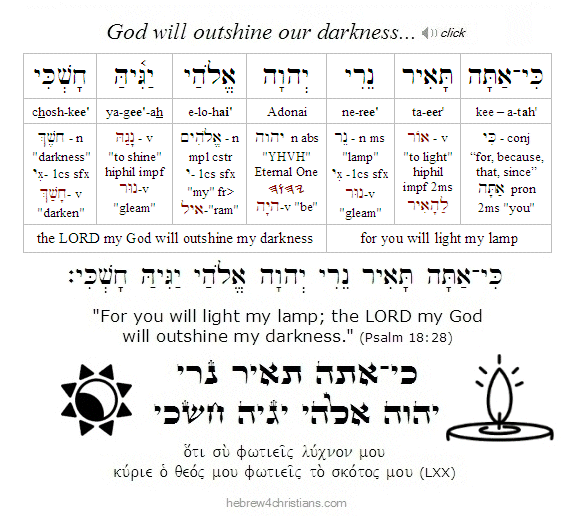
"For you will light my lamp; the LORD my God outshines my darkness" (Psalm 18:28). There is "depression," and there is the dark night of the soul, and these are different matters, though they may overlap... "Hope deferred makes the heart sick." The dark night of the soul calls us to walk by faith, not by sight. Faith enables us to walk through the darkness with God and to learn from him even there, as it is written: "Who among you fears the LORD and obeys the voice of his Servant, who walks in darkness and has no light in him? Let him trust in the Name of the LORD and lean upon his God" (Isa. 50:10).
Hebrew Lesson
Psalm 18:28 reading with comments (click):
Parashat Beha'alotekha - בהעלתך
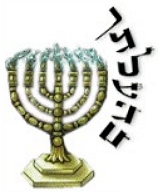
"We can't see light itself. We can see only what light lights up, like the little circle of night where the candle flickers." - Buechner
06.01.26 (Sivan 16, 5786) Our Torah for this week, called "Beha'alotekha" (i.e., Num. 8:1-12:16), begins with God giving instructions about how Aaron was to attend to the lamps of the Menorah within the Holy Place of the Tabernacle (Num. 8:1-4). Each day Aaron was to clean each of the seven lamps and to refill them with the very purest olive oil. The wicks were then to be bent so that the six outer lamps shined toward the seventh (and central) shaft. The lamps were to be lit daily, "from evening until morning," in a specific sequence - starting from the central lamp (the shamash) and then moving right to left (Exod. 27:21). In this connection consider that we cannot directly see the light, but by the light we are able to see...
According to the Talmud (Shabbat 22b), while all the lamps received the same amount of olive oil, the central lamp miraculously never ran out of oil, even though it was kindled first in the sequence. This miracle is also reported to have occurred during the Temple period, though it abruptly ended about 40 years before the destruction of the Second Temple (c. 30 AD), after the death of Yeshua the Messiah, the true Servant and Branch of the LORD. As attested in the Talmud: "Our Rabbis taught: During the last forty years before the destruction of the Temple the lot ['For the Lord'] did not come up in the right hand; nor did the crimson-colored strap become white; nor did the centermost light shine" (Yoma 39a).
 |
The portion then describes how the Levites were to be set apart for service at the Tabernacle (Num. 8:5-12). In a ritual ceremony that signified a sort of "rebirth," the Levites were first sprinkled with mei chachatat (מי חטאת), literally, "the waters of sin" (Num. 8:7), that is, holy water mixed with the ashes of the red heifer sacrifice that was used to purify from contamination with death (Num. 19:13). Next they shaved off all their hair and were completely immersed in a mikveh (i.e., a bath containing flowing or "living" water). Notice that the steps of being sprinkled with purifying water, shaving off of all the hair, and being completely immersed in a mikveh were similar to the ritual for the cleansing of the metzora, or "leper" (Lev. 14:2-32), suggesting that a qualified priest was a "healed leper" of sorts.
The medieval commentator Rashi notes that each member of the community was required to place their hands on the Levites' heads, just as the hands were placed on the head of a sacrificial animal as it was slaughtered before the altar (Num. 8:10; Lev. 1:4, 3:2). The "waving" of the Levites by the High Priest likewise simulated the ritual of "tenufah" (תנופה), that is, the waving of the guilt sacrifice (asham) that was offered by a leper after his or her cleansing (Lev. 14:12). Finally, the Levites themselves laid their hands on the sin and whole burnt offerings for atonement before the LORD (Num. 8:12).
The portion continues with a restatement of law of Passover (Num. 9:1-14), followed by a description of the Cloud of the LORD (i.e., anan Adonai: עֲנַן יְהוָה) that covered the Tabernacle by day and appeared as a pillar of fire (עַמּוּד אֵשׁ) by night. When the Cloud lifted the people would break camp and go to their next location en route to the promised land; when the Cloud settled the people would stop and encamp again (Lev. 9:15-23).
God commanded that two silver trumpets (i.e., chatzortzrot kesef: חֲצוֹצְרֹת כֶּסֶף) were to be made for various purposes, including signaling the people to break camp, assembling the elders of Israel, to signal the arrival of appointed times, as alarms for battle, and so on.
The Cloud of the LORD (ענן יהוה) lifted and the people of Israel then decamped from Sinai on the 20th day of the second second month of the second year after the Exodus from Egypt (Num. 10:11-35). The Ark of the Covenant went out first to scout a location followed by a specific camp order and formation.
Soon after many began to complain of the hardship of the journey, and the Fire of the LORD (אֵשׁ יְהוָה) broke forth and consumed people on the outer parts of the camp. The name of the place was subsequently commemorated as "Taberah" (תַּבְעֵרָה)- "the burning."
Despite the judgment of the LORD, some time later the eirev rav (mixed multitude) craved for Egyptian food and the people of Israel joined them by recalling the "free fish" they ate in Egypt. The people also complained of the monotony of the manna that fell like dew from heaven to feed the people during their journey (Num. 11:1-15). Moses then lamented to the Lord about how hard it was to lead the people, and God then instructed him to appoint 70 elders of Israel to help him lead the people (Num. 11:16-17). As for the people's complaint over the divine menu, the LORD sent an enormous swarm of quail that brought a plague upon the people. Because so many died from the plague, the place was called Kibroth-hattaavah (קִבְרוֹת הַתַּאֲוָה), or the "Graves of Craving" (Num. 11:18-33).
The portion ends with the mutiny of Miram and Aaron regarding Moses' role as the exclusively chosen leader of the people of Israel. They secretly consulted and asked: "Has the Lord indeed spoken only through Moses? Has he not spoken through us also?" The LORD heard their secret conversation and intervened by calling them to appear with Moses before the Tent of Meeting. There the LORD vindicated Moses as the sole leader of Israel because only he speaks "mouth-to-mouth" with God. Miriam was then stricken with tzaarat ("leprosy") and exiled from the camp. Moses prayed for his sister to be healed (אֵל נָא רְפָא נָא לָהּ) but God delayed healing to correct her and to be an object lesson to Israel.
Parashah Themes...
Some themes for this week's reading include the symbolism of the Menorah and the Divine Light; the ongoing need for purification from sin; the role being a priest to one another; the call for holiness in the divine service; the Shekhinah Glory and Presence of God; the direction and leading of God; the tests we face as we journey through desert places; the problem of our complaining hearts; the requirement to live by "daily bread"; the importance of respecting elders; tzaarat and exile from the camp, among others.
<< Return
|