|
Jewish Holiday Calendar
For July 2026 site updates, please scroll past this entry....
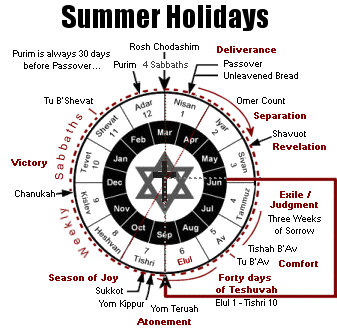
Fast of Tammuz and ends with Tishah B'Av. The last nine days of this three week period (i.e., from Av 1 until Av 9th) are days of increased mourning. However, after this somber time, the romantic holiday of Tu B'Av, the 15th of Av occurs. Summer ends with the 30 days of the month of Elul, a yearly season of teshuvah (repentance) that anticipates Rosh Hashanah and the fall holidays. The 30 days of Elul are combined with the first 10 days of the month of Tishri to create the "Forty Days of Teshuvah" that culminate with Yom Kippur.
Because they occur between the spring and fall holidays, the summer holidays help us prepare for the second coming of the Messiah:
The Summer Holidays:
Note that in accordance with tradition, holiday dates begin at sundown. Moreover, some holidays may be postponed one day if they happen to fall on the weekly Sabbath:
- Month of Tammuz (Sun. June 14th [eve] - Tues. July 14th [day])
- Month of Av (Tues. July 14th [eve] - Wed. Aug. 12th [day])
- Month of Elul (Wed. Aug. 12th [eve] - Fri. Sept. 11th [day])
- Month of Tishri (Fri. Sept. 11th [eve] - Sat. Oct. 10th [day])
Note: For more about the dates of these holidays see the Calendar pages....
July 2026 Updates
The Prayer of God...
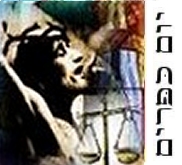
"And this is eternal life: that they know you the only true God, and Yeshua the Messiah whom you have sent." - Yeshua (John 17:3)
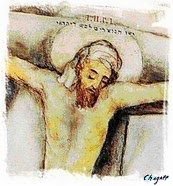
07.07.26 (Tammuz 22, 5786) Man prays to God, but to whom does God pray? And for what does He pray? Or do you think that the Almighty has no desires of His own, no yearning of heart? The sages of the Talmud believed that God indeed addresses himself: Yehi ratzon milfanai, "May it be acceptable before me, may it be My will, that my compassion overcome my anger, and that it may prevail over my justice when my children appeal to me, so that I may deal with them in mercy and in love" (Berachot 6a). This is the deeper unity of the Name YHVH (יהוה), the Savior and LORD, revealed to Moses after the sin of the Golden Calf (Exod. 34:6-7), and this is the essential meaning of the cross of Yeshua, where the LORD passionately "prayed within Himself" so that His compassion would overcome His judgment for our sins.
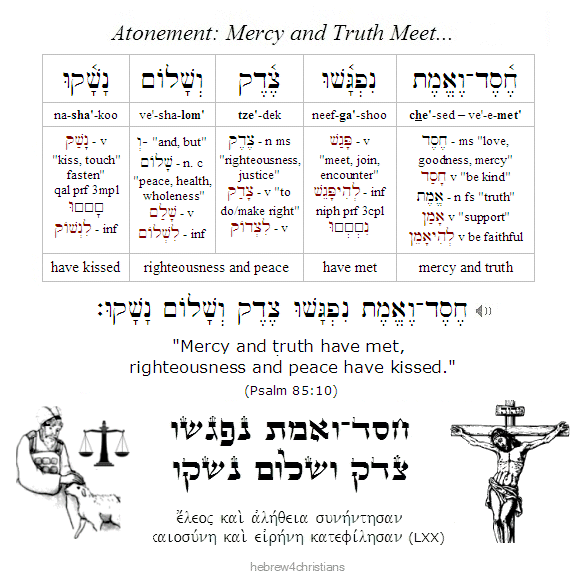
Only the cross allows God's righteousness and mercy to "kiss" (Psalm 85:10; 89:14); only the cross reveals the true Holy of Holies where the blood was placed over the Ark of the Law; only the cross intimates the Inner Sanctum of God's heart. Because of the cross, a holy God is able to truly love and help the trusting sinner (Rom. 3:26). It is written: "Righteousness and justice are the foundation of your throne (צֶדֶק וּמִשְׁפָּט מְכוֹן כִּסְאֶךָ); steadfast love and faithfulness go before you" (Psalm 89:14). Because of Yeshua, God is vindicated as entirely just - and the Justifier of those who trust in His redemptive love (Rom. 3:24-26). Yeshua is the prayer of God the Father's on behalf of His children...
The will of God - His heart's yearning and desire - is for his children to receive his love (2 Pet. 3:9; 1 Tim. 2:4; John 3:16; Ezek. 18:23). As Yeshua prayed, "Holy Father, keep them in your Name, which you have given me, that they may be one, even as we are one... I in them and you in me, that they may become perfectly one, so that the world may know that you sent me and loved them even as you loved me" (John 17:11,23).
Yeshua died on the cross to bear the shame for your sins, to be sure, but he did this so that you could be accepted and securely loved forever.... It is the love of God that is the goal of all things, after all. When Yeshua cried out, "It is finished" and breathed his last breath as He died for our sins upon the cross, the greatest exhalation of the Spirit occurred, the greatest sigh, the greatest utterance was ever declared. The sacrificial death of Yeshua for our deliverance was God's final word of love breathed out to those who are trusting in Him.
Hebrew Lesson
Psalm 85:10 reading (click for audio):
 |
His Abiding Presence...
07.07.26 (Tammuz 22, 5786) The Spirit of the Lord comforts and reassures those who come to trust in Him: "My sheep hear my voice, and I know them, and they follow me. And I give them eternal life (חַיֵּי עוֹלָם), and they will never perish - no, never! - and no one will snatch them out of my hand" (John 10:27-28).
Note that the Greek grammar in this verse uses a "double negation," which is the strongest way to deny something. In other words, if the question were asked, "Will one of these sheep perish?" the answer is emphatic: "No, no, it will never happen! It is unthinkable!" Indeed all those who belong to Messiah "shall never, ever perish - not into eternity (εἰς τὸν αἰῶνα)." It is an eternal certainty that you who are trusting in Yeshua will never perish, and no power in heaven or earth will be able to take you out of God's hand... "Surely goodness and mercy shall pursue you all the days of your life, and you shall dwell in the Presence of the Lord forever (Psalm 23:6).
Regarding the certainty of salvation Yeshua said: "I tell you the solemn truth, the one who hears my message and believes in the One who sent me has (i.e., ἔχει, present active indicative) eternal life and will not be condemned, but has passed over (i.e., μετά + βαίνω, lit., "crossed over" [עָבַר]) from death to life" (John 5:24).
The verb translated "has passed over" (μεταβέβηκεν) is a perfect active that expresses completed action: "this one has already passed over from death to life." In other words, it is an accomplished reality though it is only experienced as we surrender to the love and grace of God. As the apostle Paul later summarized: "For it is by grace you have been saved (i.e., σεσῳσμένοι, a perfect passive participle that denotes completed action done on your behalf with effects that continue to the present) through faith, and this not from yourselves, it is the gift of God, not a result of works, so that no one may boast" (Eph. 2:9-10). Ultimately, salvation is a question about who you really are, not about what you do.
God does not want us uncertain or unsure of His great love for us. A fearful believer explained that he was anxious about his acceptance before heaven. When he was asked to define "salvation," he answered, "freedom, deliverance, rest, peace." So you think fear will help you do away with your fear? You are fearful of the idea of freedom from fear?
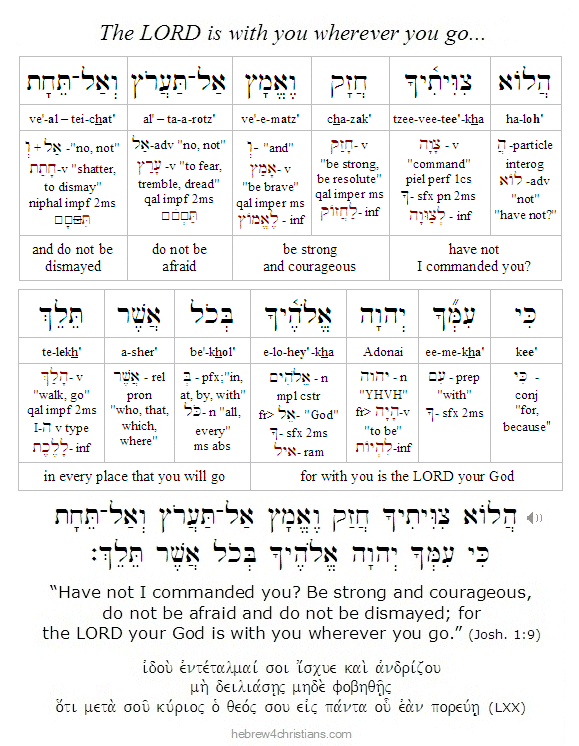
"Be strong and of good courage" - chazak ve'ematz (חֲזַק וֶאֱמָץ). The LORD God promises "never to leave you nor forsake you," and to be with you wherever you go (Josh. 1:5,9; Heb. 13:15, Psalm 139; Matt. 28:20). In the Greek New Testament the wording of Hebrews 13:15 is highly emphatic: "Not ever will I give up on you (οὐ μή σε ἀνῶ); no, not ever will I leave you behind (οὐδ᾽ οὐ μή σε ἐγκαταλίπω)." May you hear the voice of the Good Shepherd calling you, and may He forever keep you under His watchful care. Amen.
Hebrew Lesson
Joshua 1:9 reading (click for audio):
Sanctity of Heart...
07.07.26 (Tammuz 22, 5786) From our Torah portion this week we read: "Speak to the children of Israel, and say unto them, 'When ye are passed over into the land of promise ... drive away all the inhabitants of the land before you; destroy all their carved images, all their molten images, and demolish their high places'" (Num. 33:51-52). The Hebrew term for idolatry is "avodah zarah" (עֲבוֹדָה זַרָה), which literally means strange or "foreign" worship... The worship of anything other than the true God, whether it is pleasure, money, fame, control, security, self-improvement, health, religion, etc., is regarded as foreign, since it alienates us from the truth of reality. We were created to be in relationship with God but we lose sight of this truth whenever elevate what is finite to the status of the infinite. Indeed idolatry is the substitution of what is not-god (לא־אֵל) for the sacred, absolutizing the present and worshiping the temporal. Since our greatest good is found in the eternal verities of the divine communion, the Lord cannot give us an absolute good apart from Him, since there literally is no such thing. "No one can serve two masters," Yeshua said, and "a divided house cannot stand." For our own good, then, God necessarily is the Ultimate Concern of our life, and he wants to spare us the pain, disappointment, and trauma of being double-minded, disintegrated, and full of inner conflict. Spiritual warfare therefore means taking every thought captive before the bar of God's truth, rooting out and destroying all our inner idols so that we can be delivered from the anguish of uncertainty and ambivalence.
What is at stake here is your inner life, or rather the threat of the disintegration of your deepest essence into a fragmented multiplicity without center... The soul must be grounded in Reality or it is lost, dissipated in existential dread and despair. Yeshua said that when your eye is "single" (ἁπλοῦς), your whole being will be full of light (Matt. 6:22), which means that being single-minded and wholehearted unifies and heals the soul.... Being pulled in opposite directions is both painful and debilitating, for there is no overarching reason to direct the will in its decisions. Hating and loving the good is the ambivalence of despair. Being both willing and unwilling weakens the soul, but seeking the good and making God your ultimate concern binds up the broken heart and centers the will. "Your faith has made you whole..."
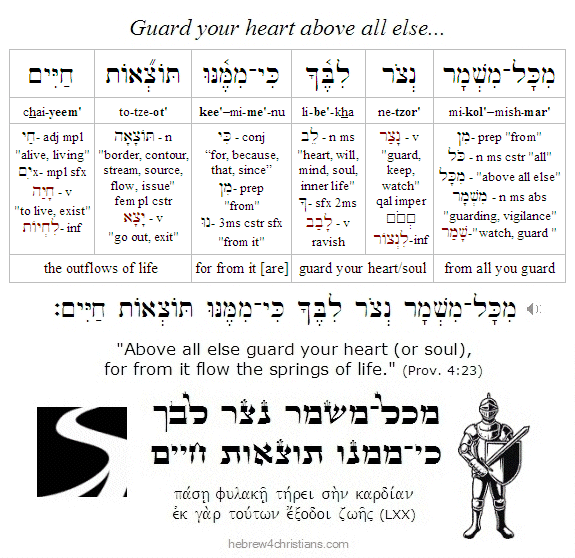
"Keep your heart with all vigilance, for from it flow the springs of life" (Prov. 4:23). The heart, that is, the willing and desiring center of the self, is to be proactively guarded, and for this sacred task God offers us heavenly comfort and resolve. Courage does not chase away or deny fear and despair, but instead gives us determination to persevere despite these feelings. "Why are you cast down, O my soul, and why are you in turmoil within me? Hope thou in God" (Psalm 42:11). Courage expresses hope in the midst of the struggle; it finds strength to confront pain, danger, or grief with God's help. Courage is grounded in the decision to trust that God is with us, despite our circumstances or feelings of abandonment. How you choose to guard your heart from the corruption and hardness of the world will determine the "road" of your life. If you do not care to keep your heart open and soft, you will become cynical, weary, and more and more selfish. Your way will be lonely, suspicious, and dangerous. If, however, you keep yourself from the hardness of unbelief, you will experience compassion, encouragement, and the joy of loving others.
Hebrew Lesson:
Proverbs 4:23 Hebrew reading (click)
 |
Sufficient unto the Day...
07.07.26 (Tammuz 22, 5786) In the Gospel of Matthew we read these words of our Lord: "Therefore do not be anxious about tomorrow, for tomorrow will be anxious for itself. Sufficient for the day is its own trouble" (Matt. 6:34). Soren Kierkegaard comments: "If there is no next day for you, then all earthly care is annihilated. When the next day comes, it loses its enchantment and its disquieting insecurity. If there is no next day for you, then either you are dying or you are one who by dying to temporality has grasped the Eternal, either one who is actually dying or one who is really living... The one who rows a boat turns his back to the goal toward which he is working. So it is with the next day. When, with the help of the Eternal, a person lives absorbed in today, he turns his back to the next day. The more he is eternally absorbed in today, the more decisively he turns his back to the next day." Amen. Today is the day of salvation; today may we hear His voice...
"If there is no next day for you, then either you are dying or you are one who by dying to temporality has grasped the Eternal, either one who is actually dying or one who is really living..." - Soren Kierkegaard
"For he that loses his life will find it..." (Luke 17:33). But how are we to understand this? An old story from the Desert Fathers comes to mind. A visitor came to the Master and was struck by his radiance. Later he spoke to a disciple and asked him for an explanation. The disciple quoted the Master's words, "Truly, truly, I say to you, unless a grain of wheat falls into the earth and dies, it remains alone; but if it dies, it bears much fruit" (John 12:24). Life is a sacred mystery, but death provides the key to unlock its meaning. We can "turn the key" by surrendering ourselves in silent expectation before God. Once we die to life in this world we are set free and empowered to live in joy and gratitude for everything. We experience serenity as we let go in surrender to God's care.
A person must be content to be as he is; a dependent being, as little capable of sustaining himself as of creating himself. If we choose to forget God and look after our own sustenance, then we are overcome with anxiety. It is certainly praiseworthy and pleasing to God when a person works for his food. But if he forgets God, and thinks that he himself is supporting himself, then he becomes burdened with the necessities of life... Worry about making a living, or not making a living, is a snare. In actuality, it is the snare. No external power, no actual circumstance, can trap a person. If a person chooses to be his own providence, then he will go quite ingenuously into his own trap, the wealthy as well as the poor. If he wants to entrench himself in his own plot of ground that is not under God's care, then he is living, though he does not acknowledge it, in a prison. When the farmer shut the door on the wood dove, the wood dove believed himself to be safe, when in fact he was caught. Or to put it another way, he was shut out from the care of Providence and trapped in a life of anxiety. In a spiritual sense he made himself a captive and "trapped himself unto death." (Kierkegaard UPD)
It is the saddest thing of all if a human being goes through life without discovering his need for God. Therefore blessed indeed are the poor in spirit, for theirs is the kingdom of heaven (Matt. 5:3). It is a "blessed fault" to understand our inner poverty, to know anguish of heart, and to be able to abide in God's salvation one day at a time....
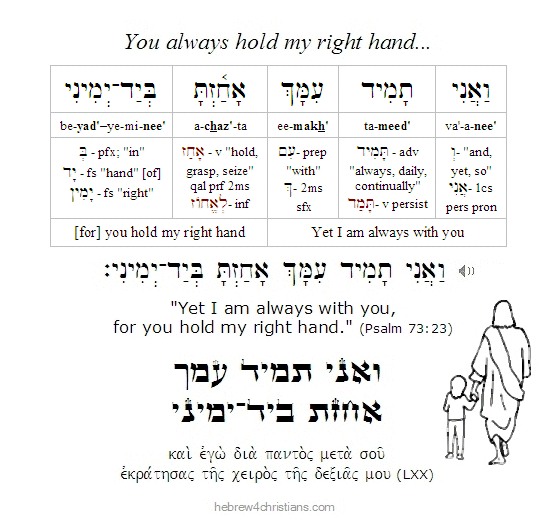
The Spirit cries out: "Fear not, for I am with you..." אַל־תִּירָא כִּי עִמְּךָ־אָנִי. What we need most of all is right here, present in this hour, whether we're conscious of it or not. God is with you, even if you feel alone, lost in darkness, unclean, afraid... "Dear Lord Jesus, I don't know who I am, I don't know where I am, and I don't know what I am, but please love me" (prayer of a sufferer from Alzheimer's disease). That's what we need most, to trust that we are safe in God's love, and that's the ultimate message of our atonement in Messiah.
Hebrew Lesson
Psalm 73:23 reading (click for audio):
Safe in God's Arms...
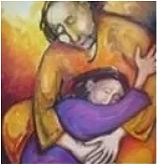
"God be praised that it is not because of my worthiness that God loves me; otherwise, I might at any moment die of fear lest the next moment I cease to be worthy." - Kierkegaard, Journals
07.06.26 (Tammuz 21, 5786) "Now I lay me down to sleep, I pray the Lord my soul to keep..." After praying with my youngest son Emanuel before he goes to bed, and just after we have said our closing "amens," a moment of silence sets in and he often asks me to pray again so that he won't have be afraid. I get it. The lingering thoughts, the liminal awareness that something went undone today, the fear of the unknown. So we pray some more, asking God to deliver us from our fears and to put his "shields of his protection" all around us as we sleep. And I think to myself, and isn't this what we are praying much of the time anyway -- not to be afraid? And not to be angry, which really is the other side of our fear?
We may sometimes feel uneasy over our lives; we may wrestle with "inner demons" that lurk in the shadows of consciousness and seek refuge from them; we may feel fragile, powerless, stupefied, sad, guilty, remorseful, fearful, insecure, lonely... We call out to the Lord for his protection and deliverance. We need reassurance that He is there for us, that he's on the other end of our heart's cry, that he cares. But surely our deepest fear is that of ourselves - our own inner darkness - and whether we will be able to hold it together and not destroy ourselves. As Yeshua said, "If the light that is in you is darkness, how great is that darkness!" (Matt. 6:23).
Our faith in God's love must be greater than the fear of our inner darkness -- those parts of ourselves that seemingly lurk in the shadows. It is not simply trusting God to protect you from external evil but trusting God to deliver you from yourself - trusting him to heal you in the unconscious depths of your soul - the wound that evokes the raw cry of the heart. And more than that, our prayers are a cry for our Abba to be there for us, to take us up in his "everlasting arms," to have him shush away our fears and to quietly say to us: "I love you; I am here with you..." Be at peace my beloved child.
Hebrew Lesson
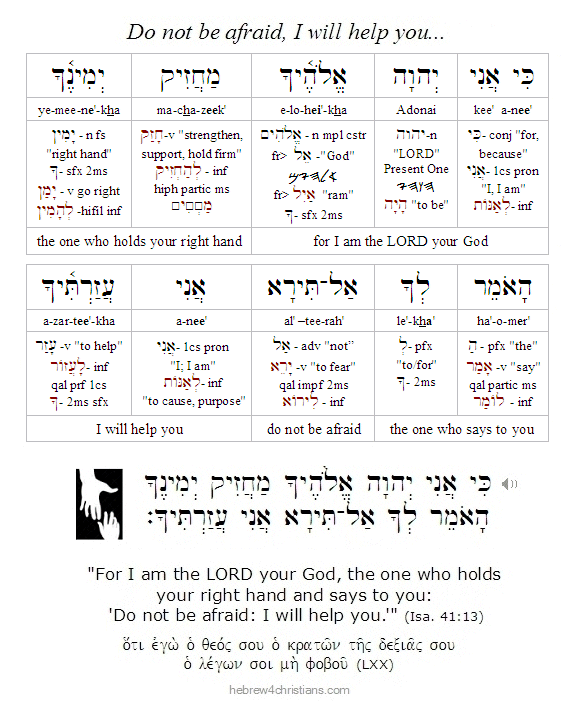
Isaiah 41:13 reading (click for audio):
 |
Guarding your Tongue...
07.06.26 (Tammuz 21, 5786) Our Torah portion this week (i.e., Mattot) begins with Moses instructing the leaders of the tribes, saying: "If a person makes a vow (נֶדֶר) ... he shall not break his word; but he shall do according to all he has said" (Num. 30:2). Notice that the phrase "break his word" literally means to profane (חָלַל) his word, which implies that breaking a promise is a type of profanity or spiritual defilement...
If we do not honor and respect our words, we lose a sense of meaning, and the substance of what we say and think becomes unstable. Such double-mindedness leads to shame, since without inner conviction we become inwardly divided and fragmented, so that we no longer trust ourselves... Being honest (i.e., yashar: יָשָׁר) implies that what we say and what we mean are unified. An honest person doesn't play games with words but understands that communication is a sacred trust...
We have a moral obligation to speak truth to others. This is called dibbur emet (דברי אמת) in Hebrew. Dibbur emet, or "speaking truth," is the duty to use words and language with integrity, compassion, and justice. We abuse language when we gossip, slander, or express contempt to others, and therefore the Torah urges us to practice "shemirat lashon" (שמירת לשון), or "guarding of the tongue" (Psalm 34:11-18).
Yeshua warned us not make oaths but rather we should be trustworthy with our words: let your "yes" mean yes, and your "no" mean no (Matt. 5:37). The talmud agrees by saying that 'no' is an oath and 'yes' is an oath." Our words are to be regarded as sacred, a confession of truth. God has made us inviolable promises, and we are never to play games with that. Just as His word is sacred, so we should strive to be sacred in our speech, too: "I tell you, on the day of judgment people will give account for every careless word they speak, for by your words you will be justified, and by your words you will be condemned" (Matt. 12:37).
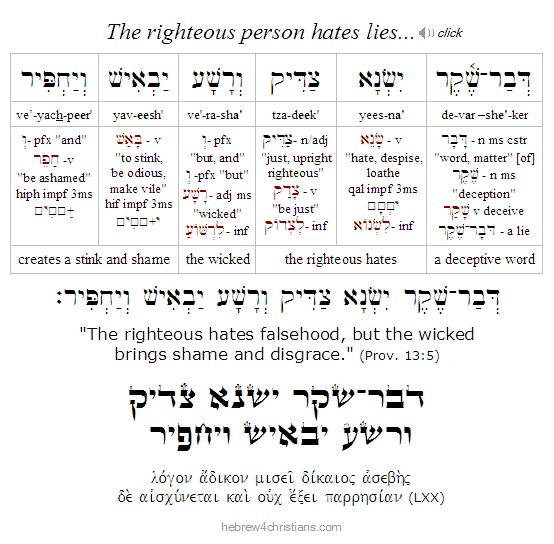
The Torah states, "You shall not put a stumbling block (מִכְשׁוֹל) before the blind" (Lev. 19:14). In addition to its literal meaning, the word "blind" figuratively refers to a person unaware of all the facts and who is therefore made vulnerable. Someone who misdirects the blind deceives them, and this violates the 9th commandment not to bear false witness (Exod. 20:16; 23:1). Such deception is called genevat da'at (גְּנֵבַת דַעַת), or "stealing the mind," since it defrauds the other person's trust. For example, it is common practice for politicians to disclose only what they think others need to know, and therefore they offer incomplete versions of truth for the sake of their own self-serving interests. Lying to others is a violation, then, of both the commandment not to steal and the commandment not to bear false witness. "The righteous person hates lies" - דְּבַר־שֶׁקֶר יִשְׂנָא צַדִּיק (Prov. 13:5).
Hebrew Lesson
Proverbs 13:5 reading (click):
 |
"Deliver me, O LORD, from lying lips, from a deceitful tongue" (Psalm 120:2). The sages say that the virtue of eminut (אֲמִינוּת), or trustworthiness, begins with learning to trust others... Parents are therefore responsible to fulfill their commitments to their children. Rabbi Zera said, "One should not say to a child, 'I will give you something' and then not do so, since that teaches the child to lie" (Sukka 46b). People learn to lie from a sense of betrayal, from the mismatch between professed words and reality. The breakdown of trust leads to the evasive use of words to protect ourselves. We tell others what we think they want to hear or we mislead them to keep ourselves safe. Breaking promises wounds others, and children can learn to become hardhearted, untrusting, and fearful of intimacy as a result.
Power to the Faint...
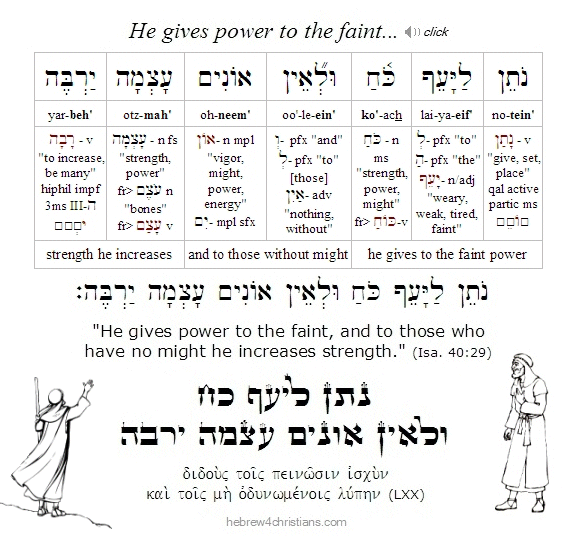
07.06.26 (Tammuz 21, 5786) "Have you not known? Have you not heard? The Eternal One, the LORD, is the Creator of the ends of the earth (בּוֹרֵא קְצוֹת הָאָרֶץ). He does not faint nor grow weary; his understanding is unsearchable. He gives power to the faint, and to him who has no might he increases strength" (Isa. 40:28-29).
Human pride has no objection that God can impart strength, but it objects that strength is found in those who are broken and weary – that is, to those mortally wounded in the battle against evil. The principle of the self-life, the ego, religious observance, "doing the law," etc., is a spiritual dead-end. The word is this: God gives strength to the weary, to the faint, to those who are without potency or power. But this means that they must first be emptied, broken, and stripped of self-sufficiency before the strength of God is manifest in them: "My power is made perfect (τελειοῦται) in weakness" (2 Cor. 12:9). God's way is first to break us, to make us weaker and weaker, so that he can then fill us with the miraculous divine nature.
Like all sacrifices brought to the altar, we must pass through death to life by means of our union with the Messiah at the cross... It is only after the cross that it may be truly said, "It is no longer 'I' who lives; now it is Messiah who lives His life in me" (Gal. 2:20). There is indeed strength, power, and victory – but such comes after the cross, after we reckon carnal energy as useless. "Not by might, nor by power, but by My Spirit, says Adonai Tzeva'ot" (Zech. 4:6).
Hebrew Lesson:
Isaiah 40:29 reading (click):
Where we read, "Messiah who loved me and gave himself for me" (Gal. 2:20), we emphasize the object of God's redeeming love; we stress that this word is being spoken to "me," and that Messiah's love is poured out "for me." But how can we justify doing so, in light of the innumerable souls that have been brought forth in the world? The Mishnah asks, "Why was man created alone?" and answers so that each person must say the world was created for me. "Whoever destroys a soul, it is considered as if he destroyed an entire world; and whoever saves a soul, it is considered as if he saved an entire world..." Amen.
This Week's Torah:
Parashat Mattot-Masei...
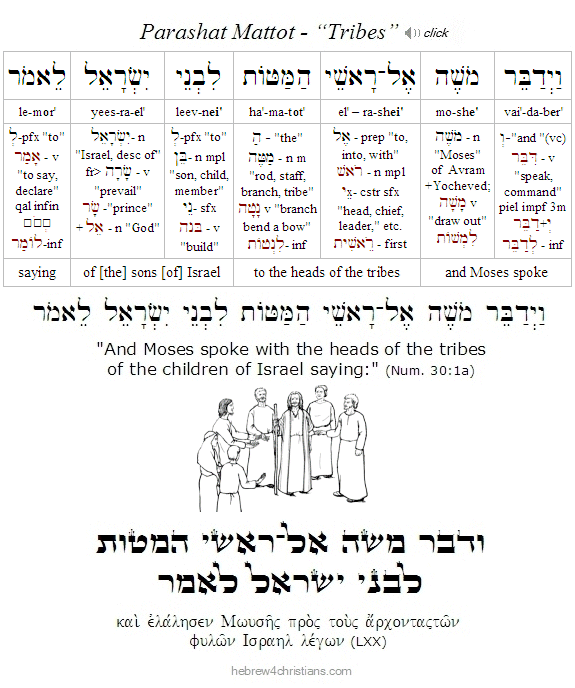
07.05.26 (Tammuz 20, 5786) Shavuah tov, chaverim! This week we will read a "double portion" of Torah that concludes Sefer Bamidbar, or "the Book of Numbers." Our first Torah portion, called parashat Mattot (מַטּוֹת, "tribes"), begins with the LORD giving laws and prohibitions regarding the making of vows (nedarim). After this, the Israelites were commanded to wage war against the Midianites for seducing the people to sin at the incident of "Baal Peor." During the ensuing battle, the wicked sorcerer Balaam was killed, as well as five tribal kings of the land of Midian.
The tribes of Reuben and Gad (and half of the tribe of Manasseh) asked permission to settle in the pasture land of Gilead (on the east of the Jordan), since they had large herds of cattle. At first Moses disapproved their request, since he feared that the other tribes would lose heart if these tribes stayed behind during the conquest of Canaan. However, when the tribal leaders made a vow to join the fight while their families remained in Gilead, Moses finally agreed.
 |
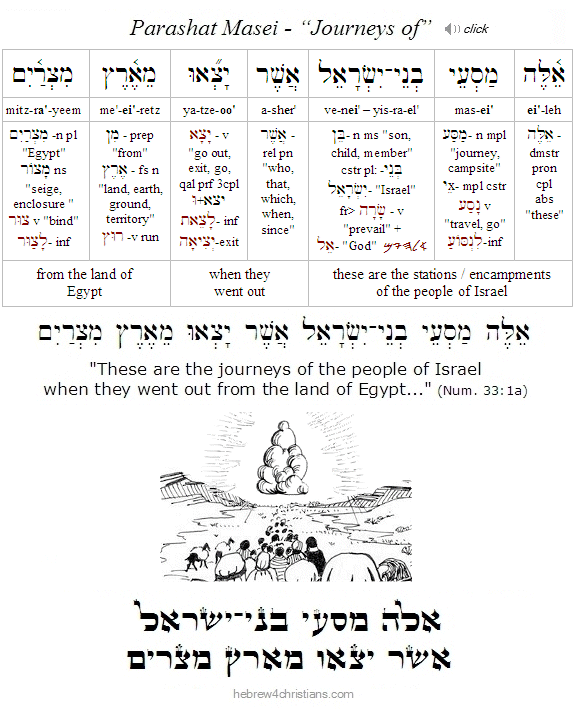
In our second Torah portion, called parashat Masei (מַסְעֵי, "journeys"), Moses recounted the various "stations" of the journey from Egypt to the edge of the promised land, and instructed that when the people would finally cross the Jordan River into the land of Canaan, they were to drive out all the inhabitants and to utterly destroy all traces of their culture and religion. After this, the land would be divided by lot according to tribes of Israel, based on the size of each tribe. God then warned Moses that if the Israelites would not drive out the inhabitants of the land, they would become a "snare" to them, and God would then judge and exile the Israelites as he intended to do to the Canaanites.
The Israelites were then instructed to assign towns with surrounding pasture lands to the Levites. There were to be a total of 42 towns, chosen by lot and distributed throughout the land according to the size of each tribe. In addition, six more cities were to be given to the Levites and designated as "cities of refuge" to which a person who unintentionally killed another may flee to take refuge from an "avenger of blood" (i.e., next of kin). The death penalty required testimony from at least two witnesses and admitted of no "ransom" (plea bargain) to be offered in place of the murderer's execution. On the other hand, a person responsible for involuntary manslaughter of another was required to dwell within the confines of a city of refuge until the death of the High Priest, after which time he was free to return to his home without fear of retribution from an avenger of blood.
The Book of Numbers – and the historical narrative of the Torah itself – concludes with the resolution of the question of legal inheritance in the land just before Joshua would lead the people into the land of Canaan. The book ends with this statement: "These are the commandments and the rules that the LORD commanded through Moses to the people of Israel in the plains of Moab by the Jordan at Jericho."
 |
The Way of Perfect Peace...
07.03.26 (Tammuz 18, 5786) When we lose sight of the truth that God is in complete control of all things, we tend to grow anxious... Feeling worried comes from focusing on ourselves, a perspective that can make us feel alone, forgotten, and even victimized in this world. Worry moves us to defend ourselves, to seek refuge in our own devices, and to forfeit the will of God according to the dictates of lesser fears...
The sages say it is not permitted to worry: "To worry is a sin; only one sort of worry is permissible; to worry because one worries." We should worry that we worry because this indicates our hardness of heart and our unbelief. God's name YHVH (יהוה) means "Presence," "Breath," "Life," and "Love." So why should we be anxious for "tomorrow"? We really only have this moment, but this moment is entirely sufficient when we walk in the light of God and seek to know him in all our ways (Prov. 3:5-6).
The first part of the Shema (i.e., Deut. 6:4-9) admonishes us to remember the truth of God "when you sit in your house, when you walk in your ways, when you lie down, and when you rise up." "In all your ways know Him," that is, in all that you put your hand to do look for the God's Presence and guidance (Prov. 3:6; 1 Cor. 10:31). This is something you must do: As King David stated, "I have set the Lord always before me, because He is at my right hand, I shall not be moved" (Psalm 16:8). Make up your mind: "Let the peace of God rule in you" (Col. 3:15).
The Name of the LORD is "I-AM-WITH-YOU-ALWAYS," which implies that we always live within His Presence and care, even if we are sometimes unconscious of this truth (Matt. 28:20). As it is written in the prophets, hen al kapayim hachotikh: "Behold I have engraved you on the palms of my hands" (הֵן עַל־כַּפַּיִם חַקּתִיךְ; Isa. 49:16). Remember the One who stretched out his hands and died for your healing; remember that he said, "Do not be anxious about tomorrow... sufficient for the day is its own trouble" (Matt. 6:34). A
Again it is written in our Scriptures: "Do not be anxious about anything, but in everything by prayer and supplication with thanksgiving let your requests be made known to God" (Phil. 4:6). When we worry we heed voices of fear and begin to feel 'double-minded,' (i.e., δίψυχος), unstable, and unable to think clearly; we get restless and find it difficult to deeply breathe. We start to feel out of control, fearful that something bad will happen despite all our efforts or wishes to the contrary; we sense doom; we lose heart; we go dark...
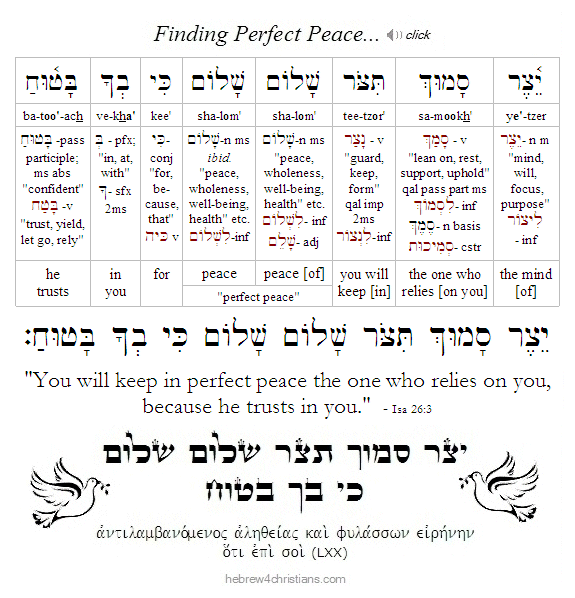
The Scripture here admonishes us to pray when we are tempted to be anxious by focusing on something for which we are grateful. Doing so will instill the "peace of God" (שלום יהוה) that quells all our fears (Phil. 4:7). We gain the "light of life," that is, inner illumination from God, so that we can remain steadfast and unmovable in faith. We will experience complete peace, shalom shaleim (שלום שלם) when we make up our minds to trust in Him (Isa. 26:3).
If you leave everything in God's hands, eventually you will see God's hand in everything....
Hebrew Lesson
Isaiah 26:3 reading (click):
Gift of Holy Desperation...
"The mass of men lead lives of quiet desperation. What is called resignation is confirmed desperation." -- Henry David Thoreau
07.03.26 (Tammuz 18, 5786) Many of us have been given the "gift of holy desperation." That's the special blessing of needing God so viscerally that you will fall apart or even self-destruct apart from His daily intervention in your life... "Blessed are the poor in spirit, for theirs is the kingdom of heaven" (Matt. 5:3). We groan in hope...
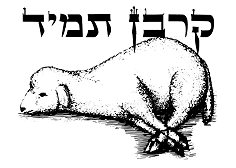
Our Torah portion this week (Pinchas) says that the fire on the altar was to be kept burning at all times (Lev. 6:12-13), which symbolizes esh tamid (אֵשׁ תָּמִיד), or the inner fire of the heart... How blessed it is to be full of the fire of this inner need, this relentless groaning, this constant hunger to be set free. Even more wonderful is how the korban tamid (קָרְבָּן תָּמִיד) - the daily whole burnt sacrifice of the lamb - represents Yeshua's ongoing and wholehearted passion for you to come alive to God's love... The heart of the Lord is offered to you in brokenness and compassion.
Hebrew Lesson:
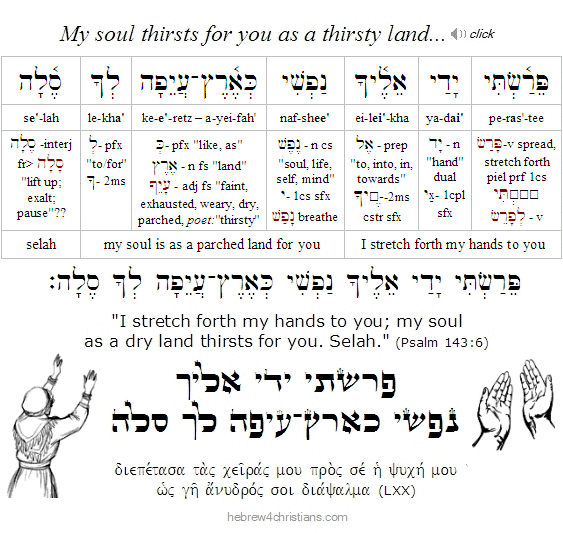
Psalm 143:6 Hebrew reading:
 |
Awakening to Wonder...

"Every sparrow is unlike every other sparrow despite the similarities." - De Mello
07.03.26 (Tammuz 18, 5786) Every day we are alive is a miracle, though because of the "evil spell of habit" we desensitize the wonder of existence right out of consciousness itself. Kierkegaard once quipped that many people sleep away the days of their lives only to awaken one day to find that they had died! "The greatest hazard of all, losing one's self, can occur very quietly in the world, as if it were nothing at all. No other loss can occur so quietly; any other loss—an arm, a leg, five dollars, a wife, etc.—is sure to be noticed."
The "sleepwalking" person mindlessly follows the social programming of the crowd and unreflectively conforms to worldly culture and its distractions. They live on the "surface" of life, conditioned by the bells and whistles of social programming. Being unconscious is likened to being asleep and oblivious to the truth of reality, which is a pleasant sort of nightmare...
When we are told to "reduce" ourselves (and the universe itself) to be "merely" or "really" the product of impersonal forces, "mechanistic" laws, overarching fate, and so on, we lose sight of the "magic" of creation and miss the wonder of why there is something rather than nothing at all. We explain away divine mysteries and pretend that we already know what is real, failing to see the great poetry and beauty of life...
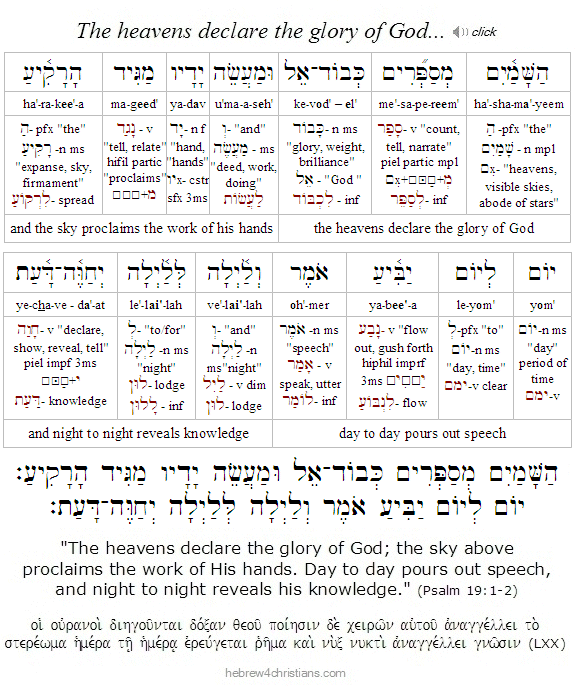
Habit steals the heart and soul out of life, inducing feelings of indifference and meaninglessness. Once we open our eyes in childlike wonder, we will discover amazing grace and gratuitous blessings all around us. Our breath, the beating of our hearts, and our thoughts will declare the wonder and glory of God....
Hebrew Lesson
Psalm 119:1-2 reading (click for audio):
 |
True and False Zeal...
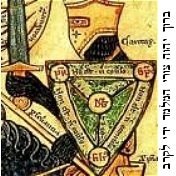
The following entry concerns our Torah reading for this week, parashat Pinchas...
07.03.26 (Tammuz 18, 5786) You may be entirely sincere in your convictions, but you may be sincerely wrong... In the time of the Second Temple, for instance, the Jewish "Zealots" despised the rule of Rome, and their political hatred caused them to blindly regard anyone who didn't share their passion as a personal enemy. In one of the great tragedies of Jewish history, these zealots actually killed more Jews than did the Romans themselves! And how many Christians these days "kill" relationships with other believers because of their particular zeal regarding some doctrinal question? I am not suggesting that doctrine is unimportant, of course, but before you pick up that sword to do the business of Pinchas, you might do well to consider your heart's attitude...
"In this respect fundamentalism has demonic traits. It destroys the humble honesty of the search for truth, it splits the conscience of its thoughtful adherents, and it makes them fanatical because they are forced to suppress elements of truth of which they are dimly aware." - Paul Tillich
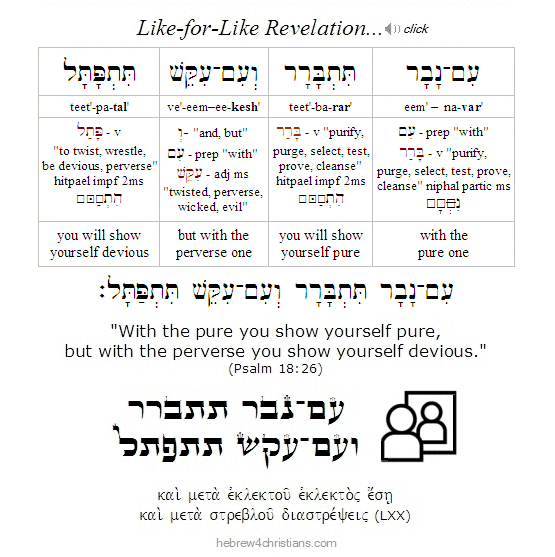
We need to be careful with our passions. There is a "false zeal" that leads to estrangement and confusion. Withholding love from others is ultimately grounded in an appeal to God as the administrator of Justice. It is an appeal to God as Elohim (אֱלהִים), not as YHVH (יהוה), the Compassionate Source of Life. If we insist on our rights, we are appealing to principles of justice, i.e., to God as the Lawgiver. But if we intend to have God be the Judge of others, we will know Him as our own Judge as well. This is a serious matter, friends: If we have an unforgiving spirit toward others, we will not receive our own forgiveness (Matt. 6:15); if we are judgmental toward them, we ourselves will be put on trial;but if we are cruel and ungiving toward them, we will experience life as hellish, miserable and mean. This reciprocal principle of Kingdom life appears throughout Yeshua's teaching. "According to your faith, be it done unto you" (Matt. 9:29).
Hebrew Lesson:
Psalm 18:26 reading (click):
 |
Olam Katan: A Small World...
Being made in God's likeness means that how we regard ourselves and others will be the measure that we regard God Himself...
07.02.26 (Tammuz 17, 5786) It is written in our Torah portion for this week (i.e., Pinchas), "My offering, my food for my food offerings, my pleasing aroma, you shall be careful to offer to me at its appointed time" (Num. 28:2). Food for God? What need has the LORD for food? But by this is meant "as you have done it to least of these my brethren, you have done it unto Me" (Matt. 25:40). The offerings you make to tzedakah (giving charity, your time, your kindness, etc.) constitute food presented before the secret place of God's altar...
God created Adam alone, as a solitary being, made in the divine image, to teach us that to destroy a single life is to destroy an entire world, and to sustain a single life is to sustain an entire world. Therefore everyone should say: 'For my sake the world was created' (Talmud). Each of us is olam katan (עולם קטן), a small world that represents the large world. Indeed, one righteous human being can sustain the entire world, as it is written (Prov. 10:25), "the righteous is the foundation of the world" (וְצַדִּיק יְסוֹד עוֹלָם).
On the other hand, balance is of course required here. Each of us is olam katan, a small world, though, as Rabbi Noah of Lekhivitz once wisely said, "if we are small in our own eyes, we are indeed 'a world,' but if we are a 'world' in our own eyes, we are thereby made small." This thought obviously echoes Yeshua's teaching: "Whoever exalts himself will be humbled, and whoever humbles himself will be exalted" (Matt. 23:12).
There are assumptions we bring to the reading of Torah that affect how we read and what we will hear... The sages generally agreed that the greatest principle of Torah is to love your neighbor as yourself (Lev. 19:18), though Ben Azzai further said that even greater is the principle that God created man in His likeness (i.e., bid'mut Elohim, בִּדְמוּת אֱלֹהִים, in "outline" or "silhouette," the word demut [דְּמוּת] a synonym of tzelem [צֶלֶם], a "shadow" or semblance) because then one cannot say, 'Since I despise myself I can despise another as well; since I curse myself, let the other be accursed as well.' Being made in God's likeness means how we regard ourselves and others will be the measure we regard God Himself (1 John 4:20). Therefore the first commandment is always, "I am the LORD thy God..." (Exod. 20:2), since apart from faith, there is no Torah of any kind.
Eleazar ha-Kappar used to say: "They who have been born are destined to die. They that are dead are destined to be made alive. They who live are destined to be judged, that men may know and make known and understand that He is God, He is the maker, He is the creator, He is the discerner, He is the judge, He is the witness, He is the complainant, and it is He who will in the future judge, blessed be He, in whose presence is neither guile nor forgetfulness nor respect of persons nor taking of bribes; for all is His. And know that everything is according to the reckoning. And let not your evil nature assure you that the grave will be your refuge: for despite yourself you were fashioned, and despite yourself you were born, and despite yourself you live, and despite yourself you die, and despite yourself shall you are destined to give account and reckoning before the supreme King of kings, the Holy One, blessed be He." (Pirkei Avot 4:29)
Hebrew Lesson
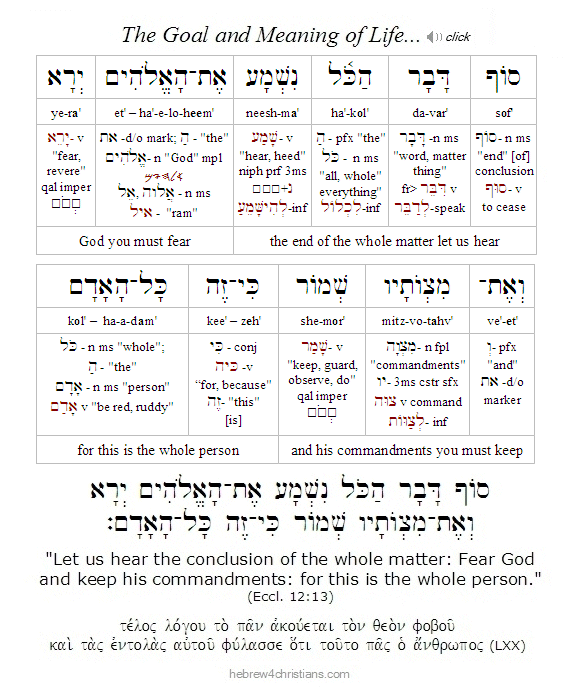
Eccl. 12:13 Hebrew reading:
The Fast of Tammuz...
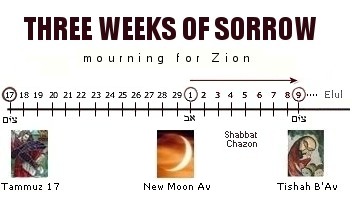
07.02.26 (Tammuz 17, 5786) In Jewish tradition, Moses smashed the tablets on the seventeenth day of the fourth month (later called Tammuz) after he came down from Sinai and found the people worshiping the Golden Calf. This tragedy was seen as prophetic, since it was on this same date that the walls of Jerusalem were crushed by the invading armies of Nebuchadnezzar (see 2 Kings 25:2-7), an event which led to the destruction of the Temple and the exile of the people three weeks later, that is, on the ninth of Av. Today, the seventeenth of Tammuz is commemorated as a fast day (i.e., the "Fast of 4th month") that marks the beginning of the three week period of mourning for the lost vision of Zion...
Since the three week period from the 17th day of Tammuz through the 9th day of Av recalls the season when the Temple was destroyed and the people were exiled from the promised land, it is called yemei bein ha-metzarim (יְמֵי בֵּין הַמְּצָרִים), "the days in the midst of distress," a phrase taken from the Book of Lamentations: "Judah has gone into exile, her pursuers have all overtaken her in the midst of her distresses" (i.e., bein ha-metzarim: בֵּין הַמְּצָרִים).
The tears of the prophet Jeremiah represent God's compassionate love for the Jewish people; the Book of Lamentations is really God's cry... God cares about the suffering of His people: b'khol tzaratam lo tzar (בְּכָל־צָרָתָם לוֹ צָר) - "In all their affliction he was afflicted" (Isa. 63:9). Even after all the horrors that befell the people of Judah due to God's disciplinary judgment, the LORD still encouraged them to seek Him again. "The faithful love of the LORD (חַסְדֵי יהוה) never ceases, and his compassions never fail. They are new every morning; great is your faithfulness" (Lam. 3:22-23). Our response to the faithful love of the LORD is teshuvah (i.e., תְּשׁוּבָה, "turning [shuv] to God"). In Modern Hebrew teshuvah means an "answer" to a shelah (שְׁאֵלָה), or a question. God's love for us is the question, and our teshuvah – our turning of the heart toward Him – is the answer. We return to the LORD when we truly acknowledge that He is our Father and our King.
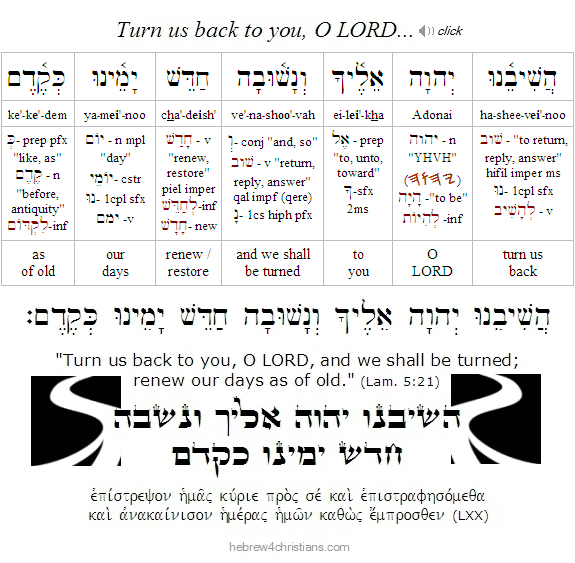
הֲשִׁיבֵנוּ יְהוָה אֵלֶיךָ וְנָשׁוּבָה
חַדֵּשׁ יָמֵינוּ כְּקֶדֶם
ha·shi·vei'·nu · Adonai · ei·lei'·kha · ve·na·shu'·va
cha·desh · ya·mei'·noo · ke·ke'·dem

"Turn us back to yourself, O LORD, so that we may return to you;
renew our days as of old" (Lam. 5:21)

Hebrew Study Card
Note that the word "distress" (i.e., metzar: מֵצַר) comes from a root word (i.e., tzarah: צָרָה) that means to "make narrow or restricted" (the Yiddish word "tsuris" comes from this root), whereas the word for "deliverance" or "salvation" (i.e., yeshuah: יְשׁוּעָה) means to "make wide" or "make sufficient." These two ideas can be seen in a verse from the Psalms: "Out of my distress (מִן־הַמֵּצַר) I called on the LORD; the LORD answered me and set me in a wide open place" (Psalm 118:5). Among other things, deliverance (salvation) is always a transition from bondage to freedom...
Note: For more information about the Fast of Tammuz, click here.
The Torah of Mercies...
07.01.26 (Tammuz 16, 5786) Shalom chaverim. It has been said that grace is getting what you don't deserve, whereas mercy is not getting what you do... Yeshua said, "Blessed are the merciful, for they shall receive mercy" (Matt. 5:7). This is not a reciprocal law like karma, i.e., you get in return what you first give, since we cannot obtain God's mercy as reward for our own supposed merit (Rom. 4:4). No, we are able to extend mercy to others only when we are made merciful ("full of mercy"), that is, when we first receive mercy as the gift of God (Eph. 2:8; Rom. 5:15). After all, you can't give away what you don't have, and if you have no mercy for others, it is likely that you have not received it for yourself, as the parable of the "Good Samaritan" reveals (Luke 10:25-8).
Your forgiveness is your forgiveness, that is, as you forgive, so you reveal your heart. What you do comes from what you are, not the other way around. We are first transformed by God's grace and then come works of love. We are able to judge others mercifully, with the "good eye," because we come to believe that we are beloved by God.
When Yeshua rebuked the "holier-than-thou" attitude of some people, he said: "Go and learn what this means, 'I desire mercy, and not sacrifice.' For I came not to call the righteous, but sinners" (Matt. 9:13). The pattern therefore abides: First you realize you are broken, impoverished of heart, and you mourn over your sinful condition (Matt. 5:3-4); then you hunger and thirst for God's righteousness, that is, for his healing and deliverance, and finally you learn to trust the mercy of God, that is, you come to accept that you are accepted despite your unacceptability (Matt. 5:5-6). As you begin "suffer yourself" and forgive your own evil, you are enabled to extend this mercy to others (Matt. 5:7). In this way you begin to see God in your relationships and obey the heart of truth (Matt. 5:8; 1 Sam. 15:22).
Though we love and honor truth, we must be careful never to use it as a weapon to judge or wound others. The failure to extend mercy, to demand your "rights" or hold on to grudges, implies that you are relating to God as Judge rather than as Savior (James 2:13). If we condemn what we see in others, we have yet to truly see what is within our own hearts; we have yet to see our desperate need for God's mercy for our lives. If you don't own your own sin, your sin will own you. Being merciful is a response to God's love and therefore is essential to genuine teshuvah (repentance).
Walking in love is the deepest expression of truth, since love heals untruth and embraces hope for what is presently broken (1 Cor. 13:7). In light of this, take a moment to ask the LORD to help you relinquish the pain of your past by being full of mercy toward yourself and others. Honor God's love for you by forgiving yourself and showing compassion and mercy to others in your life...
Hebrew Lesson
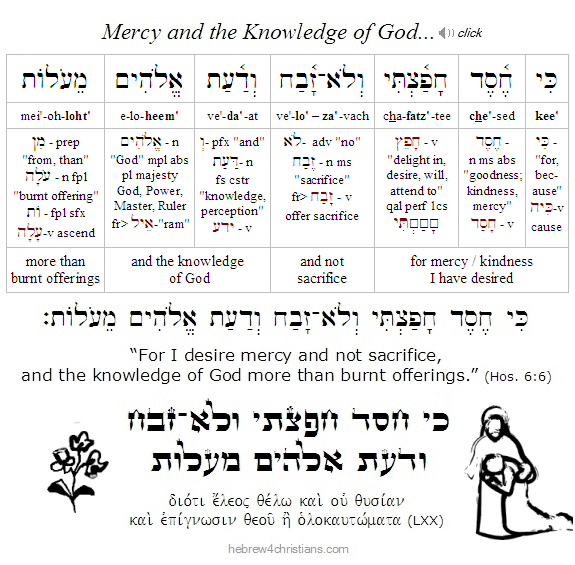
Hosea 6:6 Hebrew reading (click):
Truth and God's Salvation...
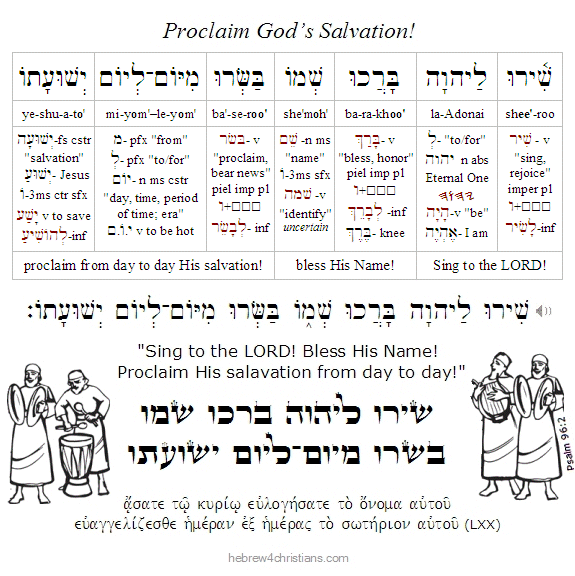
07.01.26 (Tammuz 16, 5786) The Scriptures teach us that it is forbidden to be afraid of the future because we are to live in the presence of God today and trust him to take care of us. "Sing to the LORD! Bless His Name! Proclaim His salvation from day to day" (Psalm 96:2).
"There is no fear in love," and therefore over and over the Spirit of God says, al tira' - "don't be afraid..." When we are afraid, we are believing the lie there is something beyond God's control or reach, and therefore God is "not enough"...
In times of testing you must remind yourself of what is true and real. When you know the truth, you will be set free from the power of the lie (John 8:32). God formed you in your mother's womb, breathed into you nishmat chayim, the breath of life, and numbers all your days... Every breath you take, every heartbeat in your chest is ordained from heaven, and indeed, there is not a moment of your life apart from God's sovereign and sustaining grace.
So what, then, are you afraid of? Dying? Judgment in the world to come? Being left unloved, bereft of home, abandoned, consigned to outer darkness? King David said, "If I make my bed in Hell, behold, you are there" (Psalm 139:8). Understand that the LORD God is not only present in your "happy moments," when you feel "put together" and respectable, but he is present in your desperate moments, in your hunger, your thirst, and in your secrets. May we never lose sight of God's love, especially in times of distress and trouble, since we trust that he is always working all things together for our ultimate good (Rom. 8:28).
The Name of the LORD (יהוה) means "Presence" and "Love" (Exod. 3:14; 34:6-7). Yeshua said, "I go to prepare a place for you," which means that his presence and love are waiting for you in whatever lies ahead (Rom. 8:35-39). To worry is "practicing the absence" of God instead of practicing His Presence... Trust the word of the Holy Spirit: "For I know the plans I have for you, declares the LORD, plans for healing peace and not for evil, to give you a future and a hope (Jer. 29:11). The Word always speaks hope.
Take comfort that your Heavenly Father sees when the sparrow falls; he arrays the flower in its hidden valley; and he calls each star by name. More importantly, the Lord sees you and knows your struggle with fear. Come to him with your needy heart and trust him to deliver you from the burdens of your soul (Matt. 11:28). Shalom means being free from fear.
This is a word for the exiles of every age: Be not afraid - al-tira' – not of man, nor of war, nor of tribulation, nor even of death itself (Rom. 8:35-39). If God be for us, who can be against us? Indeed, Yeshua came to die to destroy the power of death "and to release all those who through fear of death were subject to lifelong slavery" (Heb. 2:14-15). The resurrection of the Messiah is the focal point of history - not the "dust of death." Death does not have the final word. Indeed, because Yeshua is alive, we also shall live (John 14:19). May your chesed, O LORD, be upon us, as we wait for You (Psalm 33:22).
Nachman of Breslov once is reported to have said that "The whole earth is a very narrow bridge (כָּל־הָעוֹלָם כֻּלּוֹ גֶּשֶׁר צַר מְאד), and the point of life is never to be afraid." Likewise we understand Yeshua to be the Bridge to the Father, the narrow way of passage that leads to life. He calls out to us in the storm of this world, "Take heart. It is I; be not afraid" (Matt. 14:27). When Peter answered the call and attempted to walk across the stormy waters, he lost courage and began to sink, but Yeshua immediately reached out his hand and took hold of him, saying, "O you of little faith, why did you doubt (lit., think twice)?"
We must be careful not to let the light in us become darkness (Luke 11:35). The love and acceptance of God is the answer to our fear, not the thought of being judged by Him or attempting to merit his favor through religion. God's love is our hope, and this hope gives us courage to persevere the storms of the day... As it is written: "Be not afraid of sudden terror, nor of the destruction of the wicked when it comes. For the LORD shall be your confidence, and he shall keep your foot from being caught" (Prov. 3:25-26). Amen, may your chesed, O LORD, be upon us, as we wait for You.
"Greater is He that is in you than the one that is in the world" (1 John 4:4). Let us therefore walk in the Spirit of Truth, friends, and thereby overcome the devil and his noisome lies....
Hebrew Lesson
Psalm 96:2 reading (click for audio):
<< Return
|