|
|
|
|
|
Sefirat HaOmer - |
|||
|
Counting the Sheaves to Shavuot |
|||
|
|
|
 |
|
|
||||||||||||||||||
|
|
|
|
|
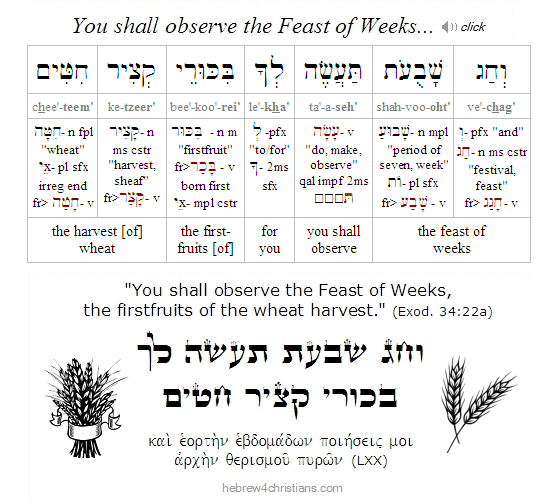
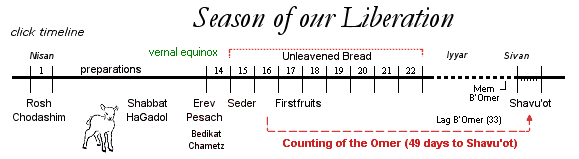
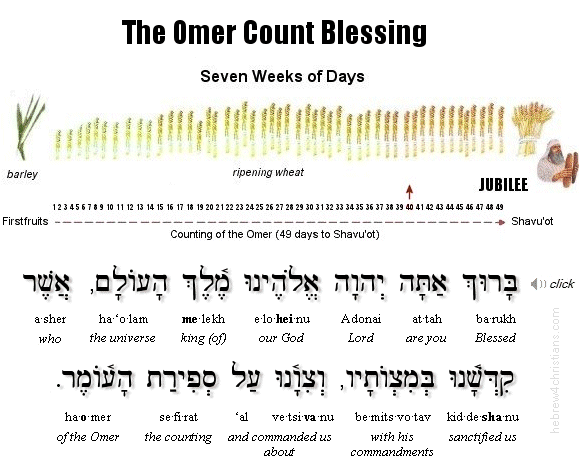
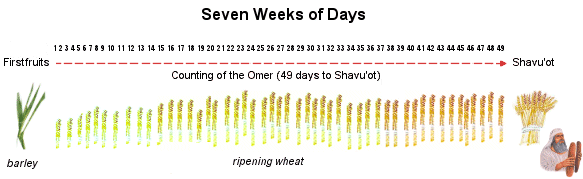
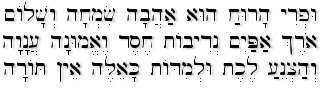
The Torah instructs us to count 49 days – seven weeks of days – from the day following Passover until Shavuot (i.e., Weeks or "Pentecost"). This period of time is called Sefirat HaOmer (סְפִירַת הָעוֹמֶר), or the "counting the sheaves" (Lev. 23:15-16; Deut. 16:9-10). Every day during this season a blessing is recited declaring exactly how many more days are left before the "seven weeks of days" are complete. Psalm 67 is often recited because it is composed of 49 Hebrew words which correspond to the 49 days of the Omer count.
|

|
|
|
|
|
|
|
|
|
|
|
|
|
|
|
|
||
|
The Hebrew Blessing |
|||||||||||||||||
|
Every evening, from the second night of Passover to the night before Shavuot, the following blessing is recited before stating the count of the omer: |
|||||||||||||||||
 |
|||||||||||||||||
|
Counting the Days... |
|||||||||||||||||
|
Jewish legend says that the Israelites were foretold that the Torah would be given to them exactly 50 days after their Exodus from Egypt. The people were so eager for this revelation that after their deliverance they began counting the days: "Now we have one day less to wait for the giving of the Torah!" This midrash attempts to explain why the Torah commands that the days from Passover to Shavuot are to be counted by claiming that the it commemorates the eagerness with which the Torah was received by the Israelites. HaRachaman hu Yachazir Lanu ("O Compassionate One! May He return for us") Since Shavuot ("Pentecost") is the ultimate point of Passover (i.e., deliverance was given for the sake of the revelation of Torah), we are called to sanctify ourselves for personal revelation by engaging in these seven weeks of repentance. Each day a blessing is recited in anticipation of the climactic day of Shavuot. |
|||||||||||||||||
|
The Meaning of Sefirat Ha'Omer |
|||||||||||||||||
|
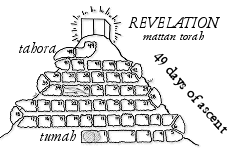
According to some of the Jewish mystics, the Omer count represents the way of teshuvah, one day for each of the 49 "levels of sin" that the Jewish people had degraded into while being slaves in Egypt. Just as there are 49 levels of spiritual impurity (i.e., tumah, טוּמְאָה), so there are said to be 49 levels spiritual of purity (i.e., tahora, טְהוֹרָה). Normally a meditation is given for each of the 49 days to help you purge a sinful condition from your life in order to attain higher levels of purity (this process is sometimes called madregot ha-tahara, "the stairs of purity"). Since Shavuot is the ultimate point of Passover (i.e., deliverance was given for the sake of the revelation of Torah), we are called to sanctify ourselves for personal revelation by engaging in these seven weeks of repentance. Since God is holy and Shavuot is about the encounter with God, we must ready and sanctify ourselves by performing the Omer count. Each day a blessing is recited in anticipation of the climactic day of Shavuot. Counting the omer, then, is a means of preparation for the giving of the Torah to Israel -- and for being restored to God. |
|||||||||||||||||
 |
|||||||||||||||||
|
Though the Jewish sages did not fathom the use of the otherwise forbidden leaven in the offering (Lev. 2:11), prophetically the waving of shtei ha-lechem pictures the "one new man" (composed of both Jew and Gentile) before the altar of the LORD (Eph. 2:14). The countdown to Shavuot therefore goes beyond the revelation of Torah given at Sinai and points to the greater revelation of Zion. Yeshua removes our tumah and makes us tahor by His sacrifice as the true Passover Lamb upon the Cross; Shavuot is the fulfillment of the promise of the Holy Spirit's advent to those who trust in Him. "Counting the Omer" is about being clothed with the Ruach HaKodesh (Holy Spirit) to encounter the resurrected LORD of Glory. |
|||||||||||||||||
 |
|||||||||||||||||
|
But the fruit of the Spirit is love, joy, peace, |
|||||||||||||||||
|
Sefirat Ha'Omer Appearances of Yeshua... |
|||||||||||||||||
|
Because of the resurrection and the connection to Shavuot (Pentecost), the counting of the Omer is highly symbolic for believers. All of Yeshua's post-resurrection appearances occurred within the days of the Omer count.
Related Topics:
|
|||||||||||||||||
|
|
|||||||||||||||||